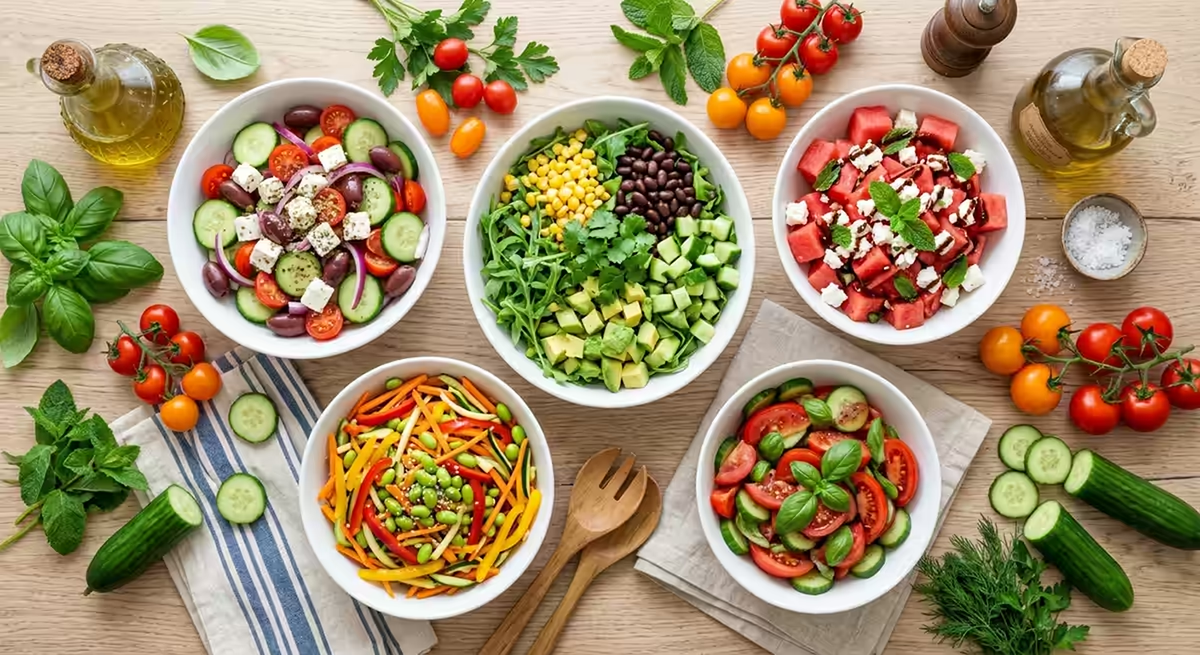
When it’s sweltering outside, you don’t feel like standing over the stove, but the fridge is bursting with tomatoes, cucumbers, and fresh herbs from the garden—that’s when light summer salads come to the rescue. This is the kind of food that refreshes, doesn’t weigh you down, and comes together in minutes. Below are 11 tried-and-true recipes using fresh vegetables, a few versatile mayonnaise-free dressings, and plenty of practical tips that make the difference between “just chopping things up” and “I can’t stop eating.”
Content
Why do we crave salads in the summer?
In the summer, the body naturally craves light foods with a high water content. Fresh vegetables are nearly 90 percent water, plus fiber, vitamins, and minerals that are hardly lost at all, since we don’t boil or fry them. Hence the main advantage of summer salads: maximum benefits with minimum effort.
There’s also a purely practical consideration. In season, tomatoes, cucumbers, peppers, zucchini, and herbs cost next to nothing and taste better than they ever will in winter. It would be a shame not to take advantage of that. A salad made with fresh-from-the-ground tomatoes, a drizzle of oil, and a pinch of salt is sometimes tastier than any elaborate dish.
And one more thing: salad is the most versatile dish in the kitchen. You can turn it into a main course by adding cheese, an egg, or beans, or you can keep it as a light side dish to accompany grilled fish or meat. One basic set of vegetables—dozens of options.
How to Make the Perfect Salad: Three Things That Make All the Difference
Before we get to the recipes, it’s worth understanding the logic behind them. Once you grasp the principle, you won’t need to follow recipes—you can just improvise with whatever you have in the fridge.
Vegetables are the foundation, but that’s not the whole story
The freshness of the vegetables accounts for 70 percent of the success. No dressing can save a limp cucumber or a mealy tomato. That’s why we choose firm, crisp vegetables—preferably locally grown and in season. If the tomatoes are watery, you can remove some of the liquid and seeds with a spoon—the dish won’t become watery.
The way you cut the vegetables is also important. Finely chopped vegetables release their juices more quickly and turn into mush, so for fresh salads we usually cut them into medium-sized pieces: tomatoes into wedges, cucumbers into half-moons or small cubes, and bell peppers into strips. This way, the salad stays crisp and looks appetizing.
The dressing makes all the difference
The most common mistake is to drown vegetables in mayonnaise. In the summer, it’s heavy, greasy, and overpowers the natural flavor of the vegetables. The classic base for a light dressing is simple: good oil plus an acid (lemon juice, vinegar) plus salt. Everything else builds on this foundation—from mustard to honey and garlic.
Remember the basic ratio for vinaigrette: 3 parts oil to 1 part acid. That is, for every 3 tablespoons of oil, use about 1 tablespoon of lemon juice or vinegar. Then adjust to your taste.
Texture and contrast
The most boring salad is one where everything tastes the same. An interesting salad always has contrast: crunchy and soft, sour and sweet, fresh and salty. That’s exactly why salty feta goes so well with juicy tomatoes, and a sour apple or lemon dressing pairs perfectly with fresh cabbage. Add a handful of seeds, nuts, or croutons—and even a simple mix of vegetables will come alive.
Dressings that will save any salad
Keep a few basic dressings on hand—and you can turn any vegetable platter into a full-fledged meal. They all take just 1–2 minutes to prepare: simply shake the ingredients in a jar with a lid or stir them with a fork.
| Dressing | Home | Who it suits |
|---|---|---|
| Classic | 3 tbsp oil, 1 tbsp wine vinegar, salt, pepper | Green and vegetable salads |
| Lemon and Garlic | 3 tbsp olive oil, 1 tbsp lemon juice, 1 clove of garlic, salt | Tomatoes, peppers, cabbage |
| Honey-mustard | 2 tbsp oil, 1 tbsp lemon juice, 1 tsp honey, 1 tsp Dijon mustard | Lettuce, carrot, and leaf lettuce |
| Yogurt | 3 tbsp thick yogurt, 1 tsp lemon juice, fresh herbs, salt | Cucumber and cabbage salads |
| Balsamic | 3 tbsp olive oil, 1 tbsp balsamic vinegar, a pinch of salt | Caprese, tomatoes, avocado |
A quick tip: Dress the salad 5–10 minutes before serving, not ahead of time. Salt draws water out of the vegetables, so if you add it too early, the salad will release its juices and become soggy.
11 Recipes for Light Summer Salads
And now—the recipes themselves. They all use simple, readily available ingredients, with no exotic ingredients and no need to spend hours in the kitchen. The quantities listed are for approximately 2–3 servings, unless otherwise noted.
1. Classic tomato and cucumber salad
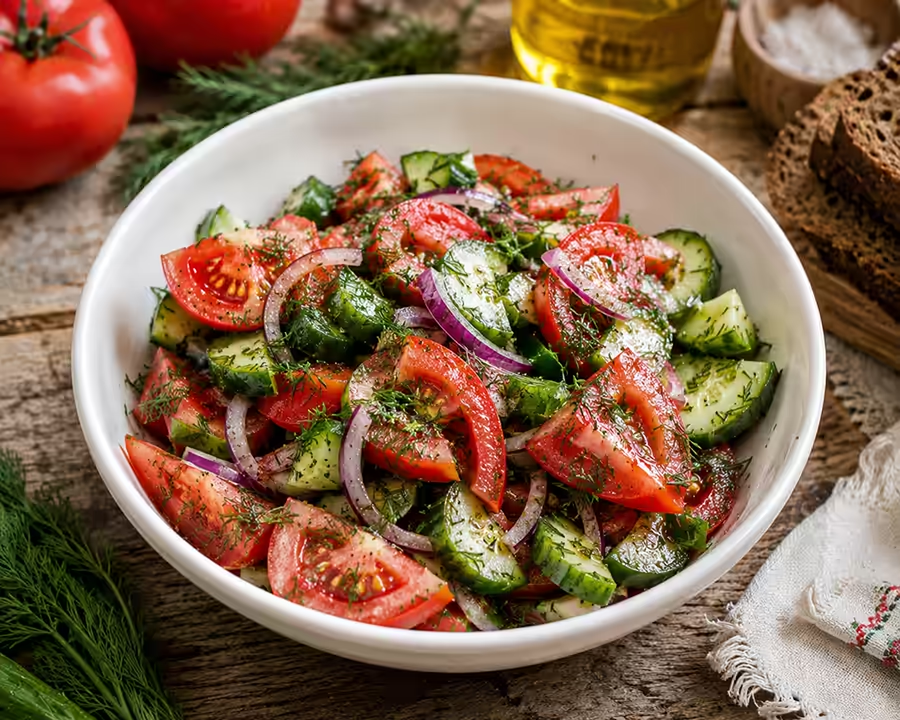
The very same salad that marks the start of summer in every Ukrainian family. It might seem as simple as can be, but it’s the little details that make all the difference.
Ingredients:
- tomatoes — 3 (about 400 g)
- cucumbers — 2 (about 250 g)
- red onion — half a small one
- unrefined sunflower oil — 2 tbsp
- herbs (dill, parsley) — a small bunch
- salt — to taste
Preparation:
- Cut the tomatoes into medium-sized wedges and the cucumbers into half-moons about 0.5 cm thick.
- Slice the red onion into thin half-rings. If you want to reduce the sharpness, soak it in cold water for 5 minutes, then drain.
- Place the vegetables in a bowl and add the finely chopped herbs.
- Drizzle with oil, season with salt, and gently toss.
- Let the salad sit for 5 minutes, then serve.
A flavor tip: be sure to use unrefined oil with a distinct nutty aroma. It works perfectly with heirloom tomatoes. Mayonnaise is unnecessary here—it just overpowers the flavor of the vegetables.
2. Greek Salad
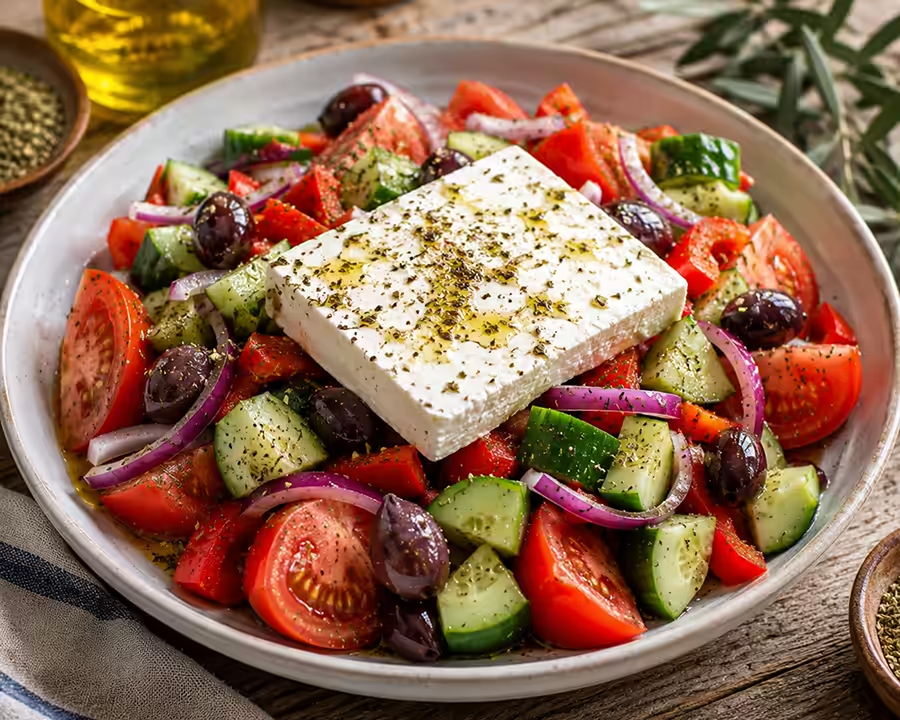
A Mediterranean classic that’s perfect for summer. Juicy vegetables, salty feta, and olives—a balance of flavors you’ll never get tired of.
Ingredients:
- tomatoes — 3
- cucumber — 1 large
- bell pepper — 1
- red onion — half
- feta cheese — 150 g
- pitted olives — a handful
- olive oil — 3 tbsp
- dried oregano — 1 tsp
- salt — to taste
Preparation:
- Cut the tomatoes into large wedges and the cucumber into thick half-moons.
- Remove the seeds from the bell pepper and cut it into strips; slice the onion into thin half-rings.
- Place the vegetables in a bowl and add the olives.
- Drizzle with olive oil, season with salt (remember that feta is salty), and toss gently.
- Top with a slice of feta or large cubes, and sprinkle with oregano.
In a traditional Greek salad, feta isn’t crumbled into small pieces or mixed in—it’s placed on top in a single chunk. This not only looks great but also ensures the right balance in every serving.
3. Caprese Salad with Tomatoes and Mozzarella
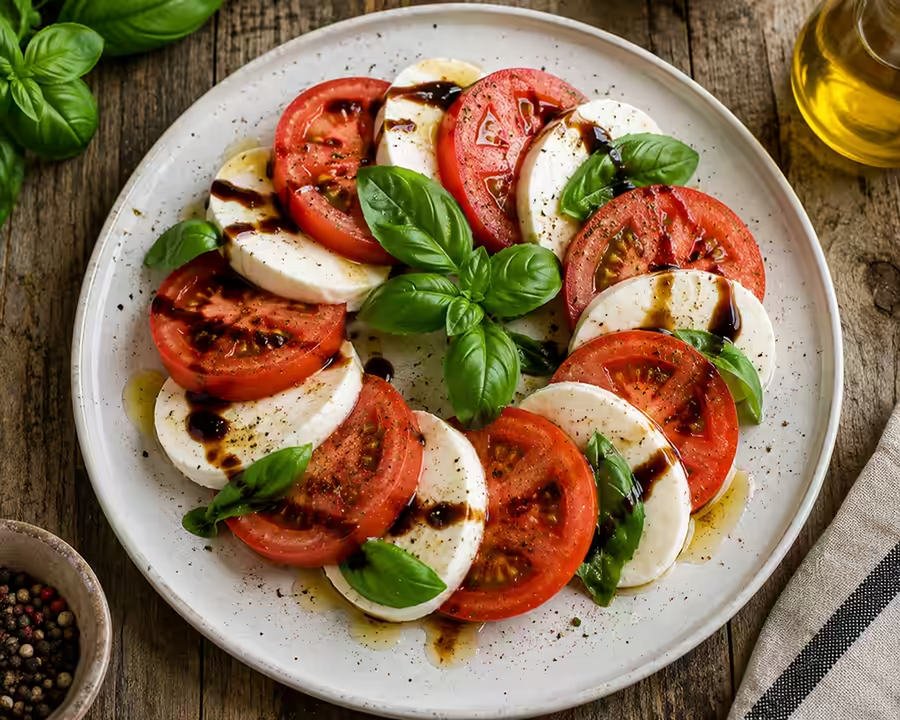
An Italian salad made with just three ingredients, relying entirely on their quality. There’s no getting around it—you need ripe tomatoes, fresh mozzarella, and fragrant basil.
Ingredients:
- ripe tomatoes — 3
- mozzarella — 200 g
- fresh basil — a bunch
- olive oil — 2 tbsp
- balsamic vinegar — 1 tbsp
- salt and pepper — to taste
Preparation:
- Slice the tomatoes and mozzarella into rounds of equal thickness, about 1 cm.
- Arrange on a plate, alternating between a slice of tomato, a piece of mozzarella, and a basil leaf.
- Drizzle with olive oil and balsamic vinegar.
- Season with salt and pepper, then serve immediately.
Caprese doesn’t like to wait, so assemble it right before serving. If you have balsamic cream on hand, it will give the dish a more appealing appearance and a richer flavor than regular vinegar.
4. Salad with young cabbage, cucumber, and dill
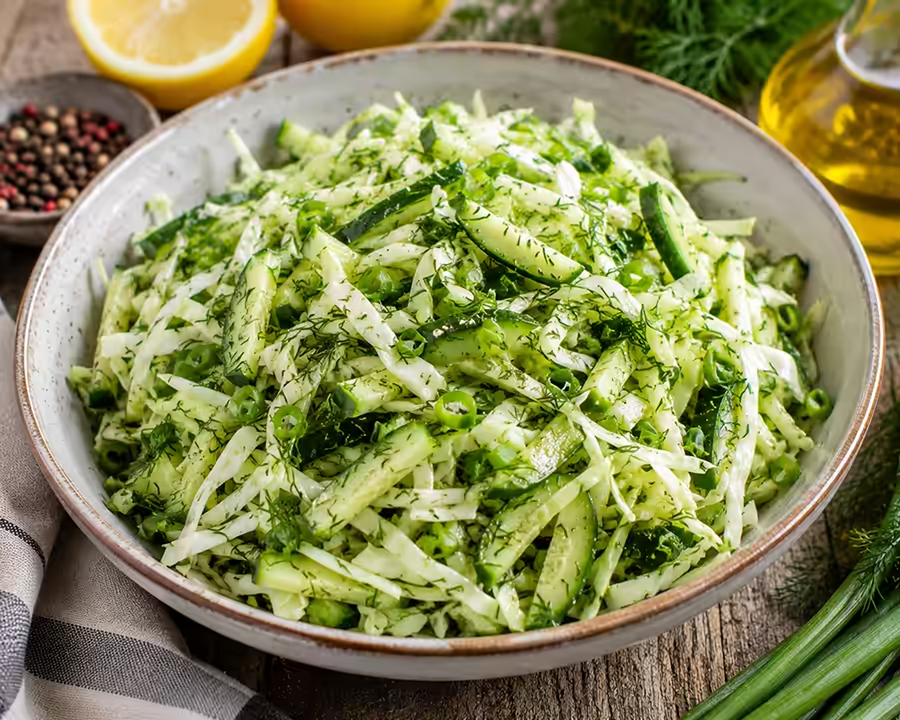
The first young cabbage is a special summer treat. It’s tender, juicy, and doesn’t need to be cooked for long.
Ingredients:
- young cabbage — about 300 g
- cucumber — 1
- green onions — a few stalks
- dill — a bunch
- oil — 2 tbsp.
- lemon juice — 1 tbsp
- salt — to taste
Preparation:
- Shred the cabbage into thin strips and place it in a bowl.
- Season with salt and gently knead with your hands for 1–2 minutes to make it softer and juicier.
- Slice the cucumber into thin strips and finely chop the herbs.
- Combine all the ingredients, then dress with oil and lemon juice.
- Stir and let stand for 5 minutes.
If the cabbage is old or a bit tough, knead it for longer—up to 5 minutes. Young cabbage, on the other hand, just needs to be lightly kneaded; otherwise, it will lose its crunch.
5. Radish and Green Onion Salad
A spring-summer salad with a kick. The radishes add a pleasant tang and crunch, while the sour cream or yogurt dressing rounds out the flavor.
Ingredients:
- radishes — about 250 g
- cucumber — 1
- green onions — 1 bunch
- hard-boiled eggs — 2 (optional)
- sour cream or thick yogurt — 3 tbsp.
- salt — to taste
Preparation:
- Slice the radish and cucumber into thin rounds.
- Finely chop the green onions.
- If you’re adding eggs, dice them.
- Put everything in a bowl, dress with sour cream or yogurt, and season with salt.
- Stir and serve immediately, while the radishes are still crisp.
It’s best to dress this salad right before serving: radishes release their juices quickly. For a lighter version, replace the sour cream with yogurt—it will give the salad a fresher taste.
6. Salad with avocado, cherry tomatoes, and arugula
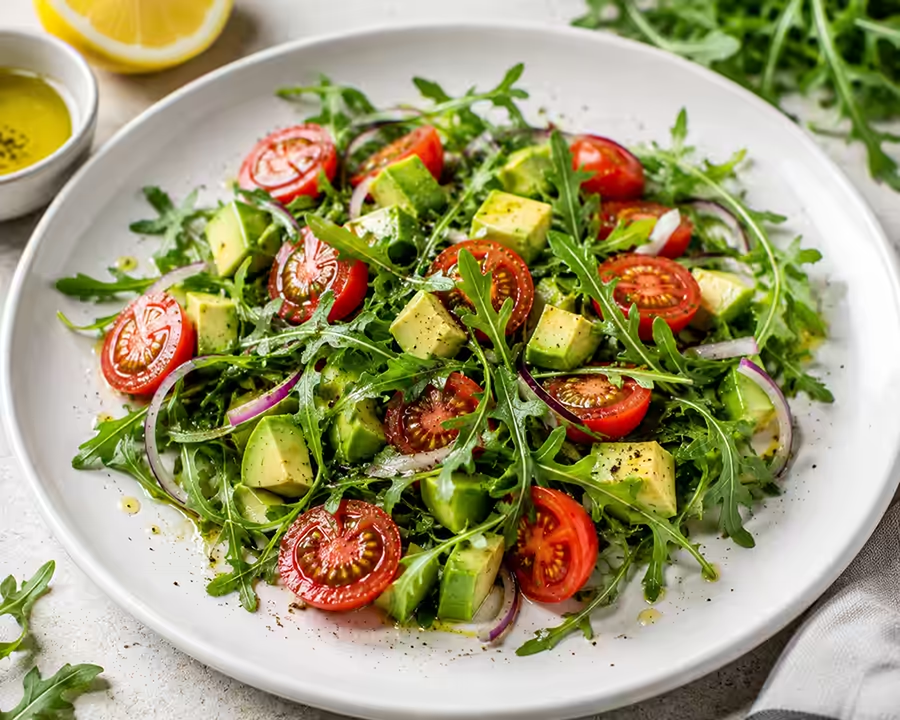
A modern classic that looks like it came from a restaurant but takes just 10 minutes to make. Creamy avocado, sweet cherry tomatoes, and the peppery kick of arugula—a combination you won’t be able to put down.
Ingredients:
- ripe avocado — 1 pc.
- cherry tomatoes — about 200 g
- arugula — 2 handfuls
- red onion — 1/4
- olive oil — 2 tbsp
- lemon juice — 1 tbsp
- salt and pepper — to taste
Preparation:
- Peel the avocado, remove the pit, and cut it into cubes or slices.
- Cut the cherry in half and slice the onion thinly.
- Place the arugula on a plate, then top with the cherry tomatoes, onion, and avocado.
- Drizzle with lemon juice and olive oil, then season with salt and pepper.
The lemon juice isn’t just for flavor—it also keeps the avocado from turning brown. Use a soft, ripe avocado; a hard one will taste bland and unappetizing in a salad.
7. Zucchini Carpaccio
An unexpected but delicious way to eat zucchini raw. Thinly sliced young zucchini is tender, with a subtle nutty flavor.
Ingredients:
- young zucchini — 1 small
- Parmesan or hard cheese — about 40 g
- olive oil — 2 tbsp
- lemon juice — 1 tbsp
- nuts (walnuts or pine nuts) — a handful
- salt and pepper — to taste
Preparation:
- Use a vegetable peeler to cut the zucchini into thin, long strips.
- Arrange them on a plate in one or two layers.
- Drizzle with oil and lemon juice, then season with salt and pepper.
- Grate or shred the cheese on top, then sprinkle with chopped nuts.
- Let it sit for 5 minutes so the zucchini can marinate a little.
Choose only young zucchini with thin skin and small seeds—older ones aren’t suitable for raw salads. Lightly toast the nuts in a dry skillet to bring out a deeper flavor.
8. Colorful Bell Pepper Salad
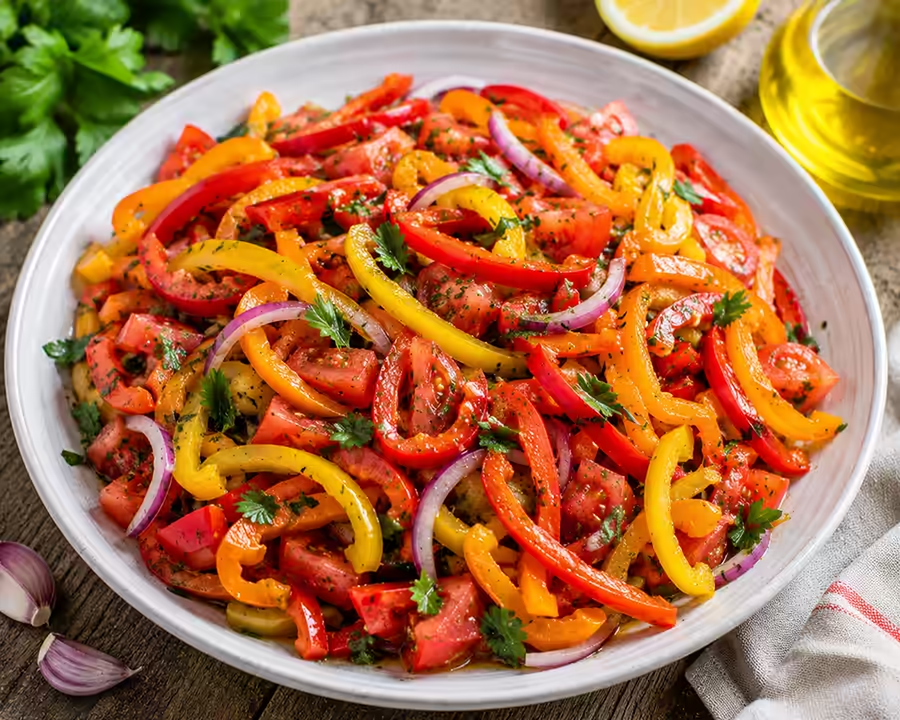
In the summer, bell peppers are bright, meaty, and sweet, so it would be a shame not to make a salad where they take center stage. It looks festive and is super easy to make.
Ingredients:
- bell peppers of various colors — 3
- tomato — 1
- red onion — half
- garlic — 1 clove
- olive oil — 3 tbsp
- lemon juice — 1 tbsp
- greens — a bunch
- salt — to taste
Preparation:
- Remove the seeds from the peppers and cut them into thin strips.
- Dice the tomato and slice the onion into thin half-rings.
- For the dressing, mix the oil, lemon juice, and pressed garlic.
- Combine the vegetables, add the chopped herbs, and pour the dressing over them.
- Add salt, stir, and let stand for 10 minutes.
Choose peppers of different colors—red, yellow, and orange. Not only do they look beautiful, but they also have slightly different flavors: red is the sweetest, while green has a slight hint of bitterness.
9. Watermelon with feta and mint
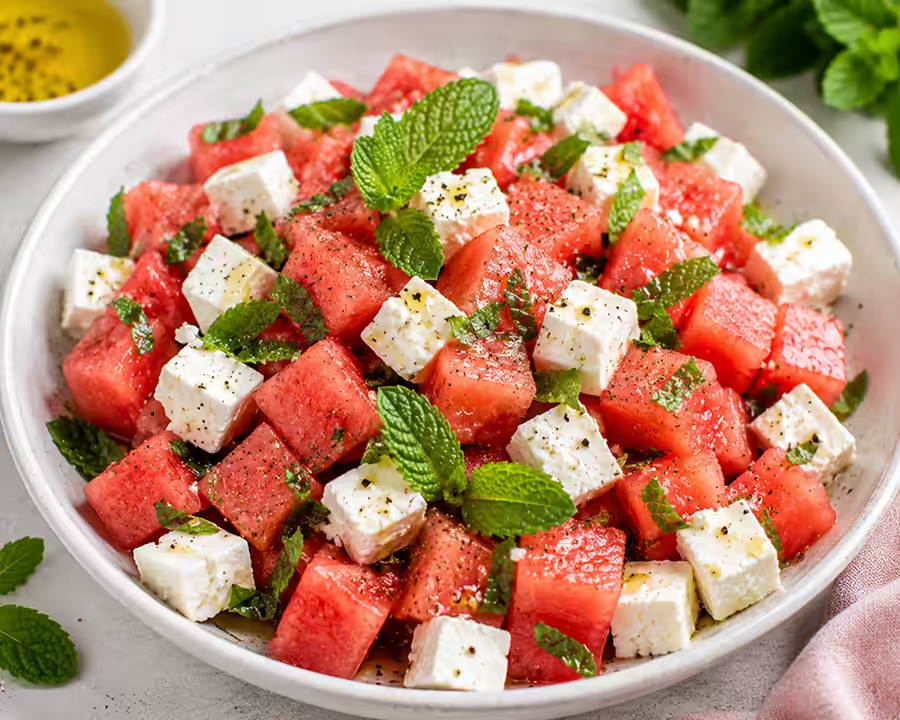
It sounds strange, but it works perfectly. Sweet watermelon, salty feta, and fresh mint—this salad wins you over from the very first bite. Perfect for a hot day.
Ingredients:
- watermelon — about 400 g of flesh
- feta cheese — 100 g
- fresh mint — a few sprigs
- olive oil — 1 tbsp
- lemon juice — 1 tsp (optional)
Preparation:
- Peel the watermelon, remove the seeds, and cut it into cubes.
- Cut the feta into cubes of the same size.
- Finely chop the mint or tear it by hand.
- Place the watermelon and feta in a bowl and sprinkle with mint.
- Drizzle with olive oil and, if desired, lemon juice, then gently toss.
There’s no need to add salt—the feta is already salty. This salad tastes best when chilled, so keep the watermelon in the fridge before slicing it.
10. Tabbouleh with parsley and bulgur
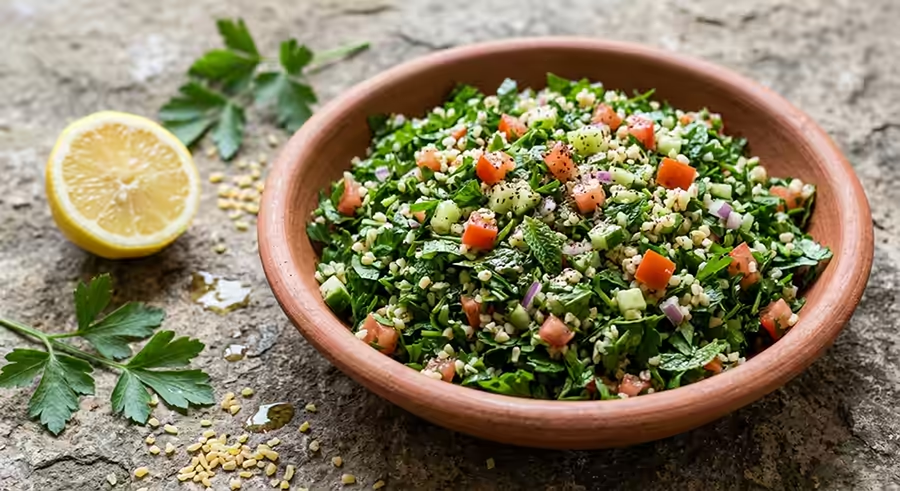
A Middle Eastern salad where the focus is on the greens, not the grains. It’s fresh, flavorful, and surprisingly filling. A great choice when you’re in the mood for something light yet satisfying.
Ingredients:
- parsley — 2 large bunches
- fine bulgur — 4 tbsp
- tomatoes — 2
- cucumber — 1
- green onions — a few stalks
- mint — a few sprigs
- olive oil — 3 tbsp.
- lemon juice — 2 tbsp
- salt — to taste
Preparation:
- Pour boiling water over the bulgur and let it sit for about 15 minutes, then drain the excess water and let it cool.
- Finely chop the parsley and mint—this is the base of the salad.
- Dice the tomatoes and cucumber into small cubes, and thinly slice the green onions.
- Combine the bulgur, herbs, and vegetables.
- Drizzle with olive oil and lemon juice, season with salt, and toss.
In a proper tabbouleh, there should be more greens than grains, so don’t skimp on the parsley. If you don’t have bulgur, you can substitute it with couscous or leave it out entirely—the salad will still be delicious.
11. Summer slaw with cabbage, carrots, and apples
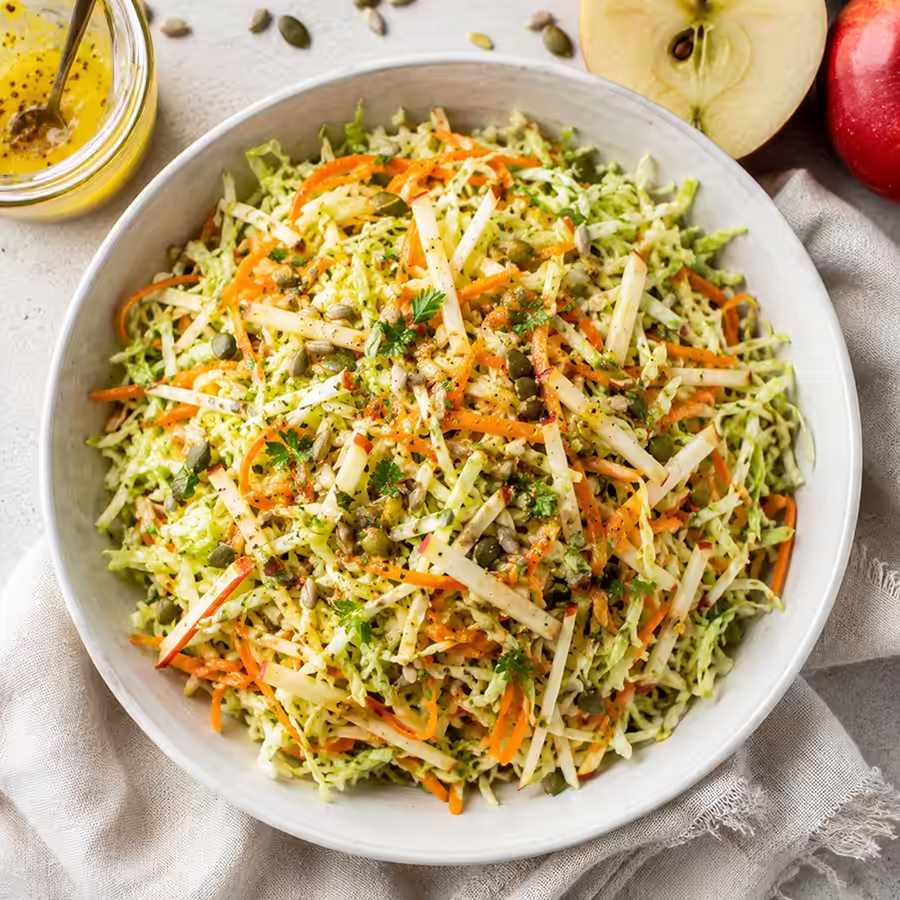
A crisp coleslaw with a sweet-and-sour hint of apple. Unlike the classic coleslaw with mayonnaise, this lighter version is dressed with a honey-mustard or yogurt dressing.
Ingredients:
- white cabbage — about 300 g
- carrot — 1
- 1 sour apple
- honey-mustard dressing (see table above)
- a handful of sunflower or pumpkin seeds
- salt — to taste
Preparation:
- Finely shred the cabbage, sprinkle with salt, and gently massage it with your hands.
- Grate the carrots using a coarse grater or cut them into thin strips.
- Cut the apple into thin strips (it’s best to do this last so it doesn’t brown).
- Combine everything in a bowl and pour the honey-mustard dressing over it.
- Stir, sprinkle with seeds, and let stand for 10 minutes.
A tart apple is more important here than a sweet one—it provides the contrast that makes the slaw so interesting. Add the seeds just before serving so they stay crisp.
Tips and Common Mistakes
Even the simplest salad can be ruined, and conversely, small details can take it to the next level. Here’s what you should keep in mind.
Don’t add salt too early. Salt draws water out of the vegetables, so a salad salted half an hour in advance will release a lot of liquid and become soggy. Add salt and dressing 5–10 minutes before serving.
Dry the greens and leaves. If the arugula or lettuce is wet after washing, the dressing will simply run off into the water at the bottom of the bowl. Pat the leaves dry with a towel or use a salad spinner.
Cut the vegetables into even pieces. When all the pieces are roughly the same size, the salad looks neater and tastes more balanced—every spoonful has a little bit of everything.
Don’t be afraid of a little acidity and salt in the dressing. A bland salad is the most common problem in home cooking. If the flavor seems flat, add a little lemon juice or a pinch of salt, and it will come alive right away.
Keep an eye on watery vegetables. You can use a spoon to remove the seeds and juice from large, meaty tomatoes—that way, your salad won’t get watery even after a few minutes.
Dress the salad gradually. It’s better to add a little dressing, toss it, taste it, and add more if needed, rather than pouring it all in at once and ending up with a salad swimming in oil.
How to serve and how long to store
Fresh vegetable salads taste best right after they’re made—that’s just how they are, and it’s their main advantage. The longer they sit, the more they lose their crunch and release their juices.
If you need to prepare the salad in advance, here’s a simple trick: chop the vegetables, place them in a bowl, but don’t add salt or dressing. The chopped vegetables will keep well in the refrigerator for several hours. Prepare the dressing separately and combine everything just before serving.
A dressed salad made with fresh vegetables doesn’t keep for long—at most a few hours in the fridge, and even then it won’t be as fresh as when it was first made. So make only as much as you’ll eat in one sitting. The exception is cabbage salads: thanks to its denser structure, cabbage holds its shape well and can last until the next day—it will even become juicier.
When it comes to presentation, there’s a simple rule: the simpler the salad, the more important the presentation. A nice wide plate, a few sprigs of herbs on top, a drizzle of oil—and even a simple plate of sliced tomatoes will look appetizing. Light salads pair perfectly with grilled dishes, fish, boiled potatoes with herbs, or simply fresh bread.
Frequently Asked Questions
Can you replace the oil in salads with something lighter? Yes. If you want a lower-calorie option, use thick plain yogurt or a yogurt-based dressing with lemon juice and herbs instead of some of the oil. The flavor will be fresher, and the salad will be lighter.
How can you prevent a salad from releasing too much liquid? Don’t salt or dress it in advance; don’t chop the vegetables too finely; and remove the seeds and liquid from large tomatoes. Dress the salad 5–10 minutes before serving.
Which vegetables are best for summer salads? Anything seasonal and grown in the ground: tomatoes, cucumbers, bell peppers, young cabbage, radishes, zucchini, and herbs. The fresher the vegetables, the tastier the salad—the dressing here merely enhances the flavor, not saves it.
Can these salads be made without vinegar? Yes, vinegar can easily be replaced with lemon or lime juice—the acidity is needed to balance the flavor, and the source doesn’t really matter. Many people actually prefer lemon juice because it adds a fresher aroma.
How can you make a salad more filling so it becomes a complete meal? Add a source of protein: a hard-boiled egg, feta or mozzarella, cooked beans, chickpeas, tuna, or pieces of roasted chicken. A handful of nuts, seeds, or croutons will also add heartiness and texture.
How many calories are in a light vegetable salad? It all depends on the dressing. The chopped vegetables themselves contain approximately 20–40 calories per 100 g. The main source of calories is the oil or cheese, so if you’re watching your diet, pay close attention to the amount of dressing you use.