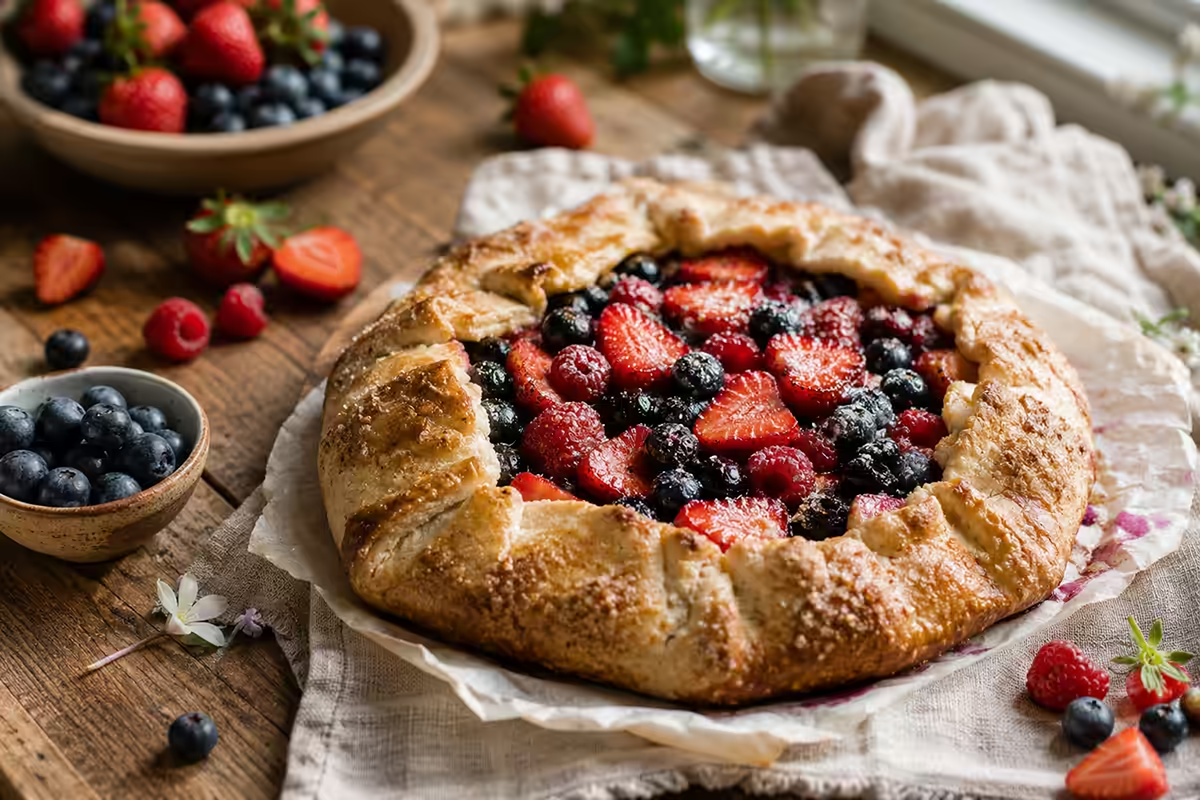
Every summer, it’s the same story in my kitchen: sometimes the strawberries get overripe in the garden, sometimes the raspberries fall off the bush faster than I can eat them, and sometimes my neighbor brings over a bucket of cherries “because she doesn’t know what to do with them.” And every time, one recipe comes to the rescue—a summer berry pie made with crumbly shortcrust pastry. It forgives almost any mistakes, works with whatever berries you have on hand, and always turns out so delicious that it gets devoured while still warm, straight from the baking pan.
This isn’t some fancy dessert with a million steps. It’s a quick homemade treat that I make when I need to use up some berries right away, before they get too ripe and start releasing juice in the bowl.
About this baked good
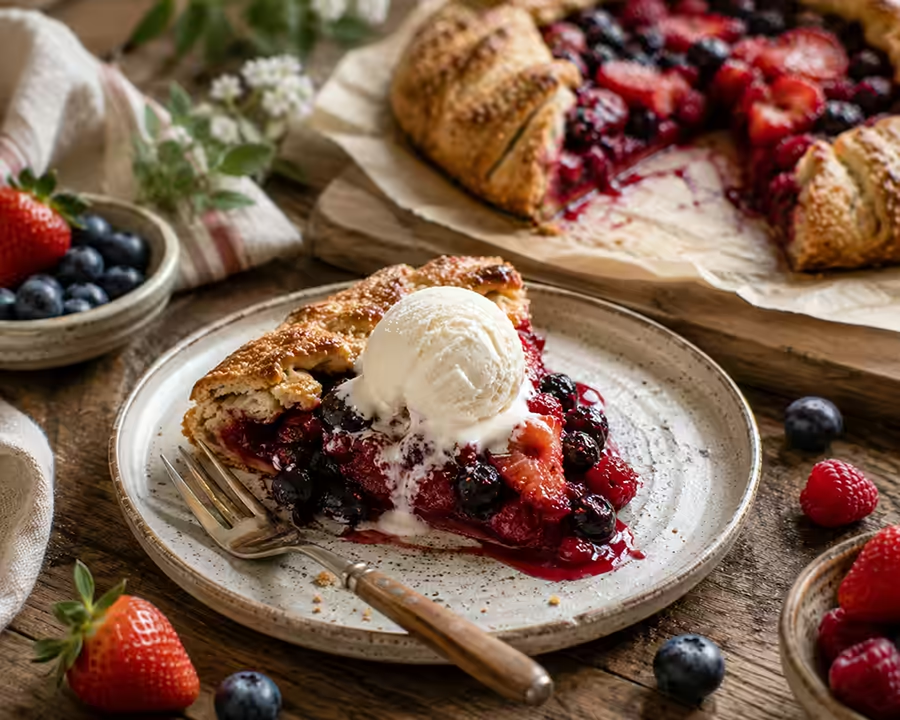
A shortbread cake with berries is, in essence, a classic French galette with a Ukrainian home-style twist: the dough isn’t shaped into a complex form; the berries are simply arranged on top or tucked under the edges, and the whole thing is baked until golden brown. I’ve been making it for about ten years now, and during that time I’ve realized the most important thing—80% of its success depends on the dough, not the filling.
The dough should be cold when you work with it and not overmixed, otherwise it will become rubbery instead of crumbly. You can use almost any summer berries: strawberries, raspberries, blueberries, currants (black or red), pitted cherries, blackberries, or a mix of them. I usually make a mix using whatever’s left in the fridge—which is why this pie is also called “the fridge pie.”
This baked good is a good choice if:
- you have some berries left that you need to use up right away;
- You want something quick to go with your tea on the weekend;
- you need to bring a dessert with you to the cottage or when visiting friends;
- If you’re in the mood for homemade baked goods without any complicated equipment—you don’t need a pastry bag or a mixer here;
- If you’re new to baking and are afraid of messing up the dough in a pan—you don’t need a pan at all here.
Seasonality of Berries in Ukraine: When to Prepare What
One of the secrets to a great pie is to use berries when they’re in season—that’s when they’re sweetest and don’t need any extra sugar. Here’s what a summer berry calendar looks like in most regions of Ukraine:
| Berry | Approximate season | Features for Baking |
|---|---|---|
| Strawberries | late May–June | the juiciest, requires more starch |
| Sweet cherries | June | It's best to remove the pits beforehand; it holds its shape well |
| Cherry | late June–July | It produces a lot of juice, and the tartness balances out the sweetness |
| Raspberry | July | delicate, breaks easily; handle with care |
| Currants (black, red) | July | sour, needs more sugar |
| Gooseberry | July | an underrated berry that pairs wonderfully with strawberries |
| Blueberry | July–August | holds its shape better than any other berry |
| Blackberry | August | similar to raspberries, but denser |
If you’re making this in early summer, use strawberries or sweet cherries. If it’s the height of the season, a mix of raspberries, blueberries, and currants gives the richest flavor and a beautiful color when sliced.
Comparison: Which format is right for you?
| Format | Cooking time | Complexity | When to cook |
|---|---|---|---|
| Classic Galette (Open-Faced) | 50–60 minutes | easily | When you're short on time and want a beautiful presentation without using a mold |
| A closed pie in a pan | 70–80 minutes | average | When you're cooking for guests, you want equal portions |
| Lattice-Top Pastry Pie | 80–90 minutes | more difficult | when you have time and want to make a spectacular presentation |
| Individual tartlets | 60 minutes | average | when individual servings are needed |
In this recipe, I’m using the classic galette as a guide—the quickest and most reliable option, which rarely lets even beginners down. But below, I’ll explain how to adapt that same recipe for a covered pan or a baking rack if you want to mix up the presentation.
Ingredients
For the dough
- 250 g wheat flour (plus a little extra for dusting the work surface)
- 150 g cold butter, cut into cubes
- 1 egg
- 30 g of sugar
- a pinch of salt
- 2–3 tablespoons of ice water (if needed)
For the filling
- 500–600 g of fresh summer berries (strawberries, raspberries, blueberries, currants, or a mix)
- 60–80 g of sugar (depending on how sweet the berries are)
- 1–2 tablespoons of cornstarch or potato starch — to prevent the juice from leaking out
- 1 tsp lemon juice
- zest of half a lemon (optional; adds freshness)
For lubrication
- 1 egg yolk
- 1 tablespoon of milk
- 1 tbsp sugar for sprinkling on the crust (optional)
Possible substitutions: You can partially replace the butter with baking margarine, but the flavor and crumbly texture will be slightly less good. You can substitute the same amount of flour for the starch if you don’t have any on hand, although the filling’s texture will be slightly less translucent. Frozen berries will work too—just don’t thaw them beforehand; use them straight from the freezer, otherwise the dough will become soggy. You can reduce the sugar in the dough to 20 g if you prefer a less sweet base—this won’t affect the texture.
How to Choose Berries for a Pie
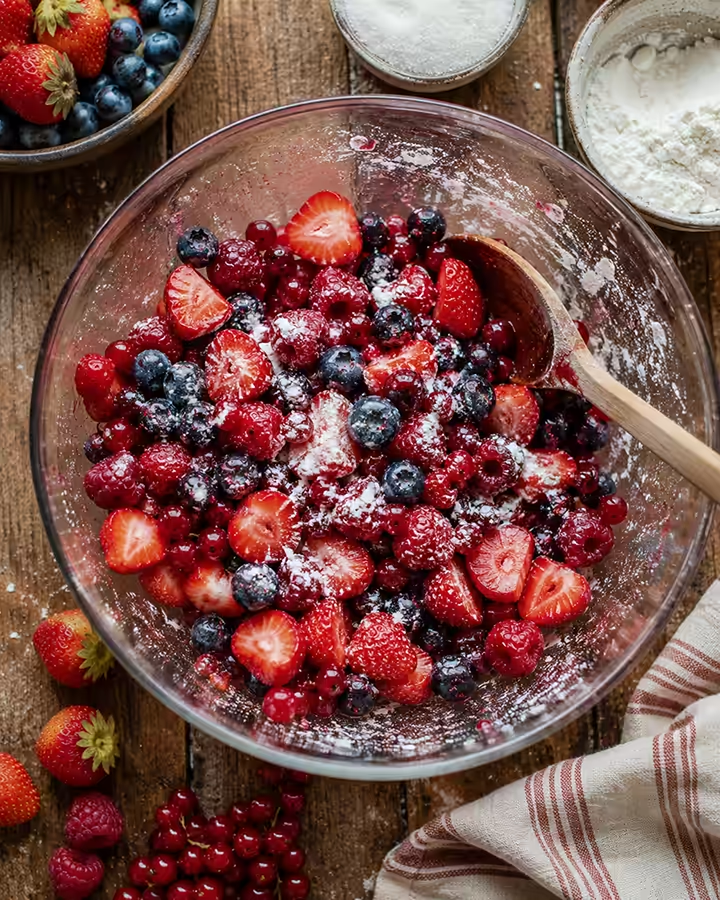
Here, I usually follow a few simple rules that I’ve developed through trial and error.
Strawberries. Choose medium-sized berries without white “shoulders” near the stem—this is a sign of underripeness and excessive acidity. Berries that are too large are often watery and release too much juice.
Raspberries. Buy them on the day you plan to use them, or at most one day in advance—raspberries spoil faster than any other summer berry. If you see damp spots at the bottom of the box, the raspberries have already started to ferment.
Blueberries. Choose berries with a light bluish bloom—this is a natural waxy coating that indicates freshness, not dirt. There’s no need to wash it off; it washes away with water when you rinse the berries.
Currants. The berries should be firm, not soft. If the currants are still on the stems, pick them off with a fork—it’s faster and neater than using your fingers.
Sweet cherries and sour cherries. Check for cherry fruitworms—an easy way to do this is to cut a few cherries in half. It’s best to remove the pits with a special cherry pitter if you’re preparing a large quantity.
If you’re buying berries at the market, don’t hesitate to ask the vendor to let you try one—it’s common practice, and that way you’ll know right away how much sugar you’ll actually need for the filling.
Step-by-Step Recipe
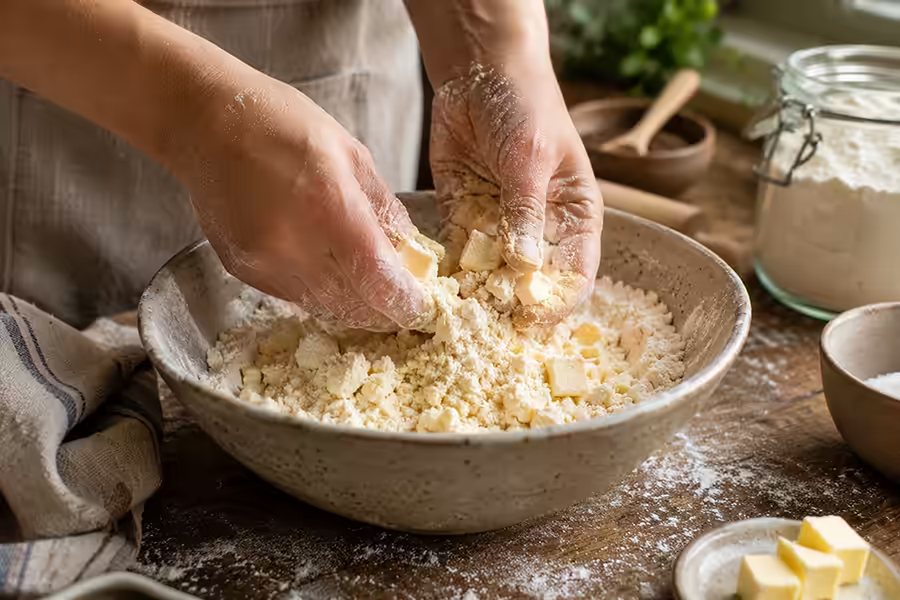
- Mix the flour, sugar, and salt in a large bowl. Add the cold butter, cut into cubes, and quickly rub it in with your fingers until the mixture resembles moist sand with small pieces of butter.
- Add an egg and 2 tablespoons of ice-cold water. Knead the dough with quick movements, but don’t overdo it—as soon as the dough comes together into a ball, stop. If the dough is too dry, add another spoonful of water.
- Shape the dough into a disc, wrap it in plastic wrap, and place it in the refrigerator for 30–40 minutes. This is a crucial step—without chilling, the dough will spread too much during baking.
- While the dough is chilling, prepare the filling. Wash the berries and pat them dry with a paper towel. Cut large berries, such as strawberries, in half or into quarters.
- In a bowl, combine the berries with the sugar, cornstarch, lemon juice, and zest. Stir gently so as not to crush the berries, and let stand for 10 minutes—during this time, the cornstarch will begin to thicken the juice.
- Preheat the oven to 190 °C.
- Remove the dough from the refrigerator and roll it out on a floured surface into a circle about 30 cm in diameter and 3–4 mm thick.
- Transfer the dough to a baking sheet lined with parchment paper (it’s easiest to roll it out directly on the parchment paper first and then transfer it to the baking sheet along with the parchment).
- Place the berry filling in the center of the circle, leaving a 5–6 cm border around the edges. Gently fold the edges of the dough over the filling to form a rim—the center remains open.
- Brush the edges of the dough with a mixture of egg yolk and milk; if desired, sprinkle with sugar for a crispy crust.
- Bake for 35–40 minutes, until the crust is golden brown and the juice in the center is thick and bubbly.
- Let the cake cool on the baking sheet for at least 15–20 minutes before serving—the filling needs to set a little, otherwise it will run all over the plate.
How to Adapt a Recipe for a Different Serving Style
If you think the galette is too “casual” and you’d like something a little more presentable for your guests, here’s how to adapt that same recipe:
A closed pie in a pan. Divide the dough into two parts—60% and 40%. Roll out the larger portion and place it in a 24-cm-diameter pan with sides; prick it with a fork, then add the filling. Roll out the smaller portion into a lid, cover the pie, and pinch the edges together. Bake for 45–50 minutes at the same temperature.
Lattice Pie. Roll out the dough the same way as for a closed pie, but cut the top layer into strips 1.5–2 cm wide and weave them into a lattice over the filling. This takes longer, but it looks more impressive on a festive table.
Individual tartlets. Roll out the dough and cut out circles to fit tartlet molds or even silicone cupcake molds. Use less filling—about 1–2 tablespoons per serving—and reduce the baking time to 25–30 minutes.
Tips and Common Mistakes
The dough spreads while baking. The most common cause is insufficient chilling or butter that’s too warm at the start. Keep the butter in the freezer for 10 minutes before you begin, and don’t skip the dough-chilling step.
The filling leaks out and the crust gets soggy. This happens when there are too many juicy berries (for example, just strawberries in hot weather) without enough starch. For very juicy berries, increase the amount of starch to 2.5 tablespoons.
The dough turns out rubbery rather than crumbly. This is the result of over-kneading. You should knead the dough just until it comes together—no more. The less you “work” it, the crumblier the texture will be.
The bottom of the pie remains undercooked. If you have a dark baking sheet or an oven with bottom heat, place the baking sheet on a lower rack in the oven, or use a preheated baking stone or an upside-down baking sheet. Another option is to sprinkle a thin layer of ground almonds or breadcrumbs over the dough beneath the filling; they’ll absorb any excess moisture.
The filling is too sweet or too sour. The flavor of the berries depends heavily on the season and variety, so you should adjust the amount of sugar to taste while mixing the filling—try the berries with sugar before spreading them on the dough.
The crust tends to burn before the filling is fully baked. This happens in ovens with strong top heat. Ten minutes before the end of baking, cover the edges of the pie with a strip of aluminum foil—this will protect the thinnest parts of the dough from burning.
The berries float to the surface, and the filling at the bottom is runny. The reason is that the starch didn’t distribute evenly. Stir the filling more thoroughly and let it sit longer before spreading it on the dough so that the starch has time to partially dissolve in the juice.
Variations and Presentation
- Berry mix. The combination of blueberries and raspberries gives it a deep color and a balanced flavor—not too sweet, not too tart.
- From the vegetable garden. If your rhubarb is ripe, add a few chopped stalks to your strawberries—it’s a classic flavor combination.
- Spicy notes. Add a pinch of cinnamon or cardamom to the filling—it brings out the berries’ natural sweetness.
- Almond topping. Before baking, sprinkle the filling with almond flakes—it will add crunch and a nutty aroma.
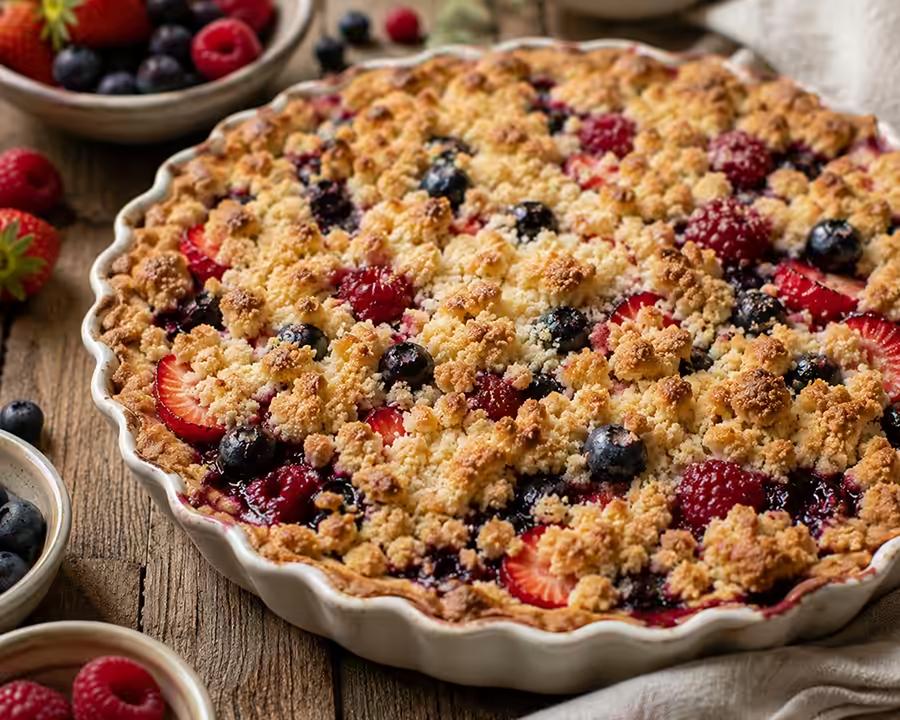
- Crumb topping (crumble). Instead of the second layer of dough, mix 50 g of flour, 40 g of sugar, 40 g of cold butter, and a pinch of cinnamon into crumbs, then sprinkle them over the filling before baking—the result will be something between a galette and a crumble.
- A cheesy touch. Add 50 g of grated hard cheese to the dough for a savory version—it pairs nicely with tart berries like currants as an appetizer to accompany wine.
- Serving. It’s best served warm, with a scoop of vanilla ice cream or a spoonful of thick sour cream. The cake is also delicious when cold, but the filling’s texture becomes denser.
- For children. Use less lemon zest and a little more sugar—children usually don’t like the strong citrus tartness in desserts.
- Storage. The pie can be stored covered with plastic wrap at room temperature for up to 24 hours, or in the refrigerator for up to 3 days. It’s best to reheat it in the oven for a few minutes rather than in the microwave, so the crust doesn’t get soggy.
- Freezing. The finished pie can be frozen whole or in slices for up to 1 month. It should be thawed slowly in the refrigerator, then baked for 5–7 minutes in a preheated oven to restore its crispness.
Approximate Calorie Content
The calorie content per serving depends on the specific berries and the amount of sugar, but as a rough estimate, one slice of cake (out of eight) made with mixed berries and 70 g of sugar in the filling contains approximately 220–260 kcal. This is a moderate calorie count for a dessert because the recipe does not include any cream, buttercream, or glaze—most of the calories come from the dough.
Why This Recipe Works (A Little Food Science)
The secret to a flaky dough lies in the right ratio of fat to flour and in how cold the butter remains right up until it goes into the oven. When the butter pieces melt in the oven—rather than during mixing—they form tiny pockets of steam between the layers of flour; this is what creates the crumbly texture, rather than a dense, rubbery one. This is the same principle behind real puff pastry, only in a simplified, homemade version.
An egg in dough serves a dual purpose: the yolk adds richness and softness, while the white helps bind the dough together, making it easier to roll out without the edges cracking.
The starch in the filling acts as a thickener: when heated, its molecules absorb moisture from the berry juice and form a gel-like structure that keeps the filling compact, rather than letting it run like a liquid syrup. It’s the same principle used in berry pies, tart fillings, or gelatin-based compotes—only without gelatin, using starch alone. Cornstarch produces a more transparent, “glossy” filling, while potato starch yields a slightly thicker and less transparent one, so for light-colored berries like strawberries, I tend to use cornstarch.
The lemon juice in the filling does more than just add flavor—it slightly lowers the mixture’s pH, which helps the pectin naturally found in the berries set better during baking. That’s why the filling holds its shape even without added gelatin or pectin.
I’ve tested this recipe with different berries dozens of times over the past few summers, and it’s the combination of “cold dough + starch in the filling” that distinguishes a pie that holds its shape from one that turns into berry jam inside the dough.
Frequently Asked Questions
Can I make this pie with frozen berries? Yes, you can. Use the berries straight from the freezer without thawing them first, and increase the amount of starch by about half a tablespoon, since frozen berries release more juice during baking.
How long can you store a baked pie? At room temperature, covered with plastic wrap or in a sealed container, it will keep for up to 24 hours; in the refrigerator, up to 3 days. It’s best not to store it any longer than that, as the crust will lose its crispness.
Can I make the dough ahead of time? Yes, you can wrap the dough in plastic wrap and store it in the refrigerator for up to 2 days or freeze it for up to 1 month. Before using it, let the frozen dough thaw in the refrigerator overnight.
Which berries should you avoid using in this recipe? Very watery berries, such as watermelon or melon blends, aren’t suitable—they release too much liquid, even when combined with starch. Strawberries, raspberries, blueberries, currants, and pitted cherries work best.
Why does my dough crack when I roll it out? This means the dough is too cold or too dry. Let it sit at room temperature for 5 minutes before rolling it out, and you can easily “patch up” the cracks with your fingers.
Can I reduce the amount of sugar in the filling? Yes, just go by how sweet the berries are. If the berries are very ripe and sweet, you can reduce the amount of sugar to 40–50 g without compromising the flavor.