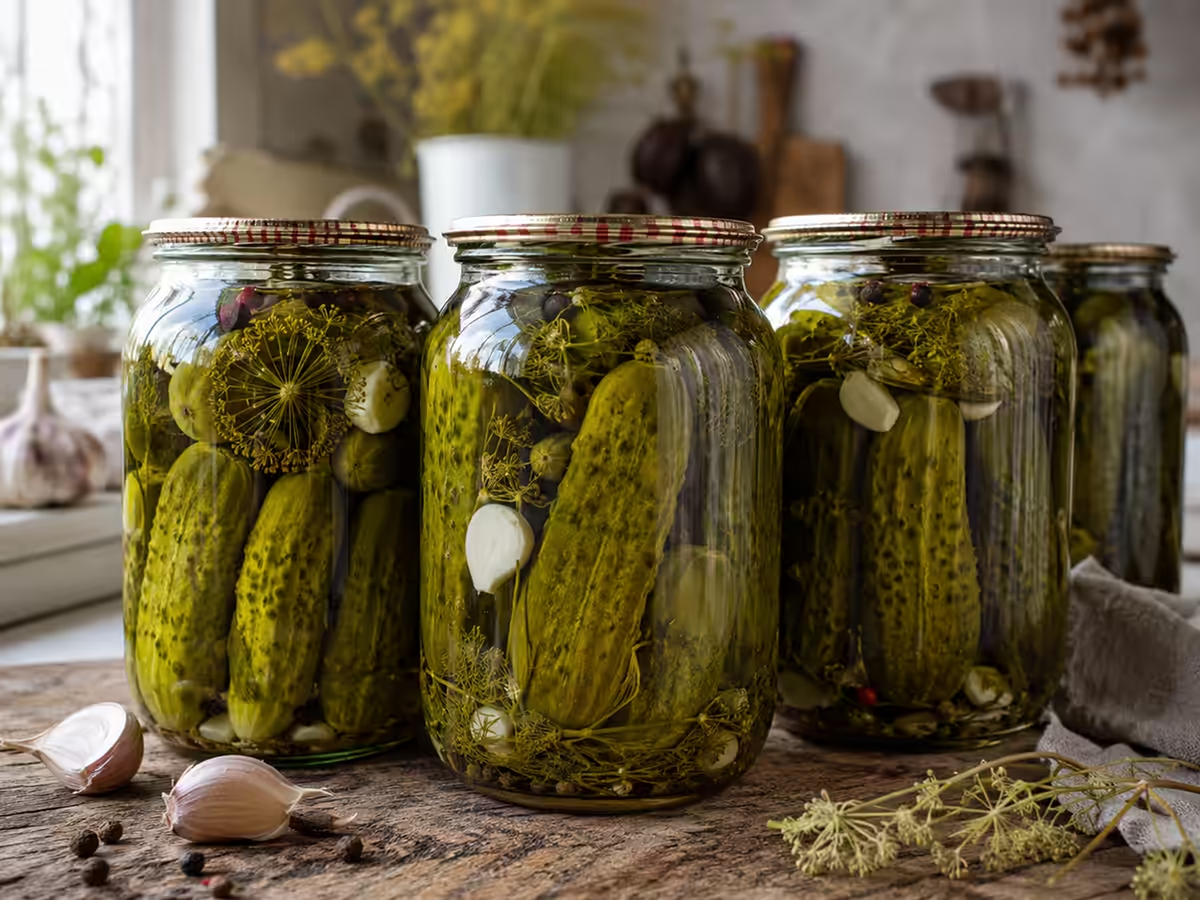
Pickled cucumbers are probably the most common winter preserve in Ukraine. They’re added to solyanka and vinaigrette, served with potatoes and meat dishes, and when you open a jar on the coldest day, you immediately think of summer. But there’s one non-negotiable requirement—they must be crisp. A soft, mushy cucumber, even with a wonderful marinade, isn’t a preserve—it’s a disappointment.
Content
This article includes a complete step-by-step recipe for pickled cucumbers for the winter, with exact proportions for 1-liter and 3-liter jars, an explanation of why some cucumbers are still crunchy a year later, while others go soft after just a month, and practical tips to save your entire seasonal supply from common mistakes. This recipe has been tried and tested over the years—and I’ll explain not only what to do, but also why.
Pickled or fermented: What’s the difference, and which should you choose?
This question comes up almost every time the topic of pickling cucumbers for the winter comes up. Both methods produce delicious results, but the techniques, flavors, and storage conditions are radically different.
Pickled cucumbers are made through fermentation: cucumbers are covered with cold or hot brine (water and salt, without vinegar) and left to ferment naturally thanks to lactic acid bacteria. The process takes anywhere from 3 days to 2–3 weeks. The result is a live product with probiotic properties and a bright, tangy-salty flavor. Pickled cucumbers should be stored in a cool place—a cellar or refrigerator—because at room temperature, they will over-ferment and become mushy.
Pickled cucumbers are preserved with vinegar: the brine inhibits any fermentation, so the product remains stable and can be stored at room temperature for years. The flavor is sweet and sour, more neutral and predictable. These are the cucumbers people usually mean when they say “winter pickles.”
This article focuses specifically on pickled cucumbers in vinegar for storage in a pantry or cellar.
What Makes Cucumbers Crunchy: Getting to the Heart of the Matter
A crisp texture isn’t a matter of luck or having a “green thumb.” It’s the result of a combination of specific factors, each of which matters. If your cucumbers turn out soft, it usually means that two or three of these factors haven’t been met.
Variety. The most important factor. Smooth-skinned salad cucumbers, which are available in supermarkets year-round, are guaranteed to become soft after heat treatment—their cellular structure and skin thickness are not suited for canning. For winter preserves, you need varieties suitable for pickling or brining: those with bumps, firm flesh, and thin but tough skin. In Ukraine, popular varieties include “Nizhynsky,” “Rodnychok,” “Zasolyvalny,” “Ernest,” as well as F1 hybrids—“German,” “Director,” and “Zasolyvalny Delikates.” At the market, just say “for pickling”—the vendors will understand right away. If you’re unsure, ask them to cut open a cucumber: a pickling variety has a dense core with almost no air pockets and small seeds.
Size and ripeness. The ideal cucumbers for a 1-liter jar are 6–9 cm long, firm, even, without yellowed spots or wrinkled skin. For a 3-liter jar, they should be up to 10–12 cm long. No marinade can save large, overripe cucumbers with a mushy center and coarse seeds—they’ll be soft from the start. Yellow or whitish sides are a sign of overripeness; set these cucumbers aside for a salad.
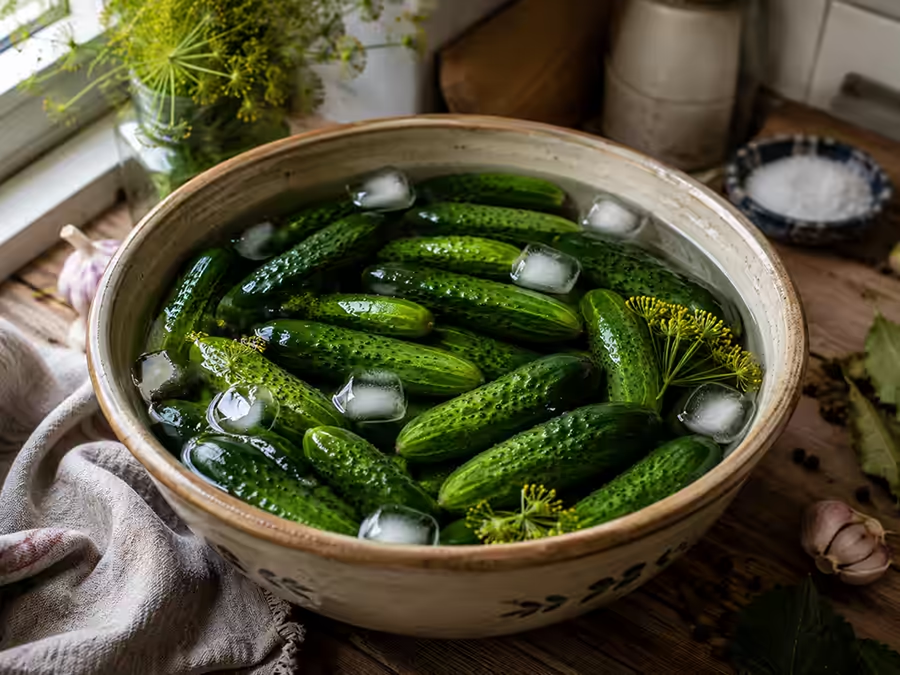
Soaking in cold water. Before canning, cucumbers are soaked in ice water for at least 2–3 hours, or preferably 4–6 hours. Why is this necessary? After being picked or transported, cucumbers lose some of their moisture, and small air pockets form in their tissue. It is these pockets that expand during sterilization and destroy the structure. Cold water restores the cells’ turgor and draws out the air—the cucumber becomes firm and plump again. If the cucumbers are fresh from the garden, 1–2 hours is enough. If they were bought yesterday or the day before, 4–6 hours is a must. Place the basin with the cucumbers and water in the refrigerator.
Tannins. Horseradish, oak, cherry, and black currant leaves contain tannins—natural astringents that bind to the pectin in cell walls and slow its breakdown during heat treatment. That’s why there was always a cherry leaf or a piece of horseradish leaf in every grandmother’s jar. It’s not just a tradition—it’s simple organic chemistry. The most effective source of tannins is oak leaves (if you have access to them), followed by horseradish root and leaves, then cherry and black currant leaves. If you have nothing but horseradish—just add the horseradish and don’t worry about it.
Non-iodized salt. Iodized salt breaks down pectin—the very component responsible for the elasticity of cell walls. This effect is well understood in food technology: even a small amount of iodine in brine accelerates tissue breakdown. Use only rock salt or unadulterated sea salt. “Extra” fine salt is non-iodized, but it’s very fine—it’s easy to use too much of it. Weigh or measure it precisely.
Marinade concentration and vinegar. Vinegar is not only a preservative but also a structural stabilizer. A very weak marinade (less than 50 ml of 9% vinegar per 1 liter) is unreliable and produces a milder result. If it’s too concentrated, the cucumbers will be sour and tasteless. The optimal ratio is 70–80 ml of 9% vinegar per 1 liter of marinade. Vinegar is always added after removing the mixture from the heat—when boiling, acetic acid partially evaporates.
Duration of heat treatment. The longer you heat it, the softer it becomes. The method of pouring boiling water over the produce three times, without prolonged sterilization, preserves the crunch much better than boiling it in a pot for 20–30 minutes. If you’re sterilizing, strictly follow the timing: for a 1-liter jar, 7–8 minutes from the moment the water starts boiling is sufficient.
What kind of dill and lids will work?
About Dill
For pickling, use only mature dill umbels—those that have already formed seeds or have just begun to bloom. Young dill greens can give the pickles an unpleasant aftertaste and cause the brine to cloud when preserved. You can prepare the umbels in advance: cut them, let them dry slightly, and store them in a paper bag—they’ll keep well for 2–3 weeks.
About Lids
There are two main options:
Sealing lids (for canning machines) — disposable metal lids with a rubber gasket that are crimped shut using a special tool. The most reliable option for storage at room temperature. The key can be either a lever-type or a roller-type—the roller-type provides a more even seal. After sealing, be sure to check for leaks: turn the jar upside down and hold it for 10–15 seconds.
Twist-off lids are metal lids with threads that can be easily twisted on by hand. They’re more convenient to use, but require high-quality lids and jars with matching threads. You shouldn’t use used twist-off lids for winter preserves—the rubber gasket wears out. New, high-quality lids (not the cheapest ones) provide reliable results.
Plastic lids are intended only for pickling or for storage in the refrigerator; they are not suitable for canning at room temperature.
How to Choose Cucumbers: At the Market, at the Summer Cottage, or in a Box
If you’re buying cucumbers at the market, look for the following signs:
- Heads with dark spines (white-spined varieties are more commonly used in salads).
- Thick skin—it doesn’t give way immediately when pressed with a fingernail.
- No yellow or white spots, no wrinkled skin.
- A uniform dark green color along its entire length.
- If you squeeze a cucumber in your hand, it should feel firm, not springy.
Ask to have one cucumber cut in half: the flesh should be firm, and the seed cavity should be small, with no large voids. If you buy a crate (10–12 kg), it’s always more cost-effective and convenient than buying a bucket.
Estimated yield:
- From 10 kg of small cucumbers (6–8 cm) — approximately 12–14 1-liter jars or 5–6 3-liter jars.
- From 10 kg of medium-sized cucumbers (9–11 cm)—a little less, since they don’t pack as tightly.
For a family of four, 15–20 liter jars or 7–8 three-liter jars are usually enough for the winter—depending on how often cucumbers are used in cooking. It’s better to make a little extra: the jars keep well and don’t spoil, and you can open the extra ones in the spring.
Preparation Before Preservation
Cucumbers. Wash them thoroughly with a sponge under running water—especially the ridges, where dirt tends to accumulate. Cut off the ends on both sides by about 0.5 cm. Cutting off the “butt ends” helps the marinade penetrate faster and eliminates areas where nitrates can accumulate. Soak them in ice water for 4–6 hours, preferably in the refrigerator.
Jars. Inspect each jar for chips and cracks, especially around the rim of the neck—even a microscopic chip means the jar won’t seal properly. Sterilize them: over steam (10 minutes), in the oven at 120 °C (15 minutes), or pour boiling water over them and let them drain. Boil the lids separately for 5 minutes, and do not touch the inside surface with your hands.
Spices. Prepare in advance: peel the garlic, slice the horseradish root into thin rounds, and pick the dill umbels. Rinse the leaves (cherry, currant, horseradish) thoroughly and pat them dry lightly.
Ingredients
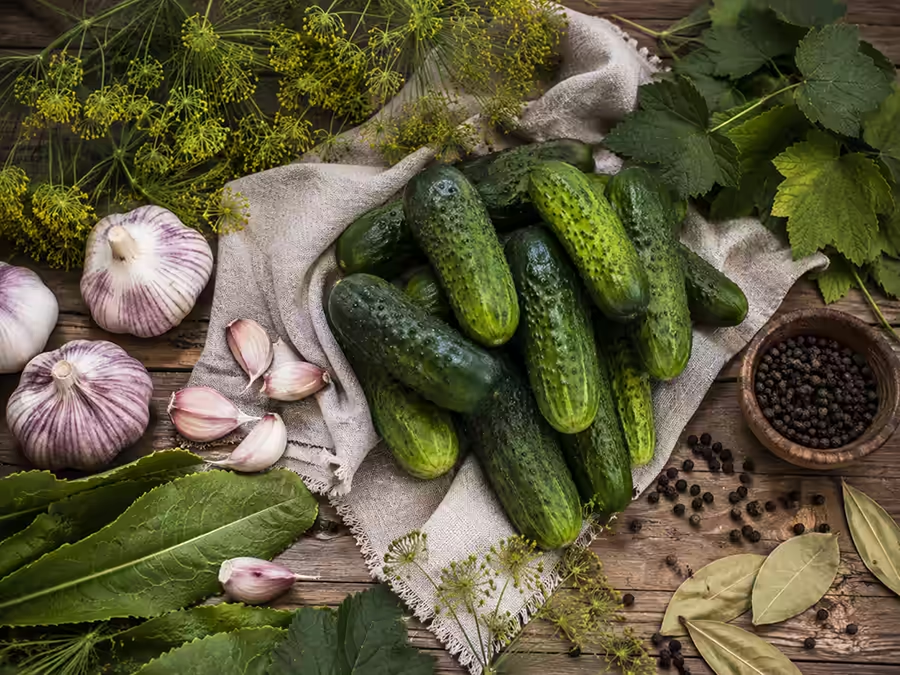
For a 1-liter jar
One 1-liter jar holds 500–600 g of cucumbers and approximately 400–450 ml of marinade.
Spices:
- Dill umbels — 1–2
- Garlic — 2–3 cloves
- Horseradish leaf—a 5–7 cm piece or one-third of a large leaf
- Horseradish root — 2–3 thin slices
- Cherry leaves — 2–3
- Black currant leaves — 1–2 (optional)
- Black peppercorns — 5–6
- Allspice berries — 2–3
- Bay leaf — 1–2 pieces
- Hot chili pepper — a small piece (optional)
For a 3-liter jar
A 3-liter jar holds 1.4–1.7 kg of cucumbers and approximately 1.2–1.4 liters of marinade.
Spices:
- Dill umbels — 3–4
- Garlic — 5–7 cloves
- Horseradish leaves — 1 large or 2 medium
- Horseradish root — 5–6 slices
- Cherry leaves — 5–6
- Black currant leaves — 2–3
- Black peppercorns — 10–12
- Allspice berries — 4–5
- Bay leaves — 2–3
- Hot pepper — 1 small pod (optional)
Marinade: basic proportions per 1 liter of water
| Ingredient | Amount per 1 liter of water |
|---|---|
| Rock salt (iodine-free) | 1.5–2 tablespoons (35–45 g) |
| Sugar | 1 tbsp (25 g) |
| 9% vinegar | 70 ml (4.5 tablespoons) |
How much marinade should I make?
| Banks | Volume | Marinade |
|---|---|---|
| 1 can | one liter | 450 ml |
| 5 cans | one liter | ≈ 2.3 L |
| 10 cans | one liter | ≈ 4.5 L |
| 1 can | three liters | one point four liters |
| 3 cans | three liters | ≈ 4.3 L |
Always make 10–15% more marinade than you need: it’s better to pour off the excess than to run out for the last jar and have it sit open while you bring a new batch to a boil.
Step-by-Step Recipe for Pickled Cucumbers for the Winter
The Triple-Pour Method (Basic)
- Soak the prepared cucumbers in ice water for 4–6 hours. Cut off the ends on both sides.
- Sterilize the jars and lids. Let them cool to room temperature—do not put the cucumbers in a hot jar.
- Place the following at the bottom of each jar: a sprig of dill, a piece of horseradish leaf, cherry and currant leaves, whole garlic cloves or cloves cut in half, a bay leaf, both types of peppercorns, and slices of horseradish root. If you’re using hot peppers, add them now as well, to the bottom.
- Pack the cucumbers tightly in a vertical arrangement—with the first row standing upright, selecting cucumbers of similar size. This is important: cucumbers of different sizes in the same jar will not pickle evenly. If there’s space left at the top, place the second row on its side or horizontally. You can also add a few more garlic cloves between the cucumbers.
- Cover the top with another dill umbrella and a piece of horseradish leaf—it keeps the cucumbers submerged in the marinade and prevents them from floating to the surface when you pour the marinade over them.
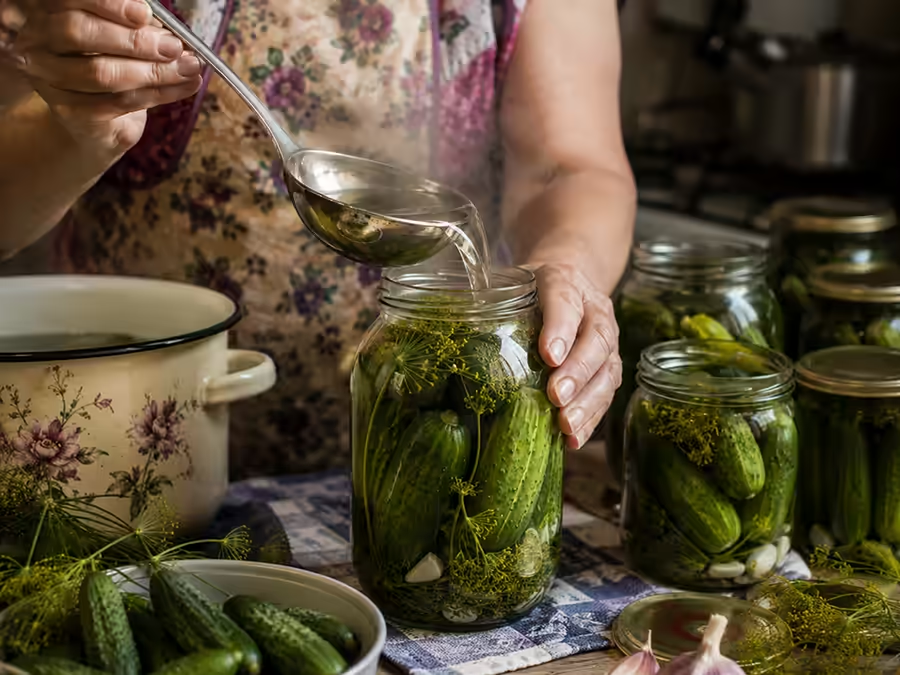
- Bring clean water to a boil. Carefully—pouring along the side of the jar so it doesn’t crack—fill it to the very top. Cover with lids, but do not seal them. Let them sit for 15 minutes. This is the first boiling: it warms up the cucumbers and jars and removes any air pockets between them.
- Pour the water back into the pot through a perforated lid or cover it with cheesecloth. Bring it back to a boil. Pour the water over the vegetables a second time. Cover with lids. Wait another 10–15 minutes.
- Drain the water a second time. Use the volume of the drained water as a guide to accurately calculate the amount of marinade. Bring the water to a boil, add salt and sugar, and stir until completely dissolved. Remove from heat. Pour in the vinegar and stir immediately. Do not bring to a boil after adding the vinegar.
- Fill the jars with the hot marinade all the way to the top, leaving no air space. Seal or screw the lids on tightly.
- Immediately turn the jars upside down and wrap them in towels or a blanket. Let them sit until they have cooled completely—10–14 hours. “Steaming” is an additional pasteurization process that occurs through gradual cooling.
- Once the jars have cooled, inspect each one: press down on the center of the lid—it should be slightly concave and not spring back. If the lid clicks or is bulging, the jar is not sealed. Check the lids and repeat the sterilization process, or immediately place that jar in the refrigerator and use it first.
Short-term sterilization method
If you want to be extra sure—after pouring the marinade into the jars, you can sterilize them in a pot of water:
- 1 liter — 7–8 minutes after it comes to a boil.
- 3 liters — 12–15 minutes.
Place the jars in warm water, not boiling water—glass cannot withstand sudden temperature changes. Place a towel or silicone mat between the bottom of the pot and the jars. Start timing once the water around the jars begins to boil. After removing them, seal them immediately, turn them upside down, and wrap them up.
The main risk with this method is that if you leave them in for even 3–5 minutes too long, the cucumbers will become noticeably softer. The triple-soaking method is more forgiving.
Citric acid instead of vinegar
If you don’t want to or can’t use vinegar, citric acid is a perfectly good substitute. It provides a milder acidity without a strong odor and is well-suited for those who are sensitive to vinegar fumes.
Proportion: 1 tsp citric acid (3–4 g) per 1 L of marinade instead of 70 mL of 9% vinegar.
For a 1-liter jar, add about 0.5 tsp of citric acid directly into the jar before pouring in the marinade. For a 3-liter jar, add 1.5 tsp.
Citric acid dissolves just as well in a hot marinade as it does in a jar—it makes no difference. The flavor turns out milder and less “vinegary,” but it’s just as effective for preservation.
Marinade Proportions: A Comparison Chart
| Marinade Option | Salt per 1 liter | Sugar per 1 liter | 9% vinegar, 1 liter | Flavor Profile |
|---|---|---|---|---|
| Classic | 1.5 tablespoons | 1 tbsp. | 70 ml | Balanced, neutral |
| Sweet and sour | 1.5 tablespoons | 2.5 tablespoons | 80–90 ml | Sweet, distinctive |
| Acute | 1.5 tablespoons | 1 tbsp. | 70 ml + chili | Spicy |
| With citric acid | 1.5 tablespoons | 1 tbsp. | 1 tsp citric acid | Mild, with no vinegar smell |
Common Mistakes and How to Avoid Them
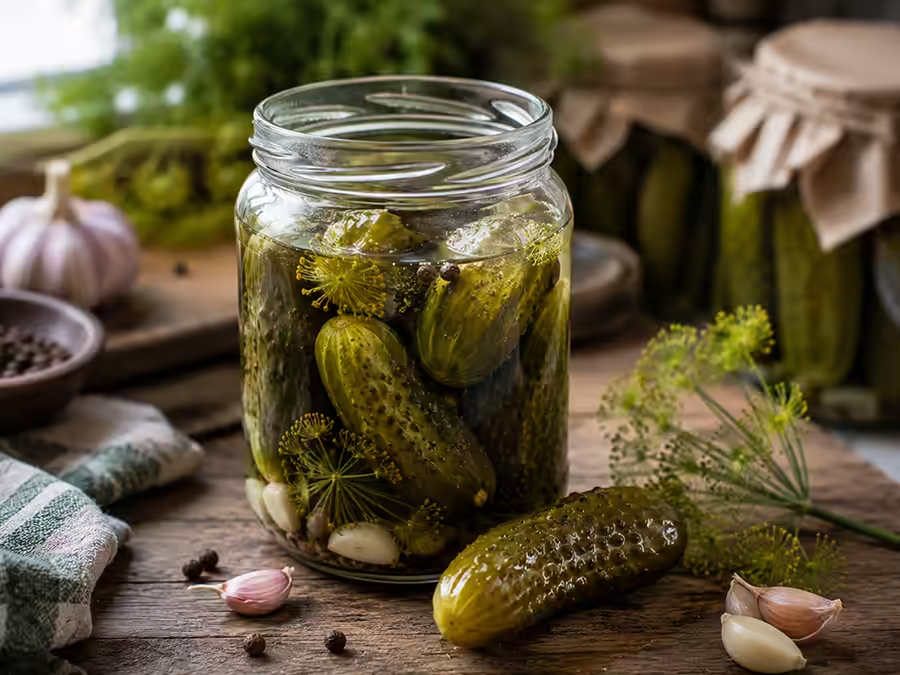
“I bought the cucumbers at the supermarket.” The most common reason for soft cucumbers. Smooth-skinned salad varieties always become soft after pickling—without exception.
You skipped the soaking step. Even just 2 hours in cold water makes a big difference in how crisp they are. If the cucumbers are fresh from the garden, soak them for 1–2 hours. If you bought them yesterday, soak them for 4–6 hours.
Iodized or fine “extra” salt in large quantities. Iodized salt breaks down pectin. “Extra” salt is non-iodized, but it’s fine-grained, so it’s easy to use too much of it. Use rock salt or sea salt without additives and weigh it precisely.
There are no tannins. Without horseradish, cherry leaves, or currant leaves, the cucumbers will be softer even if you use the perfect technique. At the very least, horseradish root is a must.
Vinegar was added to the boiling liquid, and it was boiled for another 5 minutes. Some of the acid evaporates, the acidity of the marinade drops—and the risk of spoilage and a deterioration in texture increases.
Sterilization takes too long. For a 1-liter jar, anything over 10–12 minutes is already too long. Start timing from the moment the water in the pot comes to a boil.
The jars weren’t turned upside down. Turning them upside down pasteurizes the lid from the inside and immediately reveals any problems: a defective lid will leak when turned upside down, rather than a month later in the pantry.
Open them after two weeks. Pickled cucumbers develop their full flavor and crunch after 3–4 weeks, and ideally after 1.5–2 months.
A little bonus for crunch: place 1–2 oak leaves at the bottom, if you have access to oak. Oak tannins are the most effective for strengthening the cucumber’s structure.
What to Do If the Bank Didn’t Close
It happens: after cooling, the lid pops off or the jar leaks. Don’t panic.
If you notice this right away (within the first few hours after canning): warm the jar in a water bath, replace the lid with a new one, and repeat the canning process. The cucumbers will be fine.
If you notice this the next day: put the jar in the refrigerator right away and use it within 5–7 days—it will be like “quick-pickled” cucumbers.
If the lid has bulged after a few weeks of storage, this is a sign of fermentation or contaminated contents. Do not open the jar or taste the contents. Throw it away.
Variations in marinade and flavor
A basic recipe is a good starting point, but you can try something new every year.
Sweet-and-sour cucumbers. Increase the sugar to 2–2.5 tablespoons and the vinegar to 80–90 ml per liter. The sweet-and-sour flavor is perfect with meat, kebabs, and sandwiches.
With mustard. 0.5 tsp mustard seeds per 1-liter jar. This adds a mild spiciness and further strengthens the cucumbers’ structure.
Spicy cucumbers. 1 small dried chili pepper or 3–4 slices of fresh hot pepper per 1-liter jar. Without seeds—moderately spicy; with seeds—notably hot.
With horseradish in the marinade. Grate 2–3 tablespoons of fresh horseradish root and stir it into the hot marinade before pouring it over the food. The marinade will become cloudier—this is normal. The crunch will be at its best.
Assorted vegetables with bell peppers and carrots. Slices of bell pepper and carrot rounds don’t affect the crunchiness of the cucumbers, but they enrich the brine and make the jar look more appetizing. Place them between the cucumbers as you layer them.
With garlic scapes. If you have them, add them instead of some of the garlic cloves—or along with them. Cut the scapes into 4–5 cm pieces. They add a rich garlic flavor without the sharpness of raw garlic cloves.
Where and how long to store it
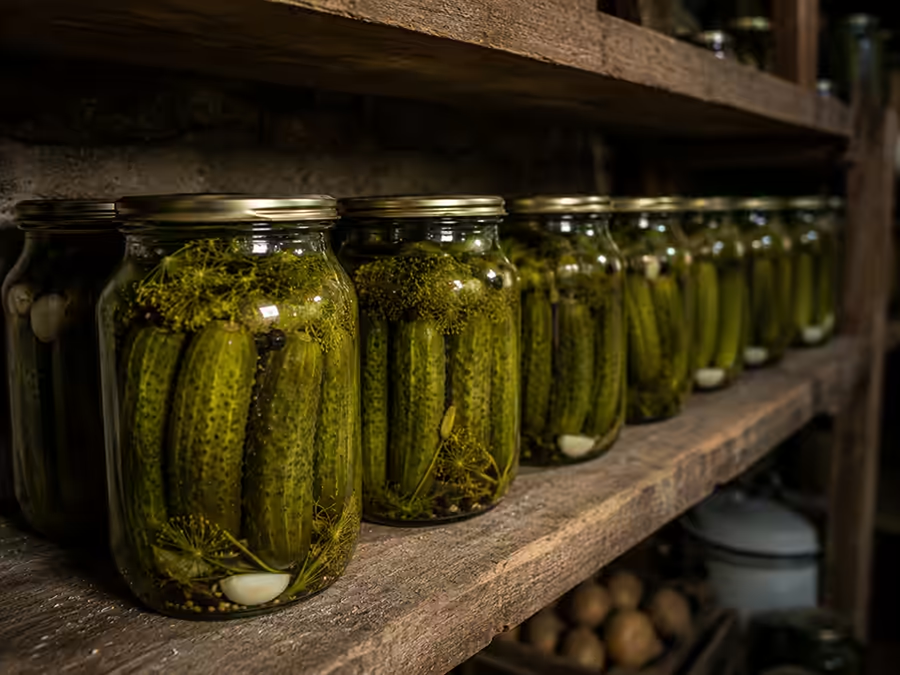
Properly canned pickled cucumbers will keep at room temperature for 1–2 years.
Ideally: a cellar, basement, or cool storage room with a temperature of 10–16 °C and no sudden temperature fluctuations. Under these conditions, the flavor stabilizes more quickly and the crispness is better preserved throughout the entire storage period.
Acceptable: a standard indoor storage room or loft at temperatures up to 22–24 °C. Shelf life: 1 year. After that, the quality may gradually deteriorate, although the product remains safe—be sure to check the lids before opening.
Not suitable: near batteries, in direct sunlight, or in places with extreme daily temperature fluctuations.
After opening: Store in the refrigerator and use within 5–7 days. If the marinade has become cloudy or has an unusual odor, don’t take any chances.
How to check a can before opening it: Press down on the center of the metal lid. It should be slightly concave and should not spring back. If it springs back or makes a clicking sound, pressure has built up inside. A bulging lid is a clear sign of spoilage. Do not open such cans.
Frequently Asked Questions
Why did the pickled cucumbers turn out soft? Most often, it’s a combination of several factors: a salad variety of cucumbers, skipping the soaking step, iodized salt, a lack of tannins (horseradish, cherry leaves, currant leaves, or oak leaves), or over-sterilization. You can’t fix pickles that have already been canned, but next time—go through each step carefully, and you’ll get a different result.
How much vinegar should I add to a 1-liter jar of pickled cucumbers? With a basic marinade (70 ml of 9% vinegar per 1 liter of water) and a ratio of approximately 450 ml of marinade per 1-liter jar, this amounts to about 30–32 ml of vinegar per jar. Some home cooks add vinegar directly to the jar before the final filling—1 tablespoon (15 ml) per liter. This is a milder option, but less reliable for long-term storage at room temperature. If you’re storing the pickles in a cellar at a temperature below 15 °C, this method will work; if you’re storing them in a pantry at home, it’s better to stick to the full amount.
Is it necessary to turn the jars upside down after sealing them? It’s not necessary, but it’s highly recommended. Turning them upside down pasteurizes the lid from the inside with the hot marinade and immediately reveals any sealing issues—a faulty lid will start leaking right away, rather than a month later in the pantry. If you don’t turn them upside down, at least check the lid by pressing on it after they’ve cooled completely.
How many days after sealing can you open the pickled cucumbers? Technically, the cucumbers will be pickled in 3–5 days, but the full, balanced flavor develops in 3–4 weeks, and the optimal crunch in 1.5–2 months. Cucumbers opened too early often taste sharply sour or unevenly pickled—not because the recipe is bad, but because the process isn’t finished yet.
What can you use to add crunch if you don’t have cherry or oak leaves? Horseradish root and leaves are enough—this is the most effective and readily available option. If you want to enhance the effect, add 1–2 black currant leaves. Oak leaves are the most potent source of tannins, but if you don’t have any, horseradish works just fine.
Can you seal pickled cucumbers without a canning machine? Yes, if you have jars with screw-top lids and new twist-off lids of the appropriate size. Tighten them firmly by hand while they’re still hot—this creates a vacuum inside as they cool, causing the lid to seal more tightly. Check them after they’ve cooled: the lid should be slightly concave and shouldn’t click. Don’t use used twist-off lids for winter preserves—the rubber gasket no longer provides the necessary seal.
Can you add aspirin or vodka to a jar to help preserve the contents? Aspirin (acetylsalicylic acid) was indeed used as a preservative in Soviet recipes, but its effect is negligible compared to a normal amount of vinegar and proper sterilization. Modern food technologists do not recommend adding aspirin to food—it’s better to simply stick to the proven marinade proportions. A small amount of vodka (1 tbsp per 3-liter jar) does slightly improve preservation, but it isn’t necessary if you use the correct canning technique.