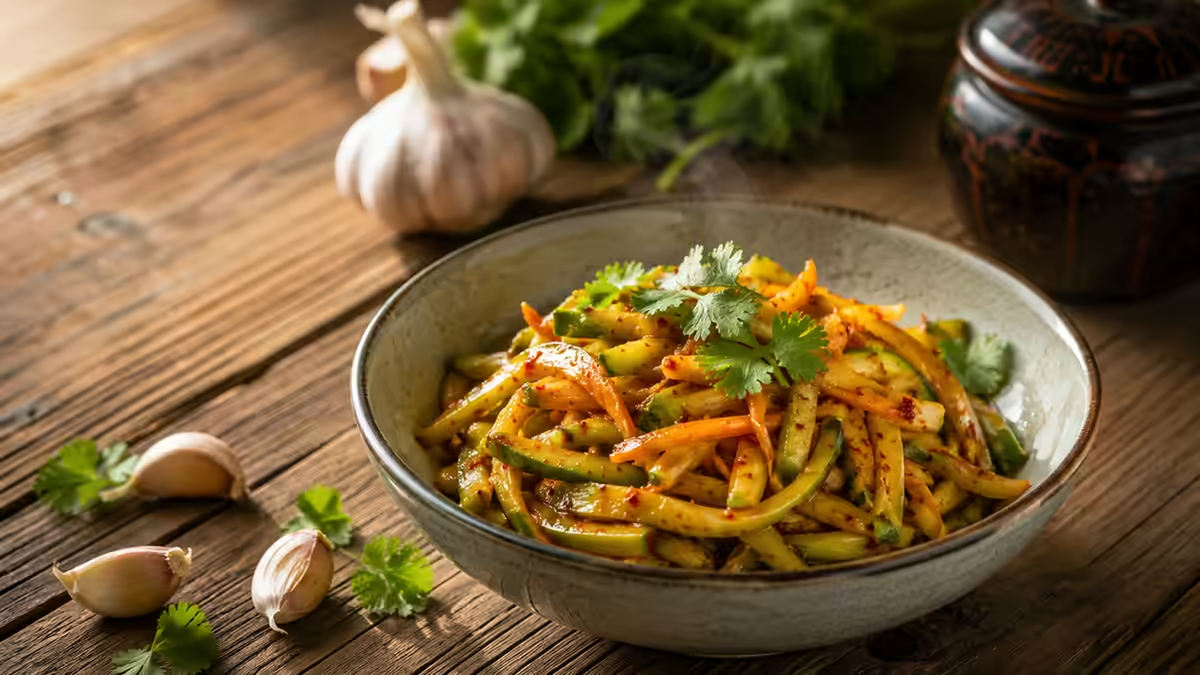
Korean-style zucchini is a preserve I make every year—a few jars more than I planned—because it disappears before winter even sets in. Crunchy, slightly spicy, with a pleasant tang and the aroma of garlic and cilantro—this appetizer is somewhat reminiscent of Korean-style carrots, only softer and juicier. I make it at the end of summer, when the zucchini are still young and firm, and the garlic is fresh from the garden. If you like spicy appetizers to go with meat, potatoes, or just bread—this recipe is worth a try.
Content
I’ve been making this preserve for several years now, and during that time I’ve tried out a few different combinations of proportions—with more sugar, with less vinegar, and with various spice blends. The proportions I’ll list below seem to me to be the most balanced: the appetizer isn’t cloyingly sweet or too sour, and the marinade is thick enough to coat each zucchini strip well.
Where Did the “Korean-Style” Trend Come From?
Interestingly, “Korean-style” dishes—such as carrots, zucchini, and beets—were not invented in Korea itself, but by the Korean diaspora in the countries of the former Soviet Union, particularly in Central Asia. Koreans who settled there after being resettled in the 20th century adapted traditional marinating techniques to local vegetables that were not available in their homeland. This is how Korean-style carrots came to be, and later, chefs began applying the same marinating principle to other vegetables, particularly zucchini.
Therefore, “Korean-style” here refers more to a cooking style than to authentic Korean cuisine. The main characteristics of this style are julienned vegetables, a vinegar-and-oil marinade, garlic, and a selection of Asian spices such as cilantro. Zucchini turned out to be a great vegetable for this dish: it absorbs the marinade quickly, holds its shape well, and has a neutral flavor that perfectly complements the aromas of the spices.
About the Dish
Korean-style zucchini isn’t a traditional Korean dish in the literal sense, but rather a post-Soviet adaptation of the popular “Korean-style” method used here to pickle carrots, beets, cabbage, and now zucchini. What makes it special is the combination of vinegar, oil, garlic, and hot peppers with a selection of spices—coriander, paprika, and sometimes turmeric. Because they’re cut into thin strips, the zucchini quickly soak up the marinade and stay crisp even after canning, as long as you don’t overcook them on the stove.
I usually make this appetizer in August and September, when the market is full of young zucchini with thin skin and small seeds. These are the vegetables that yield the best results: they don’t get mushy, hold their shape well when cut into strips, and absorb the marinade quickly. If the zucchini are overripe, with thick skin and large seeds, it’s best to peel them and remove the core; otherwise, the appetizer will turn out watery.
This recipe is convenient because it doesn’t require spending ages sterilizing jars and is made with just a few ingredients that you almost always have on hand. Plus, it’s a great option in the winter, when you’re craving something spicy and refreshing amid all the heavy winter meals.
Another advantage of this recipe is how quick it is. From washing the zucchini to sealing the jars, it takes a maximum of one and a half to two hours, most of which the vegetables simply sit and marinate on their own, without any effort on your part. This isn’t the kind of recipe where you have to stand at the stove all day, as is the case with some types of canning. That’s exactly why I recommend this recipe to those who are just starting to learn how to make homemade preserves—it’s hard to mess this up badly as long as you stick to the proportions and don’t overcook the vegetables.
The finished appetizer has a sweet-and-sour flavor with a noticeable kick and a subtle hint of garlic. Cilantro and paprika provide that same recognizable aroma associated with Korean-style carrots, so many people say from the very first spoonful that it’s “the same flavor, only with zucchini.” The texture, however, is different—softer, juicier, and less fibrous than that of carrots, and that’s exactly what many people like even more.
How to Choose Zucchini for Canning
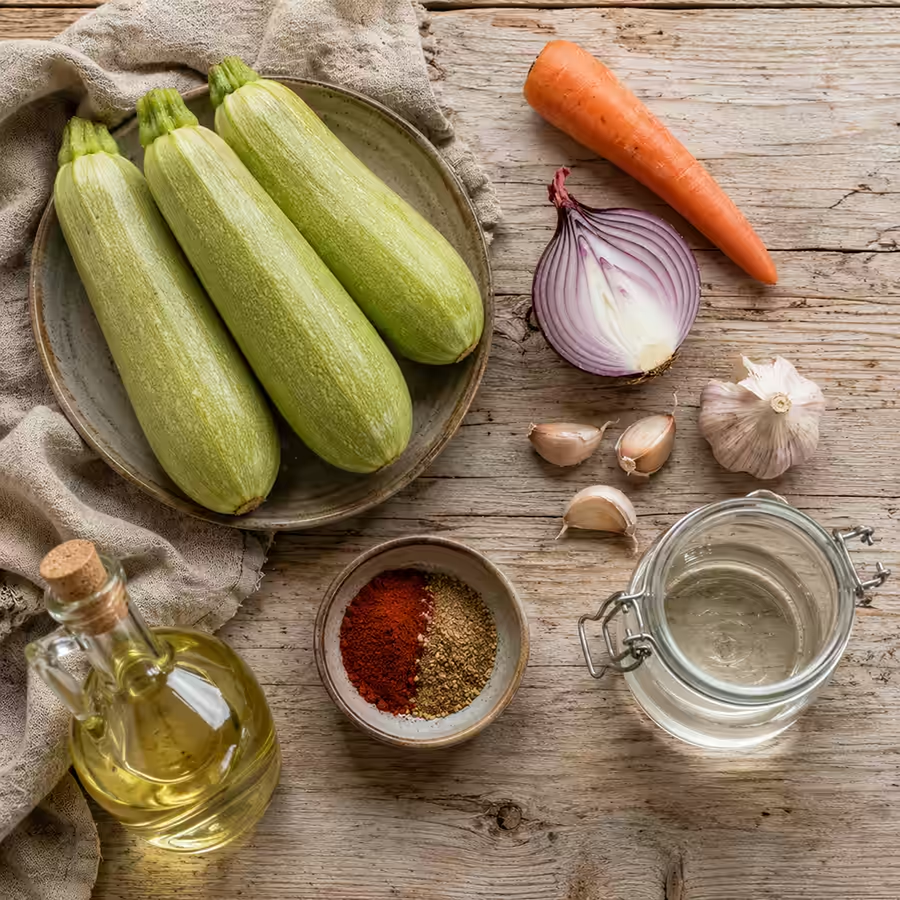
Young zucchini that are 15–20 cm long, with thin, shiny skin that can be easily pierced with a fingernail, work best for this recipe. These vegetables haven’t yet absorbed excess water or developed coarse fibers, so they yield firm, crisp strips. The color of the skin doesn’t matter—light-green and dark-green varieties work well, and even yellow zucchini, although the latter are slightly less flavorful.
If you’re left with only large, overgrown zucchini in your garden—don’t throw them away; just prepare them a little differently. Peel off the thick skin with a vegetable peeler, cut the zucchini in half, and use a spoon to scoop out the core with the large seeds, leaving only the firm flesh closer to the skin. You’ll get quite decent zucchini strips from this prepared section, though they’ll be a little less crunchy than those from young zucchini.
Before slicing the zucchini, be sure to wash them and pat them dry with a towel—excess moisture on the surface dilutes the marinade and increases the time it takes for the vegetables to release their own juices.
Ingredients
For 3 jars with a capacity of 0.5 liters:
- young zucchini — 1.5 kg
- carrots — 200 g (1 large)
- onion — 150 g (1 medium)
- garlic — 6–8 cloves
- refined sunflower oil — 100 ml
- 9% vinegar — 60 ml
- sugar — 60 g
- salt — 20 g (level, regular table salt)
- ground coriander — 1 tsp
- ground paprika — 1 tsp.
- ground black pepper — 0.5 tsp
- ground hot red pepper — 0.5–1 tsp (to taste)
- bay leaves — 2–3 (optional, in a jar)
Substitutions: You can use refined olive oil instead of sunflower oil; this will give the dish a more delicate flavor. You can reduce the sugar to 40 g if you prefer a less sweet marinade, but the appetizer will lose its crunch more quickly when stored. You can substitute 6% apple cider vinegar for the 9% vinegar, increasing the amount to 90 ml.
What equipment will you need?
You don’t need anything special for this recipe—you probably already have everything in your kitchen. You’ll need a Korean-style carrot grater (the kind that cuts into strips) or a sharp knife if you’re willing to cut them by hand. You’ll also need a large bowl for mixing the vegetables, a heavy-bottomed pot for making the marinade, and 0.5-liter jars with metal screw-on or snap-on lids.
If you don’t have a Korean-style carrot grater, you can use a regular vegetable grater with wide holes or cut the zucchini by hand into thin strips—it takes a little longer, but the result will be just as good. The key is to make sure the strips are roughly the same thickness, so that all the pieces marinate evenly.
To sterilize jars, it’s convenient to have a special steam attachment with an opening that fits the jar’s neck, but you can easily get by with a regular pot of boiling water by placing the jar upside down on a rack or a special stand.
You’ll also need a canning wrench if you’re using canning lids, or regular twist-off screw caps if you prefer to seal the jars without a special tool. Both options work equally well; the main thing is that the lids are new or at least free of any signs of deformation or rust, otherwise the seal will be compromised.
Step-by-Step Recipe
- Wash the zucchini and trim the ends. You don’t need to peel young zucchini if the skin is thin. Cut them into 4–5 mm-thick strips—either by hand with a knife or using a Korean-style carrot grater.
- Peel the carrots and grate them using the same grater you used for the Korean-style carrots, so that the strips are the same thickness as the zucchini.
- Slice the onion into thin half-rings.
- Press the garlic through a garlic press or chop it finely with a knife.
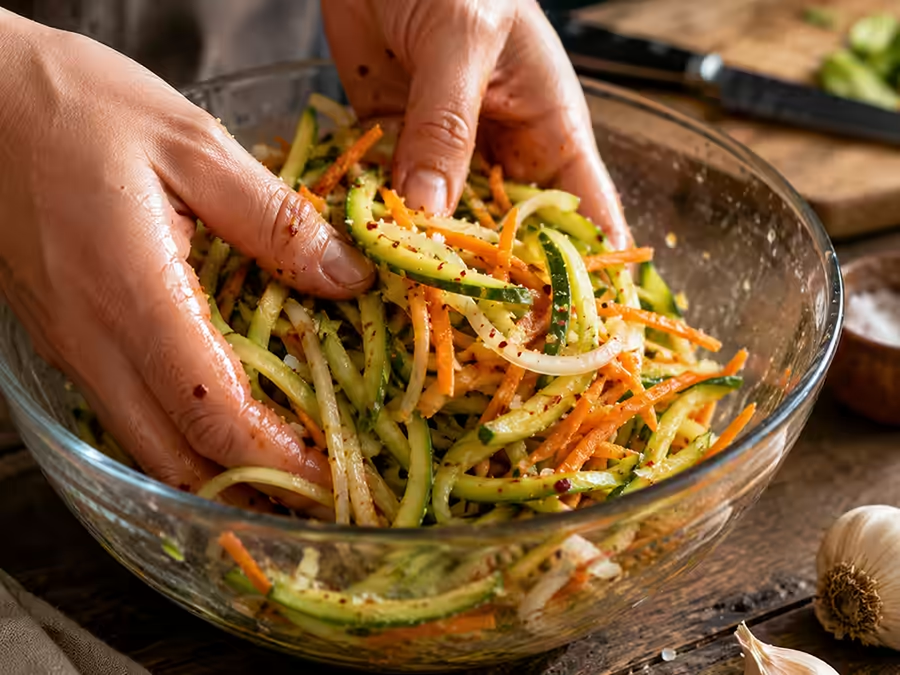
- In a large bowl, combine the zucchini, carrots, and onion. Add salt, sugar, cilantro, paprika, black pepper, and red pepper. Mix with your hands, gently mashing the vegetables so they begin to release their juices.
- Pour in the oil and vinegar, then add the garlic. Stir well once more and let it sit for 30–40 minutes at room temperature—the vegetables should release enough juice for the marinade. During this time, a noticeable amount of liquid should accumulate at the bottom of the bowl—this is a sign that the process went well and you can move on to cooking.
- Meanwhile, sterilize the jars using any convenient method: over steam for 5–7 minutes, in the oven at 120 °C for 15 minutes, or in the microwave with a small amount of water for 3–4 minutes. Boil the lids separately for 3–5 minutes.
- Transfer the vegetable mixture, along with the juice, to a heavy-bottomed pot. Bring to a boil over medium heat, stirring occasionally, and cook for exactly 3–5 minutes after it comes to a boil—no longer, or the zucchini will lose their crunch. Stir gently, from the bottom up, so as not to damage the strips and to distribute the heat evenly throughout the mixture.
- Divide the hot mixture evenly among sterilized jars, packing it tightly right up to the shoulders and making sure to fill each jar evenly with both the juice and the vegetables. If desired, place a bay leaf in each jar.
- Seal the jars with sterilized lids, turn them upside down, wrap them in a towel or blanket, and leave them that way until they have cooled completely—about 12–24 hours.
- Once they have cooled, move the jars to their permanent storage location—a pantry, basement, or dark cupboard.
Tips and Common Mistakes
The most common mistake is overcooking the zucchini. If you leave them on the heat for more than 5–7 minutes after they come to a boil, they’ll turn to mush, and the appetizer will lose all its appeal. Focus on the short cooking time rather than how they look—zucchini cook very quickly.
Another common mistake is using overripe zucchini with thick skin. They result in a watery, less flavorful marinade and don’t hold their shape as well. If you don’t have any other zucchini, peel them and cut out the core with the seeds, leaving only the firm flesh.
Make sure the salt is pure (not iodized or containing additives, which can sometimes give the preserves a bitter aftertaste)—plain table salt works best.
If you prefer a spicier appetizer, increase the amount of red pepper gradually, tasting the marinade before cooking—that way, it’s easier to avoid making it too spicy.
Don’t skip the step of letting the vegetables sit with salt and sugar before cooking: this is the stage when the main flavor develops, and without the juice, the dish will turn out a bit dry.
Another detail that’s often overlooked is the quality of the garlic. Young garlic with thin skin has a milder, fresher flavor, while old, dried-out garlic can sometimes have a bitter taste, especially if it has sprouted a little. If you notice a green sprout inside a clove, it’s best to remove it.
Also, make sure the jars and lids are thoroughly clean and dry before sterilization. Even the slightest traces of grease or detergent can affect the seal and prevent the preserves from lasting until winter.
Another small detail that affects the result is the evenness of the slicing. If some of the strips are thicker and others are thinner, the thin pieces will cook through before the thick ones, and you’ll end up with a mixture of soft mush and still-firm chunks in the jar. That’s why it’s worth spending a few extra minutes on neat slicing—or simply using a grater, which ensures a consistent thickness along the entire length of the zucchini.
Below is a rough guide to heat levels based on the amount of red pepper, to make it easier for you to find the flavor that suits you best:
| Amount of hot peppers | Level of Acuity | Who is it for? |
|---|---|---|
| ¼ teaspoon | Soft, barely noticeable | For children and people with sensitive stomachs |
| ½ teaspoon | Moderate, classic | For most families, by default |
| one teaspoon | Clearly acute | For lovers of spicy appetizers |
| 1.5 tsp or more | Very spicy | For those who are used to pickled peppers |
Variations and Presentation
Korean-style zucchini pairs perfectly with boiled or fried potatoes, any kind of grilled meat, shashlik, or simply with black bread. In winter, this appetizer is a great addition to the holiday table alongside Olivier salad and other pickled dishes.
You can vary the recipe by adding bell peppers cut into strips—this will add freshness and color. For those who like it spicy, I recommend adding thinly sliced fresh chili peppers instead of, or in addition to, ground hot pepper. For extra flavor, I sometimes add a few cumin or zira seeds—it gives the dish an interesting Middle Eastern twist.
If you don’t plan to can the jars for the winter but want to eat them right away, you don’t need to cook the dish at all—just marinate the vegetables as described and refrigerate them for 3–4 hours. The result is a fresh salad version without preservatives that will keep in the refrigerator for up to a week.
Another way to serve them that I especially like in winter is to add Korean-style zucchini to a warm stew or as a spicy touch to a hearty borscht instead of the usual pickles. Finely chopped Korean-style zucchini pairs perfectly with rice, adding extra flavor to a simple bowl of rice with minimal effort. And if you mix Korean-style zucchini with fresh herbs and a small amount of sour cream, you’ll have a quick sauce to serve with baked potatoes.
For those who like to keep the colors on the table balanced, I recommend pairing this appetizer with yellow bell peppers or corn—it makes for a vibrant presentation that looks great even on a festive table alongside a meat platter.
Calorie Content and Health Benefits
Korean-style zucchini is a fairly light appetizer, despite the oil and sugar in the marinade. The approximate calorie content is about 90–100 kcal per 100 g of the finished dish, depending on how much oil and sugar you used. This is much lower than in most mayonnaise-based salads, so this appetizer fits well even into a daily, more moderate diet.
Zucchini are a natural source of fiber, potassium, and vitamin C, although some of the vitamins are partially destroyed during brief heating. Garlic adds phytoncides, and hot peppers add capsaicin, which is widely believed to slightly speed up metabolism. Of course, this isn’t exactly a diet dish on its own, but as a spicy appetizer to accompany main courses, it’s quite moderate in calories.
A 100–150 g serving of Korean-style zucchini is roughly one heaping spoonful of a side dish, which is usually enough to add some vibrancy to a meal without overloading your daily diet with extra calories or sugar.
Storage
Sealed jars of Korean-style zucchini should be stored in a cool, dark place—such as a pantry, basement, or cupboard away from radiators—for 8–10 months. Once opened, keep the jar in the refrigerator and consume within 5–7 days.
If you notice that the lid has bulged or the marinade has become cloudier than usual, it’s best not to consume the contents of that jar—this is a sign of a leak or fermentation.
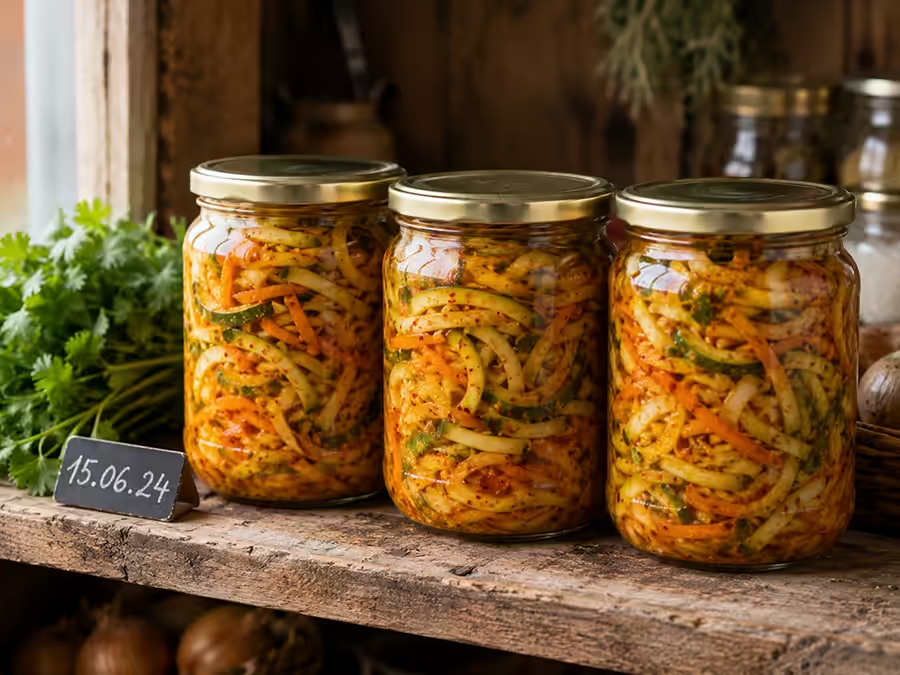
I recommend labeling the jars with the date they were prepared—either with a marker on the lid or a paper label. This is especially handy when you have several types of preserves in the pantry at the same time and it’s easy to get confused about which batch is older. Also, try not to store the jars in a place where they’re exposed to direct sunlight: under the influence of UV rays, the brine loses its color and some of its aroma more quickly, even if the preserves themselves remain safe to eat.
If you plan to store the preserves for more than a year, pay attention to how tightly the jar is sealed: check that the lid doesn’t wobble and that you can’t push it inward with your finger. A slight indentation in the lid after cooling is a normal sign of a vacuum, but a bulge or looseness indicates a problem with the seal.
Frequently Asked Questions
Is it possible to make Korean-style zucchini without sterilizing the jars? It is best to sterilize the jars for this preserve, since zucchini contains a lot of moisture, and without heat-treating the jars, the risk of spoilage is higher than with other vegetables.
Why did the zucchini turn out soft instead of crunchy? Most often, the reason is overcooking or using overripe zucchini with thick skin. Reduce the cooking time to 3–5 minutes and choose young zucchini.
Can you substitute lemon juice for vinegar? Yes, but you’ll need to use about twice as much, and the shelf life of the preserves will be shorter, so it’s best to consume the contents of such a jar within 4–5 months.
How thin should the zucchini strips be—does the thickness matter? Yes, the optimal thickness is 4–5 mm. Thicker strips take longer to absorb the marinade and don’t absorb the flavor as well, while thinner ones fall apart more quickly.
Will this recipe work for small jars with plastic lids? For long-term storage outside the refrigerator, you need sealed metal lids. With a plastic lid, the preserves can only be stored in the refrigerator—and not for very long.
Can I put other vegetables in the jar along with the zucchini? Yes, bell peppers, a small amount of cauliflower, or cucumbers go well with this marinade; the main thing is to stick to the total cooking time.
Why did the marinade turn cloudy after cooling? A slight cloudiness is normal; it’s caused by the garlic and spices settling at the bottom. However, if the marinade has become significantly cloudy and has developed an unpleasant odor or foam on the surface, it’s best to throw the jar away.
How long can I leave sliced zucchini at room temperature before cooking if I don’t have time to prepare it right away? Ideally, no more than 2–3 hours at room temperature while it’s marinating in salt. If you need to wait longer, cover the bowl and place it in the refrigerator, but try to finish the process within 24 hours; otherwise, the zucchini will start to lose their texture.
Can you freeze Korean-style zucchini instead of canning them? You shouldn’t—after thawing, the texture will become watery and soft, the strips will lose their crunch, and the marinade will separate. For long-term storage, canning in jars is better than freezing.
Why did the Korean-style zucchini “explode” or “pop” in the pantry? Most often, the cause is insufficient sterilization of the jars or lids, or too little vinegar in the marinade. If gas builds up inside during fermentation, the pressure increases and can cause the lid to pop off. Check that the jars are airtight immediately after they’ve cooled, and don’t reduce the amount of vinegar specified in the recipe.
Is it possible to make Korean-style zucchini without sugar?
You shouldn’t omit the sugar entirely—it not only adds flavor but also helps preserve the dish, allowing it to last longer. If you want a less sweet version, reduce the amount to 30–40 g, but I don’t recommend completely omitting sugar from the recipe if you plan to store the pickles for a long time.
Why do Korean-style zucchini taste bitter?
The most common cause of bitterness is the zucchini itself, especially if it has overgrown or wasn’t watered enough while growing. The second reason is dried-out or sprouted garlic, which can sometimes impart a bitter aftertaste. Choose young, fresh zucchini that don’t taste bitter even when you’re cutting them—if a piece tastes bitter when raw, it’s best not to use that zucchini at all.