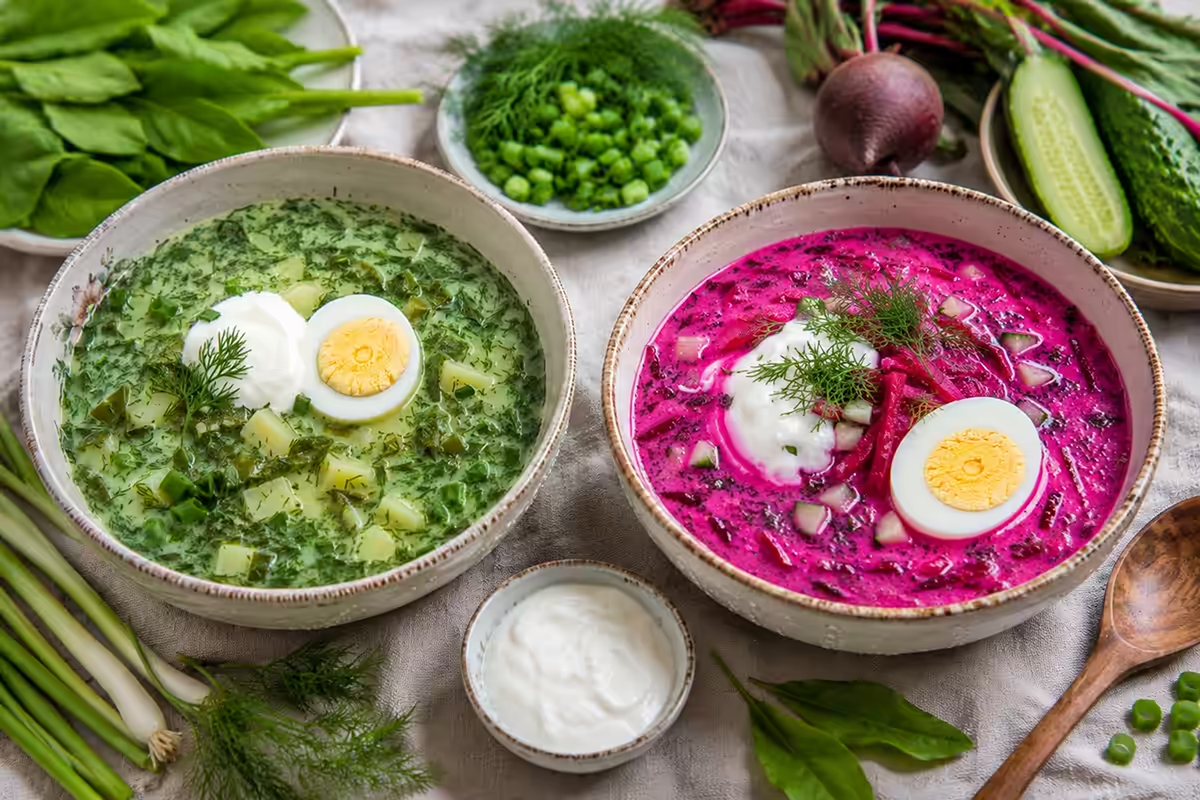
When it’s thirty outside, a bowl of hot borscht feels like a cruel joke. That’s why, from late May through September, two kinds of cold borscht are always on the table in my family—green borscht made with sorrel and beetroot cold borscht made with kefir. Both are quick to make, eaten by the spoonful straight from the fridge, and a lifesaver on those days when you really don’t feel like standing at the stove. Below are two tried-and-true recipes with exact proportions, plus all the little details that make these soups either perfect or a total flop. I’ve been making both for many years and have made enough mistakes to save you a couple of ruined pots.
Content
How is cold borscht different from regular borscht?
The first thing to understand is that cold borscht is not simply hot borscht that has been cooled. It’s a distinct dish with its own logic. Hot borscht relies on a roux, tomatoes, and slow simmering, while cold borscht relies on freshness, a hint of tartness, and temperature contrast.
I personally divide all cold borscht dishes into two broad categories.
The first type consists of green soups made with sorrel (sometimes with spinach or young nettles). The sorrel itself provides the tartness; the base is usually water or a light broth, and they are served with a hard-boiled egg and sour cream.
The second type is beet cold soups, in which boiled beets play the main role, and the liquid base is a mixture of beet broth with kefir, whey, or plain cold water with vinegar. This is the very same “kholodnik” that everyone in Polissya and Volhynia knows.
They have one thing in common: they must be served truly cold, with ice in the pitcher and a bunch of fresh herbs. The warm version of both soups is about five times less satisfying than the chilled one—I tested this myself once when I was too lazy to wait for the cold soup to chill in the fridge. Here, cold isn’t just a matter of comfort: salt and acidity taste different when cold, and it’s precisely because of this that the dish comes across as fresh rather than bland.
Here’s a quick comparison so you can immediately see which borscht appeals to you more today.
| Parameter | Green Cold Borscht | Beet Cold Soup |
|---|---|---|
| Acidic Base | sorrel | beets + vinegar/lemon |
| Liquid | water or broth | beet broth + kefir |
| Color | light green | rich pink-raspberry |
| There’s time for everything | about 40 minutes | about 60 minutes |
| Serving | egg, sour cream, herbs | egg, boiled potatoes, sour cream |
| It tastes best | on the first day | the next day |
Now, let’s go over each one in detail. But first, here are two sections that will save you the most stress: a bit of context and choosing the right products.
Where Did the Cold Soup Come From?
Cold soups made with a sour base are prepared throughout Eastern and Central Europe, and they are all related. Ukrainian kholodnyk, Lithuanian “saltibarsciai,” Polish “chłodnik,” and Belarusian chłodnik are essentially variations on a single idea: take beets, sour milk, and fresh vegetables and make a soup out of them that doesn’t need to be heated.
The logic behind these dishes is simple and very old: in the summer, when there are no refrigerators and milk turns sour within a day anyway, the smartest thing to do is to put the sour milk to good use rather than throw it away. Add boiled beets—which grew in every garden—a fresh cucumber, and some greens, and there you have a light lunch that doesn’t require cooking in the heat.
Green cold borscht with sorrel has a slightly different history. Sorrel is one of the first spring greens to appear in the garden, even before everything else has grown. So green borscht was traditionally a dish for late spring and early summer, when fresh greens are plentiful and the summer heat is still ahead. People started making the cold version just as it was getting really warm.
I’m not a big fan of long historical digressions in recipes—after all, you’re here to cook, not to listen to a lecture. So I’ll get right to the practical part. But this context explains the main point: both borscht varieties are dishes that are low on complicated ingredients and high on common sense. There’s nothing superfluous about them, and that’s exactly why it’s so easy to ruin them by trying to “improve” them.
How to Choose Ingredients for Cold Borscht
Cold borscht is one of those dishes where the quality of the simple ingredients matters more than the chef’s skill. There’s no sautéing or spices here to hide any flaws. So let’s go over the key ingredients.
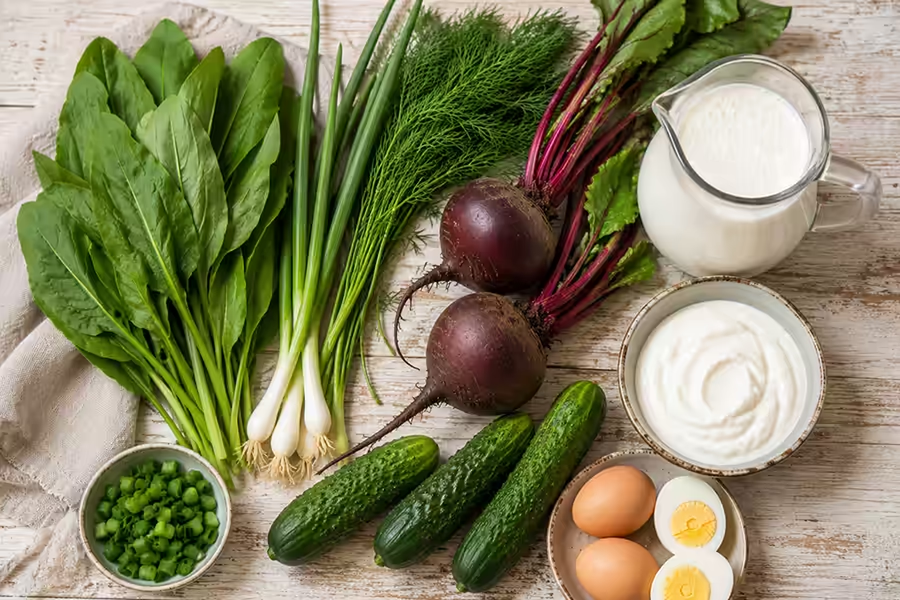
Beets. For cold beet soup, choose dark, deep burgundy beets without light rings on the cut surface—light rings result in a pale, dull color in the soup. Small and medium-sized beets (about 150–200 g each) are sweeter and cook more evenly than large, large-sized beets. Young summer beets cook faster and have a more delicate flavor; winter beets that have been stored for a long time take longer to cook and require a little more acid for brightness.
Sorrel. The younger and fresher the sorrel, the better. Young leaves are tender and have a bright, tart flavor; older leaves become tougher, with more bitterness and tough veins. When buying at the market, look for crisp leaves without any yellowing or slimy edges. If the sorrel is slightly wilted, don’t worry—it will cook just fine, but the tartness will be milder, so keep a lemon on hand.
Kefir for cold borscht. I use kefir with a fat content of 2.5%. Very low-fat kefir (1%) results in a watery texture and a sharp, “hollow” sourness. Kefir that’s too high in fat (3.2% and above) makes the borscht heavy, which is unnecessary in the summer. Very fresh, one-day-old kefir isn’t very sour—for cold borscht, it’s better to use kefir that’s been left to stand for a day or two. Excellent alternatives include whey (which adds lightness and clarity), ayran, and ryazhenka (the latter adds a pleasant aftertaste of baked milk).
Cucumbers. Choose firm, thin-skinned field-grown cucumbers. Watery greenhouse cucumbers will also work, but they’re less crisp and less flavorful. If the skin is rough or bitter, peel it off. The cucumber in the refrigerator is key to freshness, so don’t skimp on it.
Herbs. Dill, green onions, and parsley—the holy trinity for both types of borscht. Get the freshest bunch you can find, and don’t chop the herbs ahead of time: once chopped, they lose half their aroma within an hour.
Eggs. Regular chicken eggs, hard-boiled. Fresh eggs are harder to peel, so for cold borscht, it’s easier to use eggs that have been in the fridge for a week—the shells come off more easily.
Now that the food is on the table, let’s move on to the recipes.
Green Cold Borscht with Sorrel
This is the borscht from my childhood. My grandmother would cook it in a large pot—enough to last three days—and keep it in the cellar, and we’d run down there with our bowls several times a day. She would pick the sorrel from the garden right before cooking—and that’s the secret to its flavor: the fresher the sorrel, the brighter the tartness.
About the dish
Green cold borscht can actually be prepared either hot or cold—the base is the same. But there’s one important detail in the cold version: sorrel doesn’t just add acidity here; it defines the soup’s entire character. That’s why I never replace it entirely with spinach—spinach is bland; it only adds green volume and color, but not that bright tartness that’s the whole point of the dish.
If I don’t have enough sorrel, I make a mix: two-thirds sorrel and one-third young spinach. That way, the color turns out richer, and the tartness stays the same. Young nettles work well, too, but you have to blanch them in boiling water so they don’t sting.
This borscht is perfect for hot days, for a light lunch that won’t weigh you down, and for those watching their calories—the classic version made with water is very light. One serving without sour cream is about 60–80 kcal, so you can eat your fill without any guilt.
Ingredients
For a pot holding about 3 liters (6–8 servings):
| Ingredient | Quantity | Substitute |
|---|---|---|
| Fresh sorrel | 300 g | 200 g of sorrel + 100 g of spinach |
| Potatoes | 4 pieces (about 400 g) | — |
| Carrots | 1 piece (100 g) | optional |
| Eggs | 4–5 pieces | — |
| Green onions | 1 bunch | regular onion, finely chopped |
| Dill and parsley | per bundle | — |
| Fresh cucumber | 1–2 pieces | Optional, for freshness |
| Salt | about 1 tsp. | to taste |
| Water | 2.5 L | light chicken broth |
| Sour cream 15–20% | for serving | kefir, Greek yogurt |
There are no tomatoes, beets, or sautéed vegetables here—and there shouldn’t be. It’s a pure, green flavor.
Step-by-Step Recipe
- Peel the potatoes and carrots and cut them into small cubes, about 1 cm in size. The smaller the cubes, the faster they’ll cook and the more evenly they’ll be distributed on the plate.
- Bring 2.5 liters of water to a boil and add salt. Add the potatoes and carrots, and cook over medium heat for 12–15 minutes, until tender.
- While the base is cooking, hard-boil the eggs: 9–10 minutes from the moment the water comes to a boil. Then immediately run them under cold water—this will make the shells come off easily and prevent the whites from turning gray.
- Sort through the sorrel, rinse it thoroughly in two or three changes of water (it always has sand in it), and cut it into strips. It’s best to trim off the tough stems.
- When the potatoes are done, add the sorrel to the pot and cook for just 2–3 minutes. Don’t cook it any longer: sorrel loses its color instantly and turns brown if overcooked.
- Remove the pot from the heat. Taste for salt and acidity. If the sorrel was young and not tart enough, add a teaspoon of lemon juice.
- Let the borscht cool completely at room temperature, then refrigerate it for at least 2–3 hours. Cold borscht really comes into its own only after it has cooled.
- Finely chop the green onions, dill, and parsley. Cut the cucumber into small cubes. Peel the eggs and cut them in half.
- Before serving, add fresh herbs and cucumber directly to the pot or to each plate individually.
Tips and Common Mistakes
The most common mistake is overcooking the sorrel. I once let it boil “just a minute longer”—and ended up with gray borscht instead of emerald green. Add the sorrel last and remove it from the heat immediately. The chemistry here is simple: the bright green color comes from chlorophyll, which breaks down when exposed to prolonged heat and contact with acid. Sorrel itself is acidic, so time is your only ally, and you need to use it wisely.
The second mistake is adding salt at the end. I always add salt when the water is coming to a boil, because a cold dish doesn’t “taste” the salt the same way a hot one does. Cold borscht always seems less salty than the same dish when it’s warm, so it’s perfectly fine to add a little extra salt while it’s hot.
The third mistake is adding greens to a hot pot. If you want the dill and onions to stay fresh and crisp, add them either to the borscht while it’s still cold or directly to your plate.
And here’s one more little detail that trips up a lot of people: never stir the sour cream into the entire pot—cold borscht will turn sour faster. Add a spoonful of sour cream to each plate just before serving. That way, it keeps longer, and everyone can decide for themselves how much sour cream they want.
Green borscht with broth: a heartier option
If you want a full meal rather than just a light soup, cook the base in a light broth instead of water. Here’s what I do: I boil a chicken thigh or a piece of beef until tender (chicken—about 40 minutes, beef—1.5 hours), remove the meat, strain the broth, and then cook the potatoes and sorrel in it using the same method. I shred the meat into strips and return it to the borscht or serve it separately on a plate.
This borscht turns out richer and more filling, but it’s important to note that the broth should be low-fat and must be cold before serving. Solidified fat on the surface of cold soup isn’t a pleasant sight or sensation, so I always skim off the excess fat after it has cooled.
Variations and Presentation
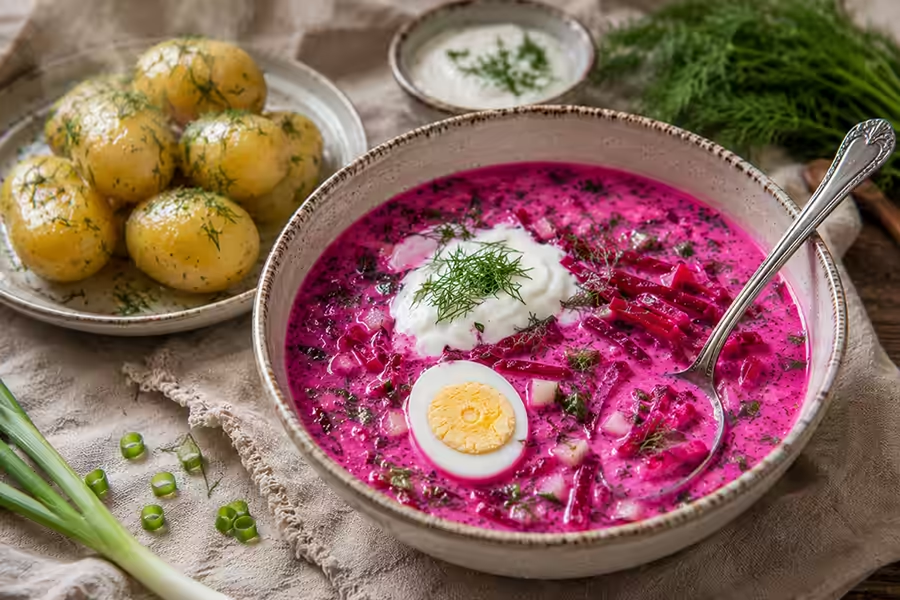
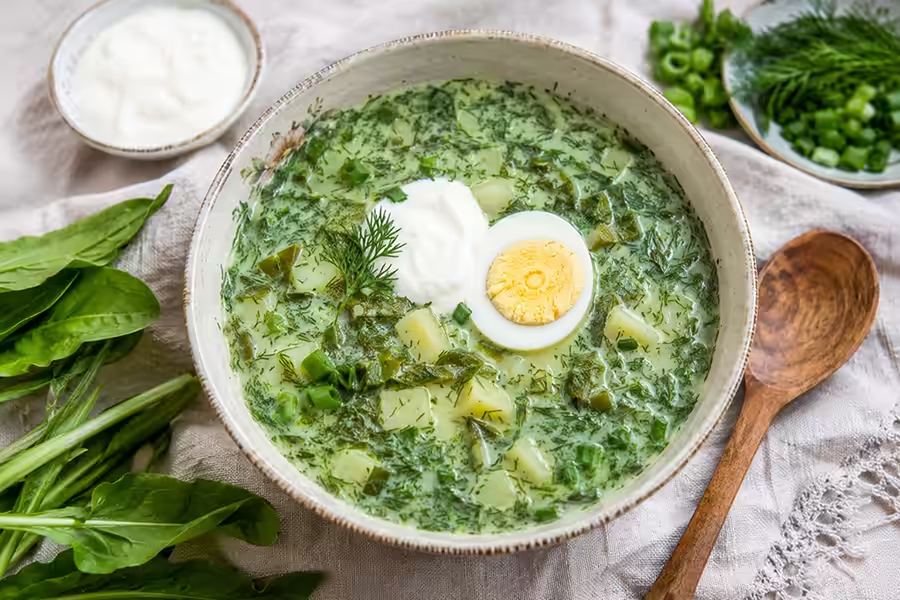
The classic way to serve it is in a large bowl of cold borscht, topped with half a hard-boiled egg, a dollop of sour cream, and a handful of fresh dill. This borscht goes wonderfully with boiled new potatoes served on the side, drizzled with oil and sprinkled with herbs.
For a more “country-style” version, I sometimes add radishes, sliced into thin rounds: they add a pleasant tang and crunch. And for those who like a stronger tang, add a little kefir right to the plate, turning the green borscht into something halfway between soup and cold borscht.
Here’s another trick I picked up from my mother-in-law: mash the yolk of a hard-boiled egg right in the bowl with a spoonful of sour cream until it becomes a smooth, creamy mixture, and only then pour in the borscht. The soup becomes silky smooth, with a completely different texture. Try it at least once—many people end up making it this way from then on.
Cold Beet Borscht (Kholodnik)
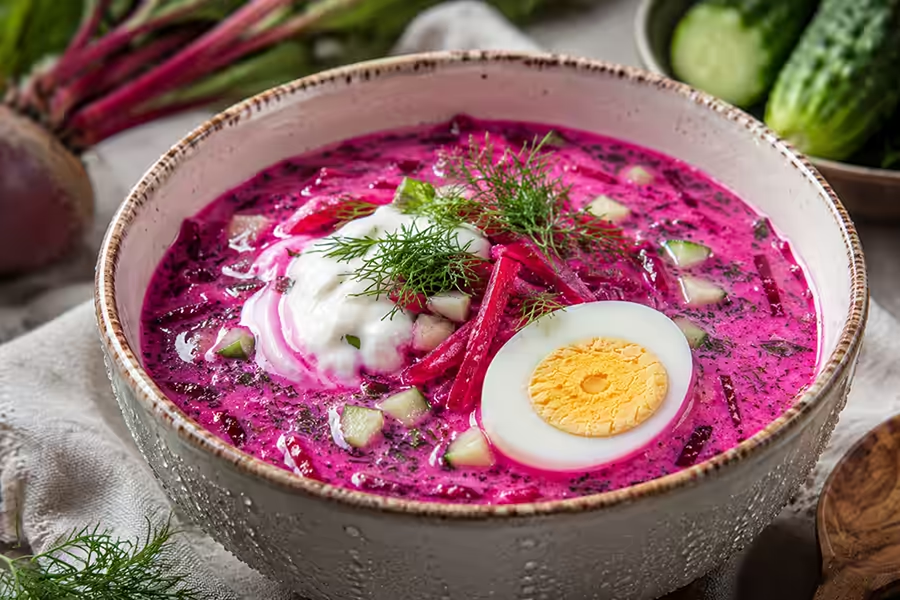
If green cold borscht is all about delicacy, then beetroot cold soup is all about color and character. That same rich pink-raspberry color, only natural, from real beets. I make it all summer long because it satisfies both hunger and thirst at the same time.
About the dish
Kholodnik is a dish that is popular in northern Ukraine, Polissya, as well as in Lithuania and Poland, where it is served in similar variations. The classic idea is simple: boiled beets provide color and sweetness, kefir (or whey) adds a tangy freshness, and cucumber with herbs adds crunch and aroma.
There are two approaches to making the base. The first is to use beet broth with kefir added; this results in a lighter cold borscht with a purer beet flavor. The second is made entirely with kefir or ayran, without any stock; this cold borscht is thicker and tangier, closer to the Lithuanian “šaltibarščiai.” I usually make a combination of the two: beetroot stock plus kefir in a ratio of about 1:1. This way, the color is vibrant and the tartness is balanced.
An important detail that causes many people to be disappointed with this cold soup: the beets must be truly cold, and the kefir should not be sour to the point of being sharp. A warm, sour cold soup tastes unpleasant, so chilling it isn’t just a recommendation—it’s a must.
Ingredients
For a pot holding about 3 liters (6–8 servings):
| Ingredient | Quantity | Substitute |
|---|---|---|
| Beet | 2 medium (about 400 g) | — |
| Kefir 2.5% | one liter | whey, ayran, ryazhenka |
| Beet Broth | about 1 liter | cold water |
| Fresh cucumbers | 2–3 pieces (300 g) | — |
| Eggs | 4 pcs. | — |
| Green onions | 1 bunch | — |
| Dill | 1 bunch | — |
| Boiled potatoes | 4 pieces (for serving) | optional |
| 9% vinegar or lemon juice | 1 tbsp. | — |
| Sugar | ½ teaspoon | to taste |
| Salt | about 1 tsp. | to taste |
The sugar here isn’t for sweetness, but for balance: a pinch of sugar “rounds out” the acidity of the kefir and vinegar, giving the flavor more depth.
Step-by-Step Recipe
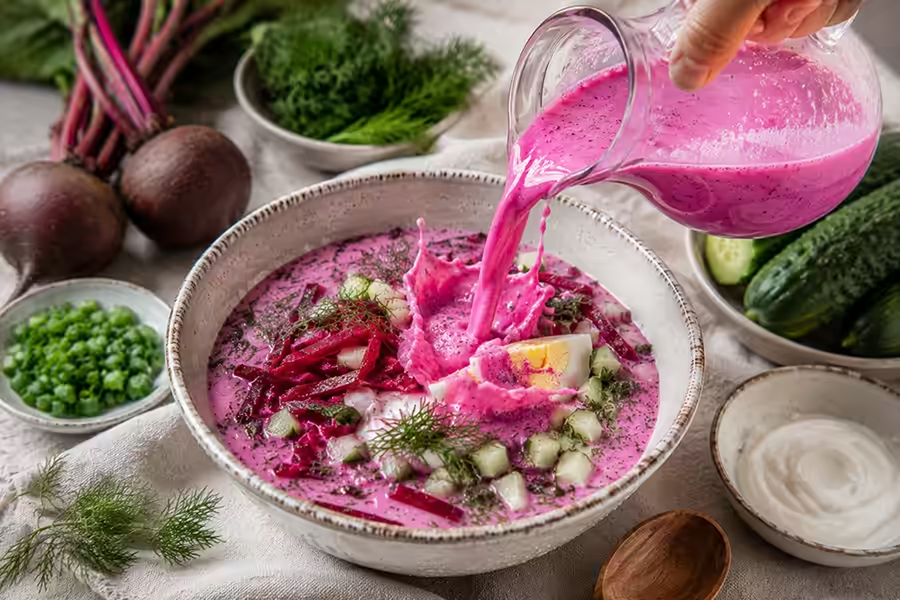
- Wash the beets without peeling them, and boil them until tender. For whole medium-sized beets, this takes 40–60 minutes, depending on their size; check for doneness with a knife—it should slide in easily. Do not pour out the water after boiling; this is your beet broth.
- To keep the color bright, add a tablespoon of vinegar or lemon juice to the water while boiling. The acid helps set the beetroot pigment, so the broth won’t fade.
- Let the boiled beets cool, peel them, and grate them on a coarse grater or cut them into thin strips. I prefer the strips—they have a nicer texture in the soup.
- Strain the beet broth and let it cool completely. This is the longest step, so cook the beets ahead of time—preferably the night before.
- Hard-boil the eggs (9–10 minutes after the water comes to a boil), let them cool, and peel them. Dice half of them for the borscht, and set the other half aside for serving.
- Dice the cucumbers into small cubes or cut them into thin strips. Finely chop the green onions and dill. You can lightly mash the onions with a pinch of salt—this will make them more flavorful and less pungent.
- In a large pot or bowl, combine the grated beets, cucumbers, eggs, and herbs. Pour in cold beet broth and kefir in a ratio of about 1:1.
- Add salt, sugar, and vinegar. Taste it: the cold beet soup should be slightly tart, refreshing, and a little sweet from the beets. Adjust the seasoning to taste.
- Refrigerate for at least 1–2 hours. During this time, the flavors will blend, and the borscht will get even colder.
Tips and Common Mistakes
The main problem with borscht is its dull color. If you don’t add acid while boiling the beets, the broth will turn out grayish-red, and the entire borscht will have the same lackluster hue. Adding a spoonful of vinegar to the water at the start completely solves this problem.
The second common mistake is to pour kefir over warm beets. The heat causes the kefir to immediately curdle into flakes, making the borscht look unappetizing. Therefore, both the beets and the broth must be ice-cold before being combined with the kefir.
The third mistake is making the borscht too watery. If you add too much broth, the beetroot flavor gets lost. Here’s my rule of thumb: the liquid should barely cover the ingredients, not float separately from them.
The fourth mistake has to do with cooking beets: don’t cook them in salted water from the very beginning if you want them to cook faster. Salt slows down the softening process. I only add salt to the finished dish. Also, don’t cover the beets completely with boiling water while they’re cooking—it’s enough for the water to cover them by a couple of centimeters; otherwise, the cooking liquid will be too diluted and the beets will turn out pale.
Cold soup made with whey or kefir—which to choose
It’s a matter of taste, but the difference is noticeable. When made with kefir, holodnik is thicker, more filling, and distinctly tart—this version is popular in northern Ukraine and Lithuania. When made with whey, the borscht turns out lighter, clearer, and more refreshing; the tartness is more subtle, and the color is cleaner and brighter, because whey doesn’t cloud it the way kefir does. If you have whey left over at home after making cheese—don’t pour it out; it’s the perfect base.
I often mix it up: I replace half the kefir with whey. It’s the perfect balance—rich yet light. And on the hottest days, I make it without any fermented milk at all: just beet broth with vinegar and lemon. This is the lightest, almost diet-friendly version, which is served as a cold drink.
Variations and Presentation
The classic way to serve kholodnik is in a deep bowl, with half an egg, a spoonful of sour cream, and a sprig of dill. I always serve hot boiled potatoes on the side—the contrast between the ice-cold borscht and the warm, fluffy potatoes is the whole point of the dish. It sounds strange, but it works perfectly.
If you like it spicier, add some grated horseradish or a few slices of radish. For a thicker, heartier version, increase the amount of kefir and reduce the amount of broth: the result will be almost like Lithuanian holodnik, which is eaten thick, much like okroshka.
Vegans can make this cold borscht, too: replace the kefir with plant-based yogurt without added sugar, and the eggs with chickpeas or tofu. The color and tang will remain, and the flavor will be close to the original. The only thing to watch out for is that plant-based yogurts sometimes contain hidden sugar and vanilla, so be sure to check the ingredients list—otherwise, your cold borscht will turn out too sweet.
Kholodnik, okroshka, and botvinya: What’s the difference?
Cold soups are often confused with one another, but they’re actually quite different. In short:
Kholodnik—made with beets and sour milk (or beet broth)—is always pink and always has a distinct beet sweetness.
Okroshka—made with kvass, kefir, or mineral water, without beets. The flavor comes mainly from boiled potatoes, sausage or meat, an egg, and a mountain of fresh herbs. The color is neutral, a creamy greenish hue. This is a different dish, though it’s also cold and a summer dish.
Botvinya is a traditional dish made with kvass and boiled, pureed green leaves (beet greens, sorrel, spinach, nettles). It is often served with fish. It is rarely found in modern cuisine, but it is essentially a “green cold soup made with kvass,” the predecessor of many summer soups.
In other words, green cold borscht made with sorrel is closer in spirit to botvinya, while cold beet soup stands apart thanks to the beets. As for okroshka, it’s all about potatoes and sausage; the only thing it has in common with borscht is that all three are typically served ice-cold.
Why Cold Borscht Is Good for You
Not only are they delicious and a great way to beat the heat, but both borscht varieties are also very nutritious.
Green borscht is light and low in calories. Sorrel is rich in vitamin C and vitamin K and contains iron and magnesium. However, it does contain oxalic acid, so people prone to kidney stones or with kidney problems should eat green borscht in moderation—this is one of those cases where “healthy” doesn’t mean “without limits.”
Beet cold soup is a true summer superfood on a plate. Beets provide fiber, folic acid, potassium, and the very betaines that give them their red color. The kefir in the recipe provides probiotics and easily digestible protein, which are beneficial for digestion. Together, they create a dish that is refreshing, filling, and gentle on the stomach during hot weather.
Both soups are a great fit for a light summer meal: they’re filling thanks to the vegetables and eggs, but not heavy, since they don’t contain any fried or fatty ingredients. I’m not a nutritionist, and I’m not presenting this as medical advice—I’ve just noticed over the years that on hot days, you feel more energized after a bowl of cold soup than after a hot lunch.
General rules for both types of cold borscht
Over the years of cooking, I’ve boiled it all down to a few simple principles that work equally well for green borscht and for holodnik.
Cold is flavor. Both soups need to be chilled for at least a couple of hours. The warm version always seems bland, because the cold mutes the salt and brings out the acidity—and that balance is what the entire flavor rests on.
Add the herbs separately. Add dill, onion, and parsley as late as possible, or directly to the plate. Herbs that have been cooked or left in the soup for too long lose their flavor and color.
Put the sour cream in a bowl, not in the pot. That way, cold borscht keeps longer and doesn’t turn sour too soon. Plus, everyone can decide for themselves how much sour cream to add.
Adjust the acidity at the end. Sorrel, kefir, and vinegar are ingredients with variable acidity. Taste the finished cold borscht and adjust the flavor with lemon or vinegar at the very end, rather than “by eye” at the beginning.
Ice in a pitcher is your friend. If you’re serving borscht on a hot day, toss a few ice cubes into it or keep the pot on ice. The soup should stay ice-cold until the very last spoonful.
How much to store and how to store it
Green borscht is best eaten on the first or second day: sorrel darkens over time, and by the third day, the color becomes quite unappealing. It will keep in the refrigerator for up to 2 days.
Beet cold soup, on the other hand, is often even tastier on the second day—the flavors have time to blend. But if you’ve already added kefir, the shelf life is reduced to 1–2 days. Tip: Keep the beet base and the kefir separate, and combine them in portions just before serving—that way, the dish will keep for 3–4 days.
I don’t recommend freezing ready-made cold borscht: the cucumber, egg, and herbs all become watery and unappetizing after thawing. However, boiled beets can definitely be frozen in advance, either cut into strips or grated—this greatly speeds up preparation in the summer. Beet broth can also be frozen without any problems in a bottle or container.
How to Apply to a Large Company
If you’re expecting guests, don’t mix everything together in advance. I set out a “building set” on the table: a pitcher of the chilled base (broth with kefir or green borscht) on its own, and in small bowls—sliced beets or sorrel, cucumbers, eggs, herbs, sour cream, and boiled potatoes. Everyone puts together their own plate: some like it thicker, some prefer it tangier, and some skip the eggs. This not only looks festive but also avoids the question, “Can I have mine without onions?” Tested time and again at family dinners.
Frequently Asked Questions
Can you make green cold borscht without sorrel?
Yes, you can, but it won’t taste quite the same. Sorrel provides that characteristic tartness, which can’t really be replaced by anything else. If you don’t have sorrel, use spinach or young nettles for the green base, and add acidity with lemon juice or a spoonful of kefir—the result will be similar, but milder.
Which kefir is better for cold borscht—full-fat or low-fat?
I use 2.5% kefir. The very low-fat kind has a watery texture and a sharp sourness, while the very high-fat kind makes cold borscht too heavy. The sweet spot is 2.5–3.2%. Whey, ayran, or ryazhenka work well as substitutes for kefir.
Why did my cold beet borscht turn out pale instead of bright pink?
Most likely, you cooked the beets without adding any acid. Add a tablespoon of vinegar or lemon juice to the water at the start of cooking—the acid locks in the natural pigment, and the color stays vibrant. Another reason is overcooked beets, so don’t leave them in the water any longer than necessary to reach tenderness.
How long should you boil beets for cold borscht?
A whole medium-sized beet takes about 40–60 minutes to cook, depending on its size. Check for doneness with a knife: it should slide in easily, without resistance. Young summer beets cook faster, while older winter beets take longer. You can also roast beets in the oven—about 1 hour at 180 °C wrapped in foil; this gives them an even richer flavor.
Can you serve cold borscht warm?
Technically, yes, but the flavor suffers greatly. Both types of borscht are intended specifically as cold dishes, and their appeal lies in the contrast between the coolness, the tartness, and the fresh herbs. If you’re in the mood for something warm, it’s better to make classic green borscht hot—it’s a complete meal in its own right.
What should you serve with cold borscht to make it more filling?
The best option is boiled new potatoes on the side, served hot with oil and fresh herbs. Boiled meat or chicken breast served right in the soup goes well with green borscht, while rye bread and a little grated horseradish are perfect with cold borscht. That’s how a light summer soup turns into a full-fledged meal.
How does holodnik differ from okroshka?
Holodnik is made with beets and sour milk; it’s pink and has a sweet-and-sour taste. Okroshka, on the other hand, is made with kvass or kefir without beets; its base consists of potatoes, eggs, sausage or meat, and herbs, and it has a neutral color. These are two different dishes, united only by the fact that both are served cold.
How many calories are in cold borscht?
Green cold borscht made with water contains approximately 60–80 kcal per serving without sour cream; it’s a very light dish. Beet cold borscht is a bit more filling due to the beets and kefir—about 90–120 kcal per serving. A spoonful of sour cream adds another 30–50 kcal. These figures are approximate and depend on the specific ingredients and the fat content of the kefir.
Can you freeze cold borscht?
You shouldn’t freeze ready-made cold borscht—the cucumbers, eggs, and herbs become watery after thawing. However, the ingredients for borscht freeze perfectly: boiled beets (sliced or grated) and beet broth can be safely stored in the freezer for several months and come in very handy in the summer.