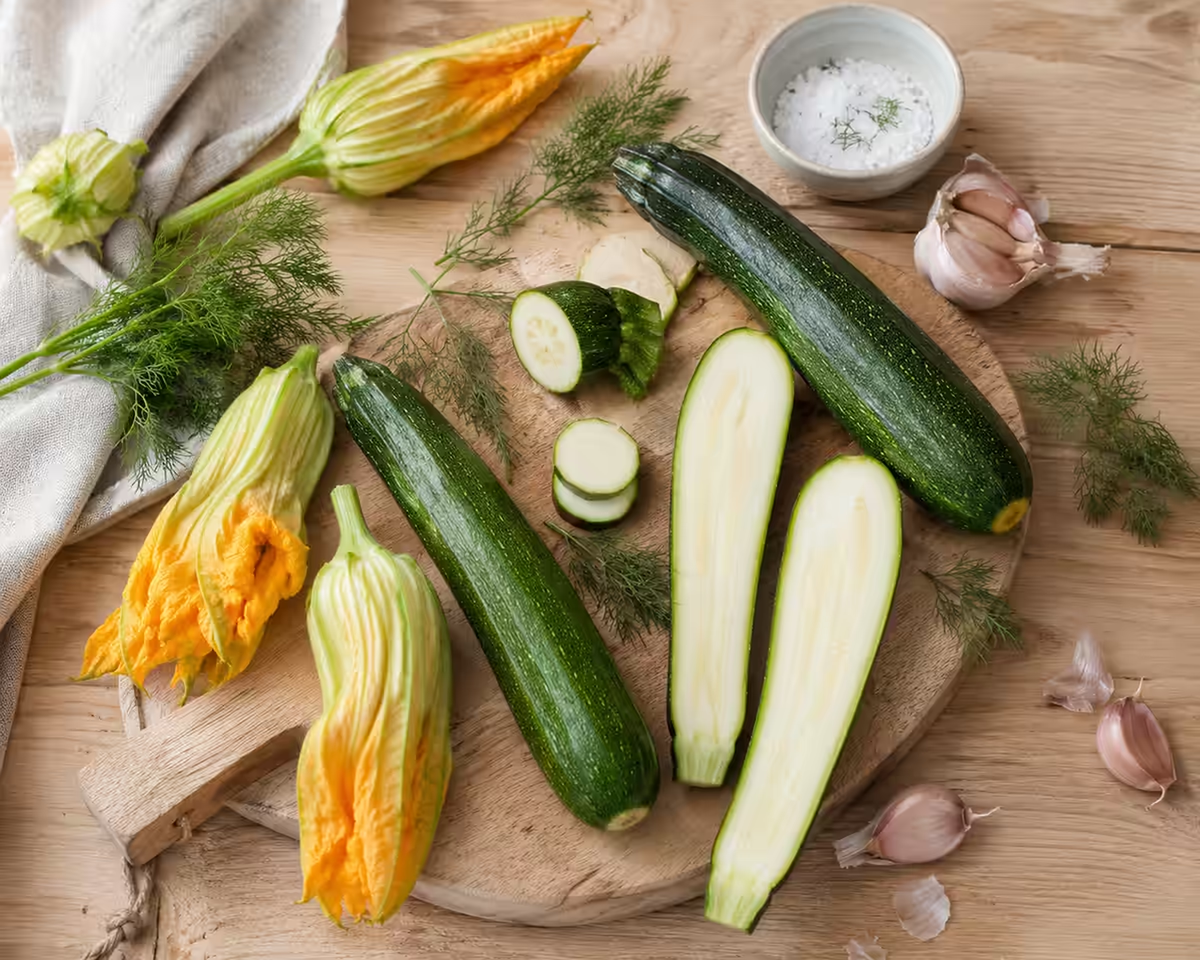
Every summer, zucchini floods the markets in such abundance that I finally feel inspired to explore all the different ways to cook them—and avoid repeating myself. I’ve been cooking with zucchini for a long time and can say with confidence: it’s one of the most versatile vegetables of the season. It’s delicious pan-fried, baked, grilled, and even in soup. In this article, I’ve compiled 8 tried-and-true zucchini recipes—from classic fritters to cream soup and stuffed halves—that look great on the table and don’t require hours at the stove.
Content
How to choose zucchini—and why it matters
Young zucchini, 15–20 cm long, are the perfect choice for most dishes. They have thin skin that doesn’t need to be peeled, soft seeds that don’t get in the way, and dense, juicy flesh. It is precisely these zucchini that make fritters tender rather than watery, and allow grilled slices to hold their shape.
Large zucchini (30 cm or longer) are best suited for stuffing: their flesh is firmer after baking, and the seeds can be easily removed with a spoon. If the zucchini has already turned yellow or the skin has become hard, it is overripe and will be less flavorful in most recipes.
I always check the stem: freshly picked zucchini have a green, firm stem. If it’s dry or shriveled, the vegetable has been sitting around for a while.
What are the health benefits of zucchini, and why should you eat it more often?
Zucchini is one of the lowest-calorie vegetables: 100 grams of raw zucchini contains only 17–20 calories. At the same time, it is very filling thanks to its fiber content and high water content, which takes up space in the stomach. That is why zucchini is often included in weight-loss diets—it provides a feeling of fullness without a significant caloric load.
Among the nutrients, several key ones are worth highlighting:
- Potassium is important for heart function and maintaining normal blood pressure. A 200-gram serving of zucchini contains about 280–300 mg of potassium.
- Vitamin C is an antioxidant that supports the immune system. It is best preserved with minimal heat treatment, so grilled or lightly sautéed zucchini is a better choice than boiled zucchini.
- Vitamin B6 and folate support the nervous system and blood formation.
- Lutein and zeaxanthin are carotenoids that accumulate in the retina and reduce the risk of age-related vision changes.
Zucchini is well tolerated by people with sensitive digestive systems because it contains soft fiber that does not irritate the mucous membranes. It is recommended as one of the first foods to introduce when starting solid foods and as part of a post-illness diet.
Another practical advantage: zucchini has virtually no strong flavor of its own, so it readily absorbs the flavors of spices, herbs, sauces, and cheese—which is what makes it so versatile.
Summer squash or zucchini—what’s the difference?
This question comes up often, so it’s worth clarifying. From a botanical standpoint, both squash and zucchini are varieties of the same species of pumpkin (Cucurbita pepo). The difference lies mainly in their appearance and slight variations in texture.
Zucchini is usually pale green or yellowish, slightly larger, with light-colored flesh and a thin skin. Its moisture content is slightly higher.
Zucchini — dark green, usually smaller and firmer. The flesh is slightly firmer, and the seeds are less prominent, even in larger specimens. It holds its shape better on the grill precisely because of its firmer flesh.
In practice, they’re interchangeable in most recipes. If I have a choice, I use zucchini for grilling and stuffing, and the fresher, younger ones for fritters and cream soups. Yellow zucchini have a slightly sweeter taste—they’re especially good grilled or baked in the oven.
The golden rule for zucchini recipes: drain off the excess water
Zucchini is about 94–95% water. This is both an advantage (it’s a light, low-calorie vegetable) and a technical challenge: if you don’t remove the excess liquid before cooking, the fritters will spread out in the pan, the casserole won’t set, and the batter will be runny.
Here’s how to do it: Grate the zucchini using a coarse grater, sprinkle with 1 tsp of salt, stir, and let sit for 10–15 minutes. Then squeeze it through a clean towel or cheesecloth—you’ll be surprised at how much liquid comes out. After this, the zucchini will reduce in volume by about half and become much more concentrated in flavor.
This rule applies to pancakes, casseroles, and fillings. It does not apply to grilled dishes, stews, and batter.
Recipe Table: Guidelines
| Recipe | Cooking time | Method | What is it suitable for? |
|---|---|---|---|
| Classic pancakes | 25 min | Frying pan | Breakfast, a quick dinner |
| Pancakes with feta cheese | 25 min | Frying pan | Breakfast, picnic |
| Cheese Casserole | 50 min | Oven | Lunch, dinner |
| Grilled zucchini | 20 min | Grill / grill pan | Side dish, appetizer |
| Braised with tomatoes | 25 min | Frying pan | Side dish, light dinner |
| Stuffed zucchini | 60 min | Oven | Lunch, a festive table |
| Cream soup | 30 min | Saucepan | First course |
| Zucchini in batter | 20 min | Deep-frying | Appetizer, party |
Recipe 1. Classic Zucchini Fritters
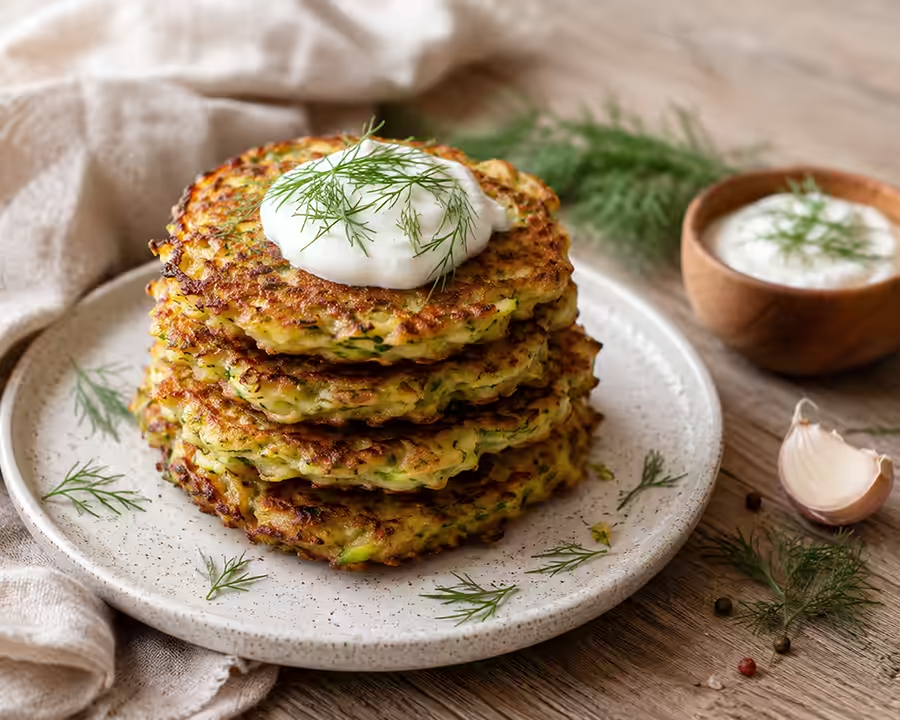
This is my go-to recipe, one I come back to every year. Crispy on the outside, tender on the inside, with just a few ingredients. The batter isn’t runny here—the zucchini holds its shape on its own after being squeezed, so you only need a little flour.
Ingredients (makes 10–12 pancakes):
- zucchini — 500 g (1 medium)
- egg — 1
- wheat flour — 4–5 tbsp.
- garlic — 2 cloves
- dill or parsley — a small bunch
- salt, black pepper — to taste
- refined cooking oil
Step-by-step recipe:
- Grate the zucchini using a coarse grater. Sprinkle with 1 tsp of salt, stir, and let sit for 10 minutes. Squeeze out the excess liquid through a towel—firmly, using both hands.
- Add the egg, minced garlic, and finely chopped herbs. Stir.
- Add the flour—start with 4 tablespoons. The dough should hold its shape but remain soft. If it’s too runny, add another tablespoon.
- Heat a skillet with oil over medium heat. The oil should be hot enough that a drop of batter sizzles immediately.
- Spoon the dough onto the baking sheet using a tablespoon, then gently flatten it with a spatula to a thickness of 1 cm.
- Cook for 3–4 minutes on each side until they are a deep golden brown—don’t rush to flip them over too soon, or the pancakes will fall apart.
- Transfer to a paper towel.
Serve with sour cream or yogurt mixed with garlic and finely chopped dill.
Important: Do not cover the pan with a lid while frying. The steam will soften the crust, and the pancakes will turn out less golden and crispy.
Variations on Classic Pancakes
The basic recipe is easy to adapt depending on what you have in the fridge:
- With cornmeal — replace half of the wheat flour with cornmeal. The pancakes will turn out golden brown and slightly crispy.
- With grated carrots — add 1 small carrot, grated using a coarse grater. The flavor becomes sweeter, and the color becomes brighter.
- With spinach — a handful of fresh or thawed, drained spinach gives the pancakes a green hue and a light vegetable flavor.
- With Parmesan — instead of fresh herbs, add 30–40 g of finely grated Parmesan. The pancakes will be saltier and more flavorful, and the crust will be crispier.
Recipe 2. Zucchini and Feta Pancakes
A variation on the first recipe with a completely different flavor profile: slightly salty with a hint of tartness. The feta melts inside, creating an interesting texture—somewhat reminiscent of a cheese pie. These pancakes are delicious at room temperature, so they’re perfect for a picnic or breakfast the next day.
Ingredients (for 10–12 pancakes):
- zucchini — 500 g
- feta or brynza — 100 g
- egg — 1
- flour — 3–4 tbsp
- fresh mint — a few leaves (optional, but highly recommended)
- black pepper — to taste
- cooking oil
Step-by-step recipe:
- Grate the zucchini, season with salt, and squeeze out the excess liquid—just as in the first recipe. Note: Feta is salty, so keep the amount of additional salt to a minimum or omit it entirely.
- Mash the feta with a fork or cut it into small cubes.
- Combine the zucchini, feta, egg, finely chopped mint leaves, and flour. Stir to combine.
- Cook in the same way—3–4 minutes on each side over medium heat.
Serving suggestions: with fresh vegetables, arugula leaves, or on their own—they’re delicious on their own.
Recipe 3. Zucchini and Cheese Casserole (Baked)
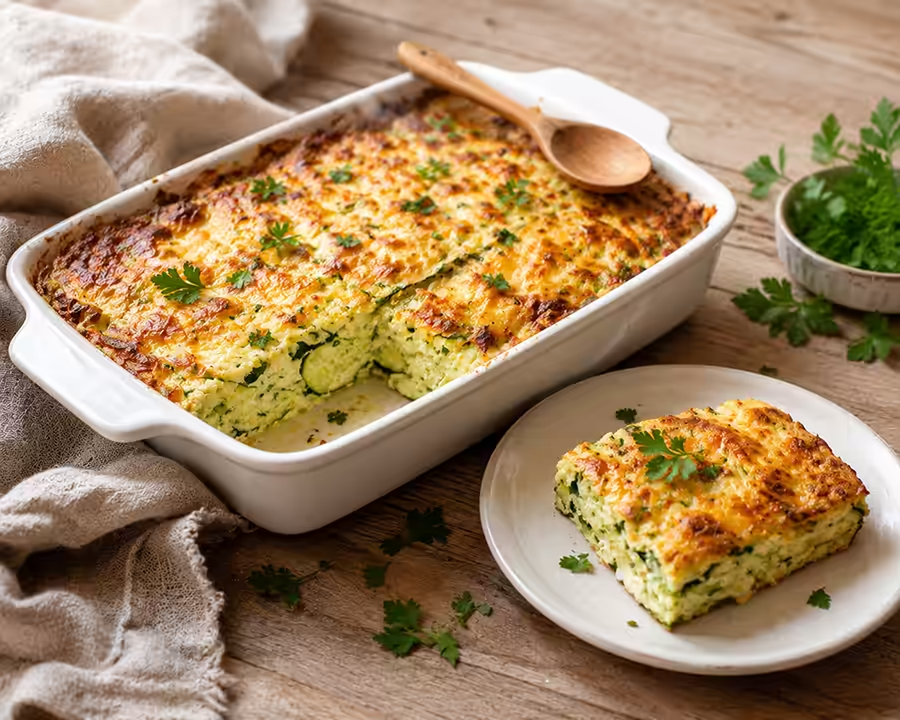
Zucchini baked in the oven is a completely different dish than fried zucchini. It has a softer texture, uses less oil, and is so convenient: just pop it in the oven and you have 35 minutes to yourself. The casserole made with this recipe turns out tender and slightly springy—something between an omelet and a frittata. It’s equally delicious hot or cold, cuts well, and holds its shape.
Ingredients (serves 4–6):
- zucchini — 700–800 g (2 medium)
- eggs — 3
- hard cheese (Gouda, Edam, or any domestic variety) — 120 g
- garlic — 2–3 cloves
- flour — 3 tbsp
- sour cream or Greek yogurt — 3 tbsp.
- fresh herbs (dill, parsley) — a bunch
- salt and pepper — to taste
- oil for greasing the pan
Step-by-step recipe:
- Preheat the oven to 180 °C. Grease a baking dish (approximately 20×25 cm) with oil.
- Grate the zucchini using a coarse grater, season with salt, let sit for 15 minutes, and squeeze out the excess liquid thoroughly.
- In a separate bowl, whisk the eggs and sour cream until smooth. Add the minced garlic and finely chopped herbs.
- Grate 80–90 g of cheese using a fine grater, then add it to the egg-and-sour-cream mixture.
- Combine all the ingredients, add the flour, and stir. Season with salt and pepper to taste.
- Pour the mixture into the prepared pan. Evenly sprinkle the remaining cheese (30–40 g) on top.
- Bake for 35–40 minutes until a golden brown crust forms.
- Let it stand for 5 minutes before serving: the casserole will be easier to cut and won’t fall apart.
Tip: If you want a crispier crust, turn on the top broiler for the last 5 minutes.
What to serve with a casserole
Zucchini casserole is a complete meal that doesn’t need a complicated side dish. Here are a few serving suggestions:
- Sour cream or yogurt with herbs—a classic and delicious combination.
- Light tomato sauce—warmed sautéed tomatoes with garlic; serve on the side.
- A fresh salad—arugula with lemon juice and olive oil, or sliced seasonal tomatoes.
- When cold, slice it and serve it on bread as a snack.
Vegetarian version without eggs: replace the eggs with 150 g of ricotta or soft tofu. The casserole will be less firm, but it will hold its shape once cooled.
Recipe 4. Grilled Zucchini with Spicy Garlic Oil
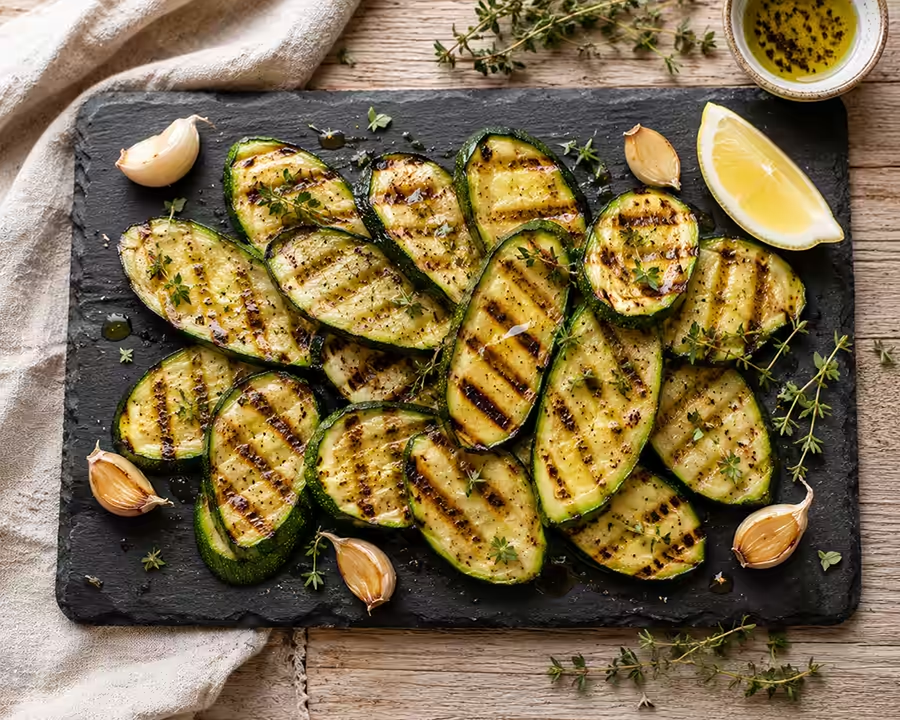
One of the simplest and most delicious summer recipes. Minimal effort, maximum flavor. Perfect for an outdoor grill, a grill pan, or the oven’s “grill” setting.
The key here is the marinade made with oil, garlic, and herbs. It not only adds flavor but also keeps the zucchini from drying out while frying.
Ingredients (serves 3–4):
- young zucchini — 3–4 pieces
- olive oil — 3–4 tablespoons
- garlic — 3 cloves
- fresh thyme or rosemary — 2–3 sprigs
- lemon juice — 1 tbsp
- salt, black pepper — to taste
Step-by-step recipe:
- Slice the zucchini lengthwise into 5–7 mm thick slices. If they’re too thin, they’ll burn; if they’re too thick, they won’t cook evenly.
- Prepare the marinade: mix together the olive oil, minced garlic, lemon juice, thyme leaves, salt, and pepper.
- Brush the zucchini slices with the marinade on both sides. Let them sit for 10–15 minutes at room temperature.
- Preheat the grill or grill pan to high heat.
- Cook the zucchini for 2–3 minutes on each side until they have distinct browned stripes and are pleasantly tender.
- Serve immediately or at room temperature—pour the remaining marinade over the top.
Tip: If you’re using an electric griddle, pat the griddle plates dry with a paper towel before placing the zucchini on them—excess oil will smoke, and the zucchini will steam instead of fry.
Recipe 5. Braised zucchini with tomatoes and garlic
A classic summer stew that takes just 20 minutes to prepare and tastes just as good hot or cold. It can be served as a stand-alone dish with bread or as a side dish with meat, fish, or poultry.
Canned tomatoes in their own juice work just as well in this recipe as fresh ones—and even better when they’re out of season, since they have a richer, more consistent flavor.
Ingredients (serves 4):
- zucchini — 600 g
- fresh tomatoes — 3–4 (400 g) or canned in their own juice — 400 ml
- onion — 1 large
- garlic — 3–4 cloves
- vegetable oil — 2–3 tbsp.
- ground sweet paprika — 1 tsp
- salt, pepper, sugar — to taste
- basil or dill for garnish
Step-by-step recipe:
- Dice the onion and sauté it in oil until translucent—about 4–5 minutes.
- Cut the zucchini into 2×2 cm cubes. Add them to the onions and sauté for another 3–4 minutes, stirring gently.
- If you’re using fresh tomatoes, pour boiling water over them, peel them, and chop them. Add them to the zucchini along with the garlic and paprika.
- Season with salt and pepper. If the tomatoes are a bit tart, add a pinch of sugar—it will balance out the flavor.
- Simmer uncovered over medium heat for 12–15 minutes. The sauce should thicken slightly and become rich.
- Serve with bread or rice, sprinkled with fresh herbs.
Tip: For a richer flavor, add 1 tablespoon of tomato paste along with the tomatoes. This creates a more concentrated, “full-bodied” sauce.
Recipe 6. Stuffed zucchini with meat and rice
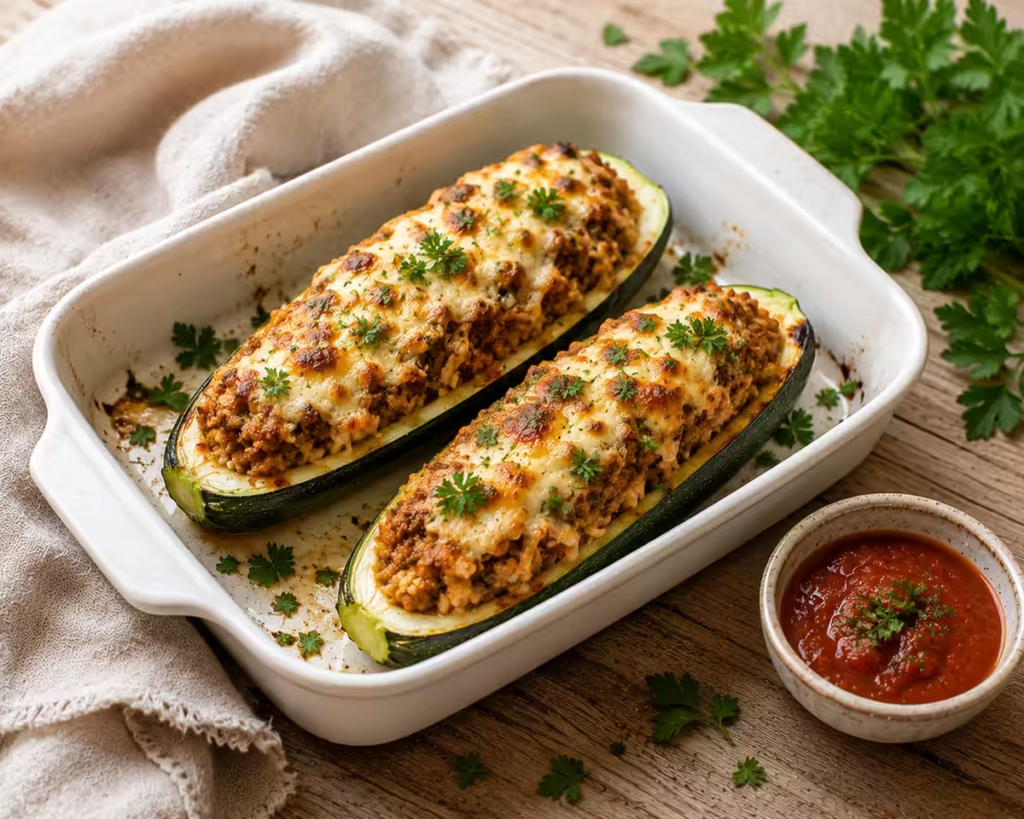
A hearty and impressive dish that looks more complicated than it actually is. It’s perfect for large zucchini that have already started to form seeds. Don’t throw away the flesh you scoop out—it goes right into the filling and enhances the flavor.
Ingredients (serves 4 — 2 large zucchini):
- large zucchini — 2 (25–30 cm each)
- ground pork and beef or ground chicken — 400 g
- rice (parboiled) — 100 g
- onion — 1
- garlic — 2 cloves
- tomato paste — 2 tbsp.
- hard cheese — 60–80 g
- salt, pepper, paprika — to taste
- oil — 2 tbsp.
Step-by-step recipe:
- Preheat the oven to 190 °C.
- Cut the zucchini in half lengthwise. Using a spoon or knife, scoop out the center and seeds, leaving walls about 1–1.5 cm thick. Don’t throw away the flesh.
- Finely chop the zucchini flesh, then sauté it with the chopped onion and garlic in oil for 5–7 minutes.
- Mix the ground meat with the rice, sautéed vegetables, and tomato paste. Season with salt and pepper, and add paprika.
- Spoon the filling into the zucchini halves, pressing it down gently.
- Place in a baking dish and pour 100 ml of water or broth into the bottom.
- Cover with foil and bake for 35 minutes. Remove the foil, sprinkle with grated cheese, and bake for another 10–15 minutes until golden brown.
Tip: Cook the rice for the filling until it’s half-done, not fully cooked—it will finish cooking inside the zucchini while baking and won’t turn into mush.
Vegetarian filling for stuffed zucchini
If you’re not using meat, here’s a filling that’s just as filling. Instead of ground meat, use:
- canned beans or chickpeas — 200 g, lightly mashed
- cooked rice — 100 g
- mushrooms — 150 g, finely chopped and sautéed
- onion — 1, sautéed
- tomato paste — 1 tbsp.
- smoked paprika — 0.5 tsp
Smoked paprika is essential here: it adds a distinctive flavor that makes up for the lack of meat. The cooking method is the same.
Recipe 7. Cream of Zucchini Soup
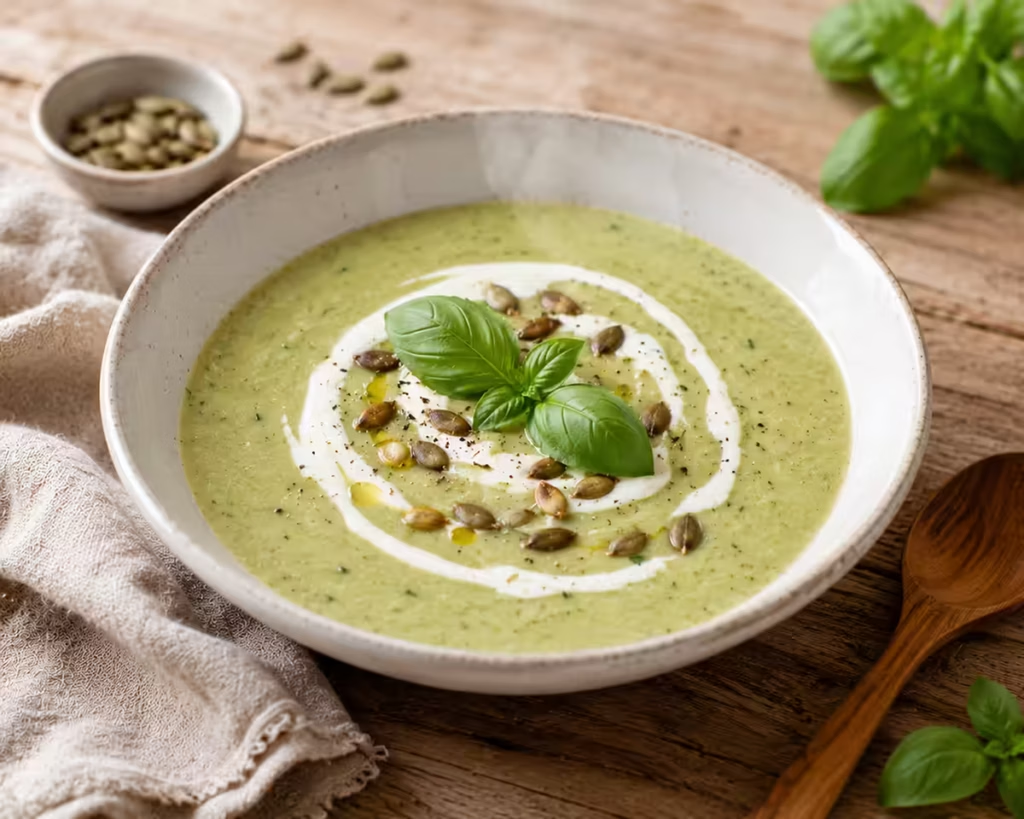
A delicate, velvety soup that’s quick to make and appeals even to those who aren’t usually fans of vegetable soups. Here, the potatoes aren’t the main ingredient but a technical component that adds thickness: they help the soup become creamy without an excess of butter.
I often make this soup in a large pot—it keeps well in the fridge for 2–3 days and only gets better.
Ingredients (serves 4–5):
- zucchini — 700 g
- potatoes — 2 medium (300 g)
- onion — 1 large
- garlic — 3 cloves
- 10–15% heavy cream — 100 ml
- vegetable or chicken broth — 700–800 ml
- butter — 20 g
- vegetable oil — 1 tbsp.
- salt, white pepper, nutmeg — to taste
Step-by-step recipe:
- Finely chop the onion and garlic. Sauté them in a mixture of vegetable oil and butter over medium heat for 5 minutes, until translucent.
- Cut the zucchini and potatoes into rough pieces—the shape doesn’t matter, since they’ll all be blended together anyway. Add them to the onions, stir, and cook together for 2 minutes.
- Pour in the broth and bring to a boil. Cook for 15–18 minutes, until the potatoes are completely tender.
- Remove from heat and blend with an immersion blender until smooth and creamy. For a silkier texture, strain through a sieve.
- Reduce the heat to low, pour in the cream, and heat for 2–3 minutes. Do not bring to a boil—the cream may separate.
- Season with salt and pepper, and add just a pinch of nutmeg.
Why nutmeg? It enhances the zucchini’s natural sweetness and “rounds out” the flavor. Just a pinch is enough—but don’t skip it.
Variations and toppings
A basic cream of zucchini soup is a “blank canvas” that lends itself well to additions:
- With green peas — add 100 g of frozen peas along with the zucchini. The soup will take on a bright green color and a slight sweetness.
- With processed cheese — melt 1–2 slices of processed cheese in the hot soup before blending. The flavor will be creamier and richer.
- For a spicy version, add 0.5 tsp of ground chili or fresh chili peppers when sautéing the onions.
Serving suggestions: toasted pumpkin seeds, crème fraîche or sour cream—1 tbsp. on top, crispy garlic croutons, a few drops of olive or pumpkin seed oil, and microgreens.
Recipe 8. Zucchini in batter
A crispy snack that disappears from the table faster than you can make it. The secret to the crispiness is beer batter or sparkling water batter: the carbon dioxide bubbles make the crust light and delicate, rather than heavy and thick.
Ingredients (serves 3–4):
- zucchini — 2 (400–500 g)
- flour — 100 g
- light beer or sparkling water — 150 ml
- egg — 1
- ground paprika — 0.5 tsp
- salt — to taste
- refined oil for deep-frying
Step-by-step recipe:
- Slice the zucchini into 7–8 mm-thick rounds or 8×1.5 cm cubes.
- Lightly salt them and let them sit for 5 minutes, then pat them dry with a paper towel—moisture on the surface prevents the batter from sticking.
- Make the batter: beat the egg, pour in the beer or soda water, then add the flour, salt, and paprika. Stir until smooth—the consistency should be like thin sour cream.
- Heat the oil in a deep skillet or small saucepan. The oil should be at least 3–4 cm deep. To check the temperature: a drop of batter should float to the surface immediately and begin to sizzle.
- Dip the zucchini slices in the batter, let the excess drip off, and place them in hot oil. Don’t overcrowd the pan—fry just a few at a time, otherwise the temperature will drop sharply and the batter will absorb the oil.
- Cook for 2–3 minutes on each side until golden brown.
- Remove them with a slotted spoon and place them on a paper towel.
Serve immediately with sour cream, taratora (yogurt + garlic + dill), or a simple tomato sauce.
How to store zucchini
Raw zucchini
Fresh young zucchini can be stored in the vegetable crisper of the refrigerator for up to 7–10 days. Do not wash them beforehand—moisture accelerates spoilage. If a zucchini has been cut, wrap the cut end in plastic wrap and use it within 2–3 days. Large zucchini with firm skin can be stored at room temperature in a cool place for up to 2–3 weeks.
Freezing
Zucchini freezes well, but it needs to be prepared first. Simply putting raw, sliced zucchini in the freezer isn’t the best idea: after thawing, it becomes watery and mushy, suitable only for soups or stews.
The best ways:
- Blanching before freezing. Cut into rounds or cubes, immerse in boiling water for 2 minutes, then immediately transfer to ice water. Dry, spread out on a baking sheet, freeze—then place in a bag. Keeps for up to 10–12 months.
- Freezing grated zucchini. Grate the zucchini, squeeze out the excess liquid, divide into portions of 200–250 g (enough for one serving of pancakes), and freeze. In the winter, you can take them out and cook them without any extra steps.
- Freezing prepared meals. Pancakes and casseroles freeze well. Portion them out after they have cooled completely.
How long do prepared meals last?
| Strava | In the refrigerator |
|---|---|
| Pancakes | 2 days |
| Casserole | 2–3 days |
| Braised zucchini | 3–4 days |
| Cream soup | 2–3 days |
| Grilled zucchini | 1–2 days |
| Stuffed zucchini | 2 days |
| Zucchini in batter | It’s better to do it right away |
Zucchini for the Winter: A Quick Guide to Preserving
If you have more zucchini from your garden than you can eat fresh, there are a few simple ways to preserve them that keep well and are actually useful in the winter.
Zucchini caviar is a classic dish that works well as a spread, a side dish, or a sauce for meat. It is made from sautéed zucchini, onions, carrots, and tomato paste, blended in a food processor, and sealed in sterilized jars.
Marinated zucchini — zucchini sliced into rounds are covered with a hot marinade made with vinegar, sugar, salt, and garlic. They are ready in a day, but must be sterilized for long-term storage.
Common mistakes when cooking zucchini
I made these mistakes myself—it’s better to know about them in advance.
Don’t skip squeezing out the water. This is the most common reason for runny pancakes and casseroles that don’t hold their shape. Even if the zucchini doesn’t seem very juicy, always squeeze it out. The difference in the result is noticeable.
An overfilled pan. When frying pancakes or zucchini fritters, the oil temperature drops sharply if you add too many at once. The result is greasy, soggy food with no crispy crust.
The grill plates are too thin. They’ll burn on the outside before they heat up on the inside. The optimal thickness is 5–7 mm.
There’s too much flour in the pancakes. The batter turns out heavy and doughy. Once the zucchini is properly squeezed, it holds its shape on its own—you need as little flour as possible.
Don’t fry them in oil that isn’t hot enough. If the oil isn’t hot enough, the pancakes will soak up the oil and turn out heavy. Here’s a simple test: when a drop of batter hits the oil, it should sizzle immediately and start to set.
You’re flipping the pancakes too soon. If the pancake is still “raw,” it will fall apart. Wait until the edges on top start to dry out and a golden crust appears on the bottom. Then it will easily come away from the pan on its own.
Keep the lid on while frying. The steam softens the crust. Always fry without the lid.
Bring the cream to a boil in the cream soup. If the cream boils too vigorously, it may separate and form curds. Add it at the end and just warm it through—do not boil it.
Don’t let the casserole cool right after taking it out of the oven. Immediately after removing it, it hasn’t fully set inside yet. Let it rest for 5 minutes, and it will slice cleanly without falling apart.
Frequently Asked Questions
Can you freeze zucchini fritters? Yes, and they freeze very well. Fry them, let them cool, spread them out in a single layer on a baking sheet, and freeze. Then transfer them to a bag. Reheat in a pan without oil or in the oven at 180 °C—the crust will crisp up again.
Do you need to peel zucchini? For young zucchini up to 20 cm long, no—the skin is thin and tender. In larger and overripe zucchini, the skin becomes tough and bitter, so it’s best to peel them.
Can you eat zucchini raw? Yes, young zucchini can be eaten raw. They are grated into salads or sliced into thin strips and marinated in lemon juice with olive oil and salt—a light appetizer ready in 15 minutes. The flavor is delicate and mild, and the texture is crisp. Older zucchini aren’t eaten raw—they’re tough and less flavorful.
Why do pancakes fall apart when flipped? The three most common reasons: not enough water has been squeezed out, too little flour or eggs, and flipping them too early. Make sure the bottom is truly golden and firm before touching the pancake. If the batter is still runny even after draining, add another 1 tbsp of flour.
What can I use instead of eggs in a pancake recipe? You can try a flax egg: 1 tbsp ground flaxseed + 3 tbsp water; let it sit for 5 minutes. But the texture will be different—the pancakes will be less springy and a bit more crumbly. It works if there’s no other option.
Can you make a casserole without flour? Yes. Instead of flour, use 2 tbsp of cornstarch—the texture will be more delicate. Or don’t add any at all—then the casserole will turn out denser, similar to a frittata, and will hold its shape well after cooling.
Can you make cream soup without cream? Yes. Use coconut milk instead of cream—it gives the soup a milder, slightly exotic flavor. Or simply leave it out: the soup will still have a creamy texture thanks to the starch in the potatoes. For a creamier result without cream, add 1 tbsp. of butter at the end, just before serving.
Can I substitute wheat flour in pancakes with another type of flour? Yes. Rice flour gives a crispy crust, chickpea flour gives a denser texture and a nutty flavor, and oat flour results in a softer texture. When substituting, pay attention to the batter’s consistency: it should hold its shape but not be too thick. The amount may vary slightly from wheat flour.
Which squash is better for grilling—regular squash or zucchini? Zucchini is slightly denser and less watery, so it holds its shape well on the grill. But young regular zucchini also turn out delicious—the key is not to slice them too thinly and to make sure the grill is well-heated.