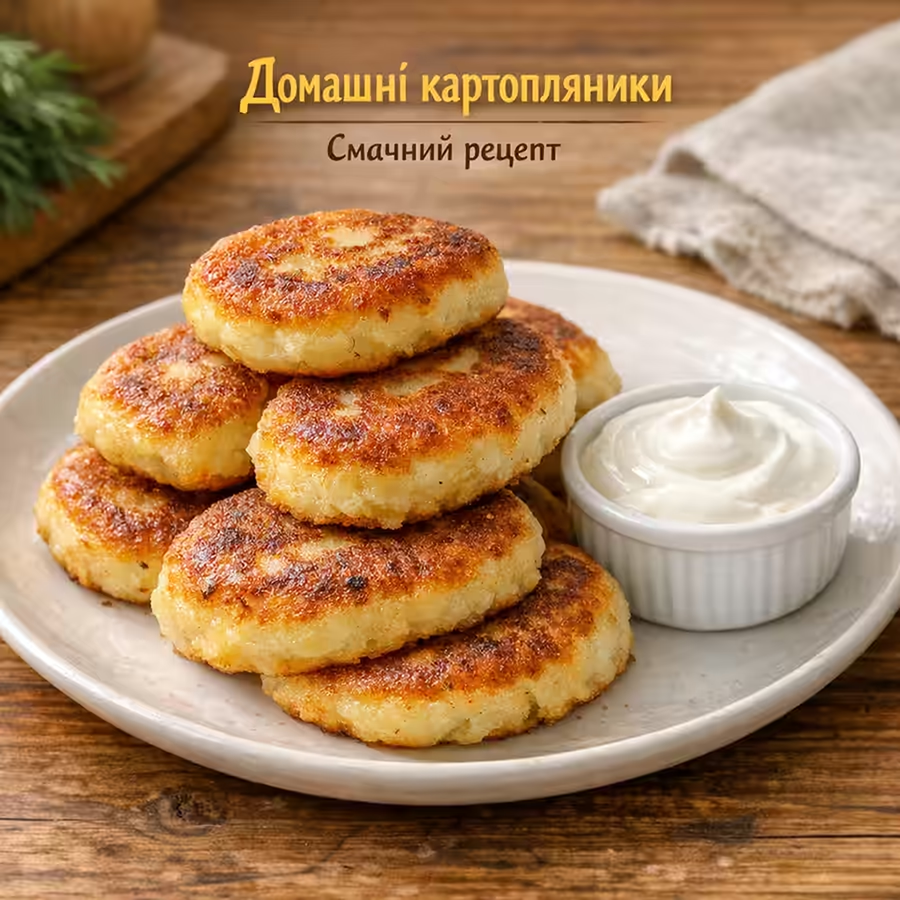
Potato patties are simple and hearty patties made from boiled potatoes, which can be prepared either plain or stuffed with cheese, meat, or cabbage. The dough comes together quickly, and they’re fried in a pan until golden brown—and in just 40 minutes, you’ll have a warm, homemade meal on the table.
Content
A brief description of the dish
What are potato pancakes?
Potato patties are made from mashed potatoes, flour, and eggs, shaped into flat patties or oval-shaped cakes. They can be filled or left plain—both versions are delicious and have their own fans.
How do they differ from deruny and zraz?
Deruny are made from raw grated potatoes—which is why they have that characteristic crispy crust and juicy center. Potato pancakes are made from boiled mashed potatoes, so they are softer and more tender inside. Zrazy are essentially the same dish, just in the classic form with a filling; in everyday speech, potato pancakes and zrazy are often used interchangeably.
Ingredients for potato pancakes
Basic ingredients for the dough (makes 10–12 pieces)
- Boiled potatoes — 1 kg (about 6–7 medium potatoes)
- Egg — 1
- Wheat flour — 80–120 g (plus extra for dusting)
- Salt — to taste
- Ground black pepper — to taste
- Cooking oil — 3–4 tablespoons
Prep time: 15 min | Cook time: 25 min | Yield: 10–12 pieces
Cottage cheese filling
- Cottage cheese (at room temperature) — 200 g
- Fresh dill — a small bunch
- Salt — a pinch
Meat filling
- Ground pork and beef — 200–250 g
- Onion — 1
- Salt and pepper — to taste
Cabbage filling
- Braised cabbage — 200 g
- Onion — 1
- Oil — 1 tbsp.
- Salt and pepper — to taste
Version without filling
Basic dough + finely chopped dill or green onions (optional) mixed right into the dough.
Step-by-step instructions for making potato pancakes
How to prepare potatoes
- Peel the potatoes and cut them into even pieces so they cook evenly.
- Boil in salted water until tender—15–20 minutes, depending on size.
- Drain the water completely through a colander. Let the potatoes sit for 2–3 minutes to allow any excess moisture to evaporate.
- Mash until smooth and lump-free. Do not add milk or butter—the potato pancakes need to be made with dry ingredients.
How to make potato dough
- Let the mashed potatoes cool to room temperature.
- Add the egg, salt, and pepper. Stir.
- Add the flour in batches—start with 80 g. Knead until the dough no longer sticks to your hands but remains soft.
- If the dough is still sticky, add another 1–2 tablespoons of flour.
How to make potato mounds
Without filling:
- Wet your hands with water or lightly dust them with flour.
- Pinch off a piece of dough about the size of a small egg and roll it into a ball.
- Flatten it slightly—you’ll end up with a round patty about 1.5 cm thick.
- Coat both sides in flour.
Filled with:
- Shape the dough into a flat disc in the palm of your hand.
- Place 1 teaspoon of filling in the center—no more, or the filling will leak out.
- Pinch the edges together and shape into an oval patty.
- Coat them in flour.
How to fry
- Heat a skillet over medium heat and add the oil.
- Place the potato slices in a single layer—they shouldn’t touch each other.
- Cook for 3–4 minutes on the first side, until the bottom is golden brown.
- Flip it over and cook for another 3–4 minutes—until the crust is evenly browned.
- Place the cooked potato pancakes on a paper towel to absorb the excess oil.
In the oven: Place on a baking sheet lined with parchment paper, brush with oil, and bake at 200°C for 20–25 minutes, flipping once halfway through.
Tips for Successful Potato Growers
Which potatoes are best to use?
Choose potatoes with a medium or high starch content—floury varieties. They produce a dry, firm texture after cooking, and the dough holds its shape and doesn’t spread in the pan.
How to Avoid Sticky Dough
The main reason is that the potatoes are too wet. After draining the water, let the mashed potatoes “steam off” over low heat for 1–2 minutes, stirring constantly. This will make the mixture drier, and you’ll need less flour.
How to make a golden crust
The pan should be well heated before adding the potato pancakes—a drop of water should evaporate immediately. Don’t use too much oil: a thin layer is enough. Don’t cover the pan with a lid while frying—the steam will make the crust soggy.
Common mistakes
The potato mixture is too wet
Reason: The potatoes weren’t completely dry after cooking, or you added milk to the mashed potatoes.
Solution: Always drain the water completely and let the mashed potatoes dry out a bit on the stove without a lid.
Too much flour
Reason: Trying to “fix” dough that’s too soft by adding flour.
Solution: The potato pancakes turn out hard and “rubbery.” It’s better to add as little flour as possible—just enough so the dough doesn’t stick to your hands.
The pan is not at the right temperature
Reason: The pan is too cold or the heat is too high.
Solution: If it’s too cold, the dough sticks and spreads out; if it’s too hot, the crust burns while the inside remains raw. You need medium, even heat.
The filling leaks out while frying
Reason: The edges aren’t sealed tightly, or there’s too much filling.
Solution: Press the edges firmly with your fingers, and use no more than 1 teaspoon of filling. If using moist cheese or cabbage, squeeze out as much liquid as possible beforehand.
Variations on the recipe
Potato pancakes with cheese
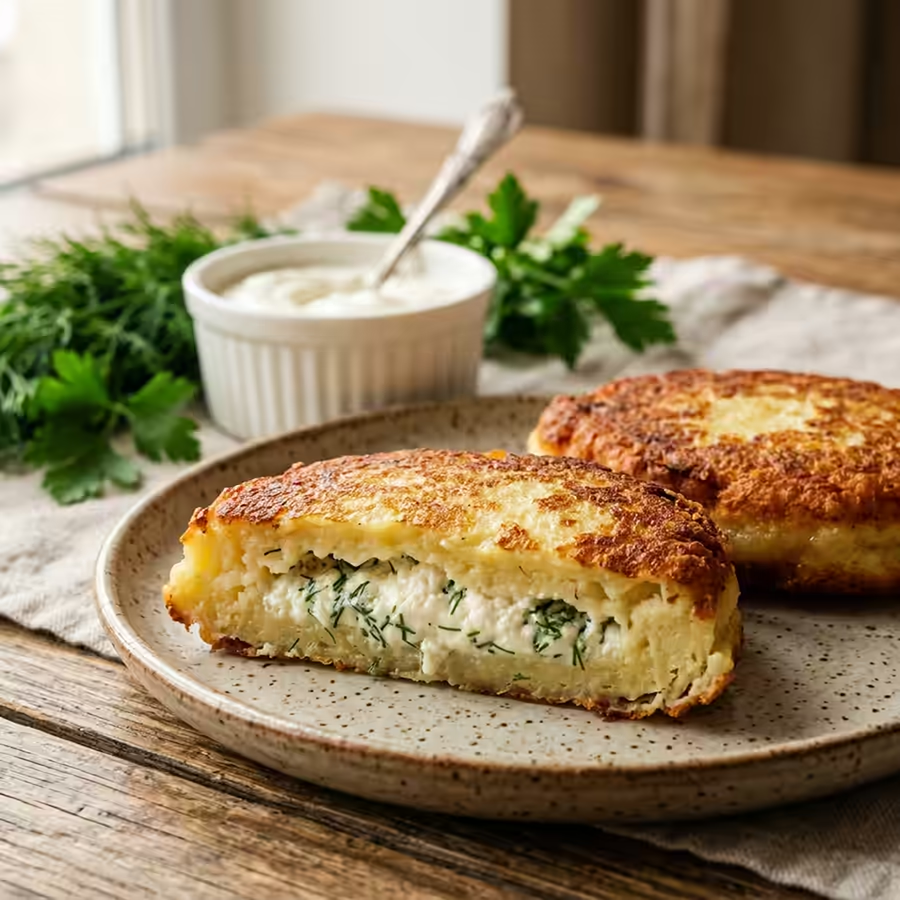
For the filling, mix 200 g of cottage cheese with finely chopped dill and a pinch of salt. If the cottage cheese is too runny, press it well through cheesecloth. You can use a mixture of cottage cheese and hard cheese—this will result in a creamier filling with a stretchy texture.
Potato pancakes with meat
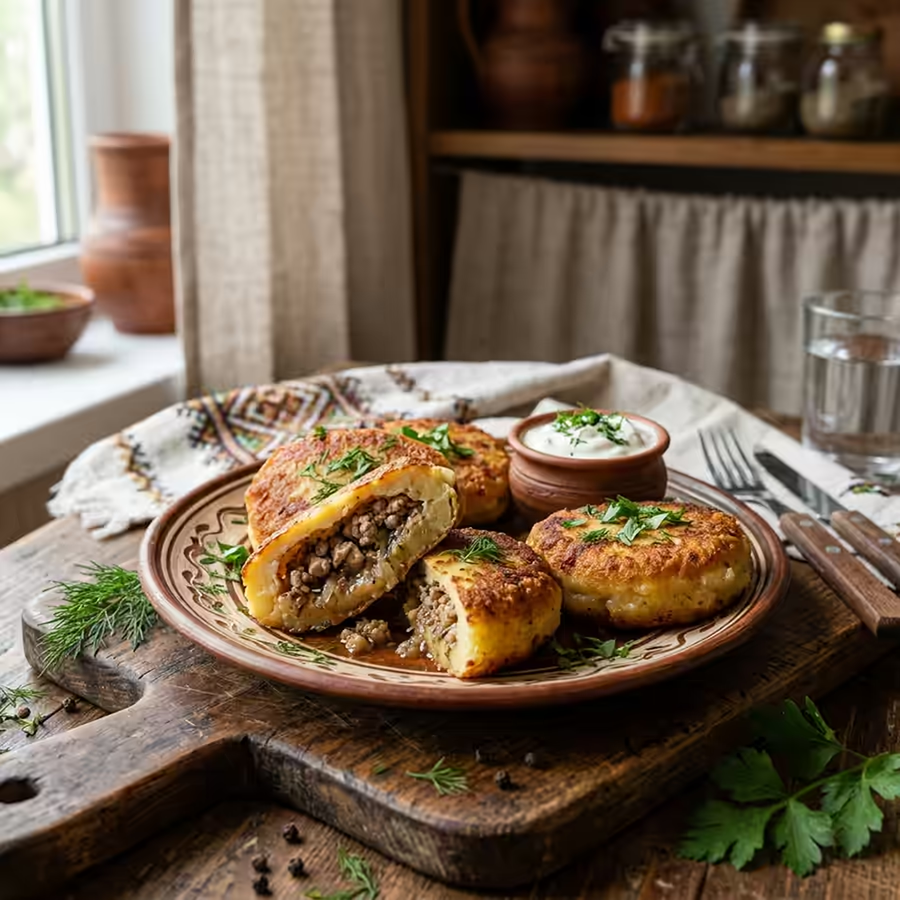
Sauté the onions until translucent, add the ground meat, season with salt and pepper, and cook until the meat is fully cooked. The filling should be completely cooked before it goes inside—it will only heat up during frying. Let it cool before shaping so the potato patties don’t tear.
Potato pancakes with cabbage
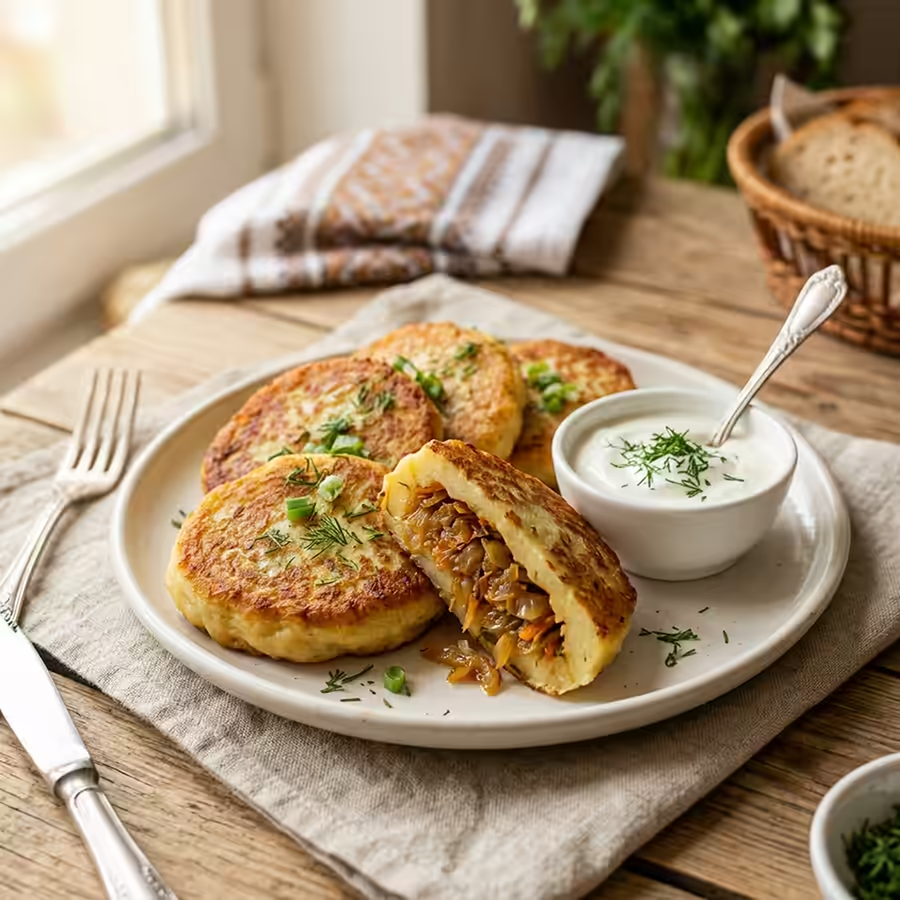
Chop the cabbage, sauté it with the onion in oil until tender, and season with salt. Let it cool and squeeze out the excess liquid thoroughly—any excess liquid will make the edges of the dough soggy, causing the potato pancakes to fall apart. You can add a pinch of cumin to taste—it’s a classic combination.
Potato pancakes without filling
The quickest option: shape the patties from the basic dough and fry them right away. You can add a little finely chopped dill, garlic, or green onion to the mixture—it will be more flavorful.
A vegetarian version
Omit the egg from the recipe—the mashed potatoes will hold their shape even without it, as long as the mixture is dry enough. Fry in vegetable oil. For the filling, use cabbage and onions or mushrooms and onions.
How to apply
With sour cream
A classic choice is sour cream at room temperature. It balances the richness of the crispy crust and brings out the flavor of the potatoes. You can add garlic and dill to the sour cream to make a simple homemade sauce.
With sauce or gravy
Potato pancakes go well with mushroom gravy or tomato sauce. Another option is onion gravy: sauté the onions until caramelized, add a little broth, and simmer for 5 minutes.
As a main course or appetizer
As a main course, serve 3–4 pieces per serving with a fresh salad or pickled vegetables. As an appetizer, serve on a plate with a selection of sauces: sour cream, tkemali, and garlic paste.
How to store
In the refrigerator
Store the prepared potato pancakes in a container with a lid or wrapped in plastic wrap—up to 3 days in the refrigerator. To prevent them from sticking together, separate the layers with parchment paper.
Can it be frozen?
Yes, and it’s best to freeze them before frying. Shape the potato patties, place them on a baking sheet lined with parchment paper, and freeze until firm (1–2 hours), then transfer them to a bag. They’ll keep for up to 1 month. You can also freeze the cooked patties, but they’ll be a little softer after reheating.
How to reheat food to preserve its texture
The best way is to cook them in a dry, preheated skillet without oil, for 2–3 minutes on each side: this will crisp them up again. The microwave will make them soft and a little “rubbery”—not ideal, but acceptable if you’re in a hurry.
Frequently Asked Questions
How do potato pancakes differ from deruny?
Deruny are made from raw grated potatoes, while potato pancakes are made from boiled mashed potatoes. They have different textures and flavors, even though both are potato dishes.
Can you make potato pancakes using leftover mashed potatoes?
Yes, and it’s convenient. The main thing is that the mashed potatoes shouldn’t contain too much milk or butter—otherwise, the batter will be too soft.
Why do potato pancakes fall apart in the pan?
Most often, it’s because the mixture is too wet or there isn’t enough flour. Check the consistency: the batter should hold together and not stick to your hands.
Do you need an egg in the dough?
An egg binds the mixture and makes it more pliable, but you can manage without it—especially if the potatoes are starchy and the mixture is fairly dry.
How long should you fry the potato pancakes on each side?
3–4 minutes on medium heat on each side, until golden brown.
What kind of cheese is best for the filling?
Fermented milk cheese (homemade or store-bought)—it’s soft and holds its shape well. You can mix it with grated hard cheese for a stretchy texture.
What kind of meat is best for the filling?
Ground pork and beef is the most common choice. Chicken or any other type of roasted meat, finely chopped, will also work.
Can you make potato pancakes in the oven?
Yes. Bake at 200°C for 20–25 minutes, flipping them once. The crust won’t be as golden as when cooked in a pan, but the dish will be less greasy.
Are potato patties suitable for freezing?
Yes, preferably raw, right after shaping. Fry them straight from the freezer, just letting them cook a little longer in the pan.
How do you reheat potato pancakes so they become crispy again? Cook them
in a skillet without oil over medium heat for 2–3 minutes on each side. Or bake them in the oven at 180°C for 10 minutes.