
Anchovies are a small fish with a huge taste, which has remained a net for thousands of yearsa capacious part of Mediterranean and world cuisine. This article will tell you all about anchovies: from biological features to the most delicious recipes and useful tips for cooking at home.
What are anchovies
Зміст
Anchovies are a small sea fish from the anchovies family (Engraulidae), which is a distant relative of herring. This is not just the name of the cooking method, as many mistakenly believe, but a specific biological species of fish. The European anchovies (Engraulis encrasicolus) is the most common species known in Ukraine as anchovies.
Appearance and specifications
Anchovies have characteristic features that distinguish them from other small fish:
Dimensions: The body length of adults is usually 12-15 cm, up to 20 cm. The weight of the largest representatives can reach 190 g.
Body structure: Cigar-shaped, compressed on the sides of the body is covered with a thin cycloid scale, which falls easily. The head is bare, without scales.
Feature of the mouth: The most characteristic feature is a very large mouth, much larger than herring. The posterior end of the long maxillary bone goes beyond the edge of the pre-cap. It is because of this feature that the anchovies got their Spanish name BoqueRone, which comes from the word “boca” – mouth.
Color: The back is bluish-green, sometimes almost black, the sides are silvery-white. A silver stripe with a metallic luster often stretches along the body.
Eyes: large, covered with a transparent leather film.
What are anchovies: types and varieties
The anchovies family has 144-146 species,united in 17 genera. They live in the Atlantic, Indian and Pacific Oceans, the Black and Mediterranean Seas.
The main industrial types
European Anchovy (Anchovies) – engraulis encrasicolus. The most common in the Mediterranean, Black and Azov Seas, also in the Eastern Atlantic from Norway to South Africa. This is one of the three most industrial species of anchovies in the world.
Peruvian anchovies – engraulis ringens. One of the most extracted fish species in the world’s oceans.
Japanese anchovies – engraulis japonicus. Distributed in the Pacific Ocean south of the Sea of Okhotsk, widely found in the Sea of Japan.
California anchovies – Engraulis Mordax. Inhabits the coast of North America.
Argentine anchovy – engraulis anchoita. Distributed off the coast of South America.
Australian anchovies – engraulis australis. It is found off the coast of Australia and New Zealand.
Anchovies vs anchovies: what’s the difference?
Many people ask if there is a difference between anchovy and anchovy. In fact, the European anchovies and anchovies are the same biological species. Anchovies are called representatives of the world’s oceans, and anchovies are the name common to fish found in the Black and Azov Seas.
The key difference It consists not in the form of fish, but in the way it is processed:
Taste: Anchovies have a different, more intense taste. They are fatter than a few, and the composition of fats is different – in anchovies are much more useful trace elements.
salting method: Anchovies are prepared using a special technology called “Anchous Ambassador”. The fish are placed in spicy brine for several days immediately after catching, then sprinkled with large salt and kept in barrels for four months. During this process, fermentation takes place, which gives the fish a special spicy taste.
Color MYasa: Anchovy fillet in the process of salting acquires a characteristic red-pink color, while MThe meat remains white.
Texture: MThe anchovies are denser, but at the same time softer than several.
Nutritional value and useful properties

Anchovies are a real treasure trove of nutrients, which makes them a valuable product for a healthy diet.
Caloric content and KBZHU
The caloric content of anchovy depends on the method of preparation:
- Raw anchovy: 131 kcal per 100 g
- Dried salty: 320 kcal per 100 g
- Canned in oil: 210 kcal per 100 g
- In oil “Plashma”: 235 kcal per 100 g
Nutritional value of raw anchovies (100 g):
- Proteins: 20.5 g
- Fats: 6.3 g
- Carbohydrates: 0 g
- Water: 71.5 g
- Ash: 1.3 g
Dried salted anchovies (per 100 g):
- Proteins: 52.7-57.4 g
- Fats: 3.0-3.1 g
- Carbohydrates: 0.1-0.5 g
- Salt: 15.6 g
Vitamin and mineral composition
Anchovies are rich in vitamins and minerals that are important for the body:
Vitamins:
- Vitamin B12 is necessary for the normal functioning of the nervous system
- Vitamin A is good for eyesight and skin
- Vitamin D is important for healthI’m bones
- Vitamin B group – support energy metabolism
Minerals:
- Omega-3 fatty acids – in very high concentrations
- Calcium – strengthens bones
- Phosphorus is essential for bone tissue
- Potassium – regulates water-salt balance
- Iron – prevents anemia
- Selenium is a powerful antioxidant
- Iodine is important for the thyroid
- Magnesium – supports the nervous system
Beneficial properties for healthI
Cardiovascular support: Omega-3 fatty acids reduce the level of triglycerides by up to 30%, prevent narrowing and inflammation of blood vessels, reduce the risk of blood clots. Anchovies promote a normal heart rate and balance blood pressure.
Cholesterol reduction: Regular consumption of anchovies improves blood lipid profile and lowers “bad” cholesterol.
Healthyme brain and nervous system: Polyunsaturated fatty acids improve brain function, increase attention and PMyat, help to get rid of depression.
Strengthening bones and joints: high in calcium and vitamin D keeps you healthyI bone tissue, prevents osteoporosis, reduces inflammation in the joints.
Immunity support: Omega-3 is a structural component of cell membranes – a protective wall against the penetration of viruses.
Anti-inflammatory action: Omega-3 fatty acids reduce the risk of chronic inflammation, acne, autoimmune diseases.
For sight: Vitamin A and fatty acids are necessary for the formation of a healthy retina.
Male healthyI: Anchovies increase male strength due to the rich composition of trace elements.
Dietary product: High protein content provides a long-lasting feeling of satiety, which is important for weight control.
Ecological safety
Unlike large predatory fish, anchovies have a short lifespan – only 3-4 years. During this time, the fish do not have time to accumulate heavy metals, including mercury. This makes anchovies safe for regular use, including children and pregnant women.
Contraindications and possible harm
High salt content: The main disadvantage of most canned anchovies – a large amount of salt. Dried anchovies contain almost 16% salt, fillets in oil – 8.8%, preserves – 6.3%. Enough withEat 50 g of dried fish to exceed the recommended daily allowance of 5 g of salt.
Restrictions for certain groups: Salty and smoked anchovies are not recommended for people with hypertension, kidney disease, susceptibility to edema.
Allergic reactions: Like any seafood, anchovies can cause allergies in sensitive individuals.
Recommendation: If the anchovies are too salty, they can be soaked for 10-15 minutes in water or milk before eating.
How to make anchovies at home
Cooking anchovies at home is quite real, although it takes time and patience. Consider a few proven ways.
Recipe 1: Classic anchovies salted in oil
Ingredients:
- Fresh anchovies (amsa) – 500 g
- sea salt – 4-6 tbsp. l.
- sunflower or other refined oil – 1-1.5 cups
- Garlic, hot red pepper, parsley – optional
Step-by-step recipe:
- Rinse fresh fish well under running water. Use scissors to remove the heads, clean the entrails with your hands and remove the spine. It is important to do this well, because dark entrails can add bitterness.
- Pour salt into a small vessel, put the fish skin up, then salt and a layer of fish again. Continue until all the anchovies are over.
- Put the fish under the press (you can use a saucer and press with a bottle of water) and send in the refrigerator for two weeks. From time to time drain the released water.
- Transfer well-salted anchovies to another vessel, pouring oil and sliced garlic, hot pepper, parsley between the layers of fish. Fill the last layer with oil so that it covers all the fish. In this way, the anchovies are “preserved” and will be well stored in the refrigerator.
Recipe 2: Quick Marinade for Anchovies
Ingredients:
- Anchovies (fresh, peeled)
- Water – 1 liter
- Carnation – 4-5 pcs.
- Black pepper peas – 15 pcs.
- Bay leaf – 5-7 pcs.
- Salt – 100 g
- Sugar – 50 g
Step-by-step recipe:
- Rinse fresh fish, remove entrails, spine and heads.
- Pour water into a saucepan, add salt, sugar and bay leaves. Grind cloves and black pepper in a mortar and add to the water too.
- Put the pan on the fire, bring to a boil and turn off. Leave the marinade to cool to room temperature.
- Put the fish in a deep bowl, fill with chilled marinade and cover.
- Refrigerate for at least 24 hours. During the first day, it is desirable to mix the fish at least twice so that it is evenly marinated.
Recipe 3: Express Base (Ready 3 hours later)
Ingredients:
- Anchovy – 500 g
- salt – 1.5 tbsp. spoons
- Sugar – 1 tsp
Preparation:
- Peel the fish (remove the heads and entrails).
- Mix with salt and sugar.
- Leave for 2.5-3 hours in the cold.
- Rinse and eat.
Recipe 4: Marinade with vinegar (10-12 hours)
Ingredients:
- Peeled anchovies
- Water – 1 liter
- salt – 1 tbsp. l.
- sugar – 1 tsp.
- Bay leaf – 2-3 pcs.
- Scented pepper
- coriander – 1 tsp.
Preparation:
- simmerEat the marinade with all the ingredients for 5 minutes.
- Cool.
- Fill the peeled fish with cold marinade.
- Refrigerate for 10-12 hours.
Recipe 5: teddy anchovies in oil
Ingredients:
- anchovies – 1 kg
- Sunflower oil – 250 g
- bay leaf, fragrant pepper, cloves, fish seasoning
- Salt – to taste (if the fish is freshly frozen)
Preparation:
- Clean the fish. If it is fresh-frozen, salt.
- Send in the oven and simmer for about an hour at 100 ° C with the door open.
- Heat the oil on a gas stove (without bringing to a boil). Add bay leaf, fragrant pepper and cloves.
- Fill the fish with spicy oil.
- In this form, anchovies will be stored for a long time in the refrigerator.
Cooking tips
- Use the freshest fish is the key to success
- Thoroughly remove dark viscera to avoid bitterness
- For long-term storageDefinitely cover the fish with oil
- Anchovies in salt can be stored for a very long time
- If the anchovies are too salty, soak them for 10-15 minutes in water or milk
where anchovies are used in cooking
Anchovies are a universal ingredient used in kitchens around the world, especially in Mediterranean cuisine.
Historical use
Back in ancient times, anchovies were highly valued for making legendary sauce GARUM (Garum). This fish sauce was extremely popular in ancient Rome and was applied to both salty and sweet dishes. In the Roman Culinary Book Apizia I century AD. Garum was part of most recipes.
The reason for this popularity was the so-calledyaty taste “- umami. Garum was prepared by fermentation of salted fish (anchovy, mackerel, herring) for 2-3 months. The production of garum was occupied by ancient city-states in Ukraine – Olbia, Chersonese, Pantikapaion.
Modern use in dishes
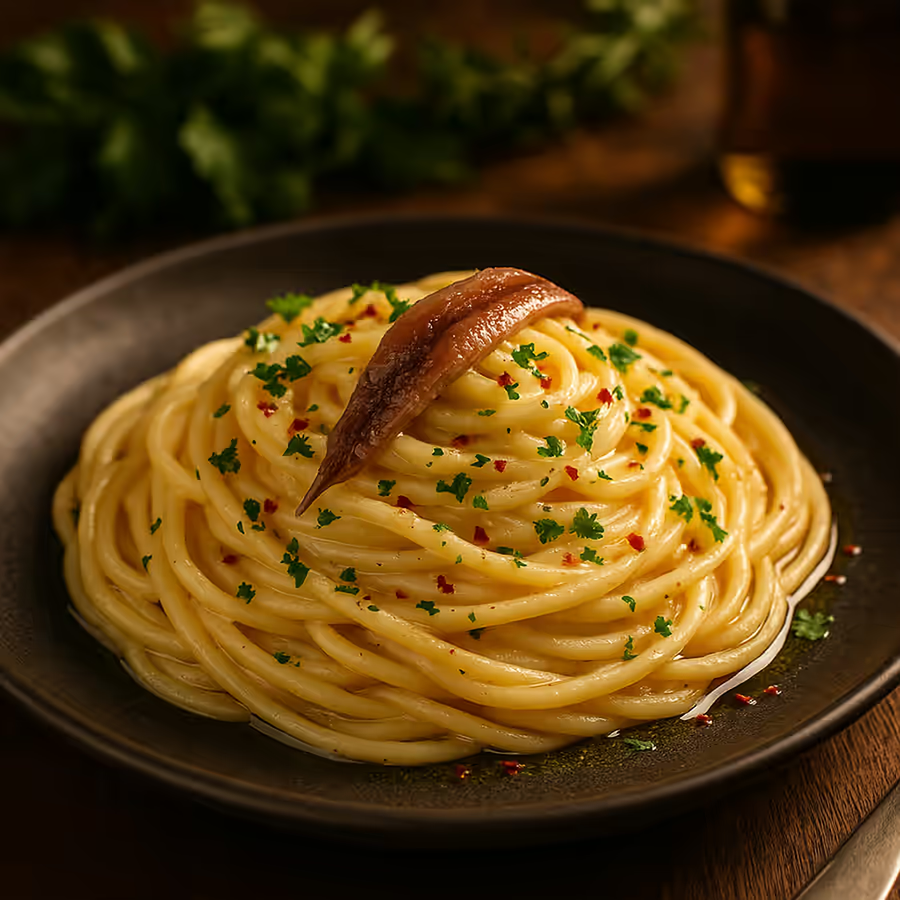
Pasta and sauces: Anchovies are a classic ingredient in Italian pasta. When heated, anchovy fillets dissolve quickly and turn into a fragrant base for the sauce. The most famous dishes:
- Puttanesca paste with anchovies, tomatoes, capers and olives
- Spaghetti with anchovies, garlic and chili
- Anchovies, Anchovies, and Cherry Tomato Pastes
Pizza: Anchovies – a traditional pizza topping. The four seasons of the year Italian pizza is especially popular with anchovy and Pizza Napoletana. The base is greased with tomato sauce, fish, olives and capers are spread, sprinkled with mozzarella.
Caesar salad: anchovies – a mustThe language component of the authentic Caesar sauce. They add a characteristic taste to the umami dressing. The classic sauce is prepared from egg yolk, Dijon mustard, garlic, anchovies, lemon juice and olive oil.
Sauces and dressings: Due to the strong taste of anchovy is an ingredient in many sauces:
- Worcestershire sauce
- Asian fish sauces
- Remulad
- Banya Cauda Sauce – Italian Anchovy Garlic Sauce
Sandwiches and bruschettas: Anchovies go well with butter on toast. They can be laid out whole fillets or ground into a paste.
Salads: In addition to Caesar, anchovies are added to French salad Nisuaz, Mediterranean salads with greens, salads with mozzarella.
Other dishes:
- stewed dishes with beef or lamb
- Stuffing olives
- Pâtés and spreads
- Casserole
- Soups
Culinary properties
Taste of umami: Anchovies have an intense salty taste with pronounced fishy notes and taste of umami. This is a saturated MA clear, slightly earthy taste, which adds depth and versatility to dishes.
Solubility: Anchovy fillet dissolves easily when added to sauces and leaves only taste and aroma. When cooked in a pan, the anchovies lose their shape and turn into a “pate”, so the sauce becomes homogeneous.
Intensity: Due to the strong taste, a limited number of anchovies are used. When adding to dishes, you should reduce the amount of salt.
Recipes with anchovies
Anchovy paste by Yevhen Klopotenko
Ingredients:
- Orquiette paste – 250 g
- anchovies – 5 pcs.
- Onions – pcs.
- Garlic – 2 cloves
- Parsley – 5 twigs
- chili peppers – pcs.
- thyme – 2 sprigs
- Cherry tomatoes – 10 pcs.
- White wine – 50 ml
- olive oil – 3 tbsp. l.
- oregano dry – tsp.
- salt, pepper – to taste
Preparation:
- Boil the paste in salted water according to the instructions (about 12 minutes). Discard on the durschlag.
- Finely chop the onion, garlic, parsley, chili, thyme and anchovies with a knife. The smaller, the better.
- Wash the cherry tomatoes and cut in half.
- Heat a frying pan with olive oil and simmer the chopped vegetables, greens and anchovies for a few minutes.
- Pour in the wine and simmer for 2 minutes until it evaporates.
- Add tomatoes, oregano, salt and pepper to taste.
- Pour the finished paste into the pan, stir and heat for a few minutes so that the paste is drunk with sauce.
- Arrange on plates and serve.
Real Caesar Sauce with Anchovies
Ingredients:
- egg yolks – 2 pcs.
- Dijon mustard – 1 tsp.
- Garlic – 2 cloves
- anchovies – 10 pcs. (or 20 g)
- lemon juice – 2 tbsp. l.
- Worcestershire sauce – 1 tsp.
- Olive oil – 100 g
- Grated Parmesan cheese – 20 g
- salt, black pepper – to taste
Preparation:
- Mash the anchovies with a fork to a state of paste.
- Pass the garlic through the press. Add to the anchovies along with egg yolks.
- Add Dijon mustard, lemon juice, Worcestershire sauce. Beat with a coin.
- Continue to beat, gradually pouring in olive oil (literally on tsp). Bring to a uniform consistency.
- Add grated Parmesan cheese, salt and pepper to taste. Mix thoroughly.
- The sauce is ready. Can be stored in the refrigerator for up to 5 days.
Salad-paste with anchovies
Ingredients:
- Paste – 250 g
- Anchovies – 50 g
- Garlic – 3 cloves
- Ground red pepper
- olive oil – 4 tbsp. l.
- butter – 2 tbsp. l.
- lemon juice – 2 tbsp. l.
- Chicken lettuce leaves
- Arugula
- fresh basil
- salt, black pepper
Preparation:
- Mix anchovies, finely chopped garlic, oil and red pepper in a large pan. Cook over medium heat, stirring frequently, until the anchovies turn into paste and the garlic is lightly not underwhelmedyanisya (6-8 minutes).
- Remove from heat and add butter and lemon juice, stir until the oil is completely melted.
- Boil the pasta, add to the sauce with a glass of cooking liquid. Stir until a thick cream sauce is damped.
- Cut the chicory leaves into large pieces, transfer to a bowl. Add the pasta with the sauce, stir, gradually adding the liquid from the cooking.
- Add arugula and basil, season with salt and pepper. Carefully spread out on plates.
Pizza with anchovies
Ingredients:
- Ready-made pizza dough
- Tomato sauce
- anchovies – 10-15 pcs.
- Mozzarella – 150 g
- olives – 10-12 pcs.
- capers – 1 tbsp. l.
- Oregano is fresh
Preparation:
- Roll out the dough, grease with tomato sauce.
- Lay out anchovies, olives and capers.
- Sprinkle with grated mozzarella.
- Bake at 220 ° C for about 15 minutes until the crust is golden.
- Garnish with oregano leaves before serving.
Tips for choosing and storing
How to choose quality anchovies
Canned in oil: It is better to choose anchovies packed in jars “plashma”, rather than “stand” in oil – so it is much easier to remove them whole. Pay attention to the quality of the oil – it should be transparent.
Anchovies in salt: This is the best option for long-term storage. The fillet retains its shape and can be stored for a very long time.
Fresh / frozen: If you plan to cook anchovies yourself, buy the freshest fish or fresh-frozen fillets.
Country of origin: The best are Italian anchovies caught in the Tyrrhenian Sea. Spanish and Mediterranean anchovies are also highly valued.
How to store properly
undisclosed canned food: Store at room temperature until the expiration date indicated on the package.
Open anchovies in oil:
- Leave in oil
- Transfer to an airtight glass jar
- Store in the refrigerator at 5-8°C
- Shelf life – no more than 5 days
Anchovies in salt: Can be stored for a very long time in a cool place. Make sure the fish is completely covered with salt.
Freezing: Yes, anchovies can be frozen. Put them one at a time on a small sheet of parchment, then pack or put in a ziploc package. They will melt in a few minutes at room temperature.
Homemade anchovies in oil: Store in the refrigerator in an airtight container. Make sure the oil completely covers the fish.
Tips for use
How to reduce salinity: If the anchovies are too salty, soak them for 10-15 minutes in water or milk before use.
Number of dishes: Due to the intense taste, use anchovies in moderation. Usually 5-10 fillets per portion of pasta or sauce are enough.
Reducing salt in the recipe: When adding anchovies to dishes, reduce the amount of salt, because the anchovies themselves are quite salty.
Tube paste: If you use anchovies only for flavoring, you can use anchovy paste in a tube – it’s more convenient for storage.
How to replace anchovies
If you do not have anchovies on hand or you do not like their taste, there are several alternatives.
The best substitutes
Some spicy ambassador: the most similar alternative. Several also belong to small sea fish, although it has a less pronounced taste.
Thai or inYetnam fish sauce: gives a similar taste to umami and is also made from fermented fish.
Worcestershire sauce: Contains anchovies in its composition, so it can partially replace them in sauces and marinades.
Herring: A simple option available in Ukraine.
Small saithe: The most similar in size to anchovies, although the taste is less pronounced.
Capers: Although it is not fish, capers add similar salinity and spiciness in some dishes.
For vegetarians
If you are looking for a fishless alternative:
- Soy sauce – Adds salinity and umami
- Miso-paste – Fermented product with taste of umami
- Olives + capers – The combination creates a similar salinity and spiciness
- Dried algae (Nori, Kombu) – give a sea flavor
FAQ: frequently asked questions about anchovies
Is there a difference between anchovy and anchovy?
No, the European anchovies and anchovies are the same biological species of fish. The difference is in the method of processing: anchovies are salted by a special technology with long-term fermentation, which gives them a characteristic red-pink color and spicy taste.
Can you eat anchovies pregnant?
Yes, anchovies are on the list of safe seafood for pregnant women. They contain little mercury after a short lifespan (3-4 years). However, you should choose heat-treated or pasteurized options and avoid excessive consumption due to the high salt content.
How many anchovies can you eat a day?
Moderate consumption is the key to good. Due to the high salt content (especially in dried and canned versions), it is recommended to limit 30-50 g per day. Only 50 g of dried anchovies contain almost three times more salt than the daily norm.
Can you eat anchovies for children?
Yes, anchovies can be introduced into the children’s diet, but with caution. They are a source of omega-3 and protein. However, due to the high salt content, it is better to choose low-salt options or soak before serving. It is not recommended for children under 3 years of age due to the risk of allergies.
Why are anchovies so salty?
The traditional method of cooking anchovies involves a long brine (up to 4 months). Salt performs several functions: preserves fish, promotes fermentation and creates a characteristic taste. Dried anchovies are the saltiest (up to 16% salt).
Do anchovies dissolve during cooking?
Yes, anchovy fillet dissolves easily when heated in oil or sauces. They turn into a fragrant paste, leaving only the taste of umami. This makes them ideal for pasta sauces.
How long are open anchovies stored?
Open canned anchovies in oil are stored in the refrigerator for 5 days, provided that they are completely covered with oil and stored in an airtight container. Anchovies in salt can be stored much longer.
Can you freeze anchovies?
Yes, anchovies can be frozen. Put the fillets one by one on parchment and pack in a vacuum or regular bag. They thaw very quickly – in a few minutes at room temperature.
What is the difference between anchovies and sardines?
Anchovies are smaller in size (12-15 cm) and have a more intense salty taste. sardines are larger (up to 25 cm), have mWhat an oily taste. Anchovies are more often salted with fermentation, sardines – canned with heat treatment.
Are there anchovies in regular Caesar salad sauce?
yes authentic caesar sauceDefinitely contains anchovies. They give a characteristic taste to umami. However, in some restaurants and ready-made versions, anchovies may be missing to simplify the recipe.
Where can I buy quality anchovies in Ukraine?
Anchovies (amsu) can be found in supermarkets in the canned fish department, specialty seafood stores, online stores. Fresh Black Sea anchovies can be bought in the markets of coastal cities.
Conclusion
Anchovies are a unique product that combines a rich history, exceptional taste qualities and numerous beneficial properties for healthI’m. This small fish from the anchovies family is a real treasure trove of omega-3 fatty acids, vitamins and minerals.
Due to the high content of polyunsaturated fatty acids, anchovies support healthyI have a cardiovascular system, lower cholesterol, improve brain function and strengthen bones. At the same time, they are environmentally friendly because they do not have time to accumulate heavy metals after a short lifespan.
In cooking, anchovies are indispensable for creating a taste of umami in sauces, pasta, pizzas and salads. They dissolve easily during cooking, giving the dishes a deep, multifaceted taste. And thanks to our recipes, you can cook anchovies at home yourself.
The main thing is PamTo be able to take moderation in consumption due to the high salt content and choose quality products from proven manufacturers. Then anchovies will be not only tasty, but also a useful addition to your diet, enriching it with Mediterranean traditions and promoting longevity and healthYu.
We hope that this article has helped you learn everything you need about anchovies – from their biological features to practical advice on cooking and use. Bon appetit!