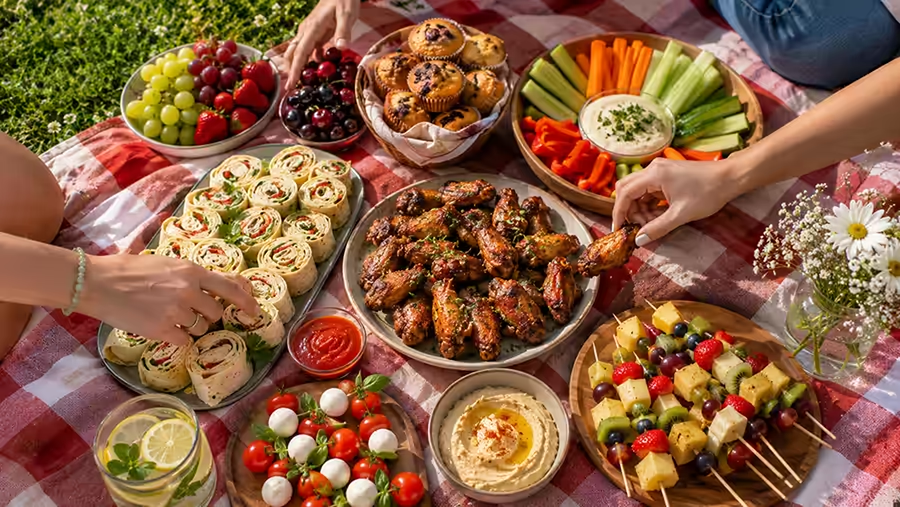
A picnic is one of those occasions where a fork is unnecessary, and the plate is usually disposable and prone to flying away at the slightest breeze. So the main rule here is simple: everything should be easy to hold, not drip down your sleeve, and taste good even when warm. In this article, I’ve gathered some tried-and-true ideas for what to bring on a picnic so that the food is delicious and you don’t have to fuss with dishes—from sandwiches and tartlets to chicken wings, falafel, and fruit on skewers.
Content
Why the “eating with your hands” approach works best outdoors
On the grass, a blanket, or a folding table, you don’t have the usual kitchen setup. There’s no flat surface for a knife, no sink nearby, and half the group is holding a glass in one hand and a phone in the other. Anything that needs to be cut on the spot immediately makes life more complicated. That’s why finger food isn’t just a trend, but common sense: these dishes are easier to portion at home, more convenient to pack, and almost impossible to spill.
There’s another practical consideration: temperature. In the summer, food sits out in the sun, and there’s no refrigerator nearby. Dishes that taste best at room temperature or slightly warm have an advantage over those that need to be served piping hot. That’s exactly why baked goods, vegetable appetizers, cutlets, and chicken wings are more appropriate here than, say, a delicate cream soup or a fresh salad with a dressing that will quickly “separate.”
And third—the company. Finger food is easy to share. A large platter of frittata cut into squares or mini pastries disappears on its own, without anyone having to line up at a shared pot. Everyone takes as much as they want, whenever they want. It’s the perfect dynamic for a picnic.
How to Plan a Picnic Menu: Simple Logic
Before you rush to cook everything under the sun, it’s worth figuring out the right balance. Here’s the formula I use myself: one or two hearty main dishes, two or three appetizers, one or two sauces, something vegetable-based for freshness, and something sweet to finish off the meal. This is enough for a group of 4–6 people without anyone overeating or looking hungry.
Also consider the preparation method. It’s helpful to make some dishes the day before (baked goods, cutlets, stuffed eggs), while others—the really simple ones—can be done just 10 minutes before you leave (chopping vegetables, rolling sushi). That way, you won’t spend half the day in the kitchen and won’t end up with everything going stale.
Below is a guide to help you quickly put together a balanced set.
| Category | Examples of dishes | Prepare in advance | How well it retains heat/time |
|---|---|---|---|
| Fine base | lavash rolls, quiche, cutlets, chicken wings | OK, 1 day | Okay, it’s best to eat them warm or at room temperature |
| Snacks | tartlets, deviled eggs, cheese sticks | Yes, a few hours | well |
| Vegetables and Freshness | vegetable sticks, falafel, pickled cucumbers | partially | very good |
| Sauces and dips | hummus, tzatziki, cheese dip | OK, 1 day | need coolness in the heat |
| Sweet | cupcakes, cookies, fruit on skewers | so | Okay, it’s better to cut the fruit right there |
And now—let’s take a closer look at each category, complete with recipes and tips.
Sandwiches, wraps, and anything else that’s rolled up
This is the foundation of any picnic, because these dishes are incredibly portable. But an “outdoor sandwich” isn’t just two slices of bread with sausage that will turn into stale bread by lunchtime—or, conversely, go soggy. There are some tricks to it.
Lavash wraps—the workhorse of any picnic
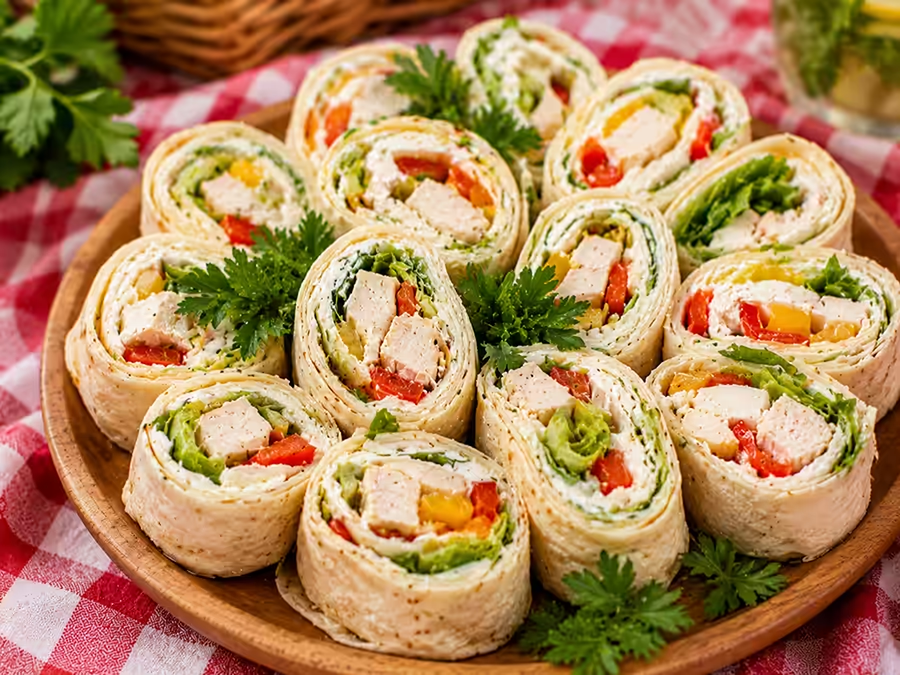
Thin Armenian lavash is the most convenient “wrap” you can imagine. It doesn’t crumble, holds the filling well, and cuts into neat rolls that are easy to pick up with your hands. The method is simple: spread a creamy base on the lavash (so the filling stays in place and doesn’t spill out), layer the filling, roll it up tightly, wrap it in plastic wrap, and let it “set” for at least 30 minutes. Then the roll slices cleanly and doesn’t fall apart.
A classic filling that everyone loves:
- Lay the lavash flat on a smooth surface.
- Spread a thin layer of cream cheese or a mixture of cream cheese and a tablespoon of sour cream, about 150 g per sheet.
- Spread the lettuce leaves over the entire surface—they create a “barrier” against moisture.
- Add 200 g of chopped roasted or smoked chicken.
- Arrange thin strips of pickled cucumber and fresh bell pepper.
- Sprinkle with chopped dill.
- Roll the lavash tightly into a roll.
- Wrap it in plastic wrap and refrigerate for 30–40 minutes.
- Before serving, cut it into 3–4 cm thick slices using a sharp knife.
You can customize the filling to your liking: red fish with cream cheese and cucumber, ham with hard cheese, mushrooms with sautéed button mushrooms, or a vegetarian option with hummus and roasted vegetables. There’s one main rule: use something creamy on the bottom as a “glue” and keep watery ingredients to a minimum, otherwise the lavash will get soggy.
Sandwiches that will last until lunchtime
Even ordinary sandwiches can be made portable. The secret lies in the correct order of the layers. Spread a thin layer of butter, mustard, or mayonnaise on the inside of the bread: the fatty layer prevents moisture from the filling from soaking into the bread. Place juicy ingredients (tomatoes, cucumbers) inside, between the dry layers of cheese or meat, rather than directly against the bread.
Dense breads hold their shape best: ciabatta, baguette, sandwich bread, and focaccia. Soft rolls go stale faster. And here’s another tip: wrap each sandwich separately in parchment paper and secure it with string or a toothpick—this makes them easy to hand out, and they won’t fall apart in your bag.
Pita bread and tortilla wraps
Pita pockets or rolled-up tortillas are another surefire option. Slice open the pita, fill it with falafel or chicken pieces, vegetables, and sauce. Spread the filling on the tortilla, roll it up like a wrap, and cut it in half diagonally. Both options are easy to eat with one hand, which is the main thing for a picnic.
Savory pastries: pies, quiches, and tartlets
Baked goods are the perfect example of “make it once, feed everyone.” They don’t need to be kept cold, travel well, and stay delicious at room temperature. They’re practically perfect for a picnic.
Baked pies
Baked pastries are better than fried ones for taking on the go: they’re not as greasy, don’t leave oil stains on the parchment paper, and stay fresh longer. You can use yeast dough or store-bought puff pastry—this saves a lot of time. Any filling will do, but for a picnic, non-runny fillings are more convenient: stewed cabbage, potatoes with onions, ground meat, eggs with green onions, or cheese with herbs.
To ensure the pastries brown nicely, brush them with beaten egg before baking. Bake at 180–200 °C for about 20–25 minutes, until golden brown. Let them cool on a wire rack, not in a covered dish, otherwise the bottoms will get soggy from condensation.
A quiche is a pie that is cut into slices
An open-faced quiche made with a shortcrust or puff pastry crust and a creamy egg filling is perfect for a group. Bake it ahead of time, let it cool, cut it into triangles—and everyone can just grab a piece with their hands. The classic filling is bacon and cheese (Quiche Lorraine), but spinach with feta, mushrooms with onions, and broccoli with hard cheese also work wonderfully.
Approximate recipe for the batter for a 24-cm pan:
- Roll out the dough and place it in the pan, forming sides.
- Prick the bottom with a fork and blind-bake the crust for 10 minutes at 180 °C.
- Spread the sautéed filling (for example, 150 g of bacon and 100 g of grated cheese).
- Whisk 3 eggs with 150 ml of heavy cream, then season with salt and pepper.
- Pour the egg mixture over the filling.
- Bake for 30–35 minutes at 180 °C, until the filling has set.
- Let it cool completely before slicing—a warm quiche crumbles.
This cold quiche holds its shape perfectly and tastes great even the next day.
Tartlets and mini quiches
If you want to make the appetizer even more portable, bake mini quiches in muffin tins or buy ready-made shortcrust tartlets and fill them with the filling right there. Tartlets pair well with crab stick salad, pâté, garlic cream cheese, and smoked fish mousse. The small size—just one or two bites—is exactly the kind of snack that disappears fastest at a picnic.
Meat and fish that are easy to hold
A picnic just isn’t complete without something hearty and protein-packed. But not all meats are equally convenient to eat outdoors. Let’s look for options you can pick up with your fingers or a skewer.
Chicken wings
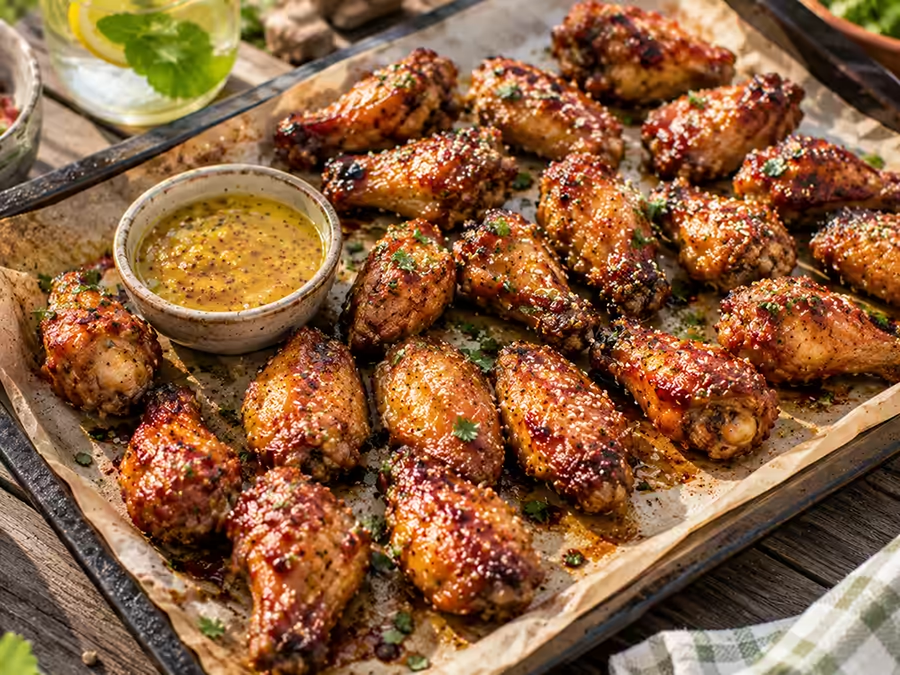
Chicken wings are the perfect picnic food: they’re small, have a natural “handle” in the form of the bone, marinate well, and taste great even when served cold. You can bake them ahead of time and simply arrange them on a tray when you get there.
A simple honey-mustard marinade for 1 kg of chicken wings:
- Rinse the wings and pat them dry with a paper towel.
- Mix 2 tablespoons of honey, 2 tablespoons of mustard, and 2 tablespoons of soy sauce.
- Add 2 minced garlic cloves and a pinch of black pepper.
- Pour the marinade over the wings and toss them with your hands.
- Let it marinate for at least 1 hour, preferably overnight in the refrigerator.
- Spread them out in a single layer on a baking sheet lined with parchment paper.
- Bake at 200°C for about 35–40 minutes, turning once halfway through.
Place the finished wings in a container lined with parchment paper to prevent them from sticking together. Be sure to have plenty of paper towels on hand—you’ll definitely need them.
Cutlets, meatballs, and meatloaf
Small meatballs and patties are perfect for eating with your hands, and they’re just as delicious warm or cold. Make them slightly smaller than usual—about two bites. Add a little more breadcrumbs and an egg to the ground meat mixture so the patties hold their shape and don’t fall apart while you’re on the go. You can skewer the fried or baked meatballs along with cherry tomatoes and a slice of cheese—and you’ve got a ready-to-serve canapé.
Kebabs and meat on skewers
If there’s a grill on site, nothing beats a classic shashlik. But even without a fire, you can bring mini-shashliks baked at home: thread marinated chicken breast or pork onto wooden skewers, alternating with vegetables, and bake at 200 °C for about 25–30 minutes. The skewer is the “handle”—nothing else is needed. For convenience, make them short, just one serving each.
Chicken nuggets and breaded fish
Homemade chicken nuggets with a crispy coating are a versatile dish loved by both kids and adults. Coat the chicken pieces in flour, egg, and breadcrumbs, then fry or bake until golden brown. Fish cut into sticks (fish fingers) works just as well. Be sure to serve these dishes with a dipping sauce—more on sauces below.
Vegetables, eggs, and vegetable-based appetizers
Amid all the hearty and fried dishes, there should definitely be something light and fresh. Vegetables lighten up the menu, add color, and help you avoid that heavy feeling after eating chicken wings and baked goods.
Veggie sticks with dip
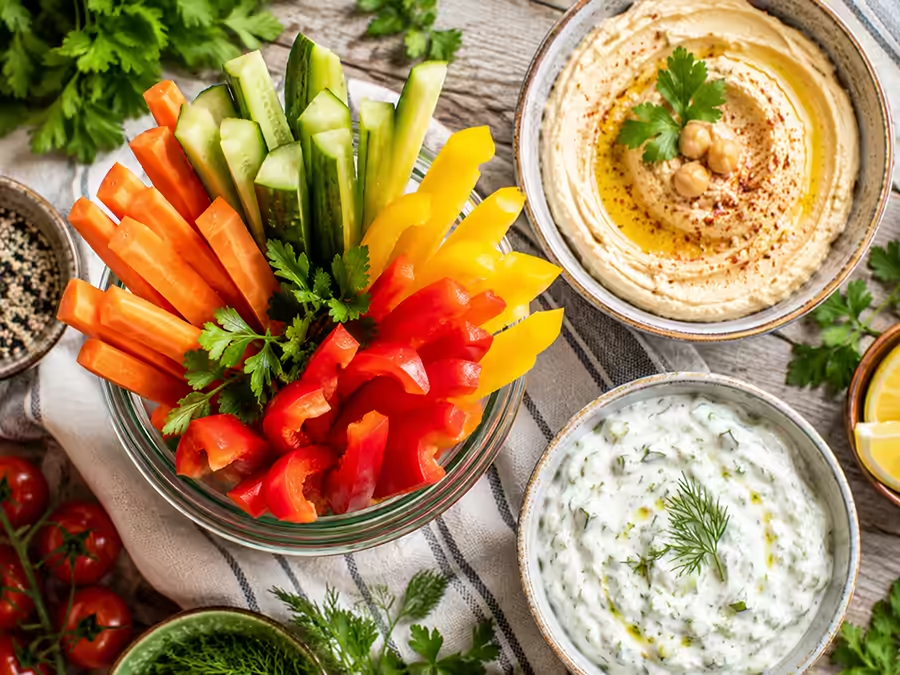
The simplest and most convenient fresh appetizer. Cut carrots, cucumbers, bell peppers, and celery—anything that holds its shape well—into long sticks. Arrange them like a “bouquet” in a glass or tall container, and bring the dip separately in a small jar with a lid. Dipping the vegetable sticks into hummus or a cheese dip is both delicious and requires no utensils. Add cherry tomatoes too: small, whole, and uncut.
Stuffed eggs
A classic that never fails. Hard-boil the eggs, cut them in half, scoop out the yolks, and mash them with a spoonful of mayonnaise or sour cream, add salt, pepper, and your choice of filling—mustard, chopped green onions, pieces of red fish, or sautéed mushrooms. Fill the egg white halves with this mixture. It’s best to transport them in a compartmentalized container or packed tightly together, with the filling facing up, so they don’t get smeared.
Falafel
Crispy chickpea balls are a wonderful plant-based option that’s perfect for eating with your hands and doesn’t need to be kept cold as strictly as meat. Falafel tastes great both warm and chilled, and pairs well with pita bread, vegetables, and tahini or tzatziki sauce. If you don’t have time to make it from scratch, a ready-made dry mix comes to the rescue—just add water, shape into balls, and fry.
Pickled and fermented vegetables
Small gherkins, pickled mushrooms, and sauerkraut in a separate jar—an underrated picnic staple. They add a touch of tartness, refresh the palate after a heavy meal, and keep perfectly well without refrigeration. Bring along convenient small jars with lids that screw on tightly.
Sauces and dips: what brings the menu together
A good sauce can elevate even the simplest dish. At a picnic, sauces serve two purposes: they make dry food more succulent and turn vegetable sticks and nuggets into a satisfying snack. The key is to transport them properly: in jars or containers with airtight lids, and in hot weather—be sure to use a cooler bag, since sour cream and egg-based sauces spoil quickly.
Here are a few basic options that cover most needs:
- Tzatziki. Thick yogurt or sour cream, grated and squeezed cucumber, garlic, a little olive oil, and salt. It’s refreshing and goes well with meat, falafel, and vegetables.
- Hummus. A purée made from chickpeas, tahini, lemon juice, garlic, and olive oil. Hearty, plant-based, and stays fresh for several hours without refrigeration.
- Cheese dip. Cream cheese with sour cream, herbs, and garlic. A perfect accompaniment to vegetable sticks and chips.
- Garlic sauce. Sour cream or yogurt mixed with pressed garlic, salt, and dill. A classic accompaniment to potatoes and meat.
- Sweet and sour or barbecue. Store-bought or homemade—perfect with nuggets and wings.
Here’s a little tip: if you’re worried the sauce might leak, pack it in a jar with a screw-top lid and place a small circle of parchment paper under the lid. That way, nothing will spill out even if the jar gets knocked over.
Side dishes that don’t require a fork
Potatoes and corn are hearty and popular, but it’s important to choose the right cut so you can eat them with your hands.
New potatoes and jacket potatoes
Boil or roast small new potatoes whole with the skin on, along with olive oil, salt, and rosemary. You can eat them right out of your hands, dipping them in garlic sauce. If the potatoes are large, cut them into wedges and bake them—this creates convenient “potato sticks” that hold their shape well.
Corn
Boiled corn on the cob—a seasonal picnic treat. Wrap each cob in foil so it doesn’t cool down too quickly or make a mess in your bag. Bring some salt and a pat of butter along. A cob with its natural “handle” is pure finger food—no extras needed.
Cheese and bread sticks
Grissini, cheese sticks made from puff pastry, and crackers are perfect for pairing with dips and filling the gaps between main courses. They’re easy to make ahead of time or buy ready-made, and they stay fresh almost indefinitely while traveling.
A sweet ending
A picnic dessert should be just as convenient as the rest of the menu: no cream that melts, no layers that spread out in the heat. We’re looking for something dense and portable.
Cupcakes, muffins, and cookies
Muffins and cupcakes are perfect: baked in individual cups, they’re already portioned out and hold up well during travel. Cookies—oatmeal, shortbread, or nut-based—are also a safe bet. Avoid desserts with buttercream or whipped cream: in warm weather, they’re the first to lose their shape.
Fruit on skewers
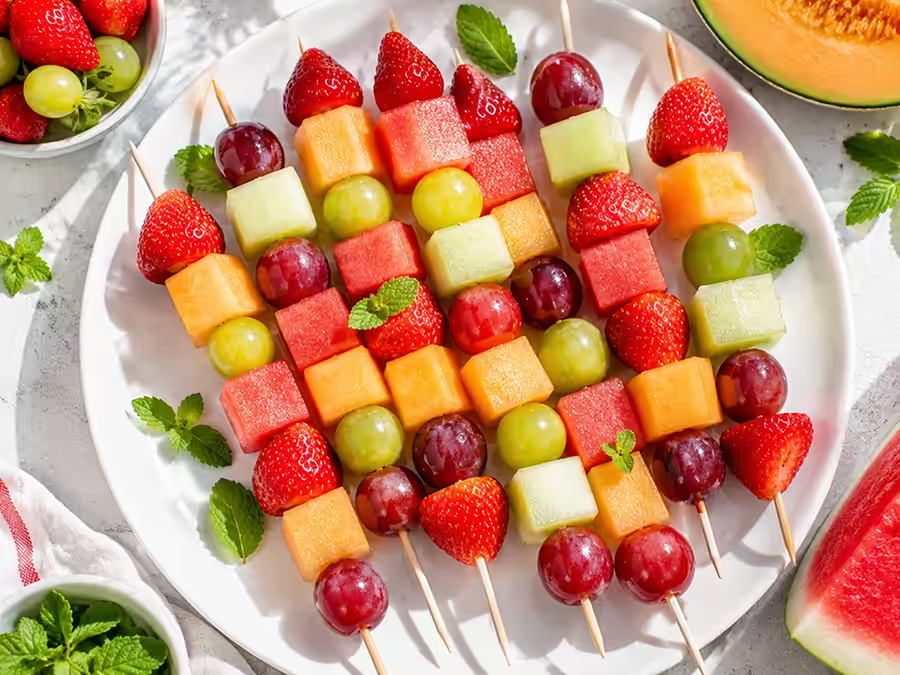
The freshest and easiest dessert. Skewer pieces of melon, watermelon, grapes, strawberries, and pineapple. It’s best to transport whole fruits and cut and skewer them on site so they don’t release juice or turn sour. If you cut them at home, pack them tightly in a container and keep them cold.
Baked fruit and energy bars
If you have a grill, try bananas wrapped in foil with chocolate chips inside—they cook for a few minutes over the coals and can be eaten with a spoon right out of the peel. And for a snack on the go, homemade bars made with oats, dried fruit, and nuts are perfect: they’re dense, nutritious, and completely low-maintenance.
What not to bring on a picnic
There are some dishes that taste great at home but are nothing but trouble when you’re out in nature. To avoid disappointment, there are a few things you should avoid.
First, salads with dressing, especially those with mayonnaise. A dressed salad quickly releases juice, becomes soggy, and spoils first in the heat. If you really want a salad, pack the ingredients and dressing separately, and mix them right before eating.
Second, delicate cream-based desserts, small cakes, and tiramisu. They tend to get runny, lose their shape, and require perfect refrigeration, which isn’t usually available at a picnic.
Third, there are dishes that only taste good when hot. Steak, french fries, pasta—all of these cool down and become unappetizing or even inedible within half an hour. Stick to foods that taste good at room temperature.
Fourth, anything that crumbles easily or falls apart without a wrapper. Without a table or a plate, these foods end up as a pile of crumbs on the blanket.
How to pack food for a picnic so that everything stays fresh
Even the most delicious dish will be a letdown if it arrives squashed or lukewarm. That’s why packaging is a separate and important issue.
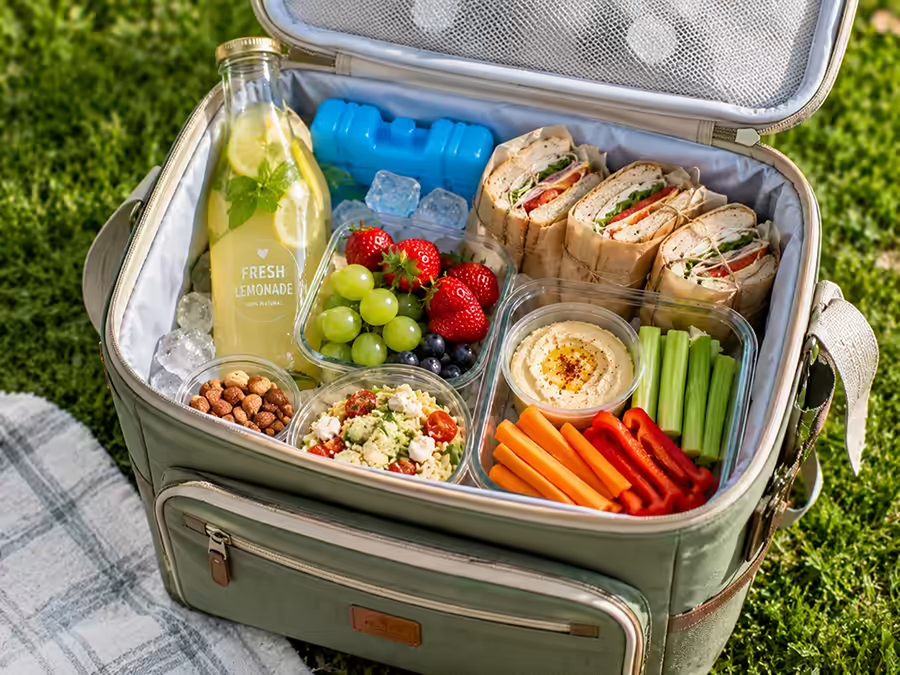
The most important thing in hot weather is keeping things cool. A cooler bag with ice packs or even bottles of frozen water is an absolute must if you’re carrying anything containing sour cream, eggs, meat, or fish. In hot weather, these foods are safe outside of refrigeration for only about two hours, and even less at temperatures above 30 °C. Keep the cooler in the shade and open it as infrequently as possible.
Choose sturdy containers with tight-fitting lids, and don’t place fragile items at the bottom. It’s a good idea to wrap rolls, sandwiches, and pastries in parchment paper in individual portions—this prevents them from sticking together and makes them easy to hand out. Store sauces and liquids only in jars with screw-on lids, not in open cups.
Little things that make all the difference: wet and dry wipes, a few trash bags, a corkscrew or knife, and a cutting board or flat tray to use as a work surface. And a separate bag for used dishes and leftovers, so as not to leave a trace behind in nature.
Last on the list, but not least—water. In the heat, you always end up drinking more than you think you need. Round out your selection with homemade lemonade, iced tea, or bottled fruit punch—and your picnic will be a success from the first bite to the last.
Ready-to-go mini picnic set for a group
To save you the trouble of planning a menu from scratch, here’s a tried-and-true, balanced meal plan for 4–6 people that’s easy to prepare the night before:
- Chicken wraps are a hearty main dish.
- Oven-baked chicken wings in a honey-mustard marinade.
- Tartlets or deviled eggs as an appetizer.
- Vegetable sticks with hummus and tzatziki.
- New potatoes in their skins with garlic sauce.
- Muffins or cookies and fruit on skewers for dessert.
This set caters to all tastes, requires almost no utensils, and is perfect for travel. Best of all, it leaves you with more time to relax instead of struggling with the dishes.
Frequently Asked Questions
What foods won’t spoil in the heat during a picnic? The most durable options are baked goods (pastries, quiche, tartlets), falafel, pickled vegetables, bread, and fruit. Meat, dishes with sour cream, eggs, and mayonnaise require a cooler bag and are safe to leave out of the cold for about two hours, and in extreme heat—even less.
What should you prepare for a picnic in advance? It’s best to do almost everything the day before: roast the chicken wings and patties, bake the quiche, hard-boil and stuff the eggs, marinate the meat, and make the sauces. Leave only the quick tasks for when you’re there or just before you leave—chop vegetables, roll up sushi rolls, and skewer fruit.
What picnic snacks are easiest to eat with your hands? Wraps, sandwiches wrapped in parchment paper, chicken wings, meatballs and patties, nuggets, tartlets, deviled eggs, falafel, vegetable sticks with dip, and fruit on skewers. None of these require a fork and are easy to portion out.
How can you transport sauce without it leaking? Use jars with screw-on lids instead of open cups. Place a small circle of parchment paper under the lid for extra sealing. Transport sour cream and egg-based sauces in a cooler bag.
How much food should you bring per person for a picnic? Roughly one or two hearty meals, two or three appetizers, and a little something sweet for everyone. For a group of 4–6 people, one large main dish, a plate of chicken wings, appetizers, vegetables, and dessert will suffice. Always bring extra water.
What should you avoid bringing on a picnic? Salads with dressing (especially mayonnaise-based ones), delicate cakes and cream-filled desserts, dishes that are only tasty when hot, and anything that crumbles easily without packaging. These foods either spoil or lose their taste and appearance within just half an hour.