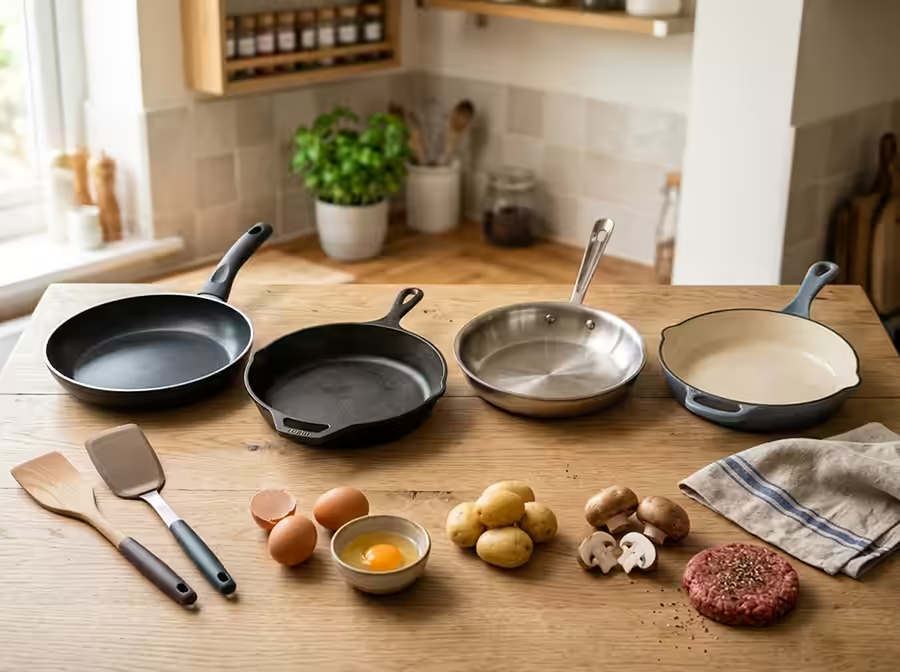
A frying pan is one of those kitchen essentials that’s hard to imagine daily cooking without. It’s used to fry eggs, omelets, pancakes, cheese pancakes, potatoes, vegetables, fish, cutlets, steaks, mushrooms, gravies, and even some dishes that are then finished in the oven. That’s exactly why the wrong choice quickly makes itself known: things burn, things stick, the crust doesn’t form, it’s hard to clean, and your favorite skillet no longer brings you the same joy after a few months as it did on the first day.
Content
Many people buy a frying pan based on a simple principle: it looks nice, the price is right, and the handle is comfortable—so it’s a good buy. But in practice, that’s not enough. It’s not just about how it looks, but also what it’s made of, how thick the bottom is, what kind of coating it has, whether it’s induction-compatible, if it can go in the oven, how heavy it feels in your hand, and whether it suits your cooking style.
Some people are perfectly happy with just one simple nonstick skillet for everyday use. But there are those who quickly realize: one model can’t fry eggs, sear a steak, make pancakes, and simmer tomato sauce equally well. That’s why it’s important to understand the different types of pans, what sets them apart, which pan is best for what, how to clean them properly, and how to extend their lifespan.
This article isn’t about fancy cookware ads, but about everyday home cooking. It’s about the kind of cooking where you need to whip up breakfast quickly, make sure your cheese pancakes don’t fall apart, get those potatoes nice and crispy, wash the dishes without getting frustrated, and avoid wasting money on a pan that’ll start to annoy you in six months.
How to Choose a Frying Pan for Home Use
The first thing to consider isn’t the brand, but your cooking habits. If you mostly make omelets, fried eggs, crepes, pancakes, cheese pancakes, delicate fish, or reheat ready-made meals, non-stick performance and convenience are more important to you. If, on the other hand, you love meat with a nice crust, fried potatoes, mushrooms, and vegetables cooked over high heat, you need a pan that retains heat well and can handle more intense cooking.
The second question is how much time you’re willing to spend on maintenance. Some materials are easy to clean and don’t require anything special. Others need to be dried, sometimes oiled, stored properly, and given a little more attention after washing. If you don’t like kitchen rituals, it’s best to choose something that doesn’t require complicated maintenance right from the start.
Third, weight and comfort. It may seem like a minor detail until you try lifting a heavy cast-iron skillet with one hand every day. If you frequently flip pancakes, toss vegetables, or simply prefer lightweight cookware, an overly heavy model can quickly become a hassle. But for those who value consistent heat and a golden crust, weight, on the contrary, can be a plus.
Fourth, the cooktop. If you have an induction cooktop, you need to check the compatibility of the specific model right away. Not all pans are suitable for induction cooktops, even if they look almost identical on the outside. For gas stoves, the choice is simpler, but the thickness of the bottom is especially important to ensure more even heating. For electric and glass-ceramic cooktops, it’s also better to choose pans with a flat, undamaged bottom.
Fifth—size. This is one of the most common mistakes. People often choose a pan that’s either too small or too large. In a pan that’s too small, the food is crammed together, starts to simmer in its own juices, and doesn’t brown properly. In a pan that’s too large, a single cutlet or two eggs look lost, and the heat isn’t used efficiently.
For most home kitchens, the following diameters are the most convenient:
- 20–22 cm — for 1–2 eggs, a light breakfast, sauce, or a serving of vegetables.
- 24 cm — a versatile option for one or two people.
- 26 cm is a good standard size for home use if you cook regularly.
- 28 cm — perfect for family meals, cutlets, pancakes, potatoes, and vegetables.
- 30 cm or more — if you often cook large portions.
If there are just one or two people at home, a 24–26 cm skillet is usually sufficient. If you have a larger family or like to cook two meals at once, it makes more sense to go with a 28 cm skillet. When it comes to pancakes specifically, many people prefer a 24 or 26 cm skillet because that size is easier to work with.
Another detail to consider is the shape of the sides. Low, slightly sloped sides are ideal for pancakes, omelets, fritters, and dishes that need to be easily lifted with a spatula. Higher sides are more practical for vegetables, gravies, stews, large portions, and dishes that require frequent stirring.
| Type | What is it best for? | Strengths | What to consider |
|---|---|---|---|
| Non-stick | Scrambled eggs, omelets, pancakes, cheese pancakes, fish, reheating food | Lightweight, easy to clean, and allows you to cook with less oil | Does not tolerate overheating, metal blades, and has a limited service life: Memory+2 |
| Stainless steel | Meat, vegetables, mushrooms, sauces, dishes containing tomatoes or wine | Non-reactive to acids, provides good temperature control, withstands high heat | It may stick if the pan isn’t heated properly |
| Cast iron | Potatoes, steaks, potato pancakes, meat, pan-fried pastries | It retains heat very well, becomes naturally “slippery” over time, and can last for generations | Heavy, requires maintenance, and may rust if not dried properly |
| Enameled cast iron | Stewing, frying, dishes with sour ingredients | It has the advantages of cast iron, but is easier to clean, doesn’t need to be re-seasoned, and is acid-resistant | Heavier and more expensive than many other options |
| Carbon steel | Steaks, cutlets, searing, quick frying at high temperatures | It retains heat almost as well as cast iron, but is lighter; over time, it becomes less and less sticky | Seasoning is required; acid removes the coating, and moisture can cause rust |
| Ceramic | Quick everyday meals and light frying | Easy to use and clean, with functionality similar to nonstick cookware | The finish wears off over time, and cheaper models may warp |
Before making a purchase, ask yourself these 5 simple questions:
- What do I cook most often?
- Do I like intense heat and a golden crust?
- Do I want the simplest possible care?
- Does the weight of the pan matter to me?
- Does it need to be compatible with induction cooktops or conventional ovens?
If you answer these questions honestly, the choice becomes much easier.
What types of frying pans are there, and how do they differ?
The most important difference between frying pans is the material. It determines how quickly the pan heats up, how long it retains heat, how easily you can brown food in it, whether food will stick, and how to care for the pan.
Nonstick skillet
A nonstick skillet is the most popular choice for everyday cooking. It’s convenient, easy to use, and requires no special skills. It’s perfect for frying eggs, omelets, pancakes, cheese pancakes, zucchini, chicken pieces, fish, and other delicate foods.
Its main advantage is that food sticks less, and you usually need less oil. This type of pan is easy to clean, is often lighter than cast iron or steel, and is also a good choice for those who don’t want to spend a long time learning how to “feel out” their cookware.
But there are downsides, too. Nonstick coatings don’t handle overheating, harsh scrubbing, metal spatulas, or rough treatment well. This isn’t the kind of cookware you buy “to last a lifetime.” Even a good nonstick pan loses its properties over time, especially if it’s regularly overheated or scratched.
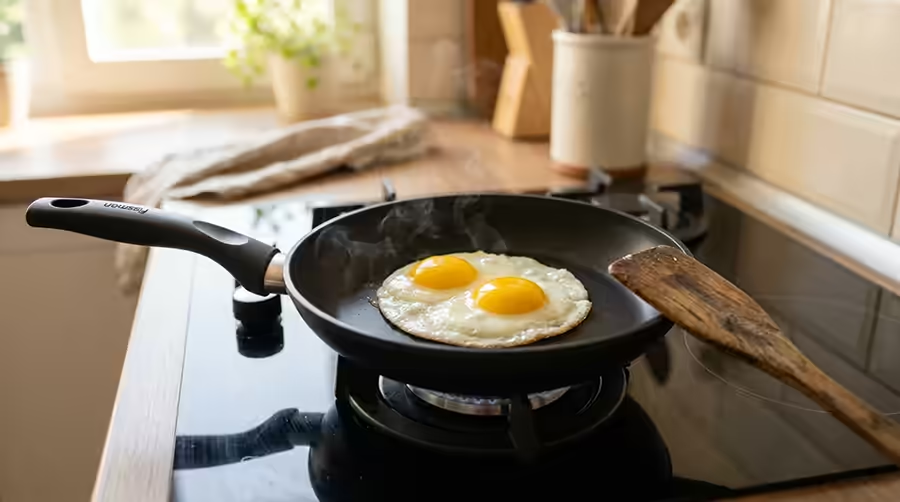
It is best suited for:
- egg dishes;
- omelet;
- cheesecakes;
- pancakes;
- pancakes;
- fish;
- reheating food;
- quick frying without high heat.
Stainless steel
A stainless steel skillet is a more serious tool for those who love to cook and want versatility. It withstands high temperatures well and is suitable for meat, vegetables, mushrooms, gravies, sauces, and dishes containing tomatoes, cream, wine, or lemon juice.
Its main advantages are durability and versatility. It is acid-resistant, performs well when frying, has a long service life, and doesn’t require the same delicate handling as nonstick cookware.
But there’s one important thing to keep in mind with stainless steel cookware: you have to learn how to cook with it. If you don’t heat the pan properly, flip the food too soon, or use the wrong heat setting, the food can stick. This leads to disappointment for many people, even though the problem often lies not with the cookware itself, but with how it’s used.
Stainless steel is well suited for:
- meat;
- cutlets;
- mushrooms;
- vegetables;
- sauces;
- dishes made with tomatoes;
- quick frying;
- dishes that are first fried and then braised.
Cast-iron skillet
Cast iron is a classic beloved for its heat retention and durability. This type of skillet takes a while to heat up, but it retains its temperature for a long time. That’s exactly why it’s perfect for potatoes, potato pancakes, meat, cutlets, homemade sausages, vegetables, and anything else where you want a crispy, golden crust.
Cast iron is often chosen by people who prefer a “real” skillet—heavy, sturdy, and not disposable. If cared for properly, this type of cookware can last for years.
But cast iron isn’t for everyone. It’s heavy, needs to be dried after washing, can rust if left wet, and isn’t very convenient for those who just want to wash the dishes quickly and forget about them until tomorrow.
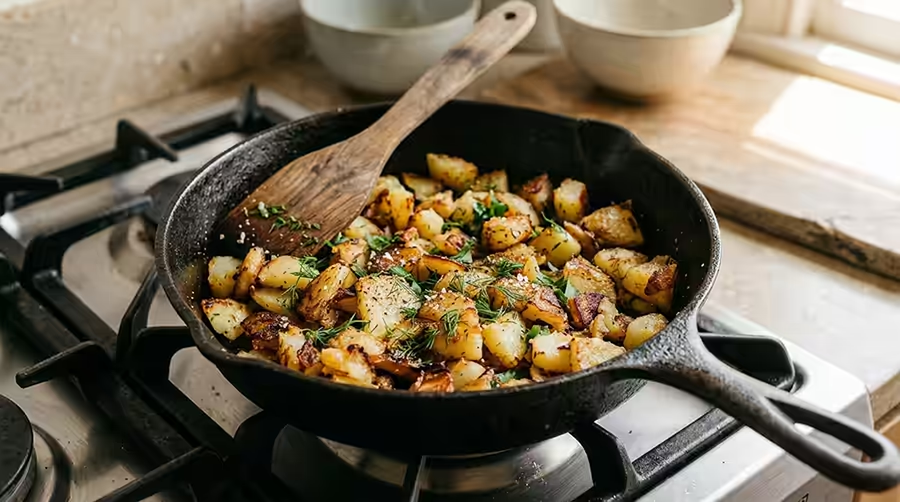
Cast iron is well suited for:
- roasted potatoes;
- potato pancakes;
- meat;
- steaks;
- cutlets;
- vegetables;
- mushrooms;
- dishes that go from the stovetop to the oven.
Enameled cast iron
Enameled cast iron is like a more “homey” version of classic cast iron. It’s just as heavy and retains heat just as well, but it has an enamel coating that makes it easier to care for. It doesn’t require the same seasoning as regular cast iron and is better suited for dishes with acidic ingredients.
This is a great option for anyone looking for durable cookware that retains heat well, but without the more complicated maintenance required by traditional cast iron. This pan is ideal not only for frying but also for braising.
There are downsides, too: it’s heavy, often more expensive, and doesn’t handle sudden temperature changes or rough handling of the enamel well.
Carbon steel
Carbon steel strikes an interesting balance between cast iron and lighter pans. It responds quickly to changes in heat, works well for searing, and can become increasingly easier to use over time if handled properly.
This pan is a favorite among those who cook frequently and want intense heat, but don’t want the extra weight of cast iron. It works well for meat, vegetables, cutlets, and pancakes—once it’s been properly seasoned.
But this isn’t the easiest option for a beginner either. It requires care, doesn’t like excessive moisture, and the acid can damage its active layer.
Ceramic skillet
Ceramic pans are often chosen for their attractive appearance and the “light” feel they provide when cooking. They are ideal for everyday cooking, especially if you’re looking for something between a standard nonstick pan and a more neutral coating.
That said, a ceramic pan isn’t necessarily built to last forever or be super durable. It wears out too, and cheaper models can lose their properties fairly quickly.
What is each pan used for?
In practice, most questions aren’t about theory, but about a simple kitchen scenario: what exactly do I want to cook? That’s when it becomes clear that different pans are better suited for different dishes.
For scrambled eggs and omelets
A nonstick pan works best. Eggs are delicate and tend to stick, break, and lose their shape easily. If you want perfectly cooked scrambled eggs, a smooth omelet, or rolled egg rolls, a nonstick pan makes life much easier.
For pancakes
For pancakes, either a dedicated nonstick pancake pan with low sides or simply a high-quality nonstick pan of the appropriate diameter works well. It’s important that the surface is even, heats up evenly, and allows you to flip the pancake easily.
For cheesecakes
Cheesecakes prefer moderate heat and an even surface. Here, too, a nonstick pan usually works best, because the delicate batter tears easily if the coating is worn or the surface is too rough.
For fried potatoes
Cast iron, carbon steel, or high-quality thick-bottomed stainless steel work well here. Potatoes need space, plenty of heat, and a consistent temperature. If the pan is too small or overfilled, the potatoes won’t fry; instead, they’ll become soft and stew.
For cutlets and meat
Cutlets, schnitzel, chicken pieces, pork, and beef turn out much better in a pan that retains heat well. This could be stainless steel, cast iron, or carbon steel. A durable nonstick pan works for a quick and easy option, but if you want a better crust, you should consider other materials.
For fish
If the fish is delicate, especially fillets, a nonstick pan is often more convenient. If you’re cooking salmon steaks, tuna, or something firmer, you can use either stainless steel or cast iron, but you’ll need to pay a little more attention.
For vegetables and mushrooms
If you like vegetables with caramelized edges, mushrooms without excess moisture, and a nice texture, stainless steel, cast iron, or carbon steel are your best bets. If you’re just cooking something quick for everyday use and don’t need to sear food intensely, a nonstick pan will do.
For sauces and tomato-based dishes
Stainless steel or enameled cast iron works well here. If you often make tomato-based sauces, vegetable sauces, or sautés with wine or lemon juice, it’s best to have a separate pan for this purpose.
For the oven
Not every pan is oven-safe. If this is important to you, check the handle material, the manufacturer’s recommended temperature, and the overall construction. Cast iron often works great in the oven, but some nonstick models with plastic parts do not.
What to do if everything sticks to the pan
This is one of the most common kitchen problems. And the interesting thing is that a bad pan isn’t always to blame. Often, the issue lies in the wrong temperature, flipping the food too early, overcrowding the pan, or using the wrong type of cookware for a particular dish.
Reason 1: Improper heating
The most common mistake is using a pan that’s either not hot enough or too hot. If the pan hasn’t reached the right temperature yet, the food will start sticking right away. If it’s too hot, especially a nonstick pan, problems arise: the coating doesn’t work as well, the fat burns, and the food cooks unevenly.
Reason 2: Too many foods at once
When the pan is too crowded, the temperature drops. The food releases moisture, starts to cook in its own juices, and doesn’t have time to brown properly. That’s why it feels like everything is sticking, falling apart, and turning out unappetizing.
Reason 3: Insufficient or improper use of oil
Even a nonstick pan doesn’t always mean “completely fat-free.” For some dishes, a small amount of oil improves the results. This is especially important when cooking on steel, cast iron, or carbon steel.
Reason 4: Scratched or worn surface
If your nonstick pan is old, dull, rough, scratched, or has lost its smoothness in certain areas, don’t be surprised if food sticks to it. In such cases, the problem is often not with the pan itself, but simply that it has reached the end of its useful life.
Reason 5: Using the wrong pan for a particular dish
Cooking delicate fish in an old steel skillet without the right technique is almost guaranteed to end in disaster. Similarly, it’s not the best idea to try to achieve a perfect crust in a thin, cheap nonstick pan that’s designed more for gentle everyday frying.
What works in practice:
- Heat the pan well, but don’t let it get too hot;
- Do not place items too close together;
- Don’t flip them too early;
- use the right amount of fat;
- choose a pan for a specific task;
- Don’t expect miracles from a worn-out nonstick surface.
Another helpful tip is to let the food “sear” first. For example, a piece of meat or a cutlet often seems to stick at first, but once a crust forms, it comes away much more easily on its own. If you start moving the food around too early, the result is almost always worse.
How to Clean a Frying Pan Properly
Cleaning isn’t just a matter of hygiene. Improper care can quickly ruin even a good pan.
How to clean a nonstick pan
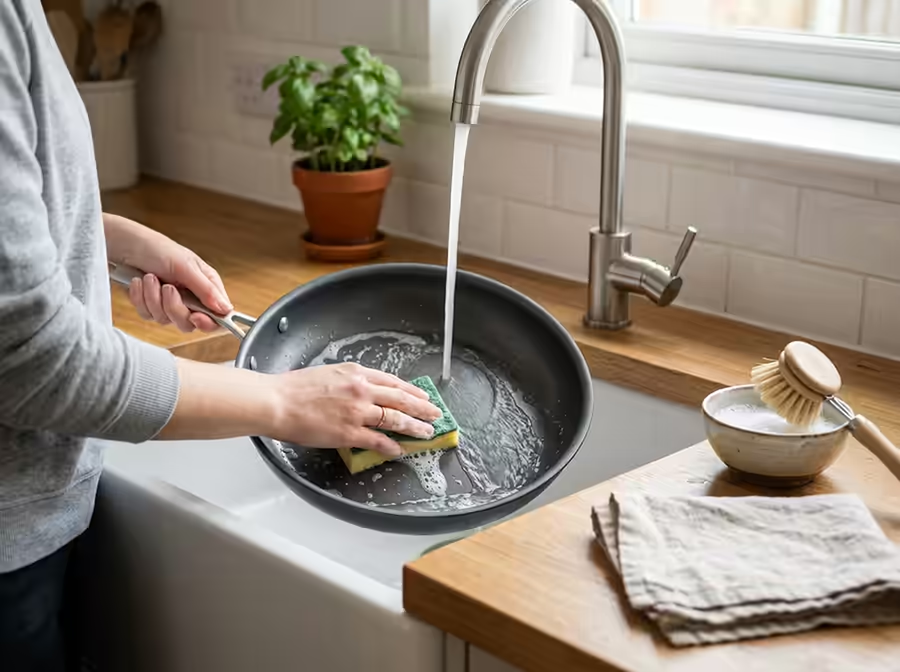
After cooking, don’t pour cold water onto the hot surface right away. Let the pan cool down a bit. Then wash it with warm water, a soft sponge, and regular dish soap.
Don’t:
- scrub with a metal sponge;
- to cut something with a knife right in the pan;
- scrape off the burnt bits with a fork;
- frequent washing in the dishwasher’s very aggressive cycle;
- leave food scraps in it for a long time.
If something is really stuck on, it’s best to pour warm water over it, let it sit for a while, and then wash it. For tougher stains, baking soda works well, but don’t scrub too hard.
How to clean a cast-iron skillet
Cast iron doesn’t like to sit wet for long. After washing, it needs to be dried thoroughly. If there are any stuck-on bits, it’s best to remove them with a brush, a wooden spatula, or salt mixed with a little water.
After washing a cast-iron skillet, it’s a good idea to heat it on the stove for a few minutes to completely remove any moisture. If necessary, you can rub a very thin layer of oil over it. This will help it stay in good working condition for longer.
How to clean stainless steel
Stainless steel is quite convenient in this regard. You can clean it with regular detergent and a sponge, and soak it if necessary. If there are burnt-on stains, warm water, baking soda, or a special mild stainless steel cleaner will do the trick.
The key is not to try to peel everything off by force while the surface is still hot. It rarely works, and it’s sure to fray your nerves.
How to clean enameled cast iron
Enameled cookware doesn’t respond well to harsh abrasives or sudden temperature changes. If there’s burnt-on residue on the surface, it’s best to soak it first, then use a soft sponge or a baking soda paste. Metal brushes and vigorous scrubbing should be avoided.
Caring for Different Types of Pans: A Quick and Concise Guide
To make your frying pan last longer, all you need to do is follow a few basic rules.
For non-stick
- Do not overheat.
- Do not use metal spatulas.
- Do not cut food directly in the pan.
- Do not place an empty pan over high heat.
- Do not store cooked food in it for long periods of time.
- Wash gently without harsh scrubbing.
For cast iron
- Do not leave it wet.
- Be sure to dry thoroughly after washing.
- Do not store acidic foods in it for long periods of time.
- If necessary, lightly brush with oil.
- Don’t worry that it “requires magic”—it just needs consistency.
For stainless steel
- Learn how to work with heat.
- Do not overload the surface.
- Let the food brown properly.
- Don’t worry if it doesn’t act like a nonstick pan.
For enameled cast iron
- Do not scratch with metal.
- Do not put a hot pan in cold water.
- Do not bang it against the sink or table.
- It requires less maintenance than regular cast iron.
Life hacks that actually work
Sometimes small habits are more beneficial than an expensive purchase. Here are a few practical tips that really come in handy in everyday life.
- Don’t try to do absolutely everything with just one pan.
- For breakfast, it’s best to have a separate nonstick pan.
- For potatoes, meat, and heavy-duty frying, it’s best to keep a separate cast-iron or steel pan.
- If you’re stacking pans inside one another, place a cloth, paper towel, or soft pad between them.
- Don’t buy a set just because it’s “cheaper as a set.”
- Two good frying pans are better than five mediocre ones.
- If you cook often, it’s not just the brand that matters, but also the comfort of the handle, the weight balance, and how the pan feels in your hand.
- For a large family, it’s better to have one large skillet than to constantly fry in small batches in one that’s too small.
- If the pan has started to wobble, the bottom has warped, or the heat distribution has become uneven, that’s a good reason to consider replacing it.
- If you make pancakes often, having a dedicated pancake pan really makes life easier.
When it’s time to replace your frying pan
People often put off dealing with this problem because they want to “hold on to it a little longer.” But there are times when it’s better not to try to salvage the pan.
You should replace the nonstick coating if:
- the surface is badly scratched;
- the surface has become rough;
- Food started sticking to it consistently, even though that hadn’t happened before;
- the coating is peeling off in places;
- The pan is warped.
You don’t necessarily have to replace a cast-iron pot just because it’s rusty or has burnt-on residue—it can often be restored. But if the pot has cracked, that’s a different story.
Stainless steel also usually lasts a long time, but if the bottom is severely warped and the pan heats up poorly or unevenly, it becomes less comfortable to use.
What is the minimum set of pans you should have at home?
For most home kitchens, this set is sufficient:
- one nonstick pan (24–26 cm) for eggs, omelets, cheese pancakes, and crepes;
- A larger, more substantial one (26–28 cm)—made of stainless steel, cast iron, or carbon steel—for potatoes, meat, vegetables, cutlets, and stir-fries.
If you often make pancakes or prepare a lot of breakfasts, a dedicated pancake pan would also be useful. If you frequently braise dishes, enjoy gravies, or cook large portions, you might also need a deep sauté pan.
Common Mistakes When Choosing a Frying Pan
Here are the most common mistakes:
- Don’t judge a book by its cover.
- Don’t worry about your weight.
- Ignore the type of stove.
- Don’t choose a diameter that’s too small.
- Expect a nonstick pan to perform like a professional-grade steel pan.
- People buy cast iron without realizing that it’s heavy and requires maintenance.
- Choose the cheapest model and expect it to perform reliably for years to come.
- Don’t overlook the handle, its mounting, and how comfortable it is to use.
A practical tip for home cooking
If you’re looking for simple, straightforward advice, here it is: for most people, it’s better to have not one all-purpose pan, but two different ones. A nonstick pan—for breakfast, pancakes, cheese pancakes, eggs, and delicate foods. The second—a more durable one—for potatoes, meat, vegetables, and dishes that require high heat.
If you want to keep things simple, go for a high-quality nonstick pan for everyday tasks and a good stainless steel pan for versatile, active cooking. If you love a crispy crust, fried potatoes, and “characterful” cookware, take a closer look at cast iron. If you want something between cast iron and a lighter pan, check out carbon steel.
The key is not to search for the mythical “best pan in the world.” It’s much smarter to find the one that’s right for you: the one that suits your specific dishes, stove, lifestyle, and kitchen habits.