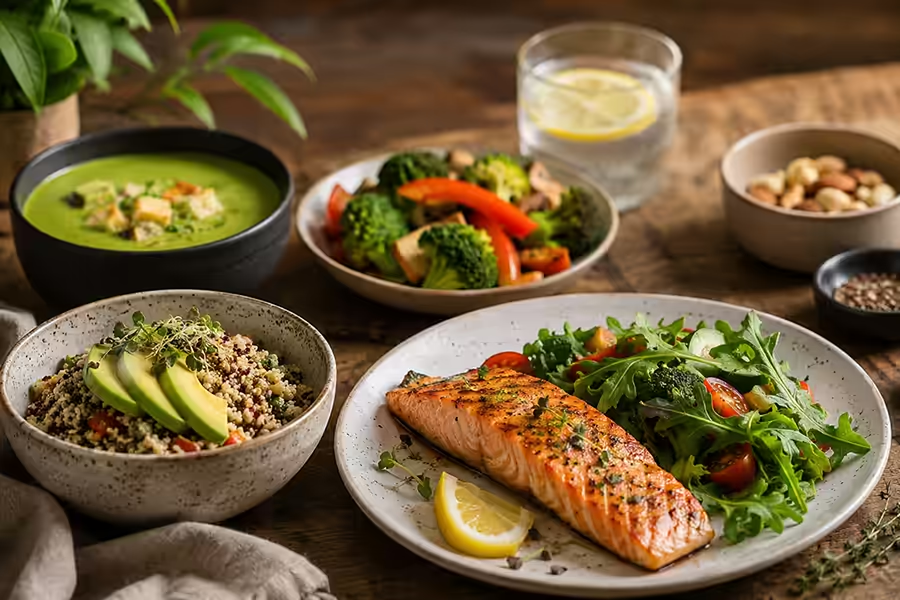
A light dinner isn’t about going to bed hungry with just a leaf of lettuce on your plate. Nor is it about strictly forbidding yourself from eating anything tasty after 6 p.m. In fact, a good dinner should be simple, nutritious, and one that doesn’t leave you feeling heavy in the stomach when you go to bed.
Content
Many people overeat in the evening not because they lack willpower. Often, the reason is simpler: they didn’t have a proper lunch during the day, their snacks were haphazard, and in the evening, their body finally “makes up for” everything it was missing. Add in fatigue, a craving for fast food, and a TV show playing in the background—and before you know it, your plate is bigger than it needs to be.
This article features 15 ideas for light dinners that won’t leave you feeling overfull. These aren’t extreme diets or complicated restaurant dishes. Everything can be prepared at home using everyday ingredients: vegetables, eggs, fish, chicken, cottage cheese, grains, legumes, and herbs. The main idea is that dinner should be satisfying without being too heavy.
What Is a Light Dinner, Really?
A light dinner is a meal or combination of foods that provides the body with enough nutrition without leaving you feeling heavy. It doesn’t necessarily have to be very low in calories. What matters more is finding the right balance.
A good dinner usually includes protein, vegetables, some healthy fats, and, if needed, a small portion of complex carbohydrates. For example, baked fish with vegetables, an omelet with a salad, buckwheat with mushrooms, cottage cheese with herbs, or braised turkey with zucchini.
If dinner consists only of vegetables, you might feel hungry again an hour later. If it’s just pasta or potatoes, it’s easy to overeat. If it’s just sweet yogurt or a bun with tea, you won’t feel full for long, and the urge to “have a little something extra” is almost guaranteed.
A light dinner shouldn’t leave you feeling hungry. It should give you a satisfying sense of fullness so that you don’t feel the urge to reach for cookies, sandwiches, or a second helping after eating.
Why do we often overeat in the evening?
Overeating in the evening often starts as early as the morning. If you’ve spent the day on coffee, cookies, and a single sandwich, your body won’t politely ask for a salad in the evening. It will demand a quick, high-calorie, and preferably very tasty meal.
There’s another reason—fatigue. After work, you don’t always feel like thinking about what to cook. It’s easier to just reach for some sausage, cheese, bread, yesterday’s leftover pizza, or sweets. It might not seem like a big deal, but it’s precisely these “little things” that often lead to overeating.
And thirdly, food as a way to unwind. Dinner becomes not just a meal, but a small reward for a hard day. The key here is not to be too hard on yourself, but to make dinner a relaxing experience. When you have ingredients at home for a quick, simple meal, you’re less likely to overeat.
What a light dinner should be like
The simplest formula for such a dinner is as follows: protein plus vegetables plus a small addition for flavor and satiety.
Protein comes from eggs, fish, chicken, turkey, cheese, beans, chickpeas, lentils, and tofu. It helps you stay full longer. Vegetables add volume, fiber, freshness, and lightness to your plate. And a small amount of oil, avocado, seeds, nuts, or grains makes the meal feel substantial rather than “empty.”
You don’t have to eat the same thing every night. One day it could be a warm chicken salad, another day a vegetable soup, the next day an omelet with herbs, and the day after that fish with broccoli. Variety helps keep you from reaching for unhealthy snacks.
15 Ideas for a Light Dinner Without Overeating
1. Omelet with herbs, tomatoes, and cheese
An omelet is one of the quickest options for a light dinner. It takes just 10–15 minutes to prepare, is quite filling, and doesn’t require any complicated ingredients. The key is not to turn it into a heavy meal by adding lots of sausage, mayonnaise, or full-fat cheese.
A 2-egg omelet with a handful of herbs, a tomato, and a small amount of cheese is a great choice for dinner. You can add spinach, bell peppers, zucchini, or mushrooms. If you want to make the dish even lighter, you can replace some of the eggs with egg whites, but this isn’t necessary.
Cook the omelet in a skillet with just a little oil, or bake it in the oven. Serve it with cucumber, lettuce, or a few spoonfuls of plain yogurt with herbs. This dinner is filling without leaving you feeling like you’ve eaten something heavy.
To avoid overeating, don’t add too much bread to your omelet. If you really want some, have just one slice of whole-grain bread instead of several sandwiches on the side.
2. Baked fish with vegetables
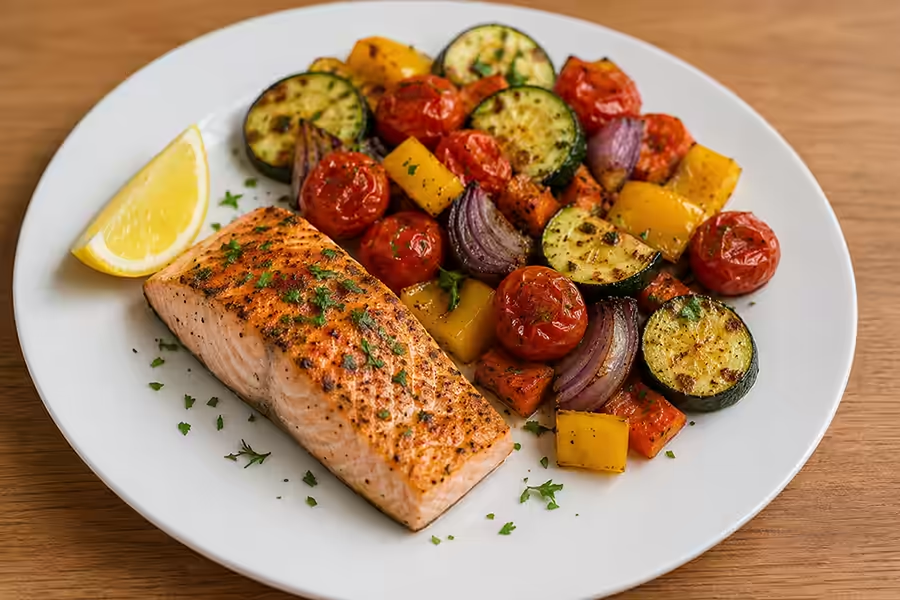
Fish is a great choice for a light dinner. It cooks quickly, pairs well with vegetables, and is usually easy to digest. The simplest option is a fillet of hake, pollock, pikeperch, trout, or salmon, baked with lemon, herbs, and spices.
You can add broccoli, cauliflower, zucchini, carrots, cherry tomatoes, or green beans to the fish. Simply arrange everything on a baking sheet, drizzle with olive oil, season with salt, pepper, and garlic, and bake until done.
If the fish is lean, such as hake or pollock, you can add a little yogurt-based sauce. If the fish is fattier, like salmon, very little additional fat is needed.
This is a great option for those who want a “proper meal” in the evening, rather than just a salad. The plate looks substantial but remains light.
3. Warm salad with chicken and vegetables
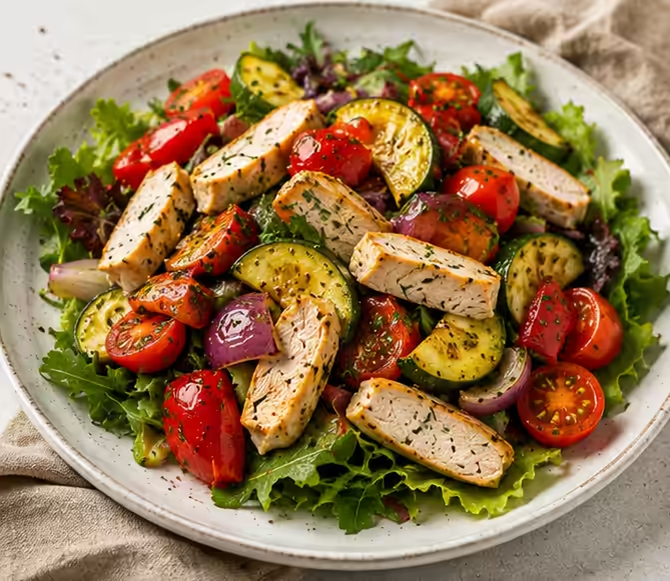
A salad for dinner can be a great choice if it includes protein. A simple salad of lettuce and cucumber is more of a side dish than a full meal. But a warm salad with chicken, vegetables, and a light dressing can be quite filling.
Take skinless chicken breast or thigh meat and quickly pan-fry or bake it. Add lettuce leaves, cucumber, tomato, bell pepper, and a little red onion. For the dressing, try olive oil with lemon juice, plain yogurt with mustard, or a sauce made with kefir and herbs.
To keep the salad from becoming too heavy, don’t add too many croutons, cheese, or rich dressings. Often, it’s the dressing that turns a light dinner into a high-calorie meal. It’s best to save mayonnaise-based dressings for other occasions and choose something lighter for dinner.
This salad is a great way to use up any leftover roast chicken from lunch. Just chop up some vegetables, warm the meat a bit—and dinner is ready.
4. Cottage cheese with herbs and vegetables
Cottage cheese is often associated with a sweet breakfast, but it’s also perfect for dinner. Especially if you serve it not with sugar and jam, but with herbs, cucumber, radishes, garlic, or roasted peppers.
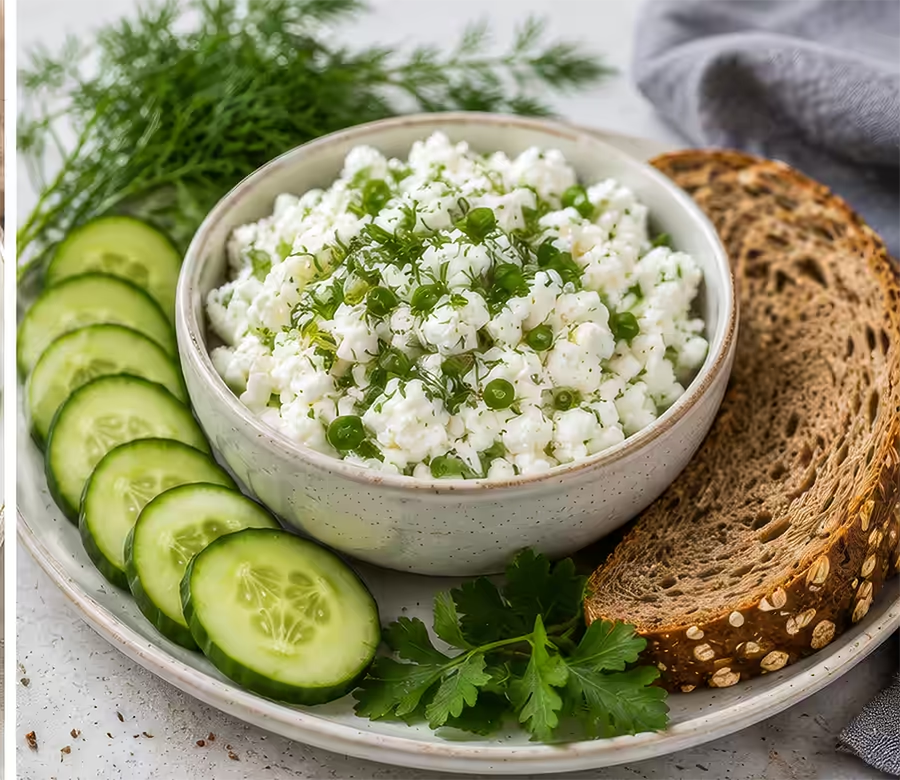
For a light dinner, medium-fat cottage cheese is a good choice. If it’s too low-fat, it might not be filling enough, and if it’s too high-fat, it can be heavy. Add a little plain yogurt or sour cream, finely chopped herbs, salt, pepper, and cucumber. The result will be something like a homemade spread or a light cottage cheese salad.
You can eat this dish with a spoon, wrap it in lettuce leaves, or serve it with a slice of whole-grain bread. It’s perfect for a hot evening when you don’t feel like frying or baking anything.
The one thing you should avoid is adding too many sweet fillings. Cottage cheese with honey, banana, dried fruit, and nuts can be delicious, but as an evening snack, a serving like that can easily become too high in calories.
5. Vegetable puree soup with added protein
Pureed soup is a great option for a light dinner, as long as you don’t make it with just potatoes and cream. You can use zucchini, pumpkin, broccoli, cauliflower, carrots, celery, or onions as a base. Boil or roast the vegetables, purée them in a blender, and add spices.
To make the soup truly filling, it’s a good idea to add some protein. This could be a hard-boiled egg, pieces of chicken or turkey, fish, chickpeas, lentils, or a spoonful of Greek yogurt. Without this, vegetable soup may seem light, but you’ll be hungry again in an hour.
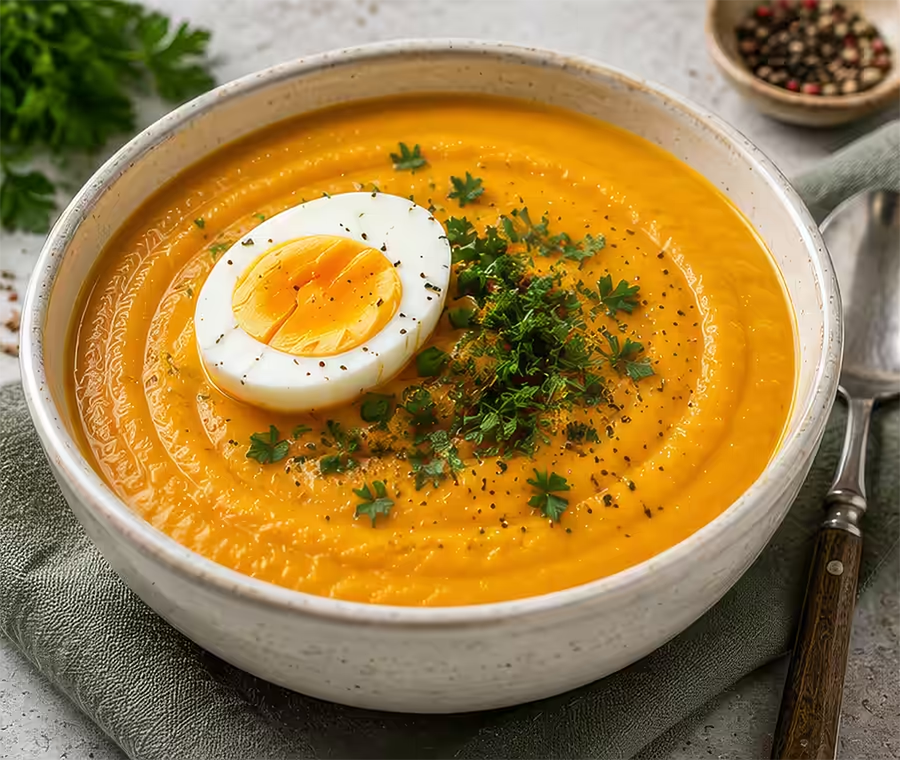
For extra flavor, add some pumpkin seeds, herbs, paprika, or garlic. You can substitute the cream with milk, yogurt, or a small amount of olive oil.
It’s convenient to make pureed soup for two days. But it’s best not to cook a huge pot for a whole week: the vegetables quickly lose their flavor, and you might get tired of eating the same thing for dinner.
6. Buckwheat with mushrooms and salad
Sometimes in the evening, you don’t feel like having a salad—you want something warm and comforting. In that case, buckwheat with mushrooms is a great choice. The buckwheat fills you up, the mushrooms add flavor, and a fresh vegetable salad makes the meal lighter.
It’s important not to make the portion too large. For dinner, a few spoonfuls of cooked buckwheat are often enough, rather than a full deep plate. Add some sautéed mushrooms and onions, herbs, and a little oil. Serve with a side salad made of cucumber, cabbage, tomato, or greens.
If you want more protein, you can add an egg, a piece of chicken, or some cottage cheese on the side. This will make the meal more balanced.
Buckwheat with mushrooms is especially perfect for the colder months, when you crave a warm meal in the evening. It’s simple, inexpensive, and doesn’t require any complicated preparation.
7. Turkey or chicken with braised zucchini
Zucchini is one of the most convenient vegetables for a light dinner. It cooks quickly, absorbs the flavors of spices well, and doesn’t weigh down the dish. Paired with chicken or turkey, it makes for a satisfying dinner without being too heavy.
Cut the meat into small pieces, then quickly sauté or braise it with onions. Add zucchini, a few carrots, a tomato, or tomato sauce without added sugar. Season with garlic, paprika, black pepper, and fresh herbs.
The main secret is not to overcook the meat or let the zucchini turn to mush. It’s best when the vegetables remain tender but not watery.
This dish is perfect for anyone who wants a “proper meal” for dinner, but without potatoes, pasta, or heavy sauces. If you’ve had an active day and want something more filling, you can add a few spoonfuls of rice or bulgur.
8. Tuna, Egg, and Vegetable Salad
Canned tuna can be a real lifesaver in the evening when you don’t have time to cook. It’s important to choose tuna packed in its own juice or in oil, but if you choose the oil-packed variety, it’s best to drain off some of the oil. It goes well with eggs, cucumbers, tomatoes, lettuce, a small amount of corn, and red onion.
This salad is quick to make: boil an egg, chop the vegetables, add tuna, and toss with a light dressing. For the dressing, you can use yogurt with mustard, lemon juice mixed with oil, or simply a little olive oil.
To make sure the salad isn’t too salty, pay attention to the tuna itself. Some canned varieties are high in salt, so there’s almost no need to add extra salt to the dish.
This is a great option for a light dinner after a long day at work. Especially when you want to eat quickly but don’t want to order fast food.
9. Roasted vegetables with feta or brynza
Roasted vegetables aren’t a boring side dish—not if you prepare them right. Zucchini, eggplant, bell peppers, tomatoes, onions, carrots, and cauliflower—all of these can be roasted with herbs, garlic, and a little oil.
Feta or brynza add a salty flavor and a bit of protein. The key is not to overdo it, as these cheeses are quite salty. A few cubes or a small sprinkle on top is enough.
This dish can be served warm or at room temperature. It’s especially delicious with fresh herbs, lemon juice, and a spoonful of plain yogurt.
If you want to make the dish more filling, add chickpeas or beans. That way, your dinner will still be plant-based but more substantial.
10. Pita bread with chicken, vegetables, and yogurt sauce
Homemade lavash can make for a light dinner, as long as you don’t load it up with mayonnaise, sausage, and lots of cheese. A good option is thin lavash, chicken, plenty of vegetables, and a simple sauce.
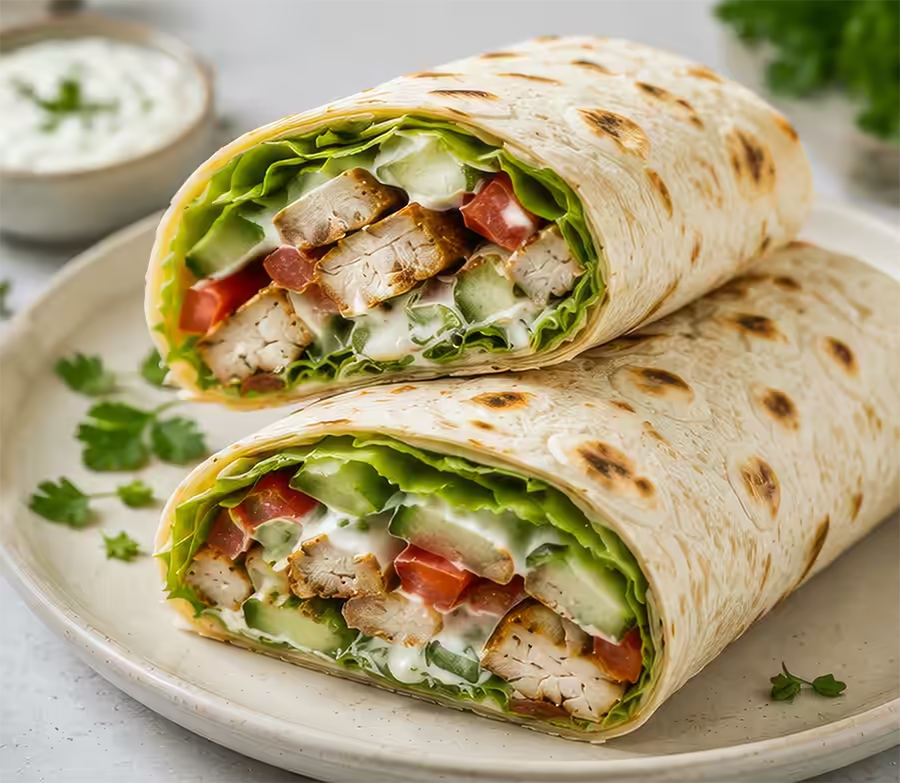
For the filling, you can use baked or boiled chicken breast, cucumber, tomato, lettuce, cabbage, carrots, and herbs. The sauce can be made with plain yogurt, garlic, mustard, lemon juice, and salt.
To avoid overeating, it’s better to make one medium-sized wrap rather than two large ones. Pita bread seems light, but if you use a lot of filling, your dinner can quickly become very high in calories.
This option is great when you’re craving something “like a shawarma,” but homemade and easier on the stomach. It works especially well if you’ve already cooked the chicken ahead of time.
11. Lentils with vegetables
Lentils are a filling and healthy choice for dinner, but it’s important not to make them too greasy. Red lentils cook down quickly and are ideal for thick dishes, while green or brown lentils hold their shape better.
A simple option: sauté the onions, carrots, and bell peppers, add the lentils, water or vegetable broth, and spices, then cook until tender. Cumin, paprika, garlic, bay leaves, and fresh herbs work well here.
Keep your portion size moderate, as legumes are very filling. If you eat too much, you may experience bloating or a heavy feeling in the evening—especially if you’re not used to eating lentils often.
For a lighter option, serve the lentils with a salad or stewed vegetables instead of bread or potatoes.
12. Steamed fish or chicken with a vegetable side dish
Steamed food doesn’t have to be bland. It all depends on the spices, sauce, and side dish. Steamed fish or chicken are great choices for dinner when you’re in the mood for something light.
Before cooking, you can marinate the meat or fish in lemon juice, spices, garlic, yogurt, or soy sauce with a moderate amount of salt. Broccoli, carrots, cauliflower, and green beans make good side dishes.
To keep the dish from tasting like hospital food, add a sauce. For example, plain yogurt with herbs, lemon sauce, a little mustard, or homemade tomato sauce.
This is a great option after a heavy lunch or a festive meal, when your body craves something light.
13. Greek salad with extra protein
A classic Greek salad consists of tomatoes, cucumbers, bell peppers, onions, olives, feta cheese, and olive oil. It’s perfect for a light dinner, but if you’re really hungry, it might not provide enough protein.
So you can add chicken, an egg, chickpeas, or baked fish to it. That way, the salad becomes a full-fledged dinner, not just a plate of vegetables.
Go easy on the oil, feta, and olives: they’re healthy, but high in calories. There’s no need to douse your salad in dressing. A small spoonful of oil, some lemon juice, oregano, and a pinch of salt is enough.
Greek salad is especially great for summer, when vegetables are full of flavor and you don’t feel like spending a lot of time in the kitchen.
14. Vegetable and Egg Casserole
A vegetable casserole is a great way to use up leftovers. Zucchini, broccoli, bell peppers, spinach, mushrooms, tomatoes—you can pour eggs mixed with a little milk or yogurt over all of these and bake them.
Add a little cheese for flavor, but don’t make it the main ingredient. Otherwise, the dish will become too heavy. Spices work well here: paprika, black pepper, dried garlic, basil, and oregano.
You can make the casserole in the evening and save the leftovers for breakfast or lunch. It holds its shape well and tastes great even when cold.
This is a convenient family dinner: you can make one big dish, and everyone can help themselves to a serving. To avoid overeating, serve the casserole with a salad right away, rather than with bread or potatoes.
15. Plain yogurt or kefir with unsweetened toppings
Sometimes you don’t feel like having a full hot meal in the evening. In that case, you can make a light dinner using plain yogurt, kefir, or ryazhenka. But it’s important that it isn’t a sweet dessert loaded with sugar and fillers.
You can add herbs, cucumber, a little salt, and garlic to the yogurt to make something like a light salad dressing. You can serve kefir with an egg, vegetables, or a slice of whole-grain bread. If you’re craving something sweet, it’s better to add berries rather than making a huge bowl with banana, honey, nuts, and granola.
This option works well if you had a late lunch or didn’t do much during the day. But if you’re really hungry, a glass of kefir alone might not be enough. In that case, it’s better to add some protein or vegetables so you don’t find yourself looking for a snack an hour later.
How to Make a Light Dinner on Your Own
You don’t have to follow a recipe every time. All you need to do is learn how to put together a plate. Start with protein: eggs, fish, chicken, cheese, legumes. Add vegetables: fresh, roasted, stewed, or steamed. Then decide if you need carbohydrates: buckwheat, rice, bulgur, a slice of bread, or potatoes.
If you’ve had an active day—whether you went for a walk, worked out, or had a long gap between meals—a small serving of grains in the evening is perfectly fine. If, on the other hand, you’ve been mostly sedentary and had a hearty lunch, you can get by with just protein and vegetables.
The key is not to make dinner a haphazard affair. When you just open the fridge and eat “whatever you find,” it’s harder to control your portion size. It’s better to put the food on a plate right away and sit down at the table.
Foods that often lead to overeating in the evening
There are foods that aren’t bad in and of themselves, but it’s easy to overindulge in them in the evening. For example, bread and cheese, sausage, salty snacks, sweet yogurt, cookies, nuts, dried fruit, pizza, and pasta with a rich sauce.
The problem isn’t that you should never eat them. The problem is that they’re hard to control. One slice of bread turns into three, a handful of nuts into half a bag, and a few cookies into a full-fledged dessert after dinner.
If you’re craving something like that, it’s best to determine your portion size right away. For example, put a single slice of bread on your plate instead of placing the whole loaf next to it. Pour some nuts into a small bowl instead of eating straight from the bag. It’s a small thing, but it really helps.
When is the best time to have dinner?
There’s no hard-and-fast rule that says you can’t eat after 6:00 p.m. If you go to bed at 11:00 p.m. or later, having dinner at 6:00 p.m. might be too early. You’ll be hungry again in a few hours.
It’s better to go by how you feel rather than by the clock. Many people find it comfortable to eat dinner 2–3 hours before bedtime. During that time, the food has a chance to digest partially, making it easier to fall asleep.
If you get home late, there’s no need to force yourself to go hungry. Just opt for a lighter option: an omelet, cottage cheese with herbs, soup, fish with vegetables, or kefir with added protein. It’s better to have a normal, moderate dinner than to “hold out” for half the evening and then end up binging on sandwiches.
How to Avoid Overeating in the Evening: Practical Tips
First and foremost, don’t let yourself get too hungry. If there are 7–8 hours between lunch and dinner, overeating is almost inevitable. In that case, it’s better to have a small snack: yogurt, an apple with cottage cheese, an egg, a handful of berries, or a few spoonfuls of cottage cheese.
Second, prepare some simple meal prep items. Hard-boiled eggs, roasted chicken, washed vegetables, cooked buckwheat, a can of tuna, cheese, and herbs—all of these can help you put together a dinner in 10 minutes. When your food is already partially prepared, you’ll be less tempted to order something heavy.
Third, eat slowly. If you eat dinner in front of a screen, it’s easy to miss the point when you’re full. Try eating without your phone for at least the first 10 minutes. It sounds simple, but it works well.
Fourth, don’t make dinner too “dull.” If a meal isn’t tasty, your body often seeks comfort afterward: sweet tea, a sandwich, something crunchy. Add spices, herbs, lemon juice, yogurt-based sauces, and roasted vegetables. Light meals can be very tasty.
Is it okay to eat carbohydrates for dinner?
Yes, you can. Carbohydrates in the evening aren’t off-limits. It’s all about quantity and quality. A small serving of buckwheat, bulgur, rice, potatoes, or whole-grain bread can be a perfectly normal part of dinner.
Problems usually arise not from the buckwheat or potatoes themselves, but from large portions, fatty sauces, frying, and snacking afterward. For example, baked potatoes with a salad and fish is one option. A large plate of fried potatoes with sausage and mayonnaise is quite another.
If you feel sluggish after a carb-heavy dinner, cut back on your portion size and add more vegetables and protein. If you get hungry quickly without carbs, do the opposite: add a little grain or bread.
Who should be careful about eating a very light dinner
A very light dinner isn’t suitable for everyone. If someone works out regularly, walks a lot, has a physically demanding job, or hasn’t eaten enough during the day, a single salad might not be enough. In that case, dinner should be more substantial.
People who tend to snack at night should also be careful. Sometimes they try to “hold out” in the evening, eating only a little, and then late at night they end up indulging in sweets or sandwiches. It’s better to eat a proper dinner at 7:00 p.m. than to snack haphazardly at 10:30 p.m.
If you have a stomach or intestinal condition, diabetes, or other health issues, it’s best to tailor your diet to your individual needs. General advice can be helpful, but it’s no substitute for consulting a doctor or dietitian.
Common Mistakes When Eating a Light Dinner
One of the most common mistakes is eating too little. Someone makes a salad with cucumbers and tomatoes, feels hungry an hour later, then has tea and cookies and thinks the problem is a lack of willpower. In reality, dinner simply wasn’t substantial enough.
The second mistake is to make a “light” dinner out of foods that only seem light. For example, sweet yogurt, granola, dried fruit, nuts, and honey. It might taste good, but a bowl like this can sometimes have more calories than a regular dinner.
The third mistake is to completely avoid fats. A little olive oil, avocado, seeds, or fatty fish can be beneficial. They add flavor and help you feel full. It’s a different story when there’s too much oil, the cheese is high in fat, the sauce is mayonnaise-based, and the portion is large.
The fourth mistake is eating dinner “on the go.” When you finish something by the fridge, then grab a piece of cheese, then some tea, then something else, your brain doesn’t recognize this as a proper dinner. It’s better to put everything on a plate so you can see a real portion.
The fifth mistake is not taking your daily routine into account. Dinner after an active day and dinner after a day spent at the computer can be different. You don’t need to eat the same thing every day if your body’s needs vary.
Simple meal prep ideas that save the day
To keep preparing a light dinner from becoming a daily chore, it’s a good idea to have a few ready-to-use items on hand. For example, hard-boiled eggs, baked chicken breast, cooked grains, washed lettuce, shredded cabbage, a can of tuna, cottage cheese, and sugar-free yogurt.
Frozen vegetables work well. Broccoli, cauliflower, green beans, and vegetable mixes make for a quick side dish when you don’t feel like peeling and chopping. You can sauté, bake, or steam them.
Another handy staple is homemade sauce. Yogurt, herbs, garlic, lemon juice, mustard, and a pinch of salt—and you’ve got a salad dressing or a sauce for fish, chicken, or vegetables. It makes even a simple dinner taste better.
Examples of light dinners for the week
To give you a better idea of what this might look like in real life, here’s an example of a meal plan for a few days.
On Monday, you can make an omelet with spinach and tomatoes. On Tuesday—baked fish with broccoli. On Wednesday—a warm chicken salad. On Thursday—buckwheat with mushrooms and a vegetable salad. On Friday—pita bread with chicken and yogurt sauce. On Saturday—lentils with vegetables. On Sunday—a vegetable casserole with eggs.
A plan like this doesn’t make life harder—it actually makes it easier. When you have even a rough idea of what to cook, there’s less chaos and fewer random snacks.
FAQ: Frequently Asked Questions About Light Dinners
Is it okay to have dinner after 6:00 p.m.?
Yes, you can. What matters more than the exact time is the composition and portion size. Many people feel comfortable having dinner 2–3 hours before bedtime.
What’s the best thing to eat for dinner so you don’t overeat?
Combinations of protein and vegetables work well: fish with vegetables, an omelet with a salad, chicken with zucchini, cottage cheese with herbs, and a salad with tuna and eggs.
Is a salad enough for dinner?
If the salad contains protein—such as chicken, eggs, tuna, cheese, chickpeas, or beans—then yes. If it’s just cucumber, tomato, and greens, it might not be filling enough.
Is it okay to eat porridge for dinner?
Yes, but the portion should be moderate. Buckwheat, bulgur, or rice go well with vegetables and protein. You shouldn’t make dinner consist solely of a large plate of porridge.
What’s the best dinner for weight loss?
One that you can eat regularly without breaking your diet. It usually consists of protein, plenty of vegetables, and a small amount of fat or complex carbohydrates. But weight loss depends on your entire daily diet, not just dinner.
Why do I feel like eating again after a light dinner?
Perhaps your dinner was low in protein or fat, or the portion was simply too small. It could also be because you didn’t eat enough during the day.
What should I eat for dinner if I really don’t feel like cooking?
The simplest options: cottage cheese with herbs and cucumber, tuna salad, an omelet, kefir with egg and vegetables, and pita bread with pre-cooked chicken and salad.
Conclusion
A light dinner without overeating isn’t about strict rules. It’s about a normal, relaxed meal that leaves your body feeling comfortable. Simple dishes work best: fish with vegetables, an omelet, cottage cheese with herbs, a warm salad, buckwheat with mushrooms, chicken with zucchini, or cream of soup.
Don’t be afraid of dinner. Just make it simple: add some protein, vegetables, and a little flavor, and don’t eat on autopilot. Then your evening will end not with a heavy feeling and regret, but with a normal sense of fullness.
And most importantly, a light dinner should be delicious. If you don’t enjoy your food, it’s hard to stick to this kind of diet for long. So add spices, herbs, a variety of vegetables, and simple sauces—and don’t turn dinner into a chore.