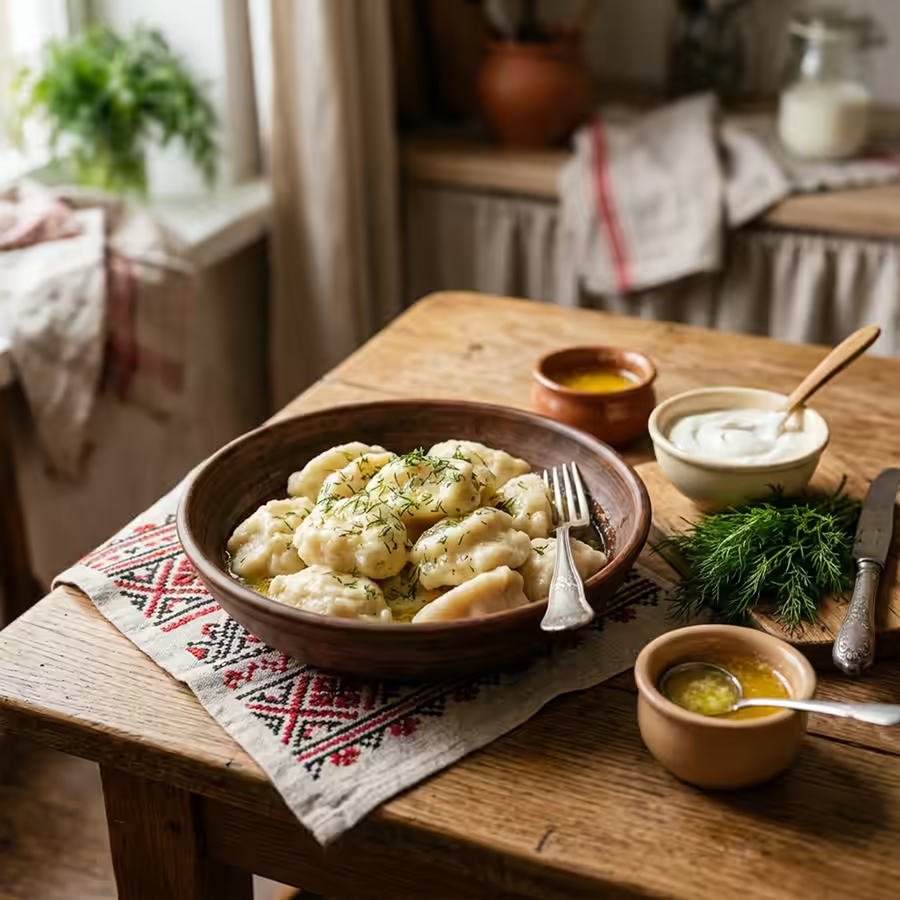
Poltava dumplings are a dish that is strongly associated with Ukrainian cuisine and home-cooked meals. They are loved for their simple ingredients, heartiness, delicate texture, and that familiar taste of home cooking that is hard to mistake for anything else.
Content
In modern home cooking, Poltava dumplings are prepared in various ways. Some people boil them in water, others steam them, some serve them simply with sour cream and butter, while others add meat, cheese, potatoes, mushrooms, or sautéed onions to the dish. That is why there is no single, definitive version that can be called absolutely correct. Instead, there are basic principles that help you make successful, tender, and delicious dumplings at home.
If you’re making Poltava dumplings for the first time, these instructions will help you get through the process smoothly and without any unnecessary mistakes. If you already have some experience, this guide will serve as a handy starting point that you can adapt to your own taste, family preferences, and favorite ingredients.
What are Poltava dumplings?
Poltava dumplings are a traditional dish of Ukrainian cuisine made from dough and served either on their own or with various accompaniments. At home, dumplings are often part of a family lunch or dinner, as they are made with readily available ingredients and are very filling.
The key feature of successful dumplings is a soft, tender texture. They shouldn’t be dry, hard, or “heavy” with flour. That’s why getting the dough consistency right is so important. If you make it too thick, the dish will lose its characteristic fluffiness. But if you strike the right balance, the result will be delightful: the dumplings will turn out soft, fluffy, and truly homemade.
Another advantage of this dish is its versatility. The basic recipe is easy to adapt. Using the same base, you can make Poltava dumplings with meat, Poltava dumplings with cheese, or Poltava dumplings with potatoes. This makes the dish ideal for both everyday meals and culinary content designed to cover multiple search queries at once.
Why this recipe is convenient
This recipe is perfect for a large homemade serving that can be shared among several people. It’s convenient because it doesn’t require complicated techniques, expensive ingredients, or professional skills. It all comes down to a few simple steps: mix, knead, let the dough rest, shape, boil or steam, and then serve properly.
Another advantage of this option is its flexibility. You can use the same base and simply change the topping. One time you can make dumplings with sour cream, the next time with a meat sauce, and then with cheese or potatoes. This is very convenient for home cooking, since you don’t have to learn several completely different recipes.
This text has also been formatted for WordPress. All measurements are given in standard kitchen units: 400 ml, 600–700 g, 1 tsp, 10–15 minutes, 3–4 minutes. No additional formatting is needed after pasting it into the editor.
Ingredients for the basic recipe
For the dough
- Kefir — 400 ml
- Eggs — 2
- Wheat flour — 600–700 g
- Salt — 1 tsp
- Baking soda — 1 tsp
- Butter — 40–50 g for greasing the cooked dumplings
These figures should be viewed as a guideline rather than a strict rule. The amount of flour may vary slightly depending on the thickness of the kefir, the size of the eggs, the moisture content of the flour itself, and even the temperature of the ingredients. That is why it is best to add the flour gradually.
For basic service
- Sour cream — to taste
- Butter — to taste
- Sautéed onions — 2–3
- Salt — as needed
- Black pepper — to taste
- Dill or green onions — for garnish
For the meat version
- Boiled or braised meat — 400–500 g
- Onions — 2
- Oil or butter — for sautéing
- Sour cream — 2–3 tbsp, to taste
- Salt — to taste
- Pepper — to taste
For the version with cheese
- Cottage cheese — 400 g
- Egg yolk — 1
- A pinch of salt
- Butter — 30 g
- Sugar — 1–2 tsp, to taste
For the version with potatoes
- Potatoes — 700–800 g
- Onions — 2
- Oil — for frying
- Salt — to taste
- Pepper — to taste
What the dough should be like
The most important rule is that the dough shouldn’t be too stiff. It should be soft, elastic, and pliable, but not runny. In short, for Poltava-style dumplings, it’s better to have dough that’s a little softer than too dense.
This is a very important point, because this is where home cooks most often go wrong. When they notice that the dough is a little sticky, many immediately add more flour. With dumplings, this isn’t always a good idea. A slight stickiness at the start is normal. It’s much worse when the dough is overloaded with flour to the point that the finished dumplings become heavy and dry.
Also, don’t knead the dough for too long. This isn’t bread or rich pastries. Once the dough is smooth and holds its shape, that’s enough. Then it’s best to let it rest for a bit.
Preparing ingredients and the workstation
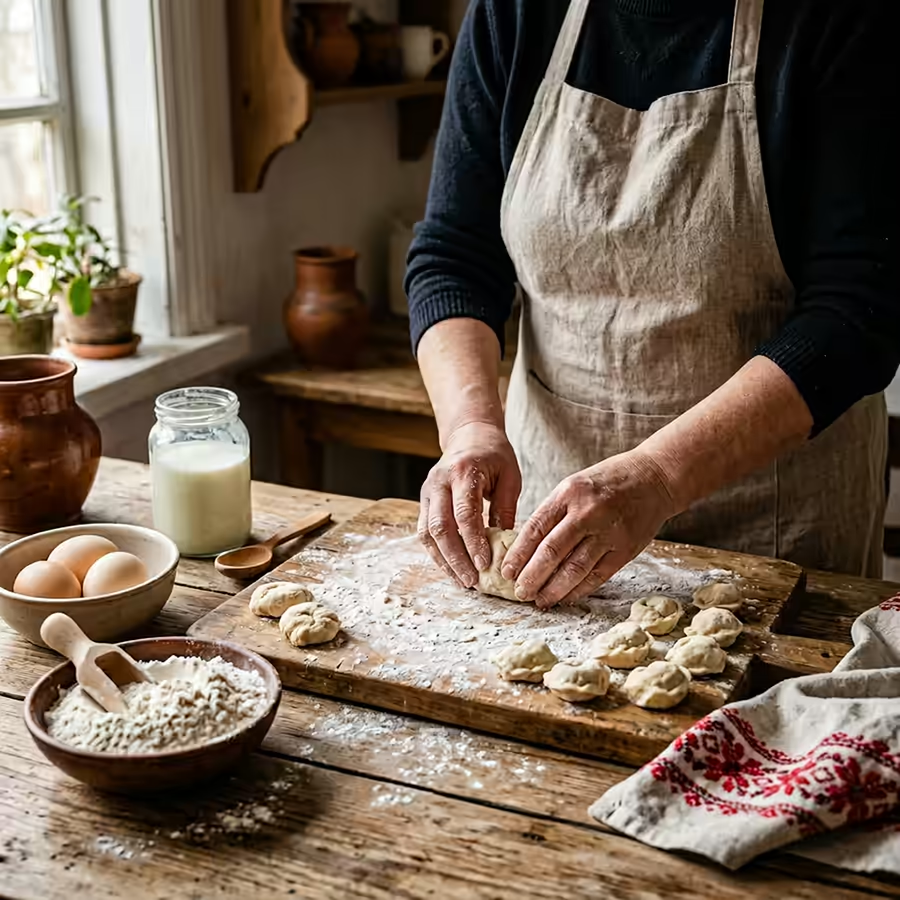
Before you start cooking, it’s best to take the kefir out of the refrigerator in advance. When it’s not too cold, the dough mixes more evenly and behaves more smoothly. It’s also better to use eggs that aren’t ice-cold.
It’s best to sift the flour. This isn’t some mandatory magical ritual, but it’s definitely a good idea: it makes the flour more uniform and lump-free, and it’s easier for you to control the dough’s consistency.
If you’re planning to make more than just plain dumplings—such as those filled with meat, cheese, or potatoes—it’s a good idea to prepare the additional ingredients in advance. Boil the meat, sauté the onions, boil the potatoes, or prepare the cheese filling ahead of time. That way, everything will be ready to go when it’s time to serve.
Also, have a large bowl for the dough, a cutting board or table for shaping, a pot of water or a steamer, a spoon, a slotted spoon, and a bowl for the finished dumplings ready. This simple preparation really helps keep things running smoothly.
Step-by-step instructions
Step 1. Mix the liquid ingredients
Pour 400 ml of kefir into a large bowl. Add 2 eggs, 1 tsp of salt, and 1 tsp of baking soda. Mix well with a spoon or whisk until smooth.
There’s no need to whip anything separately until fluffy. Just mix the ingredients well. Then let the mixture sit for 2–3 minutes while you prepare the flour.
Step 2. Gradually add the flour
First, add about 500 g of flour and stir. Then add the rest in small batches, checking the consistency as you go.
At this stage, the key is not to rush. The dough will initially be softer than you might find “comfortable,” but it’s precisely this consistency that often yields the best results. If you add all the flour at once, there’s a good chance you’ll end up with a dense dough.
Step 3. Knead the dough
When it becomes difficult to work with a spoon, transfer the mixture to a lightly floured surface and knead briefly with your hands. Don’t knead for too long. The goal isn’t to make the surface perfectly smooth, but to form a soft, uniform dough.
If it sticks a little, don’t worry. It’s better to dust your hands or the table with flour than to add extra flour to the entire mixture.
Step 4. Let the dough rest
Cover the dough with a towel or plastic wrap and let it rest for 10–15 minutes. This is a simple but very important step. During this time, the flour absorbs the moisture more evenly, and the dough becomes more pliable.
After letting it rest for a short while, it becomes easier to work with, and often it no longer feels as sticky as it does right after kneading.
Step 5. Prepare water or steam
If you’re boiling the dumplings, fill a large pot with enough water, bring it to a boil, and add plenty of salt. If you’d like to steam them, set up a steamer, a rack, or a colander over a pot of boiling water.
Both methods are good. Cooking them in water is faster and easier. When steamed, the dumplings often turn out especially fluffy and tender.
Step 6. Shape the dumplings
There are several ways to shape the dough:
- Pinch off small pieces with your hands
- Unroll the rope and cut it with a knife
- Scoop out small portions with a spoon
It’s best to choose a medium size. Dumplings that are too large may not cook through properly, while those that are too small lose some of their characteristic softness.
Step 7. Boil the dumplings in water
Add the dumplings to the boiling salted water in batches. Don’t add them all at once. Once added, stir gently so they don’t stick to the bottom.
Small dumplings are usually boiled for 3–4 minutes after they float to the surface or after the water comes to a rolling boil. It’s important to check both their size and whether they’re actually done. They should be tender but not raw inside.
Use a slotted spoon to remove the cooked dumplings and transfer them to a separate bowl.
Step 8. Or steam it
For the steaming method, place the dumplings on a greased surface, leaving space between them. They will expand during cooking.
Steaming time is usually 8–12 minutes, sometimes a little longer, depending on the size. The result is dumplings that are very soft, tender, and fluffy.
Step 9. Season the cooked dumplings
As soon as the dumplings are ready, transfer them to a bowl and add the butter. Gently stir or shake the bowl so that the butter is evenly distributed.
Don’t skip this step. The oil enhances the flavor and aroma while also preventing the dumplings from sticking together.
Step 10. Serve hot
Poltava dumplings taste best right after they’re made. That’s when they have the best texture. They’re very easy to serve—just with sour cream and butter. Or you can make a heartier version with meat, cheese, or potatoes.
Poltava-style dumplings with meat
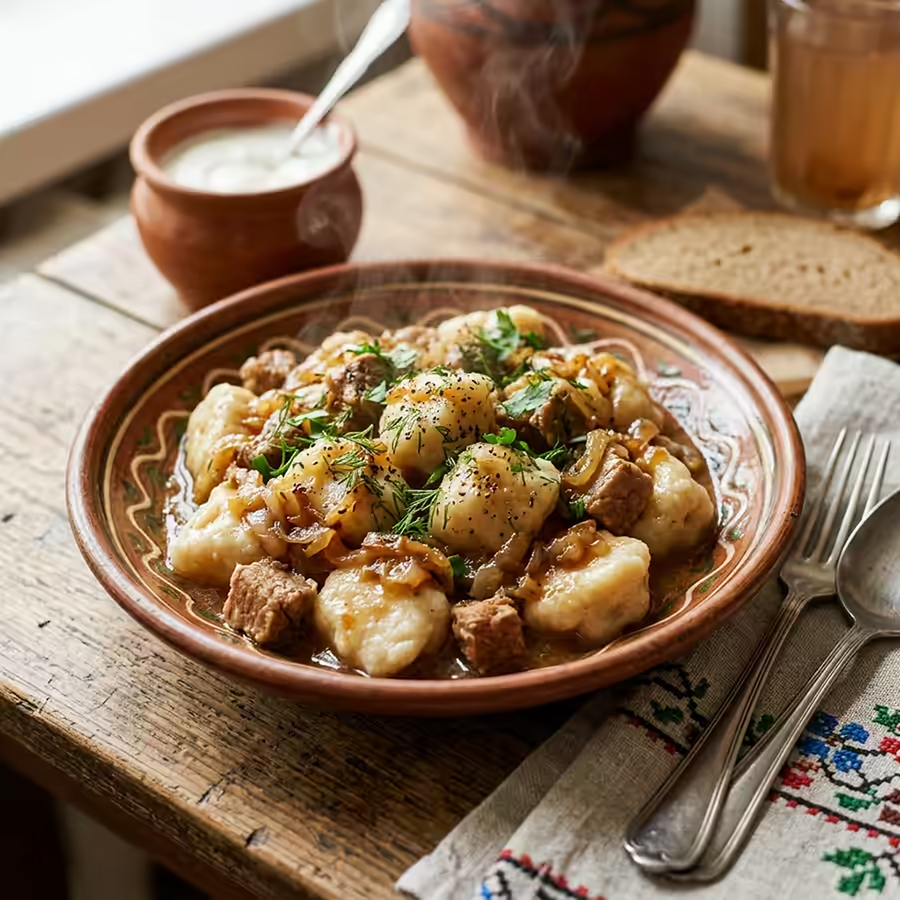
This is one of the most popular and hearty ways to serve them. It’s easiest not to complicate the recipe with a filling inside, but to make the basic dumplings and prepare the meat topping separately.
To do this, boil or braise 400–500 g of meat until tender. Chicken, pork, or beef work well. You can cut the meat into small pieces or shred it.
In a separate pan, sauté 2 onions until golden brown. Add the meat, salt, and pepper, and, if desired, a little sour cream or a few tablespoons of broth. Simmer everything together for a few more minutes.
There are two ways to serve this dish. The first is to arrange the dumplings on a plate and top them with the meat and onions. The second is to mix everything together in a large bowl. If you’re looking for a more homey and “cozy” option, the second method works especially well.
Poltava dumplings with cheese
The cottage cheese version is softer, more delicate, and perfect for home cooking. It works best with cottage cheese that isn’t too runny.
Take 400 g of cottage cheese, add 1 egg yolk, a pinch of salt, and 1–2 teaspoons of sugar, if desired. Mash well with a fork or blend in a food processor if you prefer a smoother texture.
You can serve it on its own or mix the cheese with hot dumplings and butter. If the cheese is a little dry, add a spoonful of sour cream. If it’s too wet, it’s best to let it drain first.
This option is perfect for those who want a light yet hearty meal without a heavy meat component.
Poltava dumplings with potatoes
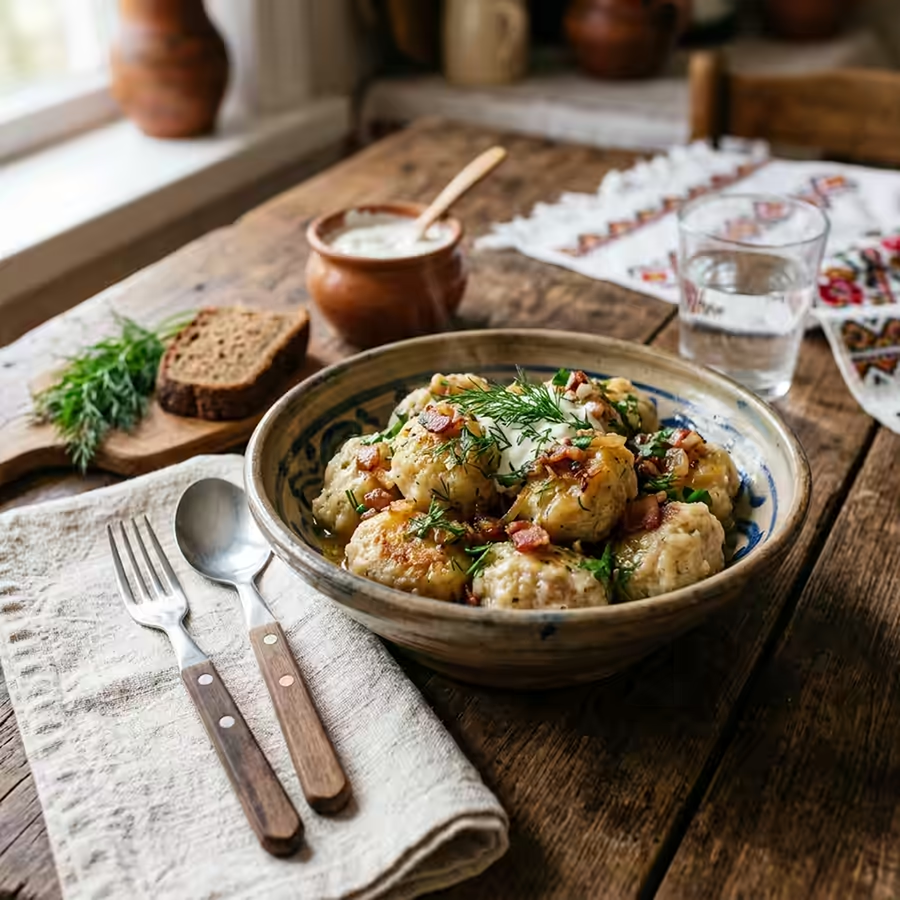
This is a very hearty and simple homemade version. Boil 700–800 g of potatoes until tender, drain the water, and let the excess moisture evaporate. Then mash them into a puree.
In a separate pan, sauté 2 onions until golden brown, then mix them with the potatoes. Season with salt and pepper to taste.
You can serve it alongside hot dumplings or mix everything together in a large bowl with a small pat of butter. This dish is especially perfect for the cold season, when you’re craving something simple, hearty, and home-cooked.
How to tell if the dumplings turned out well
Perfect dumplings should have a soft center, a pleasant tenderness, and a neat shape. They shouldn’t be raw inside, but they also shouldn’t be rubbery or too dense.
If you cut open a hot dumpling, the texture should be uniform—no large raw patches, no dense, “compacted” dough, and no excess moisture.
Another sign of a good result is that the dumplings are easy to eat. They don’t leave you feeling heavy after just a few bites, but remain soft and pleasant.
Common Mistakes
Too much flour
This is the most common problem. It causes the dumplings to become hard and dry.
Over-mixing
The dough for dumplings doesn’t require long, vigorous kneading.
Very large pieces
These dumplings may not cook evenly.
An overflowing pot
If you cook everything at once, the dumplings will stick together and won’t cook as well.
Boiling too vigorously
Boiling water can cause the dumplings to lose their shape and affect their texture.
No oil remaining after cooking
Without oil, the dumplings stick together quickly.
Practical Tips
- Add the flour gradually.
- It’s better to have soft dough than dough that’s too stiff.
- Let the dough rest for 10–15 minutes.
- Cook the dumplings in small batches.
- Coat them with oil right away.
- For a very fluffy texture, try the steaming method.
- Don’t cut the pieces too big.
- Don’t use apps that are too watery.
Another helpful tip is to cook one test dumpling. If it turns out too soft and doesn’t hold its shape, you can add a little flour. If, on the other hand, it seems too firm, you should shape the next batch without adding any extra flour.
How to serve Poltava dumplings
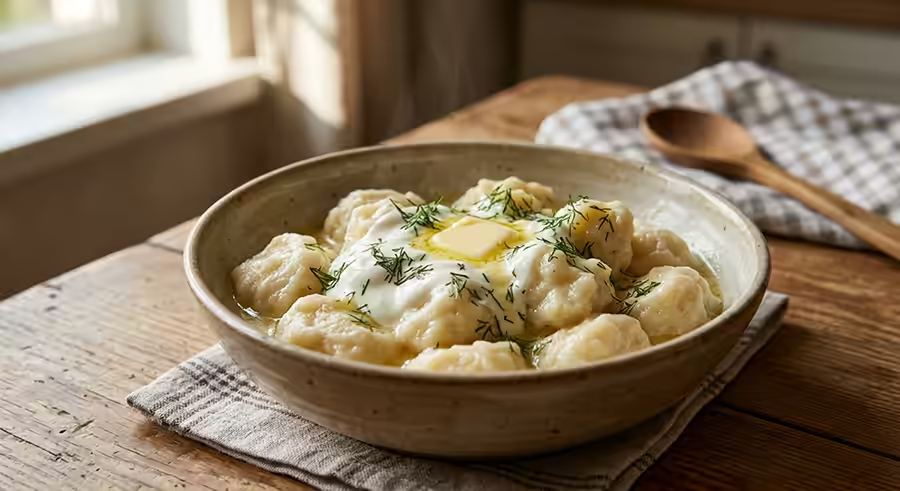
Here are the best ways to serve it:
- With sour cream and butter
- With sautéed onions
- With braised meat
- With mushroom sauce
- With cottage cheese
- With potatoes and onions
- With herbs and black pepper
- With cracklings for a richer flavor
For a family meal, it’s very convenient to serve the side dishes separately. That way, everyone can choose the one they like best.
How to store and reheat
Dumplings taste best when fresh, but you can easily store any leftovers. Once they’ve cooled, transfer them to a container with a lid. It’s best to lightly grease the container with oil first.
If you cooked the meat, cheese, or potatoes separately, it’s best to keep these ingredients separate as well. This will make it easier to reheat and serve them.
You can reheat the dumplings by:
- In a skillet with a little oil
- By the pair
- In the microwave, covered
Don’t mix everything with sour cream ahead of time if you know you’ll be saving some of the dish for later. It’s best to add the sour cream just before serving.
Frequently Asked Questions
What are Poltava dumplings?
This is a traditional Ukrainian dough-based dish that is served either on its own or with various side dishes.
What is the best surface for kneading dough?
One of the easiest options to make at home is kefir dough. It turns out soft and works well for dumplings.
How long should Poltava dumplings be cooked?
Small dumplings usually take 3–4 minutes to boil. If you’re steaming them, allow about 8–12 minutes.
Why do dumplings turn out hard?
Most often due to too much flour, over-kneading, or overcooking.
Can you steam it?
Yes, and this method often results in a very soft and fluffy texture.
Which serve is the easiest?
The simplest way to serve the dumplings is with butter, sour cream, and sautéed onions.
What kind of meat works best?
Chicken, pork, or beef—it all depends on your taste and what you have on hand.
Can you make dumplings with cheese?
Yes, this is a very nice and delicate way to serve it at home.
Can you serve dumplings with potatoes?
For example, Poltava-style dumplings with potatoes are a hearty and very convenient option for a family dinner.
How to Make an Article More Useful for Readers
Include not only a list of ingredients, but also explanations: what the dough should be like, what common mistakes to avoid, how to serve the dish, and how to store it.
Conclusion
Poltava dumplings are a dish where everything comes down to simple yet crucial details. The right soft dough, just the right amount of flour, careful shaping, gentle boiling or steaming, and a beautiful presentation all come together to create a result you’ll want to recreate again and again.
This dish is very convenient to make at home because it can easily be adapted to suit different tastes. Today it might be Poltava dumplings with sour cream, tomorrow—Poltava dumplings with meat, and the day after that—Poltava dumplings with cheese or potatoes.
If you take your time and don’t try to make the dough too stiff, the result almost always turns out well. That’s exactly why Poltava dumplings remain one of those dishes that never get old and work well both for everyday family meals and for a major culinary blog post.