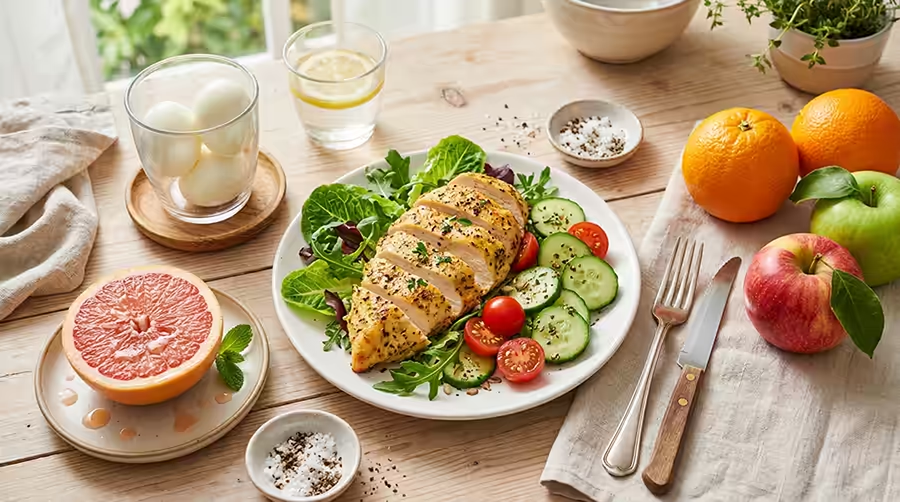
The Maggie Diet is one of the most well-known rapid weight loss plans, typically classified as a high-protein diet. It is most often described as a 4-week eating plan with a strictly defined menu, based on eggs, lean meat, chicken, fish, vegetables, and some fruits, while sweets, baked goods, fatty foods, and most common desserts are strictly limited.
Content
Different variations of this diet include egg-based and cheese-based versions. In the first case, eggs are often the primary source of protein, while in the second, some of the eggs are replaced with low-fat cottage cheese to make the diet a little milder for those who get tired of eating large quantities of eggs or simply don’t like their taste.
The popularity of the Maggie Diet is easy to explain. People choose it because of its relatively straightforward rules, simple ingredients, minimal culinary complexity, and the promise of quick results within the first 1–2 weeks. It is precisely this rapid weight loss that has made this plan famous, but at the same time, it has earned a reputation for being quite strict and not very comfortable in everyday life.
Unlike balanced long-term eating plans, the Maggie Diet is typically viewed as a short, 4-week program. It doesn’t teach people how to plan their meals flexibly, doesn’t offer a wide variety of foods, and often relies on repetitive meals, which is why some people find it difficult to stick with as early as the middle of the second week.
What is the essence of the Maggie Diet?
The basic principle of the Maggie Diet is to combine high-protein foods with vegetables and some fruits, while strictly limiting simple carbohydrates and fatty foods. As a result, daily calorie intake is often reduced without the need for separate calorie counting, and the person is provided with a ready-made meal plan that simply needs to be followed.
In most descriptions, the first two weeks are particularly strict. Breakfasts are often the same—eggs and half a citrus fruit—while lunch and dinner are strictly tied to specific days. The third week usually consists of separate food days, when you can eat certain food groups, and the fourth week involves a set of foods for the day that you must distribute among your meals yourself.
In other words, the Maggi diet appeals not only because of its menu, but also because it eliminates the need to constantly think about what to cook. For many people, this is psychologically easier than traditional weight loss involving calorie counting, macronutrient ratios, and daily portion weighing. But the simplicity of the menu doesn’t mean it’s easy to follow, because the strictness here is much higher than in most moderate diets.
Why the Maggie Diet Works
The main reason for weight loss on this diet is a calorie deficit. People cut out a significant portion of sweets, baked goods, fast food, snacks, fatty foods, sauces, and high-calorie drinks, and their diet becomes much simpler and lower in calories.
In addition, protein-rich foods are often very filling. Eggs, chicken, lean meat, fish, cheese, and vegetables can reduce hunger compared to a diet high in pastries, sugary breakfasts, and random snacks. That is why some people actually see a noticeable drop in weight as early as the first week, although part of this loss may be due not only to fat but also to a decrease in glycogen stores and the elimination of excess fluid.
However, it’s important to understand that the name of the diet alone doesn’t trigger any “special” fat-burning mechanism. The results come about because a person starts eating fewer calories, cuts out excess simple carbohydrates, and follows a very structured plan. Therefore, the effect always depends not on the hype surrounding the diet, but on starting weight, lifestyle, hormonal status, and how strictly the meal plan is followed.
Basic Rules of the Maggie Diet

Popular descriptions of the diet consistently emphasize one point: it is not advisable to arbitrarily substitute or swap foods. If eggs, fish, or citrus fruits are specified for a particular day, you should follow that exact plan rather than replacing them with “something similar.”
Another key feature is the minimal use of fats in cooking. It is recommended to boil, bake, braise, or steam meat, fish, vegetables, and poultry. Mayonnaise, butter, rich sauces, frying in large amounts of oil, and high-calorie salad dressings do not fit into the classic approach.
Many diet guides also emphasize the importance of water. They recommend drinking it regularly throughout the day, and tea and coffee are usually allowed—but without sugar. For many people, this is a crucial detail, because it is precisely sweet drinks, juices, sodas, and “coffee with dessert” that often add extra calories to their daily diet without them even realizing it.
Your eating schedule is also important. Although the wording varies slightly across different versions, the logic is the same: dinner shouldn’t be too late, and snacks should either be avoided entirely or kept to a minimum. The less chaos there is in your eating habits, the easier it is to stick to the diet and avoid falling off track halfway through.
Who should be cautious about the Maggie Diet
The Maggi diet is not a mild, general-purpose dietary regimen. In cases of kidney, liver, gastrointestinal, or cardiovascular disease, as well as other chronic conditions, a highly restrictive protein diet may be inadvisable.
It is specifically noted that this diet is generally not recommended for pregnant women, breastfeeding women, children, adolescents, and the elderly without medical supervision. The reason is simple: for these groups, a stable, varied, and nutritionally balanced diet is particularly important, whereas the Maggi diet is too strict and limited in its selection of foods.
It is equally important to take allergies and individual tolerance into account. A large number of eggs and citrus fruits are not suitable for everyone, and if you experience a rash, itching, stomach pain, nausea, or severe discomfort, you should not continue the regimen.
What’s allowed and what’s not
For the Maggie Diet to work as described in popular meal plans, it’s important not only to know the list of dishes but also to have a clear understanding of which foods are allowed and which are generally excluded entirely. This is where mistakes most often occur: people think that if a food is “almost diet-friendly,” they can add it on their own, but the classic approach to this diet doesn’t approve of such improvisation.
What can you eat on the Maggie diet?
The diet consists mainly of eggs, skinless chicken, lean meat, lean beef, veal, turkey, fish, and occasionally tuna in its own juice. These foods provide the bulk of the protein, which is why this diet is considered more filling than the classic fasting regimen based on porridge or apples.
When it comes to vegetables, non-starchy options are generally allowed. These include cucumbers, tomatoes, lettuce, cabbage, zucchini, carrots, bell peppers, broccoli, cauliflower, and other vegetables that can be eaten raw, boiled, stewed, or baked without a lot of fat.
The fruits most commonly found on the menu include oranges, grapefruits, apples, pears, kiwis, peaches, apricots, strawberries, cherries, and occasionally melons and other less sweet options. Citrus fruits appear particularly frequently in the first two weeks, as they are considered part of the classic breakfast menu.
On some days, low-fat cottage cheese or sour milk cheese is allowed. Occasionally, the menu includes dry toast, and the cheese-based version of the diet actually partially replaces eggs with sour milk cheese.
Tea and coffee without sugar are also generally allowed. If a person isn’t used to drinking these beverages without sweeteners, the first few days may seem difficult, but cutting out sugar in drinks often has the added benefit of reducing the overall calorie content of the diet.
What not to eat on the Maggie diet
The items most commonly off-limits include sweets, cakes, cookies, chocolate, candies, candy bars, rich pastries, white bread in the usual amounts, rolls, croissants, and other foods that quickly increase the calorie content of a meal.
Also considered undesirable are fatty sauces, mayonnaise, large amounts of butter, sausages, hot dogs, fatty meats, smoked meats, and most foods containing hidden fats and salt. The Maggi Diet is generally designed to eliminate the “tasty little treats” that usually cause people to overeat.
Many descriptions of the diet prohibit bananas, grapes, dates, figs, dried fruit, mangoes, and avocados. The reason for this restriction is the higher calorie content of certain fruits or their incompatibility with the classic diet menu.
The most commonly eliminated side dishes include potatoes, corn, and legumes, as well as pasta, white rice, and grains, which are almost entirely absent from the classic version. For many people, this is the most difficult part, as their bodies have grown accustomed to the feeling of a “full meal” accompanied by porridge, potatoes, or bread.
Alcohol doesn’t fit into the traditional framework either. In addition to adding extra calories, it often leads to overeating, fluid retention, and reduced appetite control—and on a strict diet, this is almost a surefire way to derail your progress.
Why You Shouldn’t Change the Menu on a Whim
Many people try to “improve” the Maggie diet on their own. For example, they might add some porridge, swap fish for cheese pancakes, replace the salad with soup, or make a “healthy dessert” with honey and nuts. But that’s often where the problem lies: the diet ceases to be the plan the person originally chose.
If you’re going to follow the Maggie method, you should stick as closely as possible to the classic structure. Otherwise, you won’t have a consistent routine, but rather a mix of dieting, intuitive eating, and random snacking—which almost always undermines your results.
However, from a practical standpoint, common sense is more important than blindly following any plan. If a particular product causes you severe discomfort, an allergic reaction, or a noticeable decline in your well-being, it’s best not to force yourself to stick to the regimen.
4-Week Menu – The Maggie Diet
Below is a detailed 4-week meal plan based on the most common version of the Maggie diet.
The first week
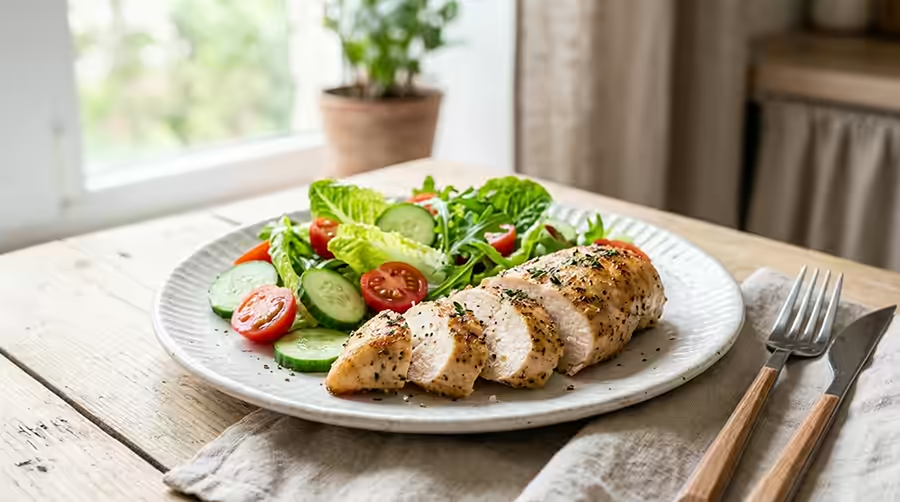
The first week is all about getting into the routine. This is when you make a sudden shift from your usual diet to a very structured meal plan, so the first 3–4 days are usually the hardest. In most traditional plans, breakfast is almost the same every day: 1–2 eggs and half a grapefruit or orange.
Day 1
Lunch: Any permitted fruit of a single variety per meal.
Dinner: Lean meat and a vegetable salad.
The first day seems fairly simple, but it’s often this day that provides the sharpest contrast to your usual diet. If you’ve been eating sandwiches, sugary breakfasts, or snacking on cookies or coffee with syrups, you may feel a strong urge to slip up by evening. This is normal, because your body hasn’t yet adjusted to the new diet.
Day 2
Lunch: skinless chicken.
Dinner: 2 eggs, a salad, 1 slice of toast, and 1 citrus fruit.
The second day already illustrates the basic principle of the diet: minimal complications, simple protein-rich foods, vegetables, and very few additional carbohydrates. It is precisely because of this structure that many people notice a reduction in bloating and a feeling of a “lighter” stomach, although part of this effect is due to the reduced intake of salt, bread, sweets, and heavy sauces.
Day 3
Lunch: tomatoes, toast, low-fat cheese.
Dinner: lean meat.
This day is usually a little easier to get through because cheese is added to the menu, and the food itself feels less “dry.” But for people who are used to large portions of side dishes, this is precisely where they might lack that psychological sense of fullness.
Day 4
Lunch: fruit is allowed.
Dinner: lean meat and leafy greens.
For some people, a fruit-based lunch is easy to manage, while for others it can cause fluctuations in appetite. If you tend to feel very hungry after eating sweet fruits, such a day may be harder to get through than a meat-based one.
Day 5
Lunch: 2 eggs and boiled vegetables.
Dinner: fish, salad, and citrus fruit.
This is one of those days when fish adds some variety to the menu. If you choose lean white fish or prepare tuna without excess fat, dinner is more enjoyable than constantly eating the same old eggs and chicken.
Day 6
Lunch: fruit is allowed.
Dinner: lean meat and salad.
The sixth day follows a similar pattern to the fourth. It maintains a calorie deficit, but at the same time can be mentally challenging due to the repetition and the desire to “treat yourself” to something over the weekend.
Day 7
Lunch: chicken breast, steamed vegetables, tomatoes, citrus fruit.
Dinner: steamed or stewed vegetables.
For many people, the end of the first week is already a turning point. Either they feel like they’ve gotten into a routine, or, on the contrary, they start to get really tired of the monotony. This is exactly when it’s crucial not to treat yourself to a “reward” like dessert or pizza, because that often ruins all the momentum built up during the first week.
Week 2 – The Maggie Diet
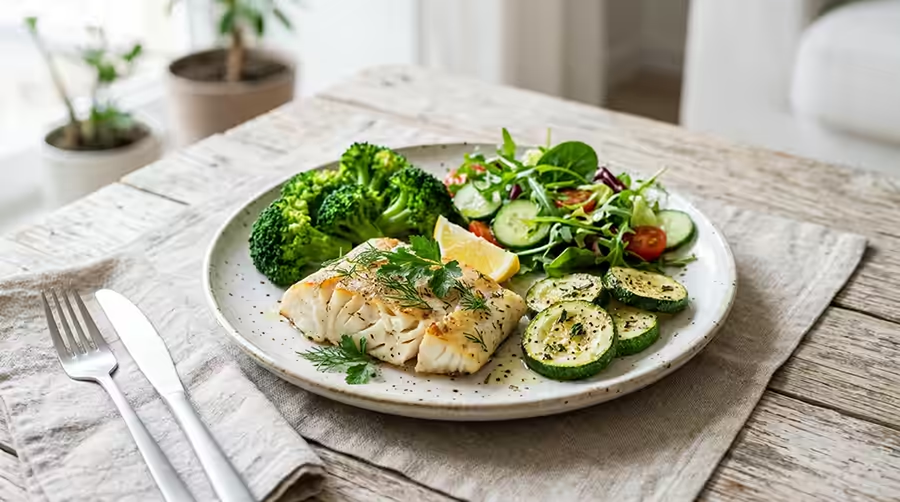
The second week of this popular diet is considered stricter and higher in protein. Breakfasts remain the same or nearly the same—eggs and citrus—but lunch and dinner become even simpler and more repetitive.
Day 1
Lunch: lean meat and salad.
Dinner: 2 eggs, salad, and a citrus fruit.
This is a day of classic Maggi. Minimal frills, maximum predictability. For those who like strict guidelines, this approach might even be comforting, but for people who crave variety in flavor, it quickly becomes tedious.
Day 2
Lunch: lean meat and salad.
Dinner: 2 eggs and a citrus fruit.
The monotony of the second week is one of the reasons why many people give up on their diet right around this time. The body has already gotten used to the lack of sweets, but psychological fatigue from eating the same foods begins to set in.
Day 3
Lunch: cucumbers and lean meat.
Dinner: 2 eggs and a citrus fruit.
Day three doesn’t seem difficult on paper, but in practice, you often find yourself wanting to add at least some grains or a slice of your usual bread to your lunch. It is precisely these small, unplanned additions that most often undermine the diet’s effectiveness.
Day 4
Lunch: 2 eggs, low-fat cottage cheese, steamed vegetables.
Dinner: 2 eggs.
This day is particularly difficult for those who don’t tolerate large quantities of eggs very well. If you experience a strong aversion to eggs at this stage, you should honestly assess how you feel rather than forcing yourself to continue the regimen.
Day 5
Lunch: fish.
Dinner: 2 eggs.
Fish adds a bit of variety to the menu, but if dinner still consists of eggs, that feeling of “I’m eating the same thing again” doesn’t go away. That’s why, in the second week, it’s very important to prepare even simple foods in a tasty way: use permitted spices, cook meat or fish gently, and don’t overcook the dishes.
Day 6
Lunch: lean meat, tomatoes, citrus fruits.
Dinner: permitted fruits.
For some people, a fruit-based dinner is easy to handle, while for others, it leaves them feeling unsatisfied. It’s especially important not to compensate for this dissatisfaction with secret snacks, because even one “innocent” slice of cheese, a cookie, or a spoonful of peanut butter can completely derail the day’s plan.
Day 7
Lunch: chicken, tomatoes, steamed vegetables, citrus fruit.
Dinner: a similar selection of foods or a lighter version of lunch.
By the end of the second week, some people are already seeing a noticeable drop in weight. This is often when the temptation to “loosen up” the rules a bit arises, but within the Maggie diet, this is usually the worst time to experiment.
Week 3
The third week differs from the first two. Here, participants are no longer given the same breakfast or prescribed specific lunches and dinners; instead, they are assigned a group of foods for the entire day. On the surface, this seems easier, but in practice, this is precisely where it’s easy to overeat—even of the permitted foods.
Monday is Fruit Day
On this day, you can eat any fruit except bananas, grapes, dates, figs, mangoes, dried fruit, and certain other higher-calorie options. The main challenge is to avoid turning your “fruit day” into constant, uncontrolled snacking.
It’s better to spread your fruit intake over 4–5 small portions. For example, an apple or a grapefruit in the morning, then a pear, followed by a small serving of strawberries, and an orange in the evening. This approach is psychologically easier than eating a large, haphazard plate of fruit once a day.
Tuesday is Vegetable Day
The menu for this day typically includes raw, boiled, stewed, or roasted vegetables prepared without oil. Potatoes, corn, and legumes are not recommended, as they do not align with the classic low-carb principles of the diet.
Vegetable Day is beneficial because it offers a break from an excess of eggs and meat, but it isn’t easy for everyone. If a person is used to hot, hearty meals, a plate of vegetables without grains, bread, or a rich dressing may seem like “not real food,” and this is where preparation is key—it’s best to have pre-cooked or roasted vegetables ready in the fridge.
Wednesday — fruits and vegetables
This is one of the easiest days of the third week, as the diet becomes a little more varied. You can alternate between fresh vegetable salads without fatty dressings, roasted zucchini, tomatoes, cucumbers, citrus fruits, apples, berries, and other permitted options.
But even on this day, it’s important not to fool yourself with “healthy” treats. Honey, nuts, dried fruit, sweet yogurt, homemade granola, and other foods that often seem healthy aren’t part of the classic Maggie diet.
Thursday — fish and vegetables
A meal of fish and vegetables is generally more appealing than a day consisting solely of vegetables or fruit. It’s more balanced in terms of both satisfaction and flavor, and if you bake the fish with lemon and spices without oil, the meal can actually be quite enjoyable.
That said, don’t forget about salt and sauces. Often, it’s these ingredients that transform a simple fish dish into something that no longer has anything to do with a strict diet plan.
Friday — meat and vegetables
Lean meat, chicken, or turkey, paired with vegetables, is quite filling. For many people, this is psychologically one of the most comforting days of the third week, as it most closely resembles a “normal” lunch plate, albeit without a side dish.
This particular day clearly illustrates that the main challenge of the Maggie Diet isn’t hunger in the traditional sense, but rather the monotony and strictness of the restrictions. When your diet includes high-quality meat and vegetables, you can feel perfectly full, but there’s a lack of freedom.
Saturday — Fruit Day
In many diets, Saturdays allow for only one type of fruit. This is a fairly strict approach, which can lead to food boredom even faster than vegetable days.
To avoid any problems, it’s best to choose a fruit in advance that you know you can tolerate well. If you choose apples, it’s a good idea to buy a few different varieties to add some variety to the taste, even though technically they’re all the same product.
Sunday — another fruit-only day
By the end of the third week, it often takes more mental than physical endurance. At this stage, you may find yourself really missing your usual food, which is why it’s a good idea to plan how you’ll transition out of the diet in advance, rather than just dreaming of a “binge day” after you’re done.
Week 4
The fourth week follows a different approach. Participants are given a daily list of foods, and they decide for themselves how to divide them among breakfast, lunch, dinner, and, if necessary, another light meal.
This format seems more flexible, but that flexibility is limited. The menu doesn’t include any extras, so any “little treats”—cookies, extra bread, cheese sauce, or a dessert after coffee—already throw you off track.
Monday
For the day: cucumbers, tomatoes, tuna in its own juice, a quarter of a chicken, about 300 g of lean meat, 1 slice of toast, 1 orange or grapefruit.
Here’s a convenient meal plan: citrus fruit and toast in the morning, meat with some vegetables for lunch, a snack of tuna and tomatoes, and chicken and salad for dinner. The key is not to try to eat everything in one sitting, because that makes it harder to control your appetite for the rest of the day.
Tuesday
Per day: about 200 g of cooked meat, cucumbers, tomatoes, 1 slice of toast, 1 permitted fruit.
This is one of the most modest days in terms of groceries, so it’s best to plan ahead and figure out how to spread your meals over several meals. For example, save some of the meat for dinner instead of eating all the protein at lunch.
Wednesday
For the day: low-fat cottage cheese, a little sour milk cheese, cucumbers, tomatoes, 200 g of cooked vegetables, 1 slice of toast, 1 citrus fruit.
This day gives you a chance to take a break from meat. If you pair cheese with tomatoes, cucumbers, and cooked vegetables the right way, you can enjoy several satisfying meals without feeling like you’re eating yet another dry chicken breast.
Thursday
For the day: half a skinless boiled chicken, a cucumber, tomatoes, 1 slice of toast, 1 citrus fruit.
Chicken Day is convenient because you can prepare the chicken in advance. If you make it juicy and don’t overcook it, sticking to the menu is much easier.
Friday
Per day: 2 eggs, tomatoes, vegetable salad, 1 orange or grapefruit.
After a few relatively varied days, this routine might start to feel too minimalist again. This is exactly when it’s important to remember that the fourth week is the home stretch—not the time to slip up.
Saturday
For the day: 2 chicken breasts, some cheese or brynza, cucumbers, tomatoes, 1 glass of milk, 1 slice of toast, 1 citrus fruit.
This is one of the most convenient days for daily life, since the food can be easily divided into several meals. For example, toast and citrus in the morning, chicken breast with vegetables at lunchtime, cheese and tomatoes in the late afternoon, and a second serving of chicken with cucumber in the evening.
Sunday
For the day: tuna, a little cottage cheese, cucumbers, tomatoes, 200 g of cooked vegetables, 1 slice of toast, 1 citrus fruit.
You should take it easy on the last day of the diet and avoid feeling like “I’ve earned it now.” The biggest mistake after finishing the Maggie diet is to immediately go back to baked goods, sweets, fast food, and large portions, which can cause some of the weight you’ve lost to come back quickly.
Results, Benefits, Risks, and Tips
The most common question about this system is: how much weight can you actually lose on the Maggi diet in 4 weeks? Figures ranging from 5 to 10 kg are often cited, and sometimes even higher promises are made, but these should not be taken as guaranteed results for everyone.
How much weight can you actually lose on the Maggie diet?
Actual results depend on starting weight, gender, age, physical activity level, hormonal balance, fluid retention, sleep quality, and how closely you follow the meal plan. Someone with a higher starting weight may lose more weight than someone who only needs to lose 3–4 kg.
It’s also important to understand that the first few pounds sometimes come off faster not just because of fat loss. When a person drastically cuts out sweets, starchy foods, salty snacks, and some carbohydrates, the body may lose fluid, and this also affects the scale.
Therefore, a more honest approach for the article would be to discuss a range rather than make a promise. For example, you could write that within 4 weeks, some people do see a noticeable weight loss—often in the range of a few kilograms or more—but the exact result is always individual and cannot be guaranteed for everyone.
What affects the rate of weight loss
The initial diet has a significant impact on the results. If, before starting the diet, a person ate a lot of baked goods, sugary drinks, fast food, and salty snacks and paid little attention to portion sizes, switching to a strict regimen will yield more dramatic results.
Physical activity is also important. Most often, experts recommend moderate exercise rather than strenuous sports: walks, light calisthenics, low-impact activities, stretching, or yoga. Highly intense workouts combined with a restricted diet can be difficult to tolerate.
Another factor is discipline. With this diet, it’s hard to “eat almost right.” You either stick closely to the plan, or it quickly turns into a series of random, half-hearted dietary choices, where you no longer understand why your weight isn’t budging or why it’s creeping back up.
Potential benefits of the Maggie diet
One of the most frequently cited advantages of this system is its straightforward structure. There’s no need to count calories, plan complicated weekly menus, search for exotic ingredients, or prepare a wide variety of dishes.
Another advantage is the simplicity of the shopping list. Eggs, chicken, vegetables, fish, citrus fruits, and cheese are available almost everywhere, which means the diet doesn’t require expensive superfoods or sports nutrition.
In addition, some people respond well to a high-protein diet. They feel fuller more easily, think less about snacking, and the absence of large amounts of sweets has a positive effect on appetite control.
For some people, the very fact that the structure is rigid can be helpful. When someone has trouble knowing when to stop eating, a clear list of “what’s allowed today” really helps cut through the chaos and get them back on track, at least for a short while.
Potential harm and drawbacks
Despite its popularity, this diet has some notable drawbacks. First, it is monotonous. The large number of eggs, repetitive protein-based meals, the near-total absence of familiar side dishes, and strict flavor restrictions make it psychologically draining.
Second, in certain medical conditions, a high-protein diet may not be advisable. This is particularly true for problems involving the kidneys, liver, cardiovascular system, and gastrointestinal tract, as well as individual intolerance to certain foods.
Third, because of its lack of flexibility, the diet does a poor job of teaching people how to eat healthily “for the rest of their lives.” A person might stick with it for four weeks but fail to understand how to continue eating healthily, and then quickly revert to their old habits.
Some people also complain of egg fatigue, a lack of variety, digestive discomfort, and mental exhaustion from constant monitoring. Even if the scale shows results, the psychological toll of this type of weight loss proves too high for some.
How to reduce the risk of failure
The best advice is not to start a diet without preparing in advance. If your fridge isn’t stocked with cooked chicken, fish, eggs, vegetables, and permitted fruits, it’s very easy to end up eating the first thing you come across.
It’s a good idea to prepare some simple meal prep items in advance. For example, hard-boil some eggs for the next two days, bake some chicken breast, prepare a few servings of vegetables, and keep some tuna in its own juice on hand. This way, you’ll reduce the risk of “accidental” slip-ups due to fatigue or lack of time.
It’s just as important to stay hydrated. Drinking enough fluids really does make it a little easier to cope with the restrictions.
Another practical tip is not to check your weight every hour. It’s better to weigh yourself 1–2 times a week under the same conditions, because daily fluctuations can undermine your motivation even when the overall trend remains normal.
How to properly transition off the Maggie diet
One of the biggest mistakes people make after completing the 4-week program is going back to their old diet right away. If, after following a strict regimen, you start eating pizza, desserts, fried foods, pastries, and large portions every day, the weight can come back very quickly.
You should ease out of the diet gradually. Start by adding a wider variety of vegetables, then small portions of complex carbohydrates, and finally return to a normal, balanced diet without overeating. The main goal is to avoid falling into a state of dietary chaos after a month of strict restrictions.
Ideally, after the Maggie diet, a person should not switch to a “now I can eat anything” mindset, but rather adopt a moderate eating pattern. For example, they should stick to simple breakfasts, avoid returning to daily sugary drinks, watch their portion sizes, and avoid mindless eating in the evening. This is the best way to maintain the results, if they have already been achieved.
Who the Maggie Diet Might Be Suitable For, and Who It Might Not
The Maggie Diet may be suitable for people who like clear rules, tolerate eggs well, have no contraindications, and want a short-term, strict plan without complicated calculations. For such people, its main advantage is how easy it is to follow: just open the menu and eat what’s listed.
However, it is not suitable for those with sensitive digestion, who cannot tolerate monotonous meals, are emotionally dependent on sweets, frequently eat out, or cannot cope with strict restrictions. In such cases, a more moderate reduction in calorie intake and a balanced diet often prove to be a wiser choice than yet another “strict diet.”
Frequently Asked Questions
Can eggs be replaced with cottage cheese?
Yes, there is a cottage cheese version of the Maggi diet, in which some of the eggs are replaced with low-fat cottage cheese. A common guideline is that 1 egg can be replaced with approximately 100 g of low-fat cottage cheese.
Can I drink coffee?
Yes, tea and coffee without sugar are usually allowed. However, sweetened coffee drinks, syrups, cream, coffee desserts, and sweetened beverages do not fit into the standard guidelines.
Can you eat bananas?
In most popular diets, bananas are considered off-limits. Along with bananas, these diets often exclude grapes, dates, figs, dried fruit, mangoes, and some other sweeter options.
Is it okay to exercise?
Moderate physical activity is usually acceptable, and sometimes even recommended, if you feel well. However, overly intense workouts combined with a strict diet may be harder to tolerate, so it’s better to opt for walks, light exercises, stretching, or gentle physical activity.
Can you repeat the Maggie diet several times in a row?
It is usually described as a short-term program rather than a long-term eating plan. Therefore, the idea of sticking to it for months on end seems questionable.
Is it true that if you slip up, you have to start over?
Many guides state exactly that: if you’ve significantly deviated from the plan, they recommend starting the program over. This just goes to show once again how strict and inflexible this diet is.
Conclusion
The Maggie Diet is a strict 4-week high-protein eating plan that can lead to noticeable weight loss in a short period of time, but it requires discipline, a good tolerance for eggs, and the absence of serious contraindications. Its strengths include a simple menu, clear rules, and potentially quick results, while its weaknesses are monotony, the risk of relapse, a limited selection of foods, and questionable suitability for a long-term lifestyle.
If we look at it objectively, the Maggie Diet may be a short-term solution for some people, but it is certainly not a one-size-fits-all solution for everyone. It works best not when it is viewed as a magic cure, but when, after following it, a person does not revert to chaotic overeating but instead adopts a more moderate and sensible diet.