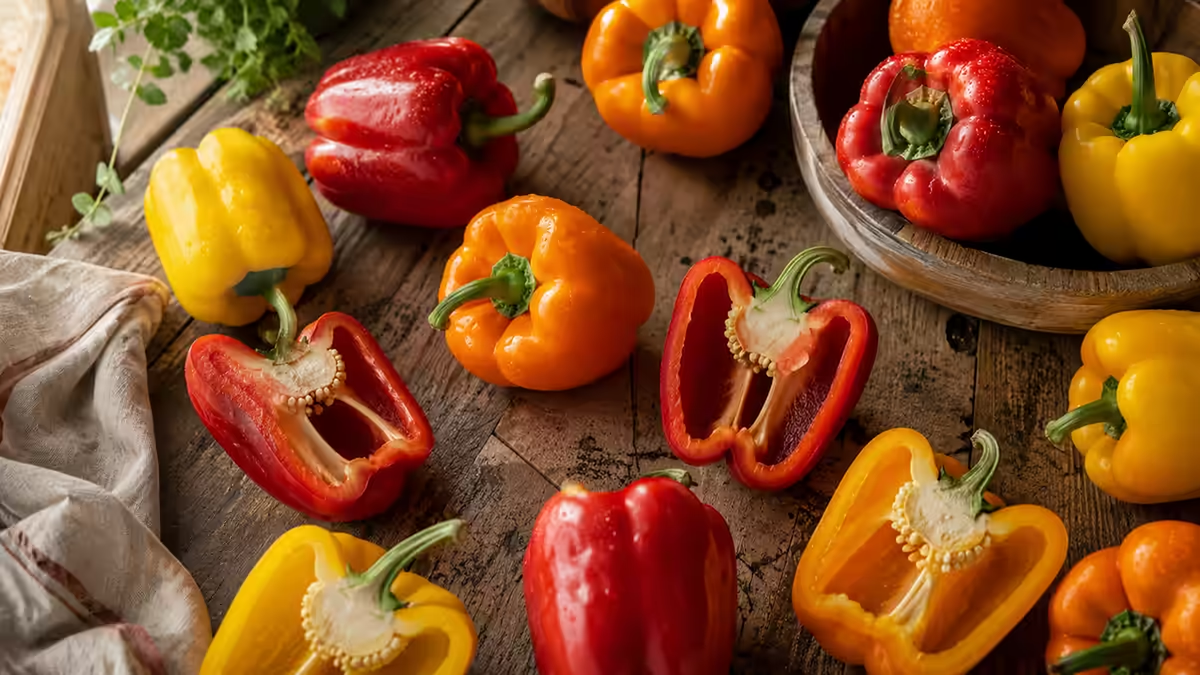
The end of summer and the beginning of fall—that’s when bell peppers cost next to nothing, and there are so many of them at the market that it’s hard to know where to look first. Every year, I buy several kilograms at once and freeze them for later, so I don’t have to overpay for greenhouse peppers of questionable quality in the winter. In this article, I’ll explain how I prepare bell peppers for freezing in three different ways—depending on how I’ll use them in the winter: for stuffing, soups, or stews. No complicated techniques—just tried-and-true methods that have stood the test of time over many seasons.
Content
Why freeze peppers in the first place?
Bell peppers are one of the few vegetables that lose almost none of their flavor or aroma when frozen. The texture, of course, changes: frozen peppers become softer, so you can’t use them raw in a salad anymore. But for hot dishes, this doesn’t matter at all—and sometimes it’s even an advantage: the peppers cook faster and infuse their flavor more effectively into broth or sauce.
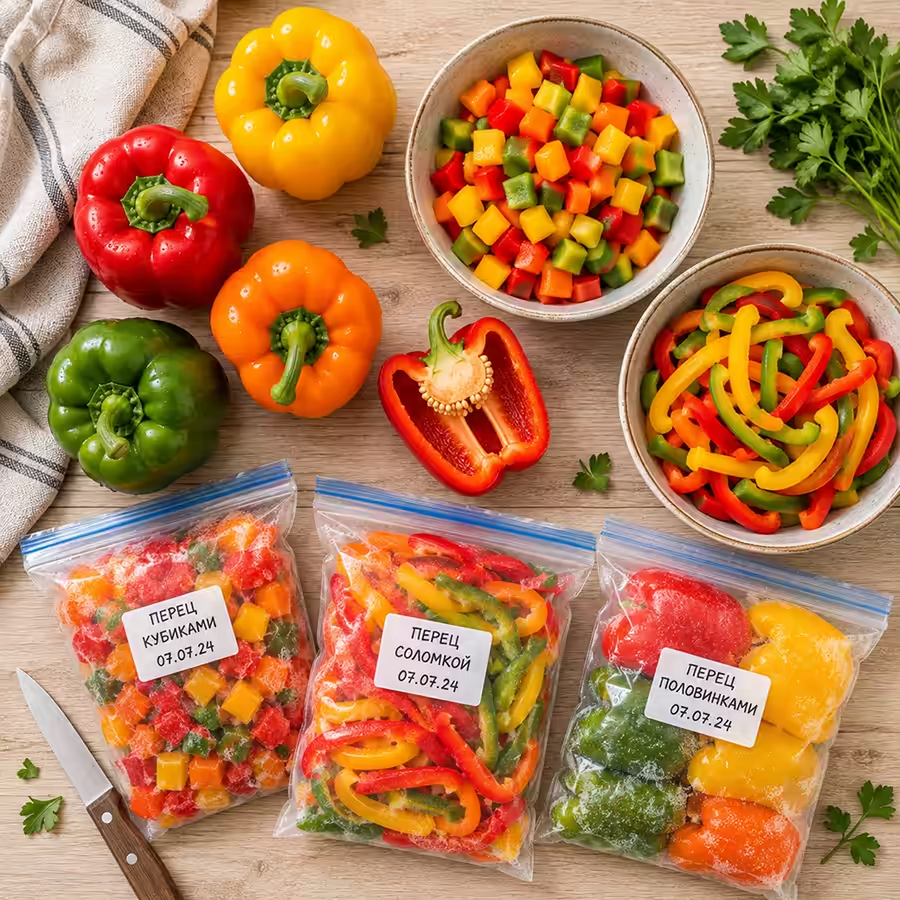
The main advantage of freezing peppers at home is that you know for sure they’re fresh, have ripened naturally, and haven’t been treated with any unnecessary additives to extend their shelf life. Plus, it’s a real money-saver: at the height of the season, peppers cost several times less than they do in winter.
Another plus is that you always have frozen peppers on hand. You don’t have to rush to the store if you suddenly feel like having borscht or lecho and don’t have any fresh peppers in the fridge.
Freezing also saves a significant amount of time in the kitchen during the winter. Instead of washing, cleaning, and chopping peppers every time before cooking, you simply take a ready-to-use portion out of the freezer. This is especially convenient on weekdays, when there’s little time to cook but you want to prepare a full meal rather than just a quick snack.
How cost-effective is this?
The price difference between in-season and out-of-season peppers is noticeable every year. In the height of summer and early fall, peppers at the market or wholesale outlets cost two to three times less than in winter, when store shelves are mostly stocked with greenhouse peppers that have less flavor and aroma. If you buy peppers in large batches right away to freeze, the difference in cost over the season is noticeable, especially for families who regularly prepare borscht, lecho, or stuffed peppers.
There’s one more point to consider when it comes to saving money: homemade frozen peppers contain no preservatives or wax coatings, which are sometimes used to treat vegetables for long-term storage on store shelves. You know exactly what you’ve frozen, when you froze it, and what kind of peppers you used.
I usually plan to buy peppers for freezing in two or three batches throughout August and September, when prices are at their lowest and the peppers are at their best. That way, I can make my supply last until about March or April of the following year.
Are vitamins and nutrients preserved during freezing?
Many people believe that frozen vegetables are something like a “dead” product with no nutritional value. In fact, the opposite is true: proper quick-freezing preserves most vitamins better than storing fresh peppers in the refrigerator for a long time. Peppers picked when ripe and frozen immediately lose less vitamin C than the same peppers that have sat on a store shelf or in the refrigerator door for a week.
Of course, some vitamins are lost during freezing and subsequent thawing—this is inevitable with any storage method. But the difference between fresh peppers from the garden and freshly frozen ones is minimal, whereas peppers that have been transported and stored for a long time before sale have already lost a significant portion of their nutrients even before they ended up in your shopping cart.
So if you have access to fresh, just-picked peppers—whether from your own garden or from the market during the season—freezing them is a way to “preserve” as many of their health benefits as possible for the winter, rather than losing them.
Which peppers are suitable for freezing?
Any ripe bell pepper without damage, rot, or soft spots is suitable for freezing. Fleshy varieties with thick walls are ideal—they hold their shape better both after thawing and after cooking.
The color doesn’t really matter: red, yellow, orange, or green peppers freeze just as well. I usually go for a mix of colors—in winter, multicolored cubes in soup look more appetizing than plain ones.
The most important thing is that the peppers be fresh. Overripe, wilted, or dried-out peppers will become even less appetizing after freezing, so it’s best to choose firm, plump peppers without dark spots.
The size of the peppers matters only when stuffing them: choose peppers that are roughly the same size so that it’s easier to calculate portions and cooking times in the winter. For slices and cubes, size doesn’t matter, since the peppers are chopped up anyway before freezing.
Preparing Peppers for Freezing
No matter how you plan to freeze the peppers, the preparation process is the same.
- Sort through the peppers and set aside any that are damaged or have rotten spots—it’s best to eat those right away rather than freeze them.
- Rinse the peppers under cold running water, and gently rub the skin with your hands if there is any dust or dirt on it.
- Pat the peppers dry with a towel or paper towels—excess moisture on the vegetables causes a layer of ice to form and ice crystals to develop inside the bag.
- Let the pepper sit on a towel for 10–15 minutes so that the moisture drains off all sides, especially if you washed it under high water pressure.
From here on, the preparation process varies depending on why you’re preparing the peppers for winter.
Method 1: Freezing a Whole Pepper for Stuffing
This is the method I use most often, because stuffed peppers are one of my favorite dishes, and in the winter I want to make them without the extra hassle of prepping the vegetables.
How to Prepare Bell Peppers
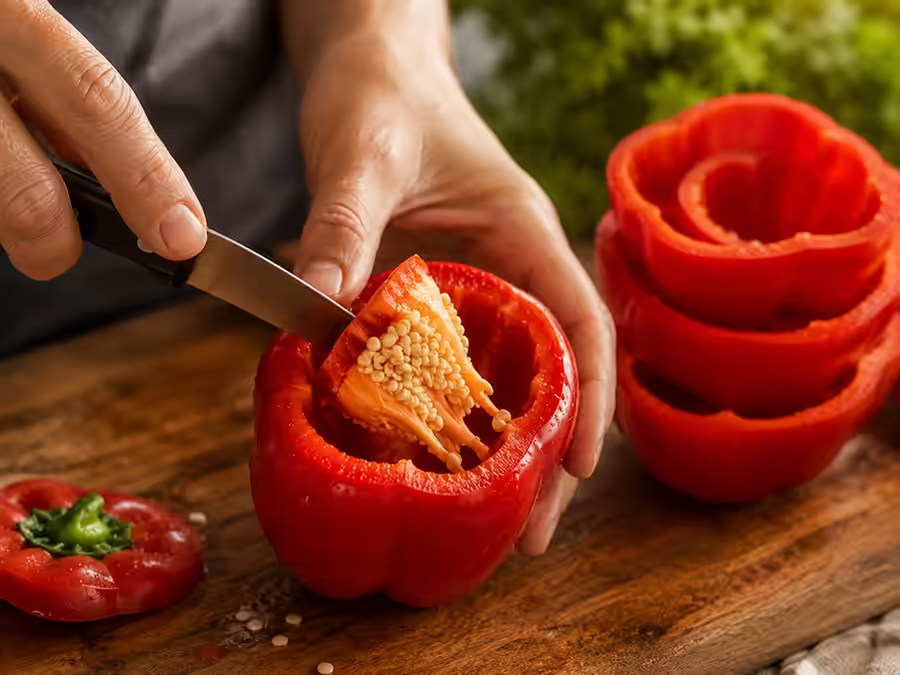
- Using a sharp knife, carefully cut out the stem along with a small circle around it—so that the opening is large enough to fill with ground meat, about 3–4 cm in diameter.
- Remove the seeds and white membranes from inside through the opening. It’s easiest to do this by shaking the pepper with the opening facing down and scraping out any remaining bits with a teaspoon.
- Rinse the inside of the peppers under running water to remove any remaining small seeds.
- Let the peppers dry both on the outside and inside—turn them so the opening is facing down on a rack or towel for about 15–20 minutes.
Blanching: To Do or Not to Do
Chefs’ opinions differ on this, and I’ve tried both options.
No blanching. The peppers are frozen raw, which preserves more vitamins and keeps their walls firm. The downside is that raw peppers take up more space in the freezer because they don’t lose their volume.
With blanching. Submerge the whole peppers in boiling water for 2–3 minutes, then immediately transfer them to ice water for the same amount of time to stop the cooking process. Blanched peppers become slightly softer and shrink in size, which means you can fit more portions in the freezer. Blanching also partially deactivates the enzymes that, over time, affect the taste and color during long-term storage lasting more than 6–8 months.
Personally, I freeze them both ways, depending on how many peppers I have. If you plan to store the peppers for more than half a year, I recommend blanching them. For freezing them for 2–3 months, the raw method is perfectly fine.
How to Prepare Peppers for Freezing
- Take one prepared pepper and place it inside another—this is what’s known as a “matryoshka.” This saves a lot of space in the freezer.
- Stack a few of these “matryoshka” peppers inside one another, 3 or 4 at a time, if the size of the peppers allows.
- Place the peppers in freezer bags or vacuum-sealed bags, and remove as much air as possible.
- Label the bag with the freezing date and the number of peppers inside—that way, in the winter, you’ll know right away how many to use for a serving of stuffed peppers.
Freeze the peppers immediately after packaging; do not leave them at room temperature for too long.
Method 2: Freezing sliced peppers for stews and stir-fries
For stews, vegetable sauté, or roasted peppers with meat, it’s easier to use peppers cut into strips or slices.
- Cut the pepper in half, remove the stem, seeds, and white membranes.
- Slice the bell peppers into slices or strips about 0.5–1 cm thick—just go by how you usually cut bell peppers for a particular dish.
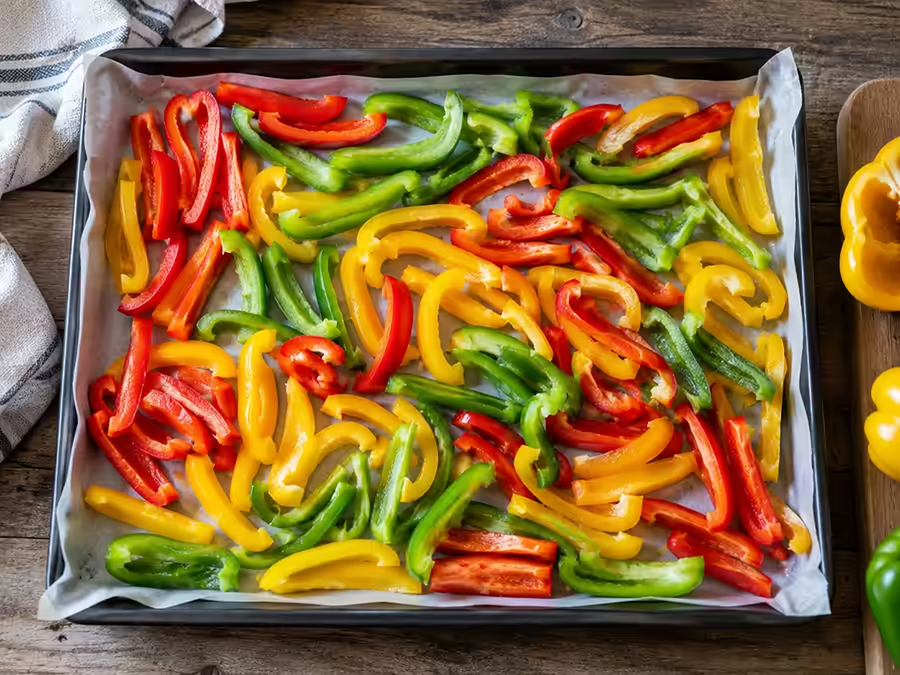
- Arrange the slices in a single layer on a baking sheet lined with parchment paper, making sure the slices do not touch each other.
- Place the baking sheet in the freezer for 2–3 hours to quickly freeze it first.
- Once the slices are frozen and firm, transfer them to a bag or container for long-term storage.
This step of freezing the peppers in individual pieces is important: if you pour the chopped peppers directly into a bag, they’ll freeze into one solid block, and in the winter you’ll have to chip off a piece with an axe. But when the slices are frozen separately, it’s always easy to scoop out exactly the amount you need for a specific dish.
The pepper slices don’t need to be blanched—they cook quickly on their own, and blanching will only make them too soft for frying.
Method 3: Freezing Diced Peppers for Soups and Borscht
For first courses—such as borscht, soup, lecho, or tomato sauces—it’s most convenient to have peppers cut into small cubes.
- Cut the peeled peppers into cubes about 0.5–1 cm in size, using the size you usually use for borscht or soup as a guide.
- Spread the cubes in a thin layer on a baking sheet lined with parchment paper.
- Freeze them on a baking sheet for 1–2 hours, until the cubes are completely frozen.
- Transfer the pepper to a sturdy bag or container, squeezing out the air.
It’s convenient to add small cubes of pepper straight from the freezer to boiling broth or to sauté with onions and carrots—there’s no need to thaw them beforehand.
I often freeze the soup base right away: peppers, onions, and carrots mixed together in roughly a 1:1:1 ratio, after sautéing them lightly in oil and letting them cool. This mixture saves time in the winter—just toss a single serving into a pot, and the soup base is ready.
What bags and containers should you choose for freezing peppers?
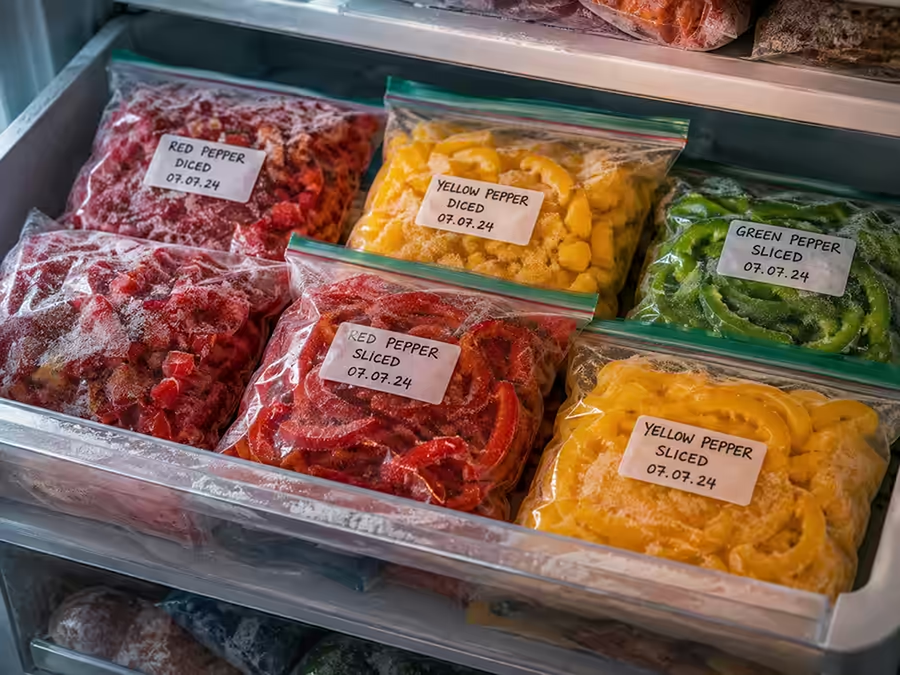
Proper packaging affects the quality of the peppers just as much as the cutting method itself. Here’s what I’ve learned over the years of freezing them.
Zip-lock bags. The most convenient option for slices and cubes. The key is to remove as much air as possible from the bag before sealing it; otherwise, frost will form on the peppers, and the product itself will dry out more quickly in the freezer, even at low temperatures.
Vacuum-sealed bags. This is the ideal option if you have a vacuum sealer. Removing all the air significantly extends the shelf life and preserves the color and aroma of the peppers better than any other method. This is especially important for whole peppers intended for stuffing that you plan to store for more than six months.
Plastic containers. They’re convenient for whole peppers stacked “nest-style,” since the container retains its shape and the peppers don’t get squashed under the weight of other bags in the freezer. The downside is that containers take up more space than flat bags.
Disposable freezer bags without a closure. This is the cheapest option, but it’s harder to squeeze the air out of them, so the shelf life is slightly shorter. These are suitable if you plan to use the peppers within 2–3 months.
Regardless of the type of packaging, there is one main rule: the less air comes into contact with the pepper, the longer and better it will keep.
A Comparison of Methods for Freezing Peppers
| Freezing Method | What is it used for? | Blanching | Shelf Life |
|---|---|---|---|
| Whole pepper | Stuffed Peppers | Optional | 6–8 months (raw), up to 10–12 months (blanched) |
| Slices | Stews, stir-fries, sautéed dishes | Not required | 8–10 months |
| Cubes | Soups, borscht, sauces | Not required | 8–10 months |
| Dressing (peppers, onions, and carrots) | Soups, borscht | Light Sautéing | 6–8 months |
Tips and Common Mistakes
Do not wash the peppers with hot water. A sudden change in temperature damages the structure of the skin, causing the peppers to become even softer after thawing than they otherwise would have been.
Do not freeze wet peppers. The moisture on the surface turns into ice crystals, which make the peppers watery and unappetizing when thawed.
Don’t leave peppers at room temperature for too long before freezing them. The sooner you put fresh peppers in the freezer, the better their vitamins and flavor will be preserved.
Label your bags. It may seem like a small thing, but in two or three months, you’ll definitely forget exactly when you froze a particular bag, and peppers that have been sitting in the freezer for over a year lose a lot of their flavor.
Do not thaw the peppers before using them in hot dishes. You can add the cubes and slices straight from the freezer to soup, stew, or a skillet—this way, they won’t get mushy as quickly and will retain their texture better.
Don’t overload your freezer with just one type of frozen food. Make small, single-serving bags for each meal, rather than one huge bag weighing a kilogram—this makes it easier to plan your meals, and you won’t have to defrost your entire supply just for a single serving of borscht.
Avoid refreezing. If the peppers have thawed even partially, it’s best to use them in a dish right away rather than refreezing them—their texture and flavor will deteriorate significantly afterward.
Do not use thin-walled peppers for stuffing. These peppers soften more quickly both after freezing and during cooking, so they easily crack or fall apart while stewing. For stuffing, choose fleshy, thick-walled varieties.
Do not put hot peppers in the freezer immediately after blanching. Let them cool completely in cold water and dry thoroughly; otherwise, the warm peppers will raise the temperature inside the freezer and affect the food stored nearby.
What to Do If the Power Goes Out
This is a question that’s on many people’s minds right now, and I’ve faced it myself more than once. If the freezer is turned off for a few hours and the door isn’t opened frequently, the food inside will stay cold for quite a while—a full freezer will stay cold for 24–48 hours, and a half-empty one for about 12–24 hours.
If the power outage was brief and the peppers are still firm—with the ice crystals on them still intact—you can safely continue storing them; nothing bad has happened. However, if the peppers have partially thawed but still feel cold to the touch, it’s best to use them right away within the next few hours—to make soup, stew, or lecho—rather than refreezing them.
Refreezing peppers that have already been thawed isn’t harmful to your health—unlike meat, for example—but it significantly degrades their texture and flavor; the peppers become even waterier and practically turn to mush after cooking.
To be prepared in case of prolonged power outages, I keep a thermometer in the freezer and always try to fill it to capacity—a full freezer retains cold much longer than a half-empty one, since the frozen foods themselves act as a thermal storage unit.
How long do frozen peppers last?
At temperatures of -18 °C and below, bell peppers retain their flavor and nutritional value well for 8–10 months. Whole bell peppers for stuffing, especially those that have been blanched, can be stored for up to a year without any noticeable loss of quality. The key is to maintain a stable temperature in the freezer, avoiding frequent thawing and refreezing, which damage the vegetable’s structure.
If the freezer is opened frequently or the temperature fluctuates, the shelf life is reduced to 4–6 months—the peppers will start to lose their flavor and color more quickly.
Variations: What Else Can You Freeze with Bell Peppers?
Roasted peppers. Roast the peppers in the oven until the skin is soft, peel them, cut them into strips, and freeze them in small portions—they make a great base for salads, bruschetta, or sauces once thawed.
Stuffed peppers. If you have time, you can stuff the peppers with meat or vegetable filling right away and freeze them as is—then in the winter, all you’ll have to do is simmer or bake them, saving yourself all the prep time.
Pepper paste or lecho. You can turn peppers into a thick sauce or lecho, pour them into small containers, and freeze them—a ready-to-use base for sauces, gravies, or borscht seasoning.
Vegetable mix for stews. Freeze bell peppers along with zucchini, eggplant, and diced tomatoes—a ready-to-use mix for stews or vegetable sautés in just 15 minutes.
Peppers for baby food. If you’re making purees for babies, you can blend roasted or boiled peppers and freeze them in small portions in ice cube trays or special baby food containers—it’s convenient to take out exactly one serving.
Pepper sauce for pizza and pasta. Sauté the peppers with onions and garlic until tender, blend until smooth, and freeze in portions—this makes a quick sauce that you’ll just need to reheat.
How to Thaw Bell Peppers Properly
For most dishes, there’s no need to thaw bell peppers ahead of time—just add the cubes or slices straight from the freezer to the hot dish. However, whole peppers intended for stuffing should be slightly thawed—that is, taken out of the freezer 20–30 minutes before cooking—to prevent them from cracking when filled with stuffing due to a sudden temperature change.
If you do need to thaw the peppers completely, it’s best to do so in the refrigerator over the course of a few hours, rather than at room temperature or in the microwave—that way, the peppers lose less of their texture and don’t become too watery.
How to Organize a Day of Mass Pepper Freezing
If you’re buying several kilograms of peppers at once, it’s more convenient to set aside a separate evening or day off for freezing them, rather than spreading the process out over several sessions. Here’s how I usually organize this process at home.
- First, I sort through all the peppers at once—setting aside the ones for stuffing (the largest and most uniform ones) and, separately, those that will be sliced or diced.
- I wash and dry all the peppers at once, spreading them out on towels all over the kitchen—that way, the water has time to drain while I prepare the next batch.
- First, I prepare the peppers for stuffing—this is the most time-consuming step, so it makes sense to start with it while I still have the energy and patience.
- Next, I slice and dice the rest of the peppers and arrange them on trays for pre-freezing.
- While the decks are sitting in the freezer for a few hours, you can wash the dishes, label the bags you’ll be using, or work on other preparations for the winter.
- At the end of the day, I transfer the frozen slices and cubes from the trays into storage bags, and I stack the peppers for stuffing “nest-style” in containers.
This approach lets you process 4–5 kilograms of peppers in a single evening without creating a mess in the kitchen and without the risk that some of the peppers will sit out too long before being frozen.
Frequently Asked Questions
Can you freeze bell peppers without blanching them? Yes, in most cases it’s actually easier and more convenient. Blanching makes sense if you plan to store the bell peppers for longer than 6–8 months or want them to take up less space in the freezer.
Can you freeze hot peppers together with sweet peppers? Technically, yes, but it’s better to freeze them separately and label the bags—hot peppers can transfer some of their flavor to neighboring items in the freezer if the bags aren’t sealed tightly.
The peppers became soft after freezing—is that normal? Yes, this is a normal characteristic of frozen vegetables. The cell structure of the peppers breaks down when exposed to low temperatures, so their texture will always be softer than that of fresh peppers. This isn’t a problem for hot dishes.
Can you freeze peppers with the skin on for stuffing? Yes, you don’t need to remove the skin when stuffing them—it helps the peppers keep their shape and prevents the filling from falling out during cooking.
How much pepper should a family freeze for the winter? Roughly 3–5 kg is enough for a family of 3–4 people to regularly prepare soups, stews, and several batches of stuffed peppers throughout the winter. But this depends on how often you cook dishes with peppers.
Can you freeze bell peppers in glass jars? You shouldn’t: the glass may crack during freezing as the contents expand. It’s better to use special freezer bags or plastic containers designed for low temperatures.
Does the color of bell peppers change after freezing? Only slightly. Red and yellow bell peppers usually retain their color well, while green ones may fade slightly over time due to the oxidation of chlorophyll. This does not affect the taste, only the appearance.
Can you freeze peppers along with spices or oil? It’s best to freeze peppers separately from spices, and add oil and seasonings during cooking. Spices can lose some of their aroma during prolonged freezing, and oil changes texture in the freezer and doesn’t distribute evenly throughout the food.
Can you freeze bell peppers without a bag, just in an uncovered container? No, an open container without a lid does not protect the bell peppers from drying out or absorbing odors from the freezer. Always use airtight packaging—a resealable bag, a vacuum-sealed bag, or a container with a tight-fitting lid.