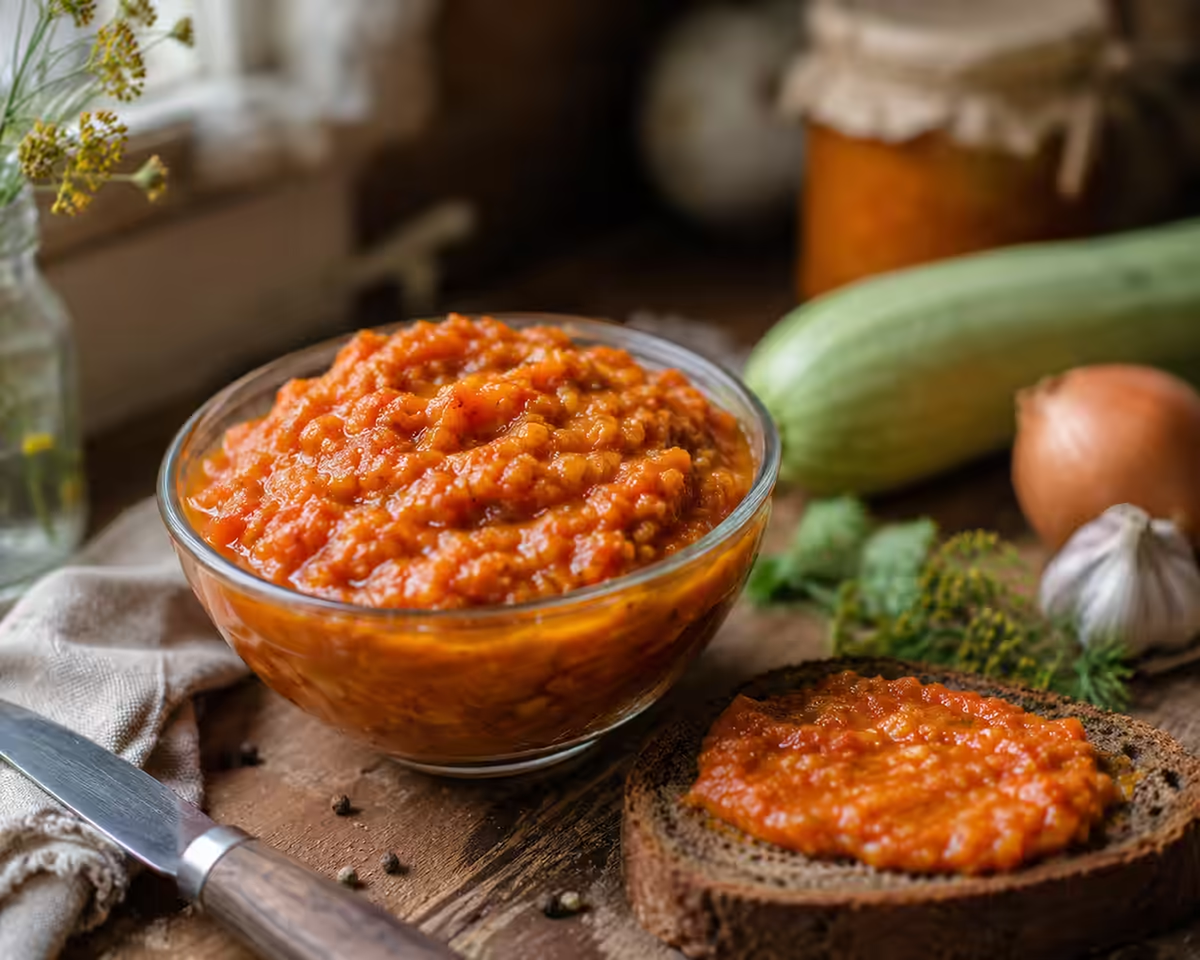
Zucchini caviar for the winter is a preserve you should make at least once so you’ll never have to buy it at the store again. I make it every year at the end of summer, when zucchini are practically free and the kitchen smells of sautéed onions and carrots. In this article, I’ll share a tried-and-true recipe that yields a thick, flavorful caviar without excess liquid and with a pleasant tang from tomato paste, and I’ll also break down all the pitfalls that could cause this preserve to fail.
Content
About Zucchini Caviar: Why It’s Worth It
Zucchini caviar is a Soviet classic that no other preserving trend has managed to supplant. It’s a lifesaver in the summer, when zucchini grow faster than you can eat them, and in the winter, it’s the perfect accompaniment to potatoes, porridge, or simply bread. Unlike fresh vegetable salads, this caviar keeps for months at room temperature—which is exactly why it’s one of the most popular ways to preserve zucchini for the winter.
The main problem everyone faces when making caviar for the first time is that it turns out runny. The reason is simple: zucchini is 90% water, and if you don’t evaporate the excess moisture properly, the jar will turn into soup. In this recipe, I’ll explain step by step how to avoid this, and I’ll also show you a few tried-and-true ways to thicken the caviar, even if something goes wrong.
Another reason why this dish is so popular is that it’s so versatile. Zucchini caviar can be eaten as a standalone appetizer, used as a base for pasta sauce, spread on sandwiches instead of butter, added to omelets, or even used in borscht instead of sautéed vegetables. It’s a rare case where a single jar of this preserve meets several needs in the kitchen at once.
How to Choose Zucchini for Caviar
The result depends largely on the ingredients, so it’s worth paying a little attention to choosing the zucchini.
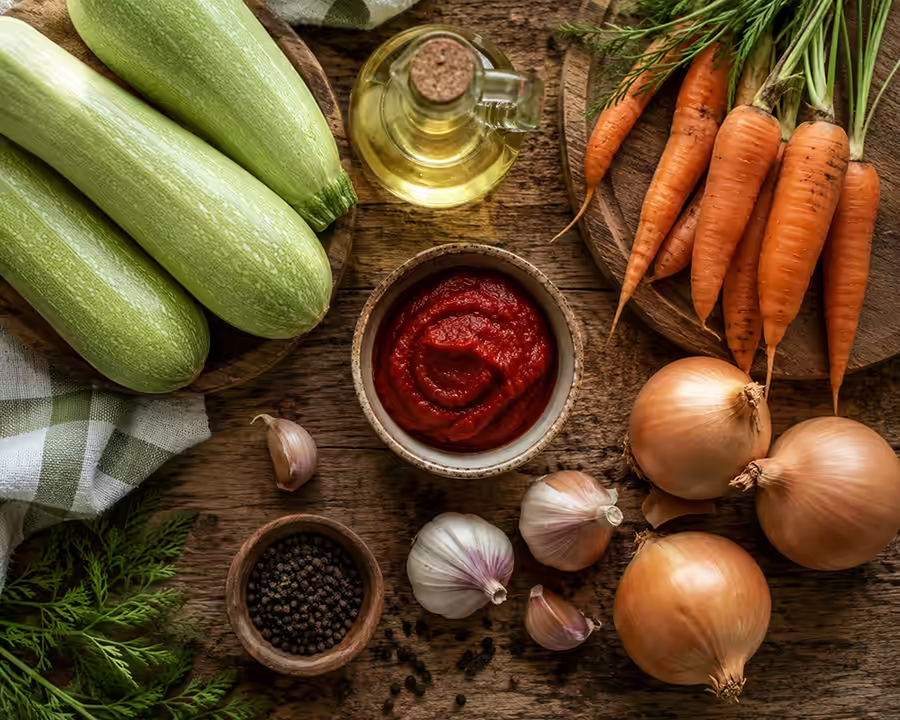
- Young zucchini have thin, almost translucent skin and small, unripe seeds. They’re best for making caviar because they don’t need to be peeled and have a tender texture without any excess fibers.
- Overripe zucchini have tough skin and large seeds in a white membrane. You can use them to make caviar, but be sure to remove the skin and seeds; otherwise, the finished dish will be stringy or bitter.
- Zucchini with spots or soft patches are not suitable for preserving—these signs indicate that the zucchini is beginning to spoil, and even heat treatment won’t fix that.
If you have a choice between several varieties, regular light-green squash and zucchini will work equally well—there’s no significant difference in the taste of the finished caviar between them.
Where did this recipe come from?
Zucchini caviar first appeared in Soviet cookbooks as early as the 1930s, when canned vegetables were mass-produced at canneries, particularly at the famous Odessa Canning Plant. It was the factory-made version in tin cans that became the benchmark of flavor for several generations—that same slightly sweet aftertaste with hints of tomato that many remember from their childhood. The homemade recipe I’m sharing is designed to capture that exact flavor, but without the preservatives and excess sugar often added in industrial production.
Interestingly, the name “ikra” is purely metaphorical here—the dish has absolutely nothing to do with fish roe. It’s simply that the finely chopped texture of the vegetables reminded housewives of the texture of real caviar, hence the name, which has stuck for an entire category of vegetable preserves: zucchini, eggplant, and beet-carrot.
How many zucchini will you need, and how do you figure out how many jars to use?
The approximate yield of finished product from 2 kg of zucchini is about 1.8–2 liters of finished caviar, or 3–4 jars of 0.5 L each, or two jars of 0.7–1 L each. If you’re planning to make enough to last all winter for a family of 3–4 people, plan on using 6–8 kg of zucchini in total, which will yield approximately 10–12 0.5-liter jars. This amount usually lasts from October through March if you eat the caviar once or twice a week.
It’s also worth thinking about the jars right away: it’s more convenient to use 0.5-liter jars, since the caviar gets eaten up faster that way and doesn’t have time to go stale while sitting open in the fridge. You should only make 1-liter jars if your family loves this dish in large quantities or if you plan to serve it to guests.
Ingredients
| Ingredient | Quantity |
|---|---|
| Zucchini (peeled) | 2 kg |
| Carrots | 400 g |
| Onions | 400 g |
| Tomato paste | 150 g |
| Sunflower oil | 150 ml |
| Garlic | 4–5 cloves |
| Sugar | 1–2 tablespoons |
| Salt | 1.5 tablespoons |
| 9% Vinegar | 2 tbsp. |
| Ground black pepper | to taste |
Possible substitutions:
- You can substitute fresh tomatoes (700–800 g) for tomato paste, but in that case, you’ll need to simmer the mixture longer to remove the excess liquid from the tomatoes.
- You can substitute 9% vinegar with citric acid (0.5 tsp for this amount) or apple cider vinegar in the same proportion—the flavor will be slightly milder.
- If the zucchini are young and have thin skin, you don’t need to peel them; you can leave the skin on—it will add a little texture.
- You can reduce the amount of sugar or omit it entirely if you prefer less sweet caviar, but in that case, balance the flavor with an extra pinch of salt.
Step-by-Step Recipe
- Wash the zucchini and trim the ends. If the zucchini are old, with tough skin and large seeds, peel them and remove the seeds. Young zucchini just need to be washed.
- Cut the zucchini, carrots, and onions into pieces that are easy to process in a meat grinder or blender—about 3–4 cm long.
- Pass the zucchini, carrots, and onions through a meat grinder with a coarse plate. This is the classic method that gives the ikra the right texture—not a puree, but actual “ikra” with small pieces. If you don’t have a meat grinder, you can use a blender on the pulse setting to avoid turning the vegetables into a smooth puree.
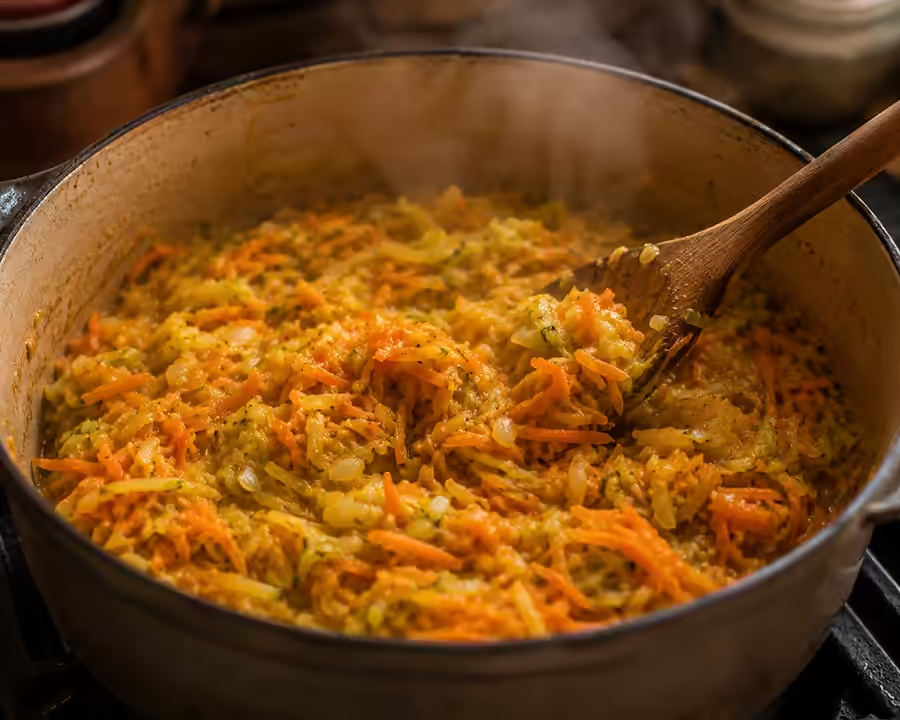
- In a large pot or cauldron, heat the oil over medium heat. Add the vegetable mixture and simmer for 40–50 minutes, stirring regularly to prevent it from burning on the bottom, especially during the first 15–20 minutes while the mixture is still runny.
- This is the most important step: letting the liquid evaporate. The zucchini will release a lot of juice, and it’s at this stage that the consistency of the caviar is determined. Simmer uncovered so that the moisture can evaporate freely. The mixture should reduce in volume by about half and become thick, with no liquid juice left at the bottom of the pot.
- Add the tomato paste, sugar, salt, and pepper. Stir and simmer for another 15–20 minutes over low heat so that the paste has time to “open up” and impart its color and flavor to the entire mixture.
- Five minutes before it’s done, add the minced garlic and vinegar. Stir, taste it—and if needed, add more salt or sugar to balance the acidity. Keep in mind that a hot dish always seems less salty than one that has cooled, so aim for a slight excess of salt.
- Fill sterilized jars with the hot caviar right to the brim, leaving as little air as possible. Use a dry spoon or a special canning funnel to avoid contaminating the rim of the jar.
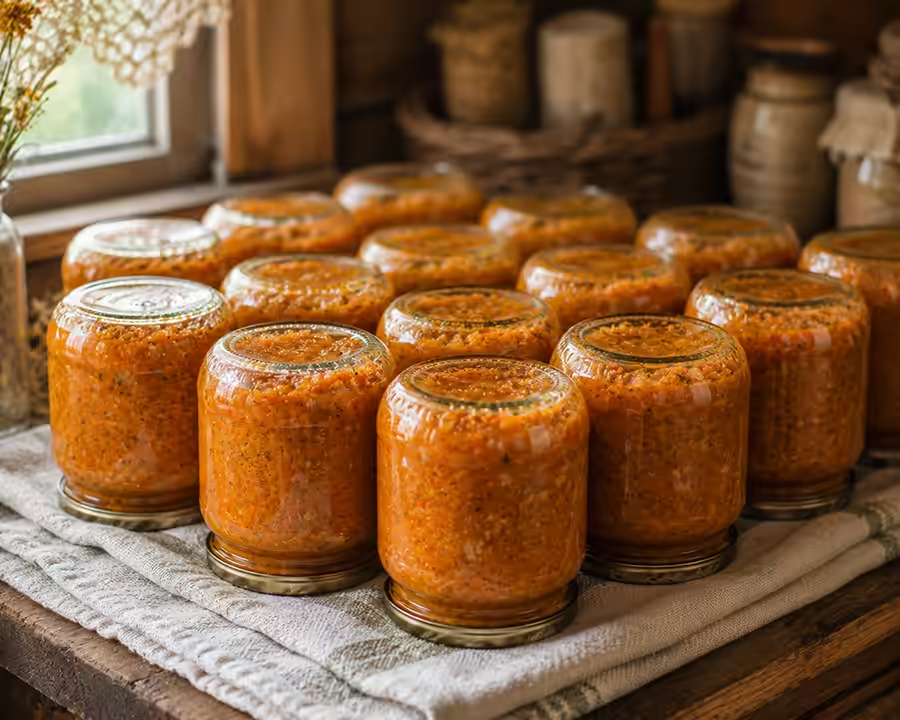
- Seal the jars with lids, turn them upside down, wrap them in a blanket or towel, and leave them that way until they have cooled completely—this is an additional pasteurization step that ensures the safety of the preserves and extends their shelf life.
- Store the cooled jars in a cool, dark place: a pantry, basement, or on the bottom shelf of the refrigerator. The optimal storage temperature is 8–15 °C.
How much time and effort does this take?
The entire preparation process, including cleaning and chopping the vegetables, takes approximately 2–2.5 hours of active work, of which about 1.5 hours is spent simmering on the stove—during which time you can do other things nearby. Sterilizing the jars adds another 20–30 minutes or so, depending on the method you choose. If you’re making a large batch using 4–5 kg of zucchini at once, plan on 3–4 hours total, including filling the jars and sealing them.
Tips and Common Mistakes
The caviar turned out runny. The most common reason is that not enough moisture was evaporated during the simmering stage. Don’t rush it: it’s better to simmer the vegetables for 15–20 minutes longer than to end up with a jar of runny juice instead of thick caviar. If you notice that the mixture is still watery and you’re short on time, add 1–2 tablespoons of undiluted tomato paste; it will thicken the texture slightly. Another trick is to add a little semolina (1 tablespoon for this amount) 10 minutes before the end of the simmering process; it will subtly absorb the excess moisture.
The caviar has burned. This happens if you simmer it over high heat or stir it infrequently. Use a pot with a thick bottom and don’t walk away from the stove for the first 20 minutes, until the mixture begins to boil vigorously. If you already smell something burning, don’t mix the burnt layer with the rest of the mixture—it’s better to carefully transfer the unspoiled portion to a clean container.
Caviar that’s too sour or too sweet. Always adjust the flavor right before sealing the jars—don’t just go by eye. The proportions of sugar and vinegar are approximate, since zucchini and tomatoes vary in acidity depending on the season and variety. Taste the dish chilled on a small spoon—this makes it easier to assess the actual balance of flavors.
Jars “explode” or lids bulge. The main reason is insufficient sterilization of the jars or lids. Sterilize the jars over steam or in the oven for at least 10 minutes, and boil the lids separately for 5 minutes. Also, check the jars for chips or cracks before use—even a small defect in the glass can compromise the seal.
The seeds have a bitter taste. Sometimes the bitterness comes from old onions or zucchini with overgrown seeds. Be sure to cut out the seed section from large fruits and do not use onions with sprouted shoots. Bitterness can also occur if the zucchini grew during a hot, dry spell—in that case, cut off more of the skin from the edges before cooking.
The caviar has separated in the jar. If the oil has risen to the top as a separate layer, there’s no need to worry—the preparation hasn’t gone bad. Just stir the caviar before serving. To reduce separation next time, add the oil in parts during the simmering process rather than all at once.
The vegetables are chopped unevenly. If some of the mixture is finely chopped and some is in large chunks, the caviar will look unappealing and won’t cook evenly. Pass all the vegetables through a grater with uniform holes in a single pass, and if using a blender, process in small batches to control the texture of each portion.
Don’t forget about acidity when canning. The vinegar in the recipe serves not only to enhance the flavor but also to preserve the food—it maintains a safe level of acidity that inhibits bacterial growth. Do not reduce the specified amount of vinegar arbitrarily unless you plan to compensate for this by sterilizing the jars an additional time in a pot of water.
Variations and Presentation
Zucchini caviar is easy to adapt to your own taste:
- Spicy version. Add half of a chopped hot chili pepper along with the garlic to the vegetable mixture, or a little ground cayenne pepper for an even level of spiciness.
- With bell peppers. 300–400 g of sweet bell peppers, ground in a meat grinder along with the other vegetables, give the caviar a richer summer flavor and a subtle sweetness.
- Bake instead of simmering. Bake the zucchini, carrots, and onions on a baking sheet for 30–40 minutes at 200 °C, then chop them up and season to taste on the stovetop. This method results in a less watery base and a light caramelized flavor, similar to eggplant caviar.
- Without vinegar. If you don’t like vinegar-based preservatives, you can sterilize the filled jars for an additional 15–20 minutes in a pot of water—this will allow you to skip the vinegar, but the shelf life will be reduced to 6–8 months in the refrigerator.
- With eggplant. Add 300 g of baked or sautéed eggplant along with the other vegetables—the result will be something between zucchini and eggplant ikra, with a richer flavor.
- A herb-infused version with basil. Five minutes before it’s done, add a sprig of fresh, chopped basil or a teaspoon of dried basil—it will add a touch of summer freshness even in winter.
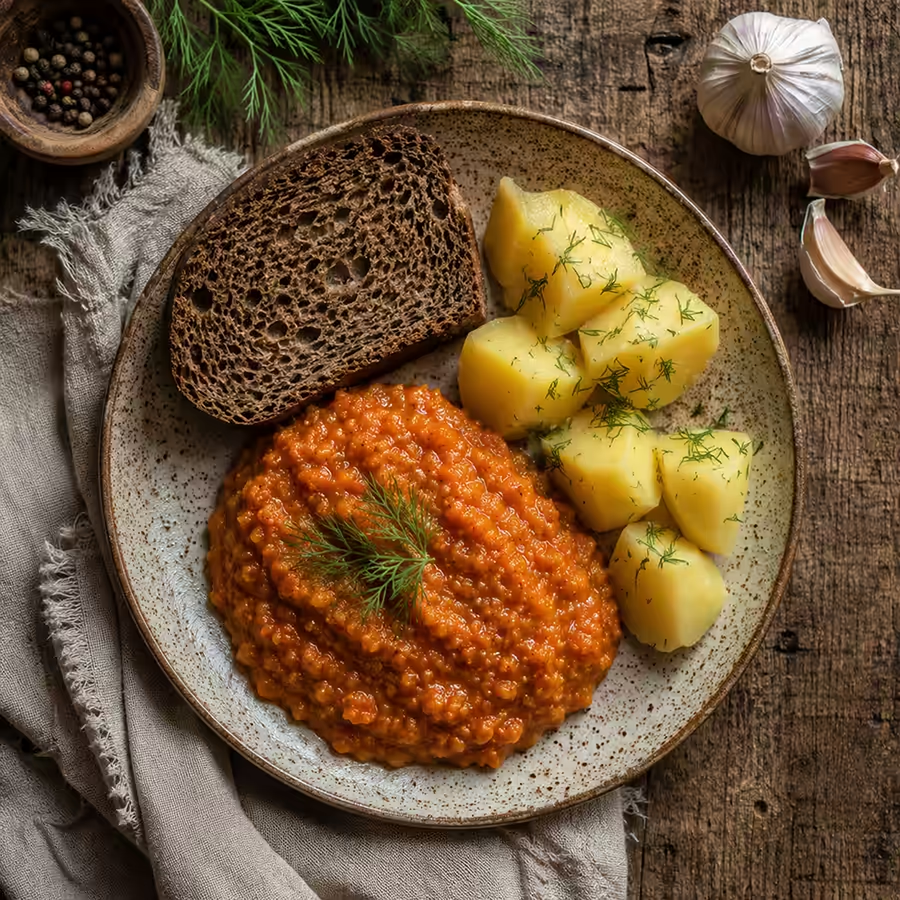
Caviar is best served chilled, with a slice of black bread, or as a side dish with boiled potatoes or porridge. It also works wonderfully as a base for sandwiches, a filling for pancakes, or an accompaniment to roasted meat. Try spreading the caviar on toast and sprinkling finely chopped herbs on top—it makes for a quick and impressive appetizer for guests.
Benefits and Nutritional Value
Zucchini caviar isn’t just delicious—it’s also quite nutritionally balanced. Zucchini are naturally low in calories and rich in fiber, potassium, and vitamin C, although some of the vitamin C is destroyed during cooking. Carrots add beta-carotene, and tomato paste adds lycopene, an antioxidant that is actually better absorbed after heating. The oil in the dish helps the body absorb the fat-soluble vitamins from the vegetables.
The approximate calorie content of the finished caviar is 90–110 kcal per 100 g, depending on the amount of oil. If you want to make the dish lighter, you can reduce the amount of oil by about a third without significantly compromising the flavor, although this will slightly shorten the shelf life of the prepared dish.
How to store it and how long it can be kept
Sealed jars of caviar are best stored in a dark, cool place—a pantry, basement, or on the balcony, provided it doesn’t freeze there. The optimal temperature is between 0 and 15 °C. Under these conditions, the preserves will keep well until next summer.
Once you’ve opened the jar, place it in the refrigerator and consume the caviar within 5–7 days. If you notice a bulging lid, cloudy brine, or an unusual odor when opening the jar, it’s best not to eat the caviar—throw the jar away without tasting it.
What to Pair with Zucchini Caviar
This dish works well as a versatile “building block” for quick meals when you’re short on time.
- Breakfast. Spread caviar on toast and top it with a hard-boiled egg—it makes for a hearty and quick breakfast without using the stove.
- Lunch. Add a spoonful of caviar to a plate of buckwheat or rice instead of sauce—it will moisten the grains and add flavor without any extra cooking.
- Dinner. Mix the caviar with boiled pasta and grated cheese—you’ll have a quick, homemade Ukrainian-style pasta dish.
- An appetizer for guests. Serve the caviar in small tartlets or on slices of baguette, sprinkled with finely chopped dill or parsley.
- For children. If you make a version without garlic and hot peppers, the caviar is perfect as a complementary food for children ages 2–3—it has a soft texture and isn’t too salty if you cut the amount of salt in half.
If you’re preparing a large batch for the winter all at once, it makes sense to set aside one or two jars without vinegar and store them in the refrigerator for immediate consumption during the first few weeks—that way, you can assess the flavor right away and adjust the proportions for the rest of the batch if necessary.
Kitchen supplies you’ll need
To make zucchini caviar for the winter, you should prepare the following in advance:
- a meat grinder with a coarse plate or a blender/food processor;
- a wide pot or cauldron with a thick bottom and a capacity of at least 5 liters;
- a wooden spatula or spoon for stirring;
- sterilized 0.5-liter jars with screw-on or roll-on lids;
- a canning funnel to carefully pour the hot mixture without splashing;
- a towel or an old blanket to wrap the jars in after sealing them.
If you plan to make caviar every year, you should buy a pair of special tongs right away to remove hot jars from the pot during sterilization—this significantly reduces the risk of burns.
Frequently Asked Questions
How long does zucchini caviar last in the winter? If properly sterilized and sealed, it will keep for up to 12 months in a cool, dark place. Once the jar is opened, keep it in the refrigerator and consume within a week.
Can you make caviar without a meat grinder? Yes, you can use a blender on the pulse setting or a food processor with a coarse chopping attachment. The key is not to over-process the vegetables into a puree so that they retain their texture.
Why does caviar lose its bright color after canning? This is normal: the color fades slightly during prolonged simmering and heat treatment. It does not affect the taste.
Can I use less oil? The oil in this recipe isn’t just for flavor—it also acts as an additional preservative. You can reduce the amount, but no more than by a third; otherwise, the shelf life will be shortened.
What should you do if you don’t have tomato paste? Replace it with fresh, ripe tomatoes, peeled, and increase the simmering time by 10–15 minutes so the mixture has time to thicken.
Can overgrown zucchini be used in this recipe? Yes, but be sure to peel them and remove the seeds—they’re tougher and can give the dish a bitter aftertaste.
Can you freeze zucchini caviar instead of canning it? Yes, you can let the prepared caviar cool and then divide it into freezer-safe containers. It will keep in the freezer for up to 6 months. Thaw it gradually in the refrigerator, not at room temperature.
Try this recipe at least once—and your homemade zucchini caviar for the winter is sure to become one of those preserves you’ll look forward to opening in the winter with special anticipation.