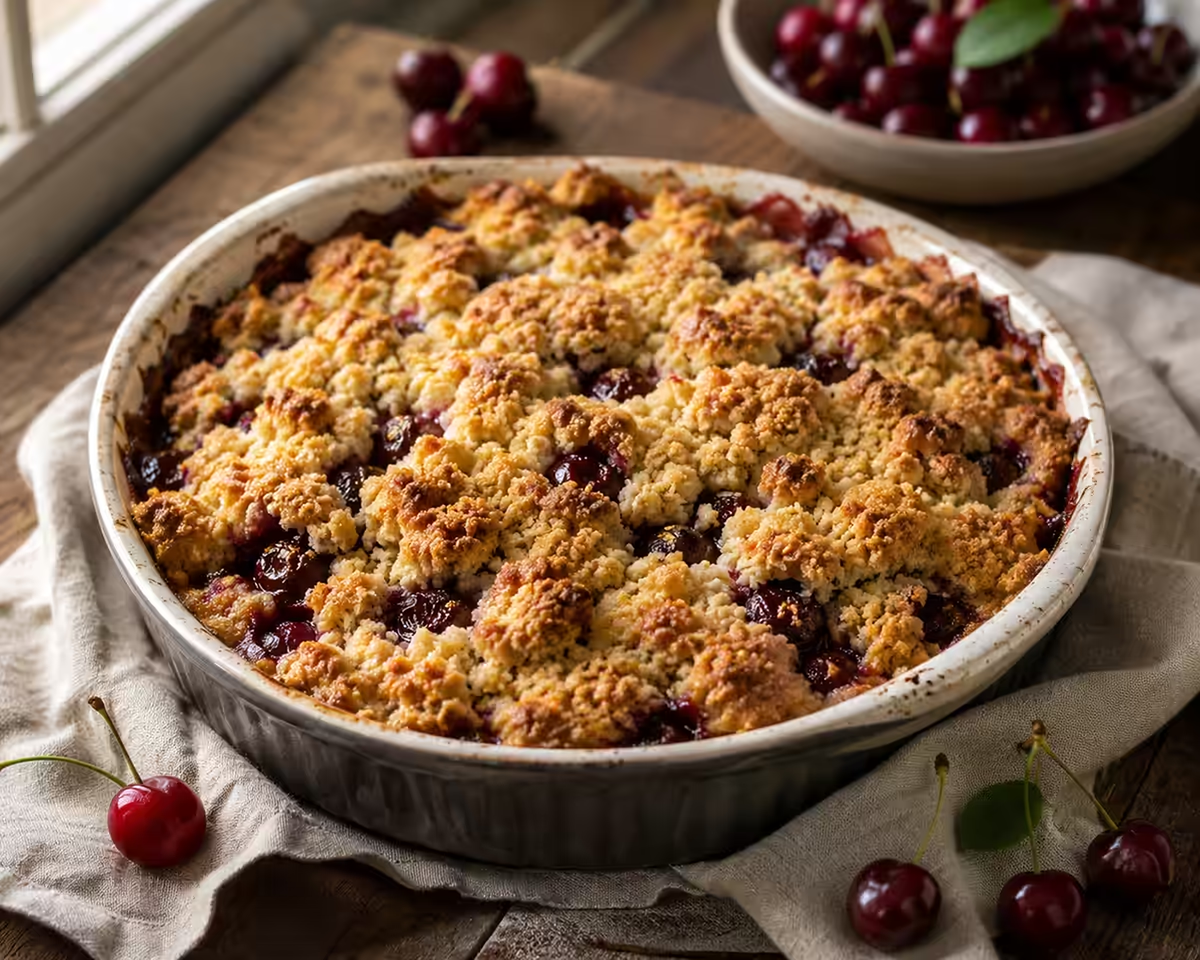
Cherry pie is one of those summer recipes you’ll want to make again and again while cherries are still in season. It turns out juicy on the inside, with a golden crust on the outside, and the aroma while baking is so enticing that your neighbors will start peeking into your kitchen. This recipe is perfect even for those who rarely bake: the dough is simple, the filling is minimal, and the result is always consistent.
Content
A little about cherry pie
Cherry pie is a classic of Ukrainian home baking. It’s made in June and July, when cherries are cheap, juicy, and smell so good that you want to eat them before they even make it into the dough. Unlike sour cherry pie, sweet cherry pie has a milder, sweeter flavor without excessive tartness. Because of this, it turns out well even without a large amount of sugar.
In terms of structure, this is a classic semi-enclosed cherry pie: a shortcrust pastry base, a juicy berry filling, and a crumble topping that turns into a golden crust during baking. The dough soaks up the cherry juice from below while remaining crumbly on top—it’s this contrasting texture that makes the pie so delicious.
This cake is perfect for taking on a picnic, serving with tea, or placing on a holiday table. It takes 1–1.5 hours to prepare, including cooling time.
Cherry pie or sweet cherry pie—what’s the difference?
These two pies are very similar in terms of preparation, but differ in taste and character.
Sweet cherries are sweeter, juicier, and less tart. They release less juice during baking, so the filling turns out thicker, and the bottom of the pie doesn’t get soggy as much. You need less sugar in the filling, and the pie itself has a milder flavor—kids love it.
Cherries, on the other hand, are more tart and aromatic. They yield more juice, resulting in a filling that is brighter in color and more pronounced in flavor. This pie pairs best with whipped cream or ice cream, as the sweetness complements the tartness of the berries.
If you want something in between, mix sweet cherries and sour cherries in a 2:1 ratio. You’ll get a nice balance: the sweetness of the sweet cherries and the distinct flavor of the sour cherries all at once.
Another difference is the color. Dark cherries produce a beautiful burgundy-colored juice that soaks into the dough. Yellow or pink cherries are much paler when cut open, but their flavor is more delicate and dessert-like.
How to choose cherries for a pie
Any variety of cherries—dark, pink, or yellow—will work for this pie. But there are a few things to keep in mind to make sure the pie turns out just right.
Ripeness. The berries should be ripe, but not overripe. Ripe cherries are firm, shiny, and come off the stem easily. Overripe cherries are very soft, ooze when pressed, and will turn to mush in the oven. Unripe cherries are hard, tasteless, and yield little juice.
Size. Larger berries are better. They have more flesh relative to the pit, so the filling turns out juicier. Smaller cherries will work too, but it takes a little longer to pit them.
Color. Dark cherries (varieties such as Valery Chkalov and Krupnoplodnaya) produce the brightest juice and the richest flavor. Pink cherries (Drogana Zhovta and Zabuta) are more delicate and sweeter. Yellow cherries are the sweetest, with almost no acidity, but they look pale when cut open.
Quantity. For a pie with a diameter of 22–24 cm, you’ll need 500–600 g of pitted cherries. Buy a little extra—700–800 g with pits—since some will be discarded as pits and damaged berries.
How to Prepare Sweet Cherries
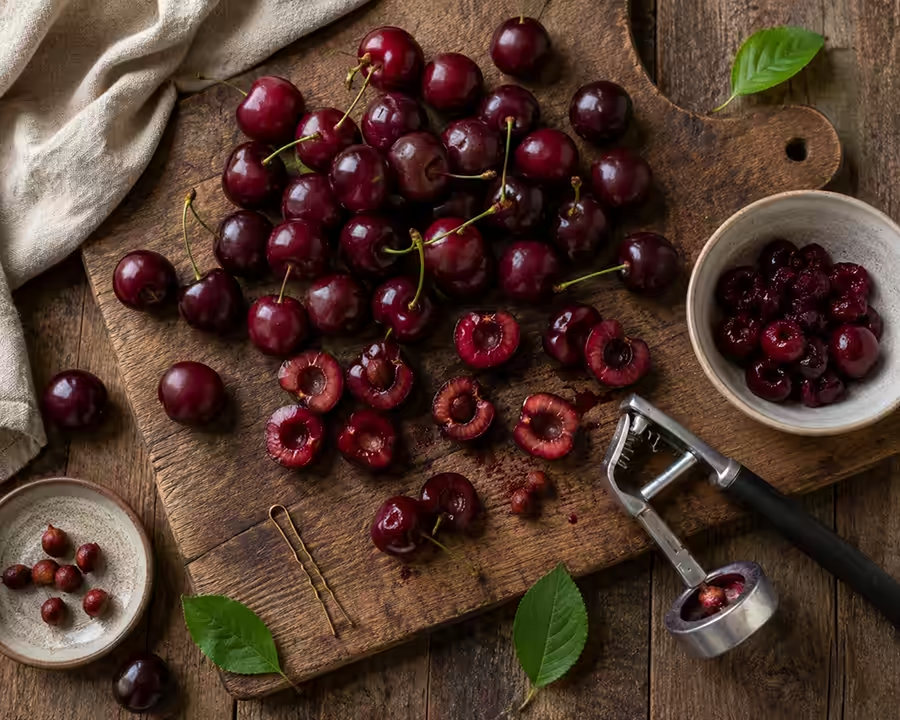
Preparing cherries is the most tedious but important step. Here’s how to do it quickly and without making a mess.
First, rinse the cherries in a colander under cold water. Don’t soak them for too long—they’ll absorb water and lose their flavor. Spread them out on a towel and pat them dry.
Remove the pits using any method you prefer:
- A bobby pin or a sushi stick—insert it near the stem, hook the pit, and pull it out. It’s quick, but it takes some getting used to.
- A special tool for removing pits—available at kitchenware stores, it’s inexpensive and makes the process much faster if you cook often.
- Use a knife to cut the berry in half and remove the pit. It’s the slowest method, but it ensures you don’t miss a single one.
Once the pits have been removed, go over the cherries one more time—check each berry. Just one missed pit can ruin the whole pie.
Set aside any cherries that have started to ooze or are badly bruised—they won’t work for the filling, but you can use them to make a sauce or jam.
Ingredients
For the dough
- Flour — 300 g
- Unsalted butter (cold) — 150 g
- Sugar — 80 g
- Egg — 1
- Egg yolk — 1 (for brushing the top)
- Baking powder — 1 tsp
- Vanilla sugar — 1 tsp
- A pinch of salt
For the filling
- Fresh cherries (pitted) — 500–600 g
- Sugar — 3–4 tablespoons (depending on the sweetness of the cherries)
- Potato or cornstarch — 1.5 tbsp.
- Cinnamon — 0.5 tsp (optional)
- Lemon juice — 1 tbsp. (optional, to balance the flavor)
Yield: 1 pie (22–24 cm in diameter), 8 servings.
Step-by-step recipe for cherry pie
Preparing the filling
- Rinse the cherries, pat them dry, and pit them using your preferred method.
- Transfer the cherries to a bowl, add the sugar, cornstarch, and, if desired, cinnamon and lemon juice. Stir and let sit for 15 minutes—the cherries will release their juice, the cornstarch will thicken it, and the filling won’t be runny inside the pie.
Making the dough
- Sift the flour, then mix it with the baking powder, vanilla sugar, and salt.
- Add the cold butter, cut into cubes. Rub it in with your hands or in a food processor until it resembles coarse crumbs—it should look like wet sand.
- Crack the egg and quickly knead the dough. Don’t knead it for too long—the dough should form a ball and not stick to your hands. If it sticks a little, add 1 tablespoon of flour.
- Divide the dough into two parts: about 2/3 and 1/3. Wrap the smaller portion in plastic wrap and place it in the freezer for 20 minutes—this will be used for the top layer.
Assembling the pie
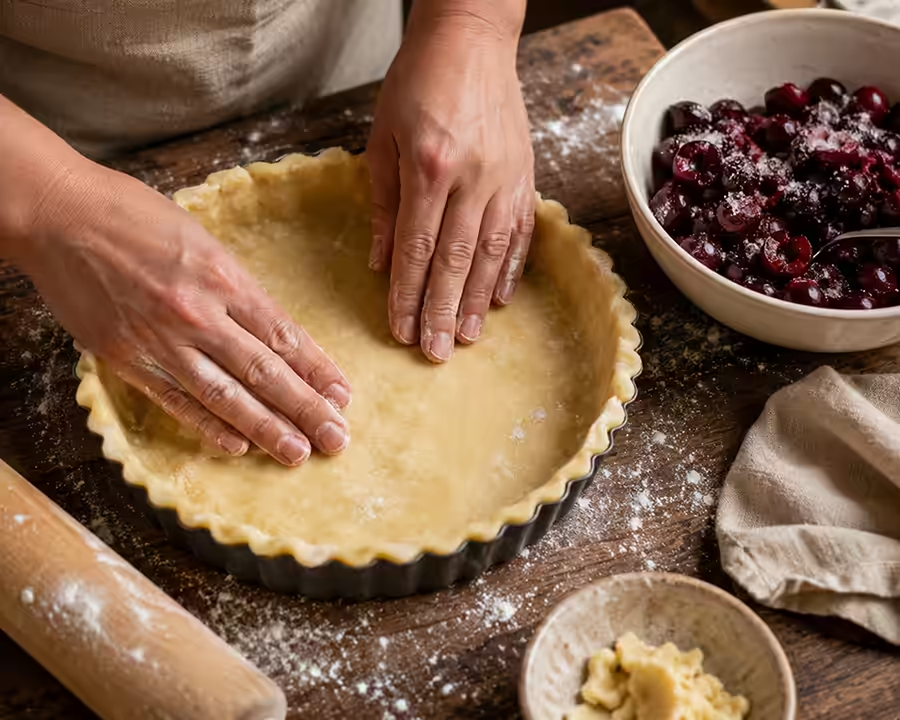
- Grease a baking pan (22–24 cm) with butter or line it with parchment paper.
- Roll out most of the dough or simply press it with your hands to cover the bottom of the pan and slightly up the sides—the layer should be even, about 5–7 mm thick.
- Spread the filling evenly over the dough. Don’t pour out all the liquid that has collected in the bowl—2–3 tablespoons is enough to keep the filling from drying out without making the pie soggy.
- Take the second portion of dough out of the freezer and grate it using a coarse grater directly over the cherries. This will create an even crumb topping that will brown during baking.
- Brush the top with beaten egg yolk—this will give it a nice golden color.
Baking
- Preheat the oven to 180 °C (top and bottom heat, no convection).
- Bake the cake for 40–45 minutes. Check for doneness with a toothpick—the dough should be fully baked, and the top should be evenly golden brown.
- Remove the pie from the oven and let it cool in the pan for at least 30 minutes—preferably an hour. A hot pie is difficult to cut, and the filling will leak out. Once it has cooled, it will taste and have a texture that is much better.
Tips and Common Mistakes
Pits. Always check the filling a second time, even if you’re sure you’ve removed them all. It’s helpful to spread the cherries out in a single layer on a cutting board and go over each berry.
Starch is a must. Without it, the filling will be too runny, the bottom of the dough will get soggy, and the pie will fall apart when sliced. Potato starch gives a more jelly-like texture, while cornstarch yields a smooth, translucent consistency. Both work well.
Butter temperature. The butter for shortcrust pastry should be cold—straight from the refrigerator. If it has softened or become warm, place it in the freezer for 10 minutes before mixing. Warm butter will make the dough greasy and sticky.
Not too thin. A dough layer thinner than 5 mm will be too fragile and will tear when transferred to the pan. The ideal thickness is 5–7 mm.
Cherry juice. The juicier the berries, the more juice they’ll release after sitting with sugar. If you end up with more than 5–6 tablespoons of juice, don’t use it all. You can set some aside for a sauce or simply pour it off.
Let it cool—don’t skip this step. The most common mistake is cutting the cake while it’s still hot. Let it cool for at least an hour, or better yet, two. That way, the filling will set, the starch will do its job, and the slices will be even.
If the top browns too quickly, cover the cake with a sheet of foil 25–30 minutes after you start baking it and let it finish baking—the dough will cook through, and the crust won’t burn.
Recipe variations: which dough to choose
Shortcrust pastry is the simplest and most popular choice for a cherry pie. But if you’re in the mood for something different, here are three alternatives, each with its own unique character.
Yeast cake with cherries
Yeast dough results in a light, fluffy texture—a completely different kind of pie compared to shortcrust pastry. It’s more filling, similar to a pastry bun, and holds the filling well even when there’s a lot of it.
For the dough, you will need: 400 g flour, 200 ml warm milk, 7 g dry yeast, 2 eggs, 60 g sugar, 80 g softened butter, a pinch of salt. Dissolve the yeast in warm milk with a spoonful of sugar, let stand for 10 minutes until foam appears. Then add the remaining ingredients and knead into a soft dough. Let rise in a warm place for 1 hour.
Once the dough has risen, divide it into two parts, place the bottom layer in the pan, spread the filling on top, and cover with the second layer or form a lattice. Let the pie rest in the pan for another 20–30 minutes before placing it in the oven. Bake at 180 °C for about 35–40 minutes.
This cake is perfect for a large group or if you’re looking for something hearty to go with your tea.
Cherry Puff Pastry Pie
Puff pastry is the quickest option, especially if you use store-bought. It creates a crispy, flaky crust that contrasts beautifully with the juicy filling.
Thaw 400–500 g of ready-made puff pastry (either yeast-free or yeast-based—whichever you prefer). Roll out one sheet and place it in a baking dish or on a baking sheet. Add the cherry filling, leaving a 2–3 cm border around the edges. Cover with the second sheet or make a lattice top using strips of dough. Pinch the edges together and brush with egg yolk.
Bake at 200°C for about 25–30 minutes—puff pastry bakes faster than shortcrust pastry. Keep an eye on the color: as soon as the top turns golden brown and starts to puff up, the pie is ready.
The flaky version turns out lighter and crispier. It’s convenient to serve it pre-sliced—the pieces hold their shape.
Sponge cake with cherries
Sponge cake batter yields the lightest, most airy result. Strictly speaking, this isn’t exactly a traditional “cake”—it’s more like a chiffon cake or an American cobbler. But the taste is absolutely wonderful.
For the sponge cake: 3 eggs, 150 g sugar, 150 g flour, 1 tsp baking powder, 3 tbsp vegetable oil, 3 tbsp milk. Beat the eggs with the sugar until fluffy (5–7 minutes with a mixer). Gently fold in the flour with the baking powder, vegetable oil, and milk. Pour the batter into a baking pan and evenly spread the pitted cherries on top.
An important point: when baked, the cherries will sink into the sponge cake—this is normal and even desirable. The result will be a juicy berry inside the soft cake.
Bake at 175 °C for about 35–40 minutes. Do not open the oven for the first 25 minutes, so the sponge cake doesn’t collapse.
A sponge cake is best eaten on the day it’s made—the next day it becomes moister, but it’s still delicious in its own way.
Comparison of Dough Varieties
In short, here’s how to choose the right dough for the situation:
- If you have some time and are in the mood for something classic—shortbread dough.
- Cooking for a large group? If you’re looking for something hearty, go for yeast bread.
- I’m short on time, but I have some ready-made puff pastry in the freezer.
- If you’re in the mood for a light, delicate dessert, try a sponge cake.
Nutritional Value of Cherry Pie
A cherry pie is a dessert, not a diet food, but it’s helpful to know what’s in it. Below are approximate nutritional values for a classic version made with shortcrust pastry.
Per 100 g of the finished pie (approximately):
- Calories: 255–280 kcal
- Protein — 3–4 g
- Fat — 11–13 g
- Carbohydrates — 35–38 g
- of which sugars — 14–17 g
One average serving (1/8 of the pie, approximately 100–120 g) contains roughly 270–340 calories, depending on the exact amount of butter and sugar.
What cherries offer as an ingredient. Fresh cherries are a source of vitamin C, vitamin B6, potassium, and antioxidants. Some of the vitamins are lost during baking, but the fiber and minerals remain. Cherries also contain melatonin, a substance that promotes better sleep.
How to reduce the calorie content. If you want to make the recipe a little lighter without sacrificing flavor:
- Reduce the amount of butter to 120 g (the dough will be slightly less crumbly, but still delicious).
- Reduce the amount of sugar in the dough to 60 g.
- You can reduce the amount of sugar in the filling to 2 tablespoons if the cherries are very sweet.
- Instead of egg yolk for brushing, use milk—the crust will still brown, but it won’t be as dark.
These changes will reduce the calorie content by approximately 15–20% without significantly affecting the taste.
Filling variations and serving suggestions
Cherries with cheese
Mix 200 g of soft cottage cheese or ricotta with 1 egg and 2 tbsp of sugar. Spread a layer of the cheese mixture over the dough, then top with cherries. The result is a creamy, rich flavor—somewhere between a pie and a cheesecake. It pairs well with shortcrust and sponge cake dough.
Cherries with almonds
Add 50 g of ground almonds or almond flour to the filling. It will absorb some of the cherry juice and add a nutty flavor. You can sprinkle almond slivers on top before baking.
Cherries with chocolate
Place a few pieces of dark chocolate (70%+ cocoa) on the dough before adding the filling. As it bakes, the chocolate will melt and blend with the cherry juice—it turns out delicious.
Serving
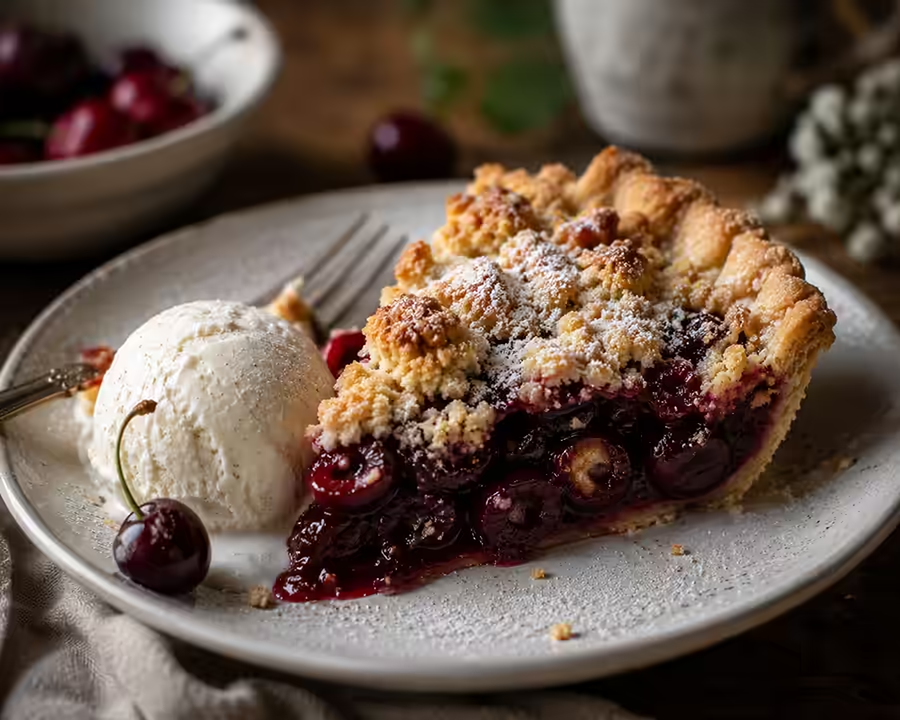
This cherry pie is delicious both warm and chilled. It goes well with:
- a scoop of vanilla ice cream
- whipped cream
- a spoonful of sour cream
- with tea, coffee, or cold milk
Sprinkle with powdered sugar right before serving—it looks homemade and appetizing.
How to store a cake
The finished cherry pie can be stored at room temperature for 1 day or in the refrigerator for up to 3 days. Cover it with plastic wrap or transfer it to a container with a lid to prevent it from drying out or absorbing odors.
To freeze, cut into portions, wrap each one separately in plastic wrap, and place in a container or bag. It will keep for up to 2 months. Thaw at room temperature or reheat in the oven at 150 °C for 10–12 minutes—it will be almost as good as fresh.
It’s best not to freeze sponge cake—it loses its texture. Puff pastry and shortbread freeze well.
What can be prepared in advance
If you’re expecting guests and want to make things easier for yourself:
- You can make the dough the day before and store it in the refrigerator for up to 2 days, wrapped in plastic wrap.
- You can pit the cherries in the morning and keep them in the refrigerator until evening, covered with plastic wrap.
- You can line the pan with parchment paper beforehand.
- The baking itself will take less than an hour—which is convenient if guests are coming over in the evening.
Frequently Asked Questions
Can you make a cherry pie without a cherry pitter? Yes. Use a hairpin, a sushi stick, or a regular ballpoint pen tip—push it through the spot where the stem was attached, and the pit will come out. It takes a little longer than using a special tool, but it’s entirely feasible even for large quantities of cherries. The most reliable method is to cut each cherry in half with a knife.
Why is the filling in the pie runny and the crust soggy on the bottom? Most often, the reason is too little starch or too much cherry juice. Make sure you’ve added the starch and let the filling sit for 15 minutes before adding it to the pie. Also, don’t pour all the juice out of the bowl—leave most of it in. If the problem persists, increase the starch to 2 tbsp.
At what temperature should I bake a cherry pie, and for how long? The optimal temperature for shortcrust pastry is 180 °C, with top and bottom heat and no convection, for 40–45 minutes. Puff pastry requires 200 °C and 25–30 minutes. Yeast dough — 180 °C and 35–40 minutes. Sponge cake — 175 °C and 35–40 minutes. If the top browns too quickly, cover it with foil.
Can I make a pie with frozen cherries? Yes. First, let the frozen cherries thaw completely in a colander—it’s important to drain off any excess juice. Then follow the same recipe, but use a little more cornstarch—2 tablespoons instead of 1.5.
Which dough is better for a cherry pie—shortcrust or yeast dough? It depends on what you’re looking for. Shortcrust dough is crumbly, light, and quick to make. Yeast dough is fluffy, soft, and more filling. If you’re making it for the first time, go with shortcrust: fewer variables, consistent results.
Why does the pie fall apart when you cut it? The most likely reason is that you’re cutting it while it’s still warm. Let the pie cool completely, preferably for 1–2 hours. The starch in the filling will only thicken once it has cooled. Also, make sure you used enough starch and that there wasn’t too much liquid in the filling.
How much sugar do you need for a filling made with very sweet cherries? If the cherries are yellow or pink and very sweet, 2 tablespoons of sugar is plenty. Add 1 tablespoon of lemon juice for balance. If the cherries are dark and more tart, 3–4 tablespoons of sugar will be just right. Go by the taste of the berries, not just the recipe.
Can you substitute butter in dough? With margarine—yes, but the flavor will be less pronounced. With vegetable oil—no: shortcrust pastry holds together precisely because of the cold, solid fat. If you need a butter-free option—switch to sponge cake batter, where oil is used in its liquid form, which is the correct method.