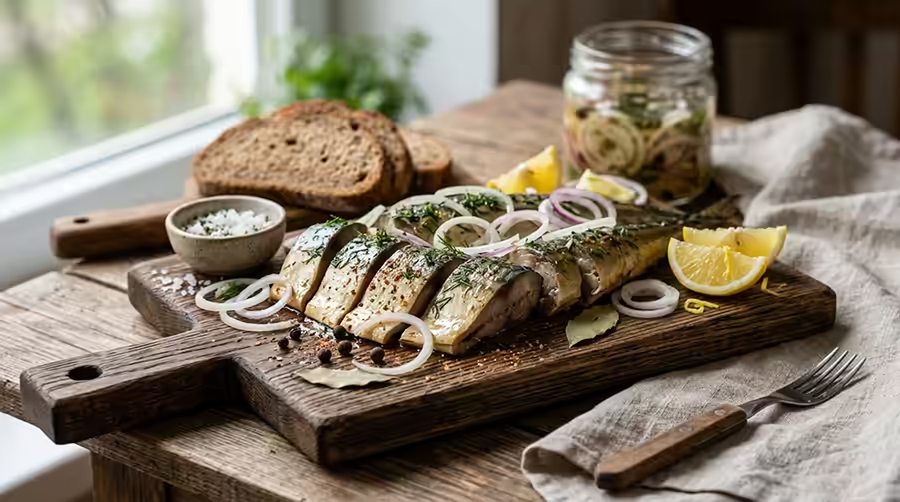
Marinated mackerel is one of the most popular homemade fish appetizers, prized for its rich flavor, tender texture, affordability, and ease of preparation. In recipes, collections, and home-cooking methods, several tried-and-true variations are most commonly found: spiced mackerel without vinegar, classic mackerel with onions and vinegar, variations with wine vinegar, more original marinades with honey and mustard, as well as “smoked-style” recipes using tea and onion skins.
Content
Mackerel is ideal for marinating because it has fairly fatty, firm, and juicy flesh that absorbs salt, the aroma of spices, and the flavor of the marinade well. With the right proportions and sufficient marinating time, mackerel turns out tender, firm, and aromatic, making it perfect for both everyday meals and festive occasions.
Many people also enjoy homemade marinated mackerel because you have complete control over the flavor. You can make the fish more tender, saltier, tangier, spicier, or even give it a flavor similar to smoked fish without a smoker, if you use tea, onion skins, and the right spices.
A major advantage of this dish is that it can be easily adapted to suit different tastes. Some people prefer mackerel in a light, spicy marinade without vinegar; others prefer a more robust appetizer with onions, oil, and a touch of acidity; and still others seek out unusual homemade variations with mustard, honey, or a smoky flavor.
This comprehensive article covers everything you really need to know to create high-quality blog content: how to choose good mackerel, how to thaw it properly, how to prepare it for marinating, which spices and proportions work best, which recipes are considered the most successful, and what mistakes to avoid. The content is based on tried-and-true methods from culinary sources, where the same basic cooking principles consistently appear.
Marinated mackerel is not just fish in brine. It’s an appetizer where every detail matters: the quality of the fish, the thawing method, the thoroughness of cleaning, the balance of salt and acid, the amount of sugar, the combination of pepper and bay leaves, the duration of refrigeration, and even whether the fish is fully submerged in the marinade.
If you do everything right, the result is far superior to many store-bought options. Homemade mackerel contains no unnecessary preservatives, often has a better texture and aroma, and lets you tailor the flavor exactly to your liking: from delicate to bold and savory.
How to choose mackerel for marinating
Choosing the right fish is the foundation of any recipe. If the mackerel itself is of poor quality to begin with, even the best marinade won’t be able to fully improve its taste, texture, and aroma.
Most often, people buy frozen mackerel for home pickling. It’s convenient, affordable, and practical, and in most stores, this is the main format in which it’s sold.
When choosing frozen mackerel, the first thing to look at is the appearance of the fish. Good-quality fish should be firm and plump, with no significant deformities, no tears in the belly, and no suspicious spots on the skin.
A very important factor is the amount of ice. If the fish is covered by an excessively thick layer of ice, or if there is a lot of snow or ice crystals in the package, this may indicate improper storage conditions or refreezing.
Refreezing is one of the most problematic issues for mackerel. After such a cycle, the flesh often loses its firmness, becomes watery, holds its shape less well after slicing, and no longer yields the dense, juicy texture required for high-quality marinated fish.
Pay special attention to the color. The carcass should not have any noticeable yellowing, brown spots, or dry, oxidized areas. Yellow and brown marks are often considered a bad sign, as they may indicate that the product is old or has been stored improperly for a long time.
The belly of the fish also reveals a lot about its condition. If it is badly damaged, burst, or split open, it’s best not to buy that mackerel, as its quality is questionable.
If you can examine the fish’s eyes, they shouldn’t be too dry or sunken. These signs may also indicate that the product isn’t very fresh.
Good mackerel for marinating usually has a firm body, a nice, even shape, and a clear, natural skin color. When the fish looks neat, without thick ice or any damage, the chances of a good result immediately increase.
Another useful factor to consider is size. For home marinating, it’s best to choose medium or large cuts, as they’re easier to prepare, gut, cut into even pieces, and present attractively.
If mackerel is sold in packages, don’t overlook the basics: check the expiration date, the condition of the packaging, the packing date, and whether there is an excessive amount of ice inside. These are basic but very important guidelines for shoppers.
When marinating fish, it’s always better to use a smaller amount of high-quality fish than to buy a large quantity of questionable fish just because it’s on sale. In home cooking, the quality of the ingredients matters too much to skimp on them.
In short, a good mackerel is one that has no yellowing, no damaged belly, no thick layer of ice, no noticeable deformities, and no signs of having been thawed multiple times. It is precisely this type of fish that salts best, retains its shape, and—after marinating—retains that same appetizing, firm, and juicy appearance.
How to Prepare Fish Properly
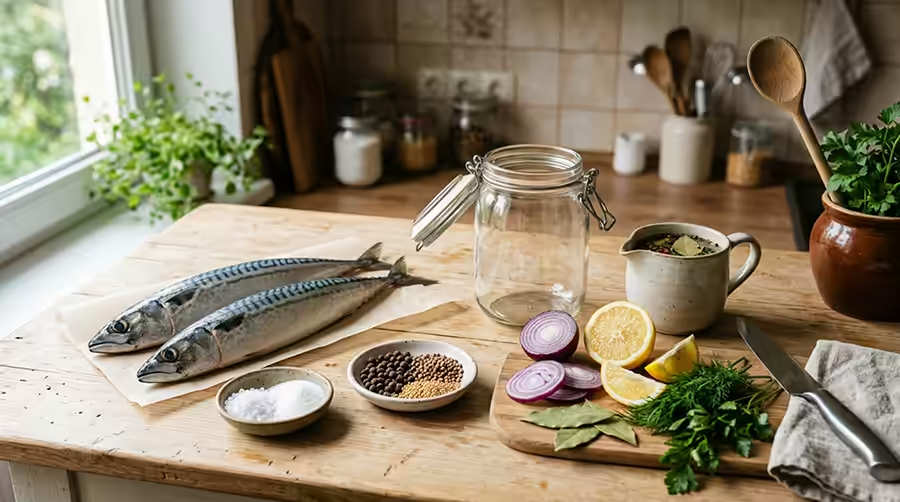
Once you’ve chosen your fish, the second critical step begins: proper thawing. It is at this stage that many people ruin the product before it’s even cooked.
The best way to thaw mackerel is slowly in the refrigerator. This method best preserves the quality, texture, and safety of the product.
It’s best to move the frozen mackerel from the freezer to the bottom shelf of the refrigerator and let it thaw gradually. Depending on the size of the fish, this can take anywhere from 24 to 36 hours.
You shouldn’t leave mackerel on the kitchen counter at room temperature. If you do, the outer layers of the fish will heat up and soften before the center has thawed, which compromises both the quality and safety of the product.
It is also not recommended to pour hot water over the fish or try to speed up the process with heat. High temperatures damage the meat’s texture, causing the fish to lose some of its juiciness.
For easier preparation, it is often recommended not to let the mackerel thaw completely, but to let it remain partially frozen. When the fish is no longer rock-hard but still retains some of its firmness, it is easier to cut, clean, and prepare.
After thawing, the fish must be gutted. If the mackerel has a head, it is cut off along with the tail—or the tail is left on, depending on how it will be prepared—but the innards must always be removed.
Pay special attention to the black membranes inside the belly. Be sure to remove them thoroughly, as they can impart an undesirable bitterness to the finished dish.
After cleaning the fish, rinse it thoroughly and pat it dry with paper towels. A little excess water on the surface isn’t a big deal, but a clean, drier fish is easier to cut and fits better in jars or containers.
Next, you need to decide on the format. Mackerel can be marinated in bite-sized pieces, fillets, or even whole, prepared fish, if a specific recipe calls for it. In the most common home recipes, however, the fish is cut into pieces, as this allows it to marinate more quickly and evenly.
If you’re preparing spiced or quick-pickled mackerel, the most practical way is to cut it into round slices about 1.5–2 centimeters thick. This method is convenient for serving at home.
The type of container you use for marinating matters too. It’s best to use glass jars, food containers, or other types of containers that don’t react with acids and salt.
Before moving on to specific recipes, it’s important to keep four simple rules in mind:
- Thaw the mackerel only in the refrigerator.
- Don’t leave the fish in a warm place for too long.
- Remove the black membranes from the belly.
- Cut into neat slices of uniform thickness.
It is with these simple steps that the process of making truly delicious marinated mackerel begins.
Types of marinades
Before diving into the detailed recipes, it’s helpful to first see which versions of marinated mackerel are considered the most successful, how they differ, and what kind of flavor they produce. Various culinary sources most often mention a few basic types of marinade, and it is these that have become classics of home cooking.
| A recipe for marinated mackerel | Base marinade | Approximate aging time | What does it taste like? |
|---|---|---|---|
| Classic Spicy (No Vinegar) | Water, salt, bay leaf, black peppercorns, allspice, cloves, coriander | Refrigerate for at least 24 hours | Delicate, natural, spicy, without any sharp acidity |
| Mackerel in wine vinegar | First, soak in salted water, then marinate in wine vinegar with sugar and spices | The pickling stage and the marinating stage are separate | A brighter acidity, a more refined spicy aroma, and a dense yet delicate texture |
| Quick Mackerel with Onions | Water, salt, sugar, vinegar, oil, onion, bay leaf, pepper | A quick home remedy | A distinctively savory flavor, a hint of tartness, and an onion aroma |
| Honey-Mustard Mackerel | Water, honey, salt, lemon juice, oil, paprika, mustard | Approximately 12–18 hours | A subtle sweet-and-sour balance, with a delicate tang |
| Smoked-style mackerel | Water, salt, sugar, black tea, sometimes onion skins and spices | From a few hours to a day or more, depending on the option | Rich color, deeper aroma, the taste of smoked fish without smoking |
This table is useful because it helps you quickly decide which direction to go. If you want a mild, classic flavor, go for the spicy version without vinegar; if you’re looking for a bold, snack-like flavor, an onion marinade or a recipe with wine vinegar will work; and if you want an unusual flavor accent, then honey, mustard, or tea brine are good choices.
The Best Recipes for Marinated Mackerel
Classic marinated mackerel without vinegar
Of all the homemade recipes, spiced mackerel without vinegar seems to be the most versatile. It lacks a sharp acidity, the fish’s flavor isn’t overpowered by a vinegary note, and the entire dish relies on salt and the aroma of classic spices.
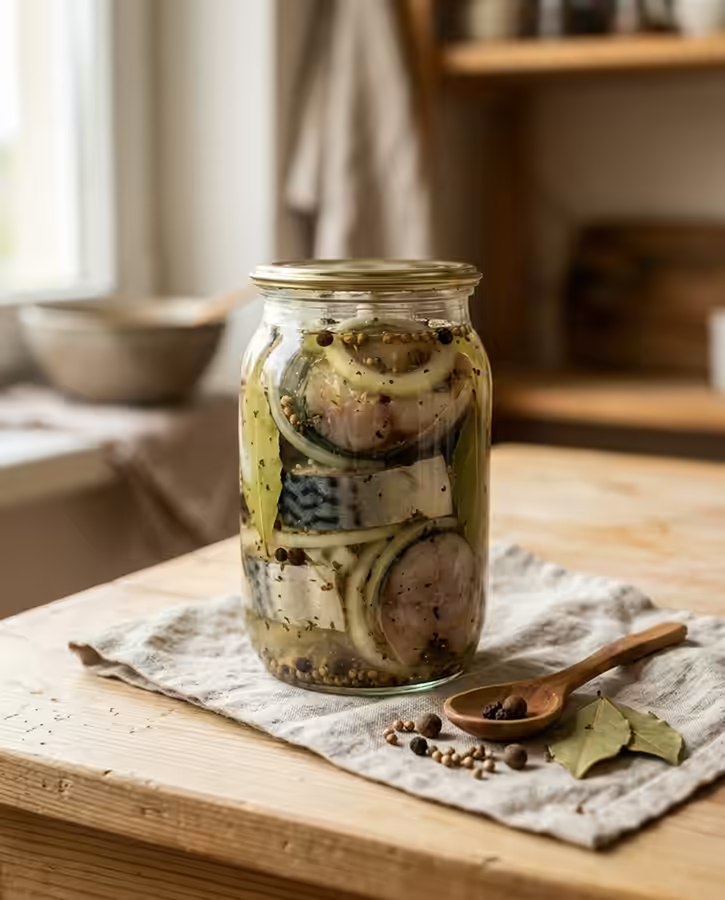
For this recipe, use 400 ml of water, 3 teaspoons of coarse sea salt, 4 bay leaves, half a teaspoon of whole black peppercorns, 5 allspice berries, 2 clove buds, and half a teaspoon of whole coriander seeds for 2 frozen mackerels.
First, thaw the fish in the refrigerator, clean it, cut off the head and tail, remove the innards, scrape away the black membranes from the inside, rinse it, and cut it into pieces about 2 centimeters in size. Do not skip this step, as it is what ensures a clean flavor without any bitterness.
The marinade is very easy to make. Add salt and spices to the water, bring it to a boil, and then simmer for another 3–4 minutes so that the salt dissolves completely and the spices release their flavor into the liquid.
Next, let the marinade cool to room temperature. This is crucial because, in this recipe, the fish is not poured over with hot liquid.
Place the mackerel pieces in a jar or other suitable container, pour in the chilled marinade until the fish is completely covered, cover, and refrigerate for at least 24 hours.
This mackerel has a very delicate flavor. The taste of the fish itself comes through clearly, while the bay leaf, cilantro, allspice, and black pepper simply provide a deeper, aromatic backdrop.
This is a great choice for those who don’t like overly sour fish appetizers. This recipe is also well-suited for children and for people who want to enjoy the mackerel’s natural flavor without an “overpowering” marinade.
Another advantage is the clear measurements. If you plan to cook more, the recipe is easy to scale up for a large family or a holiday meal.
Classic marinated mackerel is best served with thinly sliced onions, new or boiled potatoes, dark bread, and fresh herbs. Thanks to its mild marinade, it doesn’t require an elaborate side dish.
Marinated mackerel in wine vinegar with a richer aroma
If you’re looking for a more flavorful appetizer without the harsh taste of table vinegar, marinated mackerel in wine vinegar is an excellent choice. What sets this recipe apart is that it involves two steps: first, the fish is salted, and then it’s marinated in spices and vinegar.
For this method of pickling, use 2 mackerels, 300 ml of water, and 60 grams of salt. For the second step, use 200 ml of wine vinegar, 30 grams of sugar, 1 teaspoon of chili flakes, 6 white peppercorns, 6 black peppercorns, half a teaspoon of coriander, half a teaspoon of mustard seeds, 1 bay leaf, and 2 allspice berries.
The ingredients alone make it clear that the flavor will be more complex. It has a hint of tartness, a touch of spice, a mild heat from the chili, and a subtle hint of mustard.
Pre-salting helps the flesh become firmer and more defined in texture. The marinade then adds flavor and aroma without making the fish mushy or overly pungent.
This recipe works especially well if you want to serve mackerel not just as an everyday meal, but as an appetizer for a festive table. It has a more sophisticated, vibrant, and refined character.
Red onions, grainy mustard, dark bread, baked potatoes, dill, or green onions are excellent accompaniments to this dish. All of these ingredients highlight the fish’s tangy and spicy flavor profile.
In terms of taste, this version falls somewhere between classic homemade mackerel and a more “gourmet” style of preparation. That’s why it’s often a favorite among those who want to go beyond the basic recipe.
Quick-marinated mackerel with onions, vinegar, and oil
One of the most popular dishes in home cooking is mackerel with onions, vinegar, and oil. This recipe is prized above all for its accessible ingredients, distinctive flavor, and the feel of a genuine homemade appetizer.
For one of the popular quick recipes, you’ll need 1 mackerel, 1 onion, 2 teaspoons of salt, about 300–400 ml of water, half a teaspoon of sugar, 2 tablespoons of oil, 1 tablespoon of vinegar, a bay leaf, allspice, and whole black peppercorns.
Clean and rinse the fish, remove any excess parts, and cut it into serving portions. Slice the onion into thin half-rings or rings, depending on which presentation you prefer.
Next, prepare a marinade using water, salt, sugar, spices, vinegar, and oil. The fish and onions are often layered, alternating pieces of mackerel with onions and spices, after which everything is covered with the prepared marinade.
This recipe is perfect for those who love “authentic snack-style fish.” The oil mellows the flavor, the vinegar adds the right amount of tang and acidity, and the onion lends a sweet and spicy aroma.
It is the onion that plays a very important role here. Not only does it enhance the flavor, but it also becomes delicious after soaking in the marinade, which is why people usually enjoy eating it just as much as the mackerel itself.
This dish goes particularly well with hot potatoes, dark bread, pickled cucumbers, sauerkraut, or simply as a cold appetizer for a festive meal.
This recipe is also very valuable for SEO purposes, as it covers several popular search terms at once: “marinated mackerel with onions,” “mackerel with vinegar,” “quick-marinated mackerel,” and “homemade marinated mackerel.”
Marinated mackerel with honey, mustard, and lemon juice
Among the more modern and interesting options, mackerel with honey, mustard, and lemon juice stands out. This recipe is perfect for those who enjoy a balance of salty, sour, slightly sweet, and mildly spicy flavors.
In one such recipe, the marinade is made with water, honey, and salt; it is brought to a boil, and after removing it from the heat, lemon juice, oil, paprika, and mustard are added. It is this method that results in a milder, more rounded flavor profile.
Once the marinade has cooled completely, pour it over the prepared mackerel, transfer it to an airtight container, and refrigerate for about 12–18 hours.
Don’t be afraid to use honey in a fish recipe. It doesn’t make the mackerel sweet in the literal sense, but rather mellows the flavor, takes away any harshness, and helps balance the lemon’s tartness with the mustard’s spiciness.
The paprika in this recipe provides a warm, aromatic base and enhances the appetizing color slightly. Mustard adds character but doesn’t overpower the dish if used in moderation.
This recipe is perfect for anyone who has already made classic mackerel and is looking for something new. It feels like a home-style appetizer, but with a more modern twist.
This fish tastes especially good with red onion, dill, arugula, a slice of whole-grain bread, or even as part of a festive fish platter. It looks more elegant and appealing than the usual version with vinegar.
Smoked-style mackerel marinated in tea
Another distinct and very popular variation is “smoked-style” mackerel. These recipes don’t use a smoker, but instead aim to recreate a similar aromatic and visual effect using tea, salt, sugar, and sometimes onion skins.
One modern recipe calls for 2 mackerels, 1 liter of water, 3 tablespoons of black tea, 4 tablespoons of salt, and 3 tablespoons of sugar. This simple base already imparts a distinctive color and a richer flavor.
In the traditional recipe, mix 5 tablespoons of salt, 2 tablespoons of sugar, and 3 tablespoons of black tea per liter of water, and add onion skins. It is the onion skins that enhance the darker, “smoky” color.
The key to this recipe is that the tea doesn’t just add color. It creates a richer, “deeper” flavor, and when combined with onion skins, it gives the fish that familiar “smoked” taste.
In these recipes, the fish is usually thawed, cleaned, washed thoroughly, then covered with chilled marinade and left to marinate.
The flavor of the finished fish is richer than that of regular spiced mackerel. The color is also deeper, so the dish looks very appetizing even without any additional garnish.
This version is especially popular with those who want to surprise their guests. On the outside, this mackerel really does look like smoked mackerel, even though it’s much easier to prepare.
Forum Home Classics
Online forums and cooking communities are often home to very simple yet beloved recipes. While they may not always be perfect in terms of culinary precision, they perfectly capture that “home-style classic” that people have been making for years.
One such recipe calls for 400 grams of water, 1 tablespoon each of salt and sugar, 50 grams of oil, 50 grams of vinegar, and spices for 3 mackerels. This is a typical example of a traditional recipe, where everything is as simple and straightforward as possible.
The advantage of these methods is that the ingredients are almost always on hand. There’s no need to search for wine vinegar, exotic spices, or complicated additional ingredients.
The downside is that without clear instructions, a beginner might end up using too much salt, vinegar, or spices. That’s why it’s best to use these recipes as a starting point for your blog, but supplement them with clear instructions, tips, and explanations.
Forum recipes are particularly valuable precisely because of their practicality. If a recipe has been used by home cooks for years, it means it really works in everyday life.
Tips, common mistakes, how-to guides, and helpful answers
One of the most common mistakes is buying fish that already shows signs of poor quality and hoping that the marinade will fix everything. In reality, a thick layer of ice, yellow or brown spots, a misshapen carcass, dry eyes, and a damaged belly are bad signs that you shouldn’t ignore.
Another common mistake is improper thawing. If you leave the mackerel on the counter or thaw it in warm water, the flesh loses some of its texture, and the food becomes less safe to eat.
The third mistake is failing to remove the black membranes inside the belly. These are what can cause an unpleasant bitterness, so this step should not be overlooked.
The fourth mistake is using too many spices. Don’t overload the marinade with spices, or they’ll overpower the mackerel’s natural flavor.
The fifth mistake is pouring the marinade over the fish while it’s still hot, if the recipe calls for it to be cooled. First, bring the liquid to a boil, then let it cool completely, and only then pour it over the fish.
The sixth mistake is using too little marinade. The fish must be completely covered with liquid; otherwise, some pieces will marinate better than others.
Which is better—mackerel marinated without vinegar or with vinegar? It depends on your personal taste. If you prefer a more delicate, natural flavor, go for the spiced version without vinegar; if you want a bolder, more appetizing flavor, then recipes with vinegar are the way to go.
Can lemon juice be used instead of vinegar? Yes, some recipes do exactly that, combining lemon juice with honey, oil, paprika, and mustard. This results in a milder, less sharp acidity.
Is it possible to marinate mackerel quickly? Yes, there are quick versions in home recipes that use onions, vinegar, and oil, which are specifically marketed as simple and quick.
Is it possible to achieve the flavor of smoked fish without actually smoking it? Yes, that’s exactly why people use a tea marinade—and sometimes onion skins as well. As a result, the fish takes on a darker color and a richer aroma.
How long does marinated mackerel last? It’s best to store it in the refrigerator in a tightly sealed container and consume it within a few days, while it still retains its best flavor and texture.
What’s the best way to serve marinated mackerel? The best pairings include hot or boiled potatoes, black bread, rye bread, pickled or fresh onions, dill, parsley, lemon, and simple vegetable salads. These combinations work well with both the mild, spicy version and the more intense, tangy or “smoked” fish.
For an attractive presentation, arrange the mackerel slices on a flat plate, top with thin onion rings, sprinkle with fresh dill, add a few lemon wedges, and drizzle with aromatic oil. This appetizer looks very appetizing even without elaborate decoration.
A fish platter makes for a great addition to a festive table. Marinated mackerel pairs well with boiled potatoes, pickled vegetables, mustard, fresh herbs, and dark bread.
Mackerel is also a great choice for everyday meals because it can be prepared in advance. It keeps well in the fridge and can be served in just a few minutes.
It’s worth mentioning the spices separately. Successful recipes most often call for bay leaves, whole black peppercorns, allspice, coriander, cloves, mustard, and sometimes chili; more modern versions also include lemon juice, honey, paprika, or tea. It is this combination that defines the main flavor profiles of marinated mackerel in home cooking.
If you’re not sure which recipe to start with, it’s best to try two options. The first is classic spiced mackerel without vinegar, so you can appreciate the fish’s natural flavor; the second is quick mackerel with onions and vinegar, so you can see just how much the acidity and onions change the character of the dish.
After that, you can move on to more interesting options—such as using wine vinegar or adding a smoky flavor. This way, you’ll be able to find your perfect recipe, rather than just making yet another “marinated fish.”
Practical tips that really work
- Be sure to buy only firm mackerel that is free of yellowing, damage, and a thick layer of ice.
- Thaw the fish slowly, only in the refrigerator.
- Clean the belly very thoroughly, especially the black membranes.
- Don’t use too many spices if you want to preserve the natural flavor of the fish.
- Always refrigerate the marinade unless the recipe calls for otherwise.
- Make sure the fish is completely submerged in the marinade.
- For a milder flavor, choose recipes without vinegar or with lemon juice.
- For a more flavorful appetizer, try using onions, vinegar, oil, and bolder spices.
- For a unique homemade twist, try the “smoked” version with tea.
- Serve the mackerel simply, because this dish is best when served plain and home-style.
Which recipe can be considered the best?
In terms of versatility, the classic spicy recipe without vinegar is the best choice. It’s easy to prepare, doesn’t overpower the flavor, appeals to almost everyone, and serves as a great foundation for further culinary experiments.
In terms of flavor intensity, recipes featuring wine vinegar or a combination of onions, vinegar, and oil take the lead. They have more of an appetizer-style character, work particularly well in festive presentations, and appeal to those who enjoy richly marinated fish.
If we’re talking about the most original version, then mackerel “smoked” over tea leaves and onion skins is particularly intriguing. It stands out in terms of its appearance, aroma, and the overall impression the dish leaves.
And for those looking for something more modern and unusual, a honey-mustard marinade with lemon juice is a great choice. It’s milder, more delicate, and at the same time more interesting than the standard options.
In real-life home cooking, the best recipe isn’t necessarily the “perfect” one, but rather the one you can easily replicate, that your family enjoys, and that consistently delivers great results. That’s why a good SEO article should present not just one method, but several—ranging from classic approaches to more creative solutions.
Marinated mackerel is a dish that fully deserves its status as one of the best homemade fish appetizers. It’s affordable, delicious, versatile to prepare, and allows you to tailor the result to your taste—from tender, spiced fish to vibrant mackerel with onions or a smoky flavor.
If you look at the underlying logic of all successful recipes, it’s very simple: high-quality mackerel, proper thawing, a clean belly, a well-balanced marinade, sufficient marinating time, and ensuring the fish is fully submerged in the liquid. These principles are the key to truly delicious marinated mackerel.