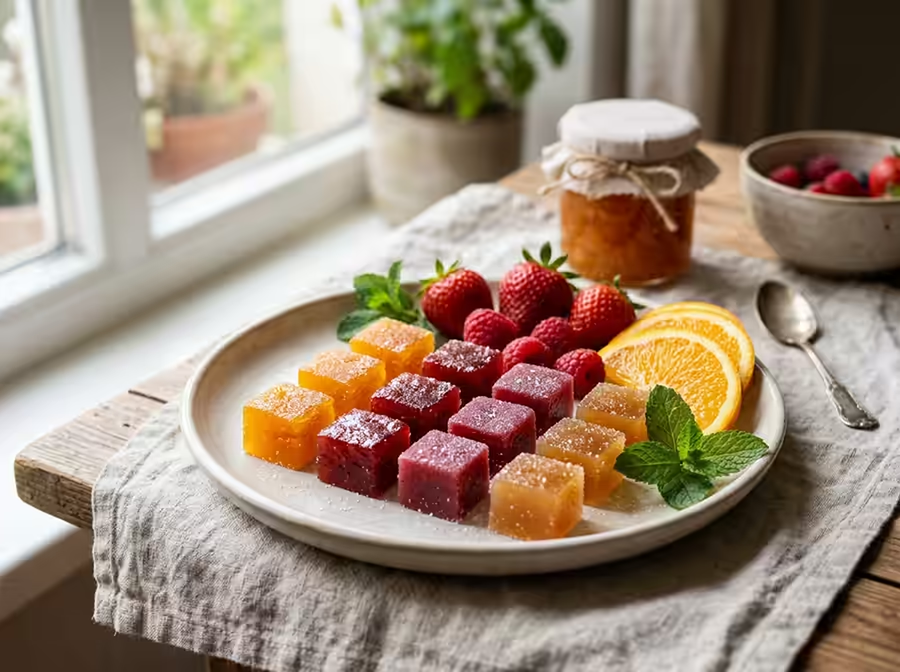
Homemade marmalade is a dessert that combines ease of preparation, vibrant flavor, and almost endless possibilities for experimentation. It can be made from fruit puree, berry juice, or a citrus base, with the addition of spices, natural flavorings, or even in a layered format for a festive table.
Many people are looking for ways to make marmalade at home because they want a natural dessert free of artificial colors, flavors, and preservatives. And that makes perfect sense: making it at home allows you to control the ingredients, sweetness, texture, aroma, consistency, and even the appearance.
Content
At first glance, it seems that marmalade is simply fruit pulp, sugar, and a thickening agent. But if you look into it more closely, it becomes clear that a successful result depends on many details. It matters what base you choose—juice or puree—what gelling agent you use, how juicy the fruit is, how much natural acid it contains, whether you heated the mixture correctly, and even how quickly you poured it into the mold.
This topic is particularly popular among food blogs, because search queries like “homemade marmalade recipe,” “marmalade made from juice,” “how to make marmalade at home,” “marmalade with agar-agar,” “fruit marmalade,” and “marmalade without food coloring” consistently attract readers. Plus, it’s one of those desserts that both kids and adults love.
What is homemade marmalade?
In everyday terms, marmalade is a firm fruit or berry jelly dessert that holds its shape, cuts easily into pieces, and has a rich flavor. Homemade marmalade can be soft and delicate, like jelly candies, or it can be firmer, springy, and even slightly chewy.
In home cooking, the word “marmalade” often refers specifically to fruit preserves made from juice or puree with the addition of a thickening agent. However, there is also another meaning—a citrus treat in the form of thick jam or marmalade, which is spread on toast or used in baked goods. But in this article, we will focus specifically on homemade marmalade as a single-serving dessert.
The main advantage of homemade marmalade is that it’s nothing like the generic store-bought sweets. You choose what to make it with: raspberries, apples, strawberries, oranges, currants, pears, peaches, apricots, cherries, or even a mix of several fruits. You control the sweetness level; you can add less sugar, more fruit, interesting spices, or natural flavors.
Another advantage is its appearance. You can make this homemade treat using silicone molds and cut it into cubes, diamonds, bars, hearts, or fun shapes for kids. It’s easy to adapt for any season, a festive table, a gift, or content for a food blog.
Why You Should Make Marmalade at Home
Homemade marmalade has several key advantages that make it so popular among fans of natural desserts.
- You can see the entire list of ingredients and don’t add anything extra.
- You can adjust the sweetness to your liking.
- It’s easy to pick your favorite fruits and berries.
- You can create seasonal versions.
- Homemade marmalade looks great in photos.
- This makes a great dessert for gift sets.
- It’s easy to make in small batches.
- It is suitable for a children’s menu, provided the ingredients are carefully selected.
- You can make several flavors at once.
- This is a great topic for engaging culinary content.
Compared to other homemade desserts, marmalade is also very forgiving. For example, cookies, cakes, and cupcakes often require precise dough-handling skills, whereas marmalade is much more forgiving. The key is to understand the logic behind its texture, and after just one or two attempts, you’ll be able to experiment with ease.
For many home cooks, this treat serves as a first step toward more advanced work with fruit desserts. It’s the perfect way to learn how to gauge proportions, work with purees, adjust acidity, and handle gelling agents properly.
What is it like?
Before we get to the recipes, it’s worth understanding what types are available. This will help you choose the format that’s right for you.
Based on
- Served with fruit puree.
- On berry puree.
- Made with real juice.
- A combination of juice and puree.
- Citrus-based.
- Made with apples.
- Made with a blend of fruits and berries.
Behind the thickener
- Made with gelatin.
- On agar-agar.
- With pectin.
By texture
- Soft and gentle.
- Dense and springy.
- Candy-like, with a clean cut.
- Moist, with a texture similar to thick jelly.
- Layered.
- Sprinkled with sugar.
- No flaking, with a naturally smooth surface.
As intended
- For children.
- For the holiday table.
- For a gift box.
- For photo content.
- To serve with tea or coffee.
- For decorating desserts.
- For the holiday dessert table.
This variety explains why this treat is so popular. In fact, a single word can encompass a whole range of different desserts, and each has its own method of preparation.
Which is better: gelatin, agar-agar, or pectin?
This is one of the most frequently asked questions. And it’s truly important, because the choice of thickener determines the final texture.
Gelatin-based marmalade
Gelatin is the most familiar and accessible option. It’s easy to work with at home, making it a great choice for beginners. Gelatin-based marmalade turns out softer, more delicate, and more “dessert-like.” It works well for strawberry, apple, peach, cherry, or mixed berry varieties.
Advantages:
- Easy to use.
- Great for beginners.
- Gives it a soft texture.
- It’s easy to find in the store.
Disadvantages:
- It doesn’t provide the same firmness as pectin or agar.
- It might be too light for hot weather.
- Not suitable for those who do not consume animal products.
Agar-agar jelly
Agar-agar is a popular plant-based thickener. It creates a firmer, more elastic texture, holds its shape well, and works wonderfully with juices and fruit bases. Agar is often used for homemade jelly candies when you want a defined shape and a clean cut.
Advantages:
- Plant-based.
- It holds its shape well.
- Suitable for finely chopped marmalade.
- It stabilizes quickly.
Disadvantages:
- We need to work quickly.
- If you get the measurements wrong, it might turn out too thick.
- Requires careful heating.
Pectin-based marmalade
Pectin is one of the best options for making fruit marmalade with a jelly-like texture. It produces a more professional texture, works well with fruit, and is particularly suitable for recipes where you want a firm but not rubbery dessert.
Advantages:
- It has a very pleasant, “candy-like” texture.
- It pairs well with a fruit base.
- It is particularly suitable for berry and fruit candies.
Disadvantages:
- It’s a little more challenging for beginners.
- You need to carefully follow the proportions.
- It is important to incorporate it into the mixture properly.
To put it simply: for your first attempts, go with gelatin or agar-agar. If you want a more professional-looking result, switch to pectin.
Which fruits are best suited
Not all fruits work equally well in marmalade. Some provide a vibrant flavor, others a beautiful color, still others a good consistency, and some need to be “boosted” with lemon or more tart berries.
The best options
- Apples.
- Strawberries.
- Raspberry.
- Blackcurrant.
- Oranges.
- Apricots.
- Peaches.
- Cherry.
- Cranberries.
- Lemon paired with sweeter fruits.
Good, but need to be balanced
- Pear.
- Banana.
- Mango.
- Watermelon.
- Plum.
- Blueberries.
For example, pears have a delicate but not particularly bold flavor, so they often pair well with lemon, apple, or cardamom. Bananas are almost never used on their own, as they can result in a flavor that’s too mild and plain. Mangoes are very flavorful, but they often need lime or lemon to balance them out.
Apples are one of the easiest bases for beginners. They pair well with cinnamon, vanilla, citrus fruits, berries, and spices. Strawberries and raspberries provide the most distinct dessert flavor. Currants are a good choice for those who prefer a more pronounced tartness.
Juice or puree: which to choose
This is another important decision that has a significant impact on the outcome.
Juice marmalade
When using juice, the finished dessert often turns out smoother, with a “cleaner” texture, and sometimes even slightly translucent. This works well with orange, lemon, grape, or apple juice.
Advantages:
- A smooth texture.
- It’s easier to achieve a smooth look.
- Works well in molds.
Disadvantages:
- The flavor may be less intense.
- If the juice is watery, the texture may be less firm.
- Often, a more intense flavor is desired.
Marmalade made from purée
Puree offers a richer flavor, a natural aroma, and a deeper color. This treat usually tastes more homemade and fruity.
Advantages:
- Rich flavor.
- A vibrant aroma.
- A more “authentic” fruity character.
- Great for berry-based recipes.
Disadvantages:
- It may be less transparent.
- Sometimes you need to strain it through a sieve.
- Seeds or skin can get in the way in berry puree.
For the best texture, the best approach is to mix things up. For example, take some fruit puree and add a little juice for a milder flavor or a smoother consistency.
Basic ingredients
No matter which recipe you choose, the list of ingredients is usually very similar.
- Fruit puree or fresh juice.
- Sugar.
- Lemon juice or another acid to balance the mixture.
- Gelatin, agar-agar, or pectin.
- Optional: vanilla, zest, cinnamon, ginger, mint, cardamom.
- For sprinkling — granulated sugar.
Sugar in marmalade isn’t just for sweetness. It helps balance the acidity and affects the texture, structure, and even the perceived thickness. That’s why reducing the sugar too much doesn’t always yield good results.
Lemon juice is a small but very important ingredient. It makes the flavor more vibrant and distinct, and helps avoid a flat, one-dimensional sweetness. This is especially important for apples, pears, peaches, mangoes, melons, and other sweet fruits.
What equipment is needed?
To make sure this treat turns out just right, it’s best to prepare everything in advance.
- Kitchen scale.
- A saucepan with a thick bottom.
- Silicone spatula or whisk.
- Blender.
- Fine sieve.
- A bowl for soaking gelatin.
- Silicone molds or containers.
- Parchment.
- A sharp knife.
- Cutting board.
- A measuring spoon or cup.
Measuring is especially important. In jelly desserts, “rough estimates” often don’t work as well as they do in baked goods or stews. If you add too little thickener, it won’t set. If you add too much, it will become too firm.
Preparation before starting
One reason this treat sometimes doesn’t turn out right is rushing. Many people start heating the mixture and only then realize they haven’t prepared the pan, measured out the sugar, or soaked the gelatin.
To prevent this from happening, follow the correct procedure.
- Choose a recipe.
- Weigh all the ingredients.
- Prepare the pan.
- If necessary, line it with parchment paper.
- Soak the gelatin or prepare the agar-agar.
- Mash the vegetables or strain the juice.
- Keep a spatula and a whisk handy.
- Clear a spot on the table in advance where you will place the hot pan.
It may seem like a small thing, but this kind of organization makes the process much easier.
Basic recipe for homemade agar-agar marmalade
Let’s start with a versatile option that works well with most fruits and is quite easy to make at home.
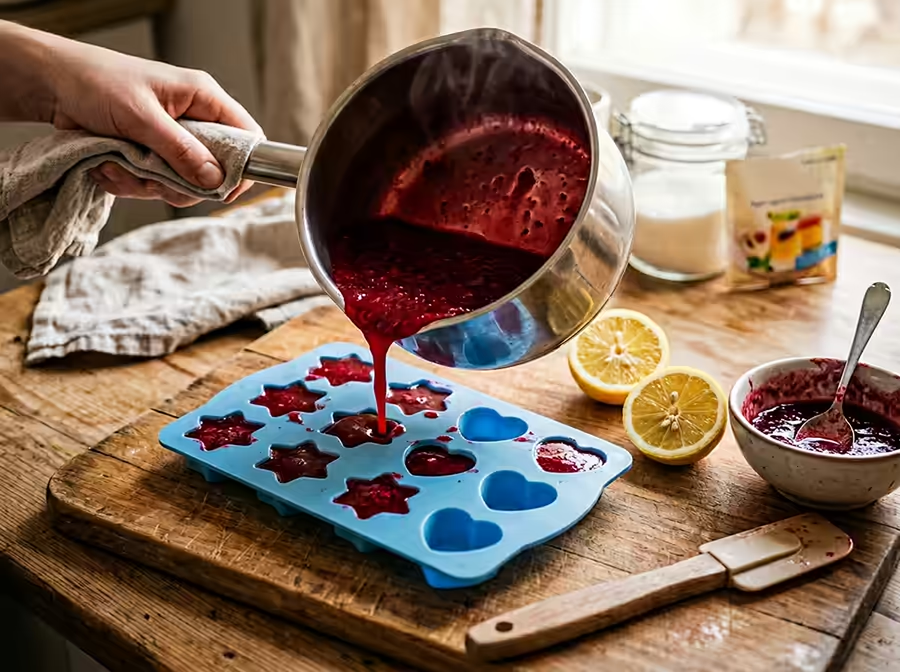
Ingredients
- Fruit puree or thick natural juice — 400 ml.
- Sugar — 180–220 g
- If-then — 8 g.
- Lemon juice — 1.5 tablespoons.
- Vanilla or zest—as desired.
Step-by-step instructions
Step 1. Prepare the base
If you’re using fruit, wash it, peel it if necessary, cut it into pieces, and blend it in a blender. If you want a perfectly smooth texture, strain the puree through a sieve.
Step 2. Prepare the agar
Mix some of the juice or puree with the agar-agar. Let it sit for a few minutes. This will help it distribute more evenly.
Step 3. Heat the fruit mixture
Combine the remaining purée or juice with the sugar in a saucepan. Place over medium heat and heat, stirring constantly, until the sugar is completely dissolved.
Step 4. Add the agar mixture
Once the fruit mixture is hot, add the agar-agar mixture. Stir constantly with a whisk or spatula to prevent lumps from forming.
Step 5. Simmer the mixture
Once it comes to a boil, let the marmalade base simmer for a few minutes. This is when the right texture develops.
Step 6. Add lemon juice
Add the lemon juice at the end of cooking. If you like, you can also add a little zest or vanilla.
Step 7. Pour into the molds
Work quickly. Pour the hot mixture into the prepared pan in a layer about 1.5–2.5 cm thick.
Step 8. Let it cool
Let the pan sit on the counter for 15–20 minutes, then transfer it to the refrigerator until completely set.
Step 9. Cut
Once the marmalade has completely set, remove it from the mold and cut it into cubes, strips, or diamonds.
Step 10. Sprinkle with sugar
If desired, roll each piece in granulated sugar. This will give them a classic look and a light, crispy coating.
Basic Recipe for Gelatin-Based Marmalade
This is a great option for anyone looking for a soft, delicate, and very simple dessert.
Ingredients
- Fruit or berry puree — 500 g
- Sugar — 150–200 g
- Gelatin — 25 g
- Cold water — 100 ml.
- Lemon juice — 1 tablespoon.
Preparation
- Pour cold water over the gelatin and let it soak.
- Transfer the fruit puree to a saucepan.
- Add the sugar and heat until it dissolves.
- Do not bring the mixture to a rolling boil.
- Remove from heat.
- Add the swollen gelatin.
- Stir thoroughly until completely smooth.
- Pour in the lemon juice.
- Pour into the pan.
- Refrigerate for a few hours until completely set.
This marmalade is perfect for strawberries, peaches, raspberries, apples, cherries, apricots, and mangoes.
Basic recipe for pectin marmalade
This recipe is closer to a pastry-style approach and yields a denser, more professional texture.
Ingredients
- Fruit puree — 400 g
- Sugar — 220–260 g
- Pectin — 10–12 g
- Lemon juice — 1 tablespoon.
- Water — 50 ml per serving.
Preparation
- Pour the purée into a saucepan.
- Mix some of the sugar with the pectin.
- Start heating the fruit base.
- Gradually add the sugar and pectin mixture, stirring vigorously.
- Add the rest of the sugar.
- Cook the mixture until it thickens.
- Add the lemon juice at the end.
- Pour into the pan.
- Let it settle.
- Cut into pieces and sprinkle with sugar if desired.
This is one of the best options for raspberries, currants, strawberries, apples, apricots, and orange-berry blends.
How to tell if a dessert will turn out well
When cooking, it’s helpful to pay attention not only to the timer but also to visual cues.
- The mixture should be smooth.
- The sugar must dissolve completely.
- There should be no lumps of thickener.
- The aroma should be fruity, not just sweet.
- The color should remain natural.
- The finished mixture should be slightly thicker than it was at the start.
- Once cooled, the surface should look smooth.
- When cutting, the pieces should retain their shape.
If the mixture looks watery and doesn’t seem thick enough even during the cooking stage, the texture will likely be too runny. In that case, it’s important to check whether there’s too much liquid, too little thickener, or whether the fruit base is rich enough.
The most delicious variations
Now let’s get down to business. Below is a large collection of recipes that you can adapt for home cooking, seasonal content, or a food blog.
Orange marmalade
Orange is one of the most vibrant options. It’s fresh, fragrant, beautiful, and very versatile.
Ingredients
- Orange juice — 400 ml
- Sugar — 180 g
- If-then — 8 g.
- The zest of 1 orange.
- Lemon juice — 1 teaspoon.
Preparation
- Mix some of the juice with agar-agar.
- Heat the remaining juice with the sugar and zest.
- Add the agar mixture.
- Bring to a boil and simmer for a few minutes.
- Add the lemon juice at the end.
- Pour into the pan.
- Let it cool until completely set.
How to improve the taste
- Add a little ginger.
- Use a pinch of cinnamon.
- Combine the orange with the tangerine.
- Add a little vanilla.
This treat is especially delicious in winter and on the holiday table.
Apple marmalade
The apple version is a true classic of home cooking.
Ingredients
- Apple sauce — 500 g
- Sugar — 170 g
- Gelatin — 25 g
- Water — 100 ml.
- Lemon juice — 1 tablespoon.
- Cinnamon — 0.5 teaspoon.
Preparation
- Bake or braise the apples.
- Mash into a puree.
- Soak the gelatin.
- Heat the mashed potatoes with sugar and cinnamon.
- Add the gelatin.
- Pour in the lemon juice.
- Pour into the pan.
- Let it cool.
Options
- An apple and a pear.
- Apple and cranberry.
- An apple and an orange.
- Apple and vanilla.
- Apple and cardamom.
Apple dessert is perfect for those who love simple, familiar, and very comforting desserts.
Strawberry marmalade
Strawberry is one of the most popular choices for children and festive dessert tables.
Ingredients
- Strawberry puree — 450 g
- Sugar — 160–180 g
- Gelatin — 25 g
- Water — 100 ml.
- Lemon juice — 1.5 teaspoons.
Preparation
- Mash the strawberries into a puree.
- If desired, strain through a sieve.
- Heat it with the sugar.
- Add the gelatin.
- Pour in the lemon juice.
- Pour into the pan.
- Let it cool.
How to make it even more interesting
- Add a few raspberries.
- Use the mint leaves.
- Combine the strawberries with the basil.
- Make a two-tone version using strawberry and berry puree.
Raspberry marmalade
Raspberry has a rich aroma and a beautiful color.
Ingredients
- Raspberry purée — 400 g
- Sugar — 220 g
- Pectin — 10–12 g
- Lemon juice — 1 tablespoon.
Preparation
- Blend the raspberries in a blender.
- Pass through a sieve.
- Mix the pectin with some of the sugar.
- Heat the raspberry purée.
- Add the pectin mixture.
- Add the remaining sugar.
- Let it simmer for a bit.
- Add the lemon juice at the end.
- Pour into the pan.
- Let it set.
Features
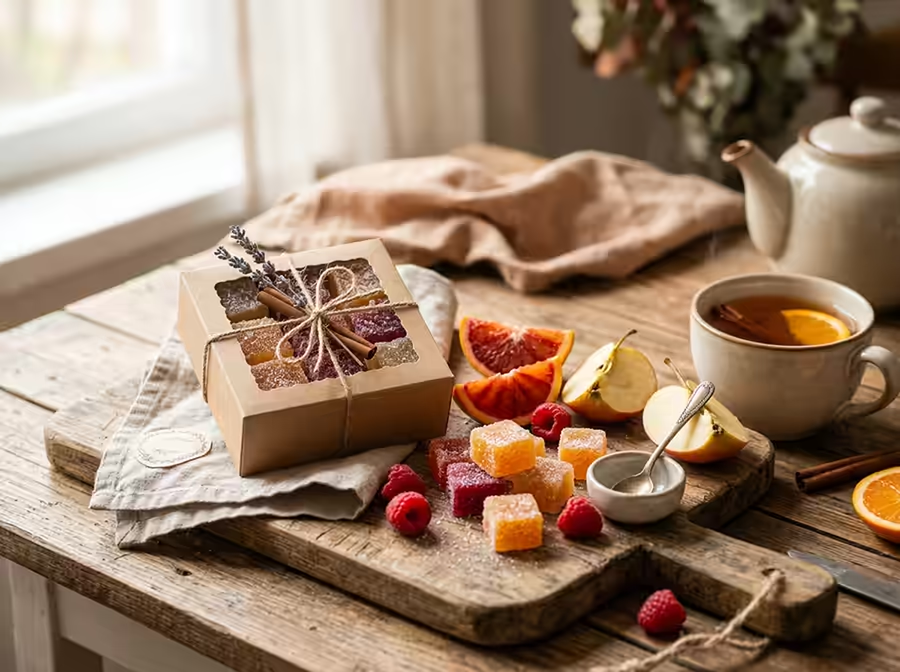
Raspberry looks especially good sprinkled with fine sugar. It’s a great choice for a beautiful box of homemade treats.
Currant marmalade
Blackcurrants have one of the most distinctive flavors.
Ingredients
- Currant puree — 350 g
- Apple sauce — 150 g
- Sugar — 200 g
- If-then — 8 g.
- Water — 60 ml.
Preparation
- Mix the two types of mashed potatoes together.
- Stir the agar-agar into the water.
- Heat the base with sugar.
- Add the agar mixture.
- Let it simmer for a few minutes.
- Pour into the pan.
- Let it cool.
Why is there an apple here?
The apple base softens the overly sharp acidity and rounds out the flavor.
Cherry marmalade
The cherry imparts a beautiful color, a slight tartness, and a very distinctive aftertaste.
Ingredients
- Pitted cherry puree — 450 g
- Sugar — 180 g
- Gelatin — 25 g
- Water — 100 ml.
- Lemon juice — 1 teaspoon.
- A pinch of cinnamon.
Preparation
- Puree the cherries.
- Pass it through a sieve if you want a smooth texture.
- Soak the gelatin.
- Heat the mashed potatoes with sugar.
- Add the cinnamon.
- Remove from heat.
- Add the gelatin.
- Add lemon juice.
- Pour into the pan.
- Let it cool.
Cherries pair especially well with cinnamon, vanilla, and even a subtle hint of dark chocolate when served.
Peach marmalade
The peach has a delicate, very summery flavor.
Ingredients
- Peach puree — 500 g
- Sugar — 170 g
- Gelatin — 25 g
- Water — 100 ml.
- Lemon juice — 1 tablespoon.
- Vanilla — optional.
Preparation
- Peel the peaches.
- Mash into a puree.
- Heat it with the sugar.
- Add the gelatin.
- Add the lemon juice.
- Add a little vanilla.
- Pour into the pan.
- Let it cool.
Peach is a good choice for those who don’t like overly tart desserts.
Apricot marmalade
Apricots make a wonderful base for a rich, aromatic treat.
Ingredients
- Apricot puree — 450 g
- Sugar — 180–200 g
- If-then — 8 g.
- Lemon juice — 1 teaspoon.
Preparation
- Remove the pits from the apricots.
- Mash into a puree.
- Mix some of the mashed potatoes with the agar.
- Heat the base with sugar.
- Add the agar.
- Boil it.
- Add lemon juice.
- Pour into the pan.
The apricot version is especially delicious when paired with vanilla or orange zest.
Pear marmalade
The pear is tender and delicate, but it needs to be properly supported.
Ingredients
- Pear puree — 500 g
- Sugar — 170 g
- Gelatin — 25 g
- Water — 100 ml.
- Lemon juice — 1.5 teaspoons.
- A pinch of cardamom.
Preparation
- Peel and chop the pears.
- Mash until smooth.
- Soak the gelatin.
- Heat the mashed potatoes with sugar.
- Add the cardamom.
- Add the gelatin.
- Add lemon juice.
- Let it cool in the pan.
A pear without lemon can taste too sweet, so a touch of tartness is highly recommended.
Lemon-Ginger Marmalade
This isn’t a childish “candy-like” flavor, but a more mature, bold, and spicy version.
Ingredients
- Apple sauce — 300 g
- Lemon juice — 80 ml.
- Sugar — 200 g
- If-then — 7 g.
- Fresh grated ginger — 1 teaspoon.
Preparation
- Combine the applesauce with the sugar and ginger.
- Dissolve the agar in a small amount of liquid.
- Add to the hot base.
- Boil it.
- Pour in the lemon juice.
- Pour into the pan.
This is a wonderful treat to enjoy with tea during the colder months.
Mango marmalade
Mango adds a mild tropical flavor and a beautiful sunny color.
Ingredients
- Mango puree — 450 g
- Sugar — 170 g
- Gelatin — 25 g
- Water — 100 ml.
- Lime juice — 1 tablespoon.
Preparation
- Prepare a smooth mango puree.
- Soak the gelatin.
- Heat the mango with sugar.
- Add the gelatin.
- Pour in the lime juice.
- Pour into the pan.
- Let it cool.
Mango almost always benefits from a citrus note. Without it, the flavor can seem too sweet.
Cranberry marmalade
Cranberries are the perfect choice for those who love desserts with a tangy flavor.
Ingredients
- Cranberry puree — 350 g
- Apple sauce — 150 g
- Sugar — 210 g
- Pectin — 10 g
- Lemon juice — 1 teaspoon.
Preparation
- Prepare two types of mashed potatoes.
- Mix the pectin with some of the sugar.
- Heat the base.
- Add the pectin mixture.
- Add the remaining sugar.
- Cook until thickened.
- Add lemon juice.
- Pour into the pan.
This is a great option for winter.
Layered marmalade
This multi-layered treat looks especially impressive in photos and on a festive table.
How to do it
- Prepare the first mixture, such as the orange one.
- Pour into a mold and let it set partially.
- Prepare a second filling separately, such as a raspberry filling.
- Carefully pour it over the first layer.
- Let it cool completely.
- Cut into neat rectangles.
Great combinations
- Orange and raspberry.
- Strawberries and lemon.
- An apple and a currant.
- Peach and cherry.
- Mango and lime.
- Pear and cranberry.
Marmalade without sugar coating
Not everyone likes it when the surface of the marmalade is covered with a layer of sugar. And that’s okay. Without the sugar coating, the dessert looks more modern, sleek, and even a little “upscale.”
To make this option look nice:
- Use high-quality silicone molds;
- Don’t overmix the batter;
- Do not let bubbles form;
- cool evenly;
- Cut with a very sharp knife.
This dessert looks great served on a ceramic plate, a wooden board, or in paper candy cups.
Jelly in molds for kids
Homemade marmalade can easily be turned into a cute dessert for kids.
What do you need to do this?
- Silicone molds shaped like stars, hearts, animals, or flowers.
- Mild flavors, such as strawberry, apple, peach, or orange.
- Not a very dense texture.
- Small portions.
- Moderately sweet.
The strawberry, apple, and orange versions work especially well. If you’re making a dessert for children, it’s best to avoid using spices that are too strong and to keep the base from being too tart.
The Secrets of Rich Flavor
Why does homemade marmalade sometimes turn out just sweet, but lacking in flavor? Most often, the problem lies in a weak fruit base or a lack of balance.
Here’s what really enhances the flavor:
- use of ripe fruit;
- a combination of sweet and sour ingredients;
- adding lemon juice;
- straining the purée through a sieve;
- moderate boiling;
- the use of zest in citrus recipes;
- adding spices in small amounts;
- a combination of two fruits instead of one.
For example, plain pear might seem bland, but pear with lemon and cardamom is much more interesting. Strawberries are delicious on their own, but a drop of lemon makes them taste much more vibrant.
How to Avoid Common Mistakes
This homemade treat seems simple, but there are a few common mistakes that can lead to disappointing results.
Mistake 1. Too much liquid
If the base is too watery, the texture will be runny. It’s better to use a thick puree or high-quality concentrated juice.
Mistake 2. Incorrect dosing
“About a tablespoon” is often not enough. This is especially true for agar-agar and pectin.
Mistake 3. Incorrect addition of thickener
You can’t just add it to the hot mixture without preparing it first, or else lumps will form or the texture will be uneven.
Mistake 4. Lack of acid
If the fruit is sweet, the flavor might be a bit bland without lemon.
Mistake 5. Overheating or underheating
Thickeners work in different ways. Some require proper heating, while others don’t like vigorous boiling.
Mistake 6: Pouring into the mold too late
This is especially critical with agar-agar. The mixture may start to set before you have a chance to spread it out evenly.
Mistake 7: Cutting before stabilization
If you take the marmalade out too early, it will crumple or lose its shape.
Mistake 8: The layer is too thick
A very high-rise dough takes longer to stabilize and may have a less uniform texture.
What to do if the marmalade hasn’t set
This is the most common fear. If the marmalade hasn’t set, don’t rush to throw it all away.
Reasons
- Not enough thickener.
- There’s too much liquid.
- Incorrect technique.
- Low-quality gelatin, agar, or pectin.
- Insufficient cooling time.
What can be done
- Return the mixture to the saucepan.
- Add a little more properly prepared thickener.
- Reheat according to the recipe instructions.
- Pour the mixture back into the pan.
- If the texture is still too soft, serve the dessert in bowls as a fruit jelly.
Important: A defective batch doesn’t always mean the product is spoiled. Sometimes it’s just a different way of presenting it.
What to do if the marmalade is too hard
The other extreme is a result that is too dense, rubbery, or “rubbery.”
Reasons
- Too much thickener.
- It’s been boiled down too much.
- There’s a very delicate balance between the fruit and the sugar.
- The fluid volume is too low.
How to fix it
It’s difficult to completely fix marmalade that has already set too hard, but for the future, you should:
- reduce the amount of thickener;
- increase the proportion of fruit;
- Do not boil the mixture for too long;
- produce a small test batch.
How to store properly
Homemade marmalade does not contain any artificial preservatives, so you need to be careful about how you store it.
The best conditions
- A sealed container.
- Refrigerator.
- A dry, clean environment.
- Store separately from strongly scented foods.
Practical Tips
- Don’t leave the marmalade exposed to the air for too long.
- If you’ve sprinkled sugar on top, store the layers between sheets of parchment paper.
- Don’t put the warm marmalade directly into the container.
- Do not store it near fish, sausages, or strong-smelling cheeses.
- Small batches are the best solution for home cooking.
If a treat contains a lot of fresh puree, it’s best not to keep it for too long. It tastes best when fresh, when the texture is still firm and the flavor is at its peak.
Can it be frozen?
Yes, some types of homemade desserts can be frozen, but it’s important to keep in mind that the texture may change slightly after thawing. This is especially true for soft desserts made with gelatin.
To test this method:
- Freeze a small portion.
- Let it thaw in the refrigerator.
- Check the texture.
- If you’re happy with the result, you can freeze more.
Denser varieties handle freezing best. Ideally, though, you should prepare this treat in small portions and eat it fresh.
How to apply
Homemade marmalade isn’t just a dessert on its own. It can be used in a variety of ways.
Serving suggestions
- To go with tea or coffee.
- For the children’s table.
- In a gift box.
- For a festive dessert plate.
- As an accompaniment to a cheese platter.
- As a cake decoration.
- In a selection of homemade sweets.
- In paper candy wrappers.
- On a wooden board with fruit.
- In small jars or gift boxes.
It looks especially good when paired with nuts, dried fruit, cookies, Brie, or Camembert, especially if it’s a citrus or spicy variety.
How to make a gift set
If you want to give homemade marmalade as a gift, that’s a great idea.
What can you put in the box?
- Orange.
- Raspberry.
- Apple with cinnamon.
- The lemon-ginger version.
- Small cookies.
- Caramel-coated nuts.
- Dried fruit.
- Paper capsules for each type.
How to apply
- Use a craft box.
- Line the pan with parchment paper.
- Label the flavors with small tags.
- Arrange the colors in a contrasting pattern.
- Add a ribbon or a simple decorative touch.
This gift has a warm, cozy, yet stylish feel to it.
Seasonal ideas
To add variety to your content or menu, you can feature marmalade recipes based on the season.
Spring
- Strawberries.
- Lemon.
- Orange.
- Mint.
Summer
- Raspberry.
- Apricot.
- Peach.
- Cherry.
- Currants.
Autumn
- An apple.
- Pear.
- Plum.
- Cranberries.
- Cinnamon.
Winter
- Orange.
- Mandarin.
- Lemon.
- Ginger.
- Cranberries.
- Spicy combinations.
What to pair these flavors with
To make the marmalade more interesting, it’s worth applying some sound culinary logic.
Great combinations
- Apple + cinnamon.
- Apple + cranberry.
- Pear + cardamom.
- Strawberries + mint.
- Strawberries + basil.
- Raspberry + lemon.
- Orange + ginger.
- Orange + vanilla.
- Cherry + cinnamon.
- Apricot + zest.
- Mango + lime.
- Currants + apple.
- Cranberry + orange.
- Peach + vanilla.
These combinations allow you to create not just a sweet dessert, but a more interesting, complex flavor profile.
Frequently Asked Questions
Can you make marmalade without gelatin?
Yes, you can. To do this, you use agar-agar or pectin.
Which option is best for a beginner?
Most often, these are marmalades made with gelatin or agar-agar. They’re a safer bet for first-time attempts.
Why won’t the marmalade set?
The cause is usually incorrect proportions, a base that is too watery, or a mistake in using the thickener.
Why does the marmalade turn out rubbery?
Most often due to too much thickener or overcooking.
Can you make marmalade from store-bought juice?
Yes, but it’s better to choose high-quality natural juice without any unnecessary additives.
Which is better—juice or puree?
Puree gives a richer flavor, while juice gives a smoother texture.
Can we cut back on sugar?
You can, but not too much. Otherwise, the texture and flavor might suffer.
Why lemon juice?
It balances the sweetness and brings out the flavor.
Is it possible to make marmalade without sugar?
You can experiment with substitutes, but that requires separate testing because the texture will be different.
Which fruits are best?
Apples, strawberries, raspberries, currants, oranges, apricots, cherries.
Is homemade marmalade suitable for children?
That is, as long as you keep an eye on the ingredients and don’t make them too sour or spicy.
Can you make marmalade in silicone molds?
Yes, it’s very convenient and attractive.
Is it necessary to sprinkle sugar on the marmalade?
No, that’s just one way of presenting it.
How do you cut it nicely?
A sharp knife that can be lightly heated and wiped dry.
Is it possible to make layered marmalade?
Yes, this is one of the most impressive options.
Can I use frozen berries?
Yes, especially for mashed potatoes. The key is to drain off any excess liquid if there’s too much of it.
How can I make it taste brighter?
Add lemon juice, combine a few fruits, or use a little zest and spices.
Is marmalade a good gift?
Yes, especially if you make a few different colors and package them nicely.
Can I use honey?
Sometimes, but it changes the taste and doesn’t always behave the same way as sugar.
What’s the best dessert to make in winter?
Orange, cranberry, lemon-ginger, and apple with cinnamon.
What’s the best treat to make in the summer?
Strawberry, raspberry, peach, apricot, cherry.