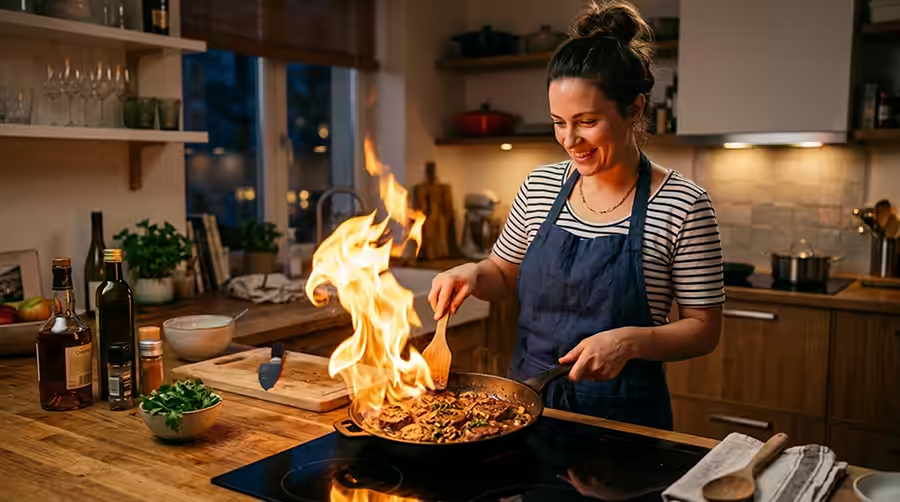
Flambéing is one of the most spectacular culinary techniques, yet it is often underestimated in home cooking. Essentially, it refers to a cooking method—or, more often, the final step—in which a dish is doused with a small amount of alcohol or a strong alcoholic beverage and then set alight to achieve a distinctive aroma, flavor, and the visual effect of the flame.
Content
The word “flambé” comes from the French “flambage” and literally refers to flame or burning. In modern cuisine, this technique is particularly associated with the French restaurant tradition, where flambéed dishes are often prepared right in front of the guest as part of a theatrical presentation.
There are several reasons for the popularity of this technique. First, flambéing helps add extra flavor to a dish; second, it can give meat a subtle smoky flavor, similar to that achieved over an open flame; third, it’s a truly striking element of restaurant presentation.
At the same time, flambéing isn’t just a “gimmick for the sake of a gimmick.” If done correctly, it enhances the dish’s flavor, and the alcohol isn’t just burned for show—it serves as an aromatic element that should complement the main ingredient.
In this article, we’ll take a practical look at flambéing: what it is, why it’s done, what kind of alcohol to use, what cookware works best, how to do it safely, what mistakes to avoid, and which flambé recipes are definitely worth trying at home.
What is flambéing, in simple terms?
To put it simply, flambéing is the brief ignition of alcohol on the surface of a hot dish or in a hot pan. This technique is most often used at the end of the cooking process, when the main ingredient is almost ready, and the flame serves as the final culinary touch.
The dish itself doesn’t “burn” in the literal sense. It is the alcohol that burns off, giving the dish a richer aroma, a subtle caramelized depth of flavor, and a visually striking presentation.
There is another important detail that is often overlooked in popular explanations. Although alcohol burns off rapidly during flambéing, it may not disappear completely, and some of the alcohol or its aftertaste may remain in the finished dish.
That is precisely why flambéing is not just about “fire in the pan,” but a controlled technique with a specific culinary purpose. A well-executed flambé should not overpower the dish with an alcohol smell; on the contrary, it should make the flavor cleaner, deeper, and more refined.
Why is flambéing used?
The most obvious reason is that it’s a spectacle. This technique is often used precisely because of its dramatic presentation, and in restaurants, for safety reasons, dishes may even be smothered with heavy lids if the flames need to be extinguished quickly.
The second reason is the aroma. Cognac, brandy, rum, calvados, liqueurs, and other spirits not only create a flame but also impart a distinctive flavor to the dish when properly paired with the ingredients.
The third reason is the flavor profile. Flambéing is often used for meat precisely to add a flavor reminiscent of a campfire or open flame, but without the need for full-scale grilling.
The fourth reason is texture and the finishing touch. In desserts, flambé often serves as the final step in preparation: it makes the sauce more aromatic, the presentation more impressive, and a simple dish much more festive.
And finally, flambéing is a way to turn a familiar recipe into a “wow dish.” Pancakes, bananas, apples, steak, or even coffee taste completely different after a properly executed flambé than they do without this final step.
Where is flambéing used?
The range of applications is much broader than it seems. You can flambé meat, steaks, medallions, poultry, game, fish, seafood, fruit, pancakes, biscuits, creams, puddings, pies, ice cream, as well as certain beverages, including coffee, absinthe, and punch.
In savory dishes, flambéing works particularly well when a deep, rich flavor is desired. That is why this technique is often used in recipes featuring beef, duck, chicken, liver, mushroom sauces, and creamy gravies.
In desserts, flambé almost always serves two purposes at once. It enhances the aroma of citrus, rum, brandy, or liqueur while simultaneously creating that signature restaurant effect that everyone loves about crêpes suzette, flambéed bananas, or cherry desserts.
Home kitchens are also suitable for this technique, but only if everything is carefully prepared. Precisely because of the risks involved, flambéing doesn’t tolerate chaos, rushing, unnecessary movements, or accidental “sparking a fire somewhere.”
What kind of alcohol is best?
The main rule is simple: the drink should be strong enough to work well for flambéing and have a flavor that doesn’t overpower the dish. Most often, spirits with an alcohol content of 40% or higher are used for flambéing.
That is why cognac, brandy, calvados, rum, liqueurs, and certain infusions are most often chosen for flambéing. Different drinks are suitable for different dishes: calvados for apples, cognac and grape brandy for meat, game, and some desserts, and rum for fruits, particularly bananas and pineapple.
It’s also worth noting desserts with a citrus twist. Liqueurs such as Cointreau or Grand Marnier are often used in these, while kirsch is used in cherry desserts.
There are also versatile options. Whiskey and vodka can be used in both savory and sweet dishes, although in terms of flavor, they are generally less refined than brandy, rum, or fruit brandies.
Another important safety precaution: avoid using extremely high-proof liquors, as they are highly flammable and are considered more dangerous to work with.
How to pair alcohol with a meal
To ensure that flambéing doesn’t seem haphazard, consider not only the flame but also the aromatic harmony of the dish. For apple desserts and duck with apples, Calvados is the best choice; for steak or meat sauce, cognac or brandy; for bananas and pineapple, rum; and for orange desserts, orange liqueur.
The more closely the aroma of the drink matches the character of the main ingredient, the more refined the taste of the finished dish will be. Flambéing leaves no room for chance: if you pair a delicate dessert with an alcohol that’s too harsh, you won’t get a refined finish—instead, the alcohol will dominate the palate.
When making flambé at home, it’s best to start with three basic options: cognac, rum, and orange liqueur. This is enough to master meat, fruit, and dessert flambé variations without getting too fancy.
What kind of cookware is suitable for flambéing?
The cookware you use is just as important as the alcohol. It’s best to use a copper pan with a stainless steel coating, cast iron, or stainless steel; coatings like Teflon or other synthetic materials are best avoided.
The reason is obvious: this type of cooking involves high heat and open flames. Therefore, the cookware must retain heat well, be stable, and not pose any unnecessary risks when in contact with flames.
It’s easiest to flambé on a gas stove, since the process requires high heat. It’s helpful to have at least two adjustable burners: use one to keep the hot dish warm and the other to heat the alcohol in a double boiler.
In addition to a frying pan, you should also have a metal ladle or a small saucepan on hand for serving alcohol. This method of serving alcohol is safer and easier to control than pouring directly from the bottle.
And one more small detail—though it’s actually quite important: make sure you have a lid handy. If needed, it will allow you to quickly extinguish the flames simply by covering the dish.
Step-by-step flambé technique
Below is a basic outline that can serve as a foundation for most homemade recipes.
- First, cook the dish until it is almost done, since flambéing is usually the final step rather than the main method of cooking.
- Prepare a small amount of alcohol, aiming for about 1–2 tablespoons per serving.
- Do not pour alcohol directly from the bottle. The flame could travel back up the stream into the bottle, creating a real risk of fire.
- It is best to preheat the alcohol in a saucepan or metal ladle over a double boiler to about 30–40°C, but do not bring it to a boil.
- The dish must be hot when flambéing. The technique involves adding alcohol to a well-heated pan to create a burst of flame.
- Pour the warmed alcohol into a hot pan or over a hot dish in small amounts. It is important to proceed calmly, without sudden movements, and without pouring “by eye.”
- Light the alcohol with long matches or a long wooden skewer, not a regular lighter.
- While cooking, do not stir the food with a spoon or spatula. Instead, gently shake the pan back and forth.
- Let the flames die down naturally. If you remove the dish too early, the alcoholic flavor may remain too strong and overpower the finished dish.
- Serve immediately after the flame has gone out. That’s when the aroma is at its strongest, and the flambé effect enhances both the taste and the guests’ experience.
Tips for successful flambéing
The first and best tip is to practice beforehand. You should practice first, and only then try flambéing for your guests.
Here’s another tip: don’t try to “pour in more alcohol to make it burn better.” Flambéing requires precision: a small amount of alcohol is enough to add both flavor and a flame, while too much will likely throw off the dish’s balance.
Here’s a third tip: don’t rush to add the alcohol, but don’t let the dish get cold either. A hot skillet, a moderate amount of the right drink, and controlled flambéing yield much better results than chaotic improvisation.
Tip #4: Choose a spirit that complements the recipe. Calvados works best with apples, cognac or brandy with meat, rum with fruit desserts, and orange liqueurs with citrus fruits.
Tip #5: Don’t confuse flambéing with “using a blowtorch.” These are two different cooking techniques: flambéing works by igniting alcohol, not by using an external heat source like a blowtorch.
Warnings and Safety Guidelines
Flambéing is a spectacular but risky technique. That’s why it’s important to have a way to quickly extinguish the flames.
Do not turn on the range hood while flambéing. Fat residue in the filter can catch fire, so the range hood poses an additional risk rather than providing protection at this time.
Don’t leave extra towels, napkins, paper packaging, or bottles of alcohol near the stove. It’s often these small, everyday oversights that make even simple kitchen appliances dangerous.
Don’t lean too close to the pan when lighting the flame. The flame can flare up quickly, and your job is to manage the process from a safe distance, not to “peek” to see if it’s burning yet.
Don’t use flambéing just for entertainment without a culinary purpose. If the dish doesn’t pair well with alcohol or you can’t control the temperature, the technique will compromise both the taste and safety.
Keep in mind that some alcohol may remain in the dish even after flambéing. For this reason, it’s best not to drive after flambéing.
Common mistakes when flambéing
The most common mistake is pouring alcohol from a bottle into a hot pan. This is dangerous because the alcohol can catch fire as it flows out of the bottle.
The second mistake is to use cold alcohol and hope that it will ignite beautifully on its own. It’s better to heat it to 30–40°C beforehand, which makes the process much more predictable.
The third mistake is using the wrong cookware. If a pan has a poor-quality nonstick coating or doesn’t retain heat well, flambéing becomes harder to control and less safe.
The fourth mistake is stirring the food while it’s cooking. It’s better to just shake the pan rather than interfere with unnecessary movements.
The fifth mistake is not letting the alcohol burn off completely. If you rush it, the dish will retain a sharp, alcoholic aftertaste that will ruin the experience, even with a good recipe.
The sixth mistake is trying to flambé under the range hood. This is a separate safety rule that should be followed without exception.
Why does flambéing sometimes fail?
Usually, the problem isn’t the “magic of the recipe,” but rather the technique. If the pan isn’t hot enough, the alcohol isn’t strong enough, or it hasn’t been warmed up beforehand, the flame effect may be weak or short-lived.
Another reason is that there is too much liquid in the pan. If the sauce hasn’t reduced at least partially and the surface temperature is too low, the alcohol won’t ignite as expected, and the flame will either fail to appear or go out quickly.
Failures also happen because of rushing. Flambé requires a precise sequence: a hot dish, alcohol prepared separately, the right moment, a long match, and no chaotic movements.
Recipes
Below are some of the most famous dishes in which flambéing isn’t just a gimmick, but truly contributes to the flavor.
1. Crêpe Suzette — a classic French dessert
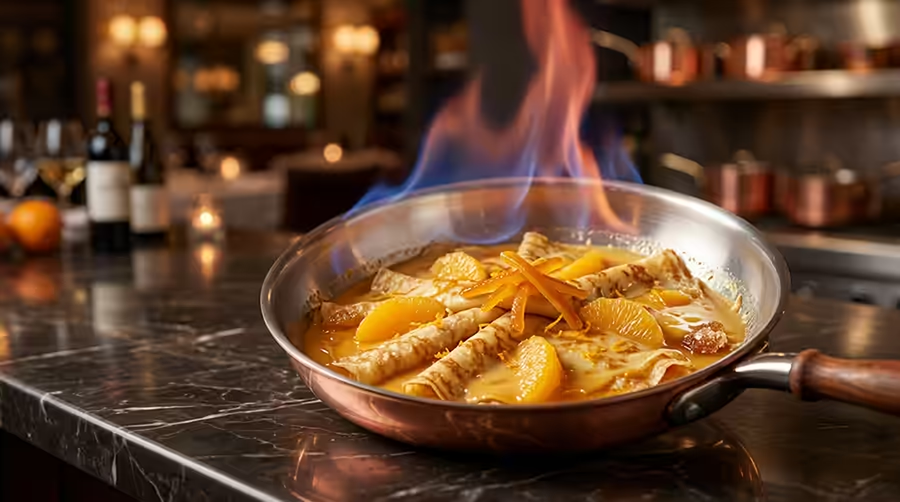
Crêpe Suzette is perhaps the most famous dessert, one that most people associate with flambéing. It is a classic French dessert made with crêpes and a caramel-orange sauce, often prepared with cognac or orange liqueur and then flambéed right in the pan.
Why is this particular recipe perfect for getting acquainted with the technique? Because it features a very logical combination of flavors: thin crepes, a creamy component, orange juice, zest, and aromatic alcohol create that quintessential “French” profile, where flambé feels natural rather than contrived.
The homemade version can be quite simple. First, make thin crepes; in a separate pan, simmer an orange sauce with zest and sugar; warm the stacked crepes in the sauce; and finally, add a splash of cognac or orange liqueur and flambé.
This is exactly the kind of situation where flambéing not only adds a visual touch but also brings out the full flavor of the citrus glaze. Crêpes Suzette are especially delicious served with a scoop of vanilla ice cream or on their own, if you want to savor the pure taste of the orange sauce.
2. Diana Steak — one of the best meat options for flambé
Among savory dishes, one of the most famous flambé recipes is Steak Diane. In the classic version, the steak is seared, the mushrooms and shallots are cooked separately, cognac or brandy is added and flambéed, and then the sauce—made with cream, mustard, and the meat juices—is reduced to the desired consistency.
The beauty of this recipe is that the flambéing isn’t just for show. The cognac serves as the aromatic base of the sauce, which blends meat juices, mushrooms, creaminess, and a hint of spice into a single, restaurant-quality dish.
When cooking at home, it’s important not to overcook the steak before flambéing it. First, sear the meat quickly, set it aside, prepare the sauce base in the same pan, add the alcohol, light it on fire, and only then return the meat to the pan so it finishes cooking in the sauce without losing its juiciness.
If you want to master flambéing not with a dessert but with a substantial hot dish, the Diana steak is one of the best ways to learn. It clearly demonstrates how the flame doesn’t just serve as a spectacle, but as an integral part of the dish’s flavor profile.
3. Flambéed Bananas or Bananas Foster
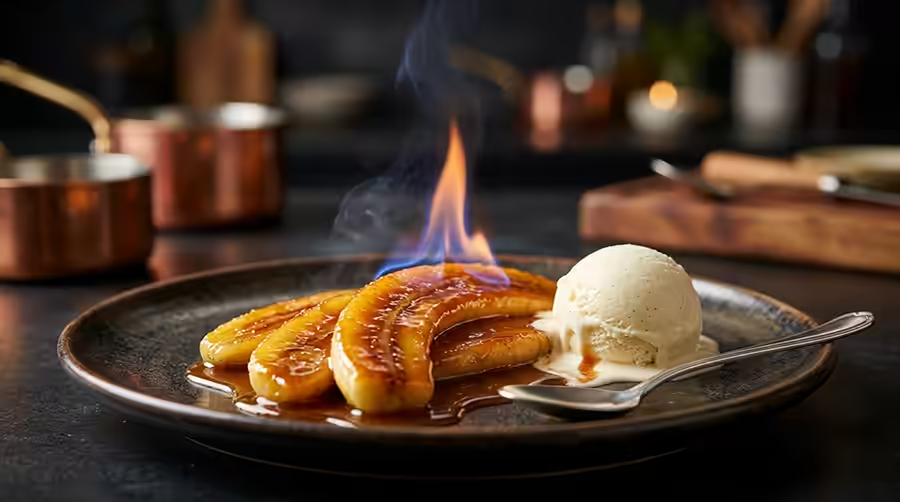
Flambéed bananas are another very popular dish that’s perfect even for a home-cooked dinner. Rum is most commonly used in this dish because it pairs well with the subtle sweetness of the banana.
Bananas are usually sautéed in butter, with sugar added, sometimes a little citrus juice or zest, and finally flambéed with rum or cognac. This dessert is most often served with vanilla ice cream.
This is a wonderful recipe for anyone who wants quick and satisfying results. The fruit cooks quickly, the aroma is rich and vibrant, and the flames in this fruit dessert look especially beautiful and appetizing.
To keep the flavor light and delicate, don’t oversweet the base. Bananas are naturally sweet enough on their own, so the main purpose of flambéing here is to bring out the caramel notes, not to turn the dessert into a heavy syrup.
4. Cherries Jubilee — a classic dessert perfect for special occasions
Cherries Jubilee is another famous recipe often mentioned in connection with flambéing. It consists of cherries in a sweet, aromatic sauce, which are flambéed at the right moment and served either as a dessert on their own or with ice cream.
The advantage of this option is that it’s very festive yet technically straightforward. If you’ve already made flambéed bananas, then a cherry dessert is a logical next step, especially for winter holidays, a romantic dinner, or a special occasion.
To enhance the flavor, cherries are often paired with a fragrant, fruity-flavored spirit. This allows the dessert to retain its berry freshness while developing a deeper aftertaste.
5. Apples flambéed with Calvados
Calvados pairs particularly well with both savory and sweet dishes featuring apples. That’s why flambéed apples are one of the most natural home-style variations of this technique.
You can caramelize apple slices in butter with a little sugar, then add a splash of Calvados at the end, flambé them, and serve the dessert on its own or with ice cream, pancakes, cheesecakes, or thick yogurt.
This dessert has a very “European” flavor: warm, fruity, slightly creamy, and with a fragrant apple aroma. Thanks to the right drink, the flambé comes across as natural here and doesn’t need an elaborate restaurant presentation to make an impression.
Which flambé recipes are best for beginners?
If you’re a beginner, start with desserts. Flambéed bananas, flambéed apples, or crêpes suzette give you more control, cook faster, and are more forgiving of minor mistakes than complex meat sauces.
If you’re in the mood for something a bit more substantial, go for Steak Diane. The flambé technique used here makes perfect sense, and the result tastes just like it came from a restaurant—even when made at home.
For a festive menu, Crêpes Suzette, Cherries Jubilee, and flambéed bananas are sure to be the showstoppers. All three recipes clearly demonstrate that flambéing isn’t just about fire—it’s part of the drama of dessert.
Frequently Asked Questions
Does all the alcohol burn off during flambéing?
Not always. A small amount of alcohol or its flavor may remain in the dish even after it has burned off.
How much alcohol is needed for flambéing?
A good guideline is 1–2 tablespoons per serving.
What’s the best way to light a dish?
The safest way is to use long matches or a long wooden skewer.
Why shouldn’t you pour alcohol from a bottle?
Because the flame could travel along the stream of liquid and ignite the contents of the bottle.
Is it okay to turn on the range hood while flambéing?
No, this is not recommended, as the grease in the filter could catch fire.
Which recipe should you try first at home?
To start with, flambéed bananas or crêpes Suzette are the easiest options, and for those who prefer a meat dish, Steak Diane is the best recipe to start with.