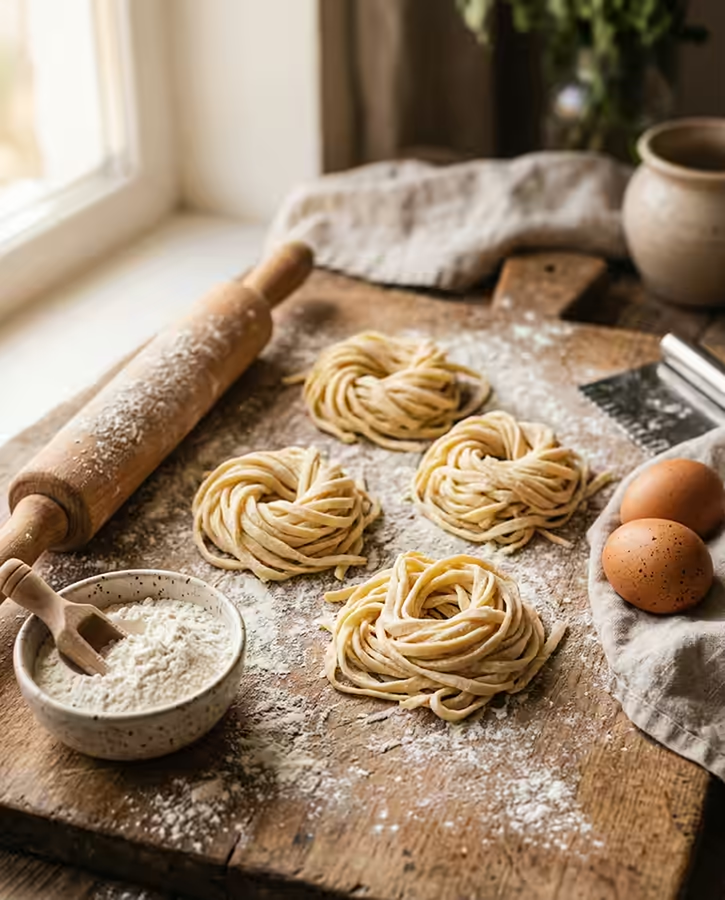
Homemade Noodles is simple, but a very rewarding dish that immediately evokes associations with home warmth, aromatic buillon, cozy kitchen, and the real taste of food without excess additives. Many people are looking for this recipe searching for queries like “homemade Noodles”, “noodles from homemade”, “how to make Noodles at home” or “recipe for homemade Noodles”, and don’t be shy: you can make it yourself, you just want to try once, as store-bought options no longer satisfy such tastes.
Content
The main advantage of homemade Noodles is that you fully control its composition, thickness, density, taste, and even color. If you want a lower fat Noodles for chicken soup — feel free. You need a thicker Noodles for a top sauce or mushroom stuffing — that’s just as easy. And also, homemade Noodles is wonderfully suited for freezing: you can freeze, store in a bag or container, and then quickly use it for lunch or dinner.
In this article, I will detail how to prepare classic dough for homemade Noodles, which eggs to choose, how to properly mix and roll the dough, how thin to roll it, beautifully cut the Noodles, how much you can store, and how to dry them. You will also find variations on the recipe, ideas for dishes with ready-made lochen, best sauces, useful culinary tips, and answers to the most common questions.
Why it’s worth preparing
Homemade Noodles has a unique texture that’s hard to replicate under factory conditions. It can be thin, elastic, silky, or more dense — it all depends on the recipe and method of use. In ready-made form, such Noodles is not just a “fill-in” dish, but becomes a full-fledged base.
One plus — a natural basis. In the simplest case, you only need flour, eggs, and salt. Without stabilizers, without enhancers, without unknown additives. For a culinary blog, this is particularly important, as readers are increasingly looking for home recipes that they can realistically prepare in their usual kitchen.
Homemade pasta is very versatile. It can be served in a broth, added to a soup, mixed with a creamy or tomato sauce, made into a mushroom dish, paired with chicken, vegetables, cheese, or just topped with olive oil and herbs. It is suitable for a festive menu and for a family Sunday lunch.
Moreover, this recipe is easy to adapt to your own taste. Some may prefer a pasta with eggs, while others love colored variations with spinach, beetroot, or pumpkin. This particular recipe for homemade pasta can be considered a basic culinary skill that always comes in handy.
Ingredients and inventory
For classic homemade pasta, you need very simple products:
- High-quality wheat flour.
- Eggs.
- Salt.
- A splash of oil if desired.
- The right amount of water only as needed.
Most often for pasta, use flour of the highest grade, as it gives the dough elasticity that mixes well and doesn’t tear easily. If you want more silky texture, the usual flour can be replaced with flour from hard wheats or very fine semolina. This method is particularly useful if you plan to serve pasta with sauce, and not just in soup.
Eggs vary in number: they give the dough flexibility, a beautiful yellow color, and a characteristic rich taste. The classic homemade pasta should have a uniform structure. If the pasta is homemade, the color will be even brighter.
From the kitchen inventory, you will need:
- A large bowl or a clean work surface for mixing.
- Roller.
- A knife to cut or a cutter for the pasta.
- A sieve for sifting the flour.
- A clean cotton cloth or paper.
- A board or countertop for rolling.
- If needed — a machine for pasta.
Currently, you have a machine for dough preparation, the process may be faster, but this is not mandatory at all. Cooking a home-made dough can be done by hand. The main thing is not to rush at the stages of substitution and preparation.
Dough proportions
The most important thing to remember about the basic proportion: for one egg, take approximately 60 grams of flour. This is a simple formula that works well for most home recipes. However, it is important to understand that the exact amount of flour can vary depending on the size of the eggs, the humidity of the flour itself, and the temperature in the kitchen.
If the egg is large, it may take slightly more flour. If the yolks are very bright and thick, the dough may often come out ideal without the addition of water. This is exactly what experienced hosts advise not to absorb all the flour, but to leave a small amount for the consistency correction when mixing.
For the first time, it’s best to take such a proven combination:
- Three hundred grams of flour.
- Three eggs.
- A pinch of salt.
- One teaspoon of oil, if desired.
The oil is not mandatory, but it can make the dough softer and more comfortable to work with. If you want a more “soup-like” dough that retains its shape well in boiling water, you can skip the oil. However, if you plan to provide a sauce, a small amount of oil will be appropriate.
Classic dough
Classic dough for home cooking should be elastic, smooth, and tender. It should not stick to the hands, but it also should not be so firm that it becomes impossible to roll out. The right consistency is a balance between plasticity and density.
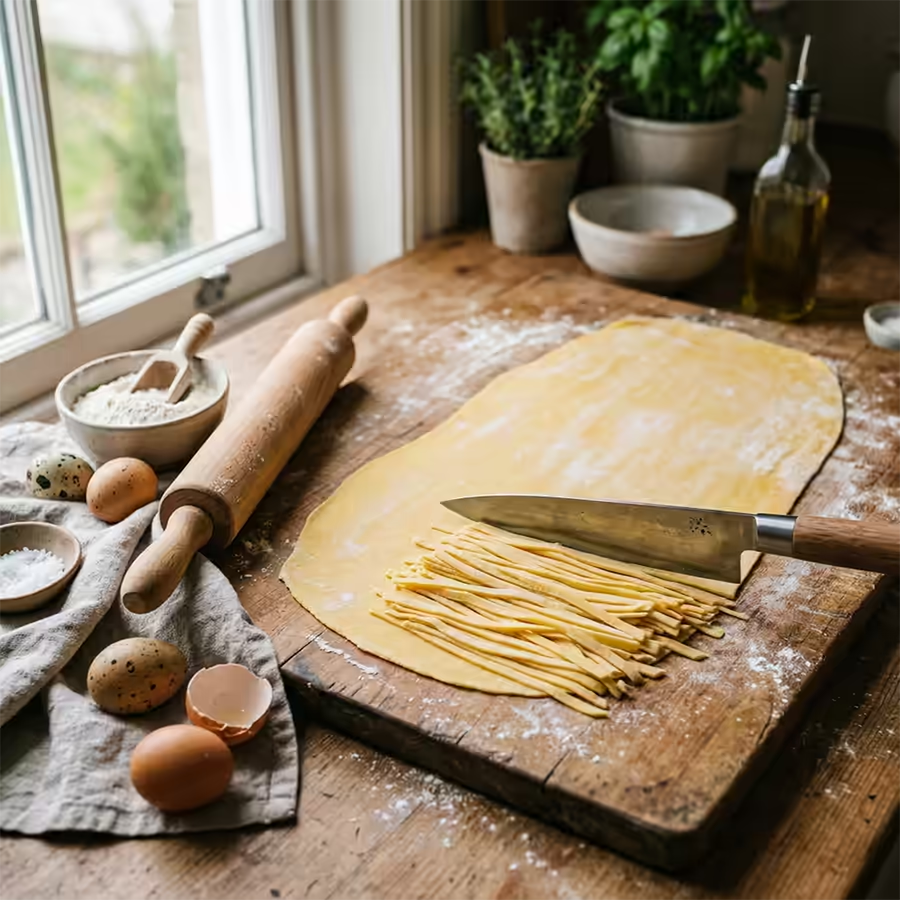
The biggest mistake beginners make is to make the dough too soft. Such dough is easy to handle at the start, but it’s difficult to work with later: it sticks, doesn’t hold its shape, requires a lot of flour when preparing, and the finished dough can slip off during cooking. For homemade dough, it’s better to take slightly firmer dough than too soft.
The dough is quite sticky and also not ideal. It breaks at the edges, tends to stick to the chest, is difficult to handle, and after the rolling, its texture can be coarse. The main rule is to add flour gradually and carefully feel the structure of the dough with your hands.
How to replace
This is a basic recipe for homemade Noodles.
- Simply sprinkle flour into the bowl or dust the working surface.
- Make a well in the center.
- Beat the eggs, add salt and, if desired, some oil.
- Gently mix the eggs with flour using a spatula or your hand, then gradually incorporate flour from the edges.
- When the mass becomes thick, switch to hand mixing.
- Knead the dough until it becomes smooth, shiny, and elastic.
- If the dough crumbles, add a little bit of water.
- If the dough sticks to your hands, sprinkle a little flour.
Kneading takes a few seconds, and the whole process is not worth waiting for the ideal smoothness right away. The dough may start to seem uneven and coarse, but already after several waves of active kneading, it may become significantly smoother.
It is very important to ‘develop’ the dough with your hands properly. For this, it is necessary to knead, fold, and again knead, turn, and repeat the motions. This is how elasticity forms, thanks to which the dough can be started very thinly without tears.
Dough remainder
After kneading, the dough needs to be covered with a food film, either covering it with a bowl or wrapping it in a package and letting it rest. This step often goes unnoticed, but it actually makes the job much easier. After resting, the dough becomes more pliable, and it’s easier to roll it out.
Usually, it’s enough to allow the dough to rest for about twenty-thirty minutes at room temperature. If you have a warm kitchen, you can let it rest longer. During this time, the structure becomes more even, the moisture is distributed more evenly, and the surface of the dough becomes smoother.
When you do this, it’s really important to remember that this step can be significant. However, there you will express the difference: the dough will stick, it will be hard to roll back, and it will join together like tiles. Therefore, for a delicious homey texture, the most important ingredient is the same as the broth or eggs.
Starting
After resting, the dough should be shortened again, and divided into parts. This way it will be easier to work with, especially when you’re preparing a large portion. While one part is starting, the rest should be covered so it doesn’t dry out.
The working surface should be sprinkled with flour, but not too much. If the flour is too abundant, it may end up in the finished dough and change its texture. It’s better to add a little and, if needed, sprinkle just a bit more.
Start by rolling the dough from the center towards the edges, regularly turning the plate. If the dough starts to shrink, give it a few minutes to rest. If the plate keeps pulling back, that means the dough is still not ready to be rolled.
For sweet doughs, the dough usually starts very thin. For doughs under the sauce, you can leave it thicker so it has more pronounced texture after baking. Ideally, the dough should be even across its entire area, without thick “islands” in between and not overly thin edges.
Rolling out the dough
After starting to roll out the dough, you need to give it a few minutes to rest. Don’t overdo it, but just enough to relax the surface to ensure it isn’t sticky to the touch. When you start to roll it out, the edges will start to get uneven. If you overdo it, the dough may begin to tear.
There are several methods for rolling out. The simplest one is to sprinkle flour on the dough, roll it out on a clean surface or plate, or layer it between a few sheets of parchment paper with necessary width. You can also roll the dough by hand and leave the edges untouched.
Thin, narrow dough is perfect for making ravioli and light dumplings. The average width is a universal variant for gnocchi, pastries, and vegetable dishes. Wider sheets might remind you of homemade pasta and pair deliciously with rich sauces, cheese, or meat.
If you want an ideal level of dough, it is best to work with a rolling pin or a special knife. However, a homemade dough is also great, and slight unevenness is not a problem here. Additionally, it creates that same ‘homemade’ aesthetic that is loved in family kitchens.
How to roll
Homemade dough rolls out very quickly. It is important to remember not to overwork it. Unlike dried shop-bought pasta, homemade dough generally rolls out much quicker, especially if the dough is thin.
You need a large amount of combined water or broth when making soup. The water should be actively simmering, but after adding the dough it may thicken a bit so that the texture remains smooth. Cover the dough thoroughly to prevent it from sticking to the table or one another.
Thin homemade dough can be ready within a few minutes. The exact time depends on its thickness, moisture, and the type of flour used. Orient it not only on time, but also on the feel: the dough should be soft, but not sticky. If it is intended for a dessert that is blended with a spicy sauce, it is better to roll it out earlier so it ‘melts’ in the sauce.
If the dough is previously rested, it usually needs to be rolled out longer. However, even in such a case, homemade dough usually rolls out much faster than shop-bought. After rolling out the dough, it may be cut into strips, with the addition of a bit of oil or sprinkled with prepared flour.
Drying and storage
Homemade dough can be used right after rolling or prepared for storage. For this, it is rolled into thin sheets on a clean surface, dough or mat. It is very important that the dough strips do not lie in contact with each other, otherwise they may stick.
The drying time depends on the thickness of the dough and the humidity of the surrounding air. If you plan on just rolling it out before using, it is sufficient to leave it for a few minutes on the table. However, if you intend to store the dough longer, it should be thoroughly dried, ideally in a shaded area.
It is advisable to store the finished broth in a glass jar, paper bag, or airtight container in a dry place. It is important to ensure that there is no moisture left in it, otherwise, it may spoil. For additional safety, many hosts store it with small portions to make it easier to use later.
Another option is freezing. For this, the broth can be easily placed, portioned into a tray or container, frozen, and then transferred to a bag. This method is convenient if you prepare a lot at once and want to have quick access to it in the future.
Broth variations
Classic chicken broth – a wonderful base, but surely not the only possible option. It is here that the real culinary creativity begins. By changing one or two components, you obtain different flavor, color, aroma, and even different behavior of the broth during cooking.
Here are the most popular variations:
- Egg broth only – richer, brighter in color, much lower and festive in taste.
- Broth without eggs – suitable for a lighter menu, has a three-dimensional texture, but also works wonderfully in soups and with sauces.
- Broth with whole grains – has a more aromatic, distinct flavor and a thicker structure.
- Spinach broth – has a bright green color and a subtle vegetable note.
- Beet broth – a beautiful rosy-red tint, which especially stands out in author’s servings.
- Broth with turmeric – a golden color and a light spicy note.
- Broth with black cumin or spices – for more restaurant-style dishes and unusual variations.
If you are adding vegetable puree or soup, it’s important to reduce the amount of the original ingredient in the recipe. For example, spinach puree can contain a lot of moisture, which makes it easier to work with softening. In that case, it’s better to start with a smaller amount of puree and gradually add consistency to the desired level.
Very interesting works with a locshina on yellows. It comes out with a shock-proof, elastic and uniquely tasty with top quality, raw and mushroom sauces. This is a wonderful option for an evening celebration or homemade pasta at a restaurant level.
Locshina without eggs
Separate attention deserves a pasta for home locshina without eggs. It can be useful not only during fasting, but also when there’s simply no eggs at home, and you want to prepare something quickly and tasty.
For such dough, usually use flour, water, fine salt and a bit of oil. It is necessary to sift it, not less than rye flour, and, moreover, the dough becomes even more important. After this, it is rolled out and cut by the usual method.
The texture of the dough locshina should be like this: it is less saturated than the dough, but perfectly complements vegetable sauces, mushroom sprinkles, tomato bases and light soups. If you add in the dough fine turmeric, you can obtain a pleasant yellow color without yellowness.
What flour is better
The question of choosing flour is very important if you want to achieve a stable result. For classical homemade locshina, the most commonly used is regular premium flour of the highest grade. It is readily available, behaves well in the dough and allows you to obtain elastic dough.
If you need a thicker locshina, pay attention to premium flour from firm sorts of wheat or a mixture of regular flour with fine bran. Such locshina has a stronger structure, retains its shape better after cooking, and especially well joins with thick sauces.
Whole grain flour adds a deeper taste, but makes the dough less smooth. Therefore, it is preferable to replace it with regular flour not always worth it, especially if you are preparing locshina for the first time. It’s better to start with partial replacement to save comfort in work and the pleasant texture of the finished dish.
Dishes with Noodles
Homemade locshina is not just soup. In fact, from it you can prepare many delicious and diverse dishes. It is the universality of it makes it a valuable element in the homemade menu.
The most delicious ideas to prepare with homemade broth:
- Chicken bouillon with a broth — a classic that never goes out of style.
- Homemade vegetable soup with vegetables and broth — a light and watery alternative.
- Mushroom broth in the top sauce — an excellent dish for the fall season.
- Broth with pumpkin and vegetables — a hearty lunch or dinner.
- Broth with smoked eel — a tasty dish with a distinct flavor.
- Broth with cheese and yellow butter — simple, but very homemade variant.
- Broth with tomato paste and basil — an easy alternative to traditional pasta.
- Broth with canned mushrooms and celery — one of the best seasonal combinations.
- Casserole with broth, cheese, and eggs — an interesting idea for leftover broth.
- Broth with pastry or meat-based filling — a rich dish for the family table.
Especially tasty broth comes out in bouillon. It is important that the bouillon itself is clear, aromatic, and well-balanced in flavor. Homemade broth in such a dish becomes not just an addition, but the central flavor element.
For other dishes, it’s better to prepare broth to a state of light doneness, and then briefly boil it together with the sauce. This way, it captures part of the flavor, but doesn’t drown out its texture. This very approach is often used when they want to get a more “professional” serving.
Broth in soup
Homemade broth ideally suits soups, but there are a few nuances. If you vary it greatly in the main pot, it collects parts of the ingredients and makes the soup denser. For someone, this is a plus; for someone — no. If you love clear soup, the broth can be boiled separately and then added to the plate before serving.
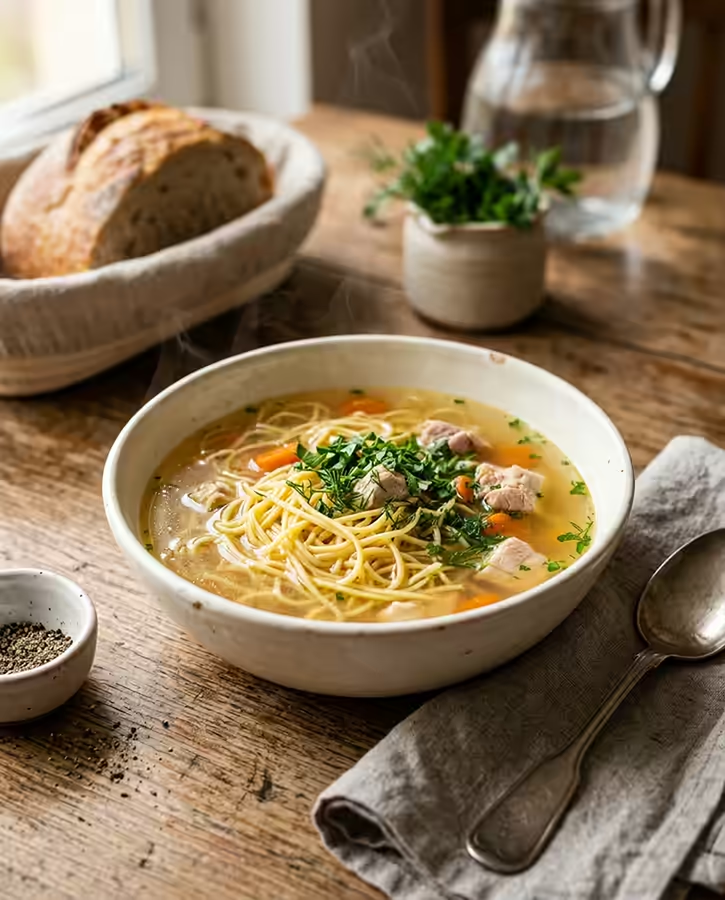
For chicken soup, the best option is a thin broth. It is lighter, quickly cooks, and looks beautiful in bouillon. Adding good pieces of carrot, green herbs, bits of pumpkin, chunks of black pepper, and a minimum of spices, so as not to overpower the homemade flavor.
In specific soups, you can use thick locusts. It goes well with broths of forest mushrooms, forest herbs, sweets or smoked ones. Such a dish stands out particularly with garden greens and wild herbs.
Locusts for dinner
Whether you’re looking for a quick idea for dinner, but delicious evening food, homemade locust is usually the best option. If the dough is prepared or the locust left out, then the preparation of the dish takes almost no time.
One of the fastest combinations is wheat flour, herbs of garlic, black pepper, and hard cheese. It is minimalistic, but very tasty. Another option is to envelope the cabbage, add mushrooms, hit in wheat herbs, season, pepper, and mix with spicy locust.
For a larger hearty evening, you can add pieces of minced chicken, herbs, or yolks. Vegetables also work wonderfully: zucchini, broccoli, sweet pepper, spinach, green garlic. All depend on what serving style you like best – homemade traditional or closer to modern pasta.
The best sauces
One of the most common inquiries from readers is what sauces go best with homemade locust. And the answer is simple: almost any, as long as you properly select the thickness and richness of the sauce. A thin locust goes better with light fillings, while a thicker one goes with denser ones.
Here are the most popular sauces for homemade locust:
- Mushroom locust sauce.
- Creamy locust sauce with garlic and greens.
- Cheese locust sauce with hard cheese or parmesan.
- Tomato locust sauce with basil and garlic.
- Locust sauce from canned cabbage and smoked cheese.
- Meat filling with yolks or corn.
- Pesto from basil or spinach.
- Locust sauce with herbs and fish.
- Mushroom filling with smoked cheese.
- Light vegetable locust sauce with tomatoes, peppers, and cabbage.
The best sauce is mackerel, one of the lightest options. It emphasizes the taste of wheat dough, does not overpower it, and gives a nice silky texture. Particularly good, such a sauce works with locust on yellows and adds mushrooms.
Tomato sauce, which gives a bright acidity, and makes the dish much more expressive. If you add onion, basil, and a splash of olive oil, the homemade sauce captures the Mediterranean style. The main thing is that the sauce should not be overly watery.
Oil-based sauce with greenery – this is an ideal option when you want to taste the specific aroma of greenery, rather than hiding it under a thick layer. Just melt some butter, add a few cloves of crushed garlic, grains, parsley, or onion greens – and you have a very homemade, aromatic dish.
Sauces served
To make it easier to orient yourself, you can remember how many servings to prepare:
- Thin greenery – chicken bouillon, light stock sauce, oil with greenery.
- Medium greenery – mushroom sauce, blended base, chicken with vegetables.
- Thick greenery – tomato sauce, meat base, cheese sauce.
- Greenery with spinach – tops, cheese, salmon, creamy vegetable sauces.
- Whole grain greenery – mushrooms, fried vegetables, sauces with herbs and garlic.
Such combinations are not a strict rule, but they work well in practice. If the greenery is very thin, a thick, heavy sauce may ‘overpower’ it. A wider greenery, on the other hand, tends to be more nutrient-rich than lighter broth.
Recommendations for results
If a homemade sauce comes out really too thin, it is worth remembering to save a portion of the base, but make sure it is an important advisory.
- Simply mash the sauce so that it’s smoother.
- Do not add too much water when preparing a classic chicken stock.
- Do not try to boil the sauce long enough.
- Always give the sauce a moment to breathe.
- Do not overspill the pasta sauce when starting to combine.
- Before activating it, filter the pasta.
- Do not overheat the fresh greenery.
- Whenever you prepare for soup, work the smoothness thinner.
- Whenever you plan to serve with sauce, make the greenery thicker.
- Keep well-dried greenery in a dry container.
Another important guideline is to always rely on the texture, not just the recipe. The texture can vary, depending on the day and conditions. The same set of ingredients can lead to different outcomes. That’s why the tactile awareness is deemed more significant than mechanical adherence to the numbers.
When you prepare a batch for the blog, whether it’s for recipes or photos, try working with smaller portions. This way, it’s easier to control the process, accurately narrate the colors, and showcase the texture of the dish at different stages. Additionally, fresh ingredients look especially photogenic when they haven’t been overcooked yet.
Part of the description
Even in such a simple recipe, there are typical components through which the results can vary.
- The texture is typically soft — the custard is creamy and holds its shape.
- The texture is usually dry — the pastry crumbles and breaks easily.
- A noticeable absence of texture — it tends to be watery and does not hold up.
- A thick custard — the filling has a rich quality.
- Moisture from the filling — layers stick together.
- A custard poured on the surface — an ready custard remains smooth.
- Overcooking — the filling retains a firmness.
- Incorrect storage — it thickens or can curdle.
Good news is that all these components can easily be fixed with practice. After a few preparations, you will intuitively begin to figure out what the ratio should be, which texture should be there when the pastry is already prepared for filling, and how much time exactly your pastry needs for resting.
Ideas for serving
A homemade custard makes a big difference, especially in simple dishes, if done correctly.
Here’s how many garnishes for serving:
- On a deep plate with transparent chicken bouillon, pieces of meat and fresh greens.
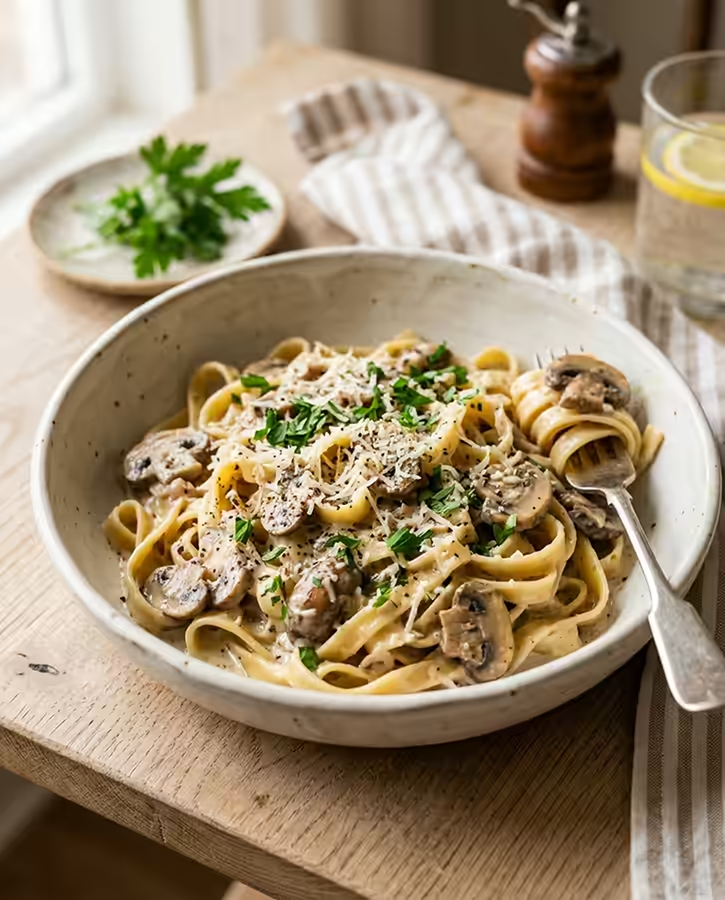
- On a wide plate with a creamy mushroom sauce and smoked cheese.
- On a big plate with gnocchi, with tomato sauce and basil leaves.
- From the baked chicken fillet, with sautéed vegetables and a sauce based on the trimmings.
- In a rustic style — with butter, herbs, a sautéed onion, and black pepper.
For photo beautiful work, use beautiful wooden boards, light textiles, burlap, gray linen stripes, and eggs in the frame. Such details create an atmosphere of a cozy home kitchen and suggest a recipe worth sharing. If you run a blog or Pinterest, a cozy kitchen is a very effective format for visual content.
Who likes the recipe?
The homemade casserole recipe is suitable for almost everyone. It’s favored by those who love home cooking, seek simple natural recipes, want to cook without preservatives, or prefer to do simple things rather than complicated gourmet dishes. It’s also a wonderful option for family cooking when you can involve kids or combine simple steps—such as arranging stripes or shaping the dough.
For beginners, this recipe is useful in that it teaches to feel the dough with your hands. For more experienced home cooks, the homemade casserole offers a wide space for experimentation: using different fillings, colors, sauces, textures, and serving methods.
FAQ
How to make a homemade casserole so it doesn’t stick?
The main thing is not to make the dough too wet, not to roll the pastry too thin, and not to pour hot water on it. After arranging the stripes, it is necessary to slide a knife carefully under it, otherwise, with regular menus, it can easily break.
Can you make a homemade casserole without eggs?
Yes, it is possible. For the alternative version, use flour, water, salt, and a little oil. Such a casserole differs in texture but goes well with vegetables, mushrooms, and tomato sauces.
What is the best type of flour for homemade casserole?
The simplest and most reliable option is high-quality white flour. For a richer structure, you can add a portion of whole wheat flour or fine bran.
What ingredients can vary in homemade casserole?
Fresh dough usually rises very quickly—usually only a few minutes. Pay attention to the thickness and degree of rolling. The main thing is not to overdo it.
Can you freeze a homemade casserole for later?
So, this is one of the easiest ways to prepare dough. The dough should be well mixed and stored in a dry airtight container or bag.
Why does the dough for the locs come out too tough?
The most common reason for the dough becoming tough is either from excessive flour or using small eggs. Try adding a literal amount of liquid and let the dough rest. After the pause, the dough sometimes becomes noticeably softer.
Is it possible to store homemade locs?
Yes, it is. It’s best to store it in portions, previously cut into strips. After that, it’s easy to quickly roll out the dough or add it to the soup.
Which homemade loc is better for soup?
For soup, the most commonly used is a thin egg loc. It is softer, cooks quickly, and goes well with clear broths.
What is the best loc for sauce?
For creamy, mushroomy, tomato sauces, the best option is a middle or wider loc. It holds the sauce better and doesn’t lose its shape.
Is it necessary to add oil to the dough?
No, it’s not mandatory. A classic recipe can only be on borashnі, eggs and salt. But a small amount of oil can make the dough softer and easier to work with.
Can you make colored homemade loc?
Yes, very easily. For green loc, add spinach; for pink — beetroot juice or puree; for yellow — turmeric or more yellowish ingredients. The main thing is to keep the humidity of the dough.
What to prepare with homemade locs if you don’t want soup?
Try loc with mushrooms in a creamy sauce, with butter and vegetables, with tomato puree, with cheese and butter, or with sour cream and mashed potatoes. There are really many options.
Homemade loc is a recipe that combines simplicity, accessibility, and depth of homemade taste. It doesn’t require complex products, but it gives a feeling of true home cooking. Once you understand the basic principles of the dough, the rest of the process becomes almost meditative: substitute, start, arrange, roll out, and serve just as your family likes it.
If you were looking for a detailed recipe for a homemade sauce, be it a classic béchamel, a mushroom sauce, cheese sauce, or a vibrant vegetable version — a homemade sauce will always find its place on the table. This material will become a reliable base for regular preparation. And further, everything will depend only on your taste: classic béchamel, mushroom sauce, cheese sauce, or vibrant vegetable version — a homemade sauce will always find its place on the table.