
Żurek (Polish for “sour soup”) is one of the most famous and oldest soups in Polish cuisine, with a centuries-old history and deeply rooted traditions. This rich, sour soup is made with rye sourdough, which gives it its characteristic sour taste and milky color. Żurek is an integral part of Polish holiday traditions, especially at Easter, but Poles enjoy making it throughout the year.
Content
The name of the soup comes from the old German word “sūr,” which means “sour.” There are several ways to spell this dish: żurek, żur, or zurek. Żurek is often confused with white borscht, but these are different dishes: żurek is made with rye flour leaven, while white borscht is made with wheat flour.
Historical origins and traditions
The origin of żurek is shrouded in legends. The most popular one tells of an innkeeper from Poznań who made a bet with a visitor. According to the terms of the bet, the innkeeper had to prepare the worst soup he could think of. He put sausage trimmings, garlic, bread leaven, old mushrooms, and vegetables in a pot, poured boiling water over it, and served it to the stranger. To the innkeeper’s surprise, the soup turned out to be incredibly delicious, and he lost his bet.
The first written references to żurek date back to the 15th century. For a long time, this soup was an everyday food for peasants and had ritual significance. Traditionally, it was believed that żurek had healing properties and helped restore strength after Lent.
Similar dishes also exist among the Czechs, Slovaks, and Belarusians throughout the former Grand Duchy of Lithuania and its borderlands. In different regions, the dish is prepared slightly differently: on rye sourdough (zhurek), wheat (white borscht), oat kvass (kiselitsa), and whey (zalivayka).
Key ingredients and their role
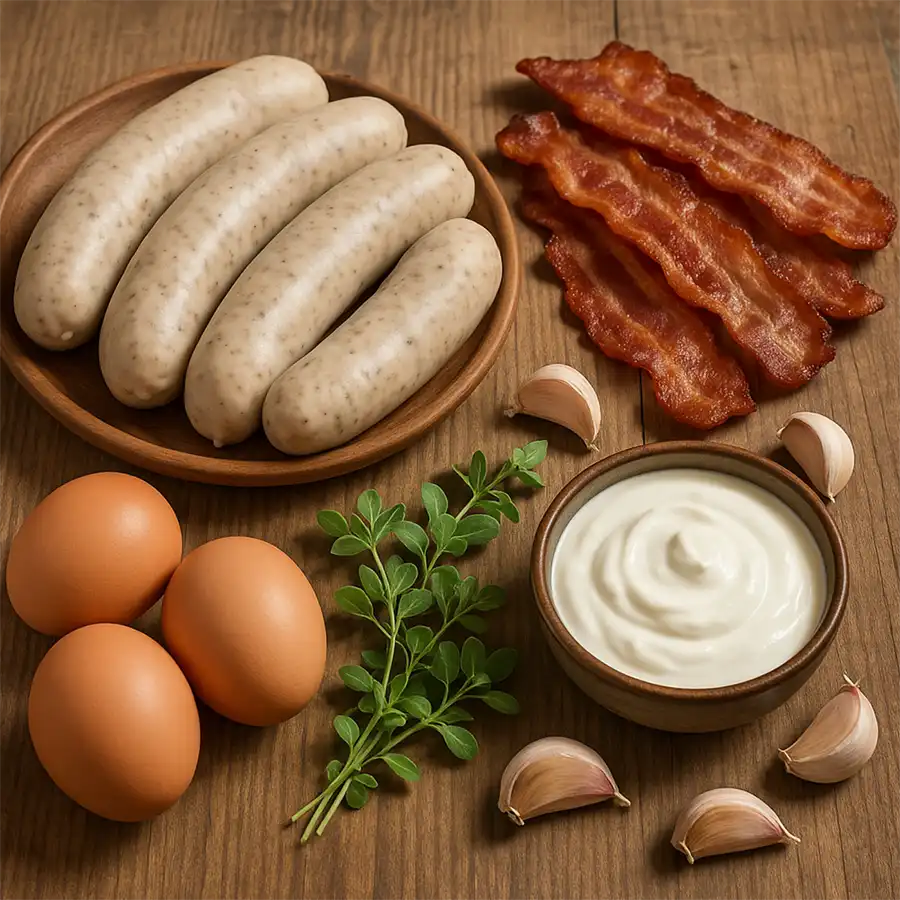
The basis of any zhurek is rye sourdough (zhur), which is prepared in advance and gives the soup its characteristic sour taste and aroma. The main ingredients of traditional zhurek include:
Meat components:
- White (raw) pork sausage
- Smoked bacon or smoked ribs
- Hunting or Krakow sausages
Vegetables:
- Potatoes (3-5 medium-sized pieces)
- Onions (2-3 pieces)
- Carrots (1-2 pieces)
- Celery root (1/3 part)
- Garlic (2-4 cloves)
Dairy products and condiments:
- Sour cream (100-200 ml)
- Dried marjoram (1 tablespoon)
- Grated horseradish
- Bay leaf
- Black and fragrant pepper
- Salt to taste
To serve:
- Hard-boiled eggs (1-2 per serving)
- Fresh herbs (parsley, dill)
- Rye bread or special bread pots
Detailed recipe for rye sourdough starter
Ingredients for the starter:
- Boiled cooled water – 500 ml
- Coarsely ground wheat flour – 100 g (10 tablespoons)
- Garlic – 4-5 cloves (unpeeled, crushed)
- Bay leaves – 2-3 pieces
- Allspice – 3-10 peppercorns
- Rye bread – 1 slice (40 g)
Step-by-step process for preparing the starter culture:
Step 1: Prepare the container
Use only sterilized glass or ceramic containers with a capacity of at least 1 liter. Never use plastic or metal containers, as this can lead to the growth of unwanted bacteria.
Step 2: Mixing the ingredients Pour the
rye flour into the prepared container and gradually add the cooled boiled water. Mix thoroughly with a whisk to remove any lumps. Add the crushed garlic, bay leaf, allspice, and rye bread torn by hand.
Step 3: Create conditions for fermentation
Cover the container with a clean cloth napkin or gauze, securing it with a rubber band. This will allow the starter to “breathe” during fermentation. Place in a warm, dark place (the optimal temperature is 20-25°C).
Step 4: Caring for the starter
Every day for 4-7 days, be sure to stir the starter with a clean wooden spoon. On the second or third day, the starter will begin to ferment—a characteristic sour smell and slight foaming will appear.
Step 5: Determining readiness
The starter is ready when it acquires a distinctly sour taste and a pleasant spicy aroma with notes of garlic and bread. The smell should resemble pickled cucumbers. This usually takes 5-7 days.
Step 6: Filtering and storage
Strain the finished starter culture through a fine sieve or cheesecloth. Pour into a clean glass bottle with a lid. Store in the refrigerator for up to one month. Be sure to shake the bottle before use.
Important tips regarding starter culture:
- Carefully monitor for mold – if it appears, discard the starter and start over.
- Flour settling at the bottom of the bottle is normal—it will help thicken the soup.
- In a warmer room, the starter culture can be ready in just 3 days.
- Part of the finished starter culture can be left as a starter for the next batch.
Traditional recipe for zurek
Ingredients for 6-8 servings:
For the broth:
- Water – 2-3 liters
- Medium potatoes – 4-5 pieces
- Carrots – 1-2 pieces
- Onion – 1 (for broth)
- Celery root – 1/3 part
- Bay leaves – 2-3 pieces
For the soup:
- Ready-made rye sourdough starter – 400-500 ml
- Smoked pork ribs – 300-400 g
- White (raw) sausage – 300-400 g
- Smoked bacon – 150-200 g
- Onions (for frying) – 1-2 pieces
- Garlic – 2-3 cloves
- Sour cream 20% – 150-200 ml
- Dried marjoram – 1-2 tablespoons
- Grated horseradish – 1-2 teaspoons
- Cooking oil – 2 tablespoons
- Salt and black pepper – to taste
To serve:
- Eggs – 6-8 pieces
- Fresh herbs (parsley, dill)
- Rye bread
Detailed preparation process:
Step 1: Prepare the broth (30-40 minutes)
Pour 2.5-3 liters of water into a large pot and place it on the stove. Add the carrots, onions, and celery, cut into large pieces. Add the bay leaf, salt a little, and cook over medium heat for 20-30 minutes.
When the vegetables have released their flavors into the broth, add the potatoes, cut into medium-sized cubes. Continue cooking for another 10-15 minutes until the potatoes are half cooked.
Step 2: Prepare the meat components (15-20 minutes)
While the broth is cooking, prepare the meat ingredients. Cut the smoked ribs into 2-3 cm segments. Cut the white sausage into 1-1.5 cm thick slices. Cut the bacon into small cubes.
Chop the onion into small cubes for frying. Peel the garlic and lightly crush it with the flat side of a knife.
Step 3: Preparing the roux (10-15 minutes)
Heat the oil in a large frying pan over medium heat. First, add the bacon and fry until golden brown and the fat has melted. Add the chopped onion and fry until translucent (5-7 minutes).
Then add the smoked ribs and sausage and fry for another 5-7 minutes, stirring occasionally. Finally, add the crushed garlic and fry for another 1-2 minutes.
Step 4: Connecting the components (10-15 minutes)
Remove large pieces of carrot, onion, and celery from the broth—they have already imparted their flavors. Transfer all the browned meat to the pot with the broth.
Bring the soup to a boil and simmer for 10-15 minutes. You can add the white sausage a little later so that it doesn’t overcook.
Step 5: Adding starter culture and seasonings (5-10 minutes)
Shake the bottle with the starter well. Gradually pour the starter into the boiling soup, stirring constantly to prevent lumps from forming. Add half of the total amount of starter, taste, and add more if necessary until the desired acidity is achieved.
Add marjoram, rubbed between your palms to release its aroma. Season with salt, black pepper, and horseradish to taste.
Stage 6: Final stage (5 minutes)
Place the sour cream in a small bowl and add a few spoonfuls of hot soup, stirring thoroughly. This tempering prevents the sour cream from curdling. Pour the tempered sour cream into the soup and stir gently.
Let the soup simmer for another 2-3 minutes, then remove from heat. Let it steep under the lid for 15-20 minutes to allow the flavors to develop.
Step 7: Boiling eggs and preparing to serve
Meanwhile, hard boil the eggs (8-10 minutes after boiling), cool in cold water, and peel. Cut in half just before serving.
Variations on the recipe for zurek
Regional characteristics
Silesian żurek is distinguished by the addition of dried mushrooms and a richer meat broth. In this region, different types of smoked meats are often used simultaneously.
The Mazovian version is characterized by a greater amount of vegetables and a milder, less sour taste. Here, more potatoes and carrots are often added.
Lviv-style żurek has its own distinctive features – a creamier texture and a specific combination of spices. Each region has its own nuances of preparation.
Alternative variations
Zurek with mushrooms (vegetarian version)
To prepare a vegetarian version:
- Use vegetable broth instead of meat broth.
- Add 200-300 g of fresh or dried mushrooms.
- Increase the amount of vegetables (carrots, celery, parsley)
- Use vegetable oil instead of lard
Chicken soup
Modern version with chicken meat:
- Chicken breast or thighs – 400-500 g
- Cook the chicken in the broth until done.
- Add smoked paprika for aroma
- Reduce the amount of fatty smoked meats
Seafood soup
Original author’s interpretation:
- Add shrimp or mussels at the final stage.
- Use fish broth as a base
- Replace marjoram with dill and parsley.
Secrets and tips from professional chefs
Tips for sourdough starter
Accelerating fermentation: During the cold season, place the jar with the starter near a radiator or in a warm oven (no higher than 30°C). This will significantly speed up the fermentation process.
Improving the taste: Add a piece of rye bread with crust to the starter – this will enrich its taste and aroma.
Storage: The finished starter culture can be frozen in portions in ice cube trays. The thawed starter culture retains all its properties.
Secrets of soup preparation
Balance of flavors: Zhurek loves a balance of salty, sour, spicy, and sweet. Don’t be afraid to add a little sugar for a milder flavor, and horseradish and pepper for spiciness.
Marjoram is a key ingredient: Be sure to rub the dried marjoram between your palms before adding it to the soup. This releases the maximum amount of aromatic oils.
Proper tempering of sour cream: Never add cold sour cream directly to boiling soup—it will curdle. Always temper it first.
Steeping time: Żurek reveals its full flavor after 30-60 minutes of steeping. Do not serve immediately after preparation.
Tips for meat components
Choosing sausage: Use only white (raw) sausage for an authentic taste. If you can’t find any, replace it with high-quality sausages with natural casings.
Smoked products: Choose products that have been hot-smoked using natural methods. Avoid products with liquid smoke.
Order of addition: First fry the bacon until the fat has melted, then add the other meat ingredients. This will create the right fat base.
Useful properties of zhurek
Nutritional value
Zurek is a fairly high-calorie dish due to its high content of meat products and fats. Average values per 100 g of the finished dish:
- Calorie content: 108-115 kcal
- Protein: 5.9-6.2 g
- Fats: 7.9-8.5 g
- Carbohydrates: 5.3-6.1 g
Benefits for the body
Probiotic properties: Rye sourdough contains beneficial lactobacilli that improve digestive system function and strengthen the immune system.
B vitamins: Rye flour and sourdough are rich in vitamins B1, B2, and B6, which are essential for normal nervous system function.
Minerals: The soup contains iron, potassium, magnesium, and phosphorus thanks to its meat and vegetable ingredients.
Energy value: The high protein and fat content makes żurek a filling dish that keeps you feeling full for a long time.
Medicinal properties
Traditionally, żurek is considered beneficial for:
- Recovering strength after illness
- Digestive problems
- Spring vitamin deficiency
- The need to quickly replenish energy reserves
Culture of serving and table setting
Traditional serving method
Bread pots: The most authentic way to serve zurek is in specially baked bread pots. To do this, take round loaves of rye bread, cut off the top, and remove the soft inside.
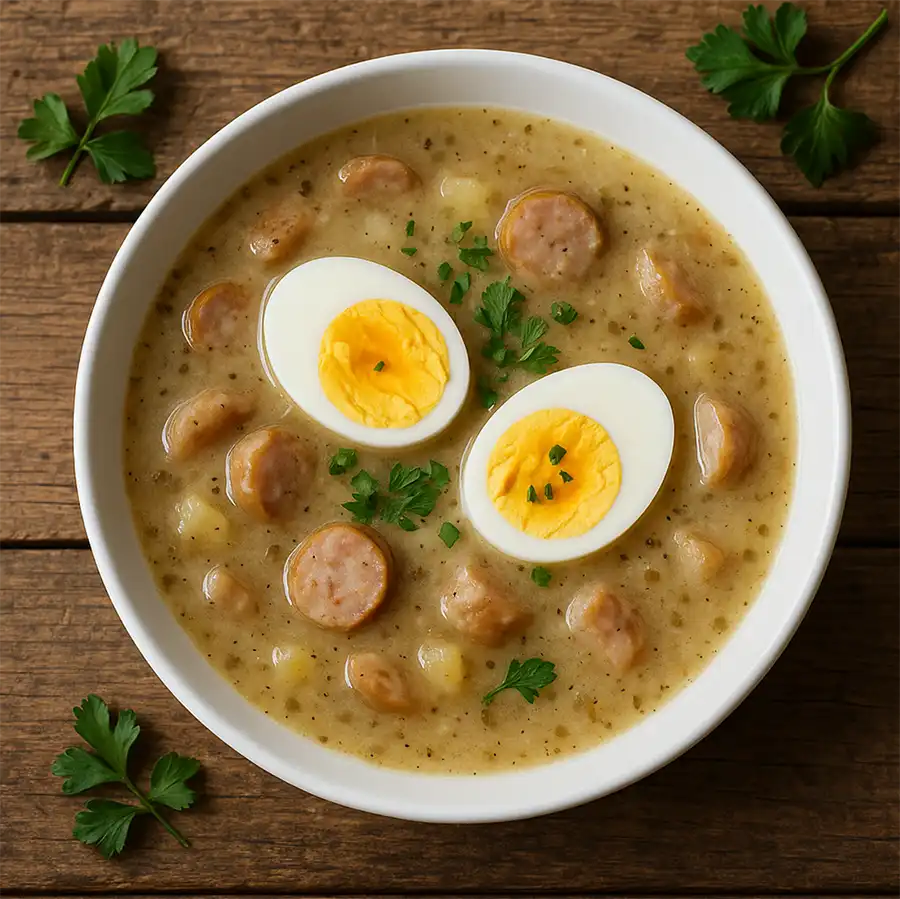
Classic presentation: Pour the soup into a bowl, place halved boiled eggs on top, and sprinkle with fresh herbs. Be sure to serve with fresh rye bread.
Accompanying dishes and drinks
Bread: Traditionally served with thick rye or rye-wheat bread. Coarsely ground sourdough bread is ideal.
Drinks: Traditionally, zurek is washed down with beer or vodka. Non-alcoholic drinks such as bread kvass or dried fruit compote are also suitable.
Additional dishes: Żurek can be complemented with grated horseradish, pickled cucumbers, or sauerkraut for a contrast of flavors.
Seasonal variations in supply
Easter serving: On Easter, zurek is traditionally served with pysanky (Easter eggs) and fresh herbs. This symbolizes rebirth and the beginning of new life.
Everyday serving: On ordinary days, żurek is served as a full meal with bread and simple vegetable salads.
Common mistakes and how to avoid them
Mistakes in preparing the starter culture
Using the wrong utensils: Never use plastic containers or metal bowls. This can lead to improper fermentation or spoilage of the starter.
Insufficient stirring: Be sure to stir the starter culture every day. This ensures even fermentation and prevents mold from forming on the surface.
Incorrect temperature: Too high a temperature (above 30°C) can kill beneficial bacteria. Too low a temperature will slow fermentation to a complete halt.
Mistakes when making soup
Adding cold sour cream: This is the most common mistake that causes sour cream to curdle. Always temper it first.
Overcooking with sourdough: After adding sourdough, do not boil the soup for too long—this can spoil the taste and texture.
Incorrect proportions: Too much starter will make the soup overly sour. Add gradually, tasting as you go.
Overcooked sausage: White sausage cooks quickly. Add it during the final stages of cooking.
Errors in filing
Incorrect temperature: Żurek is best served warm, not hot. Allow it to cool slightly after cooking.
No infusion: Do not serve the soup immediately—it needs time for the flavors to develop.
Storage and reheating
Storage rules
In the refrigerator: Ready-made zurek can be stored for 3-4 days at a temperature of +2…+4°C. Store in a glass or ceramic container with a lid.
Freezing: Żurek can be frozen, but its texture may change slightly after thawing. It is best to add sour cream after thawing.
Sourdough starter: Ready-made sourdough starter can be stored in the refrigerator for up to one month. In the freezer, it can be stored for up to six months.
Proper warm-up
On the stove: Heat over low heat, stirring constantly. Do not bring to a rolling boil.
In the microwave: Heat on medium power, stirring every 30 seconds.
Flavor adjustment: When reheating, you may need to add a little sour cream or seasoning, as the flavors may become dull.
FAQ (Frequently Asked Questions)
Is it possible to make żurek without sourdough?
No, sourdough is the basis of zhurek and gives it its characteristic sour taste. Without it, it would be just an ordinary meat soup. You can use ready-made store-bought sourdough if you don’t have time to make your own.
How long does it take to cook zhurek completely?
In total, the process takes 5-7 days: 4-6 days to prepare the starter culture plus 1-2 hours to cook the soup. If you use a ready-made starter culture, it only takes 1-2 hours.
Can white sausage be substituted?
White sausage can be replaced with high-quality sausages with natural casings or homemade sausage. In a pinch, cooked sausage will do, but the taste will differ from the traditional one.
What to do if the soup is too sour?
Add a little sugar or honey to balance the acidity. An extra dollop of sour cream or a little milk will also help. Use less starter culture in the future.
Is it possible to make vegetarian zurek?
Yes, you can make a vegetarian version with mushrooms. Use vegetable broth, add white mushrooms or champignons, and increase the amount of vegetables. The taste will be different, but the dish will still be delicious.
How can you tell if the starter culture has gone bad?
Signs of spoiled starter: unpleasant rotten smell, appearance of mold of any color, overly viscous consistency, or lack of sour smell after 7 days. Such starter should be discarded and started over.
Can you make żurek for children?
Yes, but it is better to reduce the amount of hot spices and smoked meats. You can prepare a milder version with chicken and less sourdough.
How many calories are in a serving of zurek?
One serving (approximately 300 ml) contains 320-350 calories. It is a fairly filling dish that can serve as a full meal.
Can you eat żurek while on a diet?
Zhurek is a high-calorie dish due to its high fat content. For a lighter version, you can reduce the amount of smoked meats, use low-fat sour cream, and increase the proportion of vegetables.
How long can you store the finished starter?
The prepared starter culture can be stored in the refrigerator for up to a month. If you plan to store it for longer, it is better to freeze it in portions. Be sure to check the smell and appearance before use.
Żurek is not just a soup, but a true culinary tradition that unites generations and preserves the authenticity of Polish cuisine. Preparing this dish requires patience and skill, but the result is worth the effort. By following the traditional recipe and taking into account the tips provided, you can create a real żurek that will delight you and your loved ones with its unique taste and aroma.