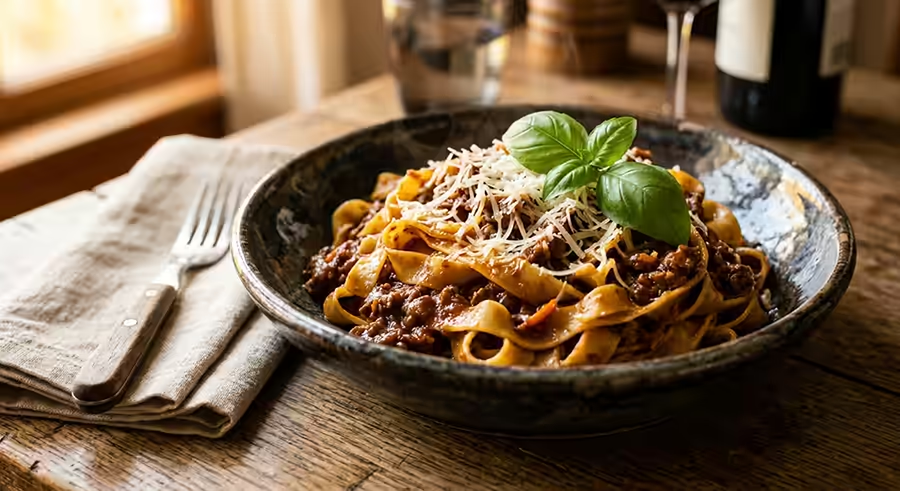
Pasta Bolognese is perhaps the most famous and beloved dish in the world. It’s known in Tokyo and Toronto, Sydney and Kyiv. But what is authentic Bolognese? It’s not just pasta with ground meat and ketchup. It’s a deep, rich, and delicate sauce that has simmered on the stove for hours, absorbing the aromas of wine, vegetables, and meat. A sauce that makes you want to close your eyes and simply savor it. In this article, I’ll tell you everything: the authentic recipe, step-by-step preparation, popular variations, answers to questions like which meat to choose, which pasta to use, why milk isn’t a strange addition, and a dozen more tips that will change your pasta Bolognese forever.
Content
Where did Bolognese sauce come from? A brief history
Bolognese is more than just a sauce. It is part of the cultural heritage of Bologna, which is considered the unofficial gastronomic capital of Italy. It was here that the word “ragù” originated—a meat sauce simmered over low heat with vegetables, wine, and tomatoes.
The first official recipe for Bolognese sauce was registered with the Bologna Chamber of Commerce back in 1982. It contained only beef, pancetta, onions, carrots, celery, tomato paste, white wine, and milk or cream. No garlic. No spaghetti—only tagliatelle. Only fresh, homemade pasta.
Of course, over the decades, the recipe has traveled the world and incorporated new ingredients. Pork, red wine, and various spices have been added. But the essence has remained the same: slow simmering, high-quality meat, and patience. Without these three elements, there can be no authentic Bolognese.
What ingredients are needed for classic Bolognese sauce?
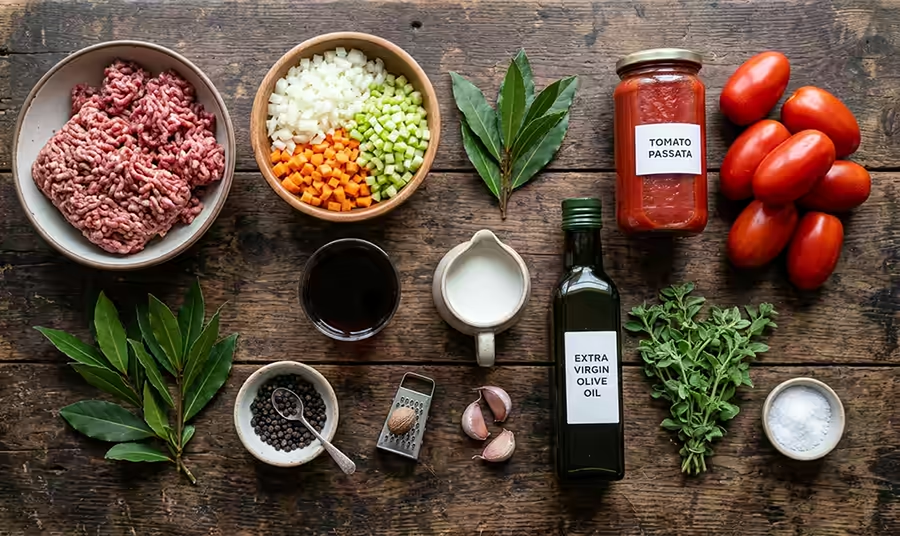
Before we start cooking, let’s take a look at the ingredients. A good Bolognese starts with good ground meat.
Meat
The classic combination is beef and pork. Beef provides a rich, meaty flavor, while pork adds richness and tenderness. The optimal ratio is 500 g of ground beef to 200 g of ground pork. If you don’t have pork, use only beef, but choose a slightly fattier cut. Lean meat will result in a dry and tough sauce.
Important: It’s best to grind the meat yourself rather than buying it pre-ground. Store-bought ground meat often contains too much fat or, conversely, is too dry, which will lead to poor results.
Vegetables — soffritto trio
Soffritto is the base for most Italian sauces. It consists of three ingredients: onion, carrot, and celery. They are finely diced and sautéed in olive oil until tender. This aromatic base gives the sauce depth and complexity of flavor. Don’t skip the celery—even if you think it’s unnecessary. You won’t taste it in the finished sauce, but without it, the dish will be completely different.
Tomatoes
There are two good options: tomatoes in their own juice (pelati) or tomato passata (passata di pomodoro). Passata has a velvety, smooth texture—it seems to envelop every piece of meat. Tomatoes in their own juice offer a slightly more pronounced tomato flavor. Both options are excellent—choose whichever suits your taste.
Wine
Dry red wine is an essential ingredient. It adds depth and complexity to the sauce. Use about 100–150 ml per standard serving. Don’t use wine you wouldn’t drink yourself—if it tastes bad, so will the sauce. You can substitute dry white wine—the flavor will be a bit lighter, but just as delicious.
Milk
Yes, milk is the real secret ingredient in Bolognese sauce. It cuts the acidity of the tomatoes and makes the sauce’s texture incredibly smooth. Add it at the end of cooking—150–200 ml per standard serving. You won’t taste any milky aftertaste, but the sauce’s smoothness and velvety texture will surprise you.
Complete list of ingredients (4 servings)
For the sauce:
- 500 g ground beef
- 200 g ground pork (or 150 g pork belly/bacon)
- 1 medium onion
- 2 carrots
- 2 celery stalks
- 2–3 cloves of garlic (optional)
- 750 ml of tomato purée or 600 g of tomatoes in their own juice
- 150 ml of dry red wine
- 200 ml of milk
- 3–4 tablespoons of olive oil
- Salt, black pepper
- 1 bay leaf
- A pinch of nutmeg
For the pasta:
- 400 g of tagliatelle, pappardelle, or penne rigate
To serve:
- Parmesan or Grana Padano — grated, generously
Step-by-step instructions for making Bolognese sauce
Now for the most important part. Classic Bolognese isn’t a dish for a quick breakfast—it’s for a leisurely Saturday. Give it time, and it will more than make up for it.
Step 1. Prepare the soffritto
Dice the onion, carrot, and celery into very small cubes—so small that the pieces practically dissolve into the sauce. In a wide skillet or Dutch oven, heat the olive oil over medium heat and sauté the vegetables for 7–10 minutes until tender and lightly golden. Take your time—a well-sautéed soffritto lays the foundation for the flavor. If using garlic, add it at the end and sauté for another minute.
Step 2. Brown the meat
This is the most crucial step. If you want a rich flavor, you need the Maillard reaction—that golden crust on the meat that adds aroma and depth. To achieve this, the pan must be very hot. Transfer the vegetables to a bowl, turn up the heat, and add the ground meat. Don’t stir right away—let a crust form on the bottom. Then break it up and stir. Cook until all the liquid has evaporated and the meat is evenly browned. If you add too much ground meat at once, it will start to simmer rather than brown—it’s better to cook it in two batches.
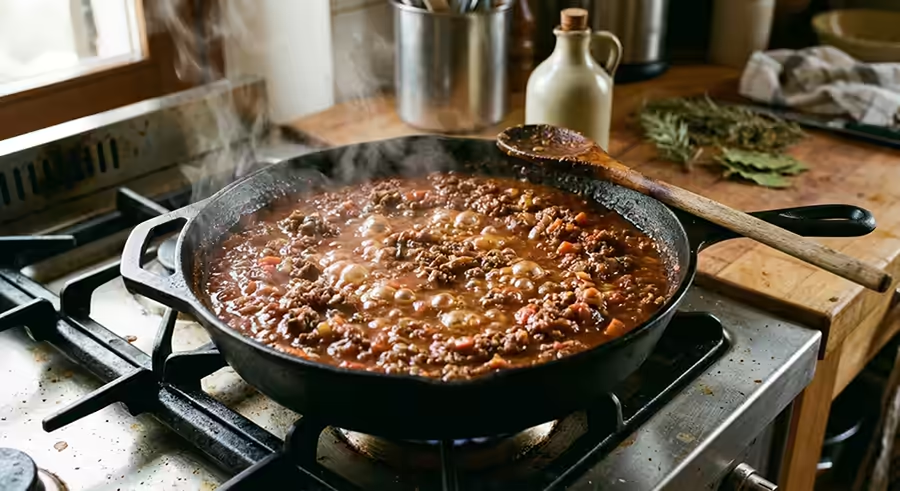
If you’re using pork and beef separately, brown them one at a time. Brown the pork first, then the beef separately, and finally combine everything together.
Step 3. Wine and Decanting
Return the vegetables to the pan, stir them in with the meat, and pour in the wine. Turn the heat to high. Let the alcohol evaporate completely for 2–3 minutes—you’ll notice the sharp smell of wine disappear, leaving only the aroma. This process is called “deglazing”—the wine lifts all the browned bits from the bottom, dissolves them into the sauce, and adds incredible depth of flavor.
Step 4. Tomatoes and slow cooking
Pour in the tomato purée or add the crushed tomatoes, pour in 300–400 ml of water (or meat broth for a richer flavor), and add a bay leaf. Bring to a boil, reduce the heat to low, and cover with a lid. Now comes the hardest part: you have to wait.
The ideal simmering time is 2.5–3 hours. That’s exactly how long it takes for the meat to become tender and melt-in-your-mouth, and for the sauce to develop the depth and richness that can’t be achieved in just 20 minutes. Check on it and stir every 30–40 minutes. If the sauce thickens too quickly, add a little hot water or broth. About 20 minutes before the end of the braising time, add the milk and simmer for another 15–20 minutes.
Toward the end of cooking, taste it and season with salt and pepper to taste. If the sauce is too thin, remove the lid, turn up the heat, and let the liquid reduce for another 10–15 minutes.
Step 5. Cook the pasta
You’ll definitely need a large pot. Pour in at least 3–4 liters of water and salt it well: you’ll need 10 g of salt per liter of water. Don’t worry about it being too salty—the pasta will absorb exactly as much as it needs. Cook the pasta according to the package instructions, but take it off the heat a minute early—the pasta will finish cooking in the sauce.
Here’s an important tip: before draining the water, set aside a cup of the pasta cooking water. This starchy liquid is your secret emulsifier, which will help the sauce coat the pasta better.
Step 6. Combine the sauce and pasta
Don’t just put the pasta on a plate and pour the sauce over it. That’s not the real way to do it. Transfer the cooked pasta directly into the pan with the hot sauce. Add 2–3 tbsp of the pasta cooking water. Stir vigorously—the pasta should be coated with sauce on all sides. Heat together for 1–2 minutes. Divide among plates and generously grate Parmesan on top. Buon appetito.
What kind of pasta should I choose for Bolognese?
This question sparks some real debate. Outside of Italy, Bolognese sauce is most often served with spaghetti—and that’s a big mistake. Spaghetti is too smooth and thin: the thick meat sauce just slides right off it onto the plate.
Here’s what really works:
- Tagliatelle is a traditional choice in Bologna. The wide, flat noodles hold the sauce perfectly. A perfect combination
- Pappardelle is even wider than tagliatelle. If your sauce is very thick and meaty, this is the perfect choice for you
- Penne rigate are tubes with a ridged surface. The sauce gets inside and clings to the outside
- Rigatoni—large, ridged tubes that hold sauce even better
- Conchiglioni are large pasta shells that are literally filled with sauce
Secrets to the Perfect Bolognese Sauce
Here’s what sets a regular Bolognese apart from the kind that has you licking your fingers:
- Don’t rush it. A 20-minute Bolognese is just ground meat in tomato sauce. A real Bolognese needs at least 2 hours, or better yet, 3 hours, simmering on low heat
- A hot pan when searing. If the pan isn’t hot enough, the meat won’t sear; instead, it will simmer in its own juices. No crust—no flavor
- Don’t overcrowd the pan. It’s better to fry the ground meat in two batches than to dump it all in at once and end up with a mushy mess.
- Use good-quality wine. Choose something you’d drink yourself. Bad wine will ruin the sauce.
- Add the milk at the end. Add it when the sauce is almost ready. It cuts the acidity and adds a creamy texture.
- A pinch of nutmeg. It’s an unexpected but really great touch for Bolognese. Especially if you’ve added milk
- The pasta cooking water is gold. This starchy water binds the sauce and pasta together, giving it a creamy texture
- The pasta is in the sauce, not the sauce on the pasta. Toss the hot pasta directly in the pan with the sauce—that’s the key difference
Variations on Bolognese
Classic recipes are great, but Bolognese is very versatile. Here are the most popular variations:
Veal Bolognese Pasta
Instead of beef, use tender veal. The sauce turns out a bit lighter in color and has a more delicate flavor. A great option for those who don’t like a strong meaty taste.
Pasta Bolognese with Pork and Pancetta
The classic Bolognese version. Pork pancetta (or bacon) is fried first, releasing its delicious fat, which is then used to sauté the vegetables. This fat gives the sauce an incredible depth of flavor.
Bolognese sauce with a blend of three types of ground meat
Beef, pork, and veal in equal parts. This is the richest and most complex flavor. If you want to make something special, this is the one to choose.
Vegetarian Bolognese Pasta
Instead of meat, use lentils, chickpeas, or a mix of mushrooms (button mushrooms + shiitake + portobello). Mushrooms add umami and a meaty texture. Chop them finely and sauté until golden brown, just like meat. Lentils provide a dense texture reminiscent of ground meat. Add a little soy sauce or Worcestershire sauce—and the umami will become even more pronounced.
Pasta Bolognese with cream
This is a departure from the classic recipe, but it’s a very popular variation in Northern Italy. Instead of milk, add 100 ml of 20–30% heavy cream right at the end. The sauce becomes creamy, rich, and slightly higher in calories.
Sicilian-style Bolognese sauce
Add cinnamon, cloves, and raisins—this is a legacy of Arab influence in Sicilian cuisine. It’s unusual, but surprisingly harmonious. Give it a try at least once—it might just become your favorite version.
Bolognese sauce for lasagna
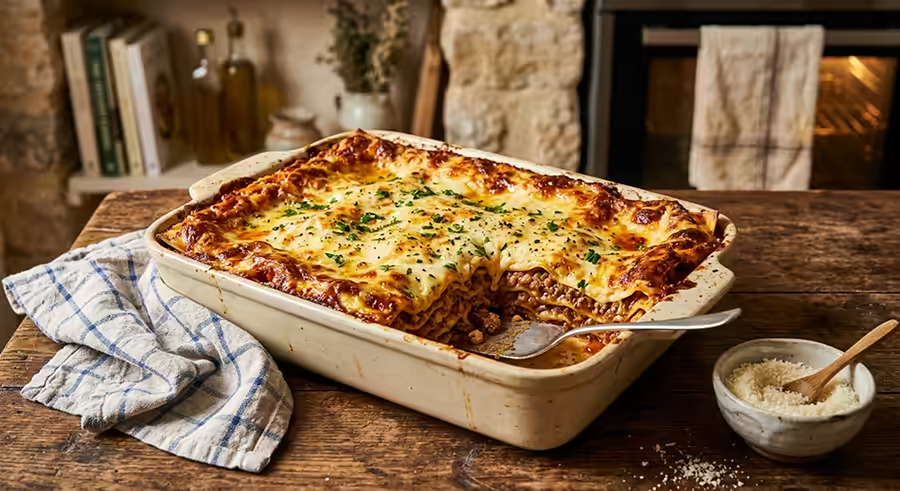
The sauce is made slightly thicker, with less liquid, so that it doesn’t make the lasagna sheets too soggy. It pairs perfectly with béchamel and Parmesan between the layers of pasta.
Homemade Bolognese Sauce
If you want to take your dish to the next level, make your own pasta. It’s easier than it looks.
Ingredients for the dough (4 servings):
- 400 g flour (preferably tipo 00)
- 4 eggs
- 4–5 tablespoons of olive oil
- 1 tsp salt
- 1–2 tbsp. water, as needed
Preparation:
Combine the flour, salt, eggs, and olive oil. Knead the dough for 8–10 minutes—it should become smooth and elastic. Wrap it in plastic wrap and refrigerate for 20–30 minutes. Then roll it out thinly (2–3 mm), roll it into a log (sprinkling with flour first), and cut into strips of the desired width. Cook the fresh pasta for just 2 minutes in salted water.
Common mistakes when making Bolognese sauce
People don’t put enough salt in the pasta water. The water should be as salty as the sea. Unsalted pasta will make the whole dish taste bland, even if the sauce is perfect.
People usually cook the sauce for 15–20 minutes. This is the most common mistake. In 20 minutes, the meat doesn’t have time to tenderize, and the flavors don’t blend together. The minimum is one hour; the ideal is 2.5–3 hours.
Serve with spaghetti. The classic Bolognese is served with tagliatelle or pappardelle. The sauce simply doesn’t cling to spaghetti.
Place the pasta on a plate and pour the sauce over it. The correct way is to toss the pasta with the sauce in the pan for a few minutes so that the pasta absorbs the sauce.
Don’t skip the milk. Many people think it’s a strange addition. In fact, milk is the secret to the creaminess of classic Bolognese. Don’t skip it.
They grind the ground meat too finely. Texture is important. The ground meat should have chunks that you can feel on your fork. Don’t turn it into a puree.
How to store and freeze Bolognese sauce
One of the biggest advantages of Bolognese sauce is that it keeps well and tastes even better the next day. So always make extra.
Refrigeration: The sauce will keep for 4–5 days in a sealed container. Reheat in a skillet or in the microwave.
Freezing: Divide the sauce into individual containers or silicone ice cube trays and freeze. It will keep for 3–4 months. Thaw in the refrigerator overnight or directly in a pan with a few tablespoons of water. This is the perfect option for a quick weeknight dinner.
Tip: Never freeze pasta together with the sauce. The pasta will get soggy and turn into mush. Freeze only the sauce, and cook fresh pasta each time.
What to serve Bolognese with
Bolognese is a meal in itself. But if you want to make your lunch or dinner more substantial, here are some suggestions:
- Focaccia or ciabatta bread—to mop up the remaining sauce from your plate (it’s a must)
- Green salad with olive oil and lemon—freshness that contrasts with the rich dressing
- A glass of dry red wine—the same variety used in the sauce. Sangiovese, Chianti, or Montepulciano d’Abruzzo
- Parmesan or Grana Padano—generously grated on top. Bolognese isn’t complete without cheese
Nutritional value
Pasta Bolognese isn’t exactly a diet-friendly dish, but there’s no need to demonize it either. One serving contains about 550–650 calories, depending on the amount of pasta and sauce. It has a good protein content thanks to the meat, complex carbohydrates from durum wheat pasta, and healthy unsaturated fats from olive oil.
If you want to make the dish lighter: use leaner ground meat, substitute milk for cream, and add more vegetables to the sauce. You can use gluten-free pasta or chickpea flour pasta.
Frequently Asked Questions About Bolognese
Can I leave out the wine? Yes, you can. Replace it with meat broth or even water. The flavor will be simpler, but still quite good.
Which wine is better—red or white? Traditionally, red, but white can also be used. Red has a richer flavor, while white is lighter and more delicate.
Can I cook this in a slow cooker? Yes. Using the “stew” setting for 4–5 hours will give you excellent results. But be sure to brown the ground meat and vegetables in a skillet first.
Why add milk? Milk neutralizes the acidity of the tomatoes and tenderizes the meat. It’s a traditional ingredient, not some made-up addition.
Why does the pasta stick together after cooking? Because you drained all the water. Leave a little cooking water in the pot and toss the pasta in the sauce right away—it won’t stick together.
Pasta Bolognese is a dish worth making at least once a week. Not because it’s easy (though it is), but because it brings everyone together around the table, fills the kitchen with an incredible aroma, and reminds us that the simplest things, made with love and without rushing, are the most delicious. Try making a large batch of sauce on a leisurely Saturday morning. Eat half right away, and freeze the other half. Then, come Wednesday after a long day, you’ll have dinner ready in 10 minutes—just boil the pasta and thaw what you made with love over the weekend.