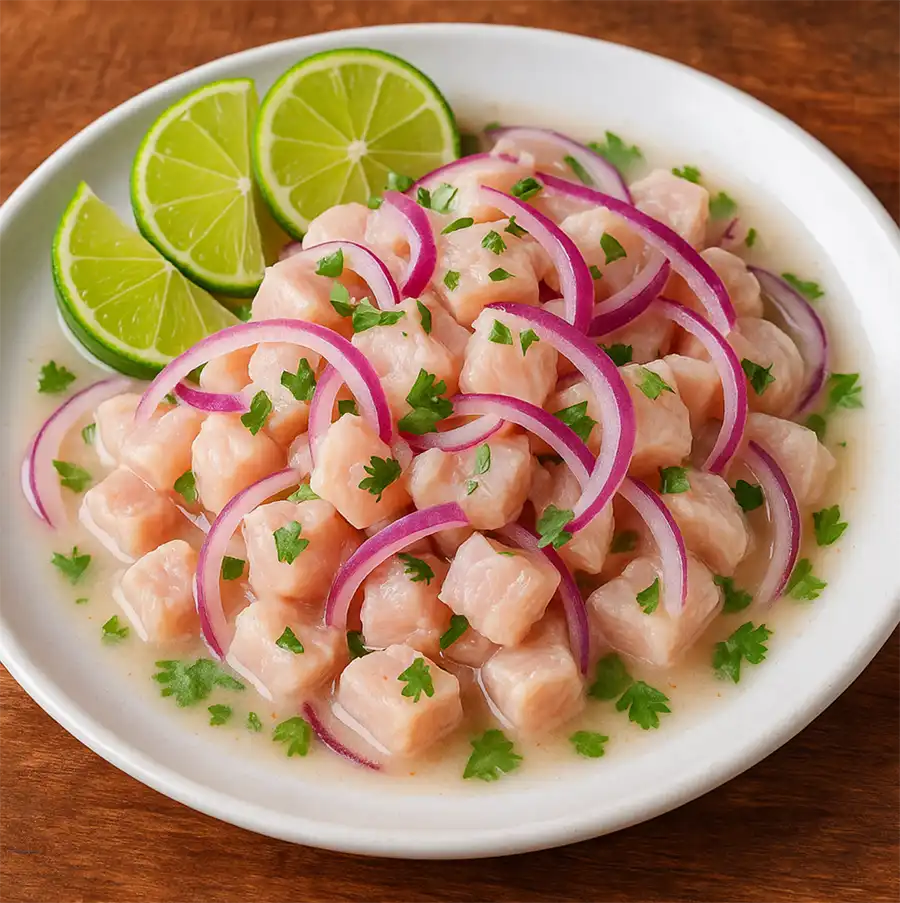
Ceviche is not just a dish, but a true culinary art that combines the taste of the ocean, the freshness of citrus fruits, and the secrets of ancient Peruvian cuisine. This unique raw fish appetizer has won the hearts of gourmets around the world with its unmatched freshness and exquisite taste.
What is ceviche: history and origin
Ceviche (Spanish: ceviche, seviche, or sebiche) is a traditional dish made from fish or seafood, believed to have originated in Peru. This dish appeared even before the conquest by the conquistadors and has spread to many cuisines in Latin American countries, although recipes may vary significantly.
The history of this dish dates back hundreds of years, when the Incas lived in what is now Peru. They used fresh lime juice and other natural ingredients to marinate fish, which allowed them to preserve food for long periods of time without refrigerators or preservatives.
In 2004, the dish was officially recognized as “Cultural Heritage of the Nation” in Peru by a resolution of the National Institute of Culture. And since 2008, June 28 has been celebrated annually as National Ceviche Day in Peru.
Classic Peruvian ceviche recipe
Ingredients for 4 servings:
Main ingredients:
- 500 g fresh sea fish fillet (dorado, sea bass, sea perch)
- Juice from 4-5 limes (or 3 lemons)
- 1 medium red onion
- 1-2 chili peppers (or jalapeños)
- 30 g fresh cilantro
- Sea salt to taste
- Freshly ground black pepper
To serve:
- 200 g sweet potatoes
- Corn or popcorn
- Lettuce leaves
- Avocado slices
Step-by-step preparation:
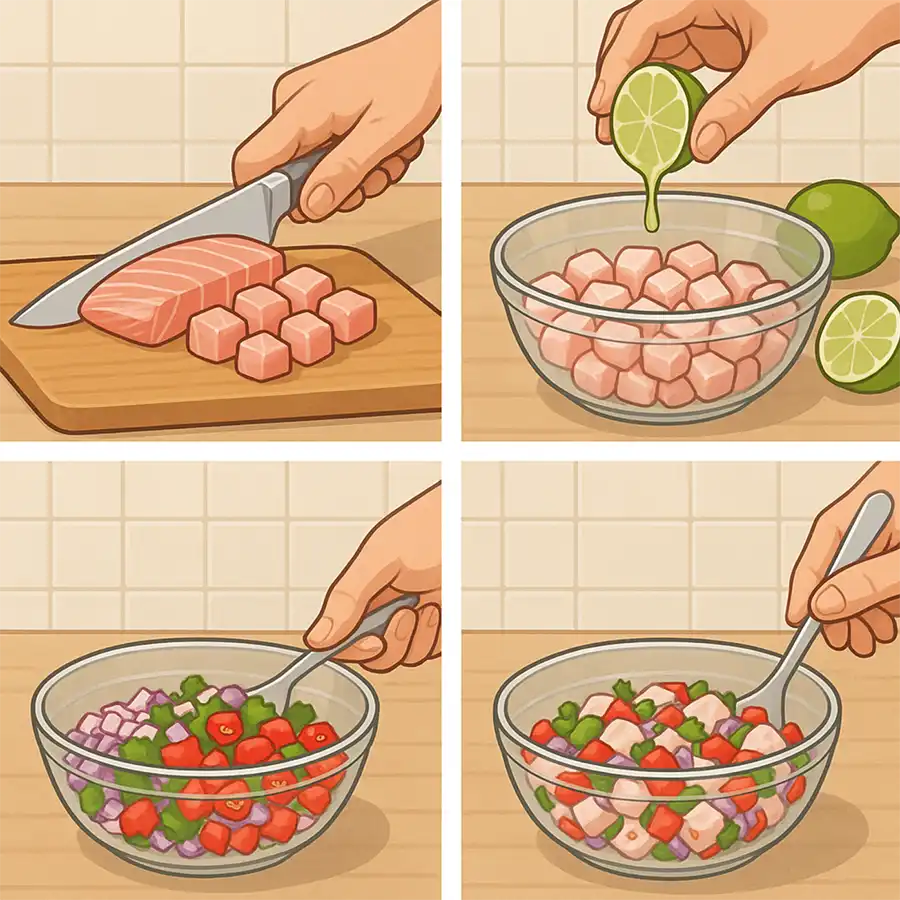
- Preparing the fish: Rinse the fish thoroughly under cold water and dry with paper towels. Cut the fillets into cubes approximately 1.5 cm in size. Important: the fish must be as fresh as possible!
- Marinating: Place the chopped fish in a glass or ceramic bowl. Squeeze the juice from the limes and pour it over the fish so that it is completely covered. Mix gently, cover with plastic wrap, and refrigerate for 15-20 minutes.
- Prepare the vegetables: Cut the red onion into thin half-rings and soak in cold water for 10 minutes to reduce the bitterness. Remove the seeds from the chili pepper and chop finely. Wash and chop the cilantro.
- Assembling the dish: When the fish turns whitish (this means that it is “cooked” in the acid), add the drained onion, chili pepper, and cilantro. Season with salt and pepper to taste, and mix gently.
- Preparation of the side dish: Boil the sweet potatoes until tender (20-25 minutes), boil or grill the corn.
- Serving: Place the ceviche on chilled plates, garnish with sweet potato slices, corn, and lettuce leaves.
Secrets to making the perfect ceviche
Choosing fish
The most important thing when preparing ceviche is the quality of the fish. It must be as fresh as possible, without any fishy smell. Ideal options for ceviche:
- Sea bass — has tender meat and few bones
- Dorado — delicate flavor and dense texture
- Sibas — white meat with minimal bones
- Salmon — for lovers of fatty fish varieties
- Tuna — for a richer flavor
Rules for marinating
- Marinating time: Do not overmarinate the fish! The optimal time is 15-20 minutes. Overmarinating can make the fish “rubbery.”
- Proportions: For 500 g of fish, you will need approximately 80-100 ml of fresh lime juice.
- Temperature: Marinating must be done in the refrigerator at a temperature of +2-4°C.
Professional advice
- Soak the onion in cold water before adding it — this will remove any excess bitterness.
- Add avocado just before serving to prevent it from turning brown.
- Use glass or ceramic cookware—metal can impart an unpleasant taste.
- Prepare in small portions — ceviche is best eaten immediately after preparation.
Variations of ceviche from different countries
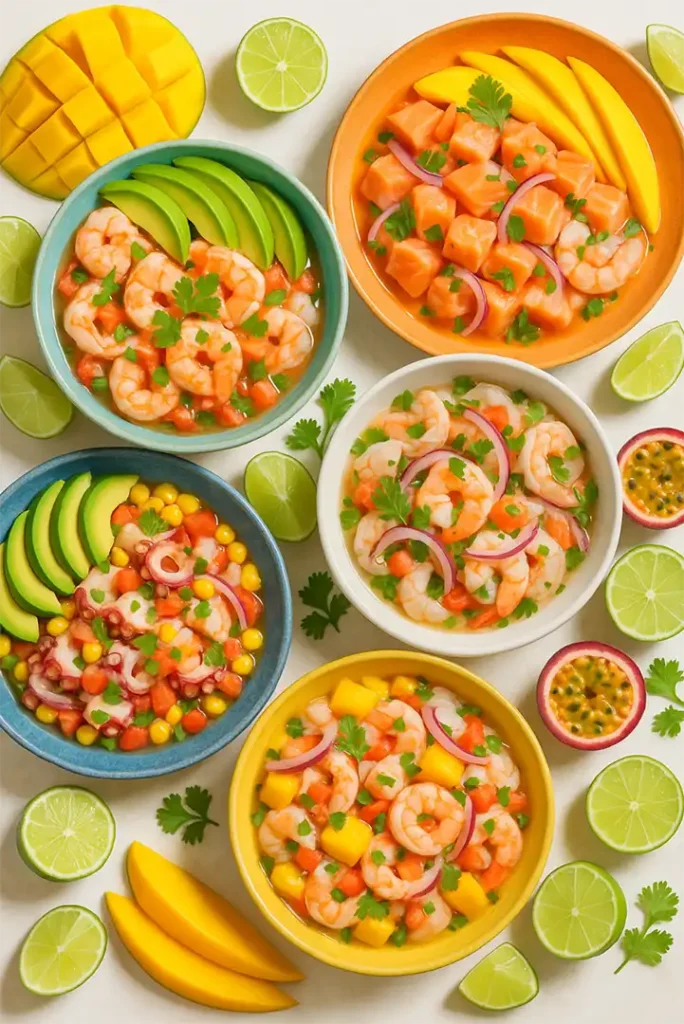
Shrimp ceviche (Mexico)
Ingredients:
- 300 g king prawns
- Juice of 4 limes and 2 oranges
- 2 tomatoes
- 1 avocado
- Red onion
- Cilantro
- Chili sauce to taste
Blanch the shrimp for 2-3 minutes in salted water, then marinate in citrus juice.
Salmon ceviche (Japanese influence)
Features: The addition of soy sauce, ginger, and sesame seeds gives the dish an Asian flavor.
Mixto seafood ceviche
A combination of different types of seafood — fish, shrimp, mussels, squid. Seafood other than fish and mussels is pre-cooked.
Colombian variant
In Colombia, tomato paste or ketchup is added to ceviche, giving the dish a special flavor.
Useful properties of ceviche
Ceviche is not only delicious, but also extremely healthy:
High protein content
Sea fish contains 20-25 g of high-quality protein per 100 g of product. The protein in ceviche is easily absorbed by the body and is a source of all essential amino acids.
Vitamins and minerals
- B vitamins — improve the functioning of the nervous system
- Omega-3 fatty acids — support heart health
- Iodine — essential for thyroid function
- Phosphorus and calcium — strengthen bones and teeth
- Vitamin C from lime — strengthens the immune system
Dietary benefits
- Low calorie content — about 150-200 kcal per serving
- No frying preserves all the nutrients
- High bioavailability of nutrients thanks to citrus marinade
Serving methods and side dishes
Traditional Peruvian serving
- Sweet potato (sweet potato) — neutralizes acidity
- Choclo (white Andean corn) — adds sweetness
- Kacha (roasted corn) — for crunchiness
Modern serving options
- On crackers or toast — as an elegant appetizer
- In tortilla cones — Mexican style
- On a lettuce leaf — for easy serving
- With plantain chips — Caribbean version
Drinks to accompany ceviche
- White dry wine — a classic combination
- Pisco sour — a traditional Peruvian cocktail
- Fresh juices — mango, passion fruit, guava
- Beer — light lager or wheat beer
Safety of consuming raw fish
Basic rules:
- Only buy fish from trusted sources with proper storage conditions.
- Check for freshness: the fish’s eyes should be clear, the gills red, and the flesh firm.
- Cook in small portions and consume immediately.
- Do not leave prepared ceviche at room temperature for more than 2 hours.
Who should be cautious:
- Pregnant women
- Children under 5 years old
- People with weakened immune systems
- Individuals with gastrointestinal disorders
Frequently asked questions and answers (FAQ)
Can ceviche be made from frozen seafood?
Yes, but after thawing, it must be as fresh as possible. It is better to use quick-frozen seafood.
How long can you store prepared ceviche?
Prepared ceviche is best consumed immediately. It can be stored in the refrigerator for no more than 24 hours.
Why is fish “cooked” in lime juice? The
citric acid in lime juice causes the denaturation of fish proteins, which is similar to the process of thermal cooking.
Can lime be substituted for lemon?
Yes, but lime has a milder and sweeter flavor. If using lemon, add a little sugar.
Which pepper is best to use?
Traditionally, rocoto peppers from Peru, but jalapeño, serrano, or regular red hot peppers will also work.
Do you need to salt the fish beforehand?
No, salt is added at the end along with the other ingredients. Pre-salting can make the fish too salty.
Ceviche is a true masterpiece of culinary art that allows you to experience all the beauty and freshness of seafood. By following simple rules and secrets, you can prepare this exquisite dish at home and treat yourself and your loved ones to an unforgettable gastronomic experience. Remember: the most important thing in ceviche is the quality of the ingredients and a love for the cooking process!