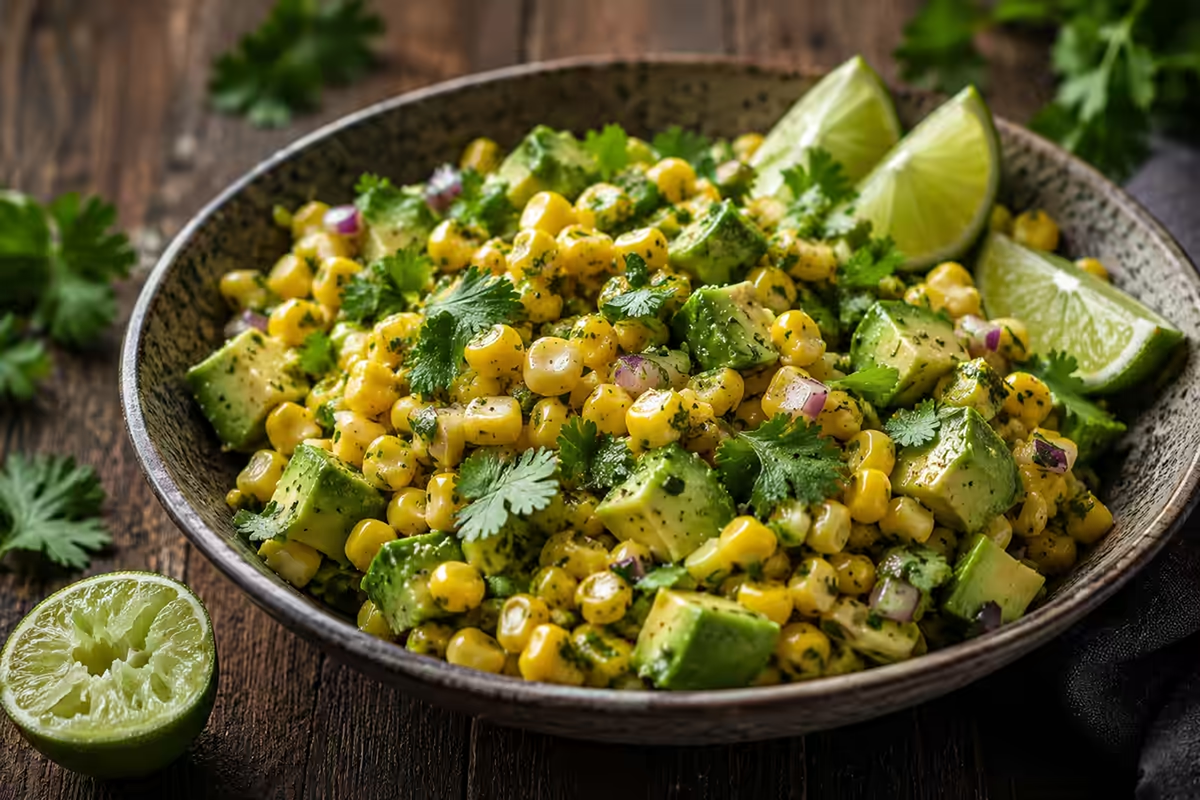
When I need something quick, fresh, and light on the stomach—this is exactly the salad I make. Corn is naturally sweet and juicy, so it really doesn’t need mayonnaise: it just overpowers the vegetables’ natural flavor with its richness. I’ve tried a dozen different dressing options and have compiled here the ones that really work—not bland and boring, but the kind that always leave the plate empty.
Content
This article is for anyone who counts calories, watches what they eat, or simply wants to add some variety to their usual selection of salads. Below are five variations of the same salad, a table showing the calorie count for each, and all my tried-and-true tips to keep the corn from “swimming” in excess liquid and the vegetables from losing their crunch.
I’ve been making this salad in different variations for several years now—at first, I just wanted to cut down on the calories in my usual “office” salad with crab sticks, but then I noticed that without mayonnaise, the dish actually tasted even better: you can taste each ingredient distinctly, rather than having them drowned out by a uniform, greasy mixture. If you also love corn but want to enjoy it without feeling guilty—this article is just for you.
The Health Benefits of Corn and Vegetables in a Salad
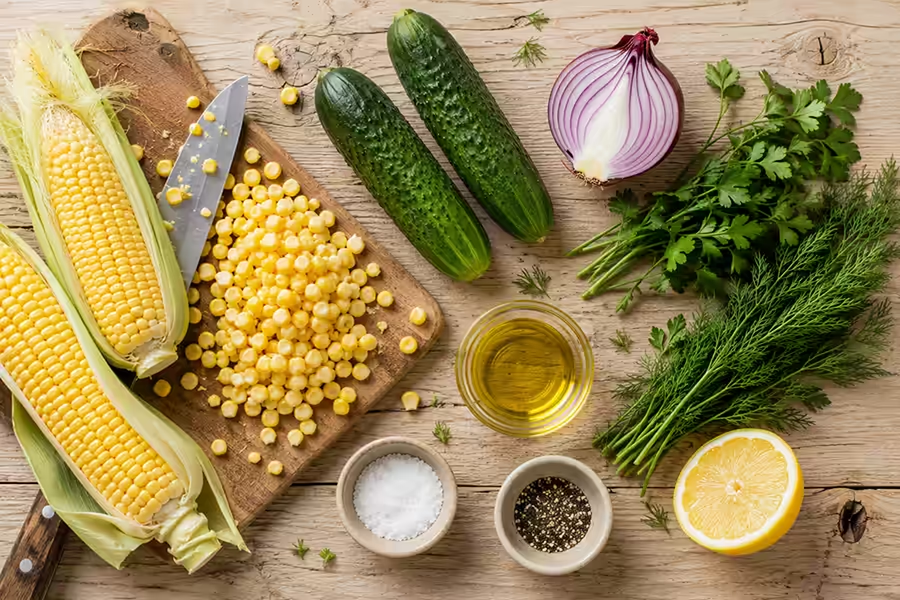
Corn is a fairly nutritious food: it contains fiber, which aids digestion, as well as B vitamins and a small amount of plant protein. Canned corn loses some of its vitamins during processing compared to fresh corn, but it retains almost all of its fiber and natural sweetness.
Cucumbers in a salad are mostly water and contain very few calories, so they effectively “cut down” on the dish’s calorie content without adding anything extra. Herbs like dill or parsley add vitamin C and a fresh aroma, while olive oil, used in moderation, provides healthy unsaturated fats that the body needs to absorb fat-soluble vitamins.
Compared to the classic mayonnaise-based version, this one offers a double benefit: fewer calories and more nutritional value from the vegetables themselves, which aren’t “drowned” in a fatty sauce but remain the stars of the dish.
Why You Should Make Corn Salad Without Mayonnaise
The classic salad with corn, crab sticks, and mayonnaise is delicious, but it’s high in calories and, to be honest, I’m a little tired of it. Mayonnaise adds richness and masks the natural flavors of the ingredients, and this dish also gets runny in the fridge within just a few hours.
Dressings made with oil, yogurt, lemon juice, or a light sauce behave differently: they don’t overpower the flavor of the corn, cucumber, or avocado, but rather bring it out. This kind of salad stays fresh longer, is lower in calories, and is easier to digest—I personally feel the difference when I eat it for dinner: there’s no “heavy in the stomach” feeling.
Another plus is its flexibility. Without mayonnaise, the salad can easily be adapted to any diet: leave out the cheese for a vegan version, or add chicken breast for a meal packed with protein. It’s harder to experiment with a mayonnaise-based dressing because it immediately gives the dish a rich, rather heavy flavor profile.
Which type of corn should you choose: canned, frozen, or fresh?
The easiest option is canned corn. It’s ready to eat, slightly sweet, and requires no further preparation. The key is to drain the liquid thoroughly and, if possible, pat the kernels dry with a paper towel; otherwise, the salad will be watery.
Frozen corn works too: boil it for 3–4 minutes in lightly salted water, or simply thaw it and sauté it in a dry skillet for 2–3 minutes—this will make it even tastier than canned corn, with a slight caramelization.
Fresh corn in season is the best option in terms of flavor. I boil the ears for 15–20 minutes in unsalted boiling water (salt makes the kernels tougher), then let them cool and cut the kernels off with a knife along the length of the ear. It takes a little longer, but the taste and texture are far superior to canned corn.
If we compare all three options: canned corn wins in terms of convenience and year-round availability; frozen corn offers the best balance of taste and effort; and fresh corn is the undisputed leader in taste, but is only available for a few summer months. I usually keep a can of canned corn on hand at home, and in the summer, when young corn appears at the market, I always buy ears of corn—the difference in taste is truly noticeable.
I’d like to say a few words about the quality of canned corn: pay attention to the ingredients listed on the can. A good product contains only corn, water, salt, and possibly sugar—with no unnecessary preservatives. If the ingredients list includes acetic acid or flavorings, the salad may not taste the way you expect.
Calorie Content of Corn Salad Without Mayonnaise: A Comparative Table
Below are the approximate calorie counts for five salad options, based on 100 g of the finished dish. These figures are approximate, as they depend on the specific ingredients and proportions, but they should suffice as a general guide.
| Salad Variation | Calories per 100 g | Protein, g | Fats, g | Carbohydrates, g |
|---|---|---|---|---|
| Corn, cucumber, greens, oil | 68 kcal | 2,1 | 3,4 | 8,2 |
| Corn, avocado, lime | 95 kcal | 1,8 | 6,5 | 8,9 |
| Corn, chicken, yogurt dressing | 88 kcal | 8,4 | 2,9 | 7,1 |
| Corn, tomatoes, feta cheese, olive oil | 92 kcal | 3,6 | 5,8 | 7,4 |
| Corn, napa cabbage, carrots, lemon dressing | 61 kcal | 1,7 | 2,2 | 8,6 |
For comparison: a classic salad with corn, crab sticks, and mayonnaise contains about 145–160 kcal per 100 g—which is twice as high in calories as lighter versions without mayonnaise.
Ingredients for a Basic Corn Salad Without Mayonnaise
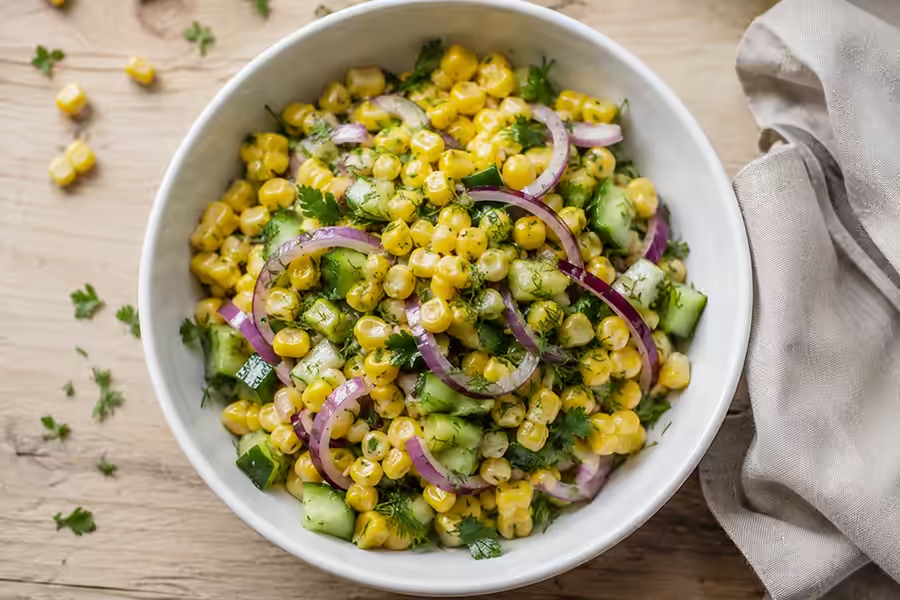
I’ll start with the most popular version—with cucumber and herbs—and then I’ll show you how to adapt it into four other variations.
- canned corn — 300 g (or frozen/fresh, boiled)
- fresh cucumbers — 2 medium-sized
- red onion — half of a small bulb
- herbs (dill, parsley) — a bunch, about 20 g
- olive oil — 2 tablespoons
- lemon juice — 1 tablespoon
- salt — to taste, about half a teaspoon
- ground black pepper — to taste
- optional: garlic — 1 clove, for a spicy kick
Substitutions I use myself: any unrefined sunflower oil works instead of olive oil, and apple cider vinegar in the same proportion works instead of lemon juice. If you don’t like raw garlic, you can substitute a pinch of dried garlic.
The quantities of ingredients are easy to scale up or down to the desired number of servings—just multiply all the proportions by the appropriate factor. The main rule I always follow is that the ratio of corn to vegetables should be roughly equal by volume, and there should be just enough dressing to lightly coat all the ingredients, not to drown them—excess liquid in the bowl means there’s too much dressing.
Step-by-Step Recipe for a Basic Salad
- Open the can of corn, drain the liquid through a colander, and let the kernels sit for 5 minutes to allow the excess water to drain off.
- Cut the cucumbers into cubes about 1 cm in size—this will make the salad crunchy and easy to eat with a fork.
- Slice the onion into thin half-rings. If the flavor seems too sharp, pour boiling water over the onion for 2 minutes, then drain the water—the sharpness will go away, but the crunch will remain.
- Finely chop the herbs with a knife.
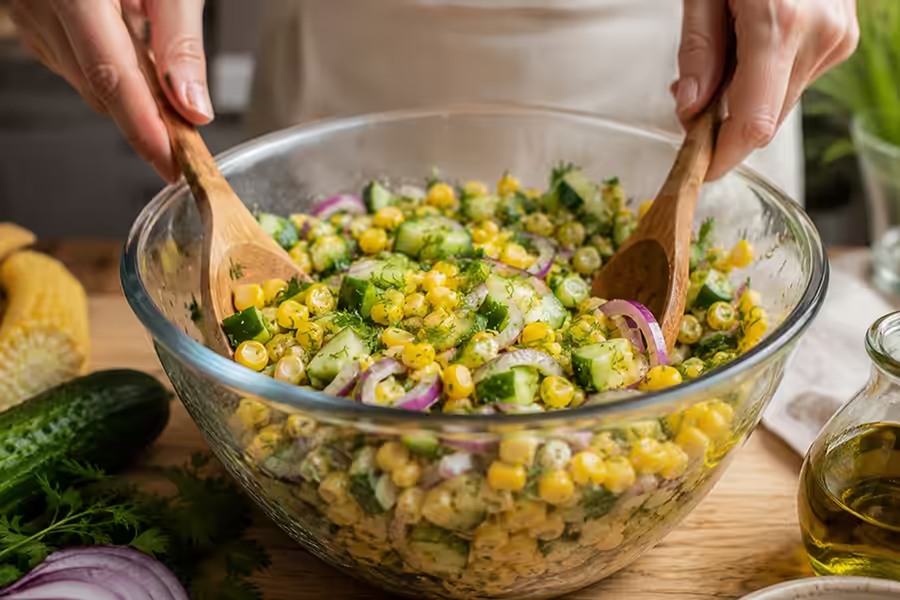
- In a large bowl, combine the corn, cucumbers, onion, and herbs.
- In a separate bowl, mix together the olive oil, lemon juice, salt, pepper, and minced garlic—this will be the dressing.
- Pour the dressing over the vegetables and gently toss them with tablespoons so as not to crush the cucumbers.
- Let the salad sit in the refrigerator for 10–15 minutes before serving—this will allow the flavors to blend better.
This makes about 4 servings of salad as a side dish or 2 servings as a light meal on its own.
Variation 1: with avocado and lime
Replace half the cucumber with one ripe avocado, diced. Use the juice of half a lime instead of lemon juice, and you can omit the olive oil entirely—the avocado provides plenty of fat. Add a pinch of ground coriander seeds for a subtle spice. This version tastes almost like a deconstructed guacamole and pairs perfectly with tacos or as a standalone appetizer.
The main secret to this variation is the ripeness of the avocado. The fruit should give slightly when pressed with a finger, but not be soft all the way through. An avocado that’s too hard will be tasteless and “woody,” while one that’s overripe will turn to mush as soon as you start cutting it and ruin the salad’s texture. If you have time, buy the avocado 2–3 days before cooking and keep it at room temperature—this way, it will ripen evenly.
For a little heat, you can add half a finely chopped, seeded chili pepper or a few drops of hot sauce directly to the dressing. Fresh cilantro (kinza), if you like its flavor, is a wonderful addition to this variation—add a bunch, finely chopped, along with the herbs.
Variation 2: with chicken and yogurt dressing
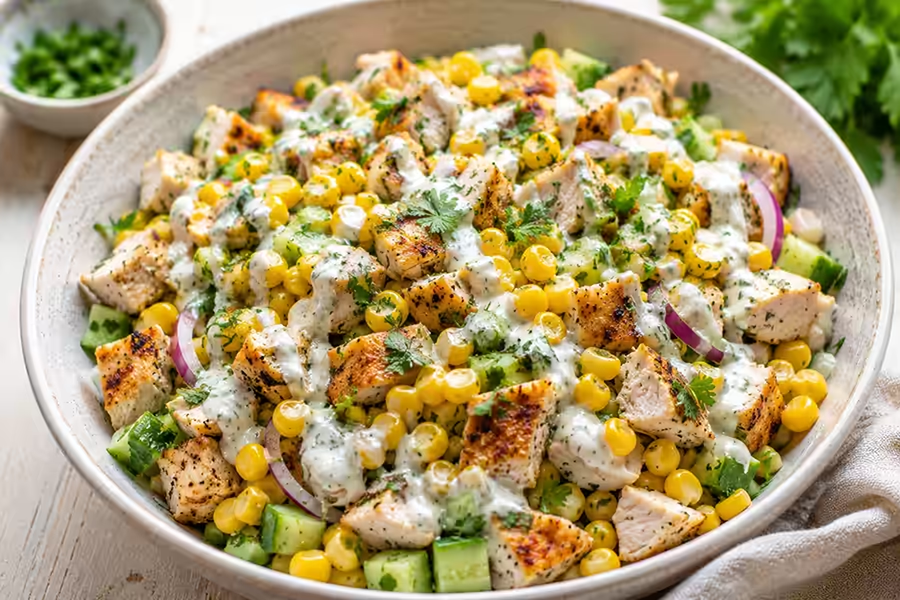
Add 200 g of boiled or baked chicken breast, cut into cubes—this will make a complete meal rather than just a side dish. Make the dressing with plain, unsweetened yogurt (2 tablespoons), a teaspoon of mustard, and a pinch of garlic powder. The yogurt dressing coats the ingredients more gently than oil and adds a pleasant tang.
It’s best to prepare the chicken in advance: boil it in lightly salted water for 15–20 minutes or bake it in the oven at 180 °C for 25 minutes until cooked through. The key is not to overcook the fillet, otherwise it will be tough and “rubbery” in the salad. I check for doneness by cutting into the thickest part: the juices should be clear, with no pink tinge.
If you want to make the dressing even thicker and more nutritious, replace regular yogurt with Greek yogurt—it’s thicker and has a higher protein content. This variation is especially well-suited for people who work out and want a complete meal with enough protein without extra calories.
Variation 3: with tomatoes and feta
Add 150 g of cherry tomatoes, cut in half, and 80 g of feta cheese, crumbled by hand or cut into cubes. Dress with olive oil and a pinch of oregano. This is almost a Mediterranean-style dish—light, juicy, and a great pairing with grilled or baked fish.
Choose firm cherry tomatoes without cracks in the skin—they’ll hold their shape longer in the salad and won’t release excess juice. If you only have large tomatoes, dice them and lightly sprinkle them with salt separately for 5 minutes, then drain off the excess liquid before adding them to the salad—this will keep the texture just right.
You can substitute Adyghe cheese or mozzarella for feta if you prefer a less salty flavor. In that case, you should add a little more salt to the dressing, since these cheeses have a milder flavor than classic Greek feta.
Variation 4: with napa cabbage and carrots
Replace the cucumber with 200 g of shredded napa cabbage and one medium carrot, grated on a coarse grater. For the dressing, use lemon juice, a little honey (half a teaspoon), and a teaspoon of soy sauce instead of salt. This salad turns out crispier and lighter in texture, and it holds its shape well even on the second day.
I especially like this variation in the winter, when fresh cucumbers are either unavailable or taste bland and watery. Napa cabbage and carrots are available year-round and stay crisp even after a day in the fridge. For added texture, you can toss in a handful of toasted sesame seeds or chopped walnuts—it’ll turn out like an Asian salad.
If you like spicy flavors, add half a teaspoon of Sriracha sauce or a pinch of ground ginger to the dressing—it pairs well with soy sauce and gives the whole dish a subtle Asian twist.
Tips and Common Mistakes
Drain the liquid from the corn thoroughly. If even a small amount of marinade remains in the jar, the salad will release its juices within a few hours and become watery—this is especially noticeable in versions made without oil.
Don’t salt the salad in advance if you plan to store it for more than a few hours. Salt draws moisture out of the cucumbers and vegetables, causing them to lose their texture quickly. It’s best to salt the salad just before serving.
Don’t overdo it with raw garlic—fresh garlic in a salad without being cooked has a rather strong flavor, which intensifies after a few hours in the refrigerator. If you’re preparing the salad in advance, it’s best to use half a clove or substitute dried garlic.
Choose cucumbers that aren’t bitter and don’t have thick skin. If the skin is rough, it’s best to peel it off; otherwise, it will ruin the uniform texture of the salad.
Don’t toss the salad too early if it contains avocado—it browns quickly and loses its appetizing appearance. Add the avocado last, right before serving.
Don’t use cold corn straight from the refrigerator if you’re making a warm version of the salad with roasted kernels—the temperature contrast will ruin the dish. Let the roasted corn cool slightly to room temperature before mixing it with the other ingredients if the rest of the ingredients are cold.
Don’t skip the “resting” time for the salad after dressing it. Those 10–15 minutes in the fridge that I mentioned in the recipe aren’t just a formality: during that time, the oil and lemon juice have a chance to slightly infuse the vegetables, and the flavor becomes more well-rounded, rather than just “doused on top.”
Serving Variations
A corn salad without mayonnaise is great served as a light meal on its own for dinner, as a side dish with chicken, grilled fish, or cutlets, or as a filling for lavash along with lettuce leaves. In the summer, this salad tastes great cold, straight from the fridge, and in the winter, you can warm it up slightly without the dressing and add the dressing once it’s warm—the result is something like a warm salad.
For a festive meal, I recommend the version with feta and tomatoes—it looks vibrant and appetizing even in a simple glass salad bowl. For everyday meals, the basic version with cucumber is more convenient: it’s quick to prepare and doesn’t require any hard-to-find ingredients.
If you plan to serve the salad at a buffet or on a large table, it’s convenient to portion it out into small glass jars or dessert bowls—that way, guests can help themselves to individual servings without disrupting the overall presentation of the dish on the table. For an everyday lunch, all you need is a large salad bowl and a serving spoon.
How to Store Corn Salad Without Mayonnaise
Without mayonnaise, this salad keeps longer than the classic version—up to 2 days in the refrigerator in a sealed container, provided you haven’t added avocado. If you add avocado, it’s best to eat the salad on the day it’s made, or within 24 hours at most; otherwise, the avocado will turn brown and become unpleasantly mushy.
If you’re preparing this in advance, it’s a good idea to store the vegetables and dressing separately and mix them together just before serving. That way, the salad will stay crisp and look fresh even after a day or two.
For storage, choose a container with a tight-fitting lid—this way, the salad will absorb fewer odors from the refrigerator and stay fresh longer. Glass containers are better than plastic ones in this regard: glass doesn’t absorb odors or colors from tomatoes or carrots, so the container won’t smell like the previous meal next time.
If you notice that the salad has released too much liquid over the course of a day, simply drain off the excess water before serving and, if necessary, add a little fresh dressing—this will restore the flavor, and the excess moisture won’t spoil your enjoyment of the dish.
FAQ: Frequently Asked Questions About Corn Salad Without Mayonnaise
Can you substitute vinegar for lemon juice? Yes, apple cider vinegar or wine vinegar works well as a substitute for lemon juice in the same proportion. The taste will be slightly different—less fresh, more tart—but the dressing will work just as well.
How many calories are in a serving of corn salad without mayonnaise? Depending on the recipe, a serving of about 150–200 g contains between 90 and 190 kcal. The lightest version is made with napa cabbage and carrots, while the heartiest is made with chicken.
Is this salad suitable for a children’s menu? Yes, the basic version with cucumber and without raw garlic and onion is suitable for children ages three and up. It’s best to omit or minimize the use of hot spices and raw garlic.
Can you freeze a prepared salad? No, you shouldn’t freeze a prepared salad with vegetables—after thawing, the cucumbers and greens will lose their texture and become watery. However, frozen corn can and should be used in cooking.
What can I use instead of feta in the tomato version? Brynza or low-fat tofu-style cheese would work well for a vegan version. The flavor will be less salty, so you should add a little extra salt to the dressing.
Can you make this salad in the winter with fresh tomatoes? Technically, yes, but greenhouse tomatoes in the winter are often watery and lack flavor. During the colder months, it’s better to use cherry tomatoes or sun-dried tomatoes—their flavor is more consistent year-round.
Can I make this salad spicy? Yes, spiciness goes well with corn. Add finely chopped chili peppers, a few drops of hot sauce, or a pinch of ground chili pepper to the dressing—this works especially well in the versions with avocado or napa cabbage.
How long can you keep a dressed salad before serving it at a holiday dinner? A dressed salad without avocado will keep just fine in the refrigerator for 2–3 hours before serving it to guests, and it will even taste a little better. If you’re planning for a longer period of time, dress the salad 20–30 minutes before serving, and prepare the vegetables separately in advance.
Can you eat this salad while trying to lose weight?
Yes, it’s one of the best options for weight loss among corn salads. The basic version with cucumber and olive oil contains only 68 kcal per 100 g, and the version with napa cabbage and carrots has even fewer calories—61 kcal. If you want to make the dish even lighter, reduce the amount of oil to one teaspoon or replace it with a few drops of fat-free lemon juice.