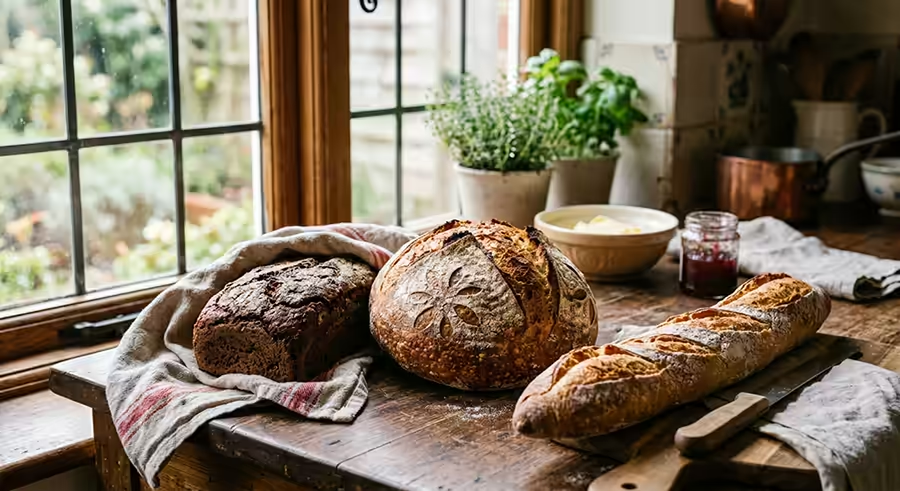
Bread is a staple in every Ukrainian household. We buy it every day, but few of us think about how to store it properly. Why does one loaf stay soft and tasty for three days, while another turns into a rock by the next morning? Why does bread in a plastic bag go moldy faster than bread left out on the table? And how did our great-grandmothers manage without refrigerators or vacuum-sealed bags—yet their bread stayed fresh for weeks?
Content
In this article, we’ll cover everything: from ancient methods of storing bread—practiced as far back as in Egypt and Kievan Rus’—to modern technologies and kitchen hacks that actually work. Whether you buy bread at the store or bake it at home, after reading this, your bread will stay fresh much longer. Get ready—there’s plenty of practical and interesting information ahead.
Why Bread Goes Stale: The Physics of the Process in Simple Terms
Before discussing ways to store bread, it’s important to understand why bread goes stale in the first place. It’s not just a matter of “drying out”—it’s much more interesting at the molecular level.
The main process responsible for staling is called starch retrogradation. During baking, the starch molecules in the dough absorb water and swell—the bread becomes soft and fluffy. But once the bread cools, these molecules begin to crystallize and push the water out. The structure of the bread changes at the molecular level; it becomes harder and drier in texture—even if the moisture content inside remains sufficient. It’s like concrete setting: the process is irreversible without external intervention.
Fun fact: Bread goes stale the fastest at temperatures between 0°C and +10°C. That’s why bread stored in the refrigerator goes stale six times faster than bread kept at room temperature. The refrigerator is the worst place for fresh bread, and we’ll discuss this in more detail below.
The second enemy of bread is mold. These are microscopic fungi whose spores are constantly present in the air. They need three conditions to grow: moisture, warmth, and organic matter. Bread perfectly meets all three criteria, which is why mold appears on it so quickly—especially in the summer heat.
The third factor is the oxidation of fats. Bread contains small amounts of fat (especially if it is made with eggs, butter, or milk). When exposed to oxygen, these fats oxidize, giving the bread an unpleasant rancid taste. That is why bread made with butter or milk spoils faster than plain wheat bread.
By understanding these three mechanisms, you’ll be able to consciously choose a storage method that minimizes all three risks at the same time.
Ancient methods of storing bread
Egyptian and Mesopotamian traditions
People were baking bread as far back as 14,000 years ago—long before the first civilizations emerged. The ancient Egyptians were true masters of breadmaking and the storage of grain and baked goods. Their knowledge, recorded on papyrus and the walls of tombs, remains astonishingly sophisticated even today.
The Egyptians stored baked bread in clay pots with lids. Clay has natural thermoregulatory properties: these pots maintain a stable temperature and humidity level inside. Once the bread had cooled completely, it was placed in the pot and tightly sealed. This bread could be stored for 2–3 days even in the hot climate of North Africa.
In addition, the Egyptians often baked bread in the form of thin, dry flatbreads—the ancestors of modern lavash. With its minimal moisture content, this bread hardly ever went stale or molded, making it ideal for storage and transport during military campaigns and trade expeditions.
In Mesopotamia, bread was stored in special rooms—the precursors to modern pantries. These rooms were built with thick mud-brick walls that kept the interior cool even during the hottest summer days. Sumerian tablets mention special “bread guardians”—people responsible for the proper storage of grain reserves and baked bread for the army and priests.
Traditions of Kievan Rus’ and Ukraine
Bread has always held a special place in our culture—it’s no wonder they say, “Bread is the head of everything.” It symbolized prosperity, hospitality, and respect. Our ancestors knew countless ways to preserve this treasure for as long as possible.
A birch bark bread box is one of the oldest Ukrainian methods. Birch bark has natural antibacterial and antifungal properties thanks to betulin, a substance found in birch bark. Bread wrapped in birch bark or placed in a birch bark container kept much longer than in any other container. Birch bark items are found during archaeological excavations throughout Ukraine—and all of them are imbued with the spirit of practical folk wisdom.
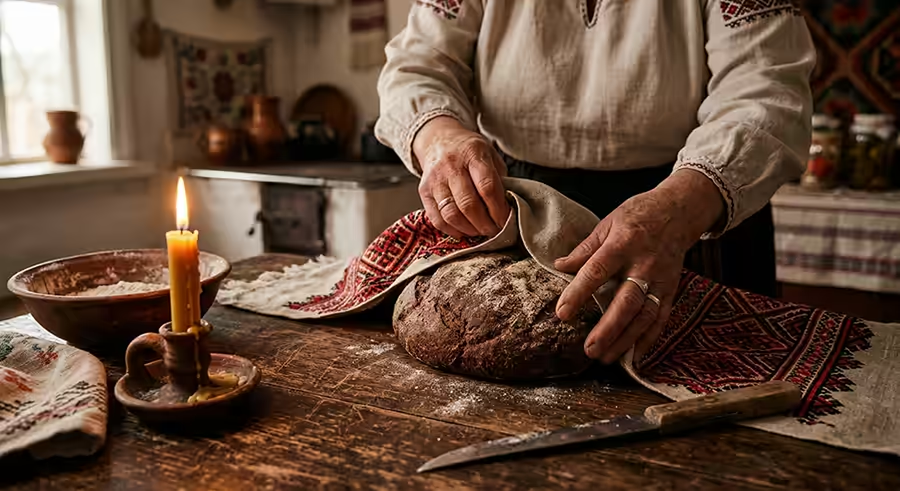
Linen towels and cloth were widely used for wrapping bread. Flax has a unique microporous structure that allows air to pass through while maintaining the desired level of humidity. The bread “breathes”—it doesn’t dry out or get stale. In addition, linen fabric has mild antibacterial properties thanks to the natural resinous substances in the fibers.
A cold cellar is another traditional method. The cellar maintains a constant temperature of about +8–12°C and relatively high humidity. But be careful: this is not the same as a refrigerator! In a cellar, there are no excessively low temperatures that accelerate starch retrogradation. Bread in a cellar goes stale slowly and evenly—remaining edible for weeks.
Crackers are perhaps the most ingenious ancient method of “preserving” bread. When bread began to go stale, it wasn’t thrown away; instead, it was sliced and dried in the oven. Crackers could be stored for months, and before eating, they were soaked in water, broth, or milk. This was a unique way of “preserving” bread—a method still used today in camping and military kitchens around the world.
The clay oven served not only for baking but also for storage. Once the oven had cooled down after being fired up, the bread was left inside—the heat gradually escaped, while the bread retained its warmth and a certain level of protective “crust.” Housewives knew that freshly baked bread should not be taken out into the cold right away.
Medieval Europe and Bread Chests
In medieval Europe, every wealthy household had a bread chest—a special wooden chest used for storing bread. The chests were made from specific types of wood: oak, juniper, and cedar. These woods contain essential oils with antibacterial properties that naturally protected the bread from mold. The interior surfaces of the chest were polished with wax or rubbed with onion—an additional safeguard against mold.
Interestingly, in some regions, bread was hung from the ceiling in burlap sacks. It is always warmer and drier up there, which helped prevent mold from forming. In addition, the suspended bread had better air circulation on all sides and was protected from mice and other rodents.
A unique culture of bread baking and storage developed in the monasteries of medieval Europe. Monks baked large quantities of bread once or twice a week and developed clear rotation systems—older bread was consumed first, while fresher bread was saved for later. These FIFO (first in, first out) principles form the basis of inventory management in every restaurant and supermarket today.
Traditional preservation methods: salt, honey, and oil
It is also worth mentioning the special substances our ancestors used to extend the shelf life of bread.
Salt is one of humanity’s oldest preservatives. Bread with a higher salt content keeps longer because salt inhibits the growth of microorganisms and slows down the retrogradation of starch. It is no coincidence that traditional Jewish challah and Georgian shoti have a characteristic salty aftertaste.
Honey was added to the dough not only for flavor—it is a natural preservative with antibacterial properties. Honey bread stays fresh 1–2 days longer than regular bread. This tradition lives on today: honey bread is popular in Scandinavian and Slavic cuisines.
Oil forms a protective layer of fat on the surface of the bread, slowing down moisture evaporation. Brushing the crust with oil or egg after baking is a technique that dates back to Ancient Greece.
Different types of bread and how to store them
Not all bread is the same. Different types have different compositions, moisture content, and shelf lives—and therefore require different storage methods.
White wheat bread
This is the most common type of bread in Ukraine. It is made from refined, high-grade flour, so it contains little fiber and natural oils. This type of bread goes stale fairly quickly—usually within 1–2 days.
The best way to store it: in a paper bag or a linen towel at room temperature. If the bread is sliced, place the slices cut-side to cut-side or lay them cut-side down on a cutting board—this will reduce the surface area exposed to air and slow down the staling process.
Important note: Industrially produced white bread typically contains emulsifiers and texture enhancers (E471, E481) that prolong its “artificial freshness.” Such bread may still look soft even on the third day, but its taste and texture are already significantly inferior to that of fresh bread. Don’t confuse softness from additives with true freshness.
Rye and rye-wheat bread
Rye bread is in a category of its own. It is denser, moister, and, by nature, keeps better and longer than wheat bread. Thanks to its higher content of fiber, natural pentosans, and organic acids (especially if it’s sourdough), it is less prone to mold and staling.
Shelf life: 3–5 days at room temperature. An important note: the first 24 hours after baking are the “maturing” period—the taste and texture of rye bread improve over time. So don’t rush to slice freshly baked rye bread—let it sit for at least 6–8 hours, wrapped in a towel.
It’s best to store rye bread wrapped in a linen or cotton cloth in a cool place. Don’t put it in a plastic bag—the crust will soften, the bread will become “damp,” and it will lose its characteristic chewy texture.
Whole-grain bread
Whole-grain bread contains bran and the germ of the grain—parts that are rich in natural oils. On the one hand, this makes the bread healthier. On the other hand, the fats in the bran oxidize more quickly, so whole-grain bread has a shorter shelf life than refined white bread.
Store whole-grain bread in a cool place, wrapped in a cloth or parchment paper. If you don’t plan to eat it within 2 days, freeze it without hesitation.
Sourdough bread
Sourdough bread is not just a trend, but a true return to tradition. Lactic acid and acetic acid, which are produced during the fermentation of sourdough, are natural preservatives. They create an acidic environment in which most pathogenic fungi and bacteria simply cannot survive. Sourdough bread can be stored at room temperature for 4–7 days without any significant loss of quality.
The golden rule: never put sourdough bread in a plastic bag. The crust will get soggy and rubbery, losing its signature crunch. It’s better to wrap it in parchment paper or linen cloth, and you can wrap it in a cotton towel on top. If the bread has a thick crust, you can store it cut-side down directly on a wooden board for the first 24 hours.
Toast
Toast bread is a processed product containing a large number of additives: emulsifiers, stabilizers, preservatives, and flavor enhancers. It stays fresh in a sealed package for quite a long time, but once opened, it quickly starts to mold—especially during the warmer months, because it contains relatively high levels of moisture and sugars, which feed the mold.
It’s best to store opened sliced bread in its original plastic bag, tightly twisting the top and securing it with a clip or a binder clip. Even better, transfer the slices to a zip-top bag and remove any excess air. If you live in a region with a hot climate or in an apartment without air conditioning in the summer, store opened sliced bread in the refrigerator (this is one of the few types of bread where refrigeration is justified if the goal is to prevent mold rather than staling).
Pita bread and thin bread
Thin Armenian lavash is naturally a “long-lasting” product. Thanks to its minimal moisture content, it hardly ever goes stale or gets moldy. Once opened, lavash simply dries out slightly and becomes crispy, but if you sprinkle it with water and warm it up, it becomes soft and elastic again, just like fresh lavash.
It’s best to store lavash in a paper bag or wrapped in a towel. For long-term storage, you can simply leave it out on a shelf—it will dry out into a flatbread, but it won’t go bad.
Yeast-free bread and gluten-free bread
Yeast-free bread (made with baking soda or kefir) and gluten-free bread are special categories. They are generally drier and denser than regular bread, so they go stale differently.
Gluten-free bread tends to dry out quickly—the gluten in regular bread is partly responsible for retaining moisture. Store gluten-free bread in an airtight container or a zip-lock bag, and preferably sliced—this makes it easier to take the amount you need and freeze the rest right away.
Homemade bread
Homemade bread without preservatives is the most sensitive to storage conditions. Rule number one: never put hot bread in a bag or bread box! It must cool completely on a wire rack for 1–2 hours. The steam released from hot bread condenses inside a closed bag, creating the perfect conditions for mold to grow before the bread has even had a chance to cool.
Homemade bread stays fresh for 1–3 days, depending on the recipe. Sourdough bread lasts longer, while yeast bread lasts shorter. If you bake at home regularly, double the batch and freeze half of it as soon as it cools.
Modern methods of storing bread
Cloth and paper bags
This is one of the simplest and most effective ways to store bread at room temperature. The fabric allows air to circulate, preventing the bread from getting stale, while also protecting it from dust and excessive drying out.
Paper bags are ideal for short-term storage (1–2 days). Paper absorbs excess moisture well, keeping the crust crispy. But in hot weather, paper can dry out the bread too much—in that case, it’s better to switch to cloth or a combination method: wrap it in a paper towel, then in a cloth.
For best results, choose fabric bags made of linen or cotton—synthetic materials don’t breathe and cause condensation to form more quickly.
Bread Box: How to Choose the Right One
A bread box is a classic staple found in every Ukrainian kitchen. But not all bread boxes are equally useful. There’s a world of difference between wooden and plastic models.
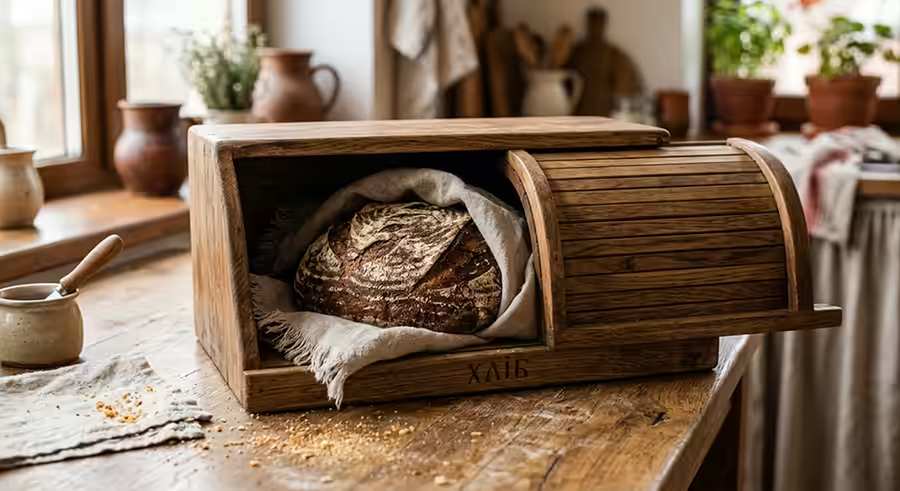
A wooden bread box is the best choice. Wood naturally regulates humidity: it absorbs excess moisture and releases it as needed, maintaining the microclimate inside. Bread boxes made of cedar, juniper, or birch bark are particularly good—they have additional antibacterial properties thanks to their essential oils. A wooden bread box should be wiped down regularly with white vinegar (once a week)—this kills mold spores and keeps the wood in good condition.
A ceramic bread box is also a good option. Ceramic maintains a stable temperature thanks to its thick walls. The downside is that it’s heavy and can break.
A metal bread box with a special coating is easy to clean and looks great, but it doesn’t regulate humidity as well as wood or ceramic.
A plastic bread box is the worst option. Plastic doesn’t breathe, so condensation builds up inside, which speeds up the growth of mold. If you only have a plastic bread box, at least leave the lid slightly ajar.
Regardless of the material, a bread box should have ventilation holes. Without them, even the best bread box will turn into a breeding ground for mold. Wash the bread box weekly with warm water and baking soda or vinegar, and dry it thoroughly before using it again.
Freezer: the best way to store bread for a long time
If a regular refrigerator is bread’s enemy, then the freezer is its best friend. At temperatures of -18°C and below, starch retrogradation stops completely, mold does not grow, and oxidation is minimal. Bread can be stored in the freezer for 3–6 months without any significant loss of quality.
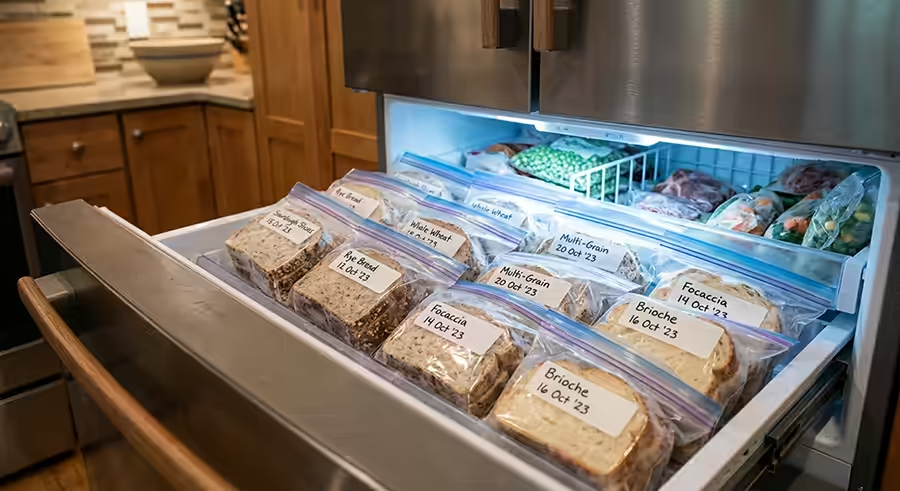
How to freeze bread properly:
- Let the bread cool completely after baking or purchasing—no steam inside the bag
- Cut it into individual slices or slice the whole loaf—this way, you can take out just as much as you need without having to defrost the whole thing
- If the bread is soft, place the slices in a single layer in a zip-top bag or container
- Remove as much air as possible—you can use a cocktail straw to suck out any remaining air before sealing
- Write the date on the bag with a marker and put it in the freezer
How to properly defrost bread:
- At room temperature: 30–60 minutes for slices, 2–3 hours for a whole loaf—this is the best option
- In the toaster: straight from the freezer without defrosting—1–2 toasting cycles will give you crispy, hot toast
- In the oven: 10–15 minutes at 180°C, wrapped in foil—restores its texture almost as if it were fresh
- In the microwave: 30–60 seconds on medium power—it’s quick, but the crust will become soft and “rubbery”
The golden rule: never refreeze bread after thawing it. The ice crystals that form during freezing damage the bread’s structure as they melt. Refreezing causes twice as much damage.
Vacuum-sealed bread storage
Vacuum bags and containers with a pump are a relatively new method that is gaining popularity in the Ukrainian market. Without oxygen, mold cannot grow and oxidation does not occur. Vacuum-sealed bread can be stored at room temperature for 7–10 days—just like in a store.
Downside: The crust inevitably becomes soft, and the bread’s texture changes slightly due to moisture redistribution. Therefore, vacuum sealing is better suited for soft toast or sandwich bread than for a crispy loaf or sourdough with a thick crust. For homemade bread, vacuum storage is an excellent choice if you want to keep the crumb fresh for several days without a freezer.
Beeswax wraps
This is a modern, eco-friendly alternative to polyethylene that combines the benefits of fabric with airtight packaging. The cotton fabric, impregnated with beeswax, carnauba wax, and jojoba oil, allows minimal air to pass through but breathes better than plastic. It is naturally antibacterial (beeswax contains propolis) and can be easily “washed” with warm water without soap.
These wraps are reusable—they can last up to a year with proper care. They are increasingly available in organic food stores and eco-shops and are gaining popularity among those who care about the environment. A 35×35 cm wrap is suitable for a medium-sized loaf of bread.
Bread box with a slice dispenser
A relatively new kitchen gadget, popular in Scandinavia and Germany, is a bread box with a vertical slot where sliced bread is stacked. The mechanism presses the slices against each other, minimizing contact with the air. This significantly slows down the staling of sliced bread—each slice is sort of “protected” by the ones next to it. It’s convenient and practical, especially for families who slice bread right after buying it.
Ceramic and terracotta tiles
Another interesting modern trend is storing bread in unglazed ceramic or terracotta containers. The porous walls of these containers naturally regulate humidity: they absorb excess moisture and release it during dry weather. The principle is the same as that of ancient Egyptian clay pots—but with a modern design. Some manufacturers even infuse such containers with natural essential oils—lavender, tea tree, or eucalyptus—for an additional antibacterial effect.
What to do if the bread has gone stale
Stale bread is no reason to be upset. In our kitchen, it’s a full-fledged ingredient, not waste.
How to revive stale bread
- Oven: Moisten the bread under running water (just rinse it briefly under the tap) and place it in a preheated oven at 180°C for 5–10 minutes—it will be almost as good as fresh, with a crispy crust
- Microwave: Wrap it in a damp paper towel and heat it for 20–30 seconds on high—the crumb will be restored, but the crust will remain soft
- Steaming: Place the bread in a colander over a pot of boiling water for 3–5 minutes—a gentle and effective method
- Toaster: Slices of stale bread turn into delicious croutons in the toaster—crispy and fragrant
Dishes made with stale bread
Our cuisine has long been based on the principle of “never throwing anything away.” Stale bread isn’t a problem—it’s an opportunity:
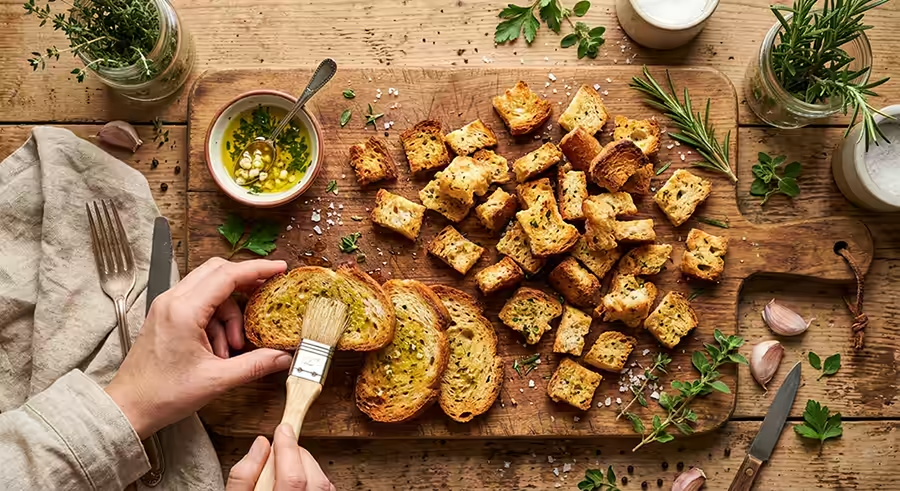
- Breadcrumbs — grind them in a food processor or grate them on a fine grater, then dry them in the oven. Homemade breadcrumbs taste much better than store-bought ones
- Croutons — cut into cubes, drizzle with garlic oil, and bake in the oven at 150°C. Perfect with Caesar salad or tomato soup
- Bread pudding is a classic British dessert that people originally learned to make simply to use up stale bread. It’s poured over with an egg-and-milk mixture and baked—the result is an incredible dessert
- French toast (pain perdu) consists of slices of stale bread soaked in an egg-and-milk mixture and fried in butter. “Pain perdu” literally means “lost bread”—the perfect name
- Bread kvass is a traditional Ukrainian-Slavic beverage. Stale rye bread is dried, covered with hot water, and mixed with sugar and yeast—fermentation takes 1–2 days
- Tyurya is an old, simple dish: stale bread crumbled into a bowl of water, milk, or kvass. An unjustly forgotten food that has been a lifesaver for thousands of generations
- Bread soup—known as soupe à l’oignon in France and açorda in Portugal—is made using stale bread as its base
- Charlotte — some Charlotte recipes call for a base made of slices of stale bread instead of sponge cake
Throwing away bread is considered a real sin in our culture. Our grandmothers used to say, “If bread falls to the ground, pick it up and kiss it.” This isn’t just a superstition, but a deep respect for the work of farmers, bakers, and nature.
Top 15 Tips for Storing Bread
- Never put bread in the refrigerator—it goes stale six times faster there than at normal room temperature
- Let the bread cool completely before wrapping it—at least 1–2 hours on a wire rack
- Store them cut-side down, or place the slices cut-side to cut-side
- Place a slice of apple or half a raw potato in the bread box—they gradually release moisture and prevent the bread from drying out (replace every 2 days)
- A pinch of salt or a piece of charcoal at the bottom of the bread box absorbs excess moisture and prevents mold from growing
- Wipe down your bread box with vinegar once a week—this kills mold spores
- Freeze bread in portions and sliced—that way, you’ll always have fresh bread “on demand” in just 5 minutes
- Don’t store different types of bread together—they can exchange moisture, odors, and spores
- Keep bread away from the stove and oven—heat and steam cause it to go stale faster and create conditions for mold to grow
- For a crispy crust, store in a paper bag or in an open container, not in a plastic bag
- If you don’t have a bread box, a paper bag from the store is a better option than a plastic one
- If bread has mold on it, throw the entire loaf away; do not cut off the affected part: the mycotoxins have already spread throughout the entire crumb
- To extend the shelf life of homemade bread, add 1 tablespoon of honey or olive oil to the recipe—these are natural preservatives
- Large loaves of bread keep better than small ones—a smaller surface area relative to volume means less moisture loss
- If the bread has started to go stale but isn’t spoiled yet, don’t wait—freeze it right away to preserve what you have
Signs that bread has gone bad
It is important to be able to tell the difference between bread that has simply gone stale and bread that is truly spoiled and unsafe.
You can eat bread:
- It is hard or dry, but doesn’t smell musty
- There is a small amount of white powdery residue—check to see if it’s flour or starch (which wipes off easily) rather than mold—the bread is safe
- It has a slightly sour smell, but no musty or moldy odor—which is normal, especially for sourdough bread
The bread needs to be thrown away:
- If you see green, black, or gray spots, it’s definitely mold
- The bread has a musty, musty, or moldy smell even without visible spots—the spores are already there, they’re just not visible to the naked eye
- If the texture has become slimy or rubbery, this is a sign of bacterial contamination
- Bright pink or red spots have appeared—a rare but dangerous strain of the bacterium Serratia marcescens
Important to know: if you see mold even on a single small spot on the bread, the entire loaf is already contaminated with microscopic spores and mycotoxins. Do not try to cut off the moldy part and eat the rest—the toxins have already spread throughout the crumb due to the bread’s porous structure. Unlike hard cheeses, soft bread does not allow for partial removal of mold.
Seasonal Considerations for Storing Bread in Ukraine
We have four distinct seasons, and bread storage conditions vary significantly depending on the season. What works perfectly in winter can lead to mold in as little as a day in summer.
Summer (June–August)
The toughest time. High temperatures (25–35°C) combined with humidity above 60% create ideal conditions for mold. Bread bought in the morning can develop spots by evening if stored in a sealed plastic bag.
For the summer, I recommend:
- Buy bread in smaller quantities and more often—the “buy and eat it the same day” principle
- Store in a well-ventilated bread box in the coolest part of the kitchen
- Freeze any leftovers right after you buy them—don’t wait until tomorrow
- Add a piece of charcoal to your bread box—it absorbs moisture and unpleasant odors
Winter (December–February)
The exact opposite problem: the air in heated rooms is very dry (relative humidity often drops to 30–40%). Bread dries out quickly and becomes crumbly even without going stale in the traditional sense.
In winter, it helps:
- Additionally, wrap the bread in a cloth over the paper bag
- Store in a closed bread box; do not leave the lid open
- Place a small ceramic disc moistened with water next to the bread in the bread box
- Do not place the bread box near a radiator
Spring and Fall
Transitional seasons with fluctuating temperatures and humidity. In apartments without air conditioning, conditions can range from very dry (on warm, sunny days) to humid (during rainy periods and when the heat is turned on). Keep an eye on the conditions in your kitchen and adjust your storage methods accordingly—there’s no one-size-fits-all solution for the entire spring or fall.
Bread in Different Cultures: Interesting Storage Traditions
Every culture has developed its own unique traditions that reflect local conditions, climate, and available ingredients. Examining these traditions helps us understand just how universal—and yet how diverse—the challenge of bread preservation has been throughout human civilization.
Scandinavia: Traditional Norwegian and Swedish knekkebrød is a crispy bread cracker with a large hole in the middle. The bread was threaded onto a pole suspended from the ceiling through this hole. It was stored for years without any packaging—simply in the open air in a dry, cool room. People began to stock up on this bread for the winter and for sea voyages.
The Mediterranean: In Spain and Portugal, stale bread isn’t waste—it’s a staple of the cuisine. Pan de agua was intentionally left to go stale so it could later be used in the legendary soups gazpacho and açorda. Without stale bread, these dishes simply can’t be made properly—fresh bread just falls apart.