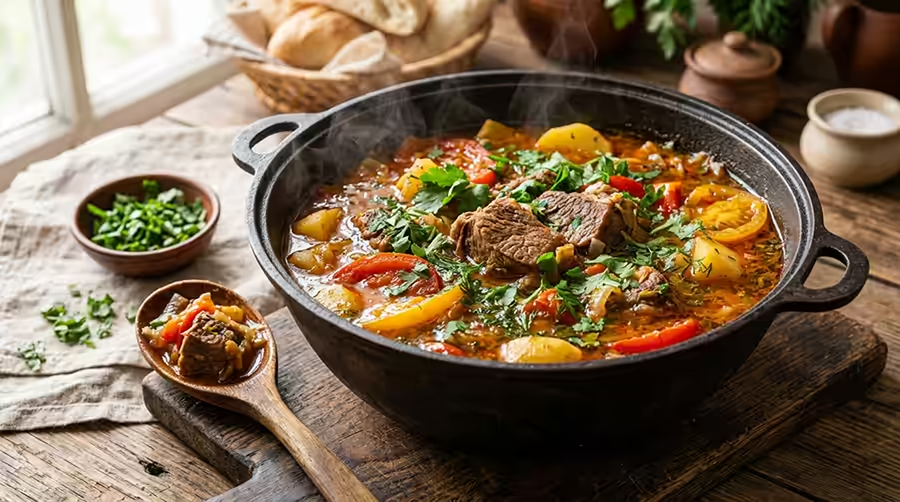
Khashlama is a rich meat dish with vegetables, prepared by simmering slowly in its own juices without browning. It is prized for its tender meat, aromatic broth, simple preparation method, and rich, home-style flavor.
Content
What is khashlama?
Khashlama is one of the most famous dishes of Caucasian cuisine, most often associated with Armenian, Georgian, and other regional traditions. Different regions have their own ways of preparing it: in some places, the dish resembles a thick stew, while in others it is more like a meat soup with plenty of vegetables and broth.
The main feature of khashlam is layering meat and vegetables in a cauldron or a heavy-bottomed pot. Everything is then simmered for a long time over low heat, allowing the ingredients to release their juices, the meat to become tender, and the broth to become rich and aromatic.
Traditionally, khashlama is made with lamb, but today recipes using beef, veal, pork, and even chicken are just as popular. That’s why the dish can easily be adapted to suit different tastes and whatever ingredients you have on hand.
A classic recipe for lamb khashlami
Classic lamb khashlama is the most authentic version of this dish. It is the lamb that gives it its deep, distinctive flavor, which is why khashlama is so beloved by fans of Caucasian cuisine.
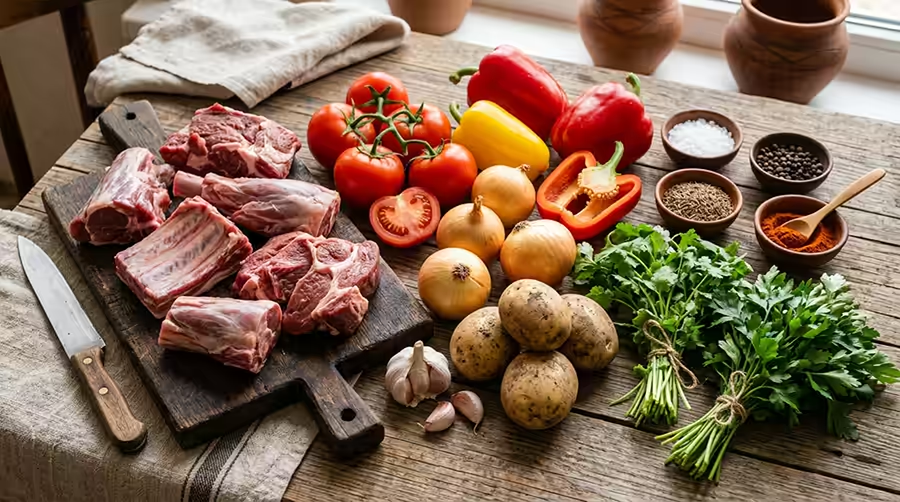
Ingredients
- Lamb (shoulder, brisket, ribs) — 2–2.5 kg
- Tomatoes — 1 kg
- Onions — 3–4 large ones
- Bell peppers — 3–4
- Potatoes — 800 g–1 kg
- Eggplants — 2–3, as desired
- Garlic — 1 head
- Hot peppers — 1–2
- Parsley — 1 bunch
- Cilantro — 1 bunch
- Bay leaves — 3–4
- Khmeli-suneli — 1.5–2 tsp
- Ground coriander — 1 tsp
- Cumin — 0.5 tsp
- Ground black pepper — to taste
- Salt — to taste
How to Make Khashlama, Step by Step
1. Prepare the meat
Rinse the lamb, pat it dry, and cut it into large pieces. Avoid cutting it too small, as the meat may fall apart during the long simmering process. It’s best to cut the pieces into 6–8 cm chunks, and leave some pieces on the bone to make the broth richer.
Season the meat with salt, black pepper, khmeli-suneli, and coriander. Let it sit for 20–30 minutes to marinate a bit.
2. Prepare the vegetables
Slice the onion into large rings or half-rings. Cut the tomatoes into wedges and the bell pepper into large strips or squares. Peel the potatoes; if they are small, leave them whole, and if they are larger, cut them in half.
Cut the eggplants into large pieces, sprinkle them lightly with salt, and let them sit for 10–15 minutes to remove any excess bitterness. Then rinse and pat dry. Separate the garlic into cloves, but you don’t need to peel them completely—this way, the flavor will release gradually.
3. Arrange the ingredients in layers
A cauldron or a pot with a very thick bottom is ideal for making khashlam. No oil is added. The ingredients are placed in the cold pot.
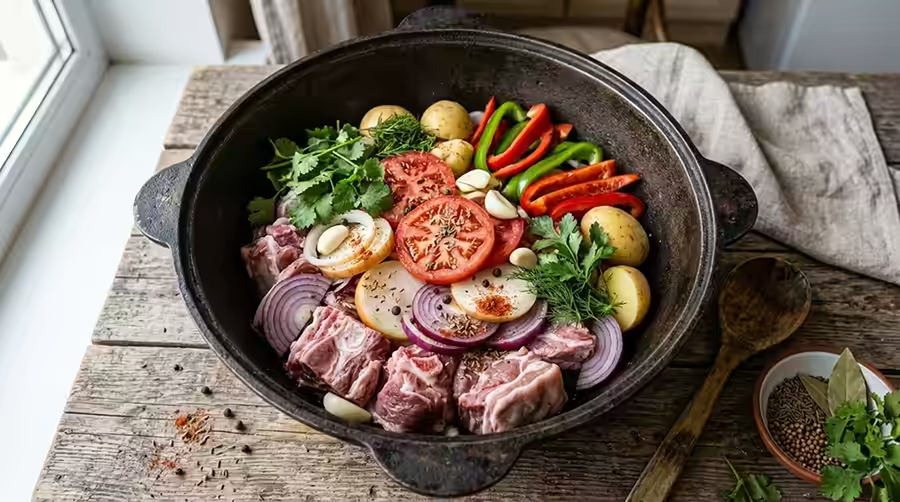
Approximate layer sequence:
- Half an onion
- Half the meat
- Eggplants
- Bell pepper
- Some tomatoes
- The rest of the meat
- The rest of the onions
- The rest of the tomatoes
- Potatoes
- Garlic, bay leaf, hot pepper, herbs
You can lightly salt each meatball and season it with spices.
4. Simmer over low heat
Cover the pot tightly with a lid and place it over medium heat. Once the liquid begins to heat up rapidly and shows signs of boiling, immediately reduce the heat to low.
Cook the khashlama for 2–2.5 hours. It’s best not to lift the lid during the first hour to prevent steam from escaping. The meat and vegetables will release enough liquid on their own, so water is usually not added, or only a very small amount is added.
5. Serve
Serve the finished khashlama hot, in deep bowls or a large serving dish. Sprinkle with fresh herbs. It pairs perfectly with lavash, homemade bread, or thin flatbread.
Beef Hashlama
Beef khashlama is one of the most popular versions. It has a slightly milder flavor that many people find more familiar than the lamb version, and when cooked properly, the meat turns out very tender.
Ingredients
- Beef — 1.5–2 kg
- Tomatoes — 700–800 g
- Onions — 3
- Bell peppers — 3
- Potatoes — 700 g
- Garlic — 5–6 cloves
- Hot pepper — 1 piece
- Coriander — 1 tsp
- Cumin — 0.5 tsp
- Thyme — 2–3 sprigs
- Parsley and cilantro — to taste
- Salt and pepper — to taste
- Water — 200–300 ml, for consumption
Preparation
Cut the beef into large pieces. You can peel the tomatoes if you want a smoother broth. Layer the ingredients: a layer of vegetables, then the meat, spices, another layer of vegetables, and top with potatoes and herbs.
If the tomatoes aren’t very juicy, add a little water. Cook over low heat for about 2–2.5 hours. The beef should be tender enough to pierce easily with a fork but not fall apart completely.
Pork Hashlama
This version isn’t the traditional one, but it’s a big hit with those who love juicy, tender meat. Pork cooks a little faster, and the dish turns out heartier and more flavorful.
Ingredients
- Pork (neck or shoulder) — 1.5 kg
- Tomatoes — 4–5
- Onions — 2–3
- Bell peppers — 3
- Potatoes — 600 g
- Carrots — 1–2
- Garlic — 4–5 cloves
- Bay leaves — 2–3
- Black peppercorns — 10–15
- Parsley — 1 bunch
- Salt — to taste
Preparation
Cut the pork into large pieces. Slice the carrots into thick rounds. Layer the ingredients as in the classic recipe: onions, meat, peppers, carrots, tomatoes, potatoes, garlic, and spices.
Simmer for about 1½ to 2 hours over low heat. The dish will be very flavorful, and the pork will stay juicy if you don’t overcook it by letting it boil vigorously.
Beer-braised meat
Another popular variation is khashlama made with beer. This method is often used when cooking in a cauldron outdoors. The beer adds a slight bitterness, a milder flavor, and helps make the meat even more tender.
What You Need to Know
- You can use light or dark beer.
- Light beer has a more delicate flavor.
- Darkness makes the aroma deeper and richer.
- Alcohol evaporates during prolonged cooking.
How to cook
Follow the classic recipe, but instead of water or some vegetable broth, add 500–700 ml of beer. This works best with lamb or beef. Cook over low heat for 2–2.5 hours.
Georgian-style khashlama
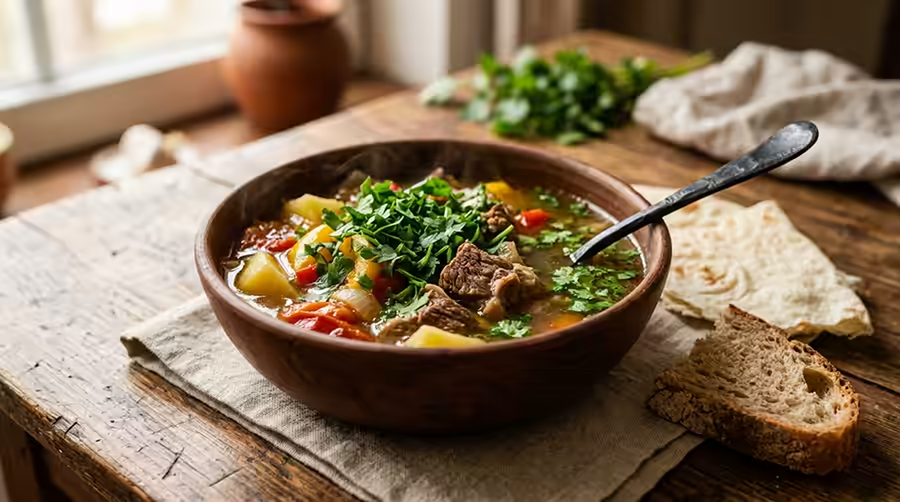
Georgian variations are often spicier and have a more vibrant flavor. They may include more garlic, aromatic spices, and even walnuts.
Key features of the recipe
- Beef or veal is used
- They add more garlic
- Utsho-suneli or other Caucasian spices are often added
- Sometimes a little tomato paste is added for color
- Chopped walnuts may be used
Preparation
The method is essentially the same: layering the ingredients and simmering them slowly. But thanks to the spices, Georgian khashlama turns out to be more flavorful, aromatic, and slightly spicier.
Khashlama in a multicooker
If you don’t have a cauldron, khashlam is easy to make in a slow cooker. It’s a very convenient option for home cooking, especially when you want to keep the process as hands-off as possible.
How to cook
- Lightly grease the multicooker bowl with oil
- Arrange the ingredients in layers
- Add salt, spices, and herbs
- Set the “Slow Cook” mode for 1.5–2.5 hours, depending on the type of meat
- Once finished, leave the dish in the warming mode for another 10–15 minutes
When cooked in a multicooker, khashlama turns out tender, juicy, and very convenient for everyday cooking.
Veal Hashlama
Veal is a great choice for those who prefer a more tender and delicate version of khashlami. It cooks faster and has a lighter flavor.
Ingredients
- Veal — 1.5–2 kg
- Tomatoes — 3–4
- Onions — 2
- Bell peppers — 2
- Potatoes — 5–6
- Carrot — 1
- Zucchini — 1–2 pieces
- Garlic — 4–5 cloves
- Bay leaves — 3
- Peppercorns — to taste
- Basil, parsley, cilantro — to taste
Preparation
Layer the meat and vegetables, cover with a lid, and simmer over very low heat for about 1½–2 hours. If desired, you can blend some of the vegetables at the end and return them to the pot to make a thicker sauce.
Secrets to a Delicious Khashlami
To make sure the dish turns out just right, it’s important to follow a few rules.
Choose the right meat
It’s best to choose cuts of meat with a small amount of fat and connective tissue. These are the cuts that become very tender after slow cooking. Shoulder, brisket, ribs, and neck are good choices for khashlami.
Don’t cut it too small
Both the meat and the vegetables should be cut into large pieces. This helps preserve the dish’s texture. If you cut everything too finely, the ingredients will turn to mush during cooking.
Take your time
Khashlama doesn’t do well over high heat. Its flavor really comes out when it simmers slowly. If it boils too vigorously, the meat will become tough and the broth will lose its richness.
Don’t open the lid too often
Steam is an important part of the process. It helps vegetables and meat cook in their own juices. Therefore, it’s best to open the lid as infrequently as possible.
Don’t overdo it with the spices
Khashlama has a natural flavor of meat and vegetables, so the spices should enhance it rather than overpower it. A basic set of spices is all you need: salt, black pepper, coriander, cumin, bay leaf, and khmeli-suneli.
Choose the right tableware
It’s best to cook this in a cauldron, a cast-iron pot, or a pot with a thick bottom. Thin-walled pots aren’t suitable because the food might burn.
What vegetables can you add?
In addition to the classic ingredients, the following are often added to khashlami:
- Eggplants
- Zucchini
- Carrots
- Hot peppers
- Celery
- Green chili pepper
- Tomatoes in their own juice
- Basil
- Thyme
The recipe is easy to adapt to the season. In the summer, khashlama is especially flavorful thanks to the ripe vegetables, while in the winter, it can be adapted to use whatever ingredients are available.
How to serve khashlama
Khashlama is served hot, straight from the cauldron or pot. It tastes best in deep bowls, served with the broth.
The following go well with it:
- Lavash
- Homemade bread
- Fresh herbs
- Pickled onions
- Yogurt
- Pomegranate juice
- Dry red wine
If the dish is very thick, it is served as a main course. If it contains a lot of broth, it is served as something between a soup and a stew.
How does khashlama differ from a regular stew?
At first glance, khashlama resembles a stew. But there are a few key differences:
- It is not browned before simmering
- Arrange the ingredients in layers
- The dish is cooked mostly in its own juices
- Cut the meat into large pieces
- The main focus is on meat, not just vegetables
That is why the flavor of the hashlam turns out to be deeper, meatier, and richer.
Common mistakes when cooking
Even a simple dish can turn out badly if you make basic mistakes.
Too much water
Khashlama shouldn’t be cooked in too much liquid. If you add too much water at the start, you’ll end up with simply boiled meat and vegetables, rather than a rich, slow-cooked dish.
Intense fire
One of the most common mistakes is cooking khashlama over high heat. This can cause the meat to become dry or tough.
Not enough onions and tomatoes
These vegetables are what give the dish its main flavor and aroma. If there aren’t enough of them, the dish will turn out a bit dry.
Fine cut
Finely chopped vegetables cook down very quickly. For khashlami, you need large pieces so that the dish has a distinct texture.
A poor choice of meat
Meat that’s too lean isn’t ideal for khashlami. It’s better to choose cuts with a small amount of fat and collagen.
The nutritional value of khashlami
Khashlama is a hearty and nutritious dish. It contains protein from meat, fiber and vitamins from vegetables, as well as natural collagen if prepared with bones.
Approximately 100 grams of beef hash contains about 120–150 calories, but the exact calorie content depends on the fat content of the meat, the amount of potatoes, and the cooking method.
How to store khashlama
Khashlama keeps well in the refrigerator for 3–4 days in a sealed container or in a covered pot. It often tastes even better the next day, as the meat and vegetables absorb the broth even more thoroughly.
It’s best to reheat it over low heat. You can freeze it, but the vegetables may lose some of their texture after thawing.
Frequently Asked Questions About Khashlama
What kind of meat is best for khashlami?
If you want an authentic flavor, go for lamb. If you prefer a milder, more familiar option, choose beef. If you like a juicy and tender texture, pork is the way to go.
Is it possible to cook without a cauldron?
Yes. Any cookware with a thick bottom and a tight-fitting lid will work. The main thing is that the heat is distributed evenly.
Do I need to add water?
Not necessarily. If the vegetables are juicy, the hashlam cooks perfectly well in its own juices. Add water only if necessary, and in small amounts.
How long does it take to cook khashlama?
- Lamb — 2–2.5 hours
- Beef — 2–2.5 hours
- Pork — 1.5–2 hours
- Veal — 1.5–2 hours
Can you prepare khashlama in advance?
Yes. It’s perfect for making ahead of time, especially if you’re planning a large gathering.
Khashlama is a first or second course
It can be either the first or the second course. If it has more broth, it’s served as a soup. If there’s less liquid, it’s served as a main course.
Can it be cooked over a campfire?
Yes, and that’s one of the best ways to do it. Khashlama cooked in a cauldron over an open fire has a particularly rich flavor and aroma.
Hashlama in the great outdoors
When cooking outdoors, it’s best to prepare all the ingredients in advance. Cut the meat and vegetables at home, and pack the spices and herbs separately. Once you arrive, all you’ll need to do is layer everything in the cauldron and monitor the heat.
For a group of 6–8 people, it’s best to choose an 8–10-liter pot. The heat should be steady, without sudden flare-ups, so the dish doesn’t boil too vigorously.
Conclusion
Khashlama is a dish that combines simple ingredients, slow cooking, and a truly rich flavor. It doesn’t require any complicated techniques, but it does call for patience, high-quality meat, and the right balance of vegetables and spices.
If you prepare khashlama correctly, you’ll end up with very tender meat, juicy vegetables, and a rich, aromatic broth. It’s a wonderful choice for a family dinner, a festive meal, or a meal cooked in a cauldron outdoors.