
Pho Bo is not just a soup, but a true gem of Vietnamese cuisine that has won the hearts of millions of people around the world. This aromatic broth with rice noodles, tender beef, and fresh herbs has become a symbol of Vietnamese gastronomy and a true work of culinary art.
The secret to Pho Bo’s popularity lies in its unique combination of simplicity and complexity—simple ingredients are transformed into an unparalleled symphony of flavors thanks to a special cooking technique and hours of simmering the broth.
Content
Origin and History of Pho Bo
The exact origin of Pho Bo is shrouded in legend, but most chefs agree that this dish originated in northern Vietnam, specifically in Hanoi, where it was developed in the 19th century. Pho Bo was originally prepared in street kiosks, but later spread throughout the country and beyond.
The soup was influenced by Chinese and French culinary traditions, creating a unique dish that has become a true symbol of Vietnam. The word “pho” translates from Vietnamese as “soup,” and “bo” translates as “beef.”
Anatomy of the Perfect Pho Bo
Traditional Pho Bo consists of three main components: rich broth, rice noodles, and meat. Each element plays an important role in creating a harmonious flavor.
Broth — The Heart and Soul of Soup
The broth is the basis of Pho Bo and determines the quality of the finished dish. Beef bones are used to make it, which are simmered for several hours over low heat. The peculiarity is that the longer the broth is cooked, the tastier it becomes.
Spices — The Secret to Unsurpassed Flavor
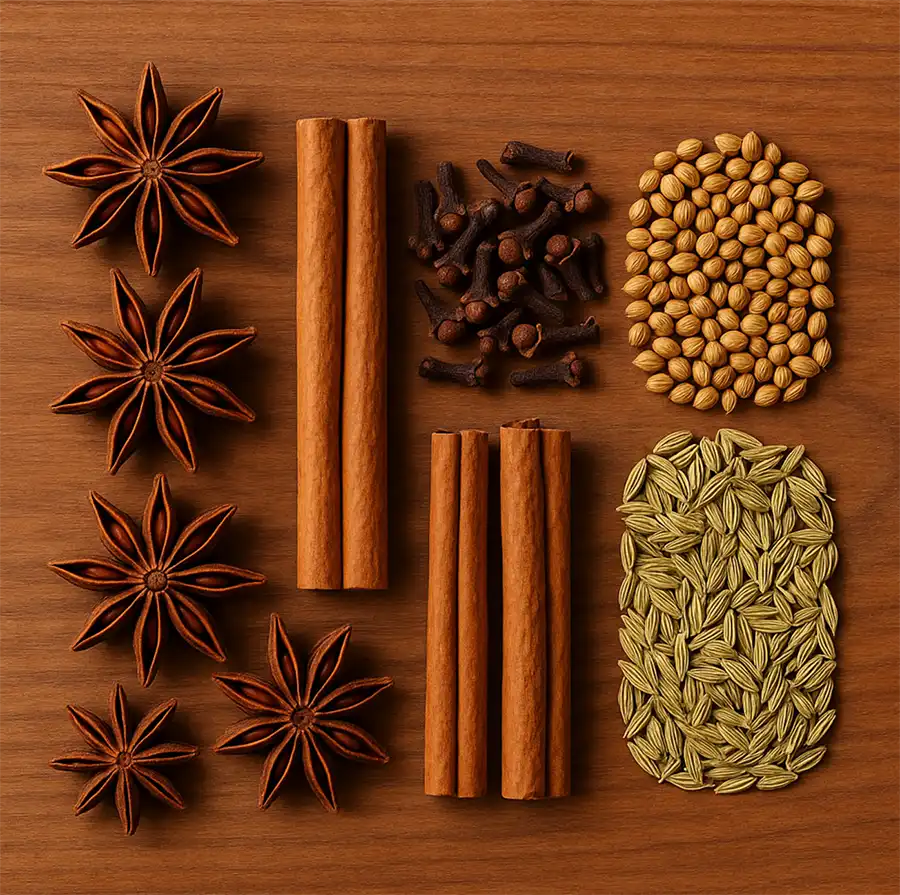
The unique aroma of Pho Bo comes from a variety of spices: star anise, cinnamon, cloves, ginger, coriander seeds, and fennel. These spices create a complex bouquet of aromas that is the hallmark of authentic Vietnamese soup.
Rice Noodles
For Pho Bo, special flat rice noodles with a thickness of 3 to 5 mm are used. They are made from rice flour and water, are grayish-white in color when raw, and turn white after cooking.
Detailed Recipe for Pho Bo
Ingredients
For the broth:
- Beef on the bone — 800 g – 1 kg
- Water — 2.5-3 liters
- Onions — 2
- Ginger root — 3-4 cm
- Star anise — 2-3 stars
- Cinnamon — 1-2 sticks
- Carnation — 3-5 buds
- Coriander seeds — 1 tsp.
- Fennel — 0.5 tsp.
- Fish sauce — 3-4 tablespoons
- Salt and sugar — to taste
To serve:
- Flat rice noodles — 300-400 g
- Beef tenderloin — 200-300 g
- Onion — 1 piece
- Green onions — 1 bunch
- Fresh cilantro — 1 bunch
- Thai basil — a few sprigs
- Lime — 1-2 pieces
- Bean sprouts — 100 g
- Chili pepper — to taste
Step-by-step preparation
Step 1: Preparing the Broth
- Pre-cleaning the meat: Rinse the beef bones with cold water, place them in a pot, and cover with water. Bring to a boil and immediately drain the first broth—this will help remove excess impurities and foam.
- Main cooking: Replace the water with fresh water, put the meat back in and simmer for 2-3 hours over low heat. Skim off the foam regularly to obtain a clear broth.
Step 2: Preparing the Spices
- Roasting vegetables: Cut the onion and ginger in half and char them over an open flame or in a dry frying pan until brown. This will give the broth a special color and aroma.
- Adding spices: After an hour of cooking, add the fried onions and ginger to the broth, along with all the spices: star anise, cinnamon, cloves, and coriander.
Step 3: Final processing of the broth
- Seasoning: 30 minutes before readiness, add fish sauce, salt, and sugar to taste. The broth should be rich, sweet and salty, dark in color, but clear.
- Strain: Strain the finished broth through a fine sieve to obtain a smooth consistency. Remove the meat, pick out the bones, and cut the flesh into thin slices.
Step 4: Preparing the Noodles and Toppings
- Preparation of noodles: Soak rice noodles in cold water for 10-15 minutes, then boil in boiling water until medium done. Rinse first with cold, then hot water.
- Preparing the meat for serving: Cut the raw beef tenderloin into slices as thin as possible. It will cook in the hot broth.
- Seasonings and herbs: Chop the green onions, cilantro, and basil. Cut the onion into thin rings. Cut the lime into slices.
Step 5: Compilation and Submission
- Assembling the soup: Place the noodles in a deep bowl, top with thin slices of raw beef and onion rings.
- Pouring broth: Pour hot broth over everything — the meat will cook instantly due to the high temperature.
- Final presentation: Sprinkle with chopped herbs, add bean sprouts, and serve with a separate plate of fresh herbs, lime, and chili sauce.
Variations of Pho Bo
Vietnamese cuisine offers several popular versions of this soup, each with its own unique characteristics:
Pho Ga — with chicken
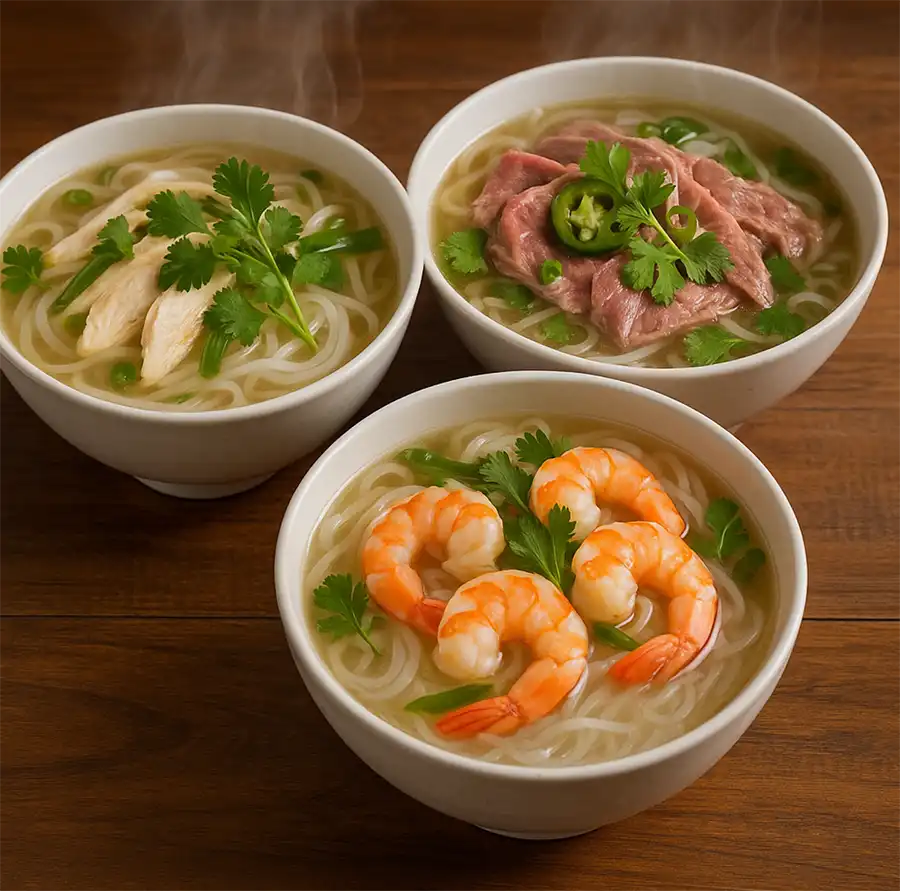
Pho Ga is prepared according to the same principle, but chicken is used instead of beef. The broth is cooked on chicken bones, which makes it slightly lighter but no less flavorful. This variation is especially popular in the southern regions of Vietnam.
Pho Ca — with Fish
Pho Ca is a seafood variation of soup with fish and seafood. Fish sauce is added to the broth to enhance the seafood flavor. In northern regions, it is served with wide rice noodles, and in the south, with various herbs and lime.
Fo Tom — with Shrimp
The shrimp variation is also popular, especially in coastal areas. It is prepared in a similar way, with the addition of shrimp and specific seafood seasonings.
Vegetarian Pho
There are also vegetarian versions of Pho without meat, where the broth is prepared with vegetables, lots of spices, and tofu.
Secrets and Tips from Professionals
Secrets of the Perfect Broth
- Time is the key to success: Authentic Pho Bo requires at least 2-3 hours of cooking, and professional chefs recommend cooking the broth for 6-8 hours.
- The right meat: For broth, it is best to use beef neck — it gives richness and remains tender.
- Caramelizing vegetables: Be sure to fry the onions and ginger until brown—this gives the broth its characteristic color and depth of flavor.
- Spice quality: Use whole spices rather than ground ones — they release their aroma better during long cooking.
Tips for Serving
- The right temperature: The meat should be sliced as thinly as possible and at room temperature so that it cooks evenly in the hot broth.
- Freshness of herbs: Always use fresh herbs — wilted herbs significantly impair the taste of the dish.
- Serving temperature: Pho Bo should be served as hot as possible so that the raw meat cooks properly.
Common Mistakes
- Wrong noodles: Do not use regular wheat noodles instead of rice noodles — this will drastically change the taste of the dish.
- Pre-cooking meat: Do not cook meat for serving — it should be cooked directly on the plate from hot broth.
- Saving on spices: Don’t try to substitute traditional spices — each one plays an important role in shaping the flavor.
Rules for Consuming Pho Bo
Proper consumption of Pho Bo is a whole ritual with its own peculiarities:
Traditional Method
- Chopsticks and spoon: Noodles and meat are eaten with chopsticks, while broth is drunk with a spoon.
- Adding seasonings: Everyone has the right to adjust the taste to their liking by adding lime, chili, or fish sauce.
- Fresh herbs: Add herbs gradually to control the intensity of the flavor.
Time of Consumption
In Vietnam, Pho Bo is traditionally eaten for breakfast, although it is now served at any time of day. It is a nutritious and energizing dish, ideal for starting the day.
Useful Properties of Pho Bo
Fo Bo is not only delicious, but also extremely healthy:
Nutritional Value
- High protein content from beef and broth
- Complex carbohydrates from rice noodles provide long-lasting satiety.
- Vitamins and minerals from fresh herbs and spices
Medicinal Properties
- Ginger and spices have anti-inflammatory properties
- Hot broth helps with colds
- Easy to digest thanks to prolonged cooking
Where to Buy Ingredients
Nowadays, most of the ingredients for Pho Bo can be found in large supermarkets. Specialized Asian stores offer ready-made spice mixes for Pho Bo, rice noodles of various thicknesses, and other authentic ingredients.
For convenience, there are also ready-made kits for quick preparation of Pho Bo, although they cannot completely replace the traditional recipe.
Frequently Asked Questions (FAQ)
How long does it take to prepare Pho Bo?
The entire process takes 4-5 hours, most of which is spent cooking the broth. The actual cooking time is about 30-40 minutes.
Is it possible to prepare Pho Bo faster?
The minimum cooking time for the broth is 2 hours, but the true deep flavor is achieved only after 4-6 hours.
Which part of beef is best to use?
The neck or shoulder with bones is ideal for broth, while the tenderloin or entrecôte, cut as thinly as possible, is ideal for serving.
Can fish sauce be substituted?
Fish sauce gives a unique umami flavor that is difficult to replace. In a pinch, you can use soy sauce, but the taste will be different.
What to do if the broth is cloudy?
Strain the broth through a fine sieve or cheesecloth. In the future, skim off the foam more thoroughly during cooking.
How long does the finished broth keep?
The broth can be stored in the refrigerator for 2-3 days, or frozen for up to 3 months.
Can Pho Bo be cooked in a multicooker?
Yes, use the “Stew” or “Soup” mode for 3-4 hours. The result will be similar to the traditional one.
What to do if you don’t have all the spices?
The minimum set: star anise, cinnamon, cloves, and ginger. Without them, you cannot achieve the true flavor of Pho Bo.
Conclusion
Pho Bo is more than just soup. It embodies the philosophy of Vietnamese cuisine, where simplicity is combined with complexity, and patience is rewarded with unmatched flavor. Preparing authentic Pho Bo requires time and attention to detail, but the result is worth all the effort.
This dish teaches us to appreciate the process of cooking, respect traditions, and understand that the best things in life take time. Each bowl of Pho Bo is a journey to the heart of Vietnamese culture, an invitation to experience the harmony of flavors and aromas that have been developed over centuries.
Try making Pho Bo at home, following the traditional recipe and our tips. Let the aroma of star anise and cinnamon fill your kitchen, and the taste of authentic Vietnamese soup give you an unforgettable culinary experience and the warmth of a distant Asian country.