
Home brewing is an exciting hobby that allows you to create unique beverages from natural ingredients and control the entire production process from start to finish. In this detailed article, we will cover all aspects of home brewing: from selecting raw materials to tasting the finished product.
Content
What is home brewing?
Home brewing is the process of making beer at home using traditional techniques, which includes mashing malt, boiling wort with hops, fermentation, and maturation. Unlike industrial production, home brewers have the opportunity to experiment with recipes and create unique flavor combinations.
Beer is one of the oldest alcoholic beverages known to mankind. Archaeological research shows that beer was brewed as early as 7,000 years ago in Mesopotamia and Egypt. Today, home brewing is experiencing a real renaissance, as more and more people seek to create natural products with their own hands.
Basic ingredients for home brewing

Malt – the basis of beer
Malt is the most important ingredient in beer, forming its basis. It is sprouted and dried grain, most often barley, although wheat, rye, and other types are also used.
Types of malt:
- Base malt – the foundation for most recipes (Pilsner, Vienna, Pale Ale)
- Colored malt – gives beer its color and aroma (Munich, Crystal, Chocolate)
- Caramel malt – adds sweet caramel notes
- Special malt – for special styles (smoked, peaty)
The color of malt is measured in EBC (European Brewery Convention) units. Light pilsner has 2-3.5 EBC, while black malt can reach 1200-1450 EBC.
Hops – for bitterness and aroma
Hops give beer its characteristic bitterness and aroma and have preservative properties. High-quality hop varieties with unique characteristics are grown in Ukraine.
Ukrainian hop varieties:
- Zagrav – a versatile bitter-aromatic variety with a spicy floral aroma
- Zlato Polissya – delicately aromatic with a herbal character
- National – aromatic with the lowest coucumulone content
- Alta – a high-resin bitter variety, similar to the German Magnum
Main characteristics of hops:
- Alpha acids – responsible for bitterness (4-15%)
- Beta acids – affect aroma and stability
- Essential oils – create an aromatic profile
Yeast – the driving force behind fermentation
Yeast converts the sugars in the wort into alcohol and carbon dioxide, forming the flavor profile of the beer. There are two main types of brewer’s yeast:
Fresh yeast (Saccharomyces cerevisiae):
- Fermentation temperature: 15-25°C
- They give off rich fruity and spicy aromas.
- Suitable for ales, IPAs, porters
Baker’s yeast (Saccharomyces pastorianus):
- Fermentation temperature: 10-15°C
- Create a clean, neutral taste
- Ideal for camps and pilsners
Water – the basis of everything
Water accounts for 85-90% of beer’s composition, so its quality is critically important. The main parameters of water for brewing are:
- pH: 6-7 for mashing, 5.2-5.5 for wort
- Hardness: depending on the style of beer
- Mineral composition: calcium, magnesium, sulfates, chlorides
Water should be purified to remove chlorine, which is harmful to yeast. Boiled or filtered water is suitable for most recipes.
Essential equipment for home brewing
Basic equipment set
For kneading and cooking:
- Large pot (30-40 liters for 20-25 liters of beer)
- Smaller pot for washing water
- Thermometer (up to 80°C)
- Bag for mashing malt or gauze
For fermentation:
- Fermenter with airtight lid
- Water seal for CO₂ outlet
- Siphon for decanting
For bottling:
- Glass or plastic bottles
- Lids and caps
- Silicone hose
Additional equipment
- Chiller – for rapid cooling of wort
- Scales – for accurate ingredient measurement
- Areometer – for measuring density
- Disinfectants – iodine solution
Professional brewing kits
For serious enthusiasts, there are ready-made brewing systems with a capacity of 30-60 liters. Such kits include:
- Stainless steel storage/boiling kettle
- Steam generator
- Barboter filter
- Immersion chiller
- Automation and temperature control
Step-by-step recipe for classic homemade beer
Ingredients (for 20 liters of finished beer):
- Barley malt (Pilsner): 4 kg
- Granulated hops: 45 g
- Brewer’s yeast: 1 packet (11-12 g)
- Water: 27 l
- Dextrose for carbonation: 8 g per liter
Stage 1: Malt mashing

- Grinding malt. Grind the malt into coarse grains, keeping the husks intact. The malt should not be like flour, otherwise the wort will become viscous.
- Preparation of the mash. Heat 15 liters of water to 65°C. Slowly add the ground malt, stirring constantly. A thick porridge will form – this is the mash.
- Temperature pauses:
- 52°C – 20-30 min (protein pause)
- 63°C – 45-60 min (saccharification)
- 72°C – until complete saccharification (minimum 30 minutes)
- 76°C – preparation for filtration
- Iodine test. Mix a drop of the paste with iodine. If the color does not change, the starch has completely turned into sugar.
Stage 2: Filtering and rinsing
- Filtering. Pour the mash through a colander lined with cheesecloth or a special bag. The resulting wort should be clear.
- Rinsing the grain. Pour hot water (76-78°C) over the remaining grain to extract residual sugars. Strain the rinsing water as well.
- Collecting the wort. Combine the first and rinse wort. The total volume should be about 25 liters.
Stage 3: Boiling and hopping
- Start boiling. Bring the wort to a boil in a large pot. Skim off any foam that forms.
- Adding hops:
- 60 minutes before the end: the main part of the hops for bitterness
- 15 minutes before the end: hops for flavor
- 5 minutes to go: aromatic hops
- Cooking time. Cook the wort for 60-90 minutes to completely evaporate unwanted compounds.
Stage 4: Cooling
- Rapid cooling. Cool the wort to 20-25°C as quickly as possible to prevent contamination. Use a chiller or an ice bath.
- Aeration. Vigorously stir the cooled wort to saturate it with oxygen, which is necessary for yeast.
Stage 5: Fermentation
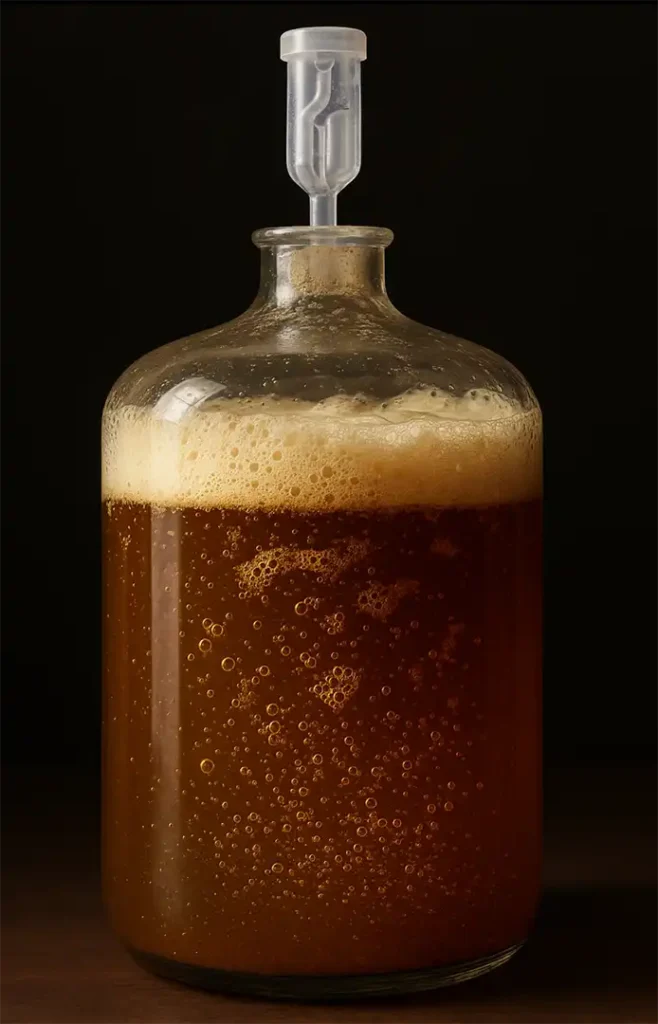
- Adding yeast. Sprinkle the yeast over the surface of the wort or activate it beforehand in warm water.
- Primary fermentation. Place the wort in a fermenter with a water seal. Fermentation lasts 5-7 days at a temperature of 18-22°C.
- Secondary fermentation. Once active fermentation is complete, transfer the homebrew to a clean fermenter, leaving the sediment behind. Allow to mature for another 7-14 days.
Stage 6: Carbonation and bottling
- Preparation of the primer. Dissolve dextrose (8 g/L) in a small amount of boiled water.
- Mixing. Carefully mix the primer with beer in a large container.
- Bottling. Pour the homemade beer into sterilized bottles, leaving 3-5 cm from the neck.
- Carbonation. Leave the bottles at room temperature for 1-2 weeks to allow gas to form.
- Maturation. Transfer the beer to a cool place (6-10°C) for 2-4 weeks for final maturation.
Variations and styles of home-brewed beer
Light beers
Pilsner is the most popular light lager with a delicate hop aroma. Use Pilsner malt (2-3 EBC) and noble hop varieties.
Pale Ale is a British style with a rich malt flavor and noticeable hop bitterness. The base is Pale Ale malt (7-10 EBC).
Dark beers
Porter – a dark beer with coffee and chocolate notes. Add 10-15% caramel or chocolate malt.
Stout – the darkest style using roasted barley, which gives it a characteristic bitterness and coffee aroma.
Wheat beer
Weissbier is a German wheat beer made with 50-60% wheat malt. It is characterized by its mild taste and natural cloudiness.
Seasonal and fruit beers
Add fruits, berries, and spices during secondary fermentation to create unique flavors. Popular additives include cherries, raspberries, coriander, and orange peel.
Secrets and tips from experienced brewers
Temperature control
Temperature is a key factor in beer quality. Use a thermometer and stabilize the fermentation temperature:
- Yeast starter: 18-22°C
- Camping yeast: 10-15°C
Sanitation and sterility
Disinfect all equipment that comes into contact with the wort after boiling. Use iodine solutions or special agents.
Water quality
If tap water has a strong chlorine smell, let it stand or use filtered water. For complex recipes, analyze the mineral composition.
Choosing yeast
Experiment with different yeast strains to achieve unique flavor profiles. Ale yeasts produce more aromas, while lager yeasts produce a cleaner taste.
Proper hopping
- Add bitter hops at the beginning of boiling (60 min).
- Aromatic – at the end (5-15 min)
- For maximum aroma – “cold hopping” after fermentation
Carbonization
Natural carbonation gives a better taste than forced carbonation. Calculate the amount of primer accurately: 6-8 g of dextrose per liter for most styles.
Common mistakes and how to avoid them
Errors during grinding
Grinding too finely leads to sticky clogging and poor filtration. Malt should be cracked, not ground into flour.
Incorrect temperature disrupts enzymatic processes. Monitor the temperature with a thermometer and follow the recipe.
Errors during fermentation
Too high a temperature causes the formation of unwanted esters and alcohols. Use temperature control.
Yeast infection due to poor sanitation leads to beer souring. Sterilize all equipment.
Problems with carbonization
Excess gas due to excessive sugar. Calculate the primer accurately.
Insufficient carbonation due to old yeast or low temperature. Add fresh yeast or increase the temperature.
Storage and tasting
Proper storage
- Temperature: 6-12°C for most styles
- Avoid direct sunlight
- Store bottles upright
- Shelf life of homemade beer: 3-6 months
Tasting
Supply temperature:
- Lightweight bearings: 6-8°C
- Country: 8-12°C
- Hardy dark varieties: 12-14°C
Errors in usage:
- Do not overcool beer – this destroys the aroma.
- Do not add ice to beer
- Don’t drink too quickly – enjoy the aroma
Useful properties and health effects
Nutritional value of beer
Home-brewed beer contains beneficial substances:
- B vitamins: B1, B2, B6, B12, folic acid
- Minerals: potassium, magnesium, phosphorus, silicon
- Antioxidants: flavonoids from hops
- Xanthohumol: a substance with anti-cancer properties
Potential benefits of moderate consumption
- Reducing the risk of cardiovascular disease
- Increased bone density
- Prevention of type 2 diabetes
- Antihypertensive properties
Disclaimer
Regular excessive consumption of beer can lead to:
- Development of alcohol dependence
- Weight problems (“beer belly”)
- Liver and heart disorders
- Hormonal imbalances
Recommended moderate consumption – no more than 1-2 units of alcohol per day for adults.
FAQ: Answers to frequently asked questions
Question: How long does it take to make homemade beer?
Answer: The entire process takes 4-8 weeks: 1 day for brewing, 1-2 weeks for fermentation, 1-2 weeks for carbonation, and 2-4 weeks for maturation.
Question: Is a special permit required for home brewing?
Answer: In Ukraine, home production of alcohol for personal consumption does not require a license, but is limited to certain volumes in accordance with the law.
Question: How much does it cost to brew homemade beer?
Answer: The cost of homemade beer is 15-25 UAH per liter, depending on the quality of the ingredients.
Question: Is it possible to brew homemade beer without special equipment?
Answer: Yes, you can use regular pots and improvised tools, although special equipment greatly simplifies the process.
Question: How can I tell when fermentation is complete?
Answer: Fermentation is complete when gas stops escaping through the water seal and the beer’s density stabilizes at 1.008-1.020.
Question: Why does home-brewed beer sometimes taste unpleasant?
Answer: The most common reasons are: infection due to poor sanitation, incorrect fermentation temperature, stale ingredients, or recipe errors.
Question: Can regular sugar be used for carbonation?
Answer: Yes, but dextrose is a better choice because it does not leave an aftertaste. Proportion: 6-8 g of sugar per liter.
Conclusions
Home brewing is an exciting hobby that combines science, art, and tradition. Successfully mastering this craft requires patience, precision, and a willingness to experiment. Start with simple recipes, follow sanitary standards, and don’t be afraid to try new variations.
Key factors for success: high-quality raw materials, clean equipment, temperature control, and time for maturation. With experience, you will be able to create unique beer varieties that surpass store-bought counterparts in taste and quality.
Home brewing is not just a drink, but the result of a creative process that brings satisfaction from creating something real with your own hands. Start your brewing journey today, and soon you will be able to enjoy your own exclusive beer with friends and family.