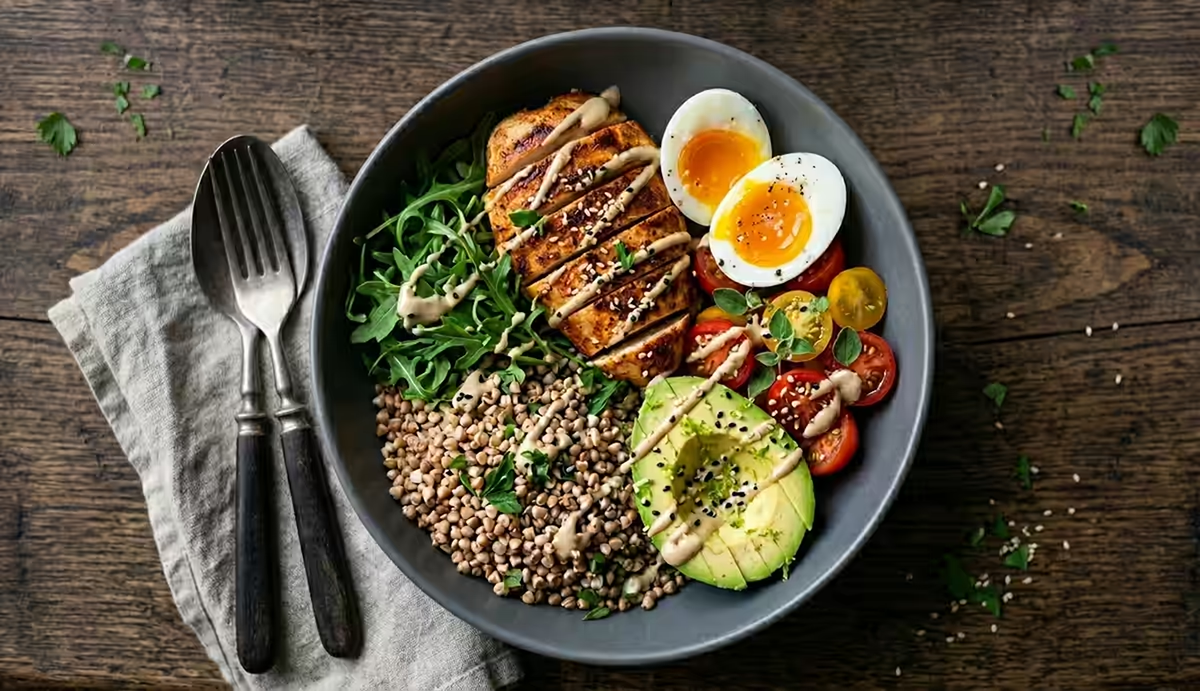
If you’re looking for a dinner that’s both filling and light, a chicken and buckwheat bowl is the perfect solution. It has everything you need: high-quality protein, complex carbs, fresh vegetables, and a sauce that ties it all together. The recipe serves 2, is easy to make, and is perfect for meal prep—when you want to cook ahead and not have to think about food for a few days in a row.
Content
I make this chicken bowl at least once a week. Over time, I’ve tried dozens of variations—with different grains, sauces, and chicken marinades. What’s described below isn’t “just one option,” but the version that, after all my experiments, has remained a staple in my rotation.
What is a bowl, and why buckwheat?
A bowl is a large bowl containing several components: a grain base, protein, vegetables, and sauce. Nothing conceptually new. But the “all-in-one bowl” format makes sense: it’s simple to put together, easy to adapt to your mood, and convenient to eat after a long day—no need to set the table, no extra dishes.
Most bowl recipes online use rice or quinoa as a base. Buckwheat is still underrated in this context, even though it actually has several advantages. First, it’s dense and holds its shape well even after cooling—it doesn’t turn into mush within an hour. Second, it absorbs the sauce evenly and doesn’t “swim” in it. Third, it has its own distinctive nutty flavor that rice lacks—and this flavor pairs well with chicken, paprika, and tahini.
From a practical standpoint: buckwheat cooks in 15–20 minutes without soaking and keeps in the fridge for up to 4 days without losing its quality. This makes it the perfect base for meal prep—cook four or five servings at once and assemble a bowl in literally five minutes every day.
Nutritionally speaking, buckwheat is a good source of slow-release carbohydrates, fiber, magnesium, and iron. Its glycemic index is lower than that of white rice, so it doesn’t cause a sharp spike in blood sugar and keeps you feeling full longer. This is important for dinner—it’s the slow-release carbs that let you go to bed without feeling hungry two hours later.
Why does this bowl really keep you full?
There’s a reason why this chicken bowl keeps you full longer than most “light” dinners. It all comes down to the combination of three key ingredients.
Protein is the most filling macronutrient. It slows down gastric emptying and affects hunger hormones—specifically by lowering ghrelin levels. A chicken breast (200 g) provides about 42 g of lean protein. Add an egg, and that’s another 6–7 g. Together, that’s 48–50 g for one dinner.
The fiber in buckwheat and fresh vegetables slows down the absorption of carbohydrates and also contributes to a feeling of fullness. Buckwheat contains approximately 2.7 grams of fiber per 100 grams of cooked grains.
The fats in avocados or tahini also slow down digestion and make you feel fuller. That’s why if you skip the avocado “to cut calories,” you risk feeling hungry again in just an hour.
It is this combination—protein, fiber, and healthy fats—that makes a meal nutritious, not just filling.
How to choose ingredients at the store
Over the years of making these bowls, I’ve realized one thing: the quality of the final dish depends 70% on the ingredients you buy. Here’s what you should look for.
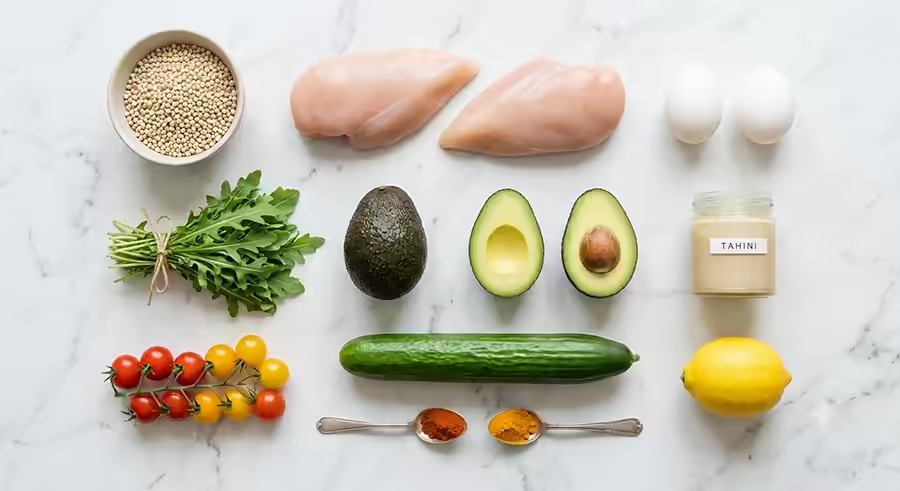
Chicken breast. Look for fillets with an even pinkish-white color and no grayish patches. If the surface is slimy or has a distinct sour smell, the meat is not fresh. Size matters: very large breasts (over 300 g each) often come from birds raised on growth promoters—they turn out stringy even when cooked properly. The ideal size is 180–220 g each.
Buckwheat. Unroasted green buckwheat has a milder flavor and retains more nutrients. Roasted (brown) buckwheat is the more common variety with a stronger aroma. Either type works for a bowl, but roasted buckwheat has a more pronounced “buckwheat” flavor, which many people prefer.
Tahini. When opening a new jar, give it a shake—the oil and paste should blend into a smooth mixture. If the paste tastes bitter even without any added ingredients, it’s either because the oil has gone rancid or the sesame seeds were over-roasted. Good tahini has a sweet, nutty flavor, without any sharp bitterness.
Avocado. A ripe avocado gives slightly when pressed with your thumb near the stem, but doesn’t give way completely. If the avocado you bought is hard, leave it at room temperature for 1–2 days, not in the refrigerator. Ripening stops in the refrigerator.
Eggs. For soft-boiled or poached eggs, choose eggs in the C0 or C1 category—they’re larger, and their yolks are brighter. Very fresh eggs (1–2 days old) are difficult to peel after cooking—choose ones that have been stored for at least a few days.
Cherry tomatoes. Even out of season, cherry tomatoes taste better than large greenhouse tomatoes—they have a more concentrated flavor. During the season (July–September), you can also use regular ripe tomatoes, cut into large cubes.
Which chicken is best?
Chicken breast is a classic choice for a protein-rich dinner. It’s lean, cooks quickly, and absorbs marinade well. If you want more flavor and aren’t concerned about fat content, boneless chicken thighs will be juicier and much harder to overcook when pan-frying.
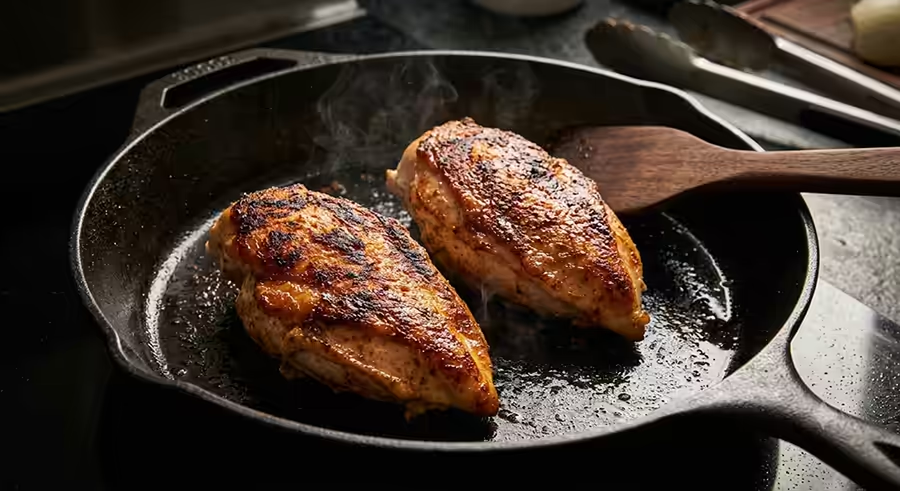
In this recipe, we use chicken breast pan-seared with spices. This method results in a crispy crust on the outside and juicy meat on the inside—as long as you don’t overcook it. Three things are really important here: pound the fillets to an even thickness, let the pan heat up well before adding the chicken, and don’t move the meat for the first 4 minutes.
Why shouldn’t you move it? When the proteins on the surface of the meat come into contact with a hot surface, they trigger the Maillard reaction—caramelization—which creates that delicious crust and complex flavor. If you stir or press down with a spatula, this process is interrupted, and the chicken will simply “simmer” in its own juices instead of browning.
Why is there an egg in the bowl?
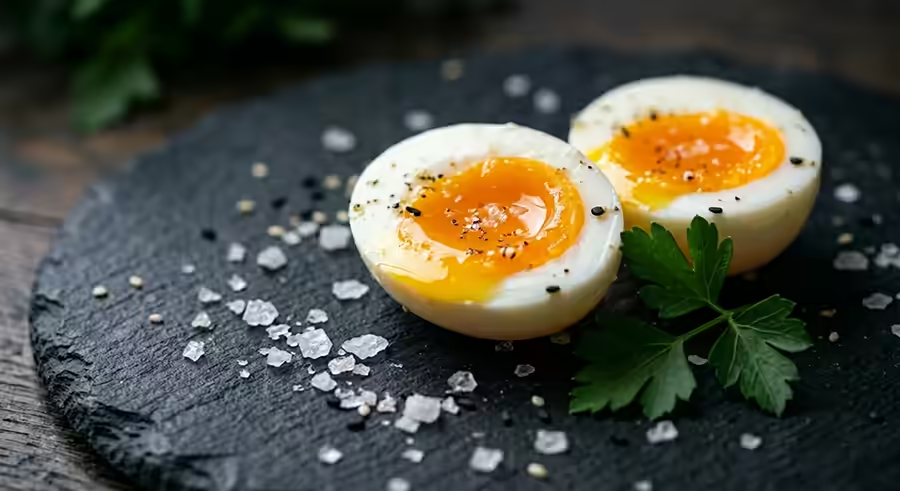
An egg adds not only protein but also a texture that no other ingredient can provide. If the yolk remains slightly runny, it spreads across the plate when cut and becomes something like a natural sauce that enriches everything around it.
Soft-boiled eggs (6–7 minutes) or poached eggs work best for a bowl. If you don’t like runny yolks or are cooking for children, boil them until fully cooked, about 8–9 minutes. This won’t make the bowl any worse—it’ll just have a different texture.
I usually make soft-boiled eggs—they’re easier to get right than poached eggs, and they have a similar effect with the yolk. Poached eggs look more impressive, but they require a little more attention.
Sauce is what holds everything together
A good bowl always has a sauce. It’s the sauce that transforms a collection of individual ingredients into a cohesive dish with its own distinct flavor. We offer two options for this recipe.
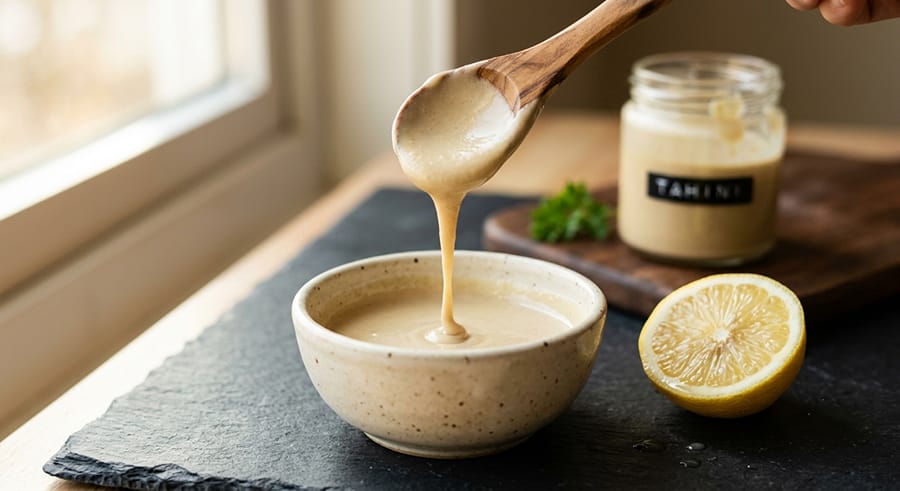
Tahini sauce—creamy with a nutty undertone—complements the mild buckwheat and tender chicken perfectly. Lemon juice adds a touch of acidity that “brightens” the dish and keeps the sauce from feeling too heavy.
Yogurt sauce—lighter, fresher, and tangy. It’s perfect for those who avoid sesame-based products or simply prefer a lighter option. It pairs well with chicken and cucumber.
Both take just two minutes to prepare and can be stored in the fridge for up to 5 days. Try both at least once—they really do taste different, and you’re sure to find a favorite.
Ingredients
Makes 2 servings. Prep time: 10 minutes. Total time: 30 minutes.
The base is buckwheat:
- Buckwheat groats — 200 g (uncooked)
- Water — 400 ml
- Salt — 0.5 tsp
Chicken breast:
- Chicken breast — 400 g (2 small fillets, 180–220 g each)
- Olive oil or sunflower oil — 1 tbsp.
- Sweet paprika — 1 tsp
- Dried garlic — 0.5 tsp
- Turmeric — 0.25 tsp
- Salt, black pepper — to taste
Eggs:
- Eggs — 2 (Grade C0 or C1)
Vegetables and herbs:
- Fresh cucumber — 1
- Cherry tomatoes — 150–200 g
- Avocado — 1 (optional, but recommended)
- Arugula or baby spinach — 1–2 handfuls
- Green onions or parsley — a few sprigs
Tahini sauce:
- Tahini — 2 tbsp.
- Lemon juice — 1 tbsp.
- Garlic — 1 clove, finely grated
- Water — 2–3 tablespoons for dilution
- Salt — a pinch
or Yogurt sauce:
- Plain Greek yogurt — 3 tbsp.
- Lemon juice — 1 tsp
- Garlic — 0.5 clove, minced
- Dill or parsley — 1 tbsp, finely chopped
- Salt — to taste
For serving (optional):
- Sesame or pumpkin seeds — 1 tsp
- Chili flakes — a pinch
- A slice of lemon
Step-by-step recipe: Chicken Bowl
Step 1. Cook the buckwheat
- Sort through the buckwheat and rinse it in a colander under cold water until the water runs clear.
- Transfer to a heavy-bottomed pot, add 400 ml of cold water, and season with salt.
- Set the heat to medium and bring to a boil.
- Reduce the heat to low, cover, and cook for 15–17 minutes without opening the lid or stirring.
- Remove from the heat and let it sit covered for 5 minutes—the grains will finish cooking and become fluffy.
If the buckwheat has clumped together a little more than you’d like, fluff it up with a fork and leave it uncovered for 2–3 minutes. The excess moisture will drain out on its own.
Step 2. Prepare and sauté the chicken
- Place the chicken breast between two layers of plastic wrap and gently pound it with a meat mallet or rolling pin until it’s an even thickness—about 1–1.5 cm. This is a key step: uneven thickness means the thin edges will overcook while the center is still undercooked.
- Take the fillets out of the refrigerator 15 minutes before cooking: bringing the meat to room temperature ensures even heating.
- In a bowl, mix together the paprika, garlic, turmeric, salt, and pepper. Rub the mixture into the chicken on both sides.
- Heat the pan well over medium-high heat for 1½ to 2 minutes. Test it: a drop of water should sizzle and evaporate immediately. Only then should you add the oil.
- Place the fillets in the pan and cook for 4–5 minutes on the first side without moving them. If the chicken sticks to the pan, it’s not time to flip it yet; it will release on its own once a crust has formed.
- Flip it over and cook for another 3–4 minutes.
- Remove from the heat and let stand for 2–3 minutes. Cutting it right away means losing the juices that haven’t yet redistributed throughout the meat.
- Cut across the grain into slices 1–1.5 cm thick.
Check for doneness: make a small cut in the thickest part—the meat should be uniformly white, with no pinkish hue.
Step 3. Boil the eggs
- Bring the water to a boil in a small saucepan.
- Gently lower the eggs into the boiling water using a large spoon or an egg poacher.
- Boil for exactly 6–7 minutes for a soft-boiled yolk, or 8–9 minutes for a hard-boiled yolk.
- Immediately transfer them to a bowl of ice water for 2–3 minutes—this makes them easier to peel, and the residual heat won’t overcook the eggs.
- Clean and cut in half just before serving.
If you want a poached egg: bring the water to a gentle simmer (bubbles rising from the bottom, but not boiling vigorously), then add 1 tbsp of vinegar. Use a spoon to create a small well in the water, then carefully slide the egg from a small cup directly into the water. Cook for 3 minutes uncovered, then remove with a slotted spoon and place on a paper towel.
Step 4. Prepare the vegetables
- Slice the cucumber into thin slices or half-rings.
- Cut the cherry in half.
- Peel the avocado and slice it—sprinkle it with lemon juice right away to prevent it from turning brown.
- Rinse the arugula or spinach and pat dry.
- Finely chop the green onions or parsley.
Step 5. Make the sauce
Tahini Sauce: Mix the tahini, lemon juice, and garlic in a bowl. The mixture will immediately become thick and slightly grainy—this is normal; tahini behaves this way when it comes into contact with acid. Start adding water one tablespoon at a time, stirring vigorously—the sauce will gradually become smooth and pourable. Season with salt. The right consistency: it flows evenly from the spoon, but isn’t too runny.
Yogurt sauce: Mix the yogurt with lemon juice, garlic, and herbs. Season with salt. If the sauce is too thick, add 1–2 tsp of cold water. If you want it more tangy, add a little more lemon juice.
Step 6. Assemble the chicken bowl
- Spread the buckwheat in an even layer at the bottom of a wide bowl or deep plate—it should take up about one-third to one-half of the space.
- Arrange the chicken, egg, vegetables, and herbs around the plate—each component separately—so the dish looks neat.
- Drizzle the sauce in a zigzag pattern or spoon it over the dish—don’t pour it all in the center at once.
- Sprinkle with sesame or pumpkin seeds, and a pinch of chili flakes if desired.
Assemble the bowl right before serving. If you’re preparing it in advance, store the ingredients separately.
How to Plan Your Cooking: Timing
One of the most common mistakes is preparing everything one dish at a time, which means some of it ends up getting cold. Here’s a step-by-step guide to having everything ready at almost the same time:
- Start by putting the buckwheat on to cook—it cooks on its own, without any effort on your part.
- While the buckwheat is cooking, prepare the chicken: pound it flat, rub it with spices, and let it sit.
- Put some water on to boil for the eggs—let it come to a boil while you’re at it.
- Cook the chicken for 8–10 minutes, turning it once.
- While the chicken is roasting, drop the eggs into the already boiling water and start timing.
- While the chicken is resting after cooking, chop the vegetables and make the sauce.
- Place the eggs in ice water, peel them, and cut them open.
- Assemble the bowl.
From start to finish—27–32 minutes. If you already have buckwheat in the fridge—15–18 minutes.
Nutritional value
Approximate values per serving (may vary depending on specific ingredients and serving size):
| Component | Calories | Proteins | Carbohydrates | Fats |
|---|---|---|---|---|
| Buckwheat, 100 g cooked | 110 kcal | 4 years | 20 years | 1 g |
| Chicken breast, 200 g | 220 kcal | 42 years old | 0 g | 4 years |
| Soft-boiled egg, 1 | 75 calories | 6 years | 0.5 g | 5 years |
| Avocado, half | 120 calories | 1.5 g | 6 years | 11 years |
| Fresh vegetables and herbs | 30–50 calories | 2 g | 6 years | 0.5 g |
| Tahini sauce, 2 tbsp | 90 calories | 2.5 g | 3 years | 8 years |
| In total | ~645–700 kcal | ~58 years old | ~35 g | ~30 g |
These are approximate figures—the exact values depend on the specific ingredients and portion sizes. If you want to reduce the calorie content, omit the avocado and replace the tahini sauce with yogurt sauce. This will result in approximately 500–540 calories with the same protein content.
Tips and Common Mistakes
The chicken turned out dry
The most common reason is that it was cooked for too long or sliced right away without letting it rest. Chicken breast is thin and cooks quickly, and if the thickness is uneven, the edges will be done before the center is, and you’ll keep it on the heat.
Pounding the meat to an even thickness solves this problem completely. Another option is to marinate the chicken for 15–30 minutes in Greek yogurt mixed with lemon juice and spices. The acid tenderizes the fibers, and the meat turns out juicier even after pan-frying. I do this when I have time—the difference is noticeable.
The buckwheat clumps together or turns into porridge
This happens if the heat is too high or if you lift the lid too often. Buckwheat should be cooked over the lowest heat, covered, without stirring. The steam inside the pot cooks the grains evenly—as soon as you open the lid, you lose the pressure and disrupt the process.
If it does end up overcooked, don’t throw it away. Fluff it up with a fork and sauté it in a dry skillet for 2–3 minutes. The excess moisture will evaporate, and the texture will improve significantly.
The avocado has turned brown
Cut the avocado just before serving and immediately sprinkle it with lemon or lime juice. If you have half left over, store it in the refrigerator with the pit wrapped tightly in plastic wrap against the flesh. It will keep for a day, no more.
Bitter tahini sauce
The reason is the quality of the tahini itself. If the product tastes bitter right out of the jar, no amount of tweaking will fix it. Good tahini has a delicate nutty aroma and a creamy or light beige color—this is sesame that hasn’t been over-roasted. If the bitterness is mild, a little more lemon, a pinch of salt, and a drop of honey can balance the flavor.
The egg won’t peel
A very fresh egg is difficult to peel because of the pH of the egg white. Eggs that are at least 4–5 days old are better suited for boiling in the shell. And be sure to place them in ice water immediately after boiling: the temperature difference helps the shell come off more easily.
The sauce is too thick or too thin
Tahini from different brands varies in thickness. If the sauce is too thick, add a little more water—about half a tablespoon at a time—while stirring. If it’s too thin, use a little more tahini or a little less water next time. A good rule of thumb: the sauce should flow off the spoon in a steady stream, but not run off immediately.
Variations and serving suggestions
Milprep version for work
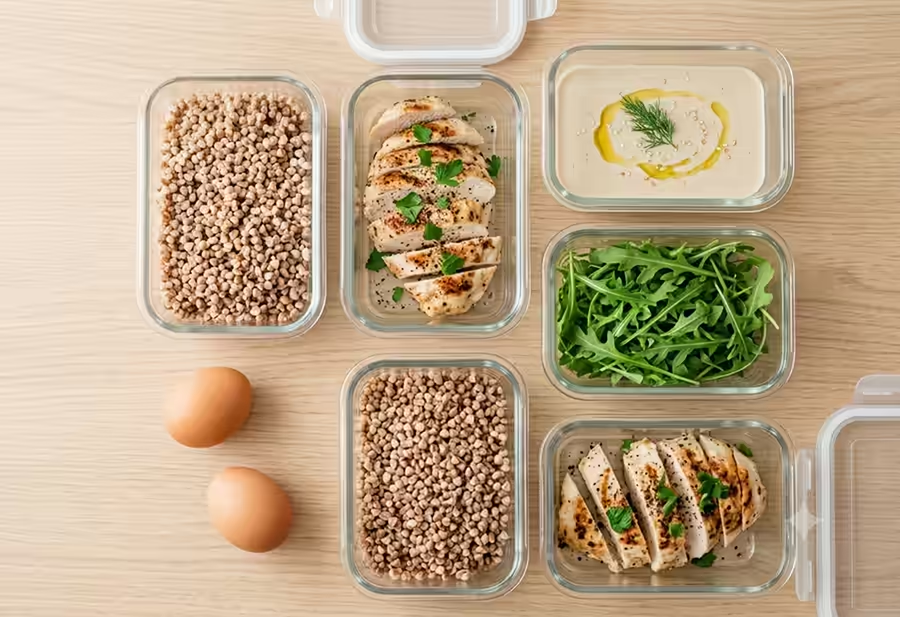
This bowl is great for meal prep—one of its biggest selling points. Here’s what keeps well:
- Buckwheat — cook enough for 4–5 servings; it will keep in the refrigerator for up to 4 days.
- Chicken breast—can be stored whole or sliced for up to 3 days.
- Sauces — up to 5 days in a sealed container.
- Hard-boiled eggs in their shells can be stored for up to 3 days; peel before eating.
- Fresh vegetables—cut them up on the day you plan to eat them.
For packing: put the buckwheat and chicken in one container, and the sauce and herbs in separate containers. Bring the egg in its shell and peel it when you’re ready to eat. Include an avocado only if you’re going to eat it right away; otherwise, it will turn brown.
Vegetarian option
Remove the chicken, add more eggs, or replace it with roasted chickpeas. Spread 200–250 g of drained canned chickpeas on a baking sheet, drizzle with oil, and sprinkle with cumin, paprika, and salt. Bake at 200 °C for 20–25 minutes, stirring once halfway through. The result is a crispy and aromatic substitute with a good amount of plant-based protein.
Pan-fried firm tofu works well too: cut it into cubes and sauté it in a pan with soy sauce, garlic, and paprika until golden brown.
With Asian touches
If you want a bolder flavor, marinate the chicken in a mixture of: soy sauce (2 tbsp), honey (1 tsp), sesame oil (1 tsp), grated ginger (0.5 tsp), and chili flakes to taste. Cook the same way. Add chopped bell peppers, sesame seeds, and a little gochujang or teriyaki sauce to the bowl instead of tahini. It sounds unexpected with buckwheat—but the combination turns out to be a great success.
A warm bowl during the cold season
A classic bowl is assembled using ingredients at room temperature or slightly warm. In cold weather, assemble the dish entirely with warm ingredients: heat the buckwheat and chicken, and instead of fresh vegetables, add pan-roasted broccoli, zucchini, or green beans. The sauce should be at room temperature, and avocado is optional.
Serving ideas
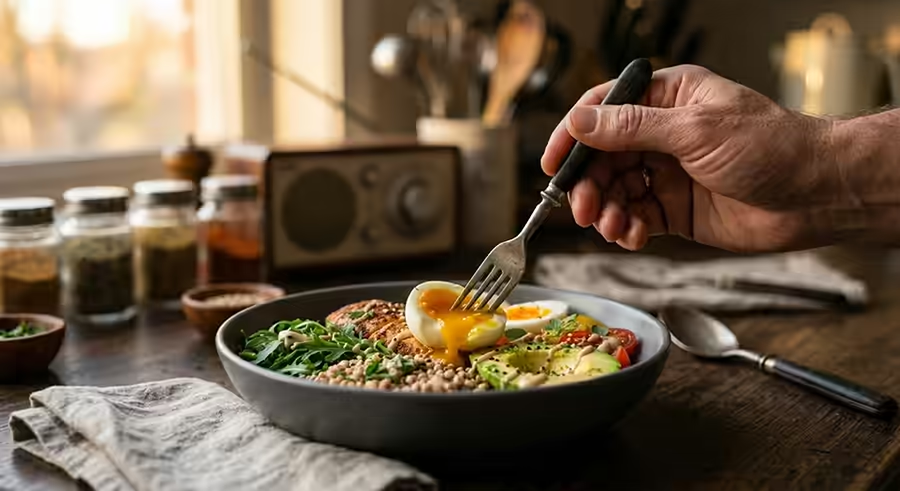
- Arrange the ingredients in “sections”—it looks neat and appetizing, and everyone can take in the dish with their eyes first.
- Apply the sauce in a zigzag pattern or drizzle it from a spoon; don’t pour it all in the center at once.
- Sesame, pumpkin, or sunflower seeds add crunch and make a great finishing touch.
- The bowl looks better in a wide bowl or a deep plate with low sides.
- If you’re serving guests, the lemon wedges on the side let everyone adjust the tartness to their liking.
Ingredient substitutions
You don’t always have everything on hand—here are some things you can substitute without significantly compromising quality.
Instead of buckwheat:
- Millet — prepared in the same way, with a slightly milder and less pronounced flavor
- Brown rice — takes 35–40 minutes, has a firm, fluffy texture
- Bulgur—just pour boiling water over it and let it sit for 15–20 minutes; it’s convenient when you’re short on time
Instead of chicken breast:
- Boneless chicken thighs are juicier; cook for 6–7 minutes on each side
- Turkey fillet — prepared in the same way as the breast, but slightly drier
- Chickpeas or tofu — for the vegetarian version
Instead of avocado:
- Hummus — 2 tbsp per serving, provides a similar creamy texture and richness
- Brynza or feta — saltiness and fat content, different texture
- Sautéed mushrooms are a satisfying alternative
Instead of tahini:
- Peanut butter—less bitter, slightly sweet, and very affordable
- Greek yogurt with garlic and lemon—a completely different flavor, but just as distinctive
- Olive oil with lemon and salt—the simplest option without a sauce
How to store and reheat
Store the ingredients separately—in different containers or in different compartments of the same one:
- Buckwheat and chicken — up to 3 days in the refrigerator.
- The sauce should be stored in a small, sealed container for up to 5 days.
- Hard-boiled eggs in their shells — up to 3 days.
- Fresh vegetables, herbs, and avocados—cut them up just before eating.
Reheating: Heat the buckwheat in the microwave with 1 tbsp of water, covered—this prevents it from drying out. Heat the chicken in a skillet or in the microwave, covered, for 1–2 minutes. Do not reheat the eggs, avocado, herbs, and sauce—add them fresh to the warm base.
Frequently Asked Questions
Can I substitute rice for buckwheat in this bowl? Yes, brown or basmati rice will work. But buckwheat has several advantages: it cooks faster, has a lower glycemic index, is higher in fiber, and has its own distinct flavor. If you want a similar fluffy texture, choose long-grain rice and don’t overcook it.
Which egg is best—soft-boiled, poached, or fried? For a bowl, a soft-boiled or poached egg works best: when cut open, the yolk spreads across the plate and enriches the other ingredients. A fried egg is also good—it adds a crispy texture and an appetizing look. A hard-boiled egg is suitable for a meal prep version, when you’re preparing in advance and transporting it.
How many calories are in a protein bowl with chicken and buckwheat? About 650–700 calories per serving with avocado and tahini sauce. If you omit the avocado and replace the sauce with yogurt, it comes to 500–550 kcal. The protein content remains high—about 55–60 g per serving.
Is this recipe suitable for people with lactose intolerance? If you use tahini sauce, yes—the dish is completely dairy-free. The yogurt sauce contains lactose: replace it with plant-based yogurt or skip it altogether, adding olive oil and lemon juice instead.
How can you make the bowl more filling if it’s not enough? Increase the amount of chicken to 250–300 g per serving, or keep the avocado if you were planning to leave it out—fats significantly prolong the feeling of fullness. You can also add a few spoonfuls of canned chickpeas or beans: they’ll boost the protein and fiber content without significantly increasing the calorie count.
Can this bowl be prepared in advance for a few days? Yes, and that’s one of its biggest selling points. The buckwheat and chicken will keep for 3 days, and the sauce for up to 5. Store everything separately and assemble the bowl right before eating: reheat the base, add fresh vegetables, an egg, and the sauce. This way, the bowl always looks and tastes as if it were just made.
Is this recipe suitable for children? Yes, with a few minor adjustments. Remove the chili flakes and use less garlic in the sauce. It’s best to hard-boil the egg, and cut the avocado into smaller pieces or mash it into a simple puree. Buckwheat and chicken are well-liked by children—especially if the chicken is cut into small pieces and topped with the sauce.