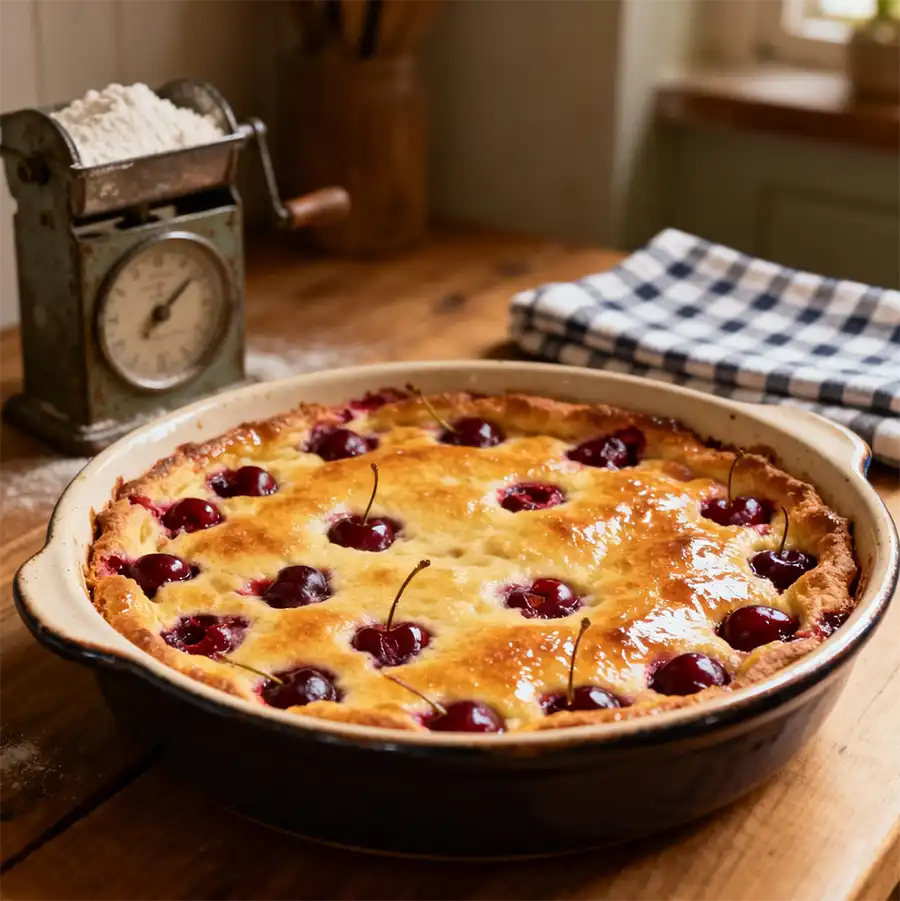
Clafoutis is a true masterpiece of French culinary art, combining simplicity of preparation with unmatched taste. This delicate dessert, reminiscent of something between a pie, a casserole, and a custard, has long won the hearts of gourmets around the world. The name comes from the Occitan word “clafir,” which means “to fill” — because the berries literally fill the dough.
History and origin of clafoutis
Clafoutis has deep historical roots dating back to the Limousin region in central France. This dessert originated in the 19th century among local peasants who were looking for a simple way to make a delicious dessert from readily available ingredients. Initially, the pie was made exclusively with black cherries, and the fruit was left with pits — they contain amygdalin, which gives the dessert a unique almond aroma when baked.
Traditionally, the dessert was served directly in the pan in which it was cooked, emphasizing the simplicity and homeliness of this dessert. Over time, the recipe spread throughout France and the world, acquiring various variations and improvements.
What is clafoutis: features of the dessert
Clafoutis is a unique dessert characterized by its special texture and method of preparation. It is based on a liquid batter, similar in consistency to pancake batter or custard. When baked, it envelops the fruit, creating a delicate creamy texture with bright splashes of berries or fruit.
Key features:
- Thin batter, similar to pancake batter
- The filling outweighs the dough
- The delicate creamy texture of the finished dessert
- The possibility of using a variety of fruits and berries
- Simplicity and speed of preparation
Traditionally, when fruits other than cherries or sweet cherries are used for the pie, the dessert is correctly called “flonard,” but today the name “clafoutis” is used for all variations.
Classic recipe for cherry clafoutis
Ingredients:

For the dough:
- Eggs — 4 pcs.
- Milk — 250–300 ml
- Wheat flour — 80-100 g
- Sugar — 100–125 g
- Butter — 50 g (melted)
- Vanilla sugar — 1 teaspoon
- Salt — a pinch
For the filling:
- Fresh or frozen cherries — 500-600 g
- Sugar for sprinkling the pan — 1-2 tablespoons
- Butter for greasing the pan — 20 g
Step-by-step preparation:
Preparation of ingredients:
- Take the eggs, milk, and butter out of the refrigerator in advance so that they reach room temperature.
- Wash the cherries, remove the pits, and dry them on a paper towel. If using frozen cherries, thaw them and drain off any excess liquid.
Preparation of dough:
- In a large bowl, lightly beat the eggs with sugar using a whisk — no need to create a fluffy foam.
- Add vanilla sugar and a pinch of salt.
- Gradually pour in the milk, stirring constantly.
- Sift the flour and add it to the liquid mixture in small portions, stirring thoroughly to avoid lumps.
- Pour in the melted butter and stir until smooth.
- The finished dough should have a consistency similar to pancake batter.
Baking:
- Preheat the oven to 180°C.
- Generously grease a 22-24 cm diameter baking pan with butter and sprinkle with sugar.
- Spread the cherries evenly over the bottom of the pan.
- Carefully pour the batter over the berries, without filling the pan to the very edges.
- Bake for 40-50 minutes until golden brown and cooked through in the center.
- Check if it’s ready with a wooden skewer—it should come out dry.
Serving:
Allow the clafoutis to cool for 15-30 minutes in the pan. Sprinkle with powdered sugar and serve warm or at room temperature. Perfect with vanilla ice cream or whipped cream.
Variations of clafoutis with different fruits and berries
Clafoutis with apples
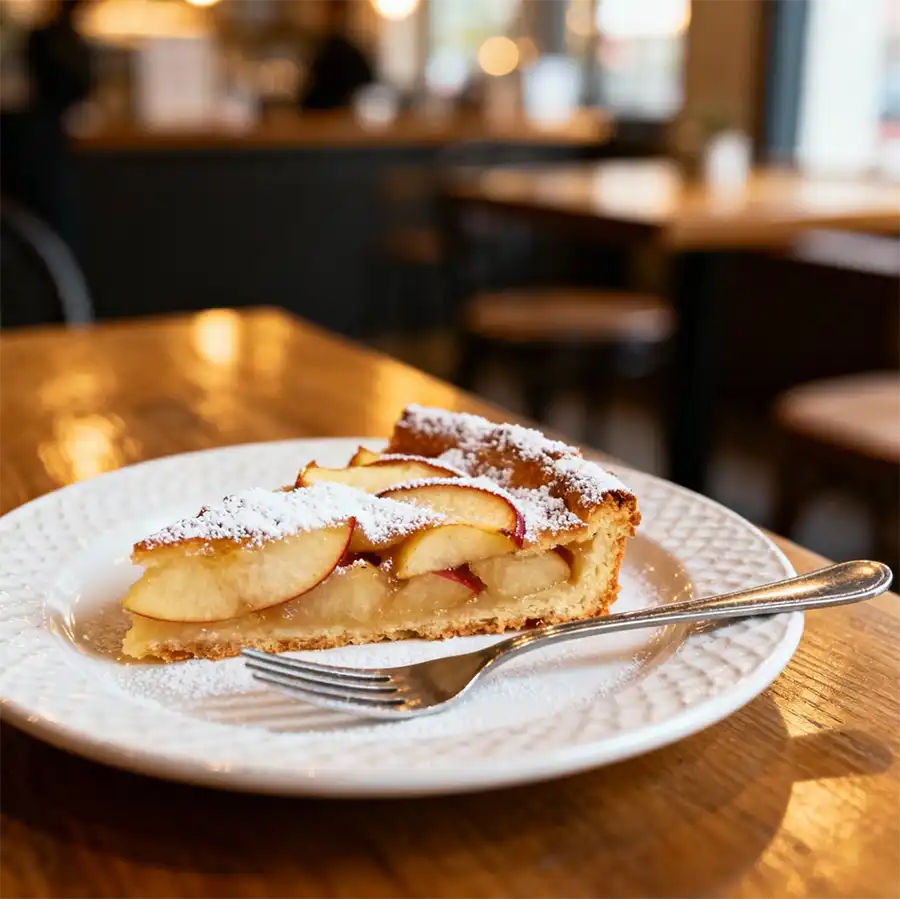
Apple clafoutis is especially popular in the fall, when fresh apples are particularly fragrant.
Cooking features:
- Use 3-4 medium apples, diced
- Pre-fry the apples in a pan with butter for 5 minutes.
- Add ground cardamom and star anise to the dough for flavoring.
- Baking time — 40-50 minutes at 180°C
Clafoutis with plums
Plum clafoutis has a rich sweet and sour taste.
Recommendations:
- Cut the plums in half and remove the pits.
- If the plums are very juicy, lightly coat them in corn flour.
- Use almond flour for a richer flavor.
- Add the spice mixture (nutmeg and cinnamon)
Clafoutis with strawberries
Strawberry clafoutis is the perfect summer dessert.
Cooking tips:
- Cut the strawberries into halves or quarters.
- Reduce the amount of sugar, as strawberries are naturally sweet.
- Baking time may be slightly shorter due to the high water content in the berries.
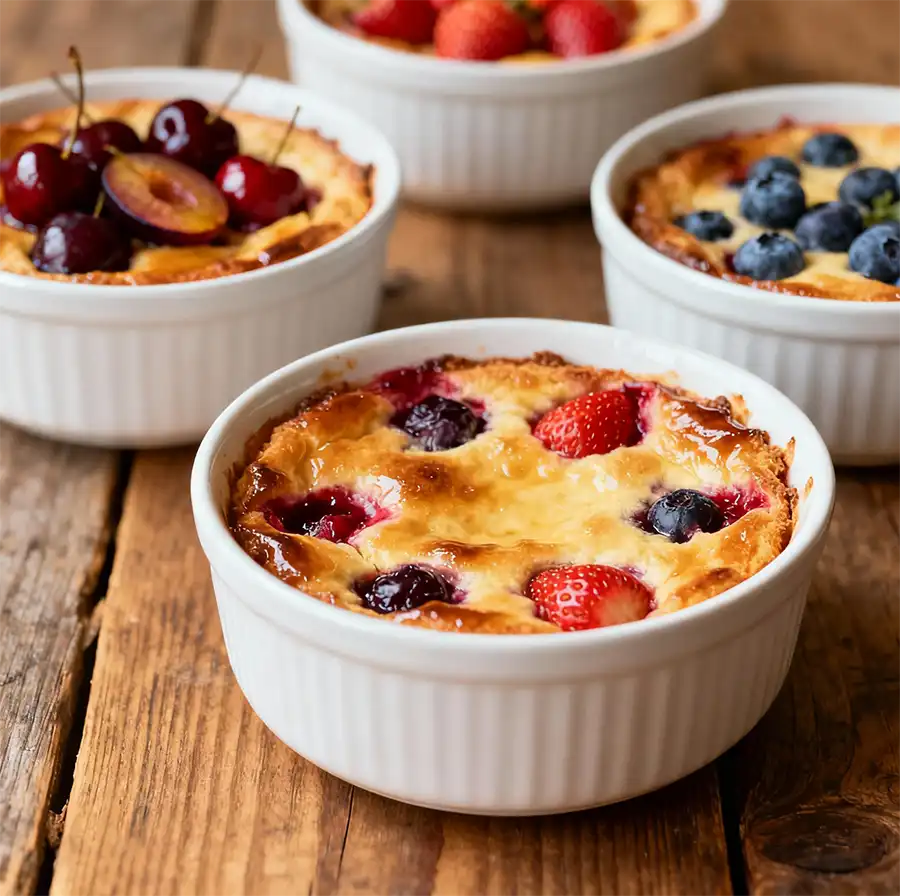
Clafoutis with blueberries and other berries
Small berries create a particularly even distribution in the dough.
Due to:
- Blueberries, raspberries, and blackberries can be used without prior preparation.
- Add 1 tablespoon of cornstarch to the berries to prevent excessive juice leakage.
- The calorie content of this clafoutis is about 125 kcal per serving.
Secrets and tips from professionals
Selecting and preparing fruit
Fresh fruit:
- Choose ripe, but not overripe fruits.
- Wash and dry fruit thoroughly before use.
- Cut large fruits into medium-sized pieces for even distribution.
Frozen fruit:
- Thaw the berries completely and drain off any excess liquid.
- Do not defrost small berries — they can be used immediately.
Secrets of perfect dough
Temperature of ingredients:
- All dairy products and eggs should be at room temperature.
- This ensures a better emulsion and uniform texture.
Mixing technique:
- Beat the dough thoroughly, but do not create excess air bubbles.
- Sift the flour to avoid lumps.
- If necessary, use a blender to achieve perfect smoothness.
Dough consistency:
- The finished dough should easily slide off the whisk.
- In terms of thickness, it resembles liquid custard.
Baking rules
Preparation of the form:
- Be sure to make a “French shirt” — brush with butter and sprinkle with sugar.
- Use a pan with high sides, as clafoutis rises during baking.
Temperature range:
- Preheat the oven in advance to the exact temperature.
- Do not open the oven during the first 30 minutes of baking.
- Bake at 200°C for the first half of the time, then reduce to 180°C.
Readiness check:
- Use a wooden skewer — it should come out dry.
- The surface should be golden brown and slightly springy when pressed.
Tips for serving
- Allow the clafoutis to cool in the pan for 15-30 minutes before serving.
- The best flavor is revealed when served warm
- Sprinkle with powdered sugar just before serving.
- Serve with vanilla ice cream, whipped cream, or custard.
Common mistakes and how to avoid them
Problems with dough
The dough is too thick:
- Add a little warm milk to thin it out.
- Ensure that you adhere to the correct proportions.
Lumps in the dough:
- Always sift the flour
- Add the flour gradually, stirring constantly.
- Use a blender to achieve perfect smoothness.
The dough did not rise:
- Check the freshness of the baking powder if you are using it.
- Ensure that the oven is sufficiently preheated.
- Do not open the oven during baking.
Problems with baking
The clafoutis burns on top:
- Lower the temperature to 160-170°C.
- Cover with foil for the last 10-15 minutes of baking.
The dessert is not baked inside:
- Increase baking time by 5-10 minutes.
- Ensure that the mold is not too deep.
- Use the correct proportions of liquid ingredients
Clafoutis sinks after baking:
- This is normal — the dessert settles slightly when cooled.
- Do not remove from the mold immediately after baking.
Problems with fruit
The berries sink to the bottom:
- Lightly coat the fruit in flour before placing it in the pan.
- Do not use too much fruit juice.
Excessive juiciness:
- Add 1 tablespoon of starch to juicy berries.
- Let the thawed berries drain completely.
Alternative options for clafoutis
Gluten-free clafoutis
For those who follow a gluten-free diet, there is a great alternative:
Ingredients:
- Gluten-free oat flour — 50 g
- Green buckwheat flour — 50 g
- Tapioca starch — 25 g
- Almond flour — 30 g
- Date sugar — 40 g
Low-calorie clafoutis
For healthy eating enthusiasts:
- Replace milk with low-fat yogurt
- Cut the amount of sugar in half
- Use sugar substitute to taste
- Calorie content can be reduced to 125 kcal per serving
Salty options
Clafoutis can be more than just a sweet dessert:
- With Bulgarian pepper and cheese
- With tomatoes and greens
- With mushrooms and herbs
Useful properties and calorie content
Nutritional value of classic cherry clafoutis:
Per 100 g of finished product:
- Calories: 188-399 kcal (depending on the recipe)
- Protein: 3.4-5.6 g
- Fats: 8.2-18.2 g
- Carbohydrates: 25.1-53.3 g
Useful properties of cherries:
Cherries, as the main ingredient in classic clafoutis, have numerous benefits:
- Low calorie content — 52 kcal per 100 g
- Rich in anthocyanins and flavonoids
- Contains vitamins A, B1, B2, C, E
- Suitable for people with heartburn due to lower acidity compared to cherries
- Helps with anemia due to its iron content
FAQ: frequently asked questions about clafoutis
Can clafoutis be prepared in advance?
Yes, clafoutis can be prepared in advance and stored in the refrigerator for up to 2-3 days. Before serving, lightly reheat in the oven at 150°C for 10-15 minutes.
Which forms are best to use?
Ceramic or glass molds with a diameter of 22-24 cm and high sides are ideal. Cast iron pans or silicone molds can also be used.
Why doesn’t the clafoutis rise?
The most common reasons: the oven is not hot enough, the dough is too thin, the baking powder is out of date, or the proportions of the ingredients are incorrect.
Can milk be replaced with cream?
Yes, you can use cream with 10-12% fat content instead of milk. This will make the texture even more delicate and creamy.
How to store leftover clafoutis?
Store in the refrigerator under plastic wrap or in a container for up to 3 days. Can be eaten cold or reheated before serving.
Is it necessary to remove the pits from cherries?
Traditionally, clafoutis was prepared with pits for additional almond flavor, but today most chefs recommend removing them for ease of consumption.
Can canned fruit be used?
Yes, but be sure to drain the syrup and dry the fruit with a paper towel. Reduce the amount of sugar in the dough, as canned fruit is usually sweeter.
How to avoid dough separation?
All ingredients should be at room temperature. Mix the dough gradually, without creating excess air bubbles.
Conclusion
Clafoutis is a true gem of French cuisine, combining simplicity of preparation with exquisite taste. This versatile dessert allows you to experiment with a variety of fruits and berries, creating new flavor combinations every time.
The secret to perfect clafoutis lies in maintaining the correct proportions, using high-quality ingredients at room temperature, and being patient during baking. Remember that every oven has its own characteristics, so don’t be afraid to adjust the baking time and temperature according to your conditions.
Whether you’re making the classic cherry version, experimenting with seasonal fruits, or creating gluten-free variations, clafoutis will always be a highlight on your table and bring joy to your loved ones. This wonderful French dessert proves that the simplest things are often the most delicious.