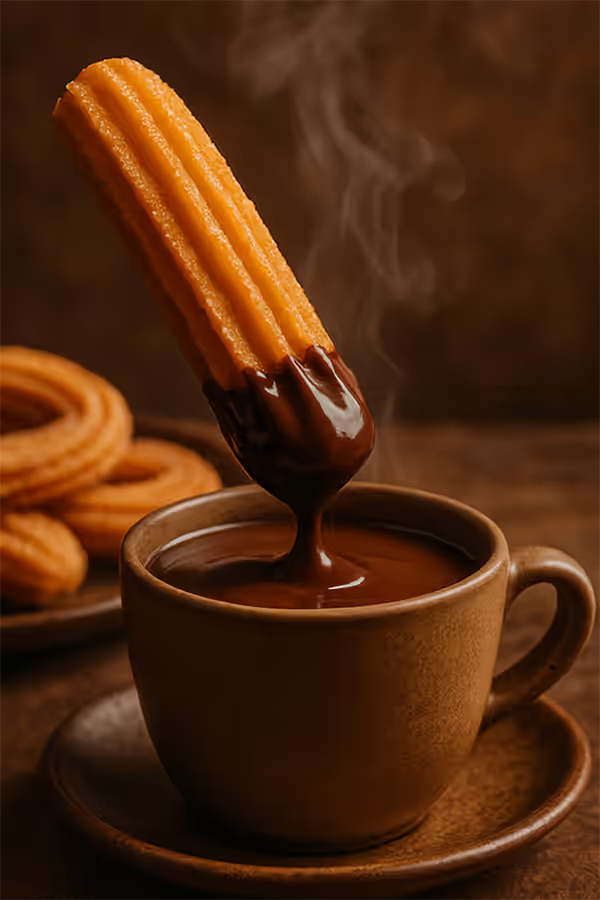
Churros are one of the most popular Spanish desserts, which have won the hearts of people all over the world. A crispy crust, soft inside, and fragrant sugar and cinnamon sprinkles are all you need for the perfect treat. In this article, we will take a detailed look at the classic recipe for churros, talk about the different variations that are popular in different countries, and share professional tips for achieving restaurant quality at home.
Content
The history of churros and their popularity
Churros originated in Spain and have a rich history that dates back centuries. Over the decades, this dessert was spread throughout Europe and the world by Portuguese travelers and maritime traders. Today, churros are hugely popular not only in Spain, but also in Latin America, Asia, and far beyond. They are sold on the streets, in specialized establishments called “churrerías,” and even in theme parks.
What are churros: basic information
Churros are fried dough made from flour and water, which is transformed into a golden, crispy treat. Unlike most sweet desserts, authentic Spanish churros are made without eggs or butter, making them simple to prepare but delightful in the end.
The texture of churros is unique: on the outside, they are golden brown and very crispy, while on the inside, they remain soft and almost airy. This contrasting texture is achieved by using the right oil temperature and frying time.
Classic recipe for churros from Spanish tradition
Ingredients for churros (serves 8-10):

For the dough:
- 250 ml boiling water (must be boiling water, not just hot water)
- 250 g of premium wheat flour
- 4 g (approximately 3/4 teaspoon) sea salt
- 15 g neutral oil (or olive oil)
For sprinkling:
- 100 g granulated sugar
- 5 g (approximately 2 teaspoons) ground cinnamon
- Neutral oil for frying (1-1.5 liters)
To serve (optional):
- Hot chocolate
- Caramel
- Black coffee
Step-by-step recipe
Step 1: Prepare the ingredients
The first step to success is measuring ingredients accurately. Use weight measurements (grams) for maximum accuracy, especially for flour. If you are using standard cups, remember that flour should be sifted and fluffed.
Grind the cinnamon until it has a uniform consistency. Mix the sugar and cinnamon in a small bowl, which you will place next to the frying area.
Step 2: Preparing the dough
- Pour 250 ml of boiling water into a medium-sized saucepan (this is crucial – the water must be boiling, not just hot). Add salt and oil.
- Place the pot on the stove and bring it to a boil again. This ensures that the temperature is high enough to hydrate the flour.
- Place the flour in a heatproof bowl. When the water boils, immediately remove the pot from the heat.
- Pour hot water directly onto the flour and immediately begin mixing vigorously with a wooden spoon or spatula. Mix until a thick, smooth mass is formed without any dry flour particles.
- Cover the bowl with a lid and let the dough “hydrate” for 1-2 minutes. This will allow the flour to fully absorb the moisture.
- Then knead the dough 4-5 times, folding it over itself. The finished dough should be smooth, elastic, and uniform.
Step 3: Preparing the frying equipment
- Fill a deep pan or pot with neutral oil to a height of approximately 10 cm.
- Heat the oil to 175-190°C (350-375°F). This is critical! Temperatures below 350°F will make the churros oily and dry, and above 375°F they will start to blacken while remaining raw inside.
- Use a cooking thermometer to accurately control the temperature.
Place the following items next to the frying pan:
- A plate covered with a paper towel for draining fat
- A bowl with sugar and cinnamon sprinkles
- Kitchen scissors or a sharp knife for cutting churros
Step 4: Filling the pastry bag and preparing for frying
- Fill a piping bag with a star-shaped nozzle (hole diameter approx. 0.7-1 cm) with hot dough. It is important to work with the dough while it is still warm!
- Remove the parchment paper and make sure that the dough is tightly packed, but without air bubbles.
Step 5: Frying process
- Hold the piping bag about 2-3 cm above the surface of the hot oil.
- Gently squeeze the bag and squeeze the dough directly into the oil, forming strips 10-12 cm long. Do not make them too long—they should fit freely in the pot.
- Once you have rolled out a strip of the desired length, use scissors to cut the dough above the oil, preventing splashing.
- Fry the churros in batches of 4-6 pieces so as not to overload the oil.
- Let them fry for 2-3 minutes until they turn light golden brown. Then carefully turn each churro over using wooden sticks or tongs.
- Continue to fry for another 2-3 minutes on the other side until they are deep golden brown and crispy.
Step 6: Processing and sprinkling
- Using tongs, remove the churros from the oil and place them on paper towels to remove excess fat. Allow them to dry for 20-30 seconds.
- While they are still hot, immediately roll each churro in the sugar-cinnamon mixture, making sure it evenly covers the entire surface.
- Serve immediately while they are still warm and crispy.
Professional tips for perfect results
1. Temperature – the key to success
The most common mistake when making churros is using the wrong oil temperature. Use a cooking thermometer! If the oil is too cold, the churros will be greasy and soggy. If it is too hot, they will quickly turn black while remaining raw inside.
2. Gradual introduction of churros
Do not put all the churros in the oil at once. Add them at intervals of about 30 seconds. This prevents them from sticking to each other and helps maintain a stable oil temperature.
3. Choosing oil
Although Spaniards traditionally use olive oil, neutral oils (such as rapeseed, sunflower, or peanut oil) are recommended for home cooking to achieve more consistent results. Extra virgin olive oil can impart a strange taste when fried at high temperatures.
4. Pastry bag and nozzle
Use a large pastry bag (30-40 cm) with a medium star-shaped nozzle. The size of the nozzle affects the frying time—thinner churros fry faster, while thicker ones take longer.
5. Working with hot dough
Churros dough works best when it is still warm. If it has cooled and hardened, it will be difficult to squeeze out. If this happens, place the bowl in a water bath for 1-2 minutes to soften it slightly.
6. Choosing flour
Use regular all-purpose flour. Flour with a high protein content may give slightly worse results. Make sure the flour is fresh—old flour affects the quality of the dough.
Variations of churros in different countries
Spanish churros (Churros Españoles)
In Spain, especially in Madrid, churros are a classic street breakfast. They are served with hot coffee or hot chocolate. Spanish churros are often slimmer and longer than their Mexican counterparts. They are made from simple ingredients: flour, water, salt, and oil.
Mexican churros (Churros Mexicanos)
Mexican churros are slightly thicker and shorter than Spanish ones. They are often made with eggs and butter, which makes them a little softer and fluffier. Mexicans serve churros with hot chocolate or coffee syrup. Some street vendors offer churros with fillings.
Churros Rellenos – stuffed churros

This variation is popular in Mexico, Argentina, and Brazil. Churros are filled with various sweet fillings:
- Dulce de leche – a favorite filling in Argentina and Brazil
- Chocolate spread – often used as a filling in Mexico
- Fruit preserves – peach, strawberry, orange
- Vanilla cream – in Portugal
To prepare stuffed churros, you will need a special pastry bag with two chambers or a piping bag to pipe the filling into the horizontal slit later.
Portuguese Farturas
In Portugal, churros are known as “farturas” and are traditionally larger and thicker than their Spanish counterparts. They are often filled with marmalade or cream. The Portuguese have a long tradition of selling farturas at carnivals, fairs, and festivals.
Argentinian churros with Dulce de Leche
In Argentina, churros are often served as a snack with dulce de leche, an Argentine sweet caramel spread. These churros can be prepared with a filling inside or served with a dipping sauce.
Asian variations
In the Philippines, churros (called “tsurro”) are served with hot chocolate (tsokolate) made from traditional cocoa tablets. In Thailand, churros are called “Patonggo Spain” (Spanish fried stick) and are often shorter and thicker.
Recipe for churros with egg and butter
If you prefer softer and airier churros, here is a recipe with egg and butter, which gives them a slightly different texture.
Ingredients:
- 240 ml of okipu
- 140 g wheat flour
- 2 tablespoons softened butter
- 1 large egg
- 1 teaspoon vanilla
- 1/8 teaspoon sea salt
- 2 tablespoons of sugar
- Neutral oil for frying
Preparation:
- Bring the water to a boil in a saucepan. Add salt, sugar, and butter.
- Remove from heat and add flour, stirring vigorously until smooth.
- Let the dough cool for about 2 minutes, then add the egg and vanilla. Beat with a wooden spoon until the egg is completely absorbed.
- Remove the dough when it has cooled enough to be handled safely. Warm it slightly in a water bath if it has cooled too much.
- Place the dough in a piping bag and fry as in the basic recipe.
This variation gives a slightly softer and fluffier internal structure compared to the traditional recipe without eggs.
Hot chocolate recipe for serving
Churros are best enjoyed with hot chocolate. Here is a recipe for sufficiently bitter and thick chocolate for dipping:
Ingredients:
- 250 ml milk
- 125 ml cream for cooking
- 2 tablespoons of sugar
- 1 tablespoon cornstarch
- 100 g dark chocolate (chopped into small pieces)
Preparation:
- In a saucepan, combine the milk, cream, sugar, and cornstarch.
- Stirring constantly, heat over medium heat until the mixture begins to simmer slightly.
- Remove from heat and add chocolate. Allow 1 minute for it to soften.
- Stir vigorously until the sauce is smooth and homogeneous.
- Serve hot with churros.
Frequently asked questions about churros (FAQ)
Can churros be prepared in advance?
Churros taste much better when they are fresh and hot. However, they can be prepared in advance and reheated. Ready-made churros can remain crispy for several hours at room temperature, but they will become softer. If you want to enjoy fresh churros but have limited time, you can prepare the dough in advance and store it in an airtight container in the refrigerator for up to 24 hours.
How to store ready-made churros?
Fresh churros are best stored in an airtight container at room temperature for several hours. They can be reheated in the oven at 180°C for 5-7 minutes to restore their crispness. Churros do not have a long shelf life and taste best within a few hours of preparation.
Can you freeze raw churros?
Yes, you can pipe the churros onto parchment paper, freeze them on a tray, and then transfer them to a freezer bag. However, they will be slightly softer after thawing and frying. For best results, it is recommended to prepare churros fresh.
Is it possible to make churros without a pastry bag?
Hmm, that’s more difficult. A pastry bag is the most practical method. However, some people use feeding syringes (with the needle removed) or ice cream bags with the corner cut off. The results may be less consistent, but it is possible.
Are churros vegetarian?
Yes, traditional churros without eggs and milk are technically vegetarian. However, they are fried in oil, which may contain animal residues depending on the source. If you follow a strict vegetarian diet, check the source of the oil. If you make churros with eggs, they will not be vegetarian.
Is it possible to make gluten-free churros?
Yes, but the results will vary. You will need to use a gluten-free mix that contains flour and binding agents. This will require some experimentation, as different gluten-free mixes produce different results.
Why did my churros turn out oily?
Oil-soaked churros are the most common problem when cooking at home. This may be due to:
- Oil temperature too low (below 350°F / 175°C)
- Frying for too long
- The dough is too thick
Ensure the oil is hot enough, and fry the churros for only 2-3 minutes on each side.
Why are my churros black on the outside but raw on the inside?
This means that:
- Oil is too hot (above 375°F / 190°C)
- You fry them for too long.
Reduce the temperature and shorten the frying time to 2-3 minutes total.
Is it safe to fry churros at home?
Yes, but caution is required. Oil at 350-375°F is very hot and can cause serious burns. Never leave hot oil unattended. Wear long clothing and work in a well-ventilated area. Use a sturdy container with deep sides to prevent splashing.
How to adapt a recipe for a large group?
The recipe is easy to scale. Multiply all ingredients by the number of servings. The main thing is to know how to control the oil. For a large group, you will need more oil and more powerful heating. Cook churros in batches to maintain the quality and temperature of the oil.
Do churros contain milk?
In the traditional eggless recipe, churros do not contain milk. However, some variations may include milk or cream. If you are making hot chocolate to serve with them, that contains milk.
Conclusion
Making churros at home can be successful if you follow a few key principles: precise measurements, the right oil temperature, and careful handling of the hot dough. The simplicity of the ingredients belies the enormous potential of this classic Spanish dessert.
Whether you’re making traditional Spanish churros, Mexican variations with fillings, or experimenting with your own modifications, the key to success is practice and attention to detail. Each batch gives you the opportunity to refine your technique and achieve that crispy, soft result that makes churros so beloved.
Try this recipe and you will find that homemade churros can be even tastier than those you buy on the street. The main thing is to use fresh ingredients, maintain the right temperature, and enjoy the cooking process. Bon appetit!