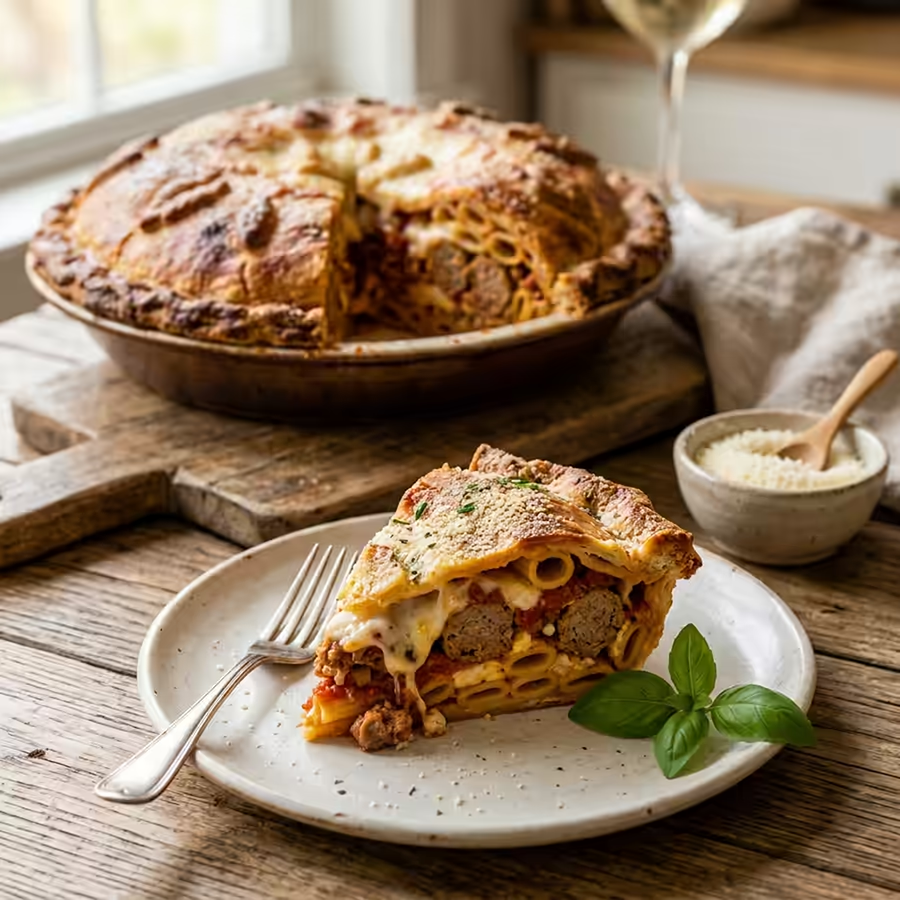
Timpano is one of those dishes that makes an impression even before you take your first bite. On the outside, it looks like a large golden dome made of dough, while inside it hides layers of pasta, rich sauce, cheese, meat filling, meatballs, eggs, or vegetables. When cut open, timpano looks truly festive, which is why it’s often prepared not for everyday meals, but for guests, family gatherings, weekend lunches, or special dinners.
Content
To put it simply, a timpano is a festive Italian pasta dish baked in a pastry crust. It’s sort of a cross between pasta al forno, a pie, and a large casserole, but it has a much more impressive shape and a more complex structure. Everything matters in this dish: the right pasta, a thick sauce, good dough, a successful combination of cheeses, and patience during the assembly.
That is precisely why timpano is considered not just a recipe, but an entire culinary project. At first glance, the dish seems very complicated, but if you break the whole process down into logical steps, everything becomes quite clear. First, you prepare the dough, then make the sauce, prepare the filling separately, undercook the pasta slightly, assemble the layers in a baking dish, bake it, let it rest, and only then slice it. Once you know the sequence, timpano is no longer intimidating—on the contrary, it’s captivating.
This dish is perfect for a food blog because it’s not only delicious but also visually striking. It has a beautiful presentation, a dramatic cross-section, rich ingredients, and plenty of variations that let you adapt the recipe to your own style. Some people prefer the classic version with meat, sausage, and cheese, while others prefer the version with eggplant, mushrooms, and ricotta. But regardless of the filling, the essence remains the same: it’s a generous, hearty, festive, and very homey dish.
In this article, we’ll cover everything in detail: what a timpa is, what ingredients you’ll need, how to make it at home step by step, which dough works best, how to avoid ruining the pasta’s texture, why it’s important to let the dish rest after baking, what popular variations exist, and what mistakes to avoid. There will also be a comprehensive FAQ at the end to address all common questions and make the article as helpful as possible for the reader.
What is a Timpano?
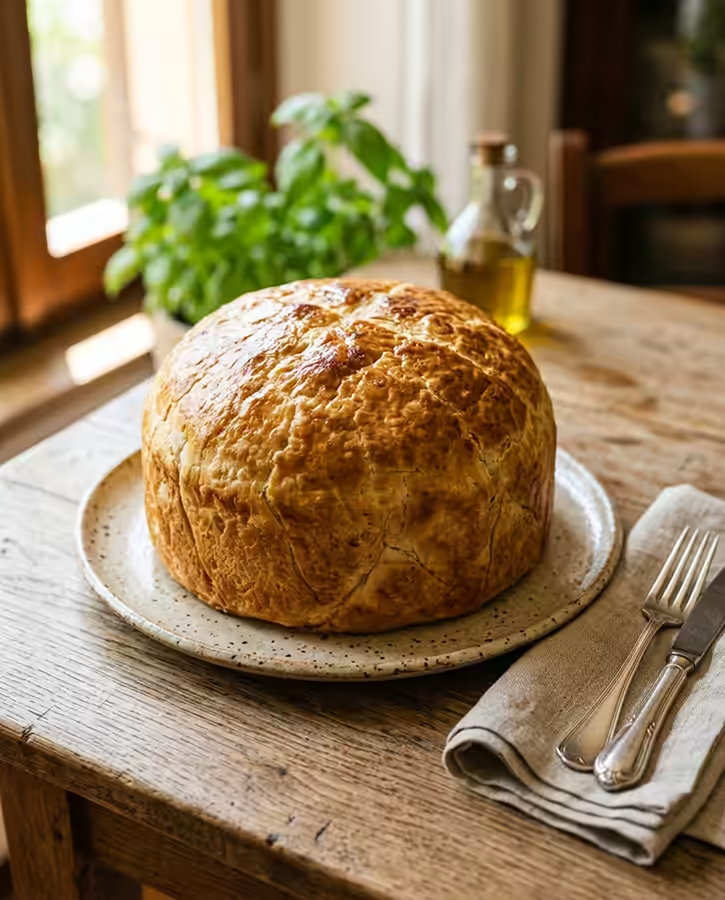
A timbale is a baked dish made with pasta in a large mold, usually dome-shaped, which is lined with dough and then filled with several layers of filling. The filling may include penne, rigatoni, meatballs, tomato sauce, sausage, cheese, eggs, green peas, ricotta, béchamel, and other ingredients. After baking, the timpan is turned out onto a plate or board, giving it the appearance of a tall baked dome.
The main feature of this dish is the harmony of form and substance. It’s not just “pasta with sauce,” but a complete composition where every layer contributes to the overall result. The pasta provides structure, the sauce adds richness, the cheese brings tenderness and creaminess, the meat adds depth of flavor, and the dough provides shape, aroma, and a beautiful golden crust.
Another key feature of timpano is the flexibility of the recipe. There isn’t just one set of ingredients that can’t be changed. On the contrary, it’s a dish that’s often adapted to family traditions, the season, budget, and mood. That’s exactly why timpan shouldn’t be seen as a strict formula. It’s more of a cooking principle: there’s a crust, there are layers, there’s baking, and there’s a spectacular presentation.
Why You Should Make Timpano at Home
The first reason is the taste. The timbale has a very rich, deep, and complex flavor. In a single bite, you can experience several textures at once: soft pasta, thick sauce, the creaminess of cheese, a juicy meat filling, and a golden-brown pastry crust. This is one of those times when a dish truly feels festive.
The second reason is the presentation. When you remove the timbale from the mold, place it on a large plate, and cut into it, it always evokes a strong reaction. The dish looks luxurious, impressive, and unique. For guests, it almost always creates a “wow” effect, and for culinary content, it makes for very compelling visual material.
The third reason is its versatility. Timpano can be prepared in a more traditional style or as a modern home-style adaptation. You can make a version with meat, one with vegetables, add béchamel sauce for a creamier texture, or stick to just tomato sauce. You can serve it hot for dinner, and reheat the leftovers the next day in individual portions—the flavor often becomes even more pronounced.
The fourth reason is that this dish is perfect for those who enjoy the cooking process. Timpano isn’t the kind of recipe you can whip up in 20 minutes between other tasks. It takes time, but in return, it offers genuine satisfaction in the preparation. It’s a great choice for a weekend when you want to do more than just throw something together quickly—you want to create a dish with character.
What should the ideal Timpano look like?
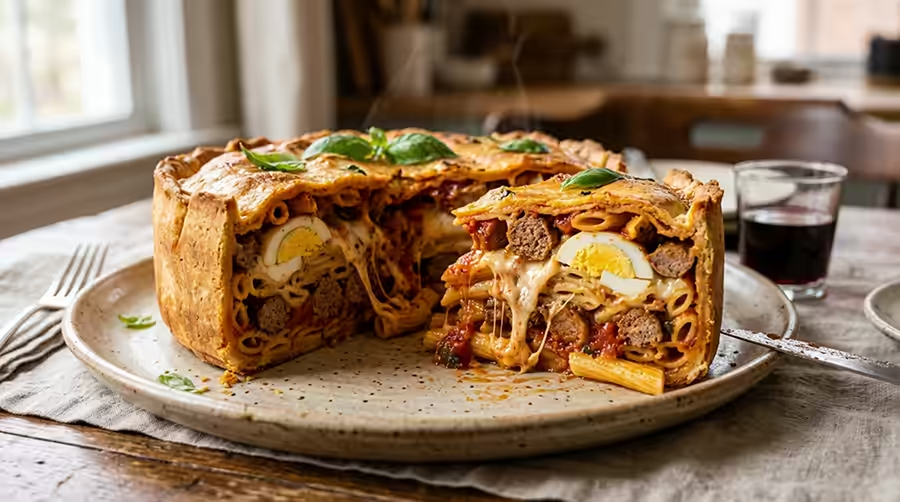
The perfect timbale should hold its shape well but not be dry. It should cut easily into large pieces, and the layers should be visible inside, rather than a chaotic mass. The pastry shell should be well-baked and golden, but not thick or heavy. The filling should retain its texture and not turn into mush.
The sauce in a good timbale is always thick. This is very important. If it’s too runny, the filling will be unstable, the dish won’t hold its shape as well after being turned out, and the bottom layers may end up too soggy. The cheese should complement, not overwhelm, the other ingredients. The meat components should be juicy, but not completely overpower the pasta.
Another key characteristic of a successful timbale is balance. It shouldn’t feel like it’s just a filling enclosed in dough. Each component needs to have its own role while also contributing to the overall structure. That’s when the dish feels cohesive, rather than haphazard.
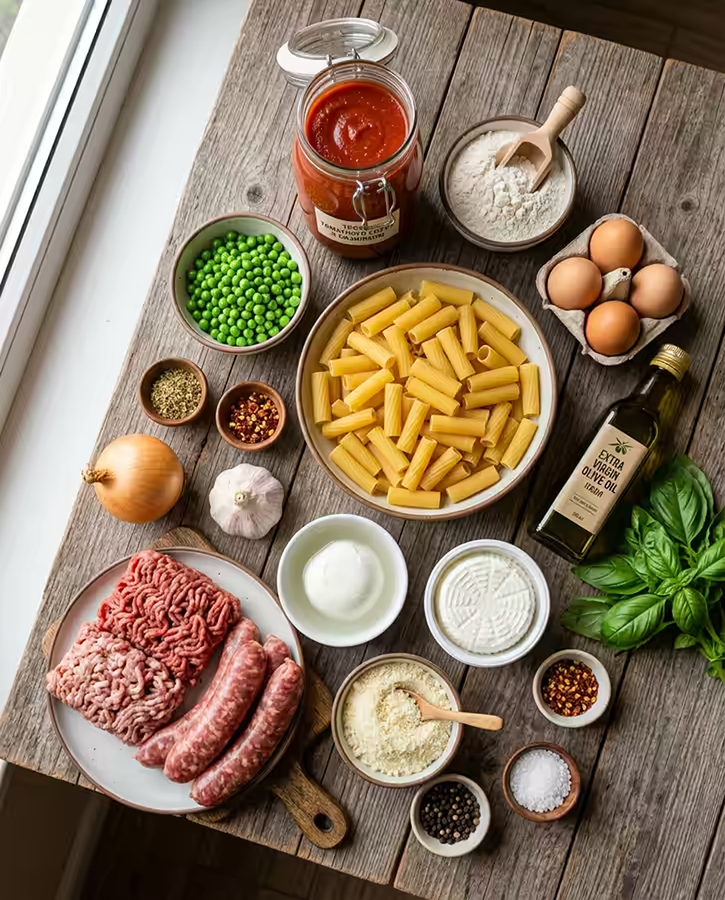
Ingredients for homemade timpano
Below is a well-balanced home recipe that yields great results without requiring restaurant-grade equipment or hard-to-find ingredients.
For the dough
- 550 g flour
- 2 eggs
- 180 ml of milk
- 160 ml olive oil
- 2 tsp salt
- 2 tsp baking powder
For tomato sauce
- 2 tbsp olive oil
- 1 large onion
- 3 cloves of garlic
- 800 ml of tomato sauce or thick tomato puree
- 150 ml of water
- 1 tsp sugar (optional)
- salt to taste
- black pepper to taste
- 1 tsp dried oregano
- a few basil leaves or 1 tsp dried basil
For meatballs
- 300 g ground meat
- 1 egg
- 60 g breadcrumbs
- 30 g grated Parmesan
- 1 clove of garlic
- 2 tbsp chopped parsley
- salt
- black pepper
- cooking oil
For an additional meat filling
- 250–300 g of raw sausage or Italian sausage without a casing
For the béchamel sauce
- 50 g butter
- 45 g flour
- 500 ml of milk
- a pinch of nutmeg
- salt
- 40 g grated Parmesan
For pasting and assembling
- 700–750 g penne or rigatoni
- 200 g mozzarella
- 150 g ricotta
- 60–80 g of Parmesan
- 100 g green peas
- 3 hard-boiled eggs (optional)
- butter for the pan
- 2 tbsp breadcrumbs for dusting the pan
- 1 egg for brushing the dough
What dishes do you need?
A large heat-resistant bowl or a tall round baking dish works best for a timbale. Ideally, it should be deep enough to form a dome. If you don’t have one, you can use a large oven-safe enameled bowl or a tall round baking dish.
You will also need:
- large mixing bowl
- sauce pan
- pasta pot
- skewer for sausages and meatballs
- hanger
- a large board or a wide plate for flipping
- sharp knife for slicing
How to Make Timpano: A Step-by-Step Recipe
1. Knead the dough
In a large bowl, combine the flour, salt, and baking powder. In a separate bowl, beat the eggs, then add the milk and olive oil. Pour the liquid mixture into the flour and begin kneading the dough, first with a spoon and then with your hands.
The dough should be soft, elastic, and easy to work with. If it’s a little sticky, add just a little flour. If it’s too dense, you can add a spoonful of milk. Don’t overdo it with the flour, or the crust will turn out tough.
Once the dough is smooth, shape it into a ball, wrap it in plastic wrap, and refrigerate for at least 30–40 minutes. This resting period is essential because it will make the dough easier to roll out; it will become more pliable and won’t shrink back.
2. Make the meatballs
In a bowl, combine the ground meat, egg, breadcrumbs, Parmesan cheese, finely grated or minced garlic, parsley, salt, and pepper. Mix the mixture well until smooth. Shape into small meatballs. Don’t make them too large, as smaller ones work better in timpano. This way, the filling is distributed more evenly, and the cross-section turns out neater.
Fry the meatballs in a small amount of oil until they are lightly golden brown. Don’t overcook them—they will finish cooking in the sauce and in the oven. Transfer them to a plate and let them cool.
3. Make the tomato sauce
Heat the olive oil in a large pot. Add the finely chopped onion and sauté over medium heat until softened. Then add the garlic and cook for about another minute, until it releases its aroma but doesn’t brown.
Add the sausage. If it’s in a casing, remove the casing and break the meat into small pieces. Sauté until the meat is lightly browned. Then pour in the tomato passata, add water, salt, pepper, oregano, basil, and, if desired, a pinch of sugar to balance the acidity.
Add the meatballs to the sauce, reduce the heat, and simmer for 40–60 minutes. The sauce should become thick, aromatic, and rich. If it seems too watery, cook uncovered for another 10–15 minutes. A thick sauce works better for timpano than one that’s too runny.
4. Make the béchamel sauce
Melt the butter in a saucepan. Add the flour and quickly stir with a whisk until a smooth paste forms. Gradually pour in the milk, stirring constantly to prevent lumps from forming.
Once the sauce has thickened, add salt, nutmeg, and Parmesan cheese. The finished béchamel should be smooth but not too thick. If it sits and thickens too much, you can thin it slightly with a spoonful of milk before mixing it with the pasta.
5. Cook the pasta
Bring a large pot of well-salted water to a boil. Cook the pasta for 2–3 minutes less than the time indicated on the package. This is absolutely crucial. If you cook it until it’s fully done, it will become too soft after baking.
Drain the water and immediately divide the pasta into two portions. Mix one portion with some of the tomato sauce, meatballs, and sausage. Mix the other portion with the béchamel sauce. You can also add a little Parmesan cheese to both portions for a richer flavor.
6. Prepare the cheese and other ingredients
Cut the mozzarella into small pieces or cubes. Slice the hard-boiled eggs into rounds or quarters. You can leave the ricotta in small spoonfuls so you can spread it between the layers later. If using peas, you can blanch them briefly or simply thaw them if they’re frozen.
At this stage, it is highly recommended that all ingredients be at least warm, not hot. If the filling is too hot, the dough will start to get soggy before it even goes into the oven, and the texture of the dish will suffer.
7. Prepare the pan
Generously grease the baking dish with butter. Don’t skimp on it, because this will determine how easily you can remove the timbale later. Then sprinkle the dish with breadcrumbs. They’ll provide extra protection against sticking and help create a nice crust.
Take the dough out of the refrigerator. If it’s very cold and stiff, let it sit at room temperature for 5–10 minutes. Then roll it out into a large sheet, big enough to line the entire pan with some overhang around the edges. The dough should be thin, but not so thin that it tears.
Carefully transfer the dough into the pan, pressing it against the sides and bottom. The edges should hang over the sides—you’ll use them to seal the top later.
8. Assemble the layers
Spread some of the tomato sauce-based pasta on the bottom. Top with a little mozzarella, a few spoonfuls of ricotta, some Parmesan, a few slices of sausage, meatballs, a few peas, and a few slices of hard-boiled egg.
For the next layer, spread some of the béchamel sauce. Add more cheese and a few pieces of the filling. Continue this way until the dish is full. Try to distribute the ingredients evenly so that every bite has a good balance of flavors.
Don’t pack the filling down too tightly. You only need to gently press it down with a spoon or the palm of your hand to ensure there are no large air pockets. If you press too hard, the cross-section will be too dense and heavy.
Finish with a layer of pasta. Don’t pour too much sauce on top. A small amount is fine, but excess liquid will only make it soggy.
9. Close the Timpano
Fold the overhanging edges of the dough inward. If the top doesn’t close completely, roll out a small piece of extra dough and place it on top like a lid. Pinch the edges together, prick the surface a few times with a fork to allow steam to escape, and brush the top with beaten egg.
It is this step that makes the dish look so beautiful. After baking, the top will be glossy, golden, and very appetizing.
10. Bake
Preheat the oven to 190°C. Place the pan on the middle rack and bake for about 55–65 minutes. If the top starts to brown too quickly, cover it with foil during the second half of the baking time.
The signs that it’s done are simple: the dough is nicely browned, the surface is springy, and the dish itself has a rich, distinct aroma. Don’t rush to take it out of the pan right after taking it out of the oven.
11. Let the dish rest
After baking, leave the timbale in the pan for at least 25–30 minutes. This is one of the most important steps in the entire recipe. If you turn the dish out too soon, the layers will still be unstable, and the cross-section will look messy.
Once the filling has set slightly, cover the pan with a large plate or cutting board, press down firmly, and carefully flip it over. Slowly remove the pan. If done correctly, you’ll be left with a beautiful, large dome with a golden crust.
12. Serving
Cut the veal into thick wedges. Thin slices tend to fall apart, while larger pieces look more appealing and hold their shape better. This dish pairs well with a green salad, arugula, a light vegetable appetizer, or simply a glass of dry wine if it’s a festive dinner.
Helpful tips for perfect results
Don’t overcook the pasta
This is one of the most common mistakes. The pasta continues to cook in the oven, so it should always be cooked until it’s slightly under al dente. Otherwise, the dish will lose its texture.
Make a thick sauce
The meat doesn’t do well with excess liquid. If the sauce is too runny, it will ruin the cut and make the center too moist. It’s better to simmer it longer than to rely on the oven to fix it.
Let the components cool before assembly
Warm or hot sauce, hot meatballs, and freshly cooked pasta can make the dough soggy even before baking begins. This can prevent the crust from baking through properly.
Don’t make the dough too thick
A thick crust will make the dish heavy. It should be firm enough to hold its shape, but not steal the show.
Grease the pan well
Generously greasing the pan with oil isn’t a minor detail—it’s essential. The tart should come out of the pan easily; otherwise, the whole effect of a beautiful presentation will be lost.
Let the dish rest
This rule works the same way as with a large cut of meat or lasagna. After baking, the texture is still “settling,” and letting it rest allows everything to stabilize.
Variations on a Timpani Theme
One of the main advantages of tympano is that you can adapt the recipe to your own taste. Below are the most popular variations.
Classic Meat Timpano
This version features tomato sauce, meatballs, sausage, Parmesan, mozzarella, ricotta, and hard-boiled eggs. It’s the most festive, hearty, and flavorful option. If you’re making timpano for the first time, this is the perfect place to start.
Timpano with béchamel sauce
In this version, some of the pasta is mixed not only with tomato sauce but also with white sauce. The béchamel makes the texture softer, more delicate, and creamier. This works especially well if you want a less “aggressive” tomato flavor and a more delicate balance.
Timpano with vegetables
You can substitute the meat ingredients with sautéed mushrooms, eggplant, zucchini, bell peppers, spinach, or caramelized onions. In this case, it’s important to thoroughly drain any excess moisture from the vegetables so the filling doesn’t turn out watery. Ricotta, mozzarella, and Parmesan work very well in this vegetable version.
Timpano with Eggplant
This is a great option for those who love Southern Italian cuisine. You can sauté, bake, or grill the eggplant, then layer it with tomato sauce and cheese. The flavor is rich, slightly sweet, and very distinctive.
Timpano with salami or ham
If you don’t feel like dealing with sausage, you can use salami, prosciutto cotto, or good-quality ham, sliced into small pieces. This option is simpler, but still very tasty.
Mini Timpano
Instead of one large cake, you can make several individual portions in small pans. This is a great option for restaurant service, a festive table, or photo content. Individual portions bake faster and are easier to serve.
What can be used as a substitute for certain ingredients
It’s not always possible to find all the items on the classic list, so here are some practical substitutes.
- You can substitute suluguni or another cheese that melts well for mozzarella.
- Ricotta can be replaced with soft cottage cheese, which has been mashed until it reaches a creamy consistency.
- Parmesan can be partially replaced with Grana Padano or another hard, aged cheese.
- You can substitute penne and rigatoni with another short pasta that holds its shape well.
- You can substitute the sausage with browned ground meat or salami.
- The dot is optional and can be omitted entirely.
How to prepare the Timpano in advance
This is one of the easiest dishes to prepare in stages.
One day before submission, you can:
- knead the dough
- make a sauce
- shape and cook meatballs
- prepare the sausage
- boil the eggs
- grate the cheese
On the day of submission, you will need:
- cook the pasta
- make a béchamel sauce
- assemble the tympanum
- baked
- give a break
- turn over and serve
This approach is very convenient if you’re cooking for guests and don’t want to spend the whole day stressing out in the kitchen.
How to store and reheat
Leftovers keep well in the refrigerator for 2–3 days. It’s best to cut the dish into portions and store them in an airtight container. You can reheat it in the oven covered with foil or in the microwave, but the oven does a better job of preserving the texture of the crust.
If you want to freeze it, wait until it has cooled completely. It’s easiest to freeze it in portions. Before serving, thaw it in the refrigerator, then reheat it in the oven.
What to serve with tympano
Timpano is a fairly hearty dish, so the side dish should be light. Good options include:
- Green salad with a simple dressing
- arugula with lemon and olive oil
- tomatoes with basil
- roasted vegetables without a heavy sauce
- Light appetizer
You shouldn’t serve anything too fatty or starchy with the timpa. It’s not the kind of dish that needs extra richness. It needs a fresh balance.
Common Mistakes
The filling is too runny
This can cause the top to collapse. This happens particularly often if the sauce hasn’t been reduced enough or if you’ve used cheese that’s too moist without checking its texture.
Overflowing form
You might be tempted to pack in as much filling as possible, but that’s a mistake. If the pan is overfilled, the dough will be harder to seal, and the center may not set properly during baking.
Too much cheese
Cheese is delicious, but when there’s too much of it, the dish becomes heavy, greasy, and loses its balance. It’s better to have a few types of cheese in moderation than one type in excess.
Poor organization of the process
Tympano isn’t the kind of dish you should cook haphazardly. You need to prepare all the ingredients in advance; otherwise, it’s easy to overcook, overheat, or overdry something during the process.
Frequently Asked Questions
What is a Timpano?
A timbale is a large baked Italian dish made with pasta and a filling, prepared in a baking dish lined with dough. After baking, it is turned upside down and served in the shape of a dome.
How is timpa different from lasagna?
Lasagna consists of layers of pasta alternated with sauce and filling in a rectangular dish. Timpano is made with pasta, usually in a dome shape, often with a pastry crust, and has a more festive, impressive appearance.
Which toothpaste is best to use?
Short pasta shapes that hold their shape work best: penne, rigatoni, ziti, or other firm, tubular varieties. Long pasta is not typically used in this dish.
Is it necessary to make the dough?
For the classic version—yes, it’s the dough itself that forms the crust and helps the dish hold its shape. But there are homemade variations where, instead of a full-fledged dough, people use just a breading layer or a very thin base.
Can you make timpa without meat?
Yes, that’s definitely possible. For a vegetarian version, eggplant, mushrooms, spinach, zucchini, bell peppers, ricotta, mozzarella, and a thick tomato sauce work well.
Is béchamel sauce a must?
No, it’s not necessary. You can make timbale with just tomato sauce. But béchamel adds creaminess and rounds out the flavor.
Can the Timpano be assembled in advance?
Yes, but it’s best not to assemble it too early. Ideally, you should prepare the individual components in advance and assemble the dish closer to the time of baking.
Why is the tympanic membrane rupturing?
The most common causes are runny sauce, overcooked pasta, hot filling when assembling, a poorly greased pan, or insufficient resting time after baking.
How long does it take to prepare?
If you’re starting from scratch in a single day, you should allow about 3.5 to 4 hours, including prep time, making the sauce, assembling, baking, and resting. If you prepare some of the components in advance, the active cooking time will be significantly reduced.
Is a timpano suitable for a festive meal?
Yes, this is one of the most impressive dishes to serve guests. It looks festive, serves well in large portions, and is perfect for a group.
Can I serve the timbale the next day?
That’s right, and often it actually tastes even better because the layers blend together more harmoniously. The key is to reheat it properly so it doesn’t get dry.
Which dough is best?
For a homemade version, an elastic dough made with eggs, milk, and oil works best. It’s easier to work with than the classic shortcrust pastry and works well for a large pan.
Is it possible to make this without eggs in the filling?
Yes, hard-boiled eggs are just one of the popular options. If you don’t like that texture or want to simplify the recipe, you can leave them out.
What is the best cheese for timpan?
The best results come from combining several types of cheese: a hard cheese for flavor, a soft cheese for melting, and a creamy cheese for a smooth texture. For example, Parmesan, mozzarella, and ricotta.
Which shape is best?
Ideally, use a deep, round, heat-resistant bowl or a tall baking dish that allows you to form a dome. The shape plays a major role in determining the final appearance of the dish.