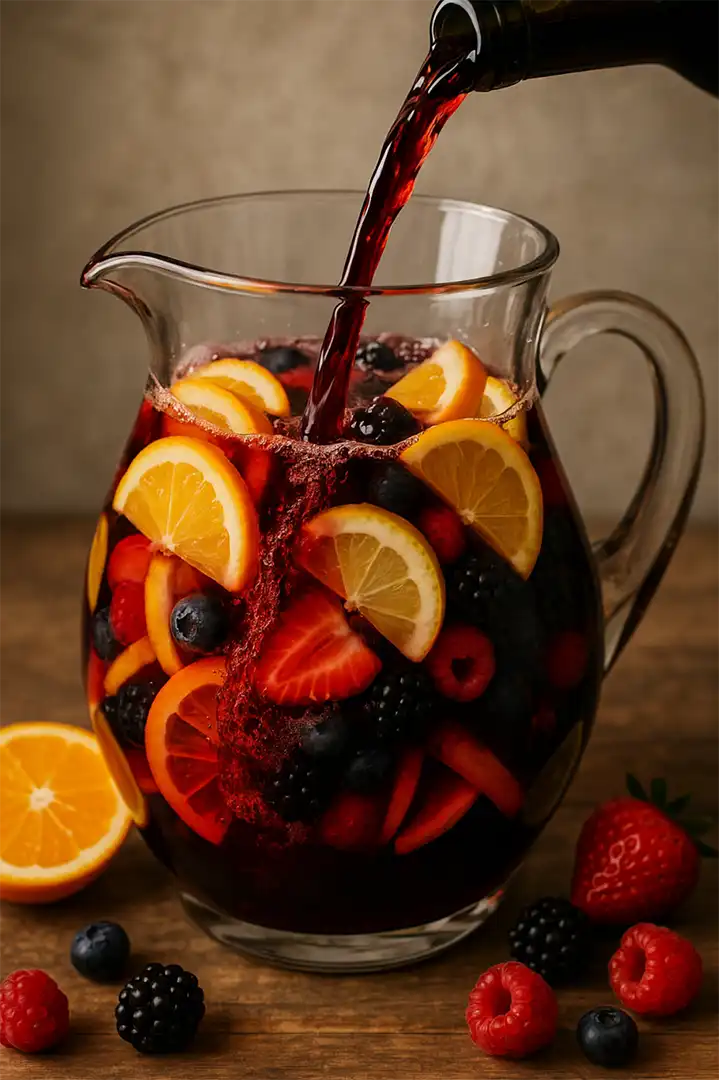
Sangria is a true symbol of Spain, attracting with its bright fruity taste and refreshing properties. This low-alcohol drink has become an integral part of summer culture thanks to its simplicity of preparation and incredible variety of variations. The name of the drink reveals its distinctive feature — the word “sangría” comes from the Spanish “sangre,” meaning “blood,” hinting at the characteristic red color of classic sangria.
The history of sangria’s origins
The roots of sangria go back to ancient times, when the Romans brought viticulture to the Iberian Peninsula. However, the real history of the drink began in the 19th century in southern Spain and Portugal, when fruit pickers working under the scorching sun were looking for ways to cool off.
They carried wineskins filled with red wine diluted with spring water and added fresh citrus juice to it. This mixture not only made it easier to work under the sun, but also refreshed them without causing severe intoxication. This drink allowed workers to remain productive throughout the day while quenching their thirst.
Sangria gained worldwide popularity in 1964 when it was presented at an international exhibition in New York. Since then, the drink has spread around the world, gaining new variations and recipes.
Classic red sangria recipe
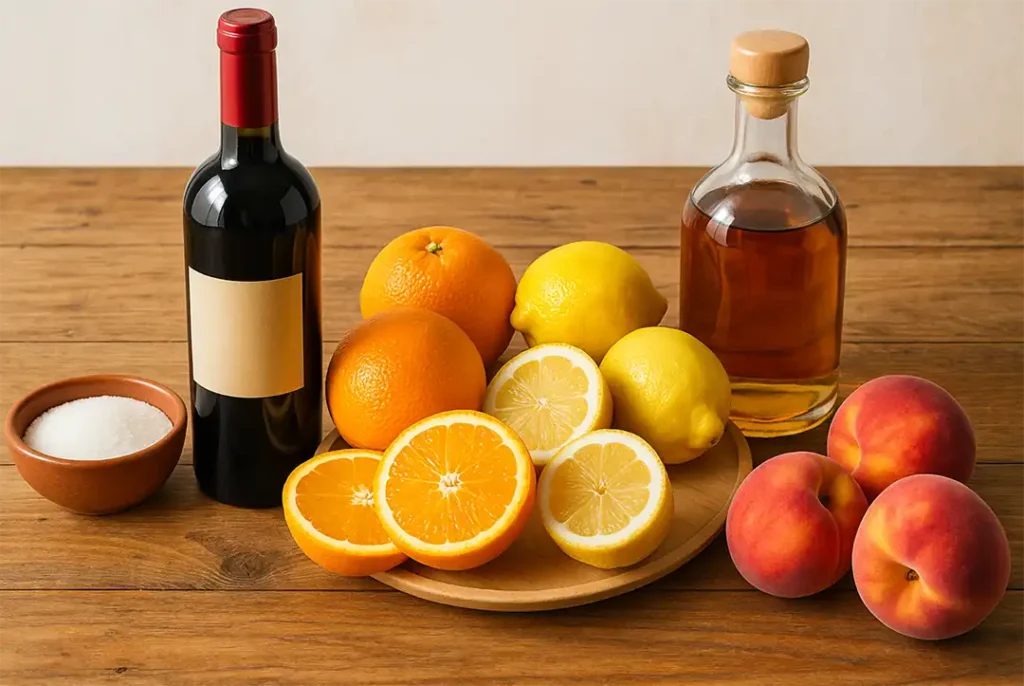
Ingredients (for 4-6 servings):
- 750 ml of dry red wine
- 1 orange
- 1 lemon
- 1 lime (optional)
- 1-2 peaches or apples
- 2-3 tablespoons of sugar or honey
- 100 ml brandy or orange liqueur
- 500 ml sparkling water or soda
- Ice to taste
Step-by-step preparation:
- Prepare the fruit: Wash all citrus fruits thoroughly and cut them into thin rings or half-rings. Cut peaches or apples into medium-sized pieces, removing any pits or cores.
- Making the base: In a large glass jug or saucepan, combine the wine, brandy, and sugar. Stir thoroughly until the sugar is completely dissolved.
- Adding fruit: Place all chopped fruit into the wine mixture and mash lightly to release juices.
- Steeping: Place the pitcher in the refrigerator for at least 2-4 hours, preferably overnight. The longer the sangria steeps, the richer its fruity aroma becomes.
- Final step: Just before serving, add sparkling water and ice. It is important to add sparkling water at the last moment to preserve freshness and bubbles.
Sangria variations
White sangria
White sangria is an elegant alternative to the classic recipe, ideal for summer parties. To make it, use:
- 750 ml dry white wine
- Light-colored fruits: apples, pears, white grapes
- Citrus fruits: lemon, lime, white grapefruit
- Orange liqueur or white rum
White sangria has a more refined and lighter taste, pairing perfectly with seafood and light appetizers.
Pink sangria
Using rosé wine, you can create an exquisite version with pomegranate juice and fresh berries. Add strawberries, raspberries, or blueberries for extra flavor.
Sparkling sangria
For a festive mood, prepare sparkling sangria based on champagne or prosecco:
- 750 ml sparkling wine
- 125 ml brandy
- 125 ml orange liqueur
- White grapes
- Citrus fruits
- 2 tablespoons of sugar
Non-alcoholic sangria
A great option for children and those who don’t drink alcohol:
Ingredients:
- 1 liter of grape or pomegranate juice
- 500 ml sparkling mineral water
- 2-3 oranges
- 1-2 lemons
- Ice to taste
Preparation:
- Cut the fruit into slices.
- Mix with juice in a 2:1 ratio with mineral water.
- Add ice before serving.
Tips for the perfect sangria
Choosing wine
- Use young table wines of medium quality. Expensive aged wines lose their nuances when combined with fruit.
- The optimal strength of wine is 11-13%.
- The following are suitable for red sangria: Tempranillo, Garnacha, Cabernet Sauvignon
- For white: Albariño, Viura, Sauvignon Blanc
Fruits and their preparation
- Always use fresh, ripe fruit.
- Wash citrus fruits thoroughly, as the peel remains in the drink.
- Remove seeds from all fruits
- Cut the fruit into equal pieces for even infusion.
Secrets of taste
- Dilute wine with water in equal proportions to reduce its strength.
- Add spices: cinnamon, nutmeg, cloves for winter versions
- Use cane sugar instead of regular sugar for a more natural taste.
- Experiment with different liqueurs: Cointreau, Triple Sec, rum
Serving temperature and tableware
Serving sangria correctly is very important for bringing out its flavor:
- Still sangria: serve at 14-16°C in wide punch glasses.
- Sparkling sangria: chill to 12-14°C and serve in champagne glasses.
- Always add plenty of ice
- Use glassware to preserve the clarity and beauty of the drink.
Useful properties and calorie content
Sangria is not only delicious, but can also have beneficial properties when consumed in moderation:
Useful properties:
- Contains vitamins C, P, B1, B2 thanks to fruit
- Helps increase appetite
- Improves cardiovascular system function
- Has antioxidant properties
Calorie content:
- Classic sangria: 173 kcal per 100 g
- Non-alcoholic version: 85 kcal per 100 g
- Alcoholic cocktail: 211 kcal per 100 g
The most common mistakes

Mistakes in choosing ingredients
- Wine that is too expensive: do not spend money on premium wines — their complexity will be lost.
- Unripe fruit: using green or overripe fruit spoils the taste
- Incorrect proportions: excess alcohol makes the drink too strong
Errors in preparation
- Insufficient infusion: sangria needs time to develop its flavor.
- Adding carbonated water too early: this causes the gas to escape
- Improper storage: keep sangria in the refrigerator for a maximum of 2 days.
Errors in delivery
- Incorrect temperature: a drink that is too warm or too cold does not reveal its full flavor.
- No ice: ice is a mandatory element of the serving
- Inappropriate tableware: using plastic tableware spoils the experience
Food pairing
Sangria goes well with various Spanish and Mediterranean dishes:
Red sangria:
- Grilled meat and barbecue
- Tapas with ham and cheese
- Seafood paella
- Spicy chorizo sausages
White sangria:
- Seafood and fish
- Light salads with fruit
- Soft cheeses
- Desserts with fruit
Sparkling sangria:
- Cold appetizers
- Canapés and bruschetta
- Fruit desserts
- Holiday cakes
Regional characteristics
In different regions of Spain, sangria is prepared in different ways:
Andalusia: peaches and apricots are added, sherry is used instead of brandy
Catalonia: “Sangria de Cava” is prepared using Catalan sparkling wine
Valencia: an alternative has been created — “Agua de Valencia” with orange juice and champagne Basque
Country: local red wines are used and apples are added
Seasonal variations
Summer sangria
- More ice and sparkling water
- Fresh berries: strawberries, raspberries, blueberries
- Watermelon and melon for extra freshness
- Mint for flavoring
Winter sangria
- Heated to 40-50°C
- Winter spices are added: cinnamon, cloves, nutmeg
- Winter fruits are used: pears, apples
- Instead of sparkling water — hot tea or mulled wine
Spring sangria
- First spring berries
- Citrus fruits with a new harvest
- Fresh herbs: basil, rosemary
Autumn sangria
- New harvest grapes
- Pumpkin and persimmon
- Nuts for texture
- Brown sugar instead of white
Sangria in modern culture
Sangria has become not just a drink, but a true cultural phenomenon. In 2014, it officially became Spain’s national drink. The European Parliament even adopted special labeling rules to protect the authenticity of the drink.
However, it is worth remembering that in Spain itself, sangria is viewed with ambivalence — locals often consider it a “tourist” drink and prefer “Tinto de Verano” — a simpler combination of red wine and lemonade.
FAQ: frequently asked questions about sangria
How long can sangria be stored?
Ready-made sangria can be stored in the refrigerator for a maximum of 2 days. After that, the fruit begins to ferment under the influence of alcohol.
Can frozen fruit be used?
It is preferable to use fresh fruit, but frozen fruit is also acceptable. Thaw completely before use.
How to make sangria less strong?
Increase the amount of sparkling water or fruit juice and reduce the amount of alcohol.
Is it necessary to add brandy?
No, brandy adds depth to the flavor, but without it, sangria will be lighter and more refreshing.
What is the difference between sangria and mulled wine?
Sangria is served cold with fresh fruit, while mulled wine is served hot with spices.
Can sangria be made without sugar?
Yes, especially if the fruit is very sweet or you are using sweet wine.
How long does it take to infuse?
At least 2 hours, ideally 8-12 hours for the flavor to fully develop.
Can vodka be used instead of brandy?
Yes, but the taste will be less rounded. It is better to use high-quality vodka.
How to serve sangria at a large party?
Prepare it in large containers, serve it self-service style with a ladle and plenty of ice.
Is sangria good for your health?
When consumed in moderation, it has antioxidant properties and vitamins from fruit, but remember about the alcohol content.
Sangria is not just a drink, but a true art form that allows you to experiment with flavors and create your own unique recipes. The main thing is to use quality ingredients, stick to the basic proportions, and don’t be afraid to get creative. Whether you’re making classic red sangria for a summer party or elegant white sangria for a romantic evening, this Spanish drink is sure to give you and your guests real pleasure and a festive feeling.