
A revolution in nutrition has come to our kitchens thanks to nutrigenetics—the science that studies the relationship between genes and nutrition. Creating a personalized menu based on DNA analysis allows you to select dishes that are ideal for your body, taking into account your individual genetic characteristics.
Зміст
What is a personalized menu based on DNA analysis?
A personalized menu is an individually designed diet based on the results of genetic testing. This approach takes into account how your genes affect nutrient absorption, metabolism, and your body’s response to different foods.
This test carefully analyzes the genes responsible for carbohydrate metabolism, lipid (fat) metabolism, and susceptibility to obesity. Thus, genetic analysis provides information about the ideal amount of specific nutrients in the diet to achieve a healthy weight in a safe and sustainable way.
Basic principles of genetic nutrition
Individual approach to macronutrients
- Carbohydrates: genetic variations determine whether fast or slow carbohydrates are better absorbed.
- Fats: some people tolerate saturated fats better, others prefer unsaturated fats
- Protein: Protein requirements may vary depending on genotype and physical activity.
Personalization of micronutrients
Genetic testing determines the individual needs of the body for vitamins and trace elements, as well as the optimal ratio of proteins, fats, and carbohydrates.
Genetic characteristics that influence the menu
Lactose intolerance
Lactose intolerance — variant -13910CC of the LCT gene contributes to a decrease in lactase enzyme activity with age, which leads to the inability to break down lactose from dairy products. Interesting fact: lactose intolerance is normal! Usually, lactase stops being produced in adulthood.
Products to avoid:
- Regular milk (cow, goat, sheep)
- Fermented milk products: yogurt, kefir, ryazhenka
- Cheeses (hard, soft, processed cheeses)
- Cocoa, milkshakes
- Cakes, cookies, certain types of bread with milk
Alternatives:
- Soy, coconut, almond, oat, and rice milk
- Lactose-free cheeses and yogurts
- Vegan coffee creamer
Gluten intolerance

The genetic markers DQ2 and DQ8 are associated with an increased risk of developing celiac disease, an autoimmune disorder in which the body cannot tolerate gluten.
Gluten-free grains and cereals:
- Rice (white, brown, red, black)
- Buckwheat
- Quinoa
- Amaranth
- Millet
- Corn
- Lentils and chickpeas
Features of vitamin metabolism
The MTHFR gene affects the body’s ability to metabolize folic acid (vitamin B9). People with mutations in this gene need additional intake of the active form of folate and foods rich in vitamins B12, B6, and B2.
Foods rich in folate:
- Green leafy vegetables (spinach, kale, lettuce)
- Avocado
- Legumes (beans, peas, lentils)
- Citrus fruits
Weekly menu based on genetic characteristics
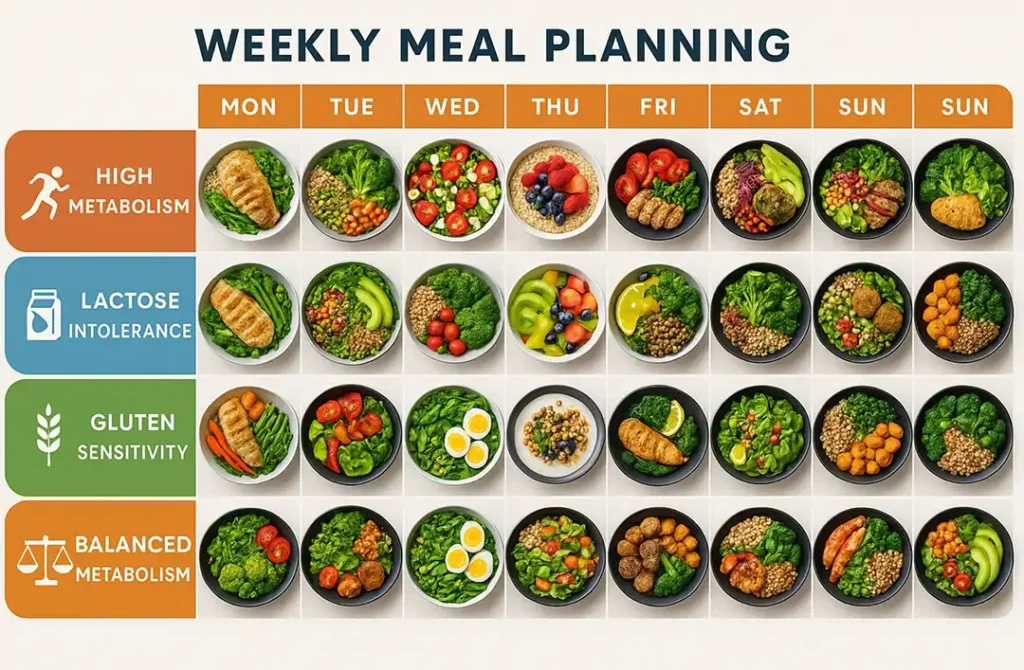
Monday: An energetic start
Breakfast: Lactose-free oatmeal with berries
- Oat flakes labeled “gluten-free” — 50g
- Coconut milk — 200 ml
- Blueberries — 100g
- Honey — 1 tablespoon
- Chopped walnuts — 20g
Snack
- Apple with almond paste
Lunch: Quinoa salad with avocado
- Boiled quinoa — 100g
- Avocado — 1 piece
- Cherry tomatoes — 150g
- Cucumber — 1 piece
- Olive oil — 2 tablespoons
- Lemon juice — 1 tablespoon
Dinner: Baked fish with vegetables
- Salmon — 150g
- Broccoli — 200g
- Carrot — 1 piece
- Olive oil, spices to taste
Tuesday: Balance Day
Breakfast: Omelet with vegetables
- Eggs — 2
- Spinach — 50g
- Tomatoes — 1 piece
- Vegetable oil for frying
Snack
- A handful of almonds and dried apricots
Lunch: Buckwheat porridge with chicken
- Buckwheat — 80g
- Chicken fillet — 120 g
- Onion — 1 piece
- Carrot — 1 piece
- Greens to taste
Dinner: Gluten-free vegetable soup
- Zucchini — 200g
- Carrot — 1 piece
- Onion — 1 piece
- Potatoes — 2 pieces
- Greens, spices
Wednesday: Antioxidant support
Breakfast: Chia pudding
- Chia seeds — 3 tablespoons
- Coconut milk — 200 ml
- Berries (raspberries, blackberries) — 100g
- Maple syrup — 1 teaspoon
Snack
- Carrots with hummus
Lunch: Tuna salad
- Canned tuna in its own juice — 120g
- Lettuce leaves — 100g
- Avocado — 0.5 pieces
- Olives — 10 pieces
- Olive oil and lemon juice for dressing
Dinner: Braised rabbit with vegetables
- Rabbit meat — 150g
- Zucchini — 150g
- Eggplant — 1 piece
- Sweet pepper — 1 piece
Thursday: Day of lightness
Breakfast: Gluten-free pancakes
- Rice flour — 100g
- Eggs — 2
- Plant-based milk — 150 ml
- Banana — 1 (for serving)
Snack
- Strip with spinach and pineapple
Lunch: Rice with vegetables
- Brown rice — 80g
- Broccoli — 150g
- Sweet pepper — 1 piece
- Soy sauce (gluten-free)
Dinner: Baked turkey with quinoa
- Turkey fillet — 150g
- Quinoa — 60g
- Asparagus — 150g
- Garlic, greens
Friday: Sea Day
Breakfast: Lactose-free yogurt with nuts
- Coconut yogurt — 150g
- Walnuts — 30g
- Honey — 1 teaspoon
- Flax seeds — 1 tablespoon
Snack
- Celery with almond paste
Lunch: Shrimp with rice noodles
- Shrimp — 150g
- Rice noodles — 80g
- Pak choi — 100g
- Ginger, garlic, sesame oil
Dinner: Ratatouille
- Zucchini — 1 piece
- Eggplant — 1 piece
- Tomatoes — 2 pieces
- Sweet peppers — 2
- Olive oil, Provençal herbs
Saturday: Family Day
Breakfast: Gluten-free granola
- Oat flakes — 50g
- Almond flakes — 20g
- Pumpkin seeds — 1 tablespoon
- Coconut milk — 200 ml
Snack
- Berry mix
Lunch: Chicken salad with quinoa
- Boiled chicken — 120g
- Quinoa — 80g
- Cucumbers — 2 pieces
- Avocado — 1 piece
- Arugula — 50g
Dinner: Baked cod with vegetables
- Fever — 150g
- Cauliflower — 200 g
- Carrot — 1 piece
- Olive oil, lemon
Sunday: Day of Renewal
Breakfast: Fruit bowl
- Banana — 1 piece
- Seasonal berries — 150g
- Coconut flakes — 2 tablespoons
- Almond milk — 100 ml
Snack
- Gluten-free rice cakes with avocado
Lunch: Veal with buckwheat
- Veal — 150g
- Buckwheat — 80g
- Braised cabbage — 150g
- Greens
Dinner: Light vegetable soup
- Zucchini — 200g
- Broccoli — 150g
- Spinach — 100g
- Coconut milk — 100 ml
Practical recipes for different genotypes
For people with lactose intolerance
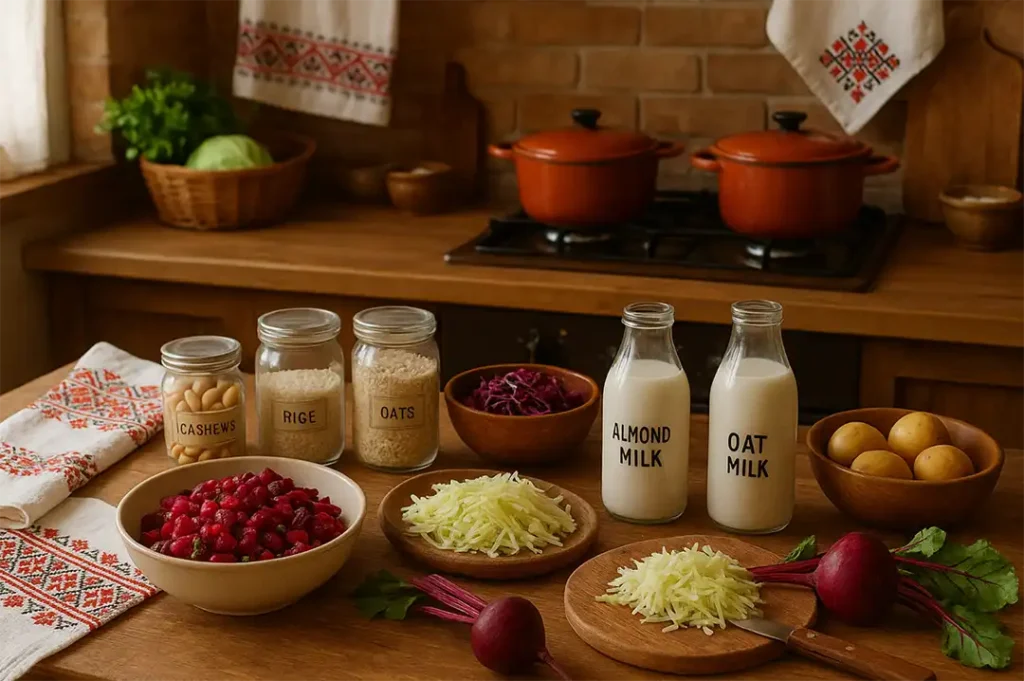
Lactose-free carrot cake
Ingredients:
- Flour (rice or regular) — 225 g
- Baking powder — 1 package
- Nutmeg — a pinch
- Cinnamon — 2 teaspoons
- Apple puree — 100 g
- Carrots — 200 g
- Almond milk — 200 ml
- Sugar — 250 g
- Vegetable oil — 40 g
Preparation:
- Mix together the flour, baking powder, nutmeg, and cinnamon.
- Add the grated apples and carrots, almond milk, sugar, and vegetable oil.
- Place the dough in a baking pan and bake at 180°C for 60 minutes.
Lactose-free beef goulash
Ingredients:
- Beef — 500 g
- Onion — 1 piece
- Tomato paste — 1 tablespoon
- Greens to taste
- Flour — 1 tablespoon
- Potatoes — 1 kg
Preparation:
- Simmer the beef pieces with onions for 30 minutes.
- At the same time, put the potatoes for mashed potatoes on to boil for 20 minutes.
- Add the tomato paste with herbs and simmer for 10 minutes.
- Add flour and serve with mashed potatoes made with coconut milk.
For people with celiac disease (gluten intolerance)
Gluten-free bread made from rice flour
Ingredients:
- Rice flour — 1 cup
- Potato starch — 1/2 cup
- Salt — 1 teaspoon
- Eggs — 2
- Water — 3/4 cup
- Olive oil — 2 tablespoons
Preparation:
- Mix the dry ingredients
- Add eggs, water, oil, and knead the dough.
- Bake in a mold at 180°C for 40-45 minutes.
Quinoa and vegetable salad
Ingredients:
- Quinoa — 1 cup
- Cherry tomatoes — 10 pieces
- Cucumber — 1 piece
- Avocado — 1 piece
- Olive oil — 2 tablespoons
- Lemon juice — 1 tablespoon
Preparation:
- Boil the quinoa until cooked (15-20 minutes).
- Cut the vegetables into cubes, mix with quinoa
- Add olive oil, lemon juice, salt, and pepper.
Corn polenta with roasted vegetables
Ingredients:
- Corn grits — 1 cup
- Water — 4 cups
- Parmesan (or vegan cheese) — 50 g
- Zucchini, eggplant, sweet peppers — 300 g
- Olive oil — 2 tablespoons
Preparation:
- Bring the water to a boil, gradually add the corn grits.
- Cook, stirring constantly, for 20-30 minutes.
- Chop the vegetables and fry them in olive oil.
- Serve polenta with vegetables, sprinkled with cheese.
Tips for creating a personalized menu
Basic principles
Taking genetic characteristics into account
- Analyze DNA test results before creating a menu
- Consult a nutrigeneticist for correct interpretation.
- Gradually introduce the recommended foods into your diet.
Balanced diet
- Ensure sufficient intake of proteins, fats, and carbohydrates
- Include a variety of vegetables and fruits
- Don’t forget to drink enough water
Seasonality of products
- Choose seasonal fruits and vegetables
- Freeze berries in summer for winter consumption
- Use fresh herbs and spices
Practical tips for cooking
Menu planning
- Plan your menu for the week in advance
- Make a shopping list based on your planned menu.
- Prepare some components of dishes in advance
Food storage
- Use airtight containers for storage
- Freeze ready meals in portions
- Label containers with the date of preparation
Alternative ingredients
- Keep a supply of different types of plant-based milk at home.
- Use gluten-free flour for baking
- Experiment with new grains and seeds
The benefits of personalized nutrition
Improving the effectiveness of your diet
Nutrition programs based on genetic testing are three times more effective than traditional diets. Personalized recommendations promote better long-term adherence to the diet.
Improving health
Digestive system
- Reducing symptoms of food intolerance
- Improved nutrient absorption
- Normalization of bowel function
Energy level
- Stabilization of blood sugar levels
- Increase in overall energy
- Improving sleep quality
Body weight
- Effective and sustainable weight loss
- Maintaining a healthy weight
- Improving body composition
Prevention of diseases
Genetically based nutrition helps prevent the development of:
- Type 2 diabetes
- Cardiovascular diseases
- Osteoporosis
- Metabolic syndrome
FAQ: Frequently asked questions about personalized menus
How long should you stick to the genetic menu?
DNA remains unchanged throughout life, so recommendations based on genetic testing are valid for life. However, the menu can be adapted depending on age, physical activity, and health status.
Can genetic nutrition be combined with other diets?
Yes, the principles of nutrigenetics can be integrated into most healthy eating systems. It is only important to take individual genetic characteristics into account when choosing foods.
How much does DNA testing cost in Ukraine?
The cost of genetic testing for nutrition ranges from 1,950 UAH for basic tests to 6,500 UAH for comprehensive programs. The turnaround time is 21 business days for a comprehensive analysis.
Is genetic nutrition suitable for children?
Genetic testing can be performed at any age. For children, it is especially important to consider food intolerances and ensure adequate intake of all nutrients necessary for growth and development.
What should you do if the test results show several food intolerances?
In this case, it is important to work with a qualified dietitian or nutrigeneticist to develop a balanced diet that excludes problematic foods but provides the body with all the necessary nutrients.
Can home DNA tests be trusted?
It is recommended to choose accredited laboratories with quality certificates and the possibility of consulting with specialists. It is important to obtain a professional interpretation of the results.
How quickly can you expect results from genetic nutrition?
The first improvements in well-being may appear after just 2-4 weeks of following a personalized menu. Sustained changes in weight and health are usually observed after 2-3 months.
Are additional vitamins necessary with genetic nutrition?
Based on the test results, your doctor may recommend specific vitamin supplements to compensate for your body’s genetically determined needs for certain micronutrients.
Conclusions
A personalized menu based on DNA analysis opens up new horizons in the individual approach to nutrition. This method allows you to create diets that best suit the genetic characteristics of the body, ensuring optimal absorption of nutrients and disease prevention.
Various genetic testing services are already available in Ukraine, and some restaurants even offer special menus based on DNA analysis. This indicates the growing popularity of personalized nutrition among Ukrainians.
The key to successful personalized nutrition lies in a comprehensive approach: genetic testing, professional consultation, gradual implementation of recommendations, and regular monitoring of results. A properly designed genetic menu can be a powerful tool for maintaining health, controlling weight, and improving quality of life.
Remember that genetics is only one of the factors that influence health. It is important to combine personalized nutrition with regular physical activity, adequate sleep, and stress management to achieve the best results.