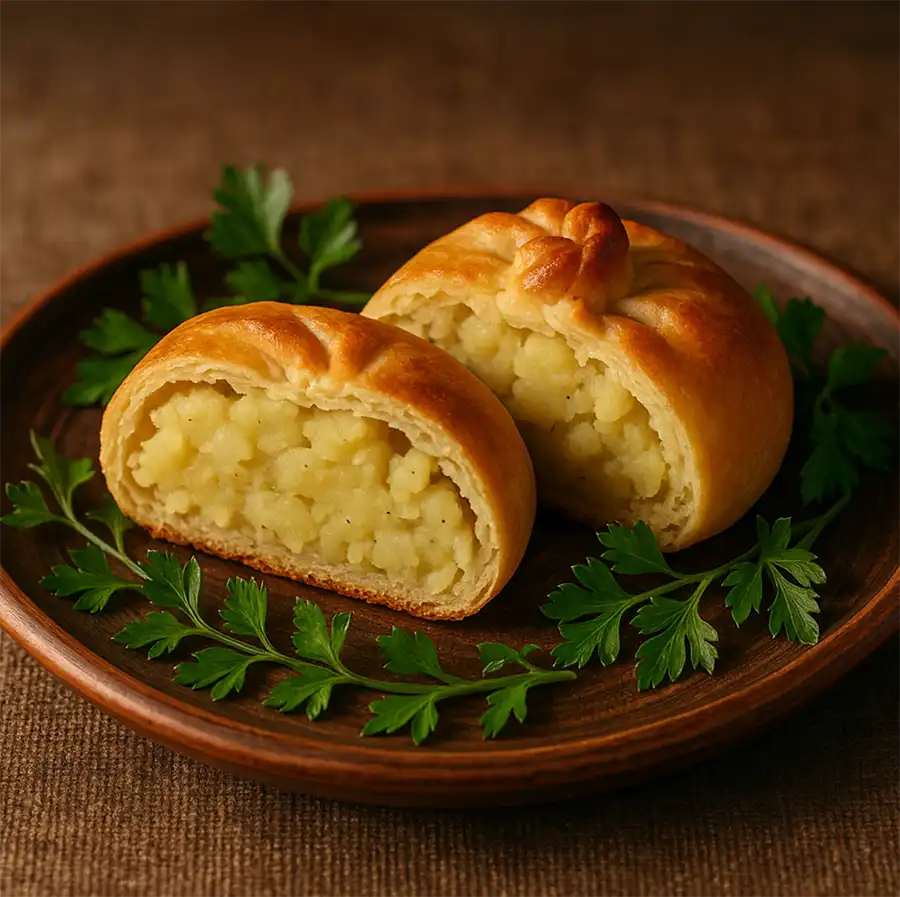
Knyši are an ancient traditional Ukrainian dish that is gradually returning to our tables thanks to the efforts of chefs and enthusiasts of Ukrainian cuisine. These fragrant pastries with a special filling are not only filling, but also connect us with the culinary traditions of our ancestors.
History and origin
Knyši has deep historical roots in Ukrainian cuisine. According to etymologists, the origin of the word “knyzh” may come from the Greek ϰνίsα — “the smell and steam of fatty roasted meat” or from a Proto-Slavic root. This dish has been mentioned in Ukrainian literature since the 18th century — even in Ivan Kotlyarevsky’s famous “Eneida,” we find the lines: “Bread, bagels, knysh were born, they went to get dishes.
Knyši were an integral part of Ukrainian ritual cuisine. They were traditionally prepared on Christmas Eve, during Lent, on Palm Sunday, and onmemorial days. These pies were given to carolers, brought as gifts to relatives during the Christmas holidays, and children gave them to their midwives.
In different parts of Ukraine, knysh acquired special meanings. In western Ukraine, knysh was the name given to a pie filled with buckwheat porridge and mashed potatoes. In some regions, knysh had a ritual significance as “bread with a soul” — a large loaf with a smaller loaf on top, symbolizing the spirit of deceased ancestors.
Varieties and regional characteristics
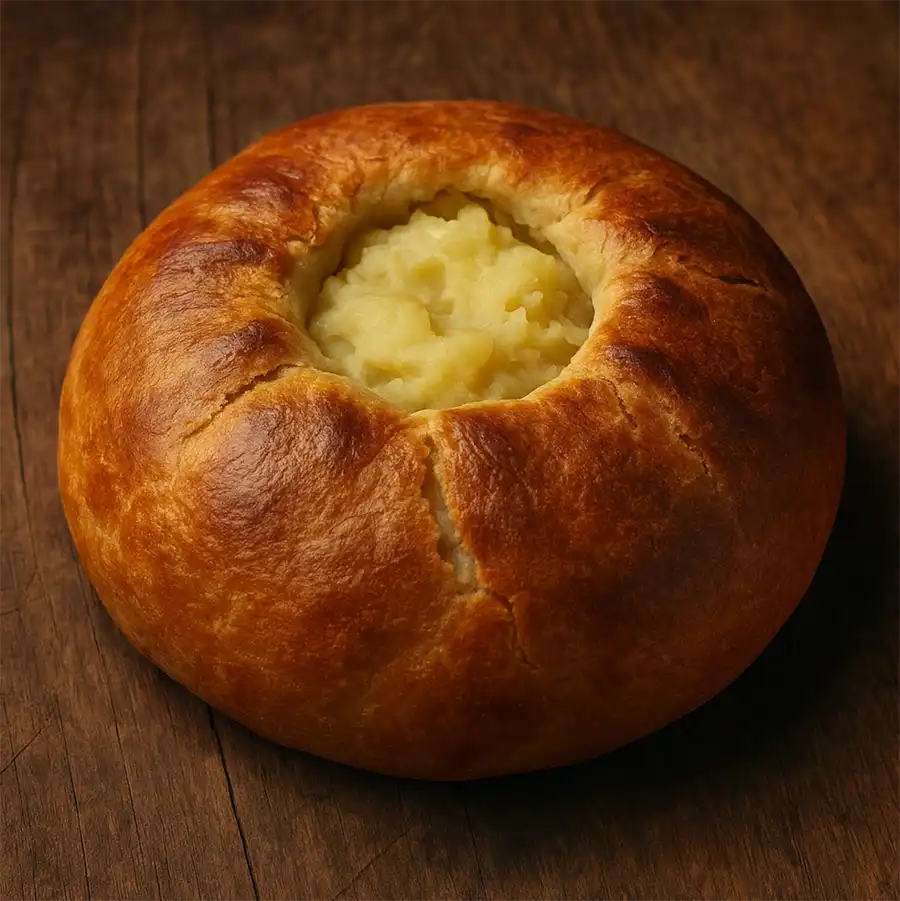
Classic filling variations
Ukrainian knysh is distinguished by an incredible variety of fillings depending on the region:
Potato knishes are the most common variety, made with mashed potatoes, fried onions, and cracklings. Potato knishes were considered a traditional dish on Christmas Eve.
Buckwheat knishes — popular in Polissya, with buckwheat porridge and onions with cracklings. Such knishes were served as an accompaniment to meat dishes in wealthy homes in the 19th century.
Cheese knysh — especially popular in the Carpathian region, with homemade cheese, herbs, and garlic. Hutsul knysh with brynza cheese is considered a true gem of Carpathian cuisine.
Cabbage knishes — with sauerkraut or fresh stewed cabbage, common in Slobozhanshchyna.
Sweet variations — with poppy seeds, jam, dried fruit, or homemade cheese with honey. These knishes were served with tea as festive pastries.
Regional characteristics
Polissya-Volyn knyshi were traditionally made from rye dough with characteristic “petals” around the edges. The dough was cut with a spoon dipped in oil, creating 5-7 “petals” that were then folded toward the center.
Hutsul knysh are distinguished by the use of corn flour and a mandatory filling of brynza cheese, greens, and lard. They are baked in traditional clay pots or molds.
Podillia knyshi were often prepared with beans and various herbs. Knyshi with viburnum berries are also popular in Podillia — a unique local tradition.
Detailed recipe for traditional Ukrainian Knyši
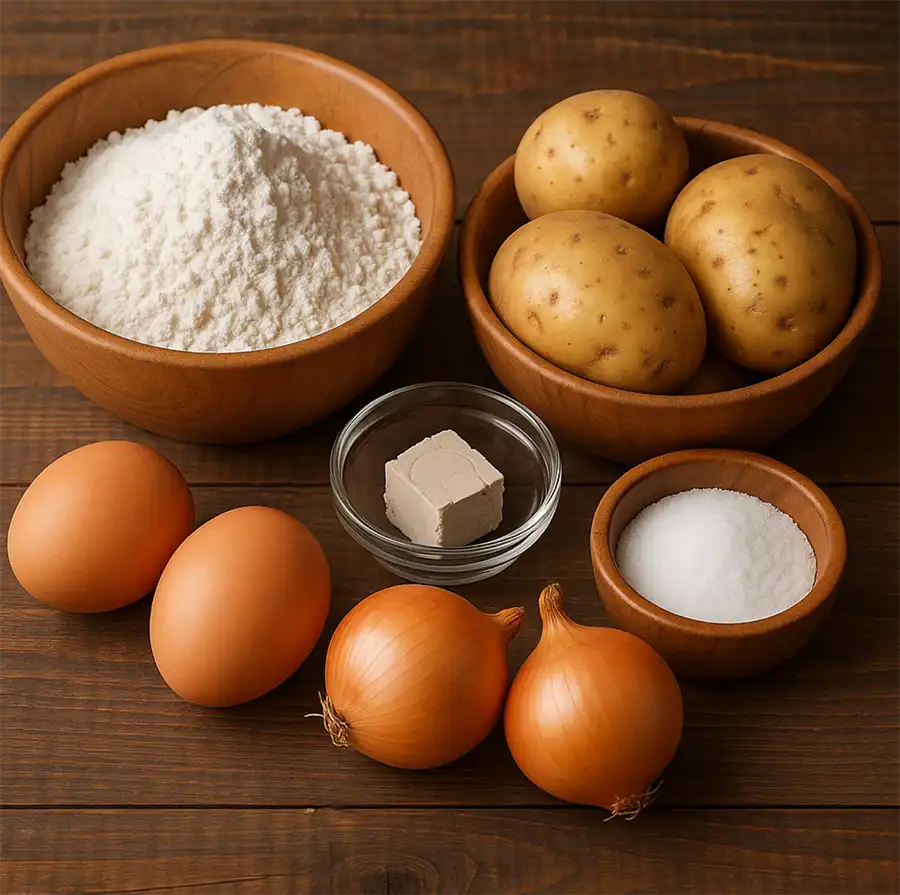
Ingredients for the dough:
- Wheat flour — 500 g
- Warm milk — 250 ml
- Dry yeast — 7 g (1 packet)
- Sugar — 1 tablespoon
- Salt — 1 teaspoon
- Sunflower oil — 2 tablespoons
- Egg — 1 (for the dough) + 1 yolk (for brushing)
Ingredients for the filling:
- Potatoes — 800 g
- Onions — 2 large heads
- Butter — 50 g
- Lard or cracklings — 100 g (optional)
- Garlic — 2-3 cloves
- A bunch of dill and parsley
- Salt and black pepper — to taste
Step-by-step preparation process:
Preparation of the dough and dough starter:
- Preparation of the dough: Dissolve the yeast and sugar in warm milk (temperature approx. 37°C). Add 2 tablespoons of flour, stir and leave for 10-15 minutes until foam appears.
- Kneading the dough: Add the remaining flour, salt, oil, and egg to the prepared starter. Knead into an elastic dough that does not stick to your hands. Cover with a damp towel and leave in a warm place for 1 hour.
Preparation of the filling:
- Prepare the potatoes: Peel the potatoes, cut them into cubes, and boil them in salted water until tender (15-20 minutes). Drain the water and mash them with butter.
- Prepare the onions: Chop the onions and fry them in oil until golden brown. If using cracklings, add them in the last few minutes of frying.
- Prepare the filling: Combine the mashed potatoes with the fried onions, add the minced garlic, chopped herbs, salt, and pepper to taste.
Shaping and baking:
- Dividing the dough: Divide the risen dough into 8-10 pieces for individual buns or into 2 pieces for large pies.
- Forming the knishes: Roll each piece into a round cake 5-7 mm thick. Place the filling in the center, gather the edges of the dough upward and pinch them together, leaving a small open center.
- Baking: Place the knishes on a greased baking sheet, brush with egg yolk, and bake at 180°C for 35-45 minutes until golden brown.
Professional secrets and tips
Secrets of the perfect dough:
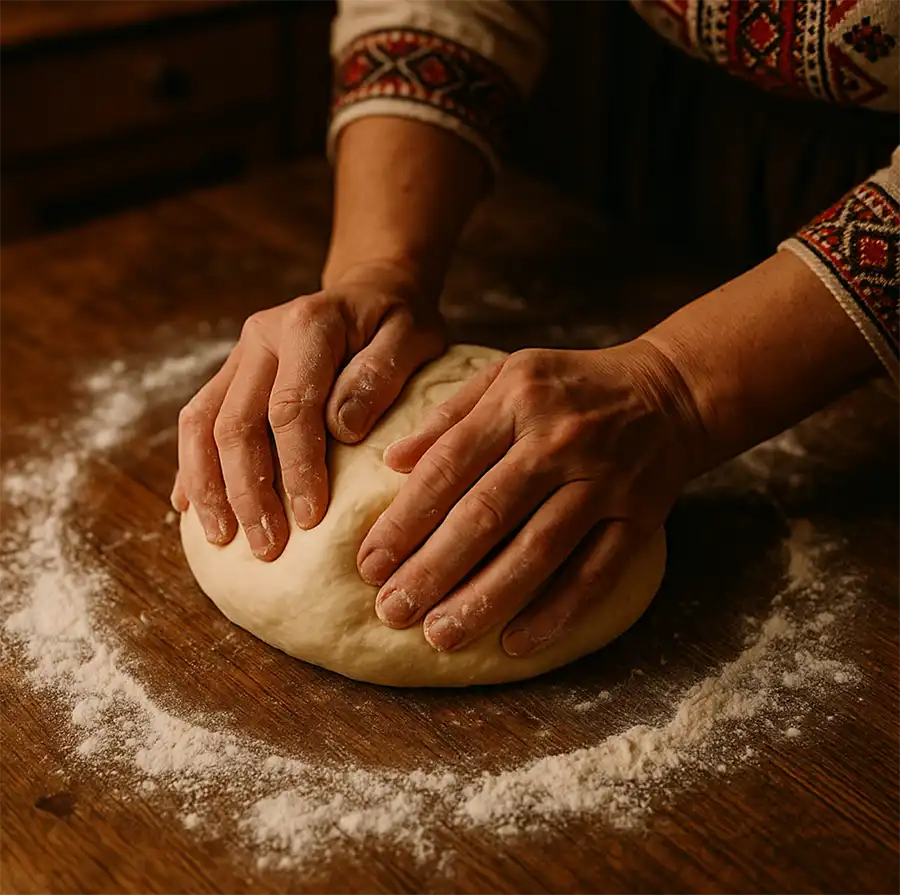
The correct temperature of the ingredients — the milk should be warm (37°C), but not hot, otherwise the yeast will die. You can check the temperature by dripping it onto your wrist — it should feel slightly warm.
Flour quality — use premium flour with a high gluten content. Be sure to sift the flour for better aeration of the dough.
Proofing time — don’t rush to bake. The dough should double in size, which takes 60-90 minutes depending on the temperature. In a cool room, the process will take longer.
Secrets of a delicious filling:
The consistency of the potatoes — the purée should not be too runny. If the potatoes are watery, dry them slightly in a frying pan.
Balance of flavors — don’t forget about the balance of salty and sweet. A little sugar in the filling will enhance the flavor of caramelized onions.
Greens — add fresh greens only to cooled filling so that they do not wilt.
Subtleties of shaping:
Dough thickness — the crust should not be too thin (it may tear) or too thick (it will not bake properly). The optimal thickness is 5-7 mm.
Pinching the edges — pinch the edges tightly, but do not pull too hard so that the dough does not tear during baking.
Shape — a traditional knish should be open at the top, allowing the filling to brown slightly.
Contemporary variations and experiments
Knishes with modern fillings:
Cheese knishes with nuts — adding chopped walnuts to the cheese filling creates an interesting contrast in textures. This option is especially popular among modern chefs.
Mushroom knishes — filled with wild mushrooms, onions, and sour cream. Perfect with mashed potatoes or on their own.
Meat knyshy — a modern interpretation with beef and pork mince. Boikiv knyshy with two types of mince are especially popular.
Vegetarian alternatives:
Pumpkin knishes are an autumn variation made with baked pumpkin, garlic, and herbs. The pumpkin gives them a sweet taste and bright color.
Cabbage and carrot — a light filling made from stewed cabbage, carrots, and greens. A low-calorie option for those watching their weight.
Puff pastry knishes:
Modern chefs often simplify the recipe by using ready-made puff pastry. This saves time, although it slightly alters the authentic taste of traditional yeast dough.
Common mistakes and how to avoid them
Mistakes with dough:
Overheating ingredients is the most common mistake made by beginners. Hot milk or an environment that is too warm can kill yeast.
Insufficient mixing — the dough should be elastic and homogeneous. Undercooked dough will not rise well.
Haste — do not shorten the fermentation time. Dough that has not risen sufficiently will be heavy and not as tasty.
Errors with filling:
Too wet — wet filling can make the dough soggy. Be sure to let the filling cool and drain off any excess liquid.
Underseasoned filling — don’t forget to taste the filling and adjust the seasoning before adding it to the dough.
Hot filling — never put hot filling in dough, as this can ruin it.
Baking mistakes:
Too high temperature — at high temperatures, the knish may burn on top while remaining raw inside.
Insufficient greasing — without greasing with egg yolk or oil, the crust will be pale.
Overfilling with filling — too much filling can cause the dough to tear during baking.
Serving and pairing
Traditional serving:
Knyši are traditionally served hot or warm. They go well with:
- Borscht or cabbage soup — a classic combination in Ukrainian cuisine
- Mushroom soup — especially delicious with wild mushrooms
- Milk or kefir — a simple and healthy option
- Sour cream is a traditional addition that enhances the flavor.
Modern serving options:
With fresh herbs — serve with plenty of fresh dill, parsley, and green onions.
Vegetable salads — light salads made from tomatoes, cucumbers, and radishes are a perfect accompaniment to hearty knishes.
As a snack, chilled knishes can be taken with you to work or on a trip.
Storage and reheating
Proper storage:
In the refrigerator, the prepared dish can be stored for up to 3-4 days in a sealed container. Allow them to cool completely before storing.
Freezing — can be frozen for up to 3 months. Freeze both raw (before baking) and ready-made.
Storing dough — Ready dough can be stored in the refrigerator for up to a day or frozen for several weeks.
Warm-up:
The oven is the best method. Heat at 150°C for 10-15 minutes, covered with foil.
A microwave is a quick but less ideal option. Heat for 1-2 minutes on medium power.
In a frying pan — you can lightly fry on both sides to restore the crispy crust.
Useful properties and nutritional value
Nutritional value:
Knyši is a nutritionally balanced dish containing:
- Carbohydrates — from flour and potatoes, provide energy
- Protein — from eggs, milk, and cheese (depending on the filling)
- Fats — from butter and oil, necessary for the absorption of fat-soluble vitamins
- Fiber — from vegetables in the filling
Useful substances:
Potatoes are rich in potassium, vitamin C, and B vitamins. Greens add folic acid and antioxidants. Onions contain quercetin, a powerful antioxidant.
Dietary variations:
For those who are watching their calorie intake, you can:
- Use skim milk and less butter
- Add more vegetables to the filling
- Reduce portion sizes
- Replace some of the flour with whole grain flour
Frequently Asked Questions (FAQ)
Is it possible to make knishes without yeast?
Yes, you can use unleavened dough made with kefir and baking soda, but the texture of the baked goods will be different, less fluffy. Traditional knysh are still made with yeast dough.
How long does it take to prepare?
The total cooking time is about 3-4 hours, including the time for the dough to rise. The active cooking time is about 1 hour.
Can it be prepared in advance?
Yes, you can form the knishes, freeze them raw, and bake them as needed. The baking time increases by 10-15 minutes.
What is the optimal thickness of the dough?
The optimal thickness is 5-7 mm. Thinner dough may tear, thicker dough will not bake well.
What to do if the filling is too wet?
Dry the filling in a pan for a few minutes or add some breadcrumbs to absorb excess moisture.
Is it necessary to brush the knishes with egg yolk?
Brushing with egg yolk gives a beautiful golden crust, but is not essential. Milk or oil can be used instead.
How can you tell when a dish is ready?
Ready-made knishes have a golden crust and make a hollow sound when tapped. You can check if they are ready with a wooden skewer.
Can other types of flour be used?
You can partially replace wheat flour with rye or whole grain flour, but this will change the texture and taste of the baked goods.
How much filling should I add?
One medium-sized bun (12-15 cm in diameter) requires about 3-4 tablespoons of filling. The main thing is not to overfill it.
Can you make sweet knishes?
Yes, traditionally they were made with poppy seeds, jam, and dried fruit. More sugar is added to the dough for sweet knishes.
Conclusion
Knyzhky are not just baked goods, but a real treasure trove of Ukrainian culinary wisdom. Each region of our country has added something special to this dish, creating an incredible variety of flavors and textures. From simple potato knyzhky to exquisite Hutsul knyzhky with brynza cheese, each variety tells its own story about the lives of our ancestors.
Today, knysh are experiencing a real revival thanks to the efforts of chefs who strive to preserve and promote Ukrainian gastronomic heritage. Making knysh in your own kitchen is not only a culinary process, but also a way to connect with your roots and feel a connection with generations of Ukrainians who have passed these recipes down from generation to generation.
Once you master the art of making knysh, you will not only expand your culinary repertoire, but also be able to treat your family to an authentic Ukrainian dish that is sure to become a family tradition. Let the aroma of freshly baked knysh fill your home with the comfort and warmth of Ukrainian hospitality!