
Homemade sausage is one of the most beloved meat dishes in Ukrainian cuisine, prepared both for holidays and for everyday meals. It is prized for its natural ingredients, rich flavor, the aroma of spices, and the ability to personally control the quality of the meat, as well as the amounts of salt, garlic, and lard. If you want to learn how to make truly delicious homemade sausage, it’s important to know not only the basic recipe but also the finer points of preparing the casing, the correct proportions, methods of heat treatment, and filling options.
Content
In this article, you’ll find everything you need to know about homemade sausage: a classic recipe, step-by-step instructions, tips for beginners, flavor variations, storage methods, answers to frequently asked questions, as well as practical advice on what to use as a substitute for sausage casings, how to clean sausage casings, and how to eliminate unpleasant odors. This guide will be useful both for those making sausage for the first time and for those looking to refine their tried-and-true recipe.
Why is homemade sausage so popular?
The popularity of homemade sausage is easy to explain. First, it’s a natural product without unnecessary additives, flavor enhancers, or stabilizers. Second, making it at home lets you choose exactly the flavor your family prefers: juicier, spicier, garlicky, smoked, or baked. Third, homemade sausage is perfect for a festive table, for breakfast, and as a hearty appetizer to accompany a side dish.
Another reason for its popularity is the recipe’s flexibility. The base can be made with pork, a pork-beef blend, chicken, or even turkey. You can add lard, paprika, black pepper, cilantro, marjoram, nutmeg, hot peppers, or dried or fresh garlic. That’s why there are dozens of variations on the homemade sausage recipe, but the basic principles of preparation remain the same.
What kind of meat should you choose for homemade sausage?
To ensure your homemade sausage turns out juicy and flavorful, it’s very important to choose the right meat. Pork is most commonly used because it has the right amount of fat and pairs well with classic spices. The ideal cuts are the shoulder, neck, brisket, or thigh. If you use meat that’s too lean, the sausage may turn out dry, so lard is often added.
For a richer flavor, you can mix pork with beef in a 70/30 or 60/40 ratio. This makes the sausage denser, meatier, and less fatty. Chicken or turkey also work well, but it’s best to add a little lard or cream to them, otherwise the filling may be a bit dry.
The best option for classic homemade sausage:
- Medium-fat pork.
- A small amount of lard for juiciness.
- Fresh garlic.
- Salt, black pepper, and, if desired, paprika and coriander.
Ingredients for classic homemade sausage
Here is a tried-and-true basic recipe for homemade sausage, which is perfect for baking in the oven, pan-frying, or cooking in a smoker.
For 2 kg of meat, you will need:
- 1.6 kg of pork.
- 400 g of salt.
- 18–22 g of salt per 1 kg of meat, or about 36–44 g in total.
- 8–10 cloves of garlic.
- 2 tsp ground black pepper.
- 1 tsp ground coriander.
- 1–2 tsp paprika.
- 100–150 ml of cold water.
- Pig intestines for stuffing.
Optionally, you can add:
- Marjoram.
- A little hot pepper.
- Nutmeg.
- Dried thyme.
- A very small amount of ground bay leaf.
Equipment for making homemade sausage
You don’t need much to make homemade sausage:
- A sharp knife.
- The bowl is large.
- A meat grinder or a knife for manual slicing.
- Sausage attachment for a meat grinder.
- A needle or toothpick for piercing the membrane.
- A baking sheet, frying pan, or baking dish.
- Gloves are optional.
If you don’t have a special sausage stuffer attachment, stuffing the sausage will be more difficult, but it’s still possible. However, the attachment makes the process much easier and helps you make evenly shaped sausages without any tears.
Homemade Sausage: A Step-by-Step Recipe
Step 1. Prepare the meat
Rinse the meat, pat it dry with paper towels, and cut it into small pieces. Finely chop the fat as well. Classic Ukrainian homemade sausage is often made not from fully ground meat, but from chopped meat. This method gives the sausage a distinct texture, with pieces of meat noticeable in the finished product.
If you prefer a milder sausage, you can mince some of the meat and leave the rest chopped. A good combination is to mince about half of the meat and grind the other half using a coarse grind.
Step 2. Add the spices and stir
Add salt, black pepper, minced garlic, paprika, coriander, and cold water to the meat. It is very important to mix the mixture thoroughly with your hands for at least 7–10 minutes. During this time, the protein in the meat will begin to bind the moisture, and the filling will become more viscous and homogeneous. This is what affects the juiciness and density of homemade sausage.
After mixing, it is best to cover the meat mixture and refrigerate it for 4–12 hours. During this time, the spices will distribute evenly, and the flavor will become richer.
Step 3. Prepare the intestine
Before stuffing, the casing must be thoroughly rinsed, checked for integrity, and soaked. If the casing is salted or dry, it should first be soaked in cool water. If it is fresh, it must be thoroughly cleaned.
Below is a separate, detailed section on how to clean casings for homemade sausage and how to remove odors.
Step 4. Stuff the sausage
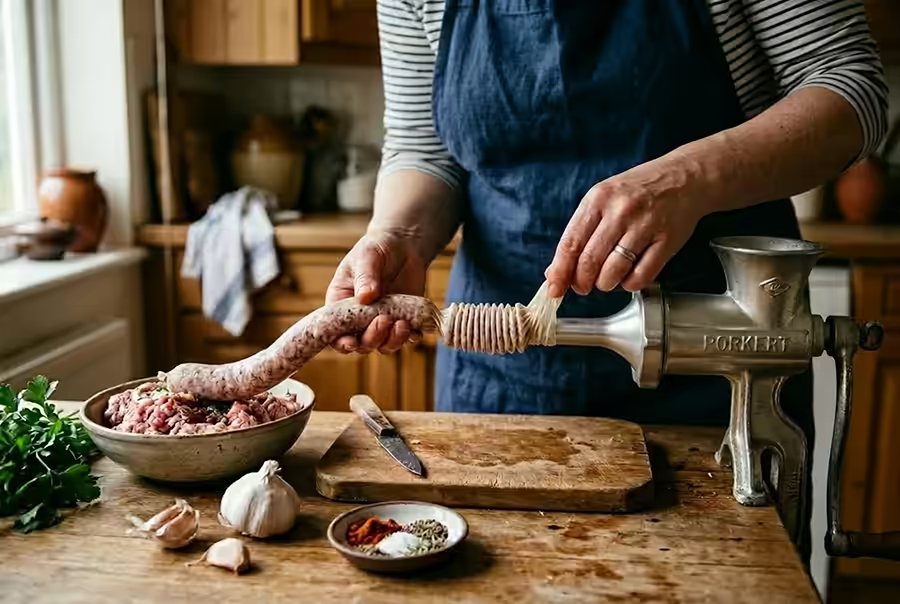
Slip the casing onto the sausage stuffer, tie one end, and begin filling the casing with meat. Don’t pack it too tightly, or the sausage may burst while baking. At the same time, it shouldn’t be too loose, or it will lose its shape.
Once you have a piece of sausage of the desired length, twist or tie it in several places. Use a needle or a toothpick to poke several holes along its length to release any excess air.
Step 5. Heat treatment
Homemade sausage can be:
- Bake in the oven.
- Parboil first, then fry.
- Simmer.
- Cook on the grill.
- Smoke after pre-drying.
The most popular method at home is baking in the oven. To do this, place the sausage on a baking sheet greased with fat or lined with parchment paper. Bake at 180–190 °C for about 45–70 minutes, depending on the thickness. Halfway through cooking, it’s best to flip the sausage and baste it with the juices that have accumulated.
For an especially juicy result, some cooks first bake the sausage under foil or with a little water in the bottom of the pan, then uncover it toward the end to create a golden crust.
How to tell when homemade sausage is ready
The finished homemade sausage has:
- A rosy complexion.
- Clear fluid when punctured.
- A dense yet juicy texture.
- A rich aroma of meat, garlic, and spices, with no raw smell.
If you have a meat thermometer, the internal temperature of the finished sausage should reach a safe level for meat products. This is especially important if you’re cooking a large batch or using a mix of meats.
How to clean a casing for homemade sausage
One of the most common questions is how to clean a sausage casing properly so that it is odorless, clean, and elastic. The taste of the finished dish depends largely on this step.
If you have fresh pork casings, follow these steps:
- Rinse the casing thoroughly on the outside under cool running water.
- Turn it inside out. You can do this with a stream of water or gently by hand.
- Carefully scrape off any remaining mucus with the blunt side of the knife.
- Rinse thoroughly several times again.
- Soak in salted water for 30–60 minutes.
- Next, rinse them in water with a little vinegar or lemon juice.
- Rinse once more with clean water.
For best results, the intestine is sometimes rubbed with salt and left for a while, then rinsed. The salt helps remove mucus and some of the odor. The main thing is not to tear the membrane by pressing too hard.
If you’ve bought pre-cleaned salted intestines, the process is much simpler:
- Rinse off the salt.
- Soak in cool water for 30 minutes or longer, depending on the instructions.
- Check for blockages by running a little water through the pipe.
- Use this for filling.
How to get rid of the smell of feces
Another very important question is how to remove the smell from the intestine before making homemade sausage. A mild, natural odor is normal, but any strong or unpleasant smell should be reduced during the preparation stage.
The following methods can help eliminate the smell of feces:
- Rinse thoroughly with cold water.
- Soaking in salt water.
- Soaking in water with vinegar.
- Soaking in water with lemon juice.
- Briefly soak in a light brine with garlic or bay leaves.
- Thorough removal of mucus.
It’s important not to use too much vinegar, so the casing doesn’t become too tough. Usually, a small amount per bowl of water is enough. After soaking in the acidic solution, be sure to rinse the casing thoroughly once more.
If the odor is very strong and doesn’t go away even after several washes, this may indicate poor product quality or improper storage. In that case, it’s best not to take any chances.
What can be used as a substitute for sausage casings when making homemade sausage?
Not everyone wants to or is able to use natural casings, so the question of what to use as a substitute for casings when making homemade sausage is a very relevant one. There are several options, and each has its pros and cons.
The most common substitutes:
- Collagen capsule.
- Protein membrane.
- Plastic wrap for forming a roll, followed by heat treatment.
- Parchment and foil.
- Roasting bag.
- Shaping a meatloaf without a casing.
Collagen casings are one of the best alternatives. They are easy to use, often come ready to use, have a uniform shape, and are well-suited for homemade sausage. Protein casings are also popular, especially for denser sausage products.
If you don’t have any casings, you can make the sausage in the form of a roll. To do this, wrap the meat mixture tightly in several layers of parchment paper and foil, or shape it inside a roasting bag. The taste will be similar to that of homemade sausage, although the texture and appearance will differ slightly.
Another option is to bake the seasoned ground meat in a narrow baking dish and then slice it. It’s not quite a traditional sausage, but it’s a convenient alternative.
The Advantages of Natural Casings and Substitutes
Natural casing:
- Provides an authentic taste and texture.
- It forms a characteristic crust when baked.
- Suitable for frying, boiling, and smoking.
Collagen capsule:
- Easier to use.
- It often doesn’t require extensive cleaning.
- It looks neat.
Piping bag, foil, parchment paper:
- These are perfect if you want to make something similar to sausage without any hassle.
- No bowel preparation is required.
- Easy for beginners.
Secrets to Making Delicious Homemade Sausage
To make sure your homemade sausage turns out perfectly the first time, there are a few important secrets you should know:
- Don’t use meat that’s too lean.
- Be sure to add enough salt, or the flavor will be bland.
- Don’t skimp on the kneading time.
- Let the filling cool before filling the pastries.
- Don’t pack the filling too tightly.
- Pop the air bubbles.
- Let the sausage rest before baking, if you have time.
- Don’t overcook it in the oven.
Garlic deserves a special mention. It is garlic that often creates that familiar, homey aroma associated with traditional Ukrainian sausage. But it’s important not to overdo it: too much garlic can overpower the flavor of the meat. The best approach is to add it gradually and adjust according to your own preferences.
Classic spices for homemade sausage
The best ingredients for homemade sausage are:
- Black pepper.
- Garlic.
- Coriander.
- Paprika.
- Marjoram.
- White pepper.
- A small amount of hot red pepper.
- Use nutmeg sparingly.
For traditional Ukrainian homemade sausage, the basic ingredients remain the same: salt, pepper, and garlic. Everything else is a matter of personal preference.
Variations on Homemade Sausage
1. Homemade pork sausage

This is a classic. It’s made with pork and lard, seasoned with garlic, salt, and black pepper. The flavor is rich, juicy, and very homey. This sausage pairs perfectly with potatoes, braised cabbage, pickled vegetables, and fresh bread.
2. Homemade pork and beef sausage
This version has a denser texture and a richer, meatier flavor. The beef adds depth, but it’s important not to make the sausage too dry. That’s why people often add a little more lard or use fattier pork.
3. Homemade chicken sausage
Chicken sausage is a lighter option. It’s best to use thigh meat rather than just breast meat, as it’s juicier. For tenderness, you can add a little cream, sour cream, or finely chopped bacon. Paprika, dried garlic, black pepper, and nutmeg pair well with chicken.
4. Homemade turkey sausage
Turkey is another option for those who prefer a less fatty dish. This sausage turns out tender, but it also needs a bit more moisture. You can add a little butter, lard, or onions sautéed until soft.
5. Spicy homemade sausage
Those who enjoy spicy flavors will love this version with red pepper, smoked paprika, garlic, and mustard seeds. The key is to strike the right balance so that the spiciness complements the meat rather than overpowering it.
6. Homemade sausage with herbs
This type of sausage is seasoned with marjoram, thyme, oregano, a little rosemary, or a blend of aromatic herbs. This version has a more European flavor and is particularly well-suited for baking and serving with vegetables.
Do you need to boil homemade sausage before baking it?
There are two approaches. The first is to bake the raw sausage right away. The second is to boil it briefly first, and then fry or bake it. Both methods work.
Pre-boiling has the following advantages:
- The sausage is less likely to crack.
- It’s easier to check if it’s ready.
- The result is a softer texture.
Direct baking results in:
- A richer, more robust flavor.
- A more pronounced golden crust.
- A richer aroma.
If you’re making homemade sausage for the first time, you can try a two-step method: first, simmer it in water that’s almost boiling for 15–20 minutes, and then bake it until golden brown.
How to fry homemade sausage in a skillet
If the sausage has already been pre-baked or boiled, you can quickly fry it in a pan until it’s golden brown. If it’s raw, it’s best to cook it first over medium heat, covered, with a little water, and then brown it.
Important tips:
- Don’t use too high a heat.
- Turn it over from time to time.
- If necessary, add a little water or broth.
- Poke a few holes in the balloon if you see that it’s inflating.
How to bake homemade sausage in the oven
One of the easiest ways to prepare it is to bake homemade sausage in the oven. The process is very simple:
- Preheat the oven to 180 °C.
- Place the sausage on a baking sheet or in a baking dish.
- Make small holes with a toothpick.
- Add a little water to the bottom of the pan or brush the sausage with fat.
- Bake for 45–70 minutes.
- Turn it over halfway through cooking.
- Toward the end, increase the temperature or turn on the broil setting to brown the top.
For festive meals, homemade sausage is often baked along with potatoes, onions, carrots, or apples. The vegetables soak up the meat juices and become especially delicious.
What to do if the sausage is cracking
Cracks are one of the most common problems. The causes are usually as follows:
- Too densely packed.
- An intact membrane.
- The temperature is too high.
- A sudden drop in temperature.
- The shell is too dry.
To avoid this:
- Do not pull on the intestine.
- Always let the air out.
- Let the sausage sit at room temperature for a while before baking.
- Don’t put cold sausage directly into an oven that’s too hot.
- Keep the temperature moderate.
What to do if your homemade sausage turned out dry
Dry homemade sausage is usually the result of several mistakes:
- Not enough fat.
- There isn’t enough water in the filling.
- Insufficient mixing.
- Overcooking.
- Use only lean fillets.
To prevent this from happening:
- Add lard or fattier meat.
- Add a little cold water.
- Don’t overcook it in the oven.
- Use a combination of different cuts of meat.
Homemade sausage without casings: a simple recipe
If you’re looking for an alternative to sausage casings, try this simple casing-free option.
Ingredients:
- 1 kg of pork.
- 200 g of fat.
- 20 g of salt.
- 5–6 cloves of garlic.
- 1 tsp black pepper.
- 1 tsp paprika.
- 80 ml of water.
Preparation:
- Chop the meat and fat.
- Add the spices and stir well.
- Form a tight roll.
- Wrap it in parchment paper, then in foil or a roasting bag.
- Bake until done.
- Let it cool under light pressure to help it hold its shape.
This isn’t your typical homemade sausage in a casing, but it’s a very convenient alternative for those who don’t want to deal with casings.
Homemade sausage for frying, baking, and grilling
Homemade sausage can be adapted to various cooking methods:
- For the oven, aim for a medium thickness and a filling that isn’t too dense.
- For a frying pan, it’s best to shape the sausages into shorter pieces.
- For grilling, the skin should be firm, and the temperature should be moderate.
- Before smoking, the sausage is first dried and often preheated.
For grilling, a recipe with paprika, garlic, black pepper, and a little mustard works well. For the oven, go with the classic version featuring pork and lard. For cold appetizers, a denser sausage made from partially ground meat is ideal once it has cooled.
How to store homemade sausage
Homemade sausage should be stored in the refrigerator in a sealed container or wrapped in parchment paper. The shelf life depends on the preparation method, the amount of salt, humidity, and the temperature of the refrigerator. In any case, homemade meat products should not be kept for too long.
To extend the shelf life of the sausage, you can:
- Freeze it raw.
- Freeze it after baking.
- Prepare part of it and freeze it in portions.
It’s best to cut the sausage into portions before freezing it. This makes it easier to use later and means you don’t have to thaw the entire batch.
Can you freeze homemade sausage?
Yes, you can freeze homemade sausage. This is especially convenient if you’re making a large batch at once. It’s best to freeze:
- Ready-to-cook raw sausage.
- Semi-cooked after a brief boil.
- Fully cooked, chilled sausage.
Before freezing, it is best to portion out the raw sausage and wrap it tightly so it does not absorb outside odors. It is best to thaw it in the refrigerator rather than at room temperature.
What to serve with homemade sausage
Homemade sausage goes wonderfully with many side dishes and appetizers:
- Mashed potatoes.
- Baked potatoes.
- Braised cabbage.
- Buckwheat.
- Pickled cucumbers and tomatoes.
- Mustard, horseradish, and adjika.
- Homemade bread.
- Pickled onions.
For a festive presentation, slice the sausage into large pieces, arrange them on a platter, and garnish with fresh herbs, roasted vegetables, and sauces. For an everyday meal, simply fry it and serve it with potatoes or porridge.
Common mistakes when making homemade sausage
Here are the most common mistakes that can cause homemade sausage to fail:
- Choosing meat that is too lean.
- Inadequate bowel cleansing.
- The packaging has too strong of a smell.
- The ground meat wasn’t mixed properly.
- Too much or too little salt.
- The filling is too dense.
- No punctures.
- Baking at too high a temperature.
- Overdrying.
- Use of a low-quality casing.
To avoid these problems, it is important not to rush, especially during the stages of preparing the casings and mixing the meat mixture.
Homemade Sausage: Tips for Perfect Results
If you want to make truly delicious homemade sausage, keep these tips in mind:
- The meat should be cold, but not frozen.
- It’s better to cut the lard into small cubes rather than turning it into a paste.
- You can combine fresh and dried garlic to create a more complex flavor.
- The water for the ground meat should be cold.
- After stuffing the sausage, it’s a good idea to let it sit in the refrigerator for 1–2 hours.
- For a nice color, you can add a little sweet paprika.
- If you prefer a thicker consistency, use less water.
- If you want a more tender sausage, mince some of the meat.
Homemade sausage in Ukrainian tradition
Homemade sausage holds a special place in Ukrainian culinary tradition. It was prepared for Christmas, Easter, weddings, church holidays, and large family gatherings. Each region had its own unique variations: in some places, more garlic was added; in others, the sausage was made with very coarse ground meat; and in still others, it was baked in the oven along with lard, onions, and spices.
That is precisely why homemade sausage is not just a recipe, but a part of our culinary heritage. For many, this flavor evokes memories of childhood, village celebrations, the warmth of the family table, and authentic home-cooked meals without any artificial aftertaste.
How to make homemade sausage more flavorful
If you want to enhance the flavor of the finished sausage, try these simple tips:
- Use fresh garlic, not just dried garlic.
- Use freshly ground black pepper.
- Use some smoked paprika.
- Let the ground meat rest in the refrigerator.
- Bake the sausage together with the onion and bay leaf in the baking dish.
- Toward the end of cooking, brown it lightly to bring out the aroma.
The flavor of homemade sausage depends not only on the spices, but also on the quality of the meat, the amount of fat, the cooking method, and even how well the casing was prepared.
Homemade Sausage for Beginners: The Easiest Way
If you’ve never made sausage at home before, start with a simple recipe:
- Use ready-made, cleaned casings or a collagen casing.
- Use pork with a moderate fat content.
- Don’t overload the recipe with too many spices.
- Choose baking in the oven instead of smoking or grilling.
- Shape the mixture into small rolls.
This approach minimizes risks and helps you grasp the basic principle. Once you’ve had your first successful attempt, you can start experimenting with spices, meat ratios, and different cooking methods.
Recipe for Homemade Sausage with Potatoes in the Oven
For many people, this is one of their favorite ways to serve it.
Ingredients:
- Ready-to-eat homemade sausage.
- 1–1.5 kg of potatoes.
- 2 onions.
- Salt.
- Pepper.
- Oil or a little lard.
- Optional: rosemary or paprika.
Preparation:
- Cut the potatoes into large pieces.
- Slice the onion into half-rings.
- Place the potatoes and onions in the baking dish, then top with the sausage.
- Add a little fat or oil.
- Bake until done, stirring the potatoes occasionally.
- Toward the end, turn up the heat to get a nice crust.
The result is a satisfying meal where the potatoes soak up the juices from the homemade sausage, and the sausage itself browns and becomes especially appetizing.
Is it possible to make homemade sausage without a meat grinder?
Yes, you can. In fact, many people believe that the tastiest homemade sausage is the minced kind. To make it, the meat and fat are finely chopped with a knife. This method takes more time, but the result has a very distinct texture. You can really taste the pieces of meat, and the sausage looks truly homemade.
If you don’t have a meat grinder with a stuffing attachment, filling the casing will be more difficult, but you can use a makeshift funnel or a cut-off plastic bottle for small quantities. However, for regular use, it’s still more convenient to have a standard stuffing attachment.
Frequently Asked Questions
How do you make homemade sausage so that it’s juicy?
Use meat that isn’t too lean; add some lard or fattier cuts of pork; pour a little cold water into the filling; and don’t let it dry out while baking.
What is the best casing for homemade sausage?
Pork casings are the most commonly used. They are elastic, have the ideal thickness, and are well-suited for classic homemade sausage.
How do you clean a sausage casing?
Rinse the intestines, turn them inside out, remove any mucus, soak them in salt water, then rinse them in water with a small amount of vinegar or lemon juice, and rinse them again with clean water.
How do I get rid of the smell of feces?
Salt, repeated rinsing, and soaking in water with vinegar or lemon juice can help. If the odor is strong and doesn’t go away, it’s best not to use that shell.
What can I use instead of a casing for homemade sausage?
You can use a collagen or protein casing, a roasting bag, parchment paper, or aluminum foil, or you can make a meat roll without a casing.
How long should I bake homemade sausage in the oven?
Usually 45–70 minutes at 180–190 °C, depending on the thickness of the sausage and the oven’s specifications.
Why does homemade sausage crack?
Most often due to overfilling, a lack of ventilation, or excessively high temperatures during cooking.
Is it possible to make homemade sausage without casings?
Yes, you can prepare it in parchment paper, foil, a roasting bag, or shaped like a tight meatloaf.
What kind of meat is best for homemade sausage?
Pork with a moderate fat content works best. You can also combine it with beef, chicken, or turkey.
Do you need to prick homemade sausage?
Yes, pricking the skin helps release air and reduces the risk of the skin splitting while baking or frying.
Can you freeze homemade sausage?
Yes, both raw and cooked. It’s best to store it in individual portions.
Which spices work best?
Salt, black pepper, and garlic are the classic base. You can also add paprika, coriander, marjoram, and a little hot pepper.
Conclusion
Homemade sausage is a delicious, natural, and highly versatile dish that can be adapted to suit any taste. If you know the right recipe, stick to the proportions, don’t skimp on preparing the casing, and pay attention to the finer culinary details, the result is sure to please. The most important thing is to choose high-quality meat, season the filling properly, stuff the casing carefully, and not overcook the sausage.
If you’re interested in making truly delicious homemade sausage, you should start with the classic pork version. Only then can you experiment with different variations, add new spices, change the meat mix, and find your perfect balance of juiciness and flavor. And whether you use natural casings, collagen casings, or make sausage without casings, the key is high-quality ingredients and attention to detail.