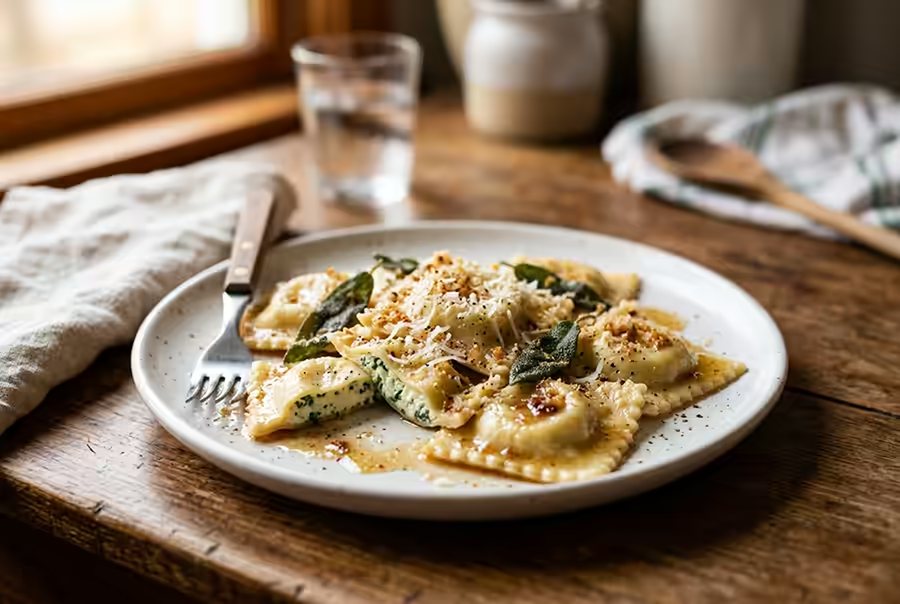
Ravioli is a stuffed Italian pasta: the filling is “sealed” between two thin layers of dough, and the edges are tightly sealed so that they can withstand boiling.
Content
Homemade ravioli: what is important to know from the start
Ravioli turn out “like in a restaurant” when the dough is thin, the filling is thick (without excess moisture), and there are no air pockets inside. The most common mistakes are wet spinach/mushrooms, overcooked dough, poorly sealed seams, and overly vigorous boiling.
The minimum set to make it beautiful:
- A rolling pin (or pasta machine, if available).
- A knife or pizza cutter; optionally, a decorative wheel.
- A glass/ring (for round shapes) and a shaped cutout (for hearts), if desired.
- Spatula/tongs, tray, or serving board.
A plan of action to avoid rushing around:
- Knead the dough → let it rest.
- Make the filling → chill.
- Roll out the sheets → form the ravioli.
- Boil for 2–4 minutes → transfer to the sauce and serve.
The perfect dough for ravioli
The base for homemade ravioli is egg dough for fresh pasta. The most convenient ratio for scale: 100 g of flour per 1 egg.
Choosing flour (in simple terms)
- Regular wheat (premium grade): versatile, affordable, great for first-timers.
- Very fine (type “00,” if you have it): gives a smoother, “silky” dough.
- Semolina (durum): adds elasticity and strength to the dough; especially useful if you are rolling it out very thinly.
A working home formula for stability: 50% wheat + 50% semolina (by weight). If you don’t have semolina, use 100% wheat, just keep an eye on the rolling and seaming.
Basic dough recipe (4 servings)
- Flour — 400 g
- Eggs — 4
- Salt — 2–3 g (a pinch/½ tsp)
How to knead:
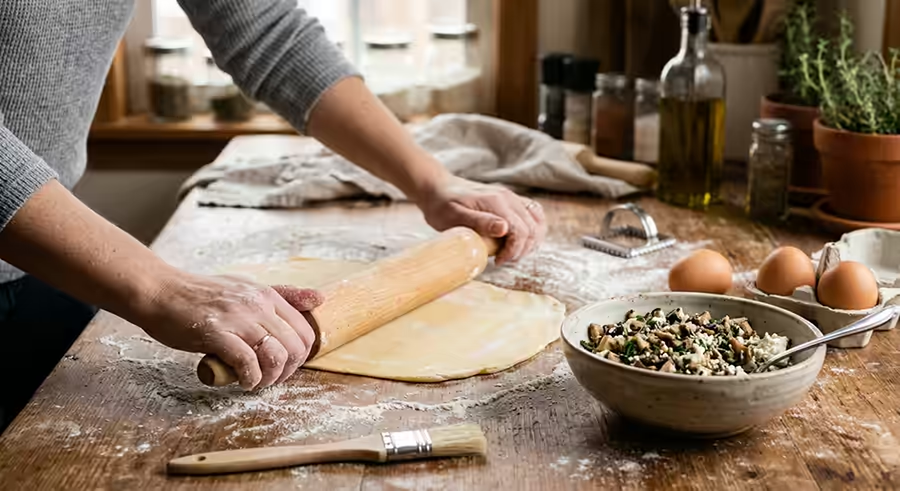
- Pour the flour into a mound, make a well, crack in the eggs, and add salt.
- Mix the eggs with a fork, scooping the flour from the edges to the center.
- Knead with your hands for 8–12 minutes: the dough should become smooth and elastic.
- Cover and let rest for 30–60 minutes at room temperature.
Signs of the right consistency:
- Does not stick to your hands, but does not crumble either.
- Springs when pressed.
- It swings smoothly without cracks along the edge.
Quick fix:
- Dry dough: wet your hands with water and knead for 1–2 minutes (do not pour water directly into the center).
- Sticky dough: let it stand for 5 minutes, then sprinkle with a minimum amount of flour and knead.
Softer dough with egg yolk (for cheese/delicate fillings)
For 1–2 servings:
- Flour — 100 g
- Egg — 1 piece
- Egg yolk — 1 piece
- Olive oil — 10–15 g (optional, for plasticity)
- Salt — a pinch
It gives a more “velvety” shell, but you need to be careful when shaping it: thinner dough is easier to damage with sharp pieces of filling.
Rolling: machine or rolling pin
Car:
- Divide the dough into 4–6 pieces and keep the rest covered with plastic wrap.
- Roll it out on a thick setting, fold it in half 2–3 times, then gradually roll it out thinner.
With a pickaxe:
- Work in small pieces (80–120 g).
- Roll out from the center outward, turning the dough.
- If it “pulls back” — pause for 10 minutes, then roll again.
Thickness guideline:
- For most ravioli: about 1 mm or slightly thinner, but without holes.
- The dough should be semi-transparent when held up to the light.
Fillings: rules + recipes, and which sauces/shapes go well with them
The main rule for fillings: keep moisture under control. Squeeze out spinach and greens, fry mushrooms well (evaporate water), dry vegetable puree in a pan for 2–3 minutes.
Below are 10 fillings. For each one, there is a brief description of how to make it, which shapes look best, and which sauce goes well with it (full sauce recipes are in the next section).
1) Ricotta + spinach (classic)
Filling:
- Ricotta — 300 g
- Spinach — 250–300 g fresh (or 200 g frozen)
- Parmesan cheese — 60–80 g
- Salt, pepper
- Muscat — a pinch
- Lemon zest — 0.5 tsp (optional)
Technique: blanch spinach for 1–2 minutes → cool → squeeze dry → mix with cheese.
Shapes: 5–6 cm squares or 5–6 cm circles (looks delicate).
Sauces: sage butter; cream and Parmesan; lemon and butter.
2) “Three cheeses” (the most stable for beginners)
- Ricotta — 250 g
- Mozzarella (well drained, finely chopped) — 120 g
- Parmesan cheese — 70 g
- Pepper, a pinch of salt
Shapes: hearts (very impressive), circles, squares.
Sauces: cream and Parmesan; pesto and cream; lemon and butter (if you want something lighter).
3) Mushrooms + ricotta/cream cheese + thyme
- Mushrooms — 450 g
- Onion — 80–100 g
- Butter — 20–25 g + oil 10–15 g
- Ricotta or cream cheese — 120–150 g
- Parmesan cheese — 50–70 g
- Thyme, pepper
Technique: Fry the mushrooms over high heat until the moisture evaporates and they turn golden brown → cool → mix with cheese.
Shapes: squares or rectangles (fit nicely on a plate).
Sauces: mushroom cream; cream and Parmesan; butter and garlic (very delicate).
4) Chicken + mushrooms (tender, “family-style”)
- Baked/boiled chicken — 250–300 g
- Mushrooms — 200 g
- Cream cheese — 120 g
- Salt, pepper, a pinch of nutmeg
Shapes: 6 cm squares or crescents (quick to shape).
Sauces: mushroom cream; pesto cream; cream and Parmesan.
5) Braised meat (stew) — for a deep flavor
- Beef (shoulder/shank) — 350 g
- Onion — 120 g, carrot — 80 g, celery — 60 g (optional)
- Tomato paste — 15 g
- Broth/water — 200 g
- Salt, pepper, bay leaf
- Parmesan cheese — 40–60 g
Technique: simmer until soft → cool → grind into a paste → add cheese.
Shapes: large squares (ravioloni) or rectangles.
Sauces: quick tomato; “in brodo” (broth); butter + Parmesan (minimalist).
6) Pumpkin + ricotta (autumn hit)
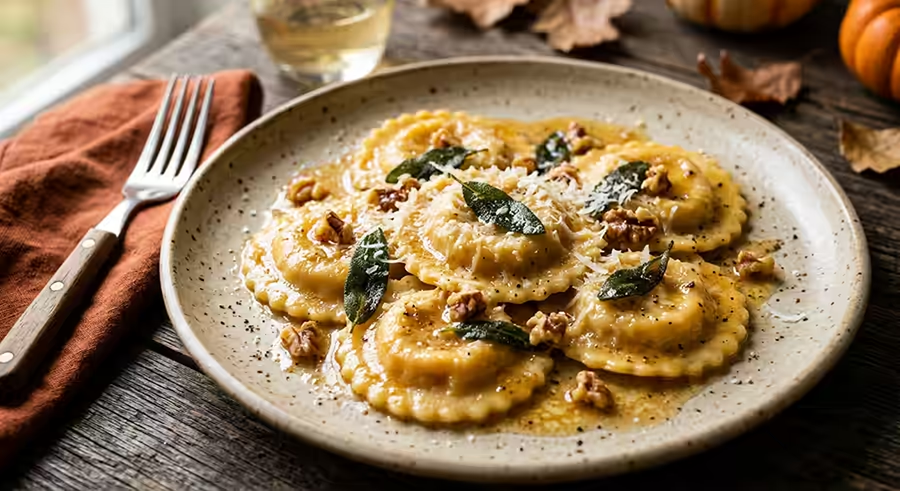
- Baked pumpkin (puree) — 250–300 g
- Ricotta — 250 g
- Parmesan cheese — 60 g
- Muscat, salt, pepper
Be sure to dry the mashed potatoes in a pan for 2–3 minutes to remove excess water.
Shapes: circles or hearts (very beautiful), as well as squares.
Sauces: sage butter (perfect); lemon butter (light); gorgonzola cream (if you like contrast).
7) Beets + goat cheese + nuts
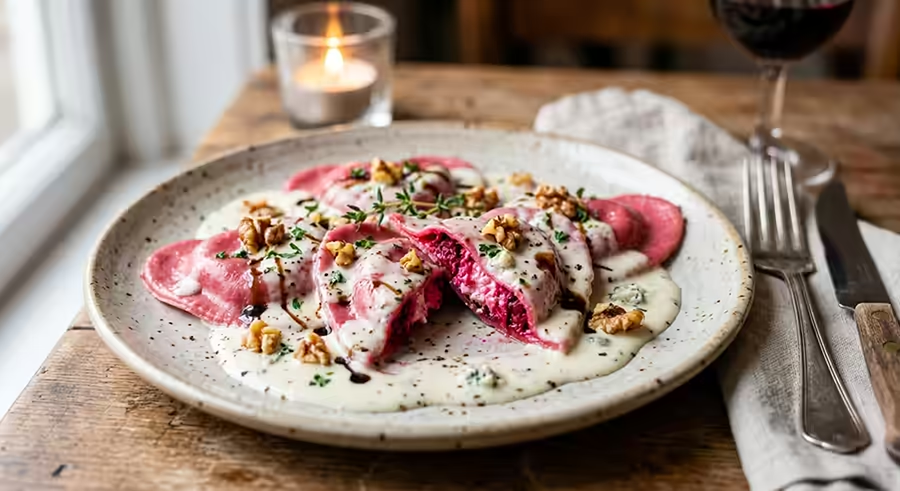
- Baked beetroot (mashed) — 250 g
- Goat cheese — 120–150 g
- Nuts — 20–30 g, very finely chopped
- Pepper, a pinch of salt
- Honey — 3–5 g (optional)
Shapes: squares or hearts (color “plays”).
Sauces: gorgonzola cream; sage butter (unusual, but works); lemon butter (if you want to freshen it up).
8) Salmon + cream cheese + dill
- Lightly salted/lightly smoked salmon — 150–180 g (very finely chopped)
- Cream cheese — 200 g
- Dill — 5–8 g
- Lemon zest — 0.5 tsp.
- White pepper
Shapes: circles or crescents (served soft).
Sauces: lemon and butter; cream and Parmesan (very soft); “in broth” with light broth (as an option).
9) Potatoes + bacon + onions (comfortable)
- Very thick puree — 350 g
- Bacon — 80–100 g
- Fried onions — 120 g
- Parmesan cheese — 40 g
- Pepper
Shapes: squares or rectangles.
Sauces: sage butter; mushroom cream (if mushrooms are added to the sauce); cream and Parmesan.
10) Pear + gorgonzola + ricotta (for gourmets)
- Pear — 1 piece (it is better to simmer and evaporate the juice)
- Gorgonzola — 60–80 g
- Ricotta — 200 g
- Pepper
Shapes: hearts or circles.
Sauces: gorgonzola cream (enhances); sage butter (very beautiful); lemon butter (as a contrast, if you don’t want it to be too “cheesy”).
Ravioli shapes and molding: squares, circles, hearts, and more
Principle one: portion of filling → moisten the edges → cover with a second sheet → remove air → seal → cut out.
Cheat sheet for filling portions
- Mini (3–4 cm): 4–6 g (≈ 1 tsp without a slide)
- Standard (5–6 cm): 8–12 g (≈ 1 heaped teaspoon)
- Large (7–9 cm): 15–20 g (≈ 1 tbsp without a slide)
Rule: a smaller portion + a perfect seam = better than “too much” and the risk of tearing.
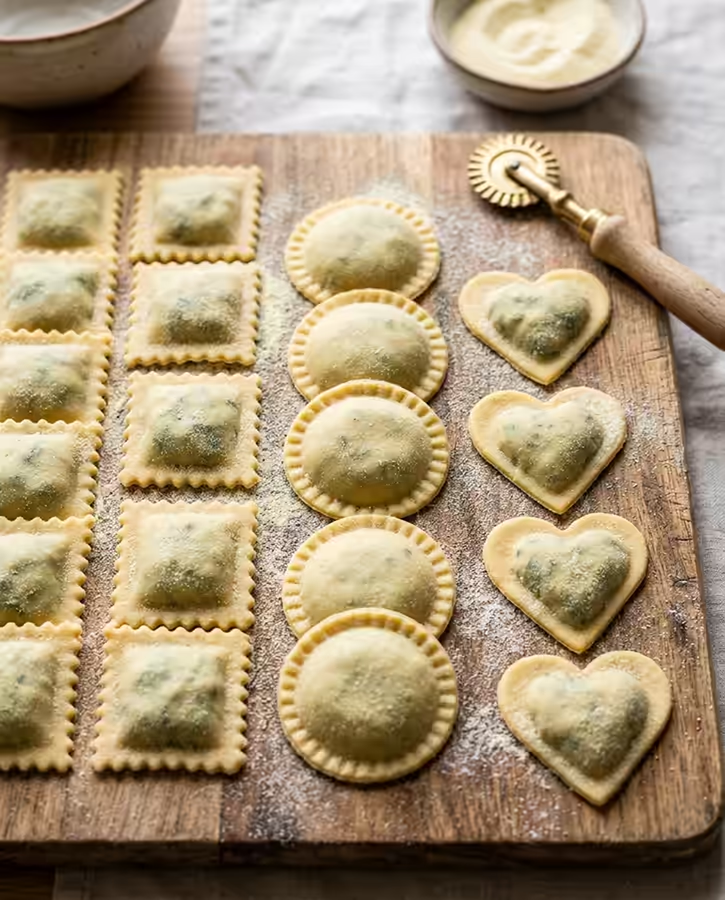
Square
The simplest to perform and the most predictable.
- After sealing, cut into squares with a knife/roller.
- Leave a 7–10 mm “frame” around the filling for the seam.
Round
They look more delicate and are good for cheese and fish fillings.
- Cut out with a glass/ring.
- First seal, then cut: this makes the seam stronger.
Hearts
Spectacular for pumpkin, beetroot, three cheeses, pear and gorgonzola.
- The portion of filling should be slightly smaller than in a square of the same size.
- After cutting, press down on the “depression” of the heart — this is a risk area.
Rectangular
Great for serving “in a row” with sauce.
- Cut into strips, then into 4×6 cm or 5×7 cm rectangles.
Triangular (quickly but carefully)
- Cut out a circle or square → fill with half of the filling → moisten the edge → fold → press down from the filling to the edge, pushing out the air.
Half-moons
One of the most convenient formats to start with:
- Cut out a circle → add filling → fold in half → seal.
- They go very well with light emulsion sauces.
“Large” ravioli (ravioloni)
When you want “2–3 pieces per serving.”
- Make the filling as smooth as possible.
- The dough is thin but strong; the seam is wider (10–12 mm).
Cooking, sauces (complete recipes), and selecting a “sauce for the filling”
Cook the ravioli in a wide pot, in well-salted water, at a gentle boil. Fresh ravioli usually cook quickly: watch for the moment when they float to the surface and the dough becomes firm, without feeling “raw.”
A key technique for any sauce: add 40–120 g of water from cooking the pasta — it helps emulsify the sauce and make it shiny.
Selecting sauces for fillings (quick reference table)
| Filling | The best sauce | Alternative | The form that “plays” |
|---|---|---|---|
| Ricotta + spinach | Oil with sage | Creamy Parmesan | Circles, squares |
| Three cheeses | Creamy Parmesan | Pesto cream | Hearts, circles |
| Mushroom | Mushroom cream | Creamy Parmesan | Rectangles, squares |
| Chicken + mushrooms | Mushroom cream | Pesto cream | Half-moons, squares |
| Meat stew | Tomato quick | In the ford | Large squares |
| Pumpkin + ricotta | Oil with sage | Gorgonzola cream cheese | Hearts, circles |
| Beetroot + goat cheese | Gorgonzola cream cheese | Lemon and oil | Hearts, squares |
| Salmon + cream cheese | Lemon and oil | In the ford | Circles, crescents |
| Potatoes + bacon | Oil with sage | Creamy Parmesan | Rectangles |
| Pear + Gorgonzola | Gorgonzola cream cheese | Oil with sage | Hearts |
Sauce 1. Brown butter & sage
Yield: ~500 g of ready-made ravioli (4 servings)
Ingredients:
- Butter 82% — 90 g
- Sage — 10–15 leaves (dried)
- Salt — to taste
- Black pepper — to taste
- Water from the paste — 40–80 g
- Lemon juice — 5–10 g (optional)
Temperature:
- Heat the oil to 150–160°C (nutty aroma, brown specks).
Preparation:
- Melt the butter over medium heat and cook for 5–8 minutes, until the foam has almost subsided and a nutty aroma appears.
- Add sage for 30–60 seconds (it will become crispy).
- Add water from the pasta, remove from heat, add lemon juice if desired.
- Transfer the ravioli and stir gently for 20–30 seconds.
Sauce 2. Cream and Parmesan (stable, without boiling)
Ingredients:
- Cream 30–33% — 250 g
- Butter — 30 g
- Finely grated Parmesan cheese — 70 g
- Pepper — to taste
- Muscat — a pinch (optional)
- Water from the paste — 60–120 g
Temperature:
- Keep the cream at 85–90°C (do not bring to a rolling boil).
Preparation:
- Heat the cream and butter to 85–90°C.
- Remove from heat, add Parmesan cheese in 2–3 batches, stirring vigorously with a whisk.
- Add pepper/nutmeg, adjust the thickness with water from the pasta.
- Reduce heat to low for 30–60 seconds, add ravioli, and stir.
Sauce 3. Mushroom cream sauce
Ingredients:
- Mushrooms — 350 g
- Onion — 80 g
- Butter — 25 g
- Olive oil — 15 g
- Cream 20–30% — 220 g
- Parmesan cheese — 40 g
- Thyme — 1 tsp (or 2–3 sprigs)
- Salt, pepper
- Water from the paste — 60–100 g
Temperature:
- Frying mushrooms: higher heat, target pan surface temperature 170–190°C.
- Cream: 85–90°C.
Preparation:
- Oil + butter → onion 2–3 minutes until soft.
- Add the mushrooms, fry for 8–12 minutes until browned and the moisture has evaporated.
- Pour in the cream, reduce the heat to 85–90°C, and heat for 2–3 minutes.
- Add Parmesan cheese, thyme, pasta water; toss with ravioli for 30–60 seconds.
Sauce 4. Quick tomato sauce
Ingredients:
- Passata/pureed tomatoes — 500 g
- Olive oil — 25 g
- Onion — 120 g (optional)
- Garlic — 10 g (2 cloves)
- Salt — 6–8 g
- Sugar — 3–5 g (optional)
- Pepper
- Basil — 10–15 g (or 1 teaspoon oregano)
Temperature:
- Simmering at 90–95°C.
Preparation:
- Oil → (optional) onion 5–7 min → garlic 20–30 sec.
- Add the pasata, maintain 90–95°C for 12–20 minutes.
- Season with salt, add spices, and finally basil.
- Mix with ravioli for 30–60 seconds.
Sauce 5. Lemon and oil (emulsion)
Ingredients:
- Butter (cold) — 70 g
- Lemon juice — 25–30 g
- Zest — 1 tsp.
- Water from the paste — 100–140 g
- Pepper, salt
- Parsley — 10 g (optional)
Temperature:
- Emulsification at 60–70°C (do not boil).
Preparation:
- Heat the water from the pasta to ~70°C, add lemon juice, zest, and pepper.
- Over low heat, add the butter cubes, stirring constantly, until shiny and smooth.
- Add the ravioli and parsley, and season with salt.
Sauce 6. Pesto cream sauce
Ingredients:
- Cream 20–30% — 200 g
- Pesto — 60–80 g
- Parmesan cheese — 30 g (optional)
- Water from the paste — 50–100 g
- Pepper
Temperature:
- 80–85°C.
Preparation:
- Heat the cream to 80–85°C, remove from heat.
- Stir in the pesto and (if desired) Parmesan cheese.
- Add the water from the pasta and mix with the ravioli.
Sauce 7. Gorgonzola cream sauce
Ingredients:
- Cream 30% — 220 g
- Gorgonzola — 90 g
- Oil — 15 g
- Water from the paste — 50–90 g
- Pepper
Temperature:
- 75–85°C.
Preparation:
- Heat the cream and butter to ~80°C.
- Add the gorgonzola in pieces and stir until smooth.
- Add the water from the pasta, season with pepper, and mix with the ravioli.
Sauce 8. “In broth” (served in broth)
Ingredients:
- Broth — 1 liter
- Parmesan cheese — 40 g per serving
- Pepper, greens
Temperature:
- Serving temperature: 75–85°C.
Preparation:
- Boil the ravioli separately in water.
- Heat the broth to 85–90°C and adjust the salt.
- On the plate: ravioli → broth → cheese → pepper.
Storage and freezing (to prevent sticking)
- Place the ravioli in a single layer on a tray sprinkled with flour/semolina.
- To freeze: 1–2 hours in a single layer, then transfer to a bag.
- Cook frozen: throw straight into boiling water, add 1–2 minutes to the cooking time.
6 common mistakes and quick solutions
- Peeling: flour on the seam or not pressed down firmly enough; brush off the flour before moistening and press down more firmly.
- Bursting: air inside or vigorous boiling; release the air and cook at a gentle boil.
- Thick “rubber” dough: roll out thickly; the goal is to make it thinner, but without holes.
- Breaks when shaping: filling contains large pieces or dough is too dry; make the filling creamier, keep the dough covered with plastic wrap.
- Wet filling: press/evaporate; thicken with Parmesan cheese.
- The sauce does not stick: always add a little water from the pasta and emulsify in a pan for 20–30 seconds.
FAQ about ravioli
- How long should the dough “rest”?
At least 30 minutes under plastic wrap at room temperature to make the dough more elastic and easier to roll out. - What is the best thickness for ravioli dough?
Aim for very thin (about 1 mm or slightly thinner), but without holes; the dough should be elastic and hold its seam. - Why does the dough constantly shrink back when rolling?
It hasn’t rested long enough, or you are working with too large a piece; pause for 10 minutes and roll out smaller portions. - What is better for sealing ravioli—water or egg?
In most cases, water is sufficient; if the edge is dry or the dough is dusted with flour, egg white can sometimes help (apply very thinly). - Why do seams come apart during cooking?
Most often because of flour on the seam, poorly removed air, or overly wet filling. - What to do if the edges don’t stick?
Brush off excess flour with a dry brush/hand, lightly moisten the contour, and press the seam harder (with your fingers around the perimeter). - Why do ravioli burst in water?
Reasons: air pocket inside, weak seam, or too vigorous boiling. - How to properly “expel” the air?
Cover with the second sheet gradually, pressing around the filling from the center to the edges, not vice versa. - Is it possible to make ravioli without a pasta machine?
Yes, with a rolling pin; the key is to use small portions of dough, take breaks, and roll the dough as thinly and evenly as possible. - How much filling should you put in one ravioli?
Enough to leave a wide, clean seam around the edge (usually 1 heaped teaspoon for a standard 5–6 cm ravioli, less for heart-shaped and mini ravioli). - What is the best filling for the first time?
Stable and “dry”: ricotta + hard cheese + pepper (no watery vegetables). - Why does the filling “run” and ruin the seam?
It is warm or watery; cool it and thicken it with grated hard cheese or evaporate/press out the moist components well. - Do you need to dry ravioli before cooking? Five to ten minutes on a
board dusted with flour/semolina is enough; don’t leave them for too long, so that the edges don’t dry out. - How long should fresh ravioli be cooked?
Usually a few minutes after they float to the surface; the exact time depends on the thickness of the dough and the size. - How to cook without damaging the shape?
In a wide saucepan, simmer gently; stir very gently once at the start, then do not stir actively. - Can raw ravioli be frozen?
Yes: first freeze them in a single layer on a tray, then transfer them to a bag or container. - How to cook frozen ravioli?
Without defrosting: put them straight into boiling water and cook them a little longer than fresh ones (about 1–2 minutes longer). - Why do frozen ravioli crack?
Often due to weak seams or over-dried edges before freezing; more careful sealing and quick freezing “in one layer” helps. - How to make the sauce stick to the ravioli?
Always add a little water from boiling the pasta to the sauce and briefly emulsify the ravioli in the pan for 20–30 seconds. - Which sauce is the most reliable if I’m afraid of messing up?
Cream cheese (without active boiling) or butter with sage: both are forgiving of minor mistakes. - Why does cream sauce sometimes become grainy?
Usually due to overheating/boiling; keep the sauce on low heat and add the cheese away from high heat. - What shapes are easiest for beginners?
Squares and crescents: they make it easy to control the seam and the amount of filling. - Can ravioli be made in advance and stored in the refrigerator?
Yes, but only for a short time (preferably on the same day): keep them in a single layer, dusted with flour and covered to prevent them from drying out. - How to serve ravioli beautifully, like in a restaurant?
Less sauce on the plate, more emulsion on the ravioli themselves; 6–8 pieces per serving, a little grated cheese, pepper, herbs, or zest (depending on the filling).