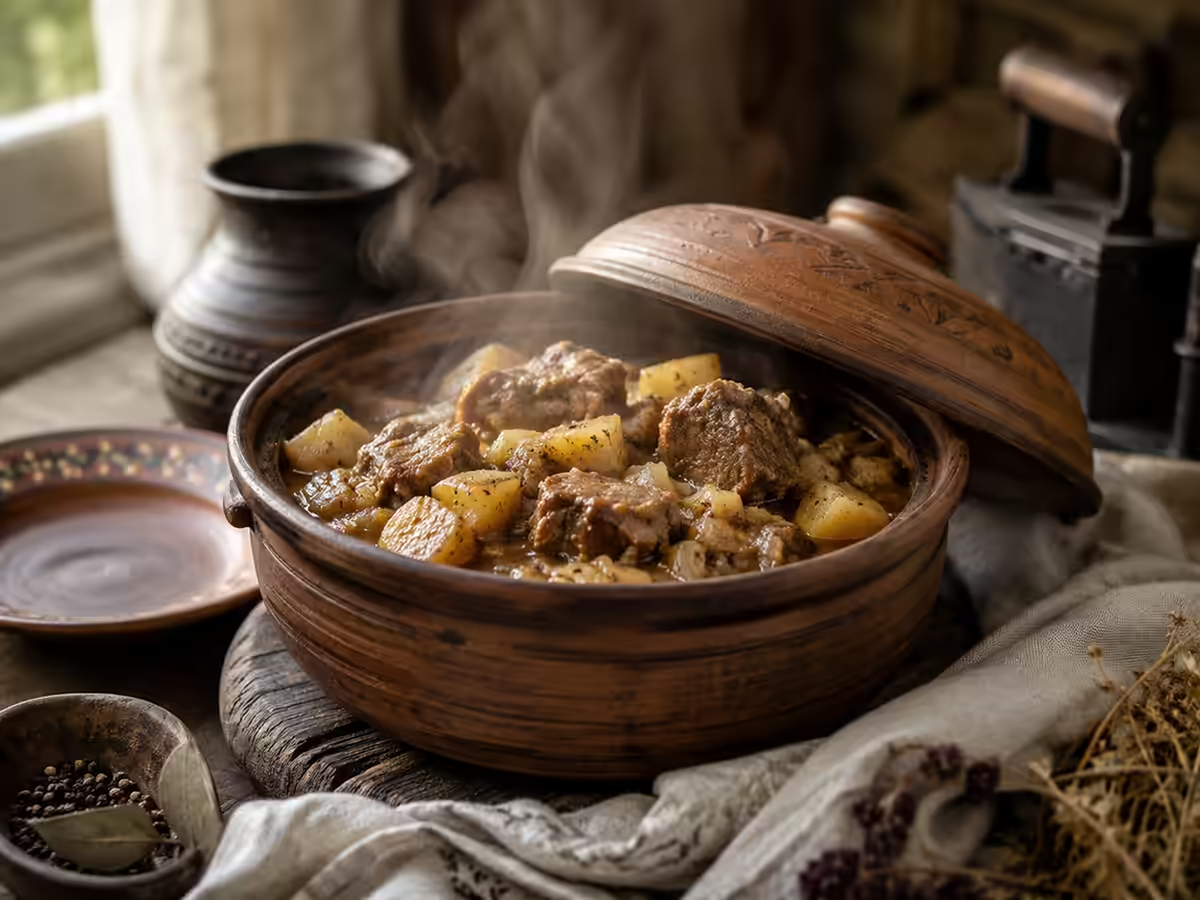
Dushenina is a meat dish that was once prepared for every major holiday: weddings, christenings, memorial services, Christmas, or Easter. The meat was slowly simmered in a covered clay pot along with vegetables and spices until it became so tender that it fell apart at the touch of a fork. Today, this dish has been all but forgotten, even though it deserves a place in modern cuisine just as much as borscht or deruny. In this article, I’ll explain where the name comes from, why the dish was considered festive, how our ancestors prepared dushenina, and how to adapt the recipe for a regular oven, a multicooker, or a roasting bag—without losing its authentic flavor.
Content
If you’re looking for a recipe that doesn’t require exotic ingredients but delivers results worthy of a Sunday holiday dinner, dushenina is just the dish. It’s forgiving of inexperienced cooks, because the method is as simple as it gets: chop, layer, pour in the liquid, and let it sit for a couple of hours.x
About the dish
Dushenina is a traditional dish of Ukrainian cuisine, made with meat from domestic animals or poultry, vegetables, and spices, and thickened with flour. It was usually made with pork, although there were also versions made with beef, veal, lamb, poultry, or a mixture of several types of meat. The dish was so deeply rooted in festive tradition that no wedding or christening was complete without it—it was served alongside boiled potatoes or porridge, generously doused with the thick gravy that formed during the braising process.
Where does the name come from?
The name “dushenina” is related to the cooking method—the meat was literally “steamed,” that is, simmered in a covered pot without air and with a minimal amount of liquid. Unlike conventional cooking in an open pot, here the meat was cooked in its own juices, slowly releasing its aromas to the vegetables and spices, which, in turn, infused the meat with their flavors. It was precisely this method—a covered pot, the slow heat of the oven, and a minimal amount of liquid—that gave the dish its distinctive name and unique texture: tender, juicy, with a thick, rich gravy.
It is interesting to note that this principle of slowly simmering meat in a covered pot with its own fat and juices is found in the culinary traditions of many peoples—for example, in French confit or Hungarian goulash cooked in a cauldron. This does not indicate any direct connection between the dishes, but rather that slow simmering in a covered pot is a universal technique that various cuisines around the world independently developed when they needed to tenderize tough meat without complex equipment.
The Role of Lamb in Traditional Cuisine
According to early 20th-century cookbooks, particularly Zinaida Klynovetska’s well-known work *Dishes and Beverages of Ukraine* (Kyiv–Lviv, 1913), dushenina was considered a festive dish. It was not prepared every day, but rather for special occasions—weddings, christenings, memorial dinners, and patron saint’s days. The reason is simple: meat was a valuable commodity on a peasant farm, and a hearty meat dish on the table signaled the importance of the occasion. Cooking it in the oven also required time and attention—the pot was placed in a hot oven and left to simmer for several hours while the hostess attended to other household chores or prepared other dishes for the festive table.
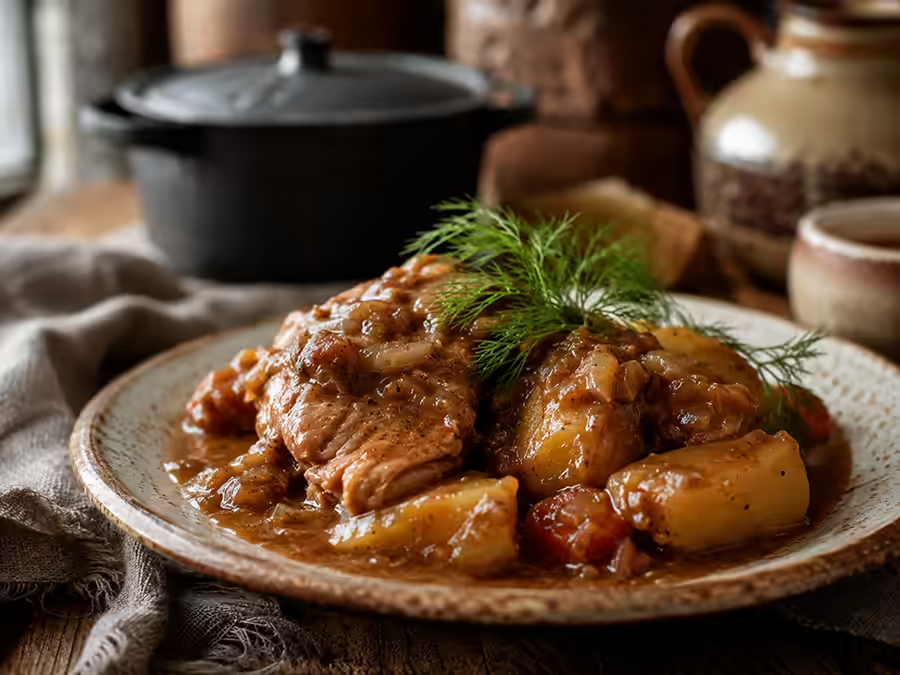
It is important to understand the context of the era: the Ukrainian oven was a kind of “slow cooker” of its time. After bread was baked or main dishes were cooked in it, the oven walls remained hot for a long time, gradually cooling down. It was during this period of “residual heat” that a pot of stewed meat was placed inside—the temperature gradually dropped, and the meat simmered under conditions very similar to modern low-temperature slow cooking. This explains why the dish turned out so tender: there were no sudden temperature fluctuations, and the meat cooked evenly and slowly.
Connection to Ritual Traditions
Meat dishes in Ukrainian tradition often had ritual significance. At weddings, a lavish spread symbolized the young family’s prosperity; at christenings, it represented wishes for the child’s health and a life of plenty; and at memorial services, the dish was prepared to honor the memory of the deceased with a generous feast for all those present. Dushenina, as a hearty, rich dish that required time and attention from the hostess, fit perfectly into all these contexts. It was usually served not as just one of many dishes, but as one of the main ones—alongside it on the table might be porridge, pickled vegetables, bread, and fruit compote.
Interestingly, in some regional variations, dried pears and pear compote were added to the pork stew—the combination of meat and fruit was a typical technique in traditional Ukrainian cuisine, which seems unusual today but actually works wonderfully: the sweet-tart flavor of the pears balances the richness of the pork. You can easily recreate this technique today if you want to experience the authentic taste of the dish as it was in the old days.
Why This Dish Deserves a Comeback
Dushenina is a perfect example of how an old technique can still be relevant today. It is, in essence, the predecessor of modern slow-cooking dishes: the meat is cooked for a long time at a low temperature in its own juices—and the result is much more tender than when fried or boiled quickly. Plus, the recipe is simple: no exotic ingredients, just meat, vegetables, salt, and a little time. For those looking for authentic Ukrainian recipes or wanting to spice up their Sunday dinner with something more interesting than the usual roast, dushenina is a wonderful option.
Another reason to bring this dish back to the table is that it requires virtually no supervision in the kitchen. While the pot is simmering in the oven, you can go about your other business without a care: unlike frying, where you have to constantly keep an eye on the pan, here all you need to do is set a timer and come back in an hour and a half to two hours to find the dish ready.
Ingredients for an authentic dushenina
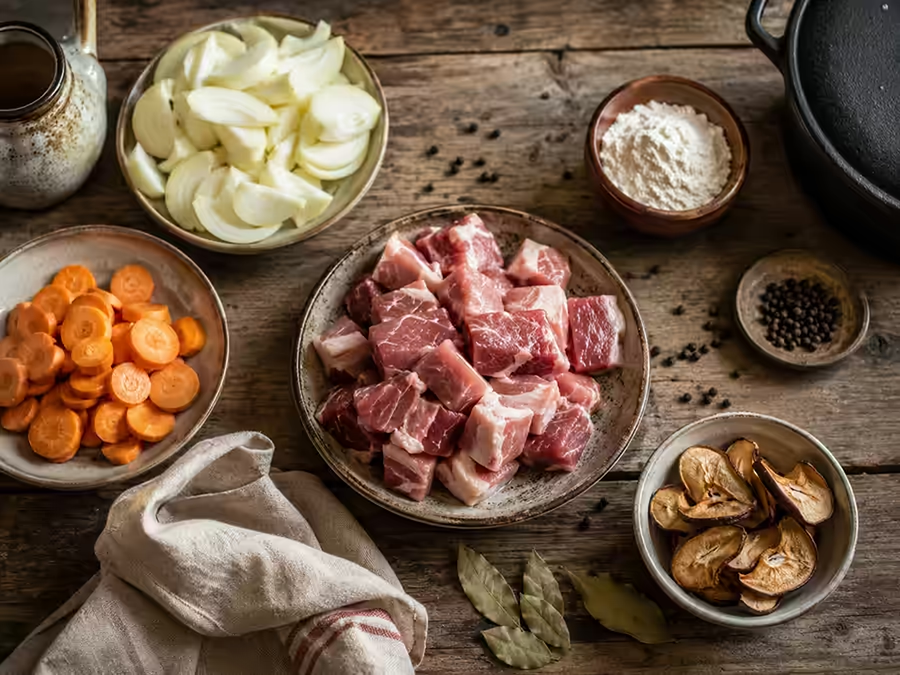
The classic recipe for dushenina is as simple as it gets—there’s nothing extra in it, and every ingredient serves a purpose.
| Ingredient | Quantity | Can be replaced |
|---|---|---|
| Pork (shoulder or neck) | 800 g | beef, a mixture of pork and beef, chicken |
| Onions | 2 pieces (about 200 g) | — |
| Carrots | 1 piece (about 100 g) | — |
| Potatoes | 600 g (optional) | without potatoes, with the porridge served on the side |
| Wheat flour | 2 tablespoons | without flour, if you want a thinner sauce |
| Meat broth or boiling water | 300–400 ml | whey, low-fat sour cream, diluted with water |
| Bay leaf | two pieces | — |
| Whole black peppercorns | 5–6 pieces | ground black pepper, ½ teaspoon |
| Salt | about 1.5 teaspoons | to taste |
| Garlic | 2–3 cloves (optional) | — |
| Dried pears | 50–60 g (for the authentic version) | without pears — for the classic version |
If you’re following an old-fashioned recipe with pears, soak the dried pears in warm water for 20–30 minutes beforehand to soften them slightly.
What kind of tableware should I choose?
The ideal option is a clay pot with a lid, just like in the old days. Clay heats up slowly and releases heat just as slowly, which keeps the temperature inside stable without sudden fluctuations. If you don’t have a clay pot, a cast-iron pot or cauldron works perfectly—the thick walls of cast iron operate on a similar principle. The worst option is a thin-walled enameled pot: it heats up quickly and cools down just as fast, causing the meat to cook unevenly. If you don’t have any other cookware, compensate by using a lower temperature and a longer cooking time.
How to Choose Meat
The best cuts for stewing are those with a moderate amount of fat and connective tissue—the shoulder, neck, and part of the shank. It is the connective tissue (collagen) that turns into gelatin during long, slow cooking, making the meat not just tender, but literally melt-in-your-mouth. Lean cuts like tenderloin or pork loin don’t fare as well here: after two hours in the oven, they’re more likely to dry out than become juicy, since they lack enough fat and collagen to withstand prolonged cooking.
Step-by-Step Recipe for Authentic Dushenina
This recipe is as close as possible to the way our great-grandmothers used to make stewed meat—with the exception that we use a regular oven instead of a stove, and instead of a clay pot, a ceramic pot with a lid or a cast-iron pot will work just fine.
Preparing the Ingredients
- Rinse the meat thoroughly, pat it dry with a paper towel, and remove any membranes and tendons. Cut it into medium-sized pieces—about 3–4 cm.
- Coat the pieces of meat in flour on all sides. This isn’t for breading, but so that the flour will thicken the juices while the meat is braising and form a thick gravy.
- Slice the onion into half-rings and the carrots into rounds or small sticks. If using potatoes, cut them into medium-sized pieces so they have time to cook through but don’t fall apart.
- If you’re making the authentic version with pears, drain the soaked pears in a colander and let the excess water drain off.
Braising and Simmering
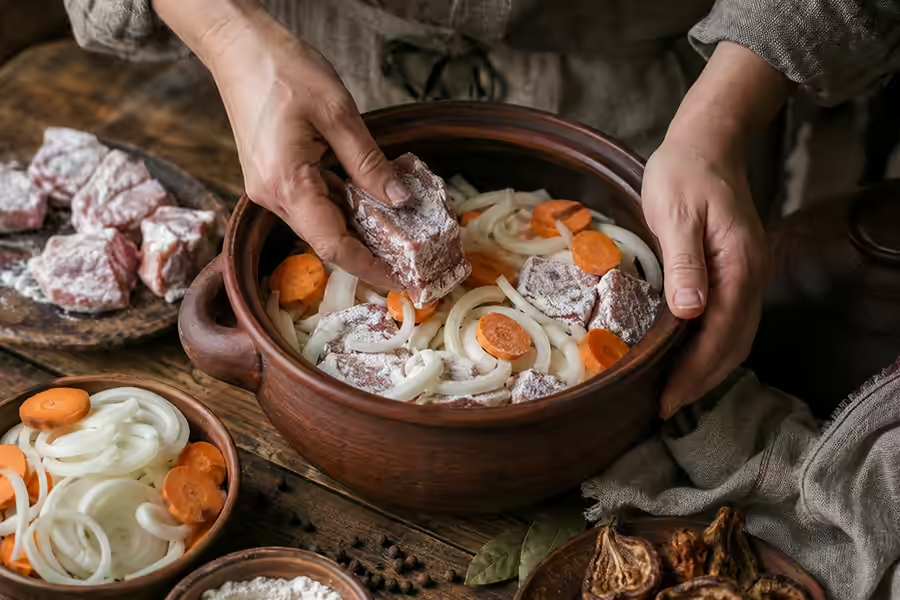
- Place half of the onions and carrots in the bottom of a pot or heavy-bottomed saucepan.
- Arrange the meat, which has been dredged in flour, in a single layer on top.
- Add the remaining vegetables, bay leaf, peppercorns, and salt. If desired, add minced garlic and soaked pears.
- If you’re cooking with potatoes, arrange them in a layer on top of the meat and vegetables—traditionally, the ingredients aren’t mixed together but are layered so that each retains its own texture and flavor.
- Carefully pour in the hot broth or boiling water so that the liquid covers about one-third of the contents—the meat should not be “floating” in the water; it cooks mainly in its own juices.
- Cover the pot with a lid or wrap it tightly with two layers of foil if there is no lid—this is important for keeping the steam inside.
- Place it in an oven preheated to 180 °C for 1.5–2 hours. Do not open the oven for the first 40–50 minutes—let the meat cook thoroughly in a closed space without losing heat.
- After 1.5 hours, check if it’s done: pierce the largest piece of meat with a fork—it should go in effortlessly, and the meat should pull away easily from the fibers.
- If desired, add sour cream or heavy cream 10–15 minutes before the dish is ready—this will give the sauce a velvety texture and a slight tang.
- If the sauce seems too thin, let the dish simmer for another 10 minutes without a lid—the excess moisture will evaporate, and the flavor will become more concentrated.
- Remove the finished stew from the oven and let it rest, covered, for 10–15 minutes—this is an important step that allows the juices to distribute evenly throughout the meat.
- Serve hot, generously drizzled with the sauce that formed while braising.
Tips and Common Mistakes
Don’t add too much liquid. The main mistake that turns a stew into ordinary soup is using too much water. There should be just enough liquid to partially cover the ingredients, not to float on top of them. The meat cooks primarily in its own juices and steam in a covered pot.
Be sure to coat the meat in flour. It’s easy to skip this step, but it’s the flour that gives the stew its characteristic thick, velvety sauce. Without it, the liquid will remain thin, like regular broth.
Do not open the oven during the first 40–50 minutes. Every time you open the door, the temperature inside drops by 15–20 degrees, and the meat will cook unevenly and take longer.
Choose meat with layers of fat. Shoulder or neck are better choices than lean tenderloin—after two hours of simmering, it’s the layers of fat that melt and make the meat juicy. Meat that’s too lean can turn out dry.
Don’t add too much salt at the beginning. It’s better to add a little less salt at first and then season the sauce 15 minutes before it’s done, when the flavor has already developed and some of the liquid has boiled off.
Add the potatoes only during the second half of the cooking process if you want them to hold their shape and not turn into mush. If, on the other hand, you prefer fluffy potatoes soaked in meat juices, add them right at the start along with all the other ingredients.
Don’t use cookware with walls that are too thin. A thin pot loses heat quickly, causing the temperature inside to fluctuate. The thicker the bottom and sides of the pot, the more evenly and gently the meat will cook.
If the sauce is too thick, thin it with a small amount of hot broth or boiling water directly in the pot and stir gently so as not to break up the pieces of meat.
If the meat is still tough after two hours, don’t rush to take it out of the oven—let it cook for another 30–40 minutes. Toughness usually means that the collagen hasn’t had time to fully turn into gelatin yet, and a little more time will fix the problem.
Comparison: The Traditional Method and the Modern Adaptation
| Parameter | An old-fashioned method | A Modern Adaptation |
|---|---|---|
| Tableware | Clay pot | Ceramic pot, cast-iron pot, roasting bag |
| Heat source | Ukrainian Stove | Oven, multicooker, slow cooker |
| Temperature | Gradual cooling of the furnace heat | A steady 180 °C |
| Cooking time | 3–4 years | 1.5–2 years |
| Meat | Pork, less commonly beef, poultry | Any meat of your choice, including turkey |
| Additional ingredients | Dried pears, fruit compote, whey | Sour cream, heavy cream, garlic, mushrooms |
| Reason for cooking | Weddings, baptisms, memorial services, patron saint’s day celebrations | Any Sunday lunch or family gathering |
Modern Variations on the Shower
Dushena in a multicooker
If you don’t have time to keep an eye on the oven, a multicooker will do a great job of braising the meat. Layer the ingredients just as you would in the classic recipe, pour in the broth, and select the “Stew” or “Braise” setting for 2 hours. The advantage of a multicooker is that the temperature inside remains stable throughout the entire cooking process, and there’s virtually no risk of burning—you can safely leave the dish to cook and go about your business.
Dushena in a baking sleeve
A modern method that mimics the effect of a covered clay pot as closely as possible—the roasting bag traps all the moisture and aromas inside. Place the meat and vegetables in the bag, tie it closed on both ends, poke a few holes in the top to let steam escape, and roast at 180 °C for 1.5 hours. The gravy turns out especially rich because none of the moisture evaporates.
Dushena with Mushrooms
Add 200–250 g of fresh button mushrooms or wild mushrooms—previously sautéed until lightly browned—to the classic set of ingredients. Mushrooms perfectly complement the flavor of braised meat and give the dish a deeper aroma—a particularly good choice for an autumn or winter meal.
Dushenina with Sauerkraut
Here’s an interesting option for those who enjoy sweet-and-sour combinations: instead of some of the potatoes, add 300 g of well-drained sauerkraut. The tartness of the sauerkraut balances the richness of the pork, and the dish takes on a flavor similar to bigos.
Low-Calorie Turkey Stew
If you want to make the dish lighter, substitute turkey or chicken thighs for the pork. The cooking time will be reduced to 1–1.5 hours, and the gravy will be lighter. This version is perfect for an everyday lunch, not just for a holiday meal.
Dushenina with Dried Pears (Authentic Version)
For those who want to experience the flavor of an authentic traditional dish: add 50–60 g of pre-soaked dried pears and 100 ml of pear compote to the meat in place of some of the broth. The sweet-tart flavor of the pears combined with braised pork creates the very taste contrast that was used to prepare this dish for major holidays several generations ago.
Plum Compote with Prunes and Apples
Here’s another variation with a “sweet” twist on a classic recipe: add 80–100 g of pitted prunes and one sweet-and-sour apple, cut into wedges, 30 minutes before the dish is done. The prunes add depth of flavor, while the apple provides a light freshness that nicely balances the richness of the meat.
Flourless Dushenina (for those who avoid gluten)
If you need to avoid gluten, simply don’t coat the meat in flour—the gravy will be a little thinner, but just as rich in flavor. To thicken it at the end of cooking, you can mash some of the cooked potatoes right into the gravy.
Storage and Reheating
The finished stew can be stored in the refrigerator in an airtight container for up to 3 days. The sauce will thicken over time—this is normal; when reheating, simply add a little broth or water. It’s best to reheat it over low heat on the stovetop or in the oven at 150 °C, covered with a lid or foil to prevent the meat from drying out. A microwave is also suitable for quickly reheating a serving, but the texture will be slightly worse than when reheated gradually.
To freeze, place the cooled dish in an airtight container or freezer bag, removing any excess air. It can be stored for up to 2–3 months. Thaw it gradually in the refrigerator overnight, rather than at room temperature—this way, the meat will retain its texture and stay juicy.
Approximate Nutritional Value
Per 100 g of cooked pork stew (without potatoes), there are approximately 220–250 kcal, 16–18 g of protein, 15–17 g of fat, and 4–6 g of carbohydrates—mainly from flour and vegetables. If you prepare the version with potatoes, the calorie content per serving increases due to the starch, but the dish becomes a complete meal on its own without the need for an additional side dish. The exact values depend on the fat content of the meat you choose and the amount of additional ingredients.
Serving
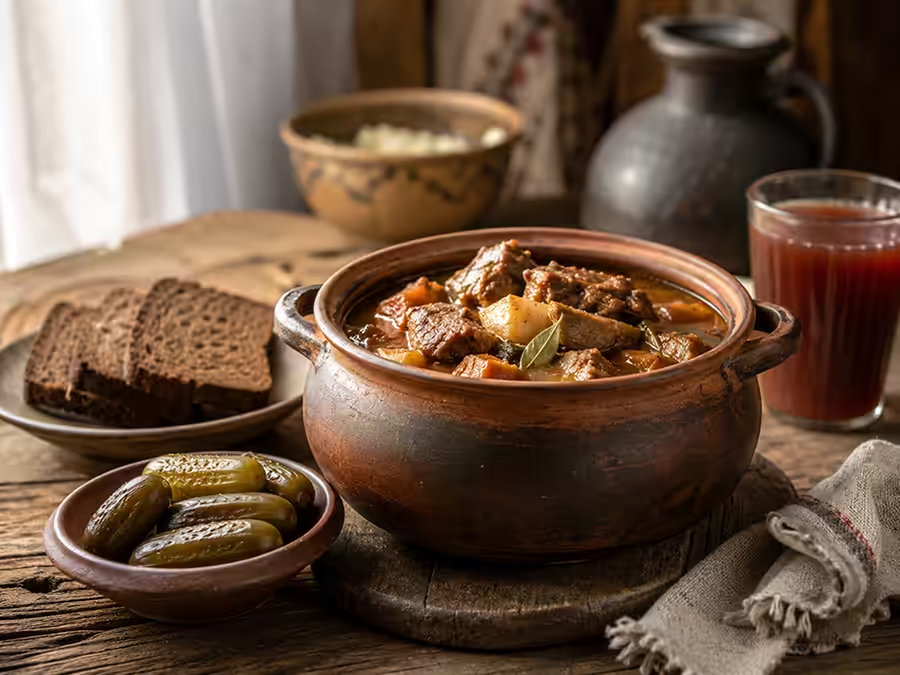
Traditionally, dushenina is served hot with boiled potatoes or porridge—buckwheat or barley—generously doused with the thick gravy that forms during the braising process. If you’ve prepared the version with potatoes right in the pot, no additional side dish is needed—the dish is complete on its own. Pickled cucumbers, marinated mushrooms, or simply fresh herbs—dill or parsley—go well with this dish, adding a touch of freshness to its rich flavor.
For a festive presentation, you can serve the stewed meat directly in the pot in which it was cooked—this gives the dish an authentic, home-cooked look and works wonderfully if you’re cooking for guests and want to create that “old-fashioned kitchen” vibe. Traditionally, uzvar or kvass are served with dushenina—both are staples of Ukrainian dining traditions and complement this hearty meat dish well without overpowering its flavor.
Frequently Asked Questions About Stew
What does the word “dushenina” mean?
The name comes from the cooking method—the meat was “stewed,” that is, slowly simmered in a covered pot with a minimal amount of liquid, without any air. That is where the dish gets its name.
What kind of meat is best for making stewed meat?
Traditionally, pork—such as the shoulder or neck, with small layers of fat—has been the most commonly used meat. It is also prepared with beef, veal, lamb, poultry, or a mixture of several types of meat.
Can you make stewed meat in a multicooker?
Yes, a multicooker works great for this. Layer the ingredients, pour in the broth, and cook on the appropriate setting for about 2 hours.
How long does it take to cook dušenina?
In the oven at 180 °C, the stew cooks for about 1.5–2 hours, depending on the size of the meat pieces and the type of cookware. The cooking time is similar in a multicooker.
How does dushenina differ from regular stewed meat or roast?
The main difference lies in the cooking method: dushenina is prepared in a covered pot with a minimal amount of liquid, primarily using its own juices and steam, rather than in an open pot with a large amount of broth. This results in a thicker gravy and a more tender meat texture.
Can you freeze cooked stewed meat?
Yes, you can freeze the prepared dish in an airtight container for up to 2–3 months. Thaw it in the refrigerator and reheat it over low heat, adding a little broth or water if the sauce has thickened.
Was stewed meat prepared only on holidays?
Historically, this was the case—because meat was such a valuable commodity in peasant farming, the dish was prepared mainly for special occasions: weddings, christenings, memorial feasts, and patron saint’s days. Today, there’s no reason to limit yourself—the recipe is simple enough for a regular Sunday dinner.
Why do some recipes for dushenina include fruit?
Combining meat with dried pears or uzvar was a typical practice in traditional Ukrainian cuisine. The slightly sweet and tart flavor of the fruit balances the richness of the pork and gives the dish its characteristic festive taste.