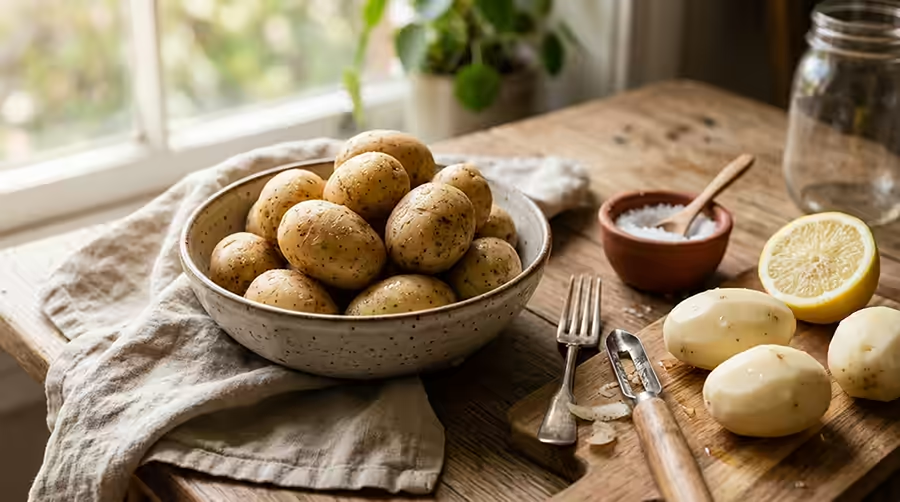
New potatoes are one of the most delightful seasonal foods, but they’re often the ones people dislike peeling the most because of their thin skin, the dirt that gets under your fingernails, and the dark stains on your fingers after just a few minutes of work.
The problem is that new potatoes don’t behave like old ones: their skin often doesn’t peel off in even strips, but comes off in patches, sticks to your hands, and forces you to either scrape them with a knife for a long time or look for quicker household methods.
That is exactly why searches like “how to peel new potatoes,” “how to quickly peel new potatoes,” and “how to avoid getting your hands dirty from new potatoes” become relevant again every season.
Content
The good news is that there’s no one-size-fits-all “secret” trick, but there are several methods that actually work for different situations: for a small portion, for a large bowl of potatoes, for boiling, for baking, and for those who don’t want to have to scrub their fingers with lemon or baking soda afterward.
Another important thing: not all new potatoes need to be peeled at all, because in many cases it’s enough to wash them well, especially if the skin is thin, the tubers are small, and the dish doesn’t require a perfectly smooth texture.
This article covers not only classic cleaning methods but also popular life hacks, including those that have gone viral on TikTok and in food media. We’ll
take a closer look at which methods actually save time, which ones just look good in short videos, how to organize the process properly, and what to do if your hands have already turned dark.
Do you need to peel new potatoes, and how do you peel them?
The first tip is simple: don’t automatically peel new potatoes just because that’s what you’re used to doing with regular potatoes.
The skin on fresh new potatoes is often so thin that it’s perfectly fine to leave it on, provided the potatoes are well washed, free of major blemishes, and intended for boiling, baking, or serving whole.
This approach is especially convenient for small potatoes, as it allows you to avoid the most annoying part of the job—prolonged contact of your hands with the juice and skin.
There are a few situations in which you don’t need to peel new potatoes:
- If it is very fine and even.
- If the skin is thin and comes off easily when washed.
- Whether you’re baking them, boiling them with dill, roasting them whole, or serving them as a home-style side dish.
- Unless you want the dish to have a completely smooth texture.
You should peel new potatoes when making mashed potatoes, cream soup, children’s meals, salad, or any dish that requires an even color and a soft, uniform texture.
Peeling is also recommended if the potatoes have many dark spots, blemishes, or eyes, or if they are no longer “tender and young” and the skin has become thicker.
Before cleaning potatoes using any method, you should wash them thoroughly.
The simplest approach is as follows: first, rinse the potatoes under cold water, then scrub them with a brush or the rough side of a new sponge to remove dirt and sand, and only then decide whether a full cleaning is necessary.
This step is critical because if you start working with dirty potatoes, you won’t speed up the process—you’ll just smear the dirt all over your hands, the knife, and the surface of the potatoes.
Here’s another detail that’s often overlooked: after washing the potatoes, it’s best to pat them dry briefly with a towel.
Wet and slippery potatoes are harder to hold, and the skin comes off less easily, so excess water just gets in the way.
Cleaning methods
When it comes to methods that actually work, there aren’t many, but each has its own logic and ideal use case.
For a small batch, hand peeling with a vegetable peeler or knife works best; for a large quantity of small new potatoes, the method of shaking them in a pot with salt is best; and for those who want to keep their hands cleaner, the fork trick comes in handy.
Manual cleaning with a vegetable peeler
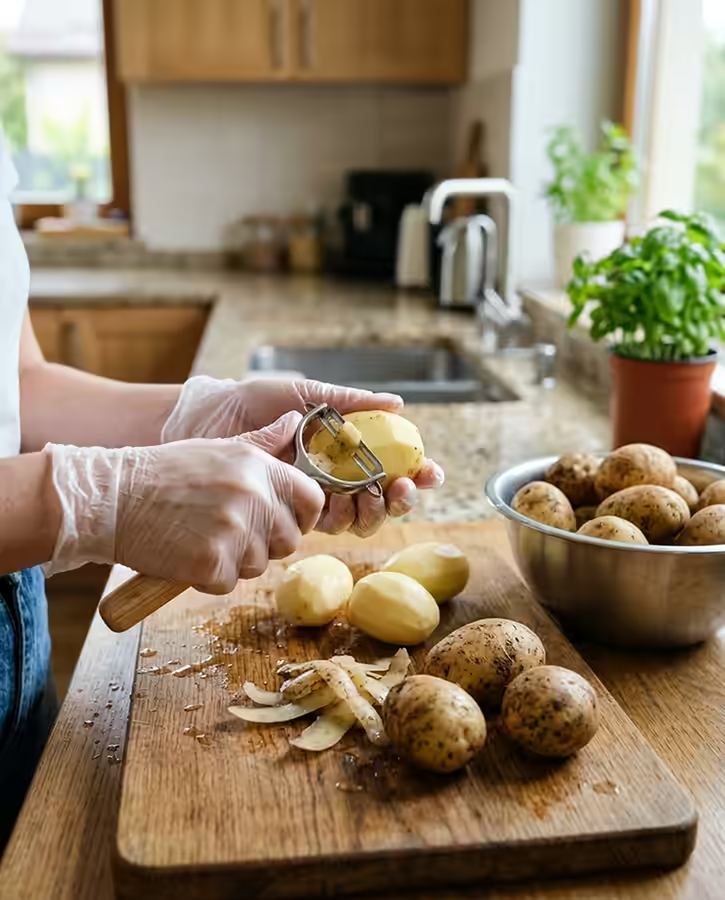
This is the most precise method for small and medium-sized potatoes. A
sharp vegetable peeler removes a thin layer of skin without cutting away too much flesh, which is especially important for new potatoes, which don’t have thick, rough skins to begin with. This method
works best when the potatoes have already been washed, dried, and aren’t too small.
Cleaning with a knife
A knife is best when you need to not only peel the skin but also carefully remove eyes, blemishes, or dark spots.
The downside is that this method is slower and tends to get your hands dirtier, especially if you have to rub the potatoes between your palms for a long time.
A brush or a stiff sponge
For very young potatoes, it’s sometimes enough not to peel them, but simply to scrub the skin off thoroughly under running water.
This isn’t a one-size-fits-all solution, but for small, tender tubers, it often works better than peeling them with a knife.
Salt and a pot
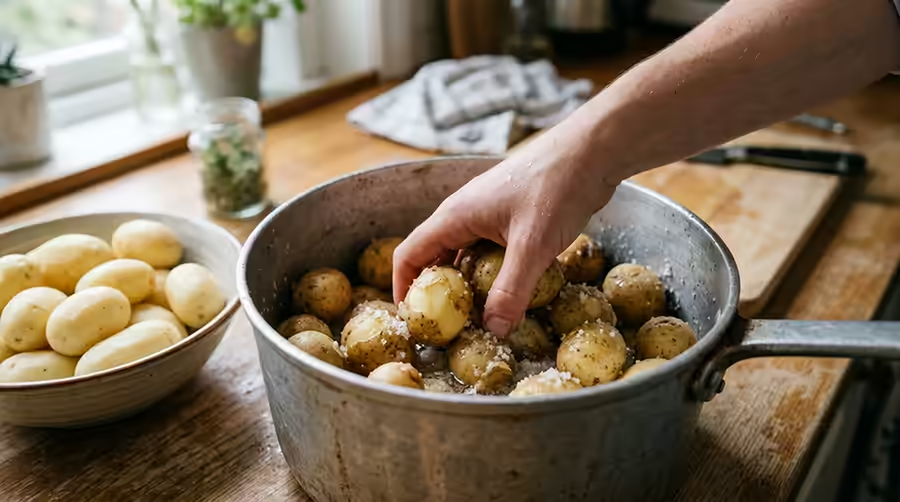
One of the most popular traditional methods is to place the potatoes in a pot, add coarse salt, cover with a lid, and shake well.
Due to the friction, the skin of very young potatoes begins to peel off, after which the potatoes are rinsed and, if necessary, finished by hand.
This method isn’t magic, but it’s truly useful when you need to quickly process a large number of small potatoes all at once.
A fork as a holder
A popular technique that has been widely discussed in culinary media involves impaling a potato on a fork and holding the utensil—rather than the potato itself—while peeling.
This way, the potato is less likely to slip, it’s easier to turn, and your fingers come into less contact with the wet skin and juice.
This method works best on medium-sized and smoother potatoes, rather than on very small or bumpy ones.
Table of Methods
| Method | How it works | What is it suitable for? | Pros | Cons |
|---|---|---|---|---|
| Vegetable peeler | Removes a thin, even layer of skin | For small and medium portions, when precision matters | Minimal pulp loss, a clean result | Not the fastest option for a large order |
| Knife | It scrapes or cuts away the skin and allows you to smooth out imperfections | For irregularly shaped potatoes with eyes or spots | Effective monitoring of problem areas | Take it slower, and handle the potatoes more with your hands |
| A brush or a stiff sponge | It peels off the very thin skin under water | For very young, small potatoes | Quick and easy—sometimes you don’t even need a knife | Doesn’t work on thicker skin |
| Salt in the pot | The skin peels off due to the friction between the potatoes and the salt | For a large quantity of small new potatoes | Saves time and reduces manual labor | It doesn’t always clean perfectly; it often needs a second pass |
| Fork + vegetable peeler | The potato stays on the fork, not in your fingers | For those who want to get their hands less dirty | It’s easier to turn the potato, and your hands stay cleaner | The effect is less pronounced on very small potatoes |
In practice, this boils down to one simple thing: if you’re peeling 400–500 grams of potatoes for dinner, it’s best to use a good vegetable peeler.
But if you’re facing a bowl of small new potatoes for a large family, the method involving salt in a pot almost always saves time, even if you have to give a few individual potatoes a quick once-over with a knife at the end.
Life Hacks and TikTok
Social media regularly shares new tricks promising to “peel potatoes twice as fast,” but not every viral video is equally useful in real life.
Some life hacks actually make sense because they simplify the grip, speed up the motion, or allow you to peel in batches, but there are also techniques that look impressive only on video, while in everyday life they yield poor results or even increase the risk of injury.
What really works
The fork trick is one of the best examples of a simple yet effective improvement.
It doesn’t change the basic principle of peeling, but it makes the process more manageable, which is why it’s especially popular with people who don’t want to keep holding potatoes with wet fingers.
The method involving salt in a pot works just as well: it doesn’t produce perfectly smooth potatoes without any effort, but it does a good job of quickly removing most of the skin from a large number of new potatoes.
What works partially
Some viral videos recommend peeling with a vegetable peeler in a continuous motion in both directions, without lifting the blade off the potato.
In theory, this might speed up the process, but in practice there’s a catch: it’s easy to start pulling the tool toward yourself, and that’s exactly what raises safety concerns.
Therefore, this technique can only be considered somewhat effective for those who have good control over their movements and definitely don’t pull the tool toward themselves.
It’s best to approach this with caution
Social media often features highly dramatic but overly theatrical methods—mechanical scrubbing, complicated gadgets, tricks involving overly aggressive movements, or perfectly staged videos that hide the actual waste of produce and the time spent on prep work.
For home cooking, repeatable methods are far more valuable than flashy ones: a sharp vegetable peeler, a fork, a brush, salt, and proper preparation of the potatoes before peeling.
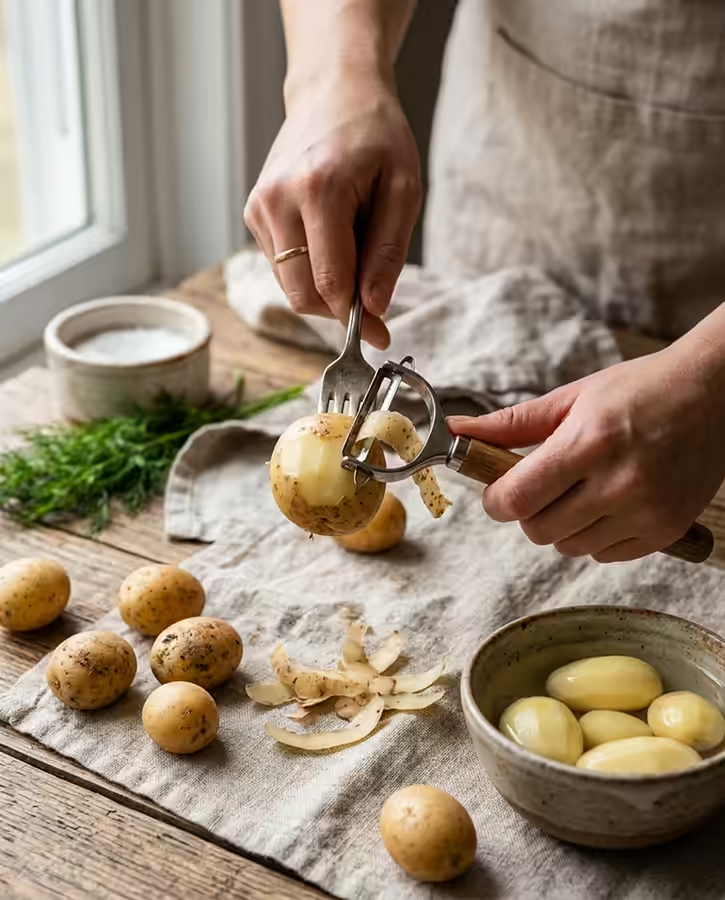
Table of Life Hacks
| Life hack | Does it work or not? | What are the benefits? | What You Need to Know |
|---|---|---|---|
| A fork as a holder | So | Less hand contact makes it easier to turn the potatoes | Best suited for medium-sized and smooth potatoes |
| Salt in the pot | So | Allows you to quickly process a large batch of small potatoes | After shaking, manual finishing is often required |
| Peeling with a vegetable peeler on both sides | Partially | Can help you move faster | It is dangerous to point the tool toward yourself |
| Cleaning without pre-washing | No | There’s no obvious benefit | The dirt just smears across your hands and the surface |
| Complex viral stunts for the sake of speed | Often no | They look good on camera | In everyday life, there’s nothing worse than simple, traditional methods |
The main point here is very practical: the best kitchen hacks aren’t the ones that amaze you, but the ones that are easy to replicate without taking any unnecessary risks.
When it comes to new potatoes, this definitely includes using a fork as a holder, the salt method, and the basic rule of working with clean, dry potatoes.
How to keep your hands clean
When readers are looking for advice on new potatoes, the issue of staining their hands almost always comes up alongside the question of speed.
Dark fingers, grayish nails, and the feeling of “stained” skin are among the main reasons why people put off peeling new potatoes until the very last minute.
Fortunately, there are several very simple solutions to this problem.
The best way to keep your hands clean is to wear gloves.
This doesn’t speed up the cleaning process itself, but it significantly reduces discomfort, which makes the whole process noticeably easier.
Another useful tip is to wash or at least rinse your hands periodically while working.
Don’t wait until all the juice, starch, and dirt have “set” on your skin: it’s much better to wash them off a few times along the way. This works
especially well if you peel the potatoes in batches rather than trying to get through the whole batch in one go.
Here’s a third tip: try not to handle the potatoes directly with your hands.
That’s why a fork, gloves, a brush, or the pot method are helpful: they reduce the contact area and prevent the juice and skin from constantly getting on your fingers.
It may seem like a small thing, but when you’re dealing with a large quantity of potatoes, you’ll notice the difference very quickly.
Proper organization of the little things also helps:
- Use potatoes that have already been washed.
- Let the potatoes dry before peeling them.
- Don’t peel potatoes that are too wet and slippery to handle.
- Trim your nails before a big cleanup if dirt tends to get trapped under them.
If your hands have already darkened, home remedies suggest several options: lemon, citric acid solution, vinegar mixed with water, tomato pulp, or baking soda.
The logic behind them is the same: either the acid helps dissolve the stains, or the mild abrasive removes them mechanically.
However, after using these methods, it’s best to wash your hands with soap and moisturize them with cream, as acids and baking soda can dry out the skin.
Table for clean hands
| The problem | What helps | How to use | Minus |
|---|---|---|---|
| My hands turn dark when I wash them | Gloves | Put on before starting work | Not everyone finds it comfortable to work for long periods while wearing gloves |
| A film quickly forms on my fingers | Frequent hand washing | Wash your hands several times during the process | Don’t forget to do this regularly |
| I don’t want to touch the potatoes with my hands | A fork as a holder | Pierce the potato and peel it while holding it with a fork | Less convenient for very small potatoes |
| My hands have already turned dark | Lemon or citric acid solution | Wipe the stains, then rinse | It can cause a stinging sensation and dry out the skin |
| Dirt has gotten under my fingernails | Baking soda or a brush with soap | Gently rub the stained areas | Don’t scrub too hard |
| The skin is irritated after scrubbing | Hand cream | Apply after washing your hands | It doesn’t remove blemishes on its own, but simply helps the skin recover |
A Practical Guide and FAQ
If you want a simple, straightforward approach without unnecessary theory, here’s the best way to proceed: first, sort the potatoes by size; then wash them thoroughly, let them dry briefly, and only then decide whether to peel them at all or just give the skin a quick scrub with a brush.
It makes sense to either cook very small, young potatoes with the skin on or treat them with salt in a pot, while medium-sized and smoother ones should be peeled with a vegetable peeler, using a fork as a holder if needed.
At the same time, you should either wear gloves or at least rinse your hands several times during the process so you don’t have to scrub your fingers with acids and baking soda later.
Is it okay not to peel new potatoes? Yes, if they are fresh, small, well-washed, and the dish doesn’t require a perfectly smooth texture.
What’s the fastest method? For a large quantity of small potatoes, the fastest household method is considered to be tossing them with salt in a pot.
What’s the most precise method? For a small portion—a sharp vegetable peeler after washing and drying the potatoes.
Do TikTok life hacks actually work? Some of them do, but the best ones are simple tricks like using a fork as a holder or organizing your movements more safely, whereas aggressively scraping with a blade toward yourself raises legitimate safety concerns.
How can you avoid getting your hands dirty from new potatoes? The best solution is gloves, as well as the habit of washing your hands right while peeling, not just afterward.
What should you do if your hands are already black? Home remedies most often mention lemon, vinegar mixed with water, tomato pulp, or baking soda, but it’s best to moisturize your skin afterward.
Should you believe all those viral hacks? No, because some of them actually work, while others just look good on video and don’t take into account convenience, the time it takes to finish the job, or the risk of cuts.
What’s most important for a good result? It’s not so much a specific life hack as it is a combination of proper washing, a drier surface, the right tool, and a method that works specifically for your amount of potatoes.
From a purely practical standpoint, the best approach for most home kitchens is this: you don’t always need to peel new potatoes, and when you do, it’s best to use either a sharp vegetable peeler or the salt method for large batches—without forgetting to protect your hands.
It is precisely these methods that yield not a “viral” but a consistently convenient result—without unnecessary fuss, waste, or stress in the kitchen.