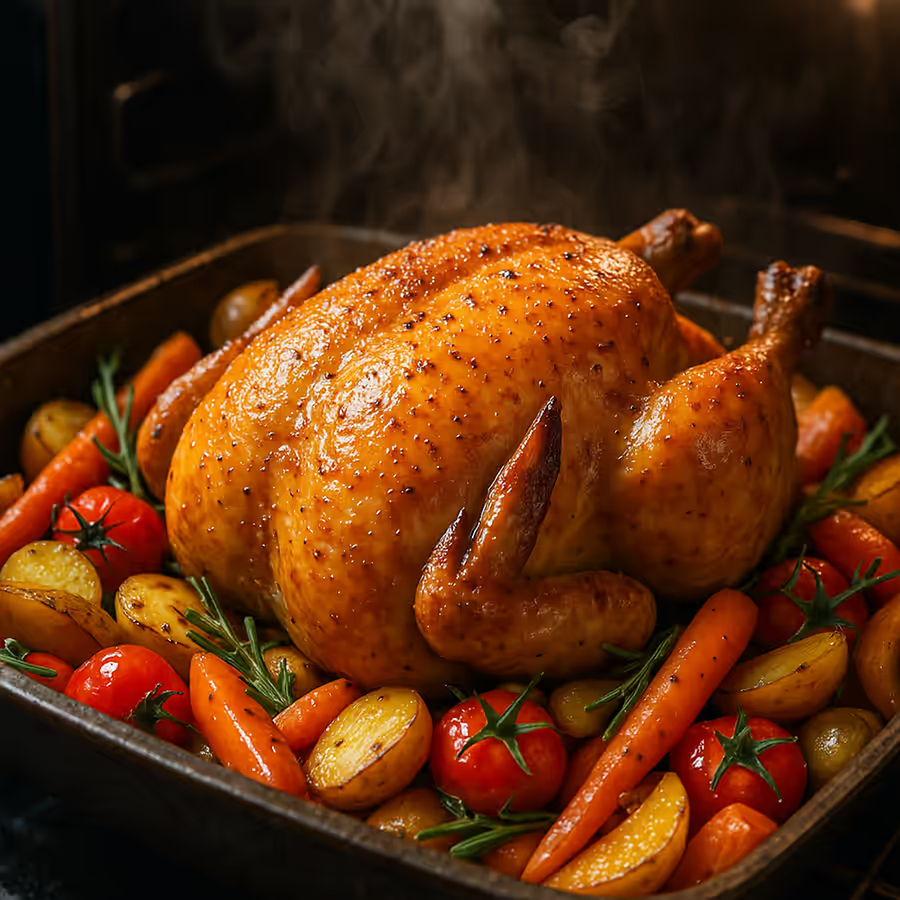
Baking in the oven is one of the healthiest ways to cook food, allowing you to preserve maximum nutrients, achieve an appetizing golden crust, and rich flavor. But why do some dishes turn out juicy and flavorful, while others are dry or undercooked? The main secret lies in choosing the right baking temperature. In this detailed guide, we will discuss the optimal temperature settings for different foods and explain the scientific rationale behind each recommendation.
Зміст
Why baking temperature is so important
The oven temperature affects not only the cooking speed, but also the texture, juiciness, color, and taste of the dish. When the temperature is set correctly, important chemical processes take place that shape the taste of baked food.
Mayar’s reaction: the science of delicious crust
One of the key processes in baking is the Maillard reaction — a chemical interaction between amino acids (proteins) and sugars that occurs when heated. It is this reaction that is responsible for the formation of a golden, appetizing crust, characteristic aroma, and deep flavor of baked dishes.
The Maillard reaction begins at a temperature of about 140°C and is most active in the range of 140-180°C. At temperatures above 180°C, it ends and the substances begin to decompose by pyrolysis, which can lead to burning.
That is why for most meat dishes and vegetables, the optimal temperature is 180-200°C — it provides the perfect balance between forming a delicious crust and keeping the inside juicy.
Internal product temperature
It is important to understand the difference between the oven temperature and the internal temperature of the product. Even if the oven is heated to 200°C, the temperature inside a piece of meat may only be 60-70°C. It is the internal temperature that determines the degree of doneness and safety of the product.
Different types of meat have different safe internal temperature indicators. According to the recommendations of the US Department of Health, meat is considered safe for consumption when its internal temperature is above 63°C. However, for chicken and turkey, this indicator should be higher — 72-75°C for a whole carcass.
Vegetable baking temperature
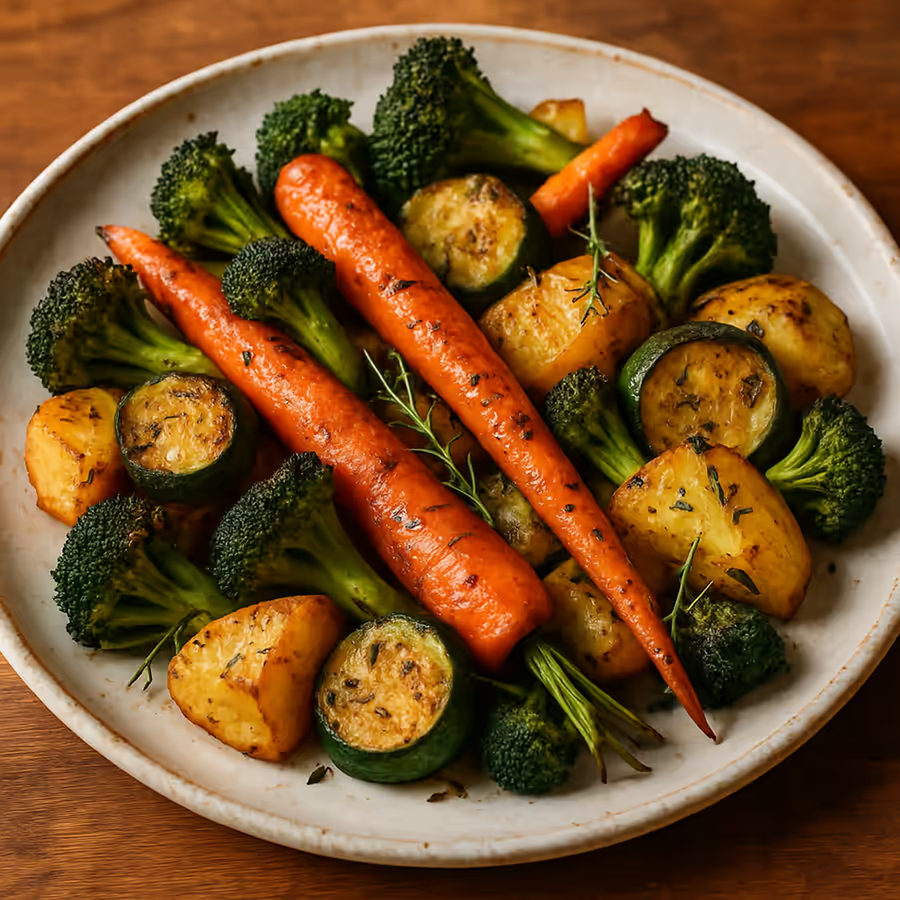
Vegetables are the simplest category of foods for baking, but even here there are nuances. Different vegetables have different densities, water and sugar content, which affects the optimal cooking temperature.
General principles for baking vegetables
Optimal temperature: 200-220°C
Most vegetables bake perfectly at 200-220°C. This setting creates a crispy golden crust, while the vegetables remain soft and juicy inside.
Four leading chefs unanimously agree that 220°C is the optimal temperature for roasting vegetables, as it ensures even cooking with perfect texture.
Root vegetables
Potatoes, carrots, beets, celery
- Temperature: 180-200°C
- Time: 40-60 minutes for whole tubers, 25-35 minutes for chopped pieces
Root vegetables have a dense structure and require longer baking times. Potatoes are best baked at 200°C — at this temperature, a golden crust forms on the outside, while the inside becomes fluffy.
For carrots and beets, the optimal temperature is 180-200°C, and the cooking time is about 40-45 minutes. These vegetables can be wrapped in foil, which allows you to preserve maximum juices and nutrients.
Soft vegetables
Eggplant, zucchini, peppers, tomatoes
- Temperature: 180-220°C
- Time: 20-30 minutes
Eggplants and zucchini bake faster due to their high water content. They are cut into thick slices (about 1 cm), coated with oil, and baked at 190-200°C for 20-30 minutes.
To achieve a crispy crust, start baking at 200-220°C for 10-15 minutes, then continue in convection or regular mode.
Cabbage vegetables
Broccoli, cauliflower
- Temperature: 180-200°C
- Time: 20-25 minutes
Before baking broccoli and cauliflower, it is recommended to blanch them in boiling water for 1-1.5 minutes, then rinse with cold water. This stops the heating process and helps preserve the bright color.
Cabbage vegetables are baked at 180°C for 20-25 minutes, usually in a cream and egg sauce.
Meat baking temperature
Meat is the most temperature-sensitive product. The right temperature is crucial not only for the taste but also for the safety of the dish.
Yalovitsa
Optimal oven temperature: 180-200°C
Beef is baked at 180-190°C depending on the size of the piece. For a large piece (1-2 kg), the cooking time is 1.5-2 hours.
Internal readiness temperature:
- Rare (with blood): 52-55°C
- Medium rare: 55-60°C
- Medium: 60-65°C
- Well done (fully cooked): 70°C
It is important to remember that after removing the meat from the oven, it continues to “cook” and its internal temperature rises by another 2-5°C. Therefore, it is better to remove the beef from the oven a few degrees before it reaches the desired temperature.
Pork
Optimal oven temperature: 180-200°C Baking
time: 25 minutes per 450 g of weight + 20-25 minutes
Pork requires a slightly lower temperature than beef — around 180°C. At 200°C, pork is roasted for the first 20 minutes to form a crust, then the temperature is reduced to 180°C.
Internal readiness temperature:
- Medium: 60-65°C
- Well done: 70°C
Lamb
Optimal oven temperature: 150-220°C (combined mode)
Lamb is a special meat that requires long, low-temperature cooking to achieve tenderness. The following method is recommended:
- Preheat the oven to 150°C and bake for about an hour.
- Reduce the temperature to 110-120°C and cook for another 4-5 hours.
- Increase to 220°C for the last 15-20 minutes to form a crispy crust.
Internal cooking temperature: 60-70°C
Poultry
Chicken
- Temperature: 180°C
- Time: 20 minutes per 450 g + 15 minutes
- Internal temperature: 72-75°C for whole carcass, 68-70°C for breast
For a medium-sized chicken (1.5-2 kg), 60 minutes of baking at 180°C is sufficient. If the carcass is large, increase the time to 70 minutes, and for a small chicken, 50 minutes will suffice.
Professional method: bake at 220-230°C for the first 10-15 minutes to “seal” the crust, then reduce to 180°C. This ensures juicy meat and a crispy golden crust.
Goose
- Temperature: 200°C
- Time: 12-15 minutes per 450 g + 15-20 minutes
- Internal temperature: 68-70°C for whole carcass, 60-65°C for breast (medium rare)
Turkey
- Temperature: 180°C
- Time: 12 minutes per 450 g + 30 minutes
- Internal temperature: 72-75°C
Fish baking temperature
Fish is a delicate product that can easily become dry. The correct temperature and baking time are critical for juiciness.
General principles
Optimal temperature: 180-200°C
Time: 10 minutes for every 2.5 cm of thickness
The universal recommendation for baking fish is 180-190°C. At this temperature, the fish cooks evenly while retaining its juiciness.
It is very important not to overcook the fish in the oven. For a whole carcass, 30-35 minutes is enough, and for fillets or steaks — 15-25 minutes. After that, the juices begin to evaporate and the dish becomes dry.
Red fish (salmon, trout)
Temperature: 180-190°C
Time: 10-20 minutes depending on the thickness of the steak
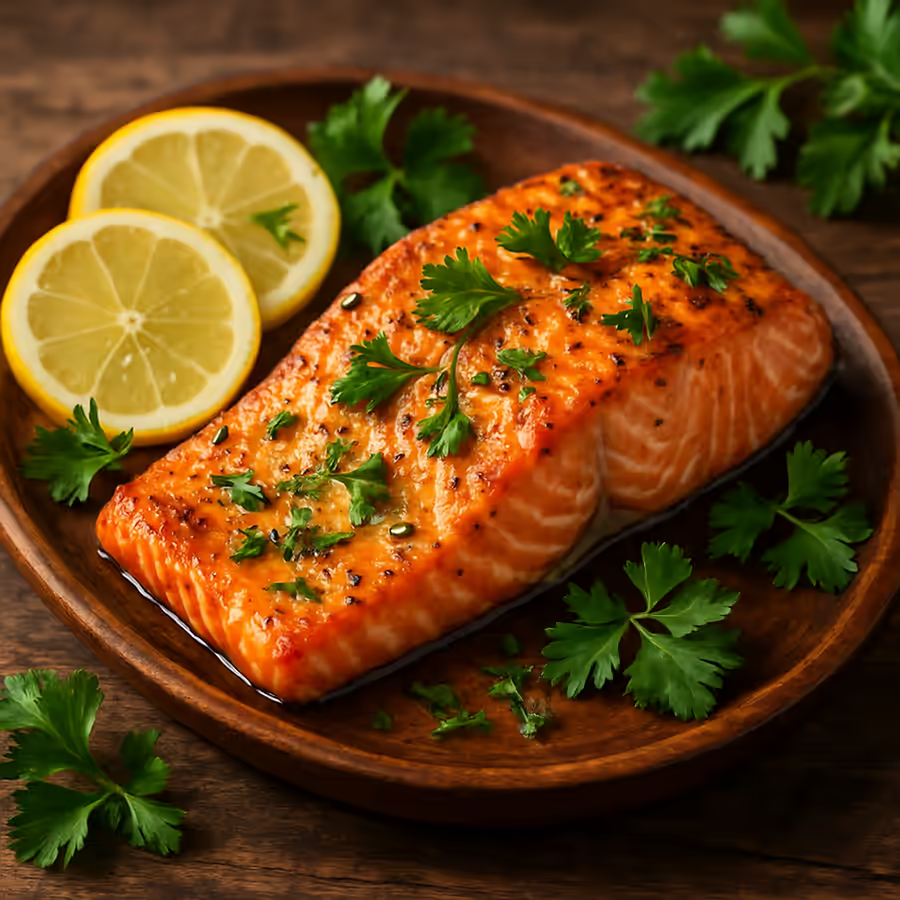
Salmon is best baked at 180°C for 10-15 minutes for thin steaks and up to 20 minutes for thick ones. The fish is ready when the internal temperature reaches 60-63°C.
Baking in foil or a sleeve extends the time to 25-30 minutes, but ensures maximum juiciness.
White fish (cod, pollock)
Temperature: 180-200°C
Time: 4-10 minutes for fillets
White fish cooks faster because it has less fat:
- Chips: 8-10 minutes
- Alaska pollock: 4-6 minutes
Mackerel
Temperature: 180-200°C
Time: 20-30 minutes for a whole carcass, 15-20 minutes for fillets
Mackerel is a fatty fish that cooks quickly and dries out easily. At 180°C, a whole fish will bake in 20-25 minutes. In foil or a roasting bag, the time increases to 25-30 minutes.
Signs of readiness: the meat separates easily from the bones, clear (not pink) juice flows out, and the skin is slightly browned.
Common mistakes when baking
Mistake #1: Incorrect baking temperature
Too low a baking temperature results in prolonged cooking, during which the food dries out. Vegetables become watery instead of crispy.
Too high a temperature causes the outside to burn while the inside remains raw. The meat quickly loses its juices and the outside becomes charred.
Mistake #2: Uneven cutting
If vegetables or meat are cut into pieces of different sizes, the large pieces will remain raw while the small ones burn. Always cut food into equal pieces for even cooking.
Mistake #3: Teaching too intensively
When food items are packed tightly together, steam builds up between them, causing them to steam rather than bake. Leave space between the pieces to allow hot air to circulate.
Mistake #4: Not preheating the oven
Placing food in an unheated oven increases cooking time and dries out the dish. Always preheat the oven to the desired temperature.
Mistake #5: Not enough oil
Some vegetables (eggplant, mushrooms) and lean fish require more oil to retain their juiciness. Vegetables with a porous structure absorb oil better than root vegetables.
Mistake #6: Opening the oven frequently
Each time you open the door, the temperature in the oven drops sharply, which disrupts the baking process. Only check if it is ready towards the end of the recommended time.
Tips for perfect baking
Use a cooking thermometer
This is the most reliable way to determine whether meat and poultry are cooked. Insert the thermometer into the thickest part of the piece, without touching the bone.
Let the meat “rest”
After removing from the oven, cover the meat with foil for 10-15 minutes. During this time, the juices will redistribute throughout the fibers, making the meat more succulent.
Do not salt vegetables before baking.
Salt draws juice out of vegetables, making them watery and preventing them from forming a crispy crust. Salt immediately before serving or 5 minutes before they are ready.
Stir the vegetables sparingly.
Frequent stirring causes juice to be released and vegetables to turn into puree. Turn them over no more than 1-2 times during the entire baking time.
Use the right dishes
A wide baking tray is best for vegetables, rather than a tall dish. The lower the sides, the less steam is concentrated and the better the crust forms. Be sure to line the metal baking tray with parchment paper.
Consider the characteristics of your oven
Convection mode reduces cooking time by 10-15% and may dry out the food. If cooking with convection, reduce the temperature by 10-20°C or reduce the cooking time.
General table of baking temperatures
| Product | Oven temperature | Baking time | Internal temperature |
|---|---|---|---|
| VEGETABLES | |||
| Potatoes (whole) | 200°C | 50-60 min | – |
| Potatoes (slices) | 200-220°C | 25-35 min | – |
| Carrots, beets | 180–200°C | 40-60 min | – |
| Eggplants, zucchini | 190-200°C | 20-30 min | – |
| Peppers, tomatoes | 180–200°C | 20-30 min | – |
| Broccoli, cauliflower | 180°C | 20-25 min | – |
| Mushrooms | 180–200°C | 20-25 min | – |
| YALOVICHINA | |||
| Boneless cut | 180°C | 12-14 min/450 g | 60–70°C |
| Stomach | 200°C | 25-30 min/450 g | 70°C |
| Spatula | 190°C | 30-35 min/450 g | 70°C |
| Roast beef | 180–200°C | 90-120 min | 55-65°C |
| PORK | |||
| Neck, ham | 180°C | 25 min/450 g + 25 min | 65–70°C |
| Carbonade | 180°C | 20 min/450 g + 20 min | 65–70°C |
| Ribs | 200°C | 25 min/450 g + 25 min | 70°C |
| BARANI | |||
| Leg with bone | 150°C (4-5 hours), then 220°C | 15 min/450 g + 20 min | 65–70°C |
| Spatula | 150-220°C (combined) | 13 min/450 g + 13 min | 65–70°C |
| BIRD | |||
| Chicken (whole) | 180°C | 20 min/450 g + 15 min | 72-75°C |
| Chicken fillet | 180–200°C | 25-30 min | 150–190°F |
| Chicken thighs | 180°C | 30-35 min | 75°C |
| Chicken wings | 180-220°C | 15-20 min | 75°C |
| Duck (whole) | 200°C | 12-15 min/450 g + 15 min | 150–195°F |
| Turkey (whole) | 180°C | 12 min/450 g + 30 min | 72-75°C |
| FISH | |||
| Salmon (steak) | 180–190°C | 10-20 min | 60°C |
| Trout (whole) | 180–200°C | 20-25 min | 60°C |
| Cod (fillet) | 180–200°C | 8-10 min | 60°C |
| Alaska pollock (fillet) | 180–200°C | 4-6 min | 60°C |
| Mackerel (whole) | 180–200°C | 20-30 min | 60°C |
| Fish in foil | 180–200°C | 30-35 min | 70°C |
Frequently asked questions (FAQ)
How to determine if meat is ready without a thermometer?
Press the meat with your finger: soft and springy — rare, springy with slight resistance — medium, firm — well done. You can also pierce it with a skewer — if clear juice flows out, the meat is ready; if it is pink, it needs a little more time.
Do you need to turn the vegetables over during baking?
Yes, but not often. It is enough to turn it over 1-2 times during the entire cooking process. Frequent stirring leads to juice release and texture deterioration.
Which is better—foil or parchment?
Foil creates an airtight environment, retaining maximum moisture — ideal for lean foods. Parchment allows steam to pass through, ensuring light browning. For a crispy crust, use parchment; for juiciness, use foil.
Why does fish become dry when baked?
The main reasons: baking for too long, an oven that is not hot enough, not enough oil or marinade. For a whole carcass, do not exceed 30-35 minutes, for fillets — 20 minutes.
Which vegetables can be baked together?
Combine vegetables with similar cooking times or cut quick-cooking vegetables (zucchini, tomatoes) into larger pieces and root vegetables into smaller pieces. Alternatively, add quick-cooking vegetables later.
What to do if the meat is burnt on the outside but raw on the inside?
Cover the meat with foil and continue baking at a lower temperature. Next time, start at a lower temperature or use foil from the beginning of cooking.
Can you salt meat immediately before baking?
Yes, meat can be salted in advance or immediately before baking. Unlike vegetables, salt helps meat retain moisture. However, it is better to salt vegetables after baking or 5 minutes before they are ready.
How long does it take to preheat the oven?
Typically 10-15 minutes to reach the desired temperature. Use the built-in indicator or an external thermometer for accuracy.
How to make the crust on meat crispier?
Start baking at a high temperature (220-230°C) for 10-15 minutes, then reduce to the recommended temperature. Alternatively, brush the meat with honey or sugar 10 minutes before it is ready and switch on the grill mode.
Why is the internal temperature of meat important?
This is the only reliable indicator of safety and doneness. Even if meat looks cooked on the outside, it may still be raw on the inside, which is hazardous to your health. An internal temperature above 63°C destroys harmful bacteria.
How to bake frozen foods?
Defrost food before baking — this ensures even cooking. If you don’t have time, increase the baking time by 50% and cover with foil at the beginning to prevent the top from burning.
Conclusion
Choosing the right baking temperature is both a science and an art. Following the recommended temperature settings for different foods guarantees juicy, flavorful, and safe dishes. Remember the golden rule: 180-200°C is a universal range for most foods, but always take into account the characteristics of the specific ingredient, the size of the pieces, and the capabilities of your oven.
Invest in a high-quality cooking thermometer—it’s the best guarantee of perfect results. Experiment, write down successful combinations of temperatures and times for your oven, and soon baking will become your favorite cooking technique.
Bon appetit and happy cooking!