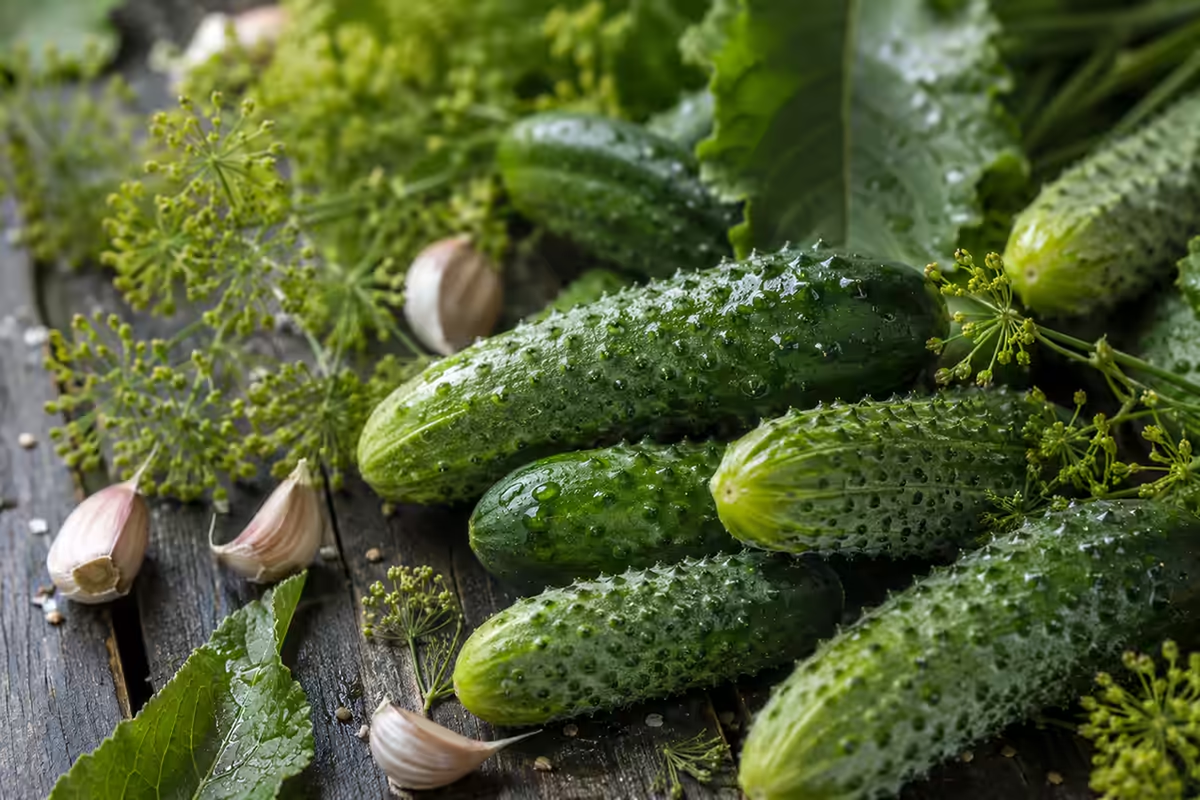
Quick-pickled cucumbers are those same crisp, aromatic ones—flavored with garlic and dill—that appear on the summer table every year alongside new potatoes and shashlik. No vinegar, no complicated preservation methods—just salt, the right herbs, and a few simple tricks that make the cucumbers crisp and delicious in just two hours. I make them from mid-June through the end of August, and every season I’m reminded that there aren’t that many simple dishes where it’s so easy to get it wrong. This article has everything you need to know to get it right the first time.
Content
Lightly salted, salted, and pickled: what’s the difference?
Before moving on to the recipe, it’s worth clarifying the terminology. These three categories are often confused, but their flavors and preparation methods are radically different.
Lightly salted cucumbers are cucumbers that have been lightly salted and left in brine for anywhere from two hours to a day. They have a mild, delicate flavor with no sourness. They have a garlic and dill aroma. That’s exactly what we’re making today.
Pickled (fermented) — the result of natural lactic acid fermentation without vinegar. The process takes anywhere from a week to a month. The taste is sour and rich, with a distinctive “cucumber-like” aroma. They’re wonderful in rosolnik, but they don’t go well with potatoes in the summer.
Pickled — sealed in jars with vinegar and sugar and heated in a water bath or autoclave. They can be stored for years, but the taste is sharp and completely different.
Lightly salted foods aren’t meant for long-term storage. Their main appeal is their speed and freshness. Make them in the evening—eat them the next day. Or make them in the morning—serve them for lunch.
Which cucumbers are suitable: this is where the main mistakes begin
Choosing the right cucumber is just as important a part of the recipe as salt and garlic. A good cucumber is crunchy even with the slightest pressure. A bad one will be soft no matter what else you do.
Varieties and Types
For light pickling, you’ll need varieties suitable for pickling: Nizhynsky, Konkurent, Rodnychok, Zasoluvally, and Nezhinka. They’re easy to identify: the skin has bumps and black spines, the flesh is firm, and there are no air pockets inside. They have a distinct “cucumber” aroma even when raw.
Salad varieties—with smooth skin and light-colored or white spines—are not suitable for light pickling. They are watery, soften quickly, and never have a crunchy texture. These are the ones usually sold in supermarkets, wrapped in plastic stretch film.
If you’re buying at the market and aren’t sure of the variety, ask the seller to confirm that they’re suitable for pickling, or just check for yourself: press the skin with your fingernail—it should be firm and offer a little resistance, rather than crushing immediately.
Size and Freshness
The ideal size is 8–12 cm. Cucumbers of this size will be evenly pickled in 2 hours. Larger ones will take longer or require slits to be made.
Freshness is key. Ideally, cucumbers should be eaten the day they’re picked or the day after. Cucumbers that have been left in a warm place for 3–4 days will no longer be crisp—they’ve lost moisture, and their cells aren’t as firm. If you’ve bought them and aren’t using them right away, store them in the refrigerator without a bag (so they don’t get mushy).
Signs of a good cucumber:
- Firm along its entire length, with no soft spots
- The tail is green and not wilted
- There are no yellow or brown patches
- Smooth, wrinkle-free skin
Set these aside right away:
- Overripe — large, with a yellow side
- Soft or hollow inside (you can hear a sound when you press on them)
- With their tails cut off, lying on the tray
The Secret to a Crisp Cucumber: Why It Works Sometimes but Not Others
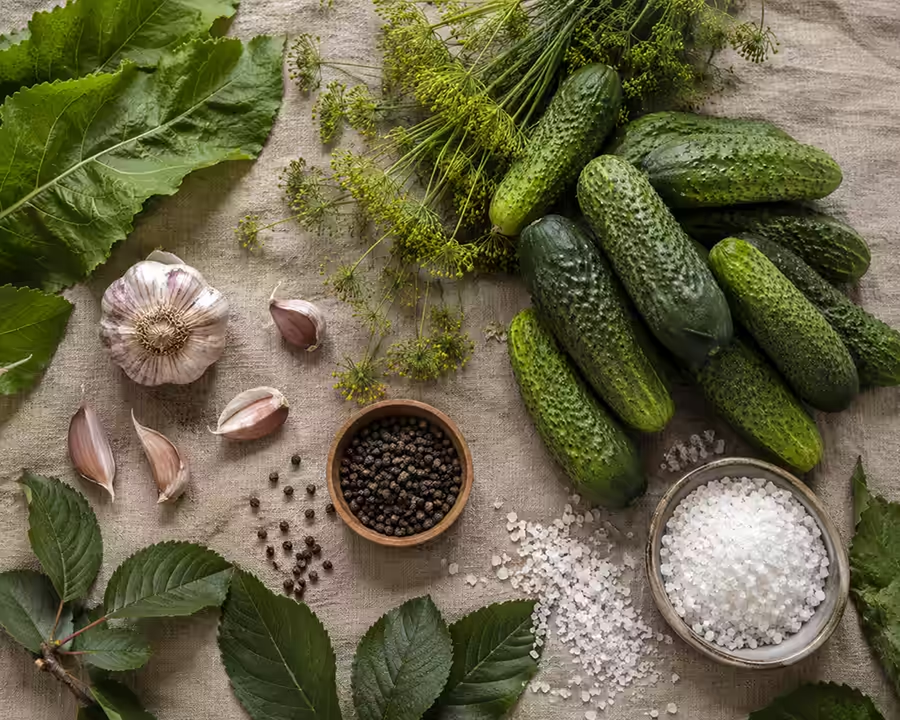
The crunch in lightly salted cucumbers isn’t a coincidence or the result of a “special recipe.” It’s the result of several specific technical decisions.
Soak them in ice water before pickling. This is the most effective and underrated step. Place the washed cucumbers in a bowl of cold water (ideally with ice cubes) for 1–2 hours. The cells become saturated with water, and the cucumbers become firm and crisp. This is especially important for cucumbers that have been sitting for a day after harvest.
Cut off both ends. It is in the tail end where the highest concentration of enzymes—pectinase and cellulase—is found; these enzymes break down the cell walls and make the cucumber soft. If you don’t trim these “risk zones,” lightly salted cucumbers lose their crunch much faster.
Use leaves that contain tannins. Oak, cherry, currant, or horseradish leaves contain tannins. They strengthen the pectin in the cell walls and physically prevent softening. Oak leaves are the most effective. Horseradish is the second most effective. If you have even just 2–3 cherry leaves, be sure to add them.
Don’t leave them out at room temperature for too long. At +20–22 °C, lightly salted fish will start to become noticeably softer and saltier after 4–5 hours. As soon as you’re satisfied with the taste, put them in the fridge right away.
Rock salt, non-iodized. Iodine breaks down pectin. It chemically weakens the bonds between cells and causes softening. Always use rock salt or sea salt without additives.
The correct brine concentration. 2–2.5% is 20–25 g of salt per 1 L of water. A weaker solution won’t salt the food properly, while a stronger one will “burn” the surface and make the skin limp.
Herbs and Spices: What They Are and Why We Use Them
Lightly salted cucumbers without herbs are simply cucumbers that have been lightly salted. The herbs give them their flavor, and each one plays its own role.
Dill with umbels is a must. It is the umbels (flowering dill) that provide the richest anise-dill aroma. Young greens work too, but the umbels have a stronger flavor.
Garlic is just as essential. Slice it into thin slices; don’t press it through a garlic press. Slices release their aroma more slowly—the flavor will be mild and even, not sharp.
Horseradish leaves—they add a sharp flavor and crunch. In addition to tannins, they have a slight bitterness that balances the saltiness.
Cherry or currant leaves—for tannins and a light fruity flavor.
Oak leaves are the most powerful natural “crunchy” agent. If you have any oak leaves, take 2–3 of them.
Peppercorns — add a spicy note without the heat.
Hot peppers—optional, for those who like it spicy.
Bay leaf—1–2 leaves in the jar—adds depth of flavor.
What not to add: cloves, cinnamon, and nutmeg—they’re too strong and overpower the fresh cucumber aroma.
Recipe 1: Lightly Salted Cucumbers in a Bag — Ready in 2 Hours
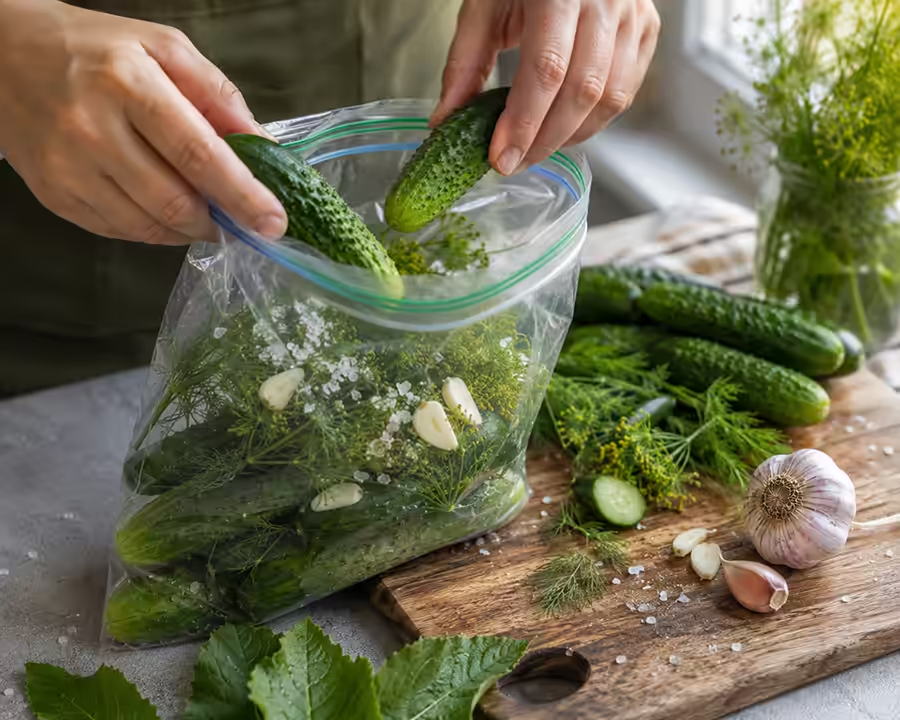
The fastest and easiest method. No jars, no stove, and very few dishes.
Why is the package so effective?
In the bag, the salt comes into direct contact with the surface of the cucumber without being diluted in a large amount of water. Osmosis occurs more quickly: the salt draws fluid out of the cucumber, and its own juice becomes a concentrated brine. The result is fully pickled cucumbers in 1.5–2 hours instead of 4–6 hours in a jar with cold brine.
Ingredients (per 1 kg of cucumbers)
- Pickling cucumbers — 1 kg
- Garlic — 4–5 large cloves
- Dill (umbrellas + greens) — a large bunch
- Horseradish leaves — 1–2 leaves
- Cherry or currant leaves — 3–4 (if available)
- Iodine-free rock salt — 1 heaping tablespoon (25–30 g)
- Sugar — 1 tsp (optional; softens the flavor)
- Black peppercorns — 6–8
- Hot pepper — a small piece (optional)
Step-by-Step Recipe
- Wash the cucumbers under running water, and scrub them with a brush or a stiff sponge. Soak them in cold water for 1–2 hours.
- Cut off the ends on both sides of each cucumber. If the cucumbers are longer than 12 cm, cut them in half lengthwise or make deep cuts along the sides with a knife.
- Peel the garlic and slice it into thin slices 2–3 mm thick.
- Tear the dill into large pieces by hand. Chop or tear the horseradish leaves. If you have cherry leaves, leave them whole.
- Use a sturdy zip-top bag, or place one bag inside another—just to be safe. Add the cucumbers, garlic, and all the herbs and leaves.
- Pour the salt and sugar directly into the bag. Close it, leaving a little air inside, and shake it well for a few seconds.
- Place the bag in a bowl or deep plate—just to be safe in case of a leak. Leave it at room temperature.
- After 45 minutes to 1 hour, shake the bag again. You’ll already be able to see some liquid inside.
- After 1.5–2 hours, check the taste: cut open one cucumber. It should be moderately salty throughout, fragrant, and firm.
- If you like the taste, take it out of the package and drain off any liquid that has accumulated. Serve immediately or store in a container in the refrigerator.
If it’s 30 °C or hotter outside, it’s best to put the bag in the refrigerator right away. Just extend the time to 3–4 hours.
Recipe 2: Lightly Salted Cucumbers in a Jar with Hot Brine
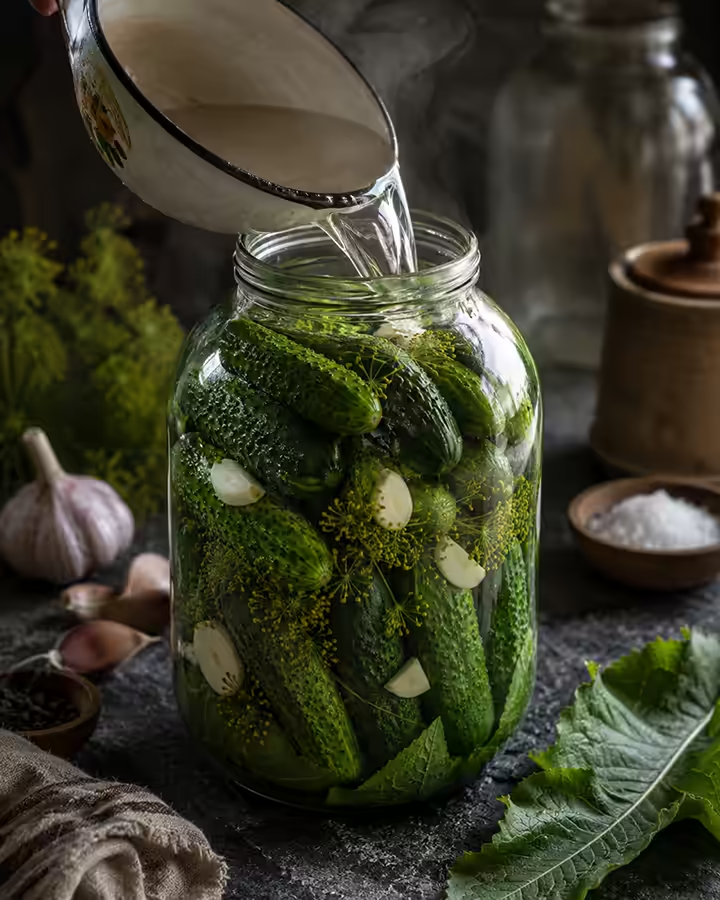
The classic method. More even salt distribution, a more traditional flavor. This is a good option if you want to make a larger batch all at once.
Ingredients (for a 3-liter jar, ~1.5–2 kg of cucumbers)
- Cucumbers — 1.5–2 kg (as many as will fit)
- Water — 1.5 liters
- Iodine-free rock salt — 2 level tablespoons (40–45 g)
- Garlic — 6–8 cloves
- Dill with umbels — a large bunch
- Horseradish leaves — 2 large leaves
- Cherry or oak leaves — 4–5 pieces
- Black peppercorns — 8–10
- Bay leaves — 2
- Hot pepper — 1–2 rings (optional)
Step-by-Step Recipe
- Wash the cucumbers and soak them in cold water for 1–2 hours. Cut off the ends.
- Place one horseradish leaf, half a bunch of cherry or oak leaves, a sprig of dill, and 3–4 cloves of garlic at the bottom of a clean 3-liter jar.
- Stack the cucumbers tightly in a vertical arrangement—stacking them vertically allows you to fit more in. Place garlic and herbs between the rows of cucumbers.
- Cover with a horseradish leaf, then add the remaining dill and garlic.
- Prepare the brine: bring 1.5 liters of water to a boil, dissolve the salt in it, and stir until completely dissolved. Let it cool to 70–80 °C—it’s hot, but no longer boiling. It’s easy to check: dip your finger in—you should be able to keep it there for 3–4 seconds, no more.
- Slowly pour the hot brine into the jar until it reaches the very top. Add the peppercorns and bay leaf.
- Cover the jar with a lid, but don’t screw it on. You can simply cover it with a saucer.
- Leave it at room temperature. Check the taste after 3–4 hours.
- Once you’re satisfied with the taste, screw the lid on and put it in the refrigerator.
If you want to have the finished product ready by the next day, pour cold brine over it and let it sit at room temperature for 8–12 hours. The flavor will be more consistent and deeper.
The “30-Minute Method”: For Those Who Can’t Wait at All
It’s not the traditional way to do it, but it comes in handy when guests are almost at the door.
Cut the cucumbers lengthwise into 4 pieces (quarters). Mix 1.5 tablespoons of salt, 1 teaspoon of sugar, and 1 tablespoon of 9% table vinegar (or the juice of half a lemon) in a bowl. Add the chopped garlic and dill. Add the cucumbers, stir, cover with a plate, and let sit for 20–30 minutes.
Result: The cucumbers will be tender, lightly salted, and slightly tangy. They’re less crunchy in this version—the vinegar and the short marinating time do their job. But as a quick appetizer—they’re just fine.
What Happens to a Cucumber Hour by Hour: A Chronology of the Pickling Process
Many people ask, “Why wait exactly 2 hours? Wouldn’t it be better to wait 6?” Here’s what actually happens.
| Time | What Happens Inside a Cucumber |
|---|---|
| 0–30 min | The salt begins to draw moisture from the surface. The cucumber is still raw on the inside. |
| 30–60 min | The top layer (2–3 mm) is salted. The aroma of garlic and dill is just beginning to come through. |
| 1–2 years | The brining process is halfway done. This is the best time to serve: the crunch is at its peak, and the salt is evenly distributed. |
| 3–4 years | The cucumber is fully salted. The flavor becomes more intense. It begins to soften slightly. |
| Ages 6–8 | A distinct salty flavor. The flesh is noticeably softer. It’s still tasty, but it doesn’t have the same crunch. |
| Ages 12 and up | The cucumbers are somewhere between lightly salted and salted. The acidity increases (fermentation begins). |
Conclusion: The “golden window” is 1.5–3 hours, depending on the size of the cucumber and the temperature. After that, place it in the refrigerator, which slows down all processes.
Common Mistakes and How to Correct Them
Soft cucumbers that aren’t crunchy. This is the most common problem. Check the following: Did you soak them in cold water? Did you cut off the ends? Is it the right variety? Did you leave them in a warm place for too long?
They’re too salty. You either added too much salt or let them sit too long. Solution: Rinse the cucumbers under cold water before serving. Or serve them with unsalted dishes—such as rice or porridge.
They aren’t salty enough, even after 3 hours. Most likely, there isn’t enough salt, or the cucumbers are too big. For larger cucumbers, increase the soaking time or make slits in them.
There’s no aroma—just saltiness. They skimped on the dill and garlic. Lightly salted foods need plenty of fresh herbs. No trick can save a bland taste.
The brine in the jar has turned cloudy. That’s normal! It’s a sign that lactic acid fermentation has begun—the same process that occurs when sauerkraut is made. If you like the taste of the cucumbers, just put them in the fridge.
Cucumbers that are slimy or stretchy are a sign of spoilage or of having been pickled for too long in a warm environment. Do not eat such cucumbers.
The skin has shriveled and become limp. The brine is too concentrated, or the salt is iodized. Plus, the cucumbers may not have been as fresh as they should have been.
Variations to Suit Different Tastes
The classic recipe is a basic, tried-and-true one. But if you want to mix things up:
With hot peppers and cilantro
Add 2–3 rings of fresh chili or 0.5 tsp of dried hot pepper flakes and 0.5 tsp of coriander seeds. It goes great with kebabs and grilled meat.
With ginger and lemon
5–6 thin slices of fresh ginger and 3–4 slices of lemon (peeled) — it’s unusual, but very refreshing. These cucumbers go well with fish and seafood.
With mustard
0.5 tsp of mustard seeds give the dish a rich and slightly spicy flavor. Mustard also prevents the bread from getting soggy—it keeps it naturally “crunchy.”
With mint and basil
5–6 fresh mint leaves and 3–4 basil leaves—a Mediterranean touch. The result is surprisingly refreshing. Serve chilled as a light appetizer.
Lightly Salted Zucchini
This method also works great for young zucchini up to 5 cm in diameter. Cut them into 1.5–2 cm rounds or in half. Salt: 1 tsp per 500 g. Time: 2–3 hours. The flavor is delicate, and the texture is tender.
Lightly Salted Tomatoes
Small cherry tomatoes, or “verški,” are pickled the same way—in a bag or jar—but you’ll need to prick the skin in several places with a toothpick. Let them sit for 3–4 hours in a warm place.
A Handy Table of Salt Ratios
| Number of cucumbers | Method in a bag (dry salt) | The Jar Method (brine for 1 liter of water) |
|---|---|---|
| 500 g | 12–15 g (1 heaping teaspoon) | 20 g |
| 1 kg | 25–30 g (1 heaping tablespoon) | 20 g |
| 1.5 kg | 35–40 g (1.5 tablespoons, not heaped) | 20 g per 1 L |
| 2 kg (3-liter jar) | — | 40–45 g per 1.5 L |
What to serve it with
Lightly salted cucumbers are one of those appetizers that look great anywhere summer is in the air.
Best combinations:
- New potatoes with dill and butter—a classic that needs no explanation.
- Shashlik, grilled meat, sausages—lightly salted ones are a refreshing treat between bites.
- Okroshka — a few slices of lightly salted cucumber instead of fresh cucumber give the soup more depth.
- Boiled or fried fish—especially pikeperch or crucian carp.
- Cold boiled pork or roasted pork belly.
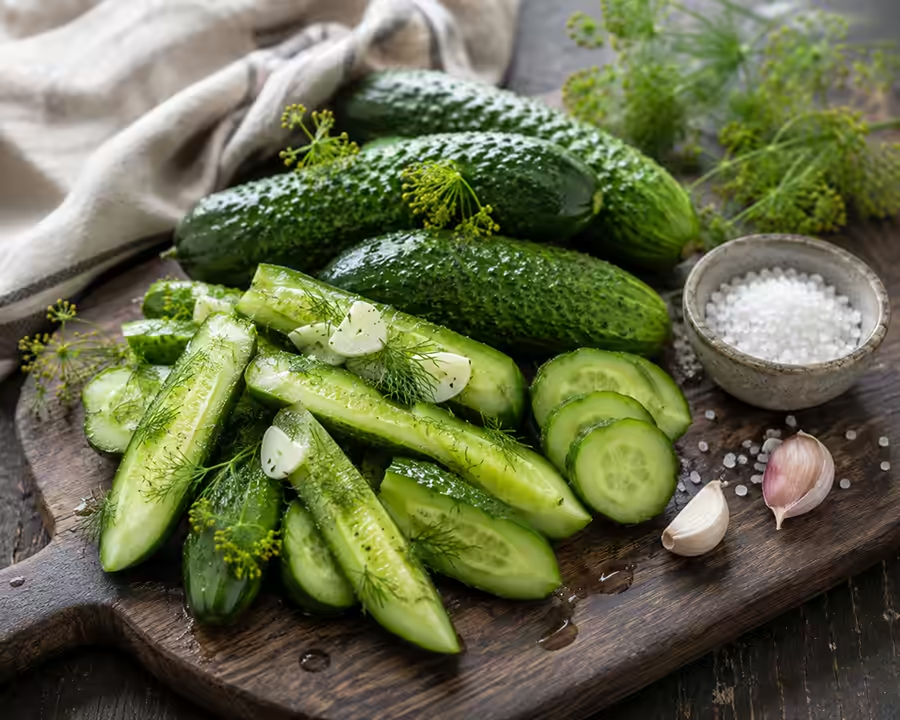
How to serve it beautifully. Arrange the cucumbers on a cutting board or a long platter. Place the remaining dill sprigs and garlic slices between them. If you have dill umbels, place them on top for decoration. A drop of unrefined sunflower oil and a pinch of coarse salt—and it’s ready.
Storage: How Long Do Lightly Salted Pickles Last?
Lightly salted cucumbers are meant to be eaten right away. But if you’ve made a batch to keep on hand:
- In the refrigerator, in a sealed container or jar—2–3 days for optimal flavor.
- By the 4th or 5th day, the flavor becomes more intense and more sour—it’s somewhere “between lightly salted and pickled.” You can still eat it, but the texture isn’t quite the same.
- If you want to “pause” the flavor at its current level, drain the brine and place the cucumbers in a dry container. The pickling process will slow down.
- Do not freeze them. Once thawed, the cucumbers will become watery and fall apart—their cellular structure is destroyed during freezing.
The best approach is to prepare small batches and eat them fresh.
Frequently Asked Questions
Is it possible to make lightly salted cucumbers without dill? Technically, yes. But the flavor won’t be the same at all. Dill is the main flavoring ingredient in lightly salted cucumbers. If you don’t have dill, you can use fresh parsley and garlic instead—it’ll turn out interesting and delicious in its own way, but it’ll be a different dish altogether.
What is the difference between the bag method and the jar method? When using the bag method, the cucumbers are ready in just 1.5–2 hours, because the salt acts directly on the surface without being diluted in a large amount of liquid. In a jar with hot brine, they’re ready in 3–4 hours; with cold brine, in 8–12 hours. The jar method yields a more uniform and “classic” flavor, while the bag method is faster and simpler.
Can I use “Extra” fine table salt instead of rock salt? It’s not recommended. Fine salt dissolves very quickly and unevenly—you can easily oversalt the surface. In addition, most “Extra” brands contain anti-caking agents that can affect the texture. Use rock salt or sea salt without additives and without iodine.
Why do my lightly salted cucumbers turn out soft, even though I seem to be doing everything right? The most likely reason is the variety. If you use a salad cucumber or a greenhouse cucumber, no method will make them crunchy. Also check: did you soak them in cold water before pickling, did you trim the ends, and did you leave them at room temperature for too long? And once again—use only rock salt without iodine.
How long do lightly salted cucumbers last in the refrigerator? 2–3 days while retaining their optimal flavor. By the 4th–5th day, they become more sour and softer—you can still eat them, but they’re not as fresh. After the fifth day, it’s best not to take any chances. If you’ve made too many, drain the brine; this will slow down the process a bit.
Are lightly salted cucumbers suitable for children? Yes, they are one of the safest pickled foods for children over 1.5–2 years old—no vinegar, no preservatives, and no artificial additives. Just reduce the amount of garlic and leave out the hot peppers. For children under 2 years old, it’s best to consult your pediatrician.