
Fireweed has long since ceased to be merely an interesting wild herb known only to enthusiasts of traditional beverages. Today, it is one of the most popular wild plants sought after by those looking for a natural alternative to regular tea, wanting to try fermenting the leaves at home, or simply seeking to better understand the properties of local herbs.
Content
The popularity of fireweed tea can be attributed to several factors. It is caffeine-free, has a mild flavor, is suitable for evening consumption, and is associated with the long-standing tradition of preparing fermented herbal beverages. For many people, fireweed tea is not just a beverage, but also part of the culture of home preservation, a return to local plants, and a natural way of life.
The term “Ivan-chai” most often refers to narrow-leaved fireweed—a perennial herb whose leaves are used to make a fragrant herbal infusion. This plant may be known by different names in various regions, but “Ivan-chai” has become the most widely recognized name in everyday use. The plant is easily recognizable by its long, narrow leaves, tall, straight stem, and bright pink-purple flowers.
This plant is valued not only as a base for homemade tea. In some traditions, the young shoots, leaves, and flowers were also used in cooking. That is why interest in fireweed is growing today not only among lovers of herbal beverages, but also among gardeners, foragers, advocates of natural foods, and food bloggers.
In this article, we’ll explore what fireweed is, where it grows, when and how to harvest it, how to grow it in your garden, how to ferment, dry, and brew it, where it’s used, what its benefits are, what precautions to take, and which herbs it can be combined with.
What is fireweed and what does this herb look like?
Fireweed is a perennial plant that adapts well to open areas and grows quickly in sunny spots. It is most commonly found in forest glades, forest edges, clearings, meadows, burnt areas, and other places without dense shade. Because of this, fireweed thrives in its natural habitat and often grows in large clusters.
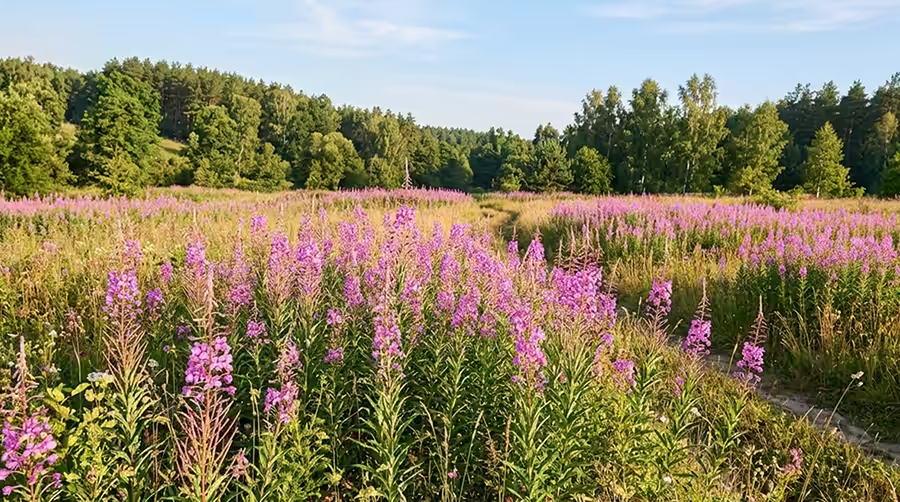
Visually, the plant is quite distinctive. It has a straight stem, elongated leaves with pointed tips, and beautiful pink or purple flowers. Fireweed is very noticeable during its blooming period, which is why many people first notice it at this time. However, it is not the flowers but the leaves that are most prized for making tea.
Fireweed leaves are used as the primary raw material for drying and fermentation. It is from these leaves that a beverage is produced that is prized for its mild flavor, pleasant aroma, and lack of caffeine. If the leaves are simply dried, they produce a light herbal infusion. However, if they are fermented properly, the flavor becomes much deeper, rounder, and more similar to a classic tea beverage.
Many people enjoy fireweed tea precisely because it isn’t overly bitter. It has a milder flavor profile than black tea and a gentler effect than caffeinated beverages. That’s why it’s often chosen for a relaxing evening tea or as a daily beverage for the whole family.
It’s worth noting that the current interest in fireweed is based on several factors. First, it’s a beautiful and readily available wild plant. Second, it’s suitable for home preservation. Third, it can be used to make a truly delicious beverage. And fourth, a whole culture of natural tea drinking has developed around it, appealing to those seeking simple and natural alternatives to store-bought products.
Where does fireweed grow?
Fireweed grows best in open, well-lit areas. It thrives in sunny, open spaces and natural habitats without heavy shade. That’s why it makes little sense to look for it in a dense, dark forest. Instead, the plant is most often found in areas with plenty of light and relatively open space for growth.
The most common habitats for fireweed are forest glades, forest edges, clearings, old logging sites, meadows, slopes, forest strips, and areas affected by fires or other natural disturbances. In such places, the plant often forms dense thickets. When fireweed blooms, these areas look very striking, as the entire area is covered in pink and purple flowers.
When harvesting, it is important not only to find fireweed but also to assess the quality of the location. You should avoid harvesting the plant near highways, major roads, industrial areas, landfills, or large agricultural fields where chemicals may be heavily used. Any medicinal or edible herb is only beneficial if it is harvested in a clean environment.
It is also advisable to avoid areas with obvious signs of contamination. If there are drainage ditches, construction debris, industrial warehouses, or other hazards nearby, it is best to look for a different location. For tea, it is not only the right plant that matters, but also the right environment in which it was grown.
Here’s a practical tip: if you want to harvest truly high-quality fireweed, choose areas that you yourself would consider suitable for gathering edible wild plants. It should be a relatively clean, natural area, far from heavy traffic and industrial pollution.
When to harvest fireweed
Fireweed is most often harvested in the summer—during its active growth and flowering period. The exact timing depends on the region, elevation, weather, and the season in general, but in most cases, this is the period from June to August. It is during this time that the plant is most visible, and the leaves are usually of good quality for harvesting.
Leaves are typically harvested for tea. They should be picked when the plant has fully developed but the leaves have not yet become too tough, dry, or damaged. If harvesting is delayed, the quality of the raw material declines. Leaves that are too old may have a less pleasant taste and be less suitable for fermentation.
It’s best to harvest fireweed in dry weather. The best time is on a rain-free day, when the morning dew has already dried from the leaves. Moist raw material doesn’t store as well, can spoil more quickly, and creates unnecessary difficulties during the subsequent drying and fermentation processes. That’s why many people plan their harvest for a clear, warm day.
It is not advisable to pick leaves immediately after rain. Even if the plant looks fine on the outside, excess moisture can negatively affect the quality of the resulting tea. If you want to achieve good results after fermentation, it is best not to rush and wait for normal conditions.
Another rule is not to take all the vegetation from a single area. You should harvest in moderation, carefully, and without harming the natural population. You shouldn’t pull the plant out by the roots if you only need the leaves. It’s enough to gently pick some of the leaves, allowing the plant to continue growing.
How to Harvest Fireweed Properly
Proper harvesting of fireweed begins with identifying the plant. If you’re not sure that you’re dealing with narrow-leaved fireweed, it’s best not to take any chances. Harvesting wild herbs always requires caution, as mistakes can be dangerous. Therefore, beginners should first familiarize themselves thoroughly with the plant’s physical characteristics or harvest it alongside someone with practical experience.
Once you’ve identified the right location and plant, it’s important to choose the right time to harvest. It’s best to do this during the day, when the leaves are dry, clean, and free of dew. Healthy, undamaged leaves without spots, signs of rot, or pests are suitable for harvesting. Anything that looks suspicious or too rough should be set aside immediately.
Leaves are usually harvested by hand. This should be done carefully, without sudden movements, taking care not to break the stem or damage the plant. You should only take a portion of the leaves, rather than completely “plucking” each one. This approach helps preserve the natural habitat and prevents the harvesting site from being depleted.
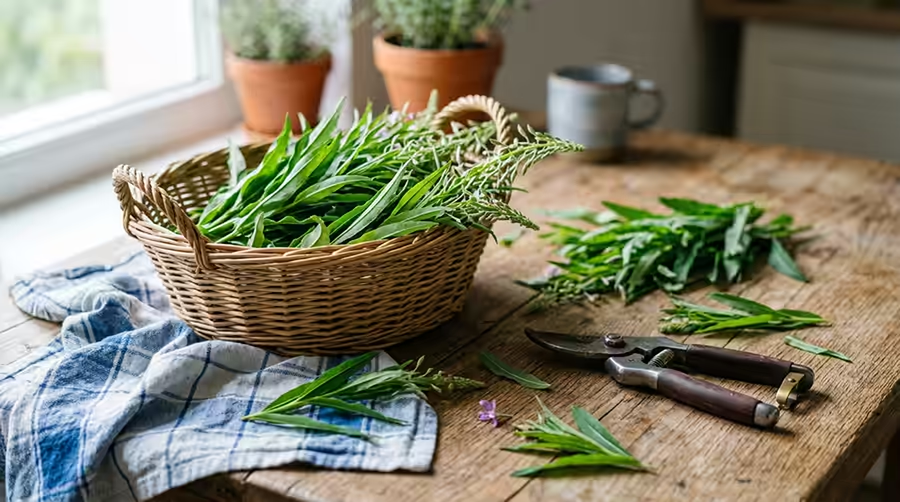
Don’t mix high-quality raw materials with unwanted debris in the same bag. It’s best to sort the leaves as you harvest them, removing tough stems, dirty parts, and unwanted plants. This will make further processing at home much easier.
For transport, it’s best to use a basket, a cloth bag, or another container where the raw materials won’t “sweat.” Plastic bags aren’t the best choice, especially in warm weather, because the leaves inside them heat up quickly and may start to spoil before fermentation even begins.
How to Grow Fireweed in Your Garden
Many people would prefer not to go out into nature every year to forage for fireweed, but rather to grow it themselves. This is entirely possible if you have a suitable spot on your property. Growing fireweed at home is convenient because you have better control over the growing conditions, the purity of the raw material, and the timing of the harvest.
A sunny spot or light partial shade without heavy shading is best for fireweed. The plant thrives in open spaces, with good light and adequate moisture. The soil should ideally be loose, fairly fertile, and not waterlogged. If water pools, this is not the best environment for growing it.
Fireweed can be propagated by seed or by dividing the rhizomes. If you already have a mature plant or access to planting material, dividing the rhizomes is often the simpler and more practical method. Seeds work too, but they require a little more patience and attention at the start.
When planting, it’s important to keep in mind right away that fireweed is a fairly vigorous plant. It can spread quickly, especially if the conditions are right. That’s why it’s best to set aside a separate area for it, rather than planting it haphazardly among delicate plants that are easily overgrown by more vigorous species.
If the plot is small, it’s a good idea to keep the plant’s growth in check. To do this, you can monitor self-seeding, periodically limit the spread of rhizomes, and remove excess plants in a timely manner. This approach will help keep your garden tidy and prevent fireweed from becoming an invasive “neighbor.”
This crop is not particularly demanding to care for. If the location is chosen wisely, the plant thrives without the need for complex agricultural techniques. The main tasks are to monitor moisture levels during dry periods, control the spread of the plant, and harvest the leaves in a timely manner. Everything else usually does not require excessive effort.
For those who grow fireweed specifically for making tea at home, it’s important to consider how easy it is to harvest. It’s best when the planting is arranged so that the plants are easy to reach, and the leaves can be harvested quickly, neatly, and without damaging the entire plot. In this way, fireweed becomes not just a wild plant, but a truly useful crop for home harvesting.
How to prepare fireweed for fermentation
Once the leaves have been harvested, they should not be left untreated for long. The sooner you begin processing them, the better the result will be. First, the leaves need to be sorted. At this stage, remove any coarse parts, damaged leaves, foreign matter, and dry or soiled pieces.
After sorting, the leaves are usually withered. To do this, they are spread out in a thin layer in a shaded, well-ventilated area. Withering is necessary to soften the leaves, allow them to lose some moisture, and prevent them from breaking during further processing. This is a very important step, as it helps prepare the raw material for fermentation.
Do not overdry the leaves at this stage. They should remain pliable, not crumbly. If the leaves are too dry, proper fermentation may not occur. If they are too moist, there is a risk of undesirable processes and spoilage of the raw material.
After the leaves have been dried, they need to be crushed or twisted. The purpose of this step is to damage the leaf’s structure so that it begins to release juice. This is what triggers the fermentation process. You can crush the leaves with your hands, twist them between your palms, or process them in any other convenient way—the main thing is to alter their structure.
As a result, the leaves become darker, softer, and more aromatic. It is at this stage that the future tea begins to develop its character. If the processing is done properly, the subsequent fermentation proceeds much more smoothly.
How to brew fireweed tea at home
Fermentation is the key process that transforms ordinary leaves into fragrant tea. The prepared raw material is placed in a container or left in a compact mass, where it remains in a warm environment for a certain period of time. The exact duration may vary, as it depends on temperature, humidity, the amount of raw material, and the degree of leaf processing.
The main indicator during fermentation is the aroma. At first, the leaves have a typical green, grassy scent. Over time, it becomes deeper, softer, and takes on a fruity-herbal character. It is the emergence of this pleasant, rich aroma that indicates the process is proceeding correctly.
It is very important not to let the raw materials ferment for too long. If fermentation takes too long, the aroma can deteriorate, and the flavor of the resulting tea can lose its appeal. If, on the other hand, the process is stopped too early, the beverage will turn out weak and less distinctive. That is why fermentation requires not so much a strict adherence to a schedule as careful observation of the condition of the leaves.
At home, a lot depends on the local environment. The process may proceed more quickly in one room and more slowly in another. Therefore, there is no one-size-fits-all timeframe. Your best guides here are your own experience, attentiveness, and monitoring the scent.
For your first attempt, it’s best to make a small batch. This makes it easier to understand the process, assess any changes in smell, and avoid wasting a large amount of ingredients. As you gain experience, you can increase the quantity.
How to dry and store fireweed tea
After fermentation, the raw material must be dried. This is necessary to halt the fermentation process, preserve the aroma, and make the tea suitable for long-term storage. It can be dried in an oven, an electric dryer, or using another gentle method that allows for temperature control.
The main rule is not to over-dry the leaves. If the leaves develop a burnt smell, the tea’s flavor will be ruined. Dry them gradually and carefully, keeping a close eye on the condition of the leaves. The finished tea should be dry but not charred, and fragrant but not overpowering.
After drying, the tea should be cooled and transferred to a clean, dry container. Glass jars with lids, metal containers, or other vessels that provide good protection against moisture and foreign odors are best suited for this purpose. It is important that the container be dry and that the storage area be dark and cool.
You shouldn’t store fireweed tea near strongly scented spices, coffee, or other products that easily impart their aroma. Fermented tea absorbs odors easily, and this can impair its flavor. You should also make sure no moisture builds up in the jar.
When properly dried and stored, fireweed tea can retain its aroma and pleasant taste for a long time. But like any natural product, it is best enjoyed when it is fresh, properly harvested, and not stored for years on end.
How to Brew Fireweed Tea Properly
Brewing fireweed tea is a simple process, but it determines just how well the drink’s flavor will come through. Most often, people use one or two teaspoons of tea per cup, or a little more for a small teapot. If you prefer a milder flavor, use less tea. If you want a stronger brew, use a little more.
It’s best to use hot water, but not water that’s too harsh. Water that’s been boiled for too long can sometimes make the flavor more bitter. The best results are often achieved when the water is very hot but not “heavy” from prolonged boiling.
It’s usually best to steep fireweed tea with the lid on. The steeping time depends on personal taste, but in most cases, a few minutes are enough for the tea to become fragrant and full-bodied. If you let it steep too long, the flavor may become too strong. If you don’t steep it long enough, it will be too light.
Many people appreciate that fireweed tea can be steeped multiple times. If the leaves are of high quality, the second and even third infusions can also be enjoyable. The flavor changes, becoming milder, but it doesn’t disappear immediately.
There are many ways to serve fireweed tea. During the cold season, it’s nice to drink it hot, like a cozy homemade beverage. In warmer weather, it’s best served chilled, like a light herbal infusion. If desired, you can add honey, lemon, berries, or a few aromatic herbs to your cup, but truly high-quality fermented fireweed tea is delicious on its own.
Where is fireweed used?
The most common use for fireweed is making a homemade herbal beverage. This is how it is best known. People drink it on weekdays, serve it to guests, prepare it for evening tea parties, and use it as an alternative to black or green tea.
However, fireweed isn’t just used for tea. In some culinary traditions, the young leaves and shoots are used in cooking. They can be added to salads, vegetable dishes, soups, or seasonal green mixes. The flowers are also sometimes used as an edible or decorative garnish.
Fireweed plays a special role in the tradition of home-preserving. For many people, it’s not just a drink, but a seasonal ritual: gathering the leaves, wilting them, crushing them, fermenting them, drying them, and then enjoying their homemade tea all winter long. There’s a special value in this that’s hard to compare to store-bought products.
Fireweed tea is also frequently included in gift sets of natural teas, homemade herbal blends, and local artisanal products. It aligns well with the concepts of naturalness, handcrafted quality, and local sourcing. That is why it is increasingly found not only in jars at home but also in stores selling farm-fresh or artisanal goods.
What is fireweed used for?
For most people, fireweed tea is first and foremost a mild, caffeine-free beverage for daily consumption. It is chosen by those who want to cut back on coffee or traditional tea in their diet. It is perfect for a relaxing evening, family tea time, or simply as a pleasant drink without any strong stimulating effects.
Another reason for its popularity is its homely, down-to-earth nature. Ivan tea offers a chance to return to familiar, locally sourced products made by hand. For some, it’s part of a natural lifestyle. For others, it’s an economical alternative to store-bought teas. And for still others, it’s a hobby involving herb gathering and home brewing.
Fireweed is also used to add variety to your home tea collection. If you already have mint, lemon balm, thyme, or other herbs at home, fireweed easily becomes another ingredient in your custom blends. It has a mild flavor, so it works well as a base for herbal blends.
For owners of food websites and blogs, fireweed tea is also interesting because it combines several topics at once: wild plants, seasonal harvesting, natural beverages, home fermentation, local traditions, healthy living, and home cooking. That is why the topic of fireweed tea has good SEO potential and consistent audience interest.
The Benefits of Fireweed Tea
When discussing the benefits of fireweed tea, the first thing to mention is that it is a caffeine-free herbal beverage. For many people, this is already a major advantage. You can drink it in the evening without worrying about the overstimulating effects that can follow coffee or strong black tea.
Another advantage is its mild flavor and pleasant taste. Many people choose fireweed tea simply because it tastes good. This is important because the benefits of a beverage often lie not only in its ingredients, but also in the fact that people actually want to drink it regularly.
In folk tradition, fireweed tea has long been associated with peace, comfort, and a holistic approach to wellness. It is often seen as a drink for rejuvenation, gentle daily consumption, and self-care at home. It is precisely this image that has sustained interest in it over the years.
Fireweed tea is also valued for the fact that it offers the feel of a natural product without complex ingredients, artificial flavors, or unnecessary additives. If the raw materials are high-quality and the tea is properly fermented, it is a truly pleasant and satisfying beverage.
At the same time, it’s important not to overstate its benefits. Fireweed tea shouldn’t be viewed as a magic cure-all. It’s best to think of it as a high-quality herbal beverage with a good reputation, an interesting history of use, and a pleasant taste.
Warnings and Possible Contraindications
Despite the popularity of fireweed tea, it should be consumed in moderation. Any herbal beverage, especially when consumed regularly and in large quantities, should be enjoyed in moderation. If your body isn’t used to such infusions, it’s best to start with small portions.
People with chronic conditions, those who take medication regularly, as well as pregnant and breastfeeding women, should be especially cautious. In such cases, it is best to consult a doctor before consuming any herbal beverages. This is a standard practice that helps prevent adverse reactions.
It’s also important to keep individual tolerance in mind. What works for one person may not necessarily be well tolerated by another. If you experience discomfort after consumption, it’s best to take a break and assess your body’s reaction.
Another important consideration is the quality of the raw materials. Poor-quality or improperly harvested fireweed can cause more harm than good. If the leaves were picked in a dirty area, dried improperly, or stored in damp conditions, the product should not be used.
This does not mean that fireweed tea is dangerous. It simply means that even with natural herbs, one should exercise caution, avoid extremes, and not blindly believe in their universal benefits.
Fireweed tea with other herbs
One of the most appealing benefits of fireweed tea is its ability to blend well with other herbs. It has a fairly mild and neutral flavor, making it a good base for homemade tea blends. This opens up many opportunities for experimentation.
One of the most popular options is fireweed tea with mint. This drink has a fresher, lighter taste. The mint nicely complements the mellow flavor of the fermented leaves and makes the tea especially enjoyable during the warmer months.
Another great option is fireweed tea with lemon balm. This combination gives the drink an even calmer, milder flavor. It’s a good choice for an evening tea break when you’re in the mood for something delicate and not too strong.
Fireweed tea with thyme sounds quite interesting. The flavor becomes deeper, spicier, and more distinctive. This version is often popular with those who prefer more distinctive herbal infusions.
For floral arrangements, try combining it with rose petals, fireweed flowers, or other delicate, fragrant ingredients. This gives the drink a mellower taste and a more refined aroma. These blends work well as gift teas or “mood-setting” teas.
You can also serve fireweed tea with berries, lemon, or honey already in the cup. This doesn’t necessarily change the tea itself, but it does make the flavor profile more interesting. The key is not to overload the drink with too many additions, so as not to lose the fireweed tea’s unique character.
Conclusion
Fireweed isn’t just a pretty wildflower; it’s a truly fascinating plant with great practical potential. You can forage for it in the wild, grow it in your own garden, ferment it at home, brew it as a daily beverage, and combine it with other herbs.
Its popularity is entirely understandable. Fireweed tea is caffeine-free, has a pleasant taste, is well-suited for home brewing, and aligns with the current interest in natural products. For many people, it’s not just tea, but part of a slower, more mindful, and more natural way of life.
At the same time, the best approach to fireweed tea is a calm and sensible one. It should be appreciated for its taste, aroma, tradition, and versatility, but one shouldn’t expect it to work magic. If harvested properly, prepared carefully, and consumed in moderation, fireweed tea can be a very pleasant addition to your daily diet.