
Matzoni — is a traditional sour milk product, well-known in the Armenian and Georgian kitchens. It is valued for its creamy texture, pleasant acidity, simple preparation and versatility in cooking. If you want to learn how to make Caucasian yogurt, how to prepare it, how to use it, how to incorporate it into dishes, this thorough explanation will help to break it down in detail and without confusion.
Content
At first glance, matzoni resembles natural yogurt, but in a homely kitchen it has its unique niche. It is used as a stand-alone dish, a base for cold soups, sauces, dressings, and desserts. Due to this, Caucasian yogurt fits perfectly both for everyday menus and for seasonal summer recipes when something light, refreshing, and quenching is desired.
Another reason for the popularity of Caucasian yogurt — simplicity of preparation. It does not require a complicated set of ingredients or expensive equipment. In most home recipes, you only need milk, a starter culture, and a warm place for fermentation. That is why Caucasian yogurt can be made regularly at home, just like traditional yogurt or other sour milk products.
What is matzoni
Matzoni, or matsun, — is a fermented dairy product, typical for the cuisines of the Caucasus. Its consistency can range from thin and creamy to quite thick, depending on the milk, yogurt starter, and the time of fermentation. Its taste is mild, slightly tangy, fresh, without excessive sourness, so it is preferred even by those who do not particularly love kefir.
Caucasian yogurt is quite different from regular yogurt, having a thicker consistency and a rich taste. However, its primary characteristic lies not only in its flavor but also in its creamy texture. Caucasian yogurt can be consumed with a spoon, drunk, mixed with greens, added to dishes, used in dressings, or even cooked as a base for light soups.
In traditional cuisine, Caucasian yogurt is often included in everyday dishes. It is served with snacks, used in cold soups, added to meat dishes, and made into sauces and appetizers. Its rich creaminess has made it a popular product far beyond the borders of the Caucasus.
What flavor does Caucasian yogurt have?
The flavor of the yogurt can be described as mild, slightly sour, with a gentle natural acidity. It is not as tangy as some types of kefir, nor is it as neutral as typical commercial thick yogurt without additives. When preparing Caucasian yogurt correctly, it comes out soft, creamy, and very versatile in dishes.
Such a flavor of Caucasian yogurt works well in cold dishes and in many salad recipes. It can be served with berries and honey or mixed with spices and herbs. The same product can easily transition into a rich dip or be used as a sauce for meat or vegetables.
The texture of the yogurt also heavily depends on the method of preparation. If you use fattier milk and good starter culture, the product will be thicker. If you use less rich base or shorten the fermentation time, the yogurt can be lighter, but this does not mean it will be worse — it will simply work better for dressings, soups, and sauces.
Yogurt in domestic conditions
Domestic yogurt is valued for its simple technology. The basic principle is this: milk is heated, cooled to a warm state, a starter culture is added, and then left in a warm place until thickened. It sounds simple, but there are several important nuances that can affect the final result.

The best for homemade preparation is to use whole milk. It is desirable that it be high-quality, fresh, and free from foreign impurities. If you are using homemade or farm milk, it should definitely be well-filtered. If you are using store-bought pasteurized milk, it is also better to choose more cream.
For the starter, you can take ready-made Caucasian yogurt, fresh thick sour cream, a natural sour milk product without additives, or a special starter. It is important that it is fresh and active. The very starter will largely determine whether the product will be thick and homogeneous.
Classic recipe for matsoni
Ingredients:
- 1 liter of milk
- 1–2 tablespoons of starter
- clean glass jar or a small number of small jars
- towel or blanket for wrapping
Preparation steps:
- Pour the milk into a saucepan and bring it to a boil or good steaming.
- Remove the saucepan from the heat and let the milk cool down.
- Wait until the temperature becomes warm, but not hot. Ideally, this is about 40–45°C.
- Separately mix the starter with a small amount of warm milk so that it is homogeneous.
- Add the starter to the remaining milk and mix well.
- Pour the mixture into a clean jar or divide it into small jars.
- Cover with a lid or wrap it in a blanket.
- Keep the jar wrapped in a warm place.
- Leave for 6–10 hours, without moving it.
- When the matsoni thickens, place it in the refrigerator for stabilization of the texture.
After cooling, Caucasian yogurt becomes thicker and creamier in taste. If everything is done correctly, you will get a soft mild product with a pleasant creamy structure.
How to make thick Caucasian yogurt
One of the simplest goals during homemade preparation is to obtain thick Caucasian yogurt. To achieve this, it is important to consider a number of factors. The first is the quality and fat content of the milk. The fatter the milk, the thicker the resulting consistency is usually.
Another important aspect is temperature. If you add a culture to hot milk, beneficial cultures may fail to survive. If the milk is too cold, the fermentation process will be slowed down or may even stop altogether. It’s best to use a kitchen thermometer, but if you don’t have one, aim for a very warm but not hot state.
The third factor is the time for fermentation. Caucasian yogurt doesn’t like to be rushed; it takes its time. The slower the conditions, the greater the chances of getting a good thick texture.
There’s also the importance of the starter culture. Fresh, homemade or active natural products generally work better than those that have been sitting in the fridge for a while. If you want to make Caucasian yogurt regularly, you might keep some of the previous product for the next batch.
Typical obstacles during preparation
Even a simple recipe may not succeed on the first try if you don’t account for basic nuances. Here are the most common obstacles:
- Adding the culture to hot milk.
- Using some old or non-fresh starter culture.
- Putting it in a cold place for fermentation.
- Short incubation time.
- Thin or poorly prepared yogurt.
- Try to check the product periodically.
If the Caucasian yogurt comes out not very thick, it’s worth noting that this is usually not a problem. After cooling, the texture often becomes firmer. In addition, even thinner varieties can be wonderfully suited for sauces, salad dressings, cold soups, smoothies, and ice cream.
The texture of yogurt varies depending on the starter culture used.
This is one of the most common questions. When people feel the yogurt, they usually refer to natural homemade yogurt. However, in culinary tradition, it is a unique product with its own history, distinct character, and characteristics of preparation.
Yogurt in many countries is usually associated with snacks or desserts. Caucasian yogurt is often used not only in sweets but also in savory dishes: sauces, marinades, cold soups, and snacks. This is where its universality really shines.
To simplify, one can say this: matsoni – it’s a yogurt base that works well as a standalone product and as an ingredient for a large number of homemade recipes.
How matsoni differs from kefir
Kefir is usually thicker and has a more pronounced sour taste. Matsoni is often creamier, softer, and more delicate in texture. It is easier to eat with a spoon, can be used in thick sauces and added to dough.
Another difference is the bacterial culture. Kefir often uses grains, while Caucasian yogurt is a more sophisticated product. It can be served as a separate dish, or it can be transformed into a base for various recipes.
How to eat matsoni
The simplest way is to eat Caucasian yogurt just chilled. It pairs well with breakfast, a light evening meal, or a picnic. If you prefer sweeter flavors, add honey, berries, bananas, fruits, nuts, or spices.
For the salty variant, you can mix it with herbs, garlic, cucumbers, peppers, or spices. In such a form, it serves as either a light snack or a base for a sauce for vegetables, meat, potatoes, or lavash.
In the Caucasian yogurt spectrum, it especially stands out in a dairy-like form. Optionally, it can be thinned with water if you prefer more liquid consistency. It’s a good option for a light summer ration.
Where to use matsoni
Caucasian yogurt is one of the most versatile yogurt products in the domestic kitchen, which is why it has very wide applicability. Below are the best ideas for its use.
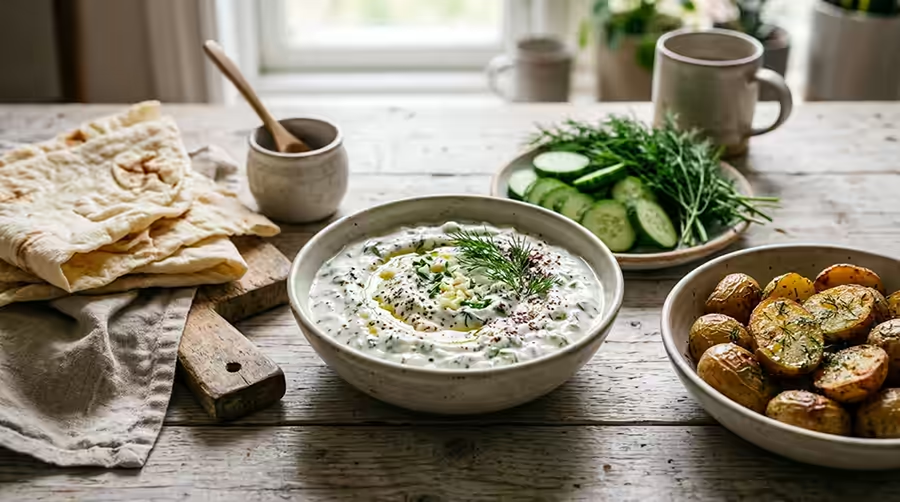
1. Sauces
Matsoni is ideally suited for sauces. It pairs well with herbs, garlic, cilantro, onions, mint, dill, lemon juice, and spices. Matsoni sauce can be served with meat, fish, potatoes, vegetables, baked dishes, and lavash.
2. Salad dressings
Whenever you want a lighter alternative to mayonnaise or creamy dressings, Caucasian yogurt makes an excellent base for dressings. It adds a nice creamy texture to salads, but does not overpower the dish.
3. Cold soups
Delicious summer soups are made with a basic dough. They can be used for home snacks, cold soups with vegetables and greens, or for dishes in a Caucasian style with rice and herbs.
4. Extraction
The dough works well with filling. It can be added with cheese, minced meat, mushrooms, pears, berries, cakes, and khachapuri. The acid base makes the dough softer and lighter.
5. Desserts
Caucasian yogurt easily transforms into a simple dessert. It is enough to mix it with berries, honey, nuts, or fruits.
6. Smoothies and shakes
You can add bananas, plums, apricots, or peaches to the smoothie. Such mixes turn out thicker, lighter, and silky.
Recipes using dough
Sauce with dough and greens
Ingredients:
- 200 g of dough
- 2 garlic cloves
- a pinch of green
- 1 teaspoon of lemon juice
- salt
- pepper
- a splash of olive oil to taste
Preparation:
Grind the green, add the garlic, mix it all with the dough, add lemon juice, salt, and pepper. If desired, include a splash of olive oil. The sauce goes wonderfully with grilled meat, vegetables, potatoes, and homemade bread.
Cold soup with dough
Ingredients:
- 400 ml of dough
- 1-2 cucumbers
- green
- salt
- 1 boiled egg
- a splash of cold water to taste
Preparation:
Cut the cucumbers into small cubes, grind the green, grate the egg or chop it finely. Mix everything with the dough, salt, and if necessary, add a splash of water. Before serving, chill well.
Dressing for salad
Ingredients:
- 4 tablespoons of dough
- 1 teaspoon of mustard
- salt
- pepper
- lemon juice
- green
Preparation:
Mix all ingredients to homogeneity. Such dressing goes well with salads with vegetables, radishes, greens, beets, cucumbers, or cooked vegetables.
Dessert with dough
Ingredients:
- 200 g of dough
- 1 teaspoon of honey
- berries or fruits
- a handful of nuts
Preparation:
Place Caucasian yogurt in a bowl, add honey, top with berries or fruits, sprinkle with nuts. This is a simple and tasty dessert without complicated preparation.
Pancakes with yogurt
Ingredients:
- 250 ml yogurt
- 1 egg
- 2–3 tablespoons sugar
- 180–200 g flour
- 1 teaspoon soda
- a pinch of salt
Preparation:
Mix the egg, sugar, salt, and Caucasian yogurt. Add the flour and soda, mix until you have a thick batter. Fry the pancakes in a medium heat until they turn golden brown. They come out soft, tender, and can be served with sour cream, honey, or jam.
Usage of yogurt
Yogurt is valued as a natural fermented dairy product that is well integrated into a daily diet. It is often chosen by those who want to enrich their meal with homemade acidic dishes. It is versatile as it can also be a standalone product and a base for a large number of recipes.
Another advantage is simple storage. If you make it at home, you clearly control which ingredients you use. This is especially convenient for people who prefer natural homemade food without unnecessary additives.
Caucasian yogurt goes well with light dishes, summer menus, pancakes, casseroles, and homemade sauces. It can be adapted to different tastes: make it thicker or thinner, sweeter or salty, neutral or spicy.
It is important to remember that this product is food, not a medicinal remedy. If there is a hypersensitivity to lactose, allergies to dairy products, or other individual peculiarities, these factors should be taken into account.
How to store
After preparing yogurt, it should be stored in the refrigerator. It’s best to use a clean glass container with a lid. Take the product with a clean spoon so as not to disrupt the texture and not spoil the storage term.
If you plan to regularly prepare Caucasian yogurt, you can leave part of the finished product as a starter for the next batch. This is convenient and allows you to maintain a domestic preparation cycle without constantly searching for a new starter.
Who likes Caucasian yogurt?
It appeals to:
- Those who enjoy natural dairy products.
- Those who often prepare homemade sauces.
- Those who are looking for new ideas for snacks.
- Those who love Caucasian cuisine.
- Those who prepare salads, pirogi, khachapuri, and other dishes.
- Those who want to have a universal product in the refrigerator for quick recipes.
Useful tips
- Use fatty milk if you want a thicker result.
- Do not add the starter to hot milk.
- You can mix and match jars.
- Do not shake the contents during fermentation.
- Give the product enough time to ferment.
- After thickening, cool down the yogurt.
- Leave some of the finished product for the next batch.
FAQ
What is Caucasian yogurt in simple terms?
Caucasian yogurt is a traditional dairy product with a thick texture and a light sour taste, made by fermenting milk.
How is matsoni different from yogurt?
It is similar to homemade yogurt but has its own unique culture and is often used in salads, sauces, and dips.
How does Caucasian yogurt differ from kefir?
Caucasian yogurt is usually thicker, lower, and creamier in taste, while kefir generally has a larger whey consistency and a sharper taste.
How to make Caucasian yogurt at home?
You need to heat the milk, cool it to a warm temperature, add the starter, and leave it in a warm place for a few hours until it thickens.
Which starter is better to use?
A ready-made matsoni, fresh sour cream, or a special starter for dairy products.
Why is Caucasian yogurt not thickening?
Reasons may vary: too warm milk, weak starter, insufficient temperature, or a short time of fermentation.
How long does it take to prepare Caucasian yogurt?
Active preparation takes about 10–15 minutes, and the fermentation lasts on average 6–10 hours.
Can you use store-bought milk?
Yes, you can. The main thing is that it should be of good quality and fresh.
What can you make with Caucasian yogurt?
Soups, cold soups, sauce, dressings, desserts, smoothies, pancakes, pies, khachapuri, and other homemade dishes.
Is Caucasian yogurt suitable for baking?
Yes, it works well in dough and helps to make baked goods soft and tender.
How can you serve Caucasian yogurt?
For a sweet version – with honey, berries, fruits, and nuts. For a savory option – with greens, garlic, spices, or any sauce for meat and fish.