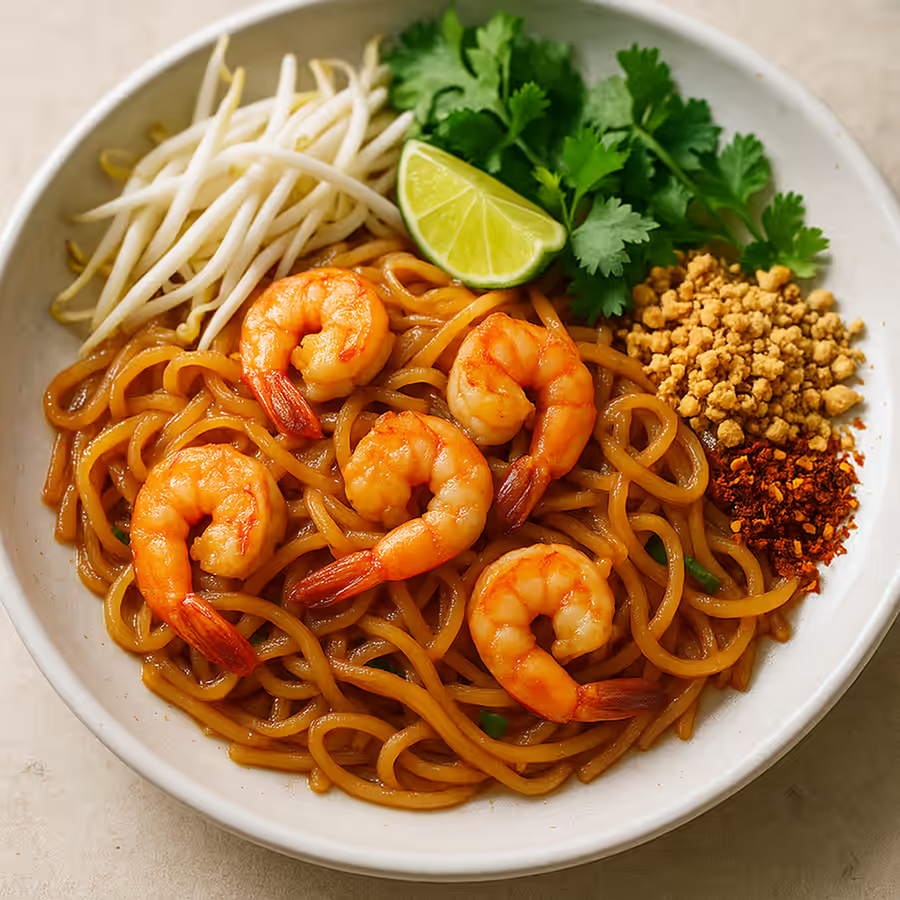
Pad Thai (ผัดไทย) is a symbol of Thai cuisine that has won the hearts of millions of people around the world. This fried rice noodles with a unique combination of sweet, sour, salty and spicy flavors have become a real culinary legend. In this article you will learn how to cook a real pad thai at home, learn about its history, cooking secrets and various variations of this dish.
Content
The story of Pad Thai: from a political decision to a national icon
Pad Thai has a fascinating story that began in the 1930s during Prem’s reignThailand’s minister of Thailand, Plaek Pibunsongkram. Unlike many traditional dishes that have evolved over the centuries, Pad Thai was created as part of a campaign to build national identity.
During World War II, Thailand faced a serious problem of rice shortages due to hostilities and floods. To reduce domestic consumption of rice, which was an important export commodity, the government began to actively promote rice noodles as an alternative. Chinese traders have long cooked fried noodles on the streets, and this dish became the basis for creating a national dish.
Plaek Pibunsongkram personally took part in the development of the recipe, adding to Chinese noodles typically Thai ingredients: tamarind paste, fish sauce and palm sugar. Thus was born Pad Thai – a combination of Chinese culinary traditions with Thai tastes, which reflects the multicultural history of Thailand.
The government actively promoted the dish by providing recipes and encouraging people to sell Pad Thai from mobile carts. The ease of preparation and availability of ingredients have made the dish extremely popular among the population. Over time, Pad Thai turned from a government initiative into a real culinary tradition and one of the most recognizable dishes of Thai cuisine in the world.
The Anatomy of the Perfect Pad Thai: Ingredients and Their Role
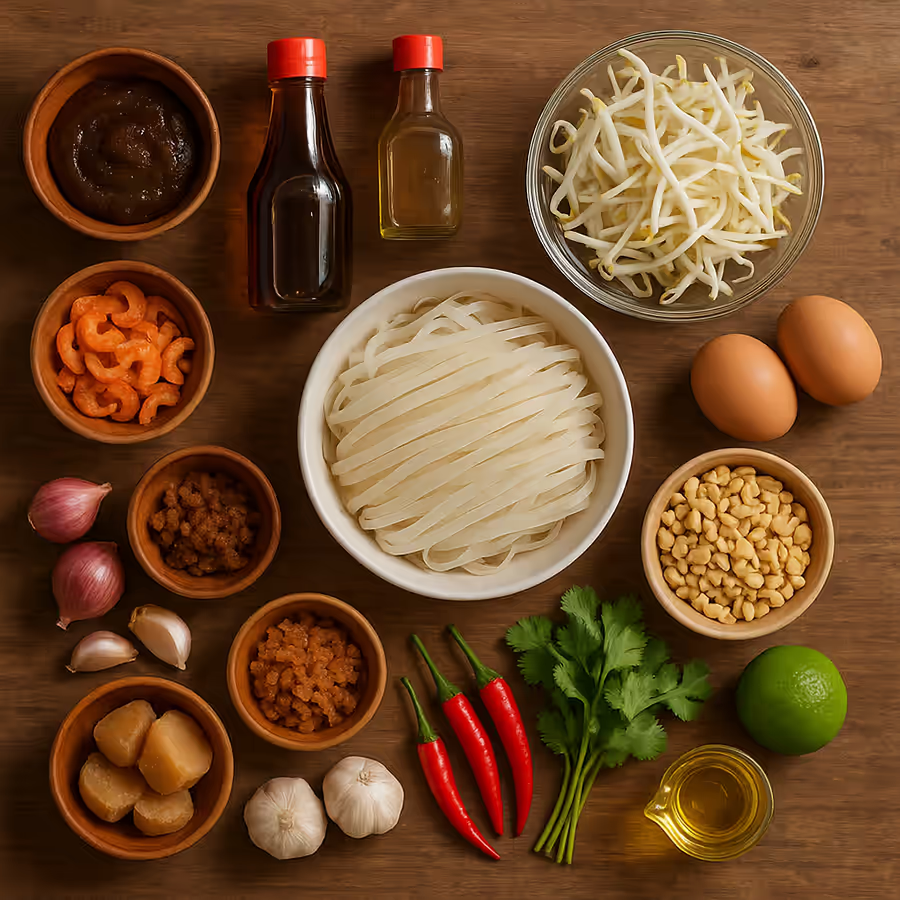
The secret of the authentic Pad Thai is the correct selection of ingredients and their balance. Each component plays an important role in creating a harmonious taste.
Rice noodles: the basis of the dish
The heart of the dish – it’s rice noodles Medium width, about 3-5 millimeters. Unlike regular pasta, rice noodles are made from rice flour and water, making it naturally gluten-free. This noodle has a smooth texture and the ability to absorb sauces perfectly.
It is critical to properly prepare the noodles before cooking. The traditional method involves soaking dry noodles in warm (not hot!) water for 20-30 minutes until it becomes mwhich, but still slightly elastic. Many novice cooks make the mistake of pouring boiling water over the noodles – this leads to the fact that the noodles are digested in a pan and fall apart.
Pad Thai Sauce: Soul of the dish
The authentic Pad Thai sauce is a complex symphony of flavors that combines acid, sweetness, salinity and depth of umami. Key components include:
Tamarind paste – an indispensable ingredient that gives the dish a characteristic acidity and fruit depth. Tamarind is the flesh of a fruit tree pod, widely used in Asian cuisine. If tamarind paste is difficult to find, it can be replaced with a mixture of fresh lime juice with brown sugar in a ratio of 2: 1, although the taste will be slightly different from the original.
Fish sauce – adds salinity and the same taste to umami, which makes Asian cuisine so unique. For the vegetarian version, fish sauce can be replaced with soy sauce, although this will change the depth of taste.
Palm sugar – a traditional sweetener in Thai cuisine, obtained from palm juice. It has a less intense sweetness and a richer caramel flavor compared to regular sugar. It is often combined with brown sugar to achieve a perfect balance.
Classic proportions for sauce Pad Thai: 3 tablespoons of tamarind paste,-⅓ cups of fish sauce, cups of palm sugar, cups of brown sugar and cups of water. The sauce is cooked over low heat, stirring constantly, until the sugar is completely dissolved and the mixture acquires a homogeneous consistency.
Protein components
Traditional Pad Thai offers flexibility in choosing protein, allowing you to adapt the dish to different dietary preferences:
Shrimp – The most authentic and popular option in Thailand. Use medium or large shrimp, peeled and without shell. They are quickly fried until pink before adding the other ingredients.
Chicken – The most common alternative in restaurants outside Thailand. Chicken fillet or thigh is cut into thin strips against fibers and marinated with a small amount of oyster or soy sauce.
Tofu – a traditional component that adds texture and protein. Use hard tofu, diced and quickly fried to a golden crust. Tofu absorbs the flavors of the sauce, making each piece rich.
Combined option – Many recipes combine several types of protein, such as shrimp with chicken or tofu with shrimp, creating a more complex texture.
Vegetables and aromatic components
Soybean sprouts (Mash seeds) -The viscous ingredient of the authentic Pad Thai. They add freshness and crispy texture. Half of the sprouts are added during frying, and the rest are left fresh for serving.
Garlic onions (Garlic Chives) – HerbsA thorny plant with a delicate garlic taste. In many recipes, they are replaced by ordinary green onions or leeks.
Garlic and shallots – create a fragrant base of the dish. The garlic is finely chopped, and the shallots are cut into thin slices or half rings and fried until golden.
Dried shrimp – Add extra depth to the umami and slightly salty taste. They are crushed and fried with garlic.
Canned radishes (Preserved Daikon Radish) is an ingredient unknown to Western chefs that adds a sweet-salt note.
Eggs – break directly into a frying pan, stir lightly and then withCombine with noodles, creating a creamy texture.
Garnishes and serving
Pad Tai is traditionally served with a set of fresh ingredients for self-regulation of taste:
- Fried chopped peanuts
- Fresh lime slices
- Dried chili flakes
- Fresh soybean sprouts
- Fresh cilantro
Detailed step-by-step recipe for classic Pad Thai
Ingredients (4 servings)
For noodles and bases:
- 300 g of dry rice noodles (3-5 mm wide)
- 300 g of shrimp (peeled) or 300 g of chicken fillet
- 100 g of hard tofu
- 2-3 large eggs
- 4-5 tablespoons of vegetable oil (peanut or sunflower)
For the Pad Thai sauce:
- 3 tablespoons tamarin paste
- 3-4 tablespoons fish sauce
- ⅓ cups of palm sugar (or brown)
- ¼ cups brown sugar
- ¼ glasses of water
Aromatic ingredients:
- 4-5 cloves of garlic (finely chopped)
- 2 shallots (finely sliced)
- 1 tablespoon dried shrimp (crushed)
- 2-3 tablespoons canned radishes (chopped)
Vegetables and side dishes:
- 100 g of soybean sprouts (divided in half)
- 3-4 stalks of garlic onion or green onion (cut into 5 cm pieces)
- 60 g of fried peanuts (grind)
- 2 limes (cut into slices)
- chili flakes to taste
- Fresh cilantro for decoration
Step-by-step cooking
Step 1: Preparing the Noodles
Place dry rice noodles in a deep bowl and fill with warm (not hot!) Water at room temperature. Leave for 25-30 minutes until the noodles are flexible, but still have a slight elasticity when bending. It should be 70-80% ready – the rest will come during frying. Add a drop of oil to the water so that the noodles do not stick together. After soaking, carefully drain the water through a duffel.
Important: Don’t cook noodles! Kipyawning will make her too mHow, and it will fall apart during frying.
Step 2: Making Pad Thai Sauce
In a small saucepan over low heat, heat the palm sugar, stirring constantly, until it is completely dissolved and acquires a golden-caramel color. Add brown sugar, tamarind paste, fish sauce and water. Continue to stir, allowing the mixture to boil slowly for 5-7 minutes to combine the flavors. The sauce should become slightly thicker and homogeneous. Try the sauce – it should be balanced with a noticeable sourness from tamarind, sweetness from sugar and depth of umami from fish sauce.
Step 3: Preparing Protein Components
If you use shrimp, rinse them with cold water and dry with a paper towel. Season with a light pinch of salt and pepper.
Cut the chicken fillet into thin strips against the fibers (approximately 5 mm thick). Marinate in 2 tablespoons of oyster or soy sauce for 10-15 minutes.
Cut the tofu into 1.5-2 cm cubes. Dry with a paper towel to remove excess moisture.
Step 4: Preparing Vegetables and Aromatic Ingredients
Finely chop the garlic. Cut the shallots into thin rings or half rings. Cut garlic onions or green onions into pieces 4-5 cm long. Chop dried shrimp. Chop the fried peanuts. Rinse soybean sprouts and divide into two parts – one for frying, the other for serving.
Step 5: Frying the Protein
Heat a wok or a large frying pan with a thick bottom over high heat. Add 1-2 tablespoons of oil. When the oil starts to smoke, add the chicken or tofu and fry quickly for 3-4 minutes until golden, stirring constantly. If you cook shrimp, fry them for 2-3 minutes until pink. Transfer the finished protein to a separate bowl.
Step 6: Creating a fragrant base
In the same wok, add another 2 tablespoons of oil. Reduce heat to medium. Add dried shrimp and fry for 1-2 minutes until flavor appears. Add chopped garlic and fry for 30 seconds, stirring constantly so as not to burn. Add shallots and canned radishes, fry for another 30-40 seconds.
Step 7: Frying Noodles
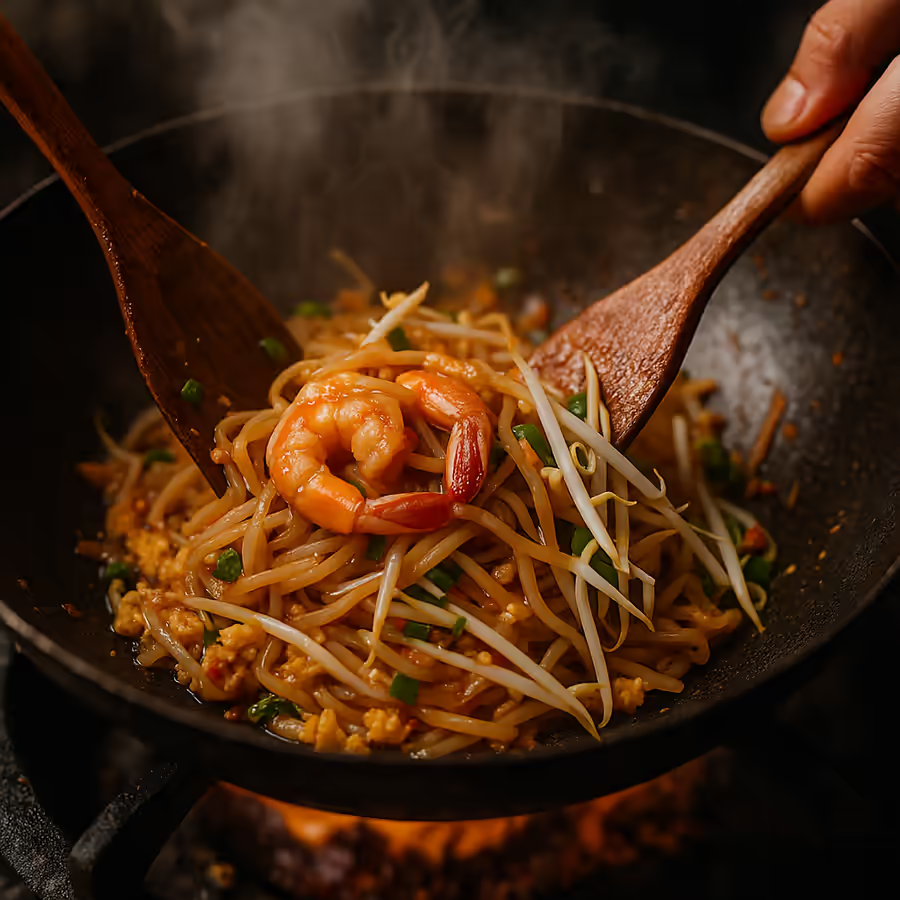
Increase the fire to the maximum. Add prepared (soaked and drained) noodles and 2-3 tablespoons of water to the wok. Quickly mix the noodles with the aromatic ingredients for 1-2 minutes. Water will help the noodles to finally cook without overdrying it.
Pour in the prepared Pad Tai sauce. Stir the noodles vigorously with a spatula or two blades, lifting and turning over so that each noodle paddle is evenly covered with sauce. Cook for 2-3 minutes until the noodles completely absorb the sauce.
Step 8: Adding Eggs
Slide the noodles to one side of the wok, freeing up the central part. Add 1 teaspoon of oil to the center. Drain lightly beaten eggs and allow them to set slightly for 10-15 seconds. Then the razorEggs with a spatula into small pieces and mix with noodles.
Step 9: Final Aboutunity
Return the cooked protein (shrimp, chicken or tofu) to the wok. Add half of the soybean sprouts and chopped garlic onions. Add half the chopped peanuts. Mix everything quickly for 30-40 seconds on high heat so that all the ingredients are warmed together.
Step 10: Feed
Immediately transfer the hot pad to the serving plates. Sprinkle the rest of the chopped peanuts generously on top. Add fresh soybean sprouts, chili flakes and twigs of cilantro. Serve with lime slices on the side – before eating, strain the lime juice on the noodles for freshness and brightness of taste.
Variations of Pad Thai for different flavors
One of the great qualities of Pad Thai is its versatility. The basic recipe can be adapted to different dietary needs and taste preferences.
Vegetarian and Vegan Pad Thai
To create a full-fledged plant version, replace shrimp and chicken with extra tofu or shiitake mushrooms. Use soy sauce or tamari sauce instead of fish sauce – although the depth of taste will be slightly different, the result will still be delicious. Exclude eggs or replace them with a vegan alternative. Increase the number of vegetables by adding broccoli, bell peppers or mini-corn for extra texture and nutrients.
Pad Thai with seafood
Along with shrimp, you can add other seafood: squid (cut into rings), mussels or crabs create a luxurious version of the dish. Seafood is fried separately on high heat for 2-3 minutes and added at the end of cooking so that they do not become rubber.
Acute fall
For lovers of spicy, add 1-2 teaspoons of chili paste or Sriracha sauce directly to the sauce. Alternatively, fry 2-3 fresh chili peppers with garlic at the initial stage of cooking. Serve with extra chili flakes and fresh chopped peppers.
pad thai with mYasom
In addition to chicken, you can use thinly sliced pork or beef. MThe meat is marinated in soy sauce with a little starch for tenderness, then quickly fried over high heat until cooked.
Pad Thai with Egg (Kai jeow)
The Thai version involves the addition of more eggs, which are prepared separately as a mini-omelet, and then cut into strips and added to the noodles at the end.
Secrets and tips from professional chefs
Temperature control
Pad thai is cooked at a very high temperature – this is the key to obtaining that characteristic “smoky” taste, which is called “wok Hay” in Chinese cuisine. The wok or pan should be hot until light smoke appears before adding the ingredients. High heat allows you to quickly fry the components, preserving their texture and creating caramelization.
Rule “Everything is ready”
The principle of mise en place (everything in its place) is critical for Pad Thai. After the start of frying, the process is extremely fast – you will not have time to cut the ingredients. Prepare all the components in advance: soak the noodles, cut the protein, cook the sauce, chop the vegetables, and place everything in bowls around the stove.
Balance of flavors
Traditional Pad Thai demonstrates the harmony offlavors: sweet (from sugar), sour (from tamarind), salty (from fish sauce), spicy (from chili) and umami (from dried shrimp and fish sauce). Before submitting the dutyBe sure to taste the dish and adjust the balance as needed. If the dish seems too sweet, add more fish sauce or lime juice. If too sour, add a little sugar.
Noodle texture
The perfect noodles for Pad Thai should be mwhich, but not bland, with a slight elasticity (al dente). The secret is to soak the noodles in warm water only until 70-80% ready – the rest it is cooked in a pan with sauce. If the noodles are still too hard after soaking, add 1-2 tablespoons of water during frying.
Typical mistakes and how to avoid them
Mistake #1: Overloading with Ingredients – The authentic Pad Thai is actually quite simple. Do not add too many different vegetables or exotic ingredients. Follow the classic set of components.
Mistake #2: Using the wrong sauces – Many Western recipes add Sriracha, ketchup or peanut butter to Pad Thai, but it’s not authentic. The traditional sauce is based on tamarind, fish sauce and palm sugar.
Mistake #3: Frying too long – The whole frying process should not exceed 8-10 minutes. Longer frying will lead to overdrying and loss of texture.
Mistake #4: Using a Cold Wook – Heat the wok to a high temperature before cooking. A cold pan will cause the ingredients to be stewed instead of frying.
Alternatives to hard-to-reach ingredients
Instead of tamarind paste: Mix 2 parts fresh lime juice with 1 part brown sugar. You can also use a small amount of balsamic vinegar with honey, although the taste will be less authentic.
Instead of palm sugar: Use brown sugar or honey. Palm sugar has a richer caramel flavor, but brown sugar is an acceptable replacement.
Instead of garlic onions: Ordinary green onions or leeks work great.
Instead of canned radishes: You can exclude this ingredient without a critical loss of taste, or replace canned turnips.
Nutritional value and dietary features
Pad Thai is a relatively balanced dish with a nutritional value that depends on the specific ingredients and portion size.
Caloric content and macronutrients
The standard portion of Pad Thai (approximately 350-400 g) contains:
- Calories: 370-430 kcal
- Proteins: 25-27 g
- fats: 22-42 g (depending on the amount of oil and peanuts)
- Carbohydrates: 82-93 g
- Fiber: 4-5 g
A portion of shrimp usually contains fewer calories compared to the version with chicken because of the lower fat content in seafood. The vegetarian version of Tofu is somewhere in the middle.
Dietary benefits
Gluten-free dish: With the use of rice noodles and wheat-free sauces, the fall is naturally gluten-free. This makes the dish a great choice for people with celiac disease or gluten sensitivity.
Protein source: The presence of shrimp, chicken, eggs or tofu provides a sufficient amount of complete protein.
Vegetables and fiber: Soybean sprouts, garlic onions and other vegetable components add fiber, vitamins and minerals.
Healthy fats: Peanuts provide useful unsaturated fats and additional proteins.
How to reduce calories
To create a lighter version of Pad Thai, you can reduce the amount of oil (use 2-3 tablespoons instead of 5), limit the amount of sugar in the sauce to cups or replace some white sugar with stevia. Increase the number of vegetables (soybean sprouts, broccoli, carrots) for additionalit without a significant increase in calories.
Storage and heating
How to store leftovers
It is better to eat fresh pads, immediately after cooking, but the remains can be stored in the refrigerator. Transfer the chilled pad thai to an airtight container within 2 hours of cooking. Do not leave the dish at room temperature longer, as this can cause bacteria to multiply, especially if it contains shrimp or chicken.
Shelf life in the refrigerator: 2-3 days at a temperature of + 2- + 4 ° C. Pad Thai with seafood is better withEat for 1-2 days for maximum freshness.
Proper heating
The best way to warm up Pad Thai is to use a frying pan or wok. Add 1-2 tablespoons of oil and 2-3 tablespoons of water to a frying pan, heat over medium-high heat. Add the cold pad and fry, stirring constantly, for 5-8 minutes, until the dish is completely warm. Water will help restore the moisture content of the noodles, which can dry out during storage.
A microwave oven is a less ideal, but faster option. Place the pad in a microwave container, add 2 tablespoons of water, cover with a damp paper towel and heat for 2-3 minutes on high power, stopping every minute to mix.
Important: Don’t freeze Pad Thai. Rice noodles do not tolerate freezing – after thawing it becomes bland and loses texture.
FAQ
Can Pad Tai be prepared in advance?
Although pad is the most delicious fresh, you can prepare the components in advance. Soak the noodles, prepare the sauce, cut all the ingredients and store them separately in the refrigerator for up to 24 hours. Immediately before serving, perform the frying stage – it will take only 10-15 minutes.
Is Pad Thai a spicy dish?
Traditionally, Pad Thai is not very sharp. Moderate spiciness is achieved through chili flakes, which are added when served, allowing everyone to adjust the sharpness to taste. The main course should be balanced between sweet, sour and salty, not fiery-spicy.
Do Thais eat Pad Thai every day?
Despite the world’s popularity, Thais do not eat the Tai Daily. This is one of the many dishes in a variety of Thai cuisine. Pad thai is more often a street meal or a dish for a quick snack, rather than the main home-made dish.
Can you use other types of noodles?
It is critical to use rice noodles for authentic Pad Thai. Other types of noodles (wheat, buckwheat, glass) will change texture and taste dishes. If there is no rice noodles, the closest alternative will be glass noodles (funchose), but the taste will not be the same.
What to do if noodles stick together?
If the noodles stick together after soaking, rinse it with cold water and lightly grease with oil. When frying, add a little more water (2-3 tablespoons) and mix actively to separate the strands.
How long does it take to make Pad Thai?
The total time depends on the preparation: soaking the noodles takes 25-30 minutes, the preparation of the ingredients – 15-20 minutes, the preparation of the sauce – 7-10 minutes, and the actual frying – only 10-15 minutes. In general, from the beginning to the finish, count on 50-60 minutes for the first time. With experience, the time will be reduced to 30-35 minutes.
Do you need special equipment?
Traditionally, pad thai is cooked in wok over high heat. However, if you do not have a wok, a large frying pan with a thick bottom and a non-stick coating will do. The key point is a large enough diameter (at least 28-30 cm) that you can vigorously mix the ingredients without scattering them.
What variations of Pad Thai exist?
In addition to the classic recipe, there are many regional and author’s variations. Pad Tai Kung cooks exclusively with shrimp, Pad Tai Guy – with chicken, Pad Thai J – vegetarian version without myase and fish sauce. In the northern regions of Thailand, local herbs and spices are sometimes added, creating unique taste profiles.
Serving and serving traditions
Proper serving of pads is just as important as cooking. In Thailand, this dish is traditionally served on a banana leaf or in paper packaging on the street, but at home it is beautifully laid out on a plate with a set of fresh side dishes.
Classic feed
Place the hot pad thai on the center of a large plate or small bowl. Sprinkle generously with chopped fried peanuts over the entire surface. On one side, put a small pile of fresh soybean sprouts. On the other hand, place 2-3 lime slices. Add a sprig of fresh cilantro for color. In a small bowl, serve extra chili flakes for those who like sharper.
Traditional accompaniments
In Thai restaurants, Pad Thai is often served with additional elements: fresh cucumbers, cut into slices, for a refreshing contrast; a small portion of fresh soybean sprouts separately; Additional bowl with chili flakes and sugar for individual taste adjustment. Some serve pad tai wrapped in a thin omelet (pad tai chor Kai), which creates an additional layer of texture.
Drinks to Pad Thai
For a complete Thai experience, serve Pad Thai with cold Thai tea (cha yen), coconut refreshing water, or a light lager such as Singha or Chang. Avoid sweet carbonated drinks, as pad thai himself is already quite sweet.
Conclusion: Pad Thai’s skill is in your hands
Pad Thai is more than just a dish. This is a culinary journey into the heart of Thai cuisine, where each ingredient plays a role in creating a harmonious symphony of tastes. Although at first glance the recipe may seem complicated due to the large number of components, in fact, cooking this dish is a matter of preparation and practice.
The key to success lies in following several fundamental principles: proper soaking of noodles, balanced sauce with tamarind as a basis, high-temperature frying in wok and timely addition of ingredients. Each time you cook this dish, your confidence will increase, and the understanding of the subtleties of the balance of tastes will deepen.
Do not be afraid to experiment with variations – vegetarian, with different types of protein, or with the addition of your favorite vegetables. The main thing is to keep the main structure of the dish and the balance oftastes that make the fall so unique.
Now, armed with a detailed recipe, professional advice and understanding the history of the dish, you are ready to create a real authentic fall in your own kitchen. Fry, taste, adjust – and enjoy the result that will compete with the best Thai restaurants. Bon appetit!