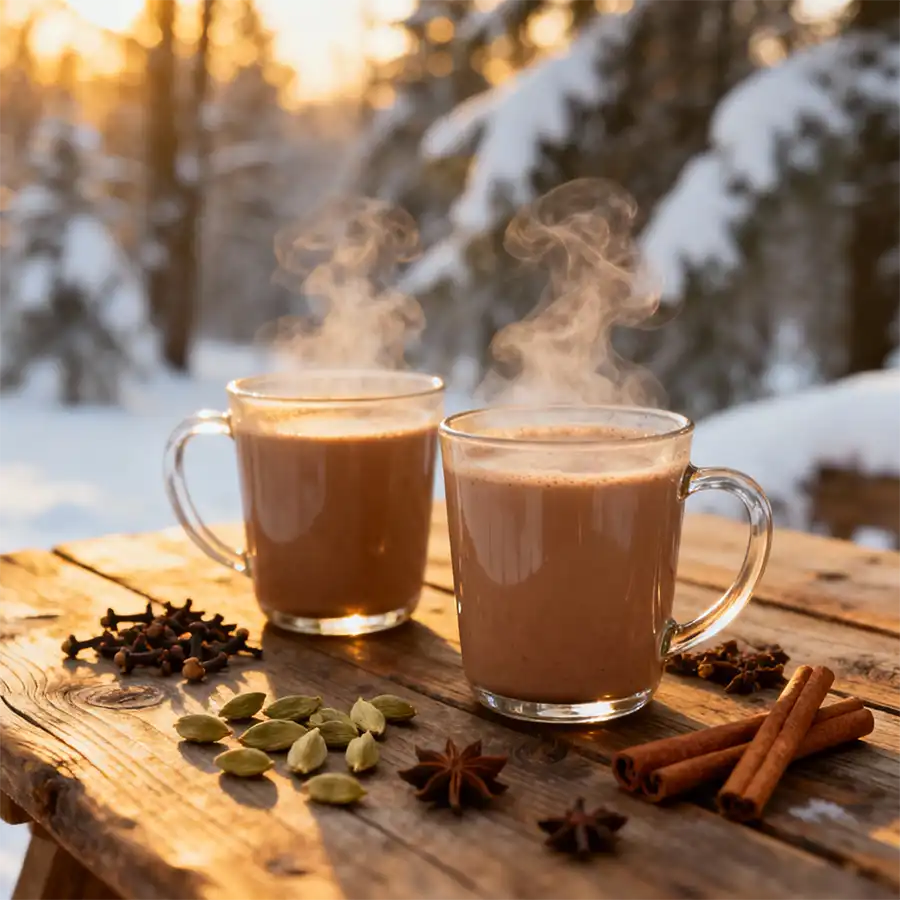
Cold winter days require a special approach to food and beverages. Warming drinks not only help the body maintain optimal body temperature, but also provide important vitamins, minerals, and antioxidants that are especially necessary during the cold season.
Content
Classic winter drinks: recipes and preparation
Mulled wine – the king of warming drinks
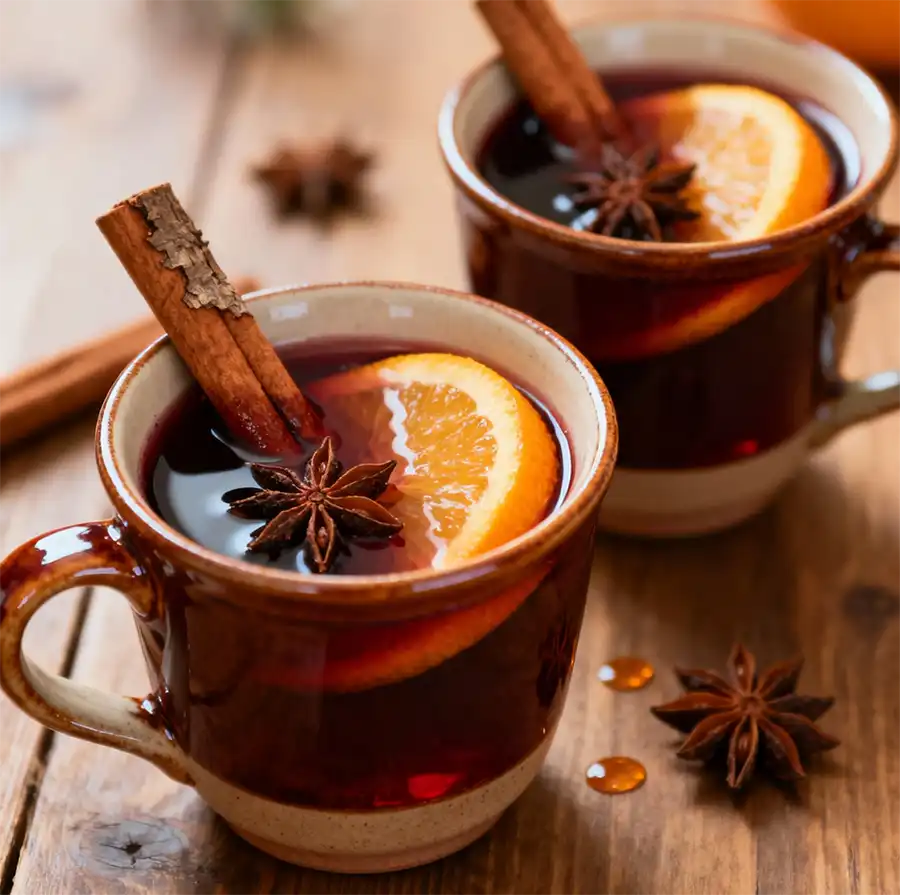
Mulled wine is considered the most popular winter drink, originating in Ancient Rome and taking on its modern form in medieval Europe. This aromatic drink has powerful antibacterial and antioxidant properties.
Classic mulled wine recipe:
- Red dry wine – 500-750 ml
- Orange – 1 piece.
- Lemon – 1 piece
- Cinnamon sticks – 2 pieces.
- Cloves – 4-6 pieces.
- Star anise – 2-3 stars
- Honey or sugar – 2-3 tablespoons
Preparation: Heat the wine in a heavy-bottomed saucepan to 65-70°C, without bringing it to a boil. Add the sliced citrus fruits, spices, and honey. Simmer for 10-15 minutes, stirring constantly.
Variations of mulled wine:
- With chocolate: add 50-150 g of dark chocolate for a rich flavor
- Non-alcoholic: replace wine with grape juice
- White mulled wine: use white wine and sea buckthorn berries
Hot chocolate – the drink of happiness
Hot chocolate has a long history, first mentioned as early as 770 BC. This drink is rich in antioxidants, magnesium, zinc, phosphorus, and potassium.
Homemade hot chocolate:
- Milk – 500 ml
- Dark chocolate – 100-150 g
- Cocoa powder – 1-2 tablespoons
- Honey or sugar – to taste
- Vanilla – 0.5 tsp.
- Cinnamon – a pinch
Preparation: Heat the milk without bringing it to a boil. Add the chopped chocolate and cocoa, stir until completely dissolved. Add sweetener and spices.
Ginger tea – a natural immune booster
Ginger tea is a powerful immune booster thanks to its high gingerol content. It improves blood circulation, speeds up metabolism, and has anti-inflammatory properties.
Classic ginger tea:
- Fresh ginger root – 2-3 cm
- Lemon – 0.5 pieces
- Honey – 1-2 tsp.
- Water – 250–300 ml
- Mint – optional
Preparation: Peel and grate the ginger. Pour boiling water over it and let it steep for 10-15 minutes. Add lemon juice and honey after cooling to 40°C.
Traditional Slavic drinks
Zbiten – an ancient healing elixir
Zbiten is an ancient Slavic drink mentioned in chronicles dating back to 1128. The name comes from the verb “to beat,” because honey and herbs were prepared separately and then thoroughly mixed together.
Traditional sbiten:
- Honey – 150-200 g
- Water – 1–2 liters
- Cinnamon – 2 sticks
- Cloves – 6-8 pieces.
- Star anise – 2-3 stars
- Ginger – 20 g
- Medicinal herbs (thyme, mint, rosemary) – to taste
Preparation: Bring water to a boil, add spices, and simmer for 5-10 minutes. Cool to 70°C, add honey and herbs.
Uzvar – Ukrainian vitamin compote
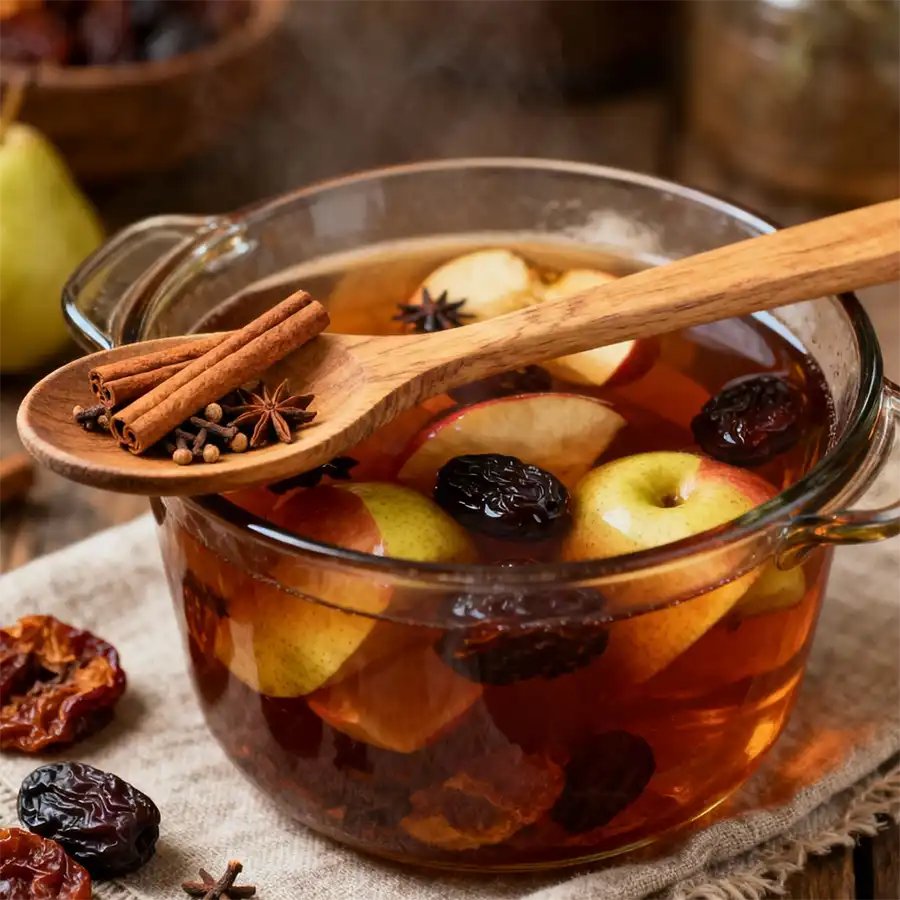
Uzvar is a traditional Ukrainian drink made from dried fruit, rich in vitamins A, C, B, zinc, potassium, magnesium, and iron.
Classic uzvar:
- Dried fruit mix – 200-300 g
- Water – 2-3 liters
- Honey – to taste
- Cloves – 2-3 pieces.
Preparation: Wash the dried fruit, cover with water, and simmer for 15-20 minutes over low heat. Add spices and honey after cooling.
Exotic warming drinks
Masala tea – Indian spice blend
Masala tea is a traditional Indian drink with a unique blend of spices that has a tonic and warming effect.
Ingredients for masala:
- Black tea – 4 tablespoons
- Milk – 300 ml
- Water – 300 ml
- Cardamom – 4-6 seeds
- Cinnamon – 1 stick
- Cloves – 2-3 pieces.
- Black pepper – 4 peppercorns
- Ginger – 0.5 tsp.
- Honey – 1 tablespoon
Preparation: Grind the spices in a mortar. Bring the milk and water to a boil, add the spices and tea, and simmer for 2 minutes over low heat.
Useful properties
Antioxidant action
Many winter drinks contain powerful antioxidants. Cocoa contains flavonoids and catechins, which help combat stress and prevent cell damage. Mulled wine has a pronounced antioxidant effect thanks to red wine and spices.
Supporting the immune system
Vitamin C in lemons and other citrus fruits strengthens the immune system. Ginger contains gingerol, which has antibacterial and anti-inflammatory properties. Honey has natural antibacterial properties.
Improved digestion
Ginger stimulates digestion and reduces nausea. The spices in masala tea accelerate metabolism. Dried fruit compote improves bowel function thanks to the presence of pectin.
Improved mood
Cocoa stimulates the production of endorphins and serotonin. Honey promotes the synthesis of tryptophan, which is responsible for feelings of joy. The aromatherapeutic effect of spices also has a positive effect on emotional state.
Variations and modern interpretations
Non-alcoholic alternatives
For those who avoid alcohol, there are some great alternatives:
- Non-alcoholic mulled wine: grape juice with spices
- Children’s punch: apple juice with cinnamon and cloves
- Fruit grog: strong tea with honey and lemon
Vegan options
Plant-based dairy products are perfect for cooking:
- Hot chocolate with almond milk
- Masala tea with coconut milk
- Cocoa with oat milk
Modern applications
Contemporary variations include:
- Cocoa with turmeric and chili
- Mulled wine with goji berries
- Ginger tea with lemongrass
Practical tips for cooking
Preservation of vitamins
To preserve nutrients as much as possible, follow these rules:
- Do not overheat beverages above 70°C.
- Add honey to beverages cooled to 40°C.
- Cut citrus fruits immediately before adding them.
- Store ingredients in a cool, dark place.
The right temperature
The optimal serving temperature varies for different beverages:
- Mulled wine: 65-70°C
- Hot chocolate: 60-65°C
- Tea: 70-80°C
- Zbiten: 60-70°C
Choosing tableware
Use pots with thick bottoms for even heating. Avoid aluminum cookware when preparing acidic beverages. Serve in warmed cups or glasses.
Warnings and contraindications
Alcoholic beverages
Alcoholic warming drinks should be consumed with caution:
- Do not go out into the cold immediately after consumption.
- Limit intake if you have cardiovascular disease
- Avoid when taking medication
Individual intolerance
Some ingredients may cause allergic reactions:
- Citrus fruits for those prone to allergies
- Honey for diabetes (control the amount)
- Spices for stomach problems
- Dairy products in lactase deficiency
Special groups
Pregnant women should limit:
- Alcoholic beverages
- Excessive amounts of caffeine
- Some medicinal herbs
Seasonality and availability of ingredients
Winter ingredients
Particularly available in winter:
- Dried fruits and nuts
- Citrus fruits
- Spices and medicinal herbs
- Honey and other natural sweeteners
Preparations
Summer preparations for winter drinks:
- Frozen greens and berries
- Dried fruits and herbs
- Honey and ginger paste
- Special mixtures
Economic aspects
Cost of ingredients
Winter drinks can be economical:
- Dried fruit is cheaper than fresh fruit in winter
- Spices are used in small quantities
- Homemade drinks are cheaper than store-bought ones
Usefulness vs. cost
Value for money:
- Uzvar: high vitamin content at a low price
- Ginger tea: powerful immune-boosting effect
- Cocoa: lots of nutrients per serving
Cultural significance
Traditions of different nations
Every nation has its own winter traditions:
- Slavic zbiten and uzvar
- Scandinavian gleg
- Indian masala
- English grog
Current trends
Current trends include:
- Eco-friendly ingredients
- Vegan alternatives
- Functional supplements (turmeric, adaptogens)
- Craft spice blends
Frequently asked questions (FAQ)
1. Can you drink mulled wine every day?
Mulled wine contains alcohol, so daily consumption is not recommended. Several times a week in small quantities would be optimal.
2. How long can homemade winter drinks be stored?
Freshly prepared drinks are best consumed immediately. They can be stored in the refrigerator for up to 2-3 days, but their beneficial properties are gradually lost.
3. Can children be given warming drinks?
Non-alcoholic options (cocoa, ginger tea with honey, fruit compote) can be given to children over one year old. Honey is not recommended for children under 12 months.
4. How to prepare a warming drink for diabetics?
Use natural sweeteners in minimal amounts or avoid them altogether. Sugar-free fruit compote and herbal teas with spices are good options.
5. When is it best to drink warming beverages?
In the evening to relax, before bed (non-alcoholic), after a walk in the cold. Ginger tea is best drunk in the morning for energy.
6. Can fresh ginger be replaced with dried ginger?
Yes, but it will be less effective. Ratio: 1 tsp fresh = 1/3 tsp dried.
7. How to store spices for winter drinks correctly?
In tightly closed containers, in a dark, cool place. Whole spices last longer than ground spices.
8. Do frozen berries lose their beneficial properties?
When frozen correctly, most vitamins and minerals are preserved, especially if freezing took place immediately after harvesting.
Winter warming drinks are not just a way to warm up, but a whole culture of caring for health and well-being. Properly prepared, they become a source of vitamins, antioxidants, and positive emotions, helping the body cope with the challenges of the cold season.