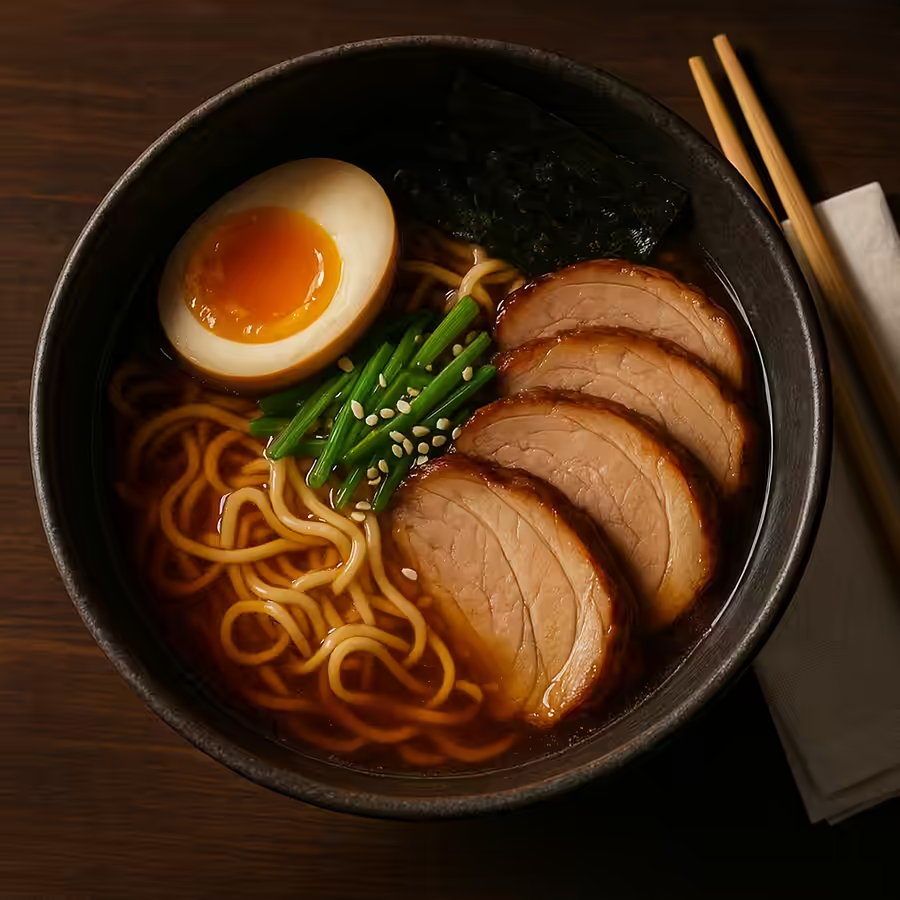
Ramen has long ceased to be just “Japanese noodle soup” and has become a cult dish that is loved all over the world. It is a combination of rich broth, springy wheat noodles, meat, vegetables, sauces, and toppings, where every element matters. In this article, we will explore its origins, the different types available, how to cook delicious ramen at home using common ingredients, and provide a basic universal recipe, variations, practical tips, and answers to frequently asked questions.
Content
What is ramen and why does everyone love it so much?
Ramen is a Japanese dish consisting of wheat noodles in hot broth with various additives. Classic ramen consists of four key elements:
- broth
- tare (concentrated sauce base)
- noodles
- toppings
The broth can be chicken, pork, beef, fish, or vegetable. The tare determines the flavor: soy, miso, salty, etc. The noodles are springy wheat noodles, often with the addition of alkaline water (kansui). Toppings include meat (usually pork), marinated egg, nori seaweed, green onions, mushrooms, corn, bamboo, and vegetables.
Why ramen is so popular:
- very filling
- provides enormous scope for variation
- combines deep umami flavor with affordable ingredients
- can be street food or restaurant food
- you can actually make it at home without exotic ingredients
History of the dish
Although ramen is associated with Japan, its roots are Chinese. Initially, it was simple noodles in broth that Chinese chefs prepared for workers — quick, filling, and inexpensive. Then the dish made its way to Japan, where it was adapted to local tastes, ingredients, and techniques.
For a long time, soup was food for ordinary people: it was sold from street carts and small stalls near train stations and ports. After World War II, against the backdrop of shortages and the country’s recovery, cheap, high-calorie soup became very popular. Specialized bars appeared, where each chef created their own “secret” broth and flavor combinations.
In 1958, Momofuku Ando invented instant noodles — instant ramen. Later, cup noodles were introduced. Soup has become a global product: from quick-cooking noodles to signature tasting sets in expensive restaurants. Today, it is a dish that is constantly evolving and easily adapts to the products of any country.
Main types
There are dozens of regional ramen styles in Japan, but it is convenient to focus on the basic types based on the main flavor of the broth/tare.
Shoyu ramen
Ramen based on soy sauce.
- Broth: chicken or chicken and pork.
- Color: transparent or slightly brown.
- Taste: salty, rich, with a distinct umami flavor.
This is one of the most versatile options, ideal for home cooking.
Miso ramen
Broth based on miso paste (fermented soybean paste).
- Thicker and “heavier” than the neck.
- Taste: rich, deep, with a slight nutty flavor.
- It goes well with minced pork, corn, vegetables, and butter.
Shio ramen
“Salty” ramen, where the basis of the flavor is not soy sauce, but salt.
- Broth: light-colored, often clear (chicken, fish, vegetable).
- Taste: light, delicate, “clean.”
Suitable for those who don’t like overly intense soy flavors.
Tonkotsu (Tonkotsu ramen)
One of the most famous and intense types.
- Broth: made from pork bones, cooked for 8–12 hours.
- Color: milky white, opaque.
- Taste: very rich, fatty, with pronounced umami.
This is “heavy artillery” — not for every day, but a true gastronomic experience.
Vegetarian/vegan ramen
- Broth: made from vegetables, mushrooms, seaweed.
- Taste: umami is provided by mushrooms, miso, seaweed, and soy sauce.
- Toppings: tofu, tempeh, mushrooms, vegetables, greens, nori.
Ramen noodles: types, selection, and substitutes
What makes ramen noodles special
The classic noodles for this dish are wheat noodles made from:
- flour (often with a high protein content)
- water
- salt
- alkaline water (kansui)
Consue:
- gives noodles a yellowish tint
- makes it springy, “alive” to the bite
- helps prevent spoilage in hot broth
Forms can be:
- thin straight — for light broths
- thin and wavy — good for “holding” sauce
- thick straight — for thick, fatty broths (tonkotsu)
What to do if there are no ramen noodles
At home:
- Chinese wheat or egg noodles from an Asian store
- udon — if you like a thicker texture
- spaghetti made from durum wheat as a compromise
To bring the texture closer:
- cook until al dente
- don’t overdo it
- You can add a little baking soda (a conditional analogue of kansui) to the water, but be very careful.
Broth: how to control flavor and richness
Broth is the basis of everything. It determines whether the soup will be light or very thick and “meaty.”
Light broth
Suitable if you are preparing:
- for lunch
- for children
- for those who don’t like heavy, fatty foods
We do:
- base — chicken bones, a little meat, vegetables
- simmer over low heat
- cooking time 2.5–4 hours
- partially remove fat if desired
Rich broth
If you want a pronounced umami flavor:
- add pork bones/ribs
- allow periodic more vigorous boiling
- Don’t remove all the fat: without it, the taste will be “flat.”
Depth is given by:
- meat bones with bone marrow
- dried mushrooms
- algae (if any)
- long heat treatment
Basic homemade shoyu ramen (3–4 servings)
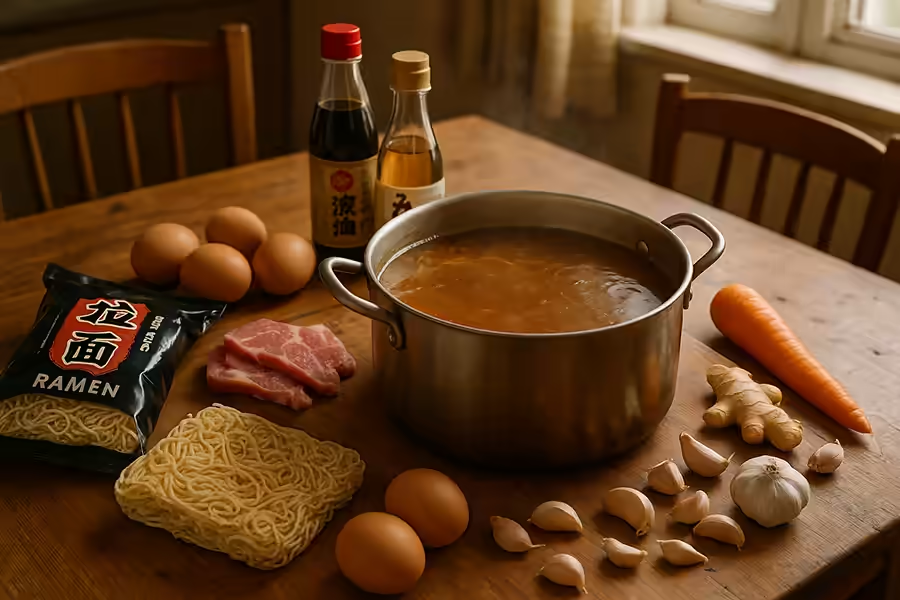
Ingredients
For the broth:
- chicken bones/parts — 800–1000 g
- pork bones or ribs (optional) — 300–500 g
- onion — 1 piece
- carrot — 1 piece
- celery stalk — 1 piece (optional)
- garlic — 4–6 cloves
- ginger — 3–4 cm of root
- water — 2.5–3 liters
- bay leaf — 1–2 pieces (optional)
- black peppercorns — 5–8 pieces
For tare (soy sauce base):
- soy sauce — 120–150 ml
- mirin — 2–3 tablespoons (or 1 tablespoon honey/sugar + 1 tablespoon rice vinegar)
- rice vinegar — 1–2 tablespoons
- garlic — 1–2 cloves
- ginger — 1–2 cm
- sugar or honey — 1 tsp (to taste)
For noodles:
- ramen noodles or other wheat/egg noodles — 300–400 g
For meat (bowl):
- pork neck/loin/brisket — 400–500 g
- soy sauce — 50 ml
- water — 50 ml
- mirin or honey — 1 tbsp.
- garlic — 2 cloves
- ginger — 2 cm
Toppings (example):
- pickled eggs — 3–4 pieces
- green onions — 3–4 stalks
- nori seaweed — 1–2 sheets
- corn — 4–6 tablespoons
- mushrooms (shiitake or champignons) — 100–150 g
- pickled bamboo (if available)
- sesame seeds — 1–2 tablespoons
Step-by-step recipe: how to make ramen at home
Step 1. Broth
- Preparing the bones
If desired, scald the bones with boiling water or boil them for 2–3 minutes and drain the water — this will give you a clearer broth. - Storing food
- Place the bones in a pot.
- Add the onion cut in half, carrots, celery, crushed garlic, ginger slices, bay leaf, and pepper.
- Pour cold water over it.
- Cooking
- Bring to a boil, skim off the foam.
- Reduce the heat to low and cook for 3–4 hours.
- Add water if necessary.
- Straining
- Strain the broth through a sieve.
- The meat can be removed from the bones and used as an additional topping.
The broth can be cooked the day before and cooled. Remove some of the fat to make it lighter.
Step 2. Tare (soy sauce base)
- Mix soy sauce, mirin, rice vinegar, and sugar/honey in a small saucepan.
- Add crushed garlic and ginger.
- Heat gently for 3–5 minutes on low heat, without bringing to a boil.
- Let it steep and strain if desired.
One serving usually requires 1–2 tablespoons of tare (adjust to taste).
Step 3. Meat (bowl)
- Season the pork, quickly fry it in a dry pan on all sides until golden brown.
- In a small saucepan, combine the soy sauce, water, mirin/honey, and add the garlic and ginger.
- Place the meat in the marinade, cover, and simmer for 40–60 minutes on low heat.
- Let it cool in the marinade, then cut into thin slices.
The marinade can be partially used to enhance the flavor (be careful with saltiness).
Step 4. Noodles
- Boil a large amount of water.
- Add the pasta and cook until al dente (slightly less than indicated on the package).
- Drain in a colander, you can quickly rinse with hot water to wash off the starch.
Always cook noodles separately from the broth.
Step 5. Toppings
Pickled eggs:
- Boil the eggs for 6.5–7 minutes after the water comes to a boil.
- Cool in cold water, clean.
- Pour over a mixture of soy sauce, water, and mirin/sugar (approximately 1:1:0.25).
- Marinate for 4 hours to a day.
Other toppings:
- green onion — finely chopped
- mushrooms — quickly fry
- corn — warm up
- nori — cut into strips
- bamboo — cut, if available
Step 6. Assembling the frame
- Warm up a deep bowl (with boiling water).
- Place 1–2 tablespoons of tar on the bottom.
- Add 300–350 ml of hot broth, stir, and taste.
- Place a portion of noodles, forming a “nest.”
- Arrange slices of meat, half a pickled egg, mushrooms, corn, greens, and nori.
- Sprinkle with sesame seeds.
Serve immediately while the broth is hot and the noodles are firm.
Variations on homemade ramen
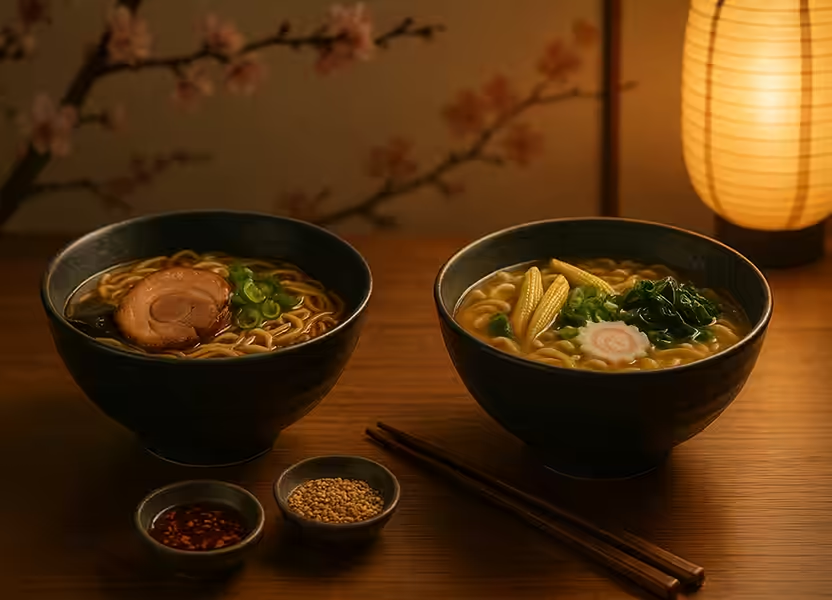
Miso ramen
- Add 1–2 tablespoons of miso paste (dissolved in a small amount of broth) to the tare.
- Toppings: fried ground pork with garlic and ginger, corn, green onions, a little butter.
Chicken light shio ramen
- Pure chicken broth without pork.
- Tare: salt, a little soy sauce, rice vinegar, or lemon juice.
- Toppings: boiled chicken, egg, shredded carrots, spinach, greens.
Vegetarian/vegan ramen
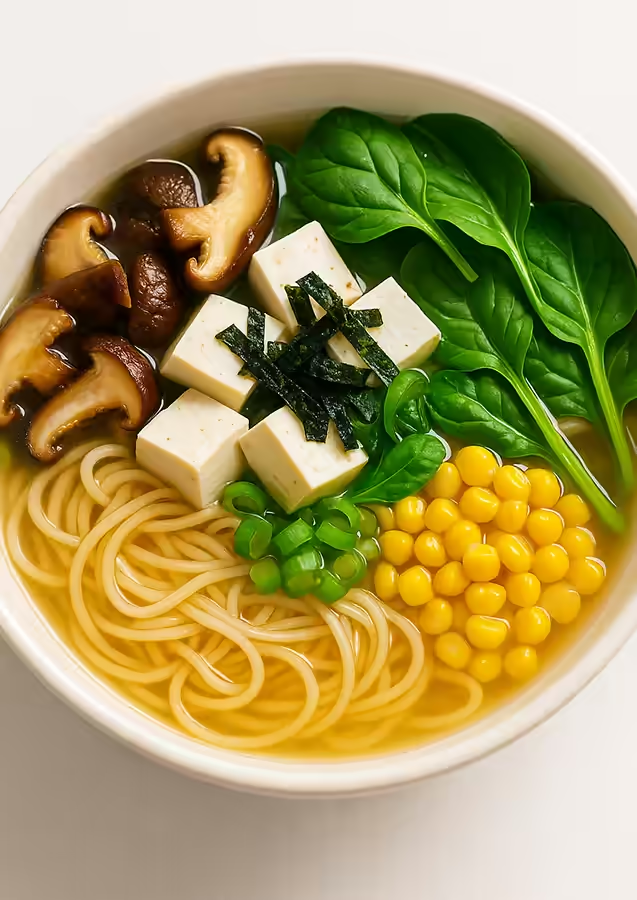
- Broth: carrots, onions, celery, mushrooms, parsley root, seaweed if possible.
- Tare: soy sauce + miso + sesame oil.
- Toppings: tofu, mushrooms, spinach, corn, nori, green onions.
Spicy ramen
- Add chili paste or chili oil to the container.
- Toppings: minced pork or chicken, fried with chili, garlic, and ginger, sesame seeds, green onions, peanuts.
“Ukrainian” ramen
- Broth: homemade chicken + beef bones.
- Toppings: stewed beef, egg, mushrooms, greens, sometimes a little sauerkraut as an accent.
- Tare: soy sauce + garlic, you can add a drop of cold-pressed sunflower oil.
Planning: how to make soup convenient for everyday life
What can be done in advance:
- broth — cook a large batch, pour into containers, and freeze
- Tare — stored in a jar for 1–2 weeks in the refrigerator
- pickled eggs — 2–3 days in the refrigerator
- meat bowl — 2–3 days in marinade or frozen in portions
On a weekday:
- defrost and heat the broth
- cook noodles
- chop the egg, meat, and greens
- Assemble the bowl — 15–20 minutes
Tips for the perfect ramen
- The flavor comes from the tare, not the overly salty broth.
- The noodles should be firm, do not overcook them.
- The bowl should be hot — warm it up before serving.
- Balance textures: soft (meat, eggs), crunchy (greens, vegetables), chewy (noodles).
- Don’t be afraid of local ingredients: it’s better to have delicious “Ukrainian ramen” than a weak copy of a restaurant classic.
Extended FAQ
Is it necessary to cook the broth for 8–12 hours?
No. For homemade soup, 3–4 hours of cooking is enough to get a rich flavor. Very long broths are appropriate if you want a “restaurant-style” tonkotsu, but it’s not a must-have.
Why is my broth cloudy?
A cloudy broth does not mean that it is bad. Cloudiness is caused by vigorous boiling, bone marrow, and fat. For a clear broth, keep the heat to a minimum; for a rich broth, on the contrary, prolonged boiling is required.
Why do noodles go sour?
- boiled in water
- stays in hot broth for too long
- thin noodles for a very hot dish
Solution: cook until al dente, serve immediately, do not keep the finished ramen “waiting for guests.”
Is it possible to make a dish without soy sauce?
You can — it will be closer to the shio style: salt + umami from bones, mushrooms, vegetables. Add a little lemon juice or rice vinegar, ginger, greens — you will get a clean, light taste.
Is it appropriate to serve the dish with lemon or lime?
Yes, especially with light chicken and vegetarian options. A few drops of citrus will refresh the broth and enhance the umami flavor.
How to eat soup correctly?
- Eat while hot, while the broth is still very warm.
- Noodles are eaten with chopsticks, broth with a spoon.
- Slurping is normal: it allows you to better appreciate the aroma, and the noodles cool down in flight.
- You don’t have to finish all the broth, but in Japan it is considered a compliment to the chef.
Can instant ramen be used as a base?
You can, but it’s better to:
- take only noodles
- do not use the powdered sauce completely
- cook your broth and make a simple tare