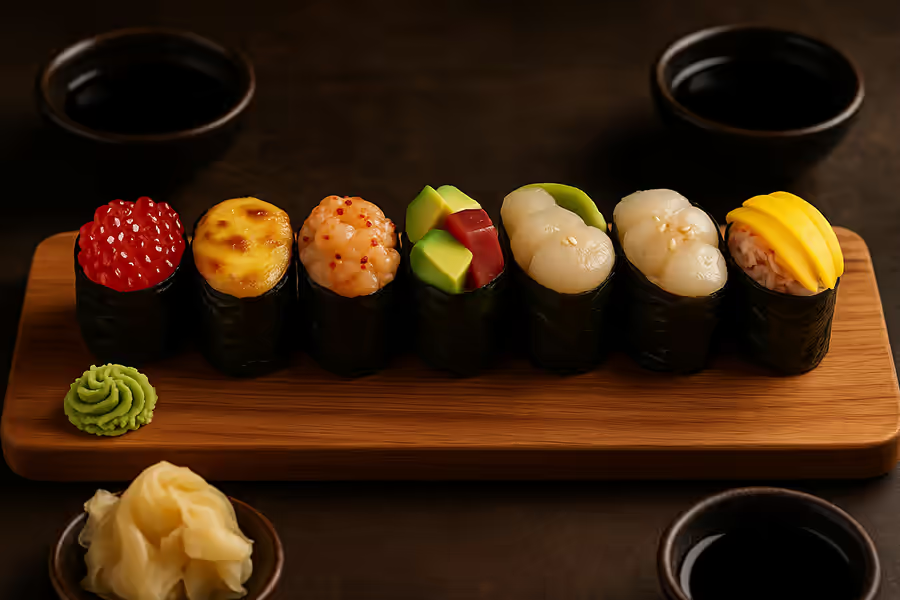
Japanese cuisine has captivated the world not only with the popularity of sushi and rolls. Among the lesser-known but no less delicious and elegant appetizers, it is worth highlighting gunkan — a unique type of sushi, which is traditionally shaped like small boats or warships. If you have ever seen the oval appetizers with elevated scallions on the menu of a restaurant, you might have been curious about how they are prepared and where they come from. In this article, we will cover everything you need to know about gunkan: from its historical origins and name derivations to detailed homemade recipes and interesting gastronomic variations.
Content
Origins and history of gunkan: from Japanese pride to global recognition
Legend of its creation
Gunkan (軍艦巻 — gunkan-zushi or gunkan-maki) is a distinctive type of Japanese sushi that resembles a “warship” or “military vessel”. This dish gets its name due to its peculiar shape: a rice base, wrapped with a strip of nori, indeed reminiscent of miniature marine vessels floating above the surface.
The history of gunkan originates in the mid-XX century, more precisely — until 1941, when these sushis were invented in the legendary restaurant “Ginza Kyubey”, located on one of the most famous streets of Tokyo — Ginza. According to one of the versions, the historical legend, the restaurant was named after the delicacies that arrived from the southern Japanese island Hokkaido — sea urchin. Guests asked the chef to prepare sushi with these delicate seafood delicacies.
The problem with the dish lies in the fact that the traditional method of preparing sushi previously involved securing the ingredients or placing them under pressure. The sea urchin – very tender and delicate – when traditionally made would have been crushed and lost its original appearance and texture. The creative chef made a genius move: instead of placing delicate parts on a compact rice cube (as in regular nigiri), he encased the rice with a seaweed wrap, preserving its original “cup” or “barrel”, in which he accurately placed the sea urchins. This gave birth to a revolutionary form of sushi that quickly gained popularity.
In another version, a similar request came from a guest who asked the chef to prepare sushi with sea urchin, which also needed to be secured from crushing. Regardless of which version is true, the result remained the same – it resulted in a new, revolutionary form of sushi that transformed the culinary tradition.
The name “gunkan” arose not by chance. At the beginning of the 20th century, the bronzed “Mikasa” became a symbol of Japan’s national pride. In addition, in Japanese military history, the linkors and cruisers occupied a special place in the imagination of the nation. Merchants and chefs who recognized the popularity of the new dish decided to utilize this connection with national pride and named gunkan in a symbolic reference to the Japanese naval fleet. Thus, this new form of sushi gained its romantic and heroic name.
Evolution and dissemination around the world
Over time, gunkan became popular outside of Japan. When Japanese immigrants brought sushi to America (especially in the 1960s), they adapted traditional sushi to the American taste, creating new forms and combinations. Gunkan became one of the most popular forms of sushi in American sushi bars, especially as they began to prepare it with crab sticks, cheese, and a rich sauce “spicy” – an adaptation of Western flavors to the Japanese tradition.
In today’s world, this is not only a festive dish, as in traditional Japan, but a common appetizer in sushi restaurants around the world. With the spread of healthy eating culture and the popularity of Asian cuisine, gunkan has found its place on the everyday menu of Ukrainian restaurants and home kitchens.
The distinction of gunkan from other types of sushi.
Many people confuse gunkan with other types of sushi, so it’s important to understand their differences.
Nigiri-sushi is a compact ball of rice (approximately 15-20 grams), covered on top with a thin slice of fish, seafood, or vegetable. They have a dish-like appearance but lack a protective shell.
Maki-sushi (rolls) are long rolls made from sushi rice and various fillings wrapped together with seaweed or rice paper, often garnished with sesame seeds.
Gunkan consists of nigiri-sushi covered with a ring of seaweed that forms a “border” for the placement of sensitive ingredients. Unlike maki, they are not rolled; they are formed by hand. Unlike regular nigiri, they have an additional “border” made of seaweed. This makes them unique and functional for specific types of fillings.
Essential ingredients.
Rice for sushi: the selection and importance of quality.
Rice is the heart of every gunkan, therefore choosing the right type is critically important. Depending on the quality of rice, not only the taste but also texture, consistency, and overall quality of the finished dish will be affected.
The best types of rice for gunkan:
- Japanese Koshihikari rice is the standard rice for sushi with the highest quality. It has a subtle pearly sheen, a tender taste, and an ideal stickiness.
- Japanese Shinihikari rice is an alternative to Koshihikari with similar qualities.
- Short-grain rice — if you cannot find Japanese, choose a high-quality glutinous rice (e.g., Italian Arborio), but it is less ideal.
It is not recommended to use long-grain rice (like basmati), as it is non-sticky and fails to hold shape.
Nutritional value of rice for sushi: 100 grams of cooked white Japanese rice contains about 130 calories, 2.6 grams of protein, 28 grams of carbohydrates, and practically 0 fat. Rice primarily contains carbohydrates, providing its energy content, though it is not particularly rich in calories when portioned for sushi.
Nori: Japanese seaweed and its characteristics
Nori (海苔) — this Japanese name for natural red seaweeds from the genus Porphyra is sold in the form of thin dried sheets. This seaweed has a light dim flavor and a thin oceanic aroma, creating a unique taste profile.
Nutritional value of nori: This seaweed contains proteins, dietary fibers, minerals (calcium, iron, potassium, zinc), and vitamin B groups (B2, B3, B9, and B12), including rare B12. This makes nori very beneficial for vegetarians and vegans.
Quality grades of nori:
Nori is classified based on the levels of quality:
| Nori class | Characteristics | Usage |
|---|---|---|
| Gold (A-class) | Shiny, soft, thinner, with a rich dark color | Premium sushi and hand rolls |
| Silver (B-class) | Silvery tint, less chewy | Standard sushi and rolls |
| Bronze (C-class) | The least desirable variety, sometimes crunchy | Harsh rolls, harsh dishes |
How to select quality nori:
- Color — quality nori should be uniformly either dark green or black with a shiny pale reddish-brown tint. Bright, vibrant green or red shades indicate poor preservation.
- Wrap — should be thin, made of fine marine aroma. Commonly a sour wrap — an indication of staleness.
- Texture — one side should be smooth (glossy), and the other should be slightly rough. With proper storage, the leaves remain easy to laminate.
- Producer — select leaves from well-known Japanese companies that guarantee quality.
The global production norm concentrates in three countries — Japan, China, and Korea. Japan produces approximately 2 billion dollars of this product annually, which makes it one of the largest export positions in the country.
Detailed homemade recipe for gunkan with salmon
Now let’s move on to practice. Here is a comprehensive step-by-step recipe for gunkan with salmon — a classic variant that will vividly introduce you to the main techniques and methods.
Ingredients (for 4-5 gunkan)
For the rice base:
- 200 g round-grain rice (mostly Japanese type Koshi-Hikari or high-quality Ukrainian short-grain)
- 300 ml clean water for boiling
- 50 ml of real rice vinegar (not to be confused with regular!)
- 1 teaspoon of white sugar
- ½ teaspoon of sea salt (not iodized)
For assembling gunkan:
- 1 sheet of nori (calculate about 1/4 of a sheet for one gunkan, in total you will need to cut out pieces)
- Cold water for rinsing the nori
For the beginning with salmon:
- 120-150 g of fresh or lightly salted salmon (it’s best to buy from a specialized store), sliced into small cubes measuring 5-8 mm
- 20 g ikura (preferably red, but black or yellow may be possible) — mainly a premium version to buy
- 20 g Japanese mayonnaise (for example, Kewpie) or regular mayonnaise
- 12 ml soy sauce (light unsalted version, if possible)
- 8 ml sesame oil (or light olive oil)
- For garnish: green chive, light and dark sesame seeds, a few leaves of micro-herbs
Step 1: Proper rice preparation — the foundation of success
This is the most crucial step, from which the quality of the whole dish depends. Many beginners tend to overlook this, but it is critically important.
1.1 Rice preparation:
Measure out rice (a cup) and rinse it under cold running water three to four times until the water is completely clear. This removes excess starch, which makes the rice stick together and mushy. Rinse accurately, moving the rice in your hand to ensure the starch is fully removed.
1.2 Water ratios:
Traditional Japanese water ratio — 1 part rice to 1.5 parts water. For 200 g of rice, you need 300 ml of water. This is very important, as different waters (spring, soft, chlorinated) may require slight adjustments, but start with these proportions.
1.3 Varieties of rice:
- Use long-grain rice in a pot or rice cooker.
- Add 300 ml of cold water.
- No lid bring to active boiling on medium-high heat.
- When the water starts to bubble, cover it and immediately reduce heat to minimum.
- Cook rice on minimum heat for exactly 15 minutes. Do not lift the lid, allow it to sit undisturbed.
- Important: Do not lift the lid while cooking — this releases steam.
1.4 Rice draining:
- After 15 minutes, turn off the heat, but leave the rice covered for another 15-20 minutes. This allows the rice to absorb any remaining moisture and achieve the necessary consistency.
- Water should even out during cooking.
1.5 Cooling:
- Transfer hot rice to a large shallow bowl or wooden pot (traditional Japanese use wooden utensils, as they retain excess moisture).
- Allow the rice to cool to comfortable serving temperature (not cold, but still warm).
Step 2: Preparation of rice seasoning
While the rice is cooling, it is critically important to prepare the seasoning:
2.1 Mixing the seasoning:
In a small bowl mix:
- 50 ml of real rice vinegar (very important! the usual white vinegar makes rice bitter)
- 1 teaspoon of sugar (not corn syrup)
- ½ teaspoon of sea salt (not iodized, as iodide makes it taste bitter)
2.2 Heating the seasoning:
Heat this mixture on low heat or in a microwave (just 20-30 seconds), until the sugar and salt completely dissolve. Do not boil the seasoning — it should remain warm, not hot.
2.3 Mixing the seasoning with rice:
- Quickly mix it with the cooled rice.
- Swiftly stir it with any spatula or special wooden turner. Do not mash the rice – simply spread the seasoning evenly so that each grain is coated with the mixture.
- The process should take no longer than 1-2 minutes. If you stir too long, the rice may break and become mushy.
2.4 Additional cooling:
Let the rice cool down to room temperature before forming the sushi rolls. Some recipes suggest that the rice is ready when it can be touched with bare hands without discomfort.
Step 3: Forming the rice base
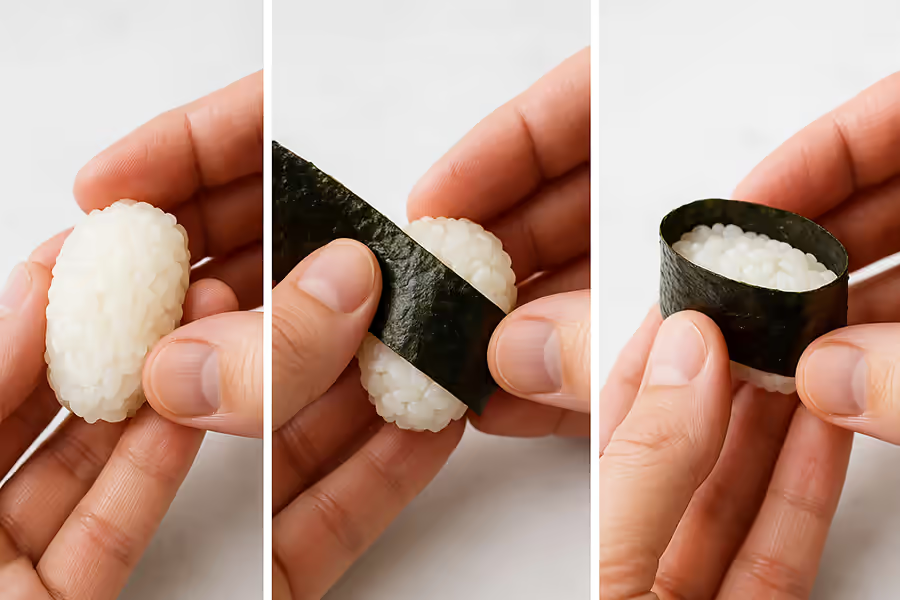
This is the most sensitive part of the process that requires some practice. For the first time, the sushi may not be perfectly shaped – this is normal.
3.1 Preparing hands:
Wet your hands in cold water with a pinch of rice vinegar. Some recipes also add a bit of salt. This prevents the rice from sticking to your hands and makes the work easier.
3.2 Forming the rice base:
- Take approximately 1 tablespoon of rice (this is typically 15-20 grams per serving depending on how much you mix).
- Spread the rice by hand in a slightly oval shape with an approximate size of 2 cm x 3-4 cm. The shape should be compact, but not too tightly packed — the rice should remain fluffy and “breathe”.
- Tip: Do not press the rice too hard. You can check how well it holds together: if you spread the formed rice in a thin layer, it should easily fall apart if pressed too much, but maintain its shape under normal conditions.
3.3 Arrangement of Rice Base:
Place the formed rice on a clean surface (ideally on a plate for sushi, bamboo mat, or simply on a clean ceramic dish).
Step 4: Seasoning and arrangement of the base.
This is a critical step, as the base must be properly seasoned with vinegar.
4.1 Arranging the Nori Sheet:
- Take one sheet of nori and cut it into strips about 3-4 centimeters (approximately 1.5-2 inches). It can be beneficial to use scissors (the most popular option, as they provide a clean cut), or a sharp knife.
- You’ll get approximately 4-5 strips from one sheet, depending on the size.
4.2 Wrapping Nori around the Rice Base:
- Wrap one strip of nori around the rice base horizontally so that the nori overlaps on the rice by 0.5-1 cm. This creates a “bar” for the beginning.
- Gently overlap the edges of the nori, leaving a small gap (approximately 0.5 cm) before you “seal” the sheet.
4.3 Securing the Nori:
- Moisten the edge of the nori with cold water – just enough to make one edge stick to the other.
- Place the edge of the icing to the other side, accurately using spatulas for about 5-10 seconds. The icing edge should stay moist — this is a natural layer.
- If the water becomes too quick, add the edge once more.
Step 5: Preparing the salmon starter
While forming the thickness, we prepare the starter. This should be done close to the delivery moment to keep everything fresh.
5.1 Bringing the salmon together:
- Use fresh salmon cut into 5-8 mm cubes. The size of the cubes should be about uniform for aesthetics.
- Use a sharp knife for a clean cut to prevent tearing the fibers.
5.2 Mixing the starter:
In small quantities mix:
- Chopped salmon (120-150 g)
- Ika tobiko (20 g)
- Japanese mayo (20 g)
- Soy sauce (12 ml)
- Kewpie oil (8 ml)
Mix carefully with the help of a small spoon, so as not to crush the ikura. The ikura is very delicate, so handle it gently.
5.3 Additional ingredients:
Optional, add:
- Chopped fresh green cilantro (for a refreshing herbal kick)
- Light and dark sesame seeds (for texture and aesthetics)
- Micro-greens or young parsley leaves (for decoration and freshness)
Step 6: Final assembly
6.1 Placing the starter:
- Take a small spoon (teaspoon or dessert spoon) with the prepared starter.
- Carefully place the starter in “a cup” of thickness, filling it with the light layer (approximately 1-1.5 cm above the edge).
- The starter should not spill out, so distribute the portion evenly.
6.2 Securing the starter:
- If the starter appears uneven, add a dollop of Japanese mayonnaise at the edge for better adhesion.
- The detailed culinary instructions “attach” one or two rice grains de-nebulize at the lower edge of the norii for better fixation — this is not obligatory, but it helps.
6.3 Improvement:
- For enhancement, decorate with cunjut, micro-greens, or additional pieces of greenery for an aesthetic effect.
- Important: improvement must adhere to the principle “less is more” — the thickness should look elegant, not overbearing.
6.4 Serving:
Serve the thickened as a garnish after preparation, while the nori is still crisp, and the topping is fresh. The thickened part should be complemented with two plates or one, depending on the size, making sure to not overload the base.
Considerable advice from experts for ideal thickening.
To ensure thickening turns out perfectly, follow these checked recommendations:
About rice
- Do not compromise on rice quality. Round-grained Japanese rice genuinely creates a huge difference. If you cannot find Japanese rice, choose a good Ukrainian or European short-grain variety. Cheap rice often contains foreign grains or pebbles.
- Water for cooking rice. For the best results, use filtered water — chlorine and minerals in tap water can affect the taste.
- Rice for sushi should not be variable with the grain. The grain adds stipulations to the dressing. This ensures proper consistency.
About water for soaking
- Prepare a small jar of clean cold water with a few rice vinegar granules and salt. This preserves the integrity of the rice during handling.
- Sometimes moistening your hands during shaping — dry hands will absorb all the rice.
About temperature
- All ingredients, except for the starting ones, must be room temperature, but not cold. Hot rice will expand the grains, while too cold will make it hard to shape.
- Starting with the freshest and coldest options.
About size and shape
- One gunkan calculated for 1-2 servings. Do not try to make them too large — this makes them awkward to eat and detracts from elegance.
- The shape is oval, not round. An oval shape looks more natural and suggests a clear contour of the shell.
About freshness and storage
- Gunkan is better offered right after preparation. If you need to wait, cover them with wet paper towel or plastic wrap to prevent them from drying out and remaining tacky.
- The maximum storage time at room temperature is 1-2 hours. After this, the quality may deteriorate.
About the technique of preparing nori
- Knives give a cleaner cut than scissors. When using scissors, they constantly pull at the sticky rice.
- Characteristic: Some chefs previously prefer to cut nori dry before preparing — this makes the leaf lighter and easier for wrapping.
About the quality of the starter
- Always buy salmon from specialized stores or trusted fish dealers. The quality of the fish directly influences the taste and safety.
- Tobiko and other ikura must be fresh — this is critically important.
Popular gunkan variations for all palettes
One of the main advantages of gunkans is their universality and flexibility in choosing a starter. Here are some of the most popular variations, which are easy to prepare:
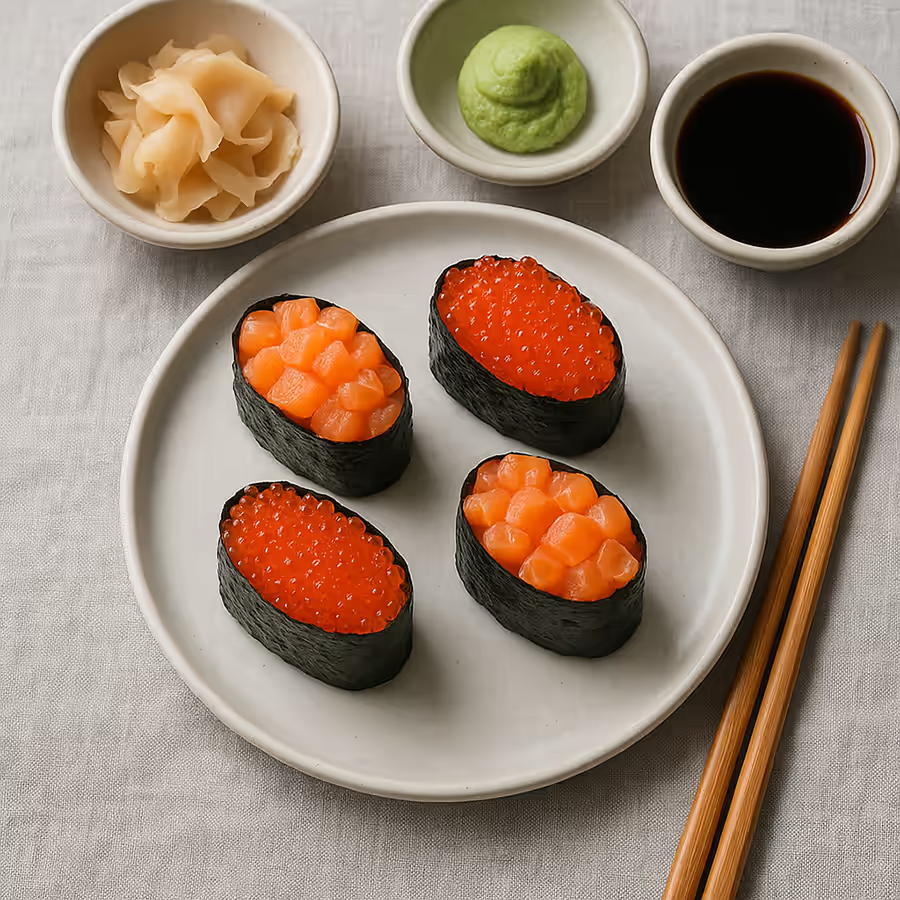
1. Classic gunkan with crab sticks and cheese (Kani Mayo Gunkan)
One of the most popular variations, especially in western restaurants:
Ingredients:
- 250 g crab sticks (or real crab meat, if allowed to make your own luxury)
- 90-100 g of natural firm cheese (mostly cheddar or emmental)
- 1.5 tablespoons of Japanese mayonnaise
- 1.5 tablespoons of soy sauce
- ½ teaspoon of sesame oil
- To taste: chips of spicy sauce
Preparation:
- Chopped shrimp marinated in cubes (if you want them whole) with small pieces.
- Mix with other ingredients.
- Plate on a gunkan.
Suggested variant: This variant can be baked in the oven at a temperature of 180°C for 8-10 minutes, until the cheese is melted and has not gained a golden crust. This makes a dish spicy, Hawaiian, and uniquely delicious — also known as “Baked gunkan” has become a synonymous with comforting spicy snack.
2. Gunkan with shrimp and spicy sauce (Spicy Ebi Gunkan)
For those who love spicy and pickled flavors:
Ingredients:
- 150 g of boiled shrimp, diced
- 1-2 teaspoons of spicy sauce (a mixture of mayonnaise with chili, commonly referred to as Sriracha mayo)
- 12 ml of soy sauce
- 8 ml of lemon juice (freshly squeezed)
- 5 ml of sesame oil
- To taste: crushed pickled pepper, sesame seeds
Preparation:
- Carefully mix everything together so that the shrimp remain whole.
- Plate on a gunkan.
- This variant particularly suits people who love spicy Asian cuisine.
3. Gunkan with avocado and tuna (Avocado Tuna Gunkan)
A fresh and light variant, ideal for summer days:
Ingredients:
- 100 g of fresh tuna, diced
- ½ ripened avocado, diced (usually, avocado should be ideally ripened)
- 12 ml of lemon juice (to prevent the avocado from darkening)
- 10 ml of soy sauce
- 5 ml of light olive oil (or sesame oil)
- To taste: micro-greens, black sesame seeds
Preparation:
- Mix tuna and avocado very carefully.
- Add the remaining ingredients.
- Plate on gunkan right before serving, so that the avocado does not oxidize.
- This variant reveals refreshing, exotic flavors.
4. Gunkan with scallops and sesame oil (Scallop Gunkan)
For lovers of seafood, who are always looking for something special:
Ingredients:
- 100 g of boiled scallops (or shellfish), finely diced
- 25 g cream cheese (from creamy cheese or butter)
- 8 ml of sunflower oil
- 6 ml of soy sauce
- For garnishing: white sesame seeds, green onion
Preparation:
- Mix the filling with cream cheese as a base.
- Add sunflower oil and soy sauce.
- Serve in thin layers.
- Sprinkle with white sesame seeds for contrast.
- Cream cheese creates a creamy texture, which wonderfully complements the filling.
5. Gunkan with mango and crab meat (Tropical Gunkan)
An interesting option with sweet and salty contrast, popular in western restaurants:
Ingredients:
- 80 g of crab meat or crab sticks
- 60 g of diced ripe mango
- 25 g of cream cheese
- 8 ml of Japanese mayonnaise
- 5 ml of lime juice (from mango)
- For garnish: microgreens, coconut flakes
Preparation:
- Mix crab meat with cream cheese and mayonnaise.
- Add lime juice and mango.
- Serve in thin layers.
- For additional flavor, sprinkle with dried coconut for an exotic touch.
- This option creates a wonderful balance between sweet and savory.
6. Vegetarian gunkans (Vegetarian Gunkan)
For vegetarians and vegans:
Option 1 — Vegetables and avocado:
- Cucumber, avocado, carrot, diced ripe mango
- Cream cheese or Japanese mayonnaise as a base
- Sunflower oil and sesame seeds
- Lime juice
Option 2 — Tomatoes and basil:
- Fresh tomatoes, diced ripe mango
- Mint leaves for garnish
- Cream cheese or vegan alternative
- Olive oil, black pepper
Option 3 — Mushroom starter:
- Sautéed mushrooms, diced ripe mango
- Sautéed garlic
- Sunflower oil
- Soy sauce
All vegetarian options show that gunkans are a universal form not limited to seafood.
Baked (spicy) gunkans: experimentation and adaptation
In addition to traditional recipes, we have a way to prepare baked gunkan — a modern adaptation of this dish that combines Japanese tradition with western methods of preparation. They are usually made like regular gunkans, but before serving, they are baked in the oven. This radically changes their texture and flavor.
How to prepare baked gunkans:
Preparation Steps:
- Shape the gunkans using a regular method with already cooked rice and nori.
- Prepare the filling for baking:
- Mix 250 g of crab sticks (or imitation crab) with rice vinegar, spicy sauce, and about 90-100 g of hard cheese (finely grated).
- You can also add Japanese mayonnaise for creaminess.
- Spread it on a base, using a parchment or silicone mat.
- Preheat the oven to a temperature of 180°C (350°F).
- Bake the gunkans for 8-10 minutes, until the cheese melts, but do not let them brown and not exceed light-golden color. Do not bake too long — usually, they should not turn black or burn.
- Let them cool slightly (approximately 2-3 minutes) before serving — they will be very hot.
Results and advantages of baked gunkans:
Baked gunkans acquire a wonderful multi-layered texture:
- Top — crispy, slightly chewy cheese layer
- Middle — soft, hot fillings and other ingredients
- Bottom — fluffy, warm rice
- Crust — crispy either by the cheese or the excess filling that slightly charred
These baked gunkans make comfortable dishes for cold days and become “sugary European” servings.
Frequently asked questions (FAQ)
Question 1: What can replace the nori, if it is unavailable?
Answer: Generally, you can replace only thinly sliced fresh (not marinated) produce. This creates a fascinating contrast between freshness and saltiness, although the taste may be slightly different. However, be sure to note that the produce is an essential part of authentic cuisine, and today this product can easily be found in any supermarket in the aisle of Asian products, in online stores, or in specialized groceries. The price is generally very affordable.
Alternatives:
- Thinly sliced soybean panel (if you are preparing a vegan version)
- Very thinly sliced shredded cabbage (for saltiness)
Question 2: How to store produce at home if left unsold?
Answer: It is best to prepare and serve as needed. However, if storage is required:
- At room temperature: Maximum 1-2 days. Cover them with wet paper towels or cellophane.
- In the refrigerator: Placed in an airtight container at a temperature of 2-4°C, they can be stored for a maximum of 2-3 days. They will lose freshness and taste but will remain edible. The salt may dissolve, but the taste will remain interesting. Before serving, you can slightly revive the produce at room temperature.
- Do not freeze produce — when thawed, they become soft and unappetizing.
Recommendation: Prepare consistently, gradually, so they always remain fresh.
Question 3: Which soybean sauce is better to use?
Answer: For sushi and other dishes, traditionally it is recommended to use light soy sauce (light variety). It is less salty and milder in taste than regular dark soy sauce. The label should state “Light Soy Sauce” or “Shio-dare.”
Different types of soy sauces:
- Light soy sauce (Usukuchi) — for sushi and delicate dishes.
- Dark soy sauce (Koikuchi) — for marinades and sauces.
- Tamari soy sauce (Tamari) — gluten-free, has a bolder flavor.
Although it is a specialized sauce, you can use regular dark soy sauce, just in slightly smaller amounts, as it is more intense.
Question 4: Can you make udon without cheese?
Answer: Absolutely! Cheese is a Western adaptation and evolution of the recipe, not a traditional Japanese ingredient. In traditional udon, which are made in Japan, only various forms of wheat, seasonal vegetables, and seafood without any cheese are used.
Classic cheese-free udon variations:
- With ikura (the most traditional)
- With sea urchin
- With salmon
- With crab meat
Experiment to your own preferences and traditional tastes. There is no “correct” recipe — only your favorite.
Question 5: How long does the cooking take from start to finish?
Answer:
- Prepared rice takes: Cooking takes approximately 20-30 minutes (including seasoning, draining, and wrapping the beginning).
- With brown rice (including variations of rice): Approximately 50-70 minutes, since most of the time goes to the brown rice (15 minutes) and its cooling and seasoning (30+ minutes).
- Pure working time: Roughly 15-20 minutes of active work.
Time-saving tip: If you want to save time, prepare the rice in advance. The cooled rice for sushi can be stored in the refrigerator for up to 24 hours in an airtight container.
Question 6: What ingredients are the most accessible and affordable for udon?
Answer: The most accessible and affordable options:
- Udon with crab sticks — crab sticks are usually cheaper than real fish, and they are easy to find even in supermarkets.
- Macaroni with red sauce (bolognese or tomato) — the dish is nutritious, quite accessible and is prepared quickly.
- Vegetarian macaroni — vegetables and avocado often are cheaper than seafood.
- Macaroni with salted crab meat — salted version may be cheaper than the fresh varieties.
Regional availability: In different regions of Ukraine, the availability of components varies. In large cities, finding necessary ingredients is usually easier than in small towns.
Question 7: Is macaroni useful from a health perspective?
Answer: Macaroni have mixed nutritional value. They could be part of a healthy diet, but it is necessary to recognize the limitations:
Positive aspects:
- Rice provides carbohydrates and energy
- Norm can include fiber, vitamins, and minerals (calcium, iron, zinc, potassium)
- Salmon and other fish products — contain omega-3 fatty acids, which are beneficial for the heart and brain health
Negative aspects:
- High fat content:
- Macaroni often contains mayonnaise, cheese, and other fatty ingredients
- Processed macaronis still contain more calories
- Possible high sodium content (soy sauce, salt)
- Average calorie content — one macaroni can contain approximately 80-150 calories depending on the starting ingredients
Conclusion: Macaroni is not a diet food, but garlic sauce for special occasions. For regular consumption, it is recommended to prepare lighter versions with minimal mayonnaise and cheese.
Question 8: How to serve macaroni to guests on holidays?
Answer: Macaroni looks beautifully plated during serving, especially if adhering to certain rules:
Serving:
- Place the macaroni on a specialized napkin, tray, or board for serving.
- Arrange them in one row or in a preferred order.
- Add small pieces with:
- Soy sauce
- Wasabi (Japanese horseradish)
- Marinated imbir (gari)
- Leave the pickles at room temperature and serve after one hour of preparation.
Appearance:
- Contrasting colors (dark vine, bright pickles) already look beautiful
- Micro-greens and herbs add elegance
- Ideal quantity (8-12 pickles per portion for appetizers, 15-20 for the main dish)
Carry-out: pickle as a masterpiece and with finesse
Pickles — are not just simple snacks, this is an art in miniature which combines Japanese traditions with creative freedom. They require simplification in preparation, than is apparent at first glance, but demand care for details and quality of ingredients.
The main rule when preparing pickles is the quality of the ingredients, love for the process, and patience. Hot rice, excellent vine, accurate forming, correct room temperature — and your pickles will be as beautiful and tasty as in the most prestigious sushi restaurants.
Starting from a classic pickle with salmon or crab sticks, you can easily experiment with other variations and create your own combinations that please you and your family. Vegan variations, fermented versions, and exquisite variations — there is simply no limit to creativity.
Try it already today, and I guarantee this dish will become your favorite for everyday use, as well as for a celebratory table. Pickles — are further proof that Japanese cuisine rivals the simplicity of form and complexity of taste.