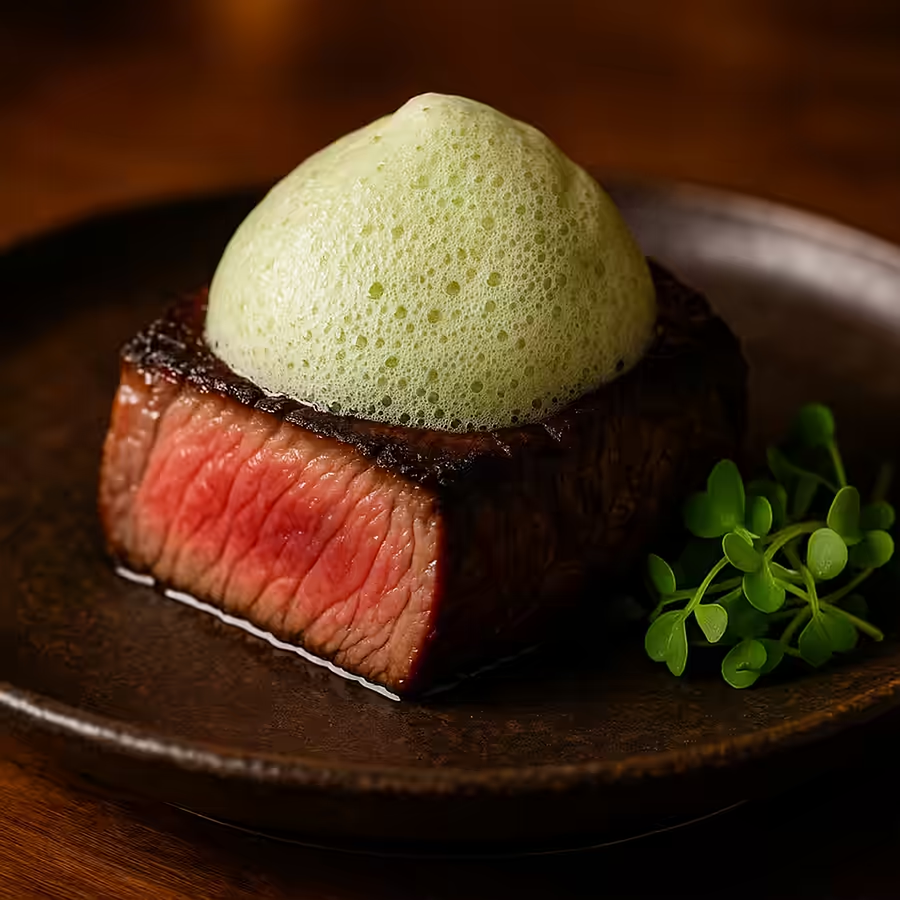
Espuma is one of the most sophisticated techniques in molecular cuisine, allowing you to transform almost any product into a light, airy foam with a rich flavor. This revolutionary technique has changed the perception of food texture and has become an integral part of the menus of the world’s best restaurants. In this article, you will learn about the history of espuma, the principles of its preparation, the necessary equipment, various recipes, and expert tips for achieving the perfect result.
Content
What is espuma in cooking?
The word “espuma” comes from Spanish and Catalan and literally translates as “foam.” In a culinary context, espuma is a technique for preparing an extremely light, airy mousse or foam using a special culinary siphon and gas cartridges. Unlike traditional culinary foams, such as whipped cream or meringue, espuma allows you to create foam from virtually any ingredient, from vegetable purées and broths to sauces, juices, and even soups.
The main feature of espuma is that it preserves the pure, concentrated taste of the base product, while acquiring an incredibly delicate, airy texture. As Ferran Adrià, the creator of the technique, aptly put it, espuma allows you to feel the “soul” of a dish, revealing its true flavor identity. This technique has opened up endless possibilities for creativity and experimentation for chefs.
The history of espuma: Ferran Adrià’s revolution
The history of espuma is inextricably linked to the name of legendary Catalan chef Ferran Adrià and his revolutionary restaurant El Bulli. Located near the town of Roses on Spain’s Costa Brava, this establishment was named the world’s best restaurant five times by Restaurant magazine (in 2002, 2006, 2007, 2008, and 2009).
The birth of technology in 1994
It was in 1994 that Ferran Adrià first presented a dish that forever changed the gastronomic world — espuma de judías blancas con erizos, or white bean foam with sea urchins. This dish is considered the first in history where food was transformed into culinary foam in the modern sense of the term. Visually, it looked like a delicate white cloud resting on the sharp needles of a sea urchin — the contrast between softness and prickliness created an incredible impression.
The principle of “Creativity is not copying”
Adrià always followed the principle that “creativity is not copying.” He sought to interpret the taste of food in a new way, rejecting the limitations of the physical properties of products. Before the advent of espuma, the concept of incorporating air into food already existed in the form of whipped cream, meringues, and mousses. However, Adrià’s contribution was that he began to use savory ingredients to make foam and mastered the technique of creating hot foams.
The closure of El Bulli and its legacy
El Bulli closed on July 30, 2011, after 47 years of operation, but its legacy lives on. Techniques that are now considered commonplace in haute cuisine—espuma, spherification, the use of liquid nitrogen—were created at this legendary establishment. After a brief decline in popularity in the 2010s, espuma has returned to the culinary scene and firmly established itself as a way to add depth of flavor and elegance to dishes.
Science behind Espuma: how it works
To successfully prepare espuma, it is important to understand the principles of its formation. Essentially, espuma is a stable emulsion in which air in the form of tiny bubbles is evenly distributed in a liquid base.
Principle of operation of the siphon
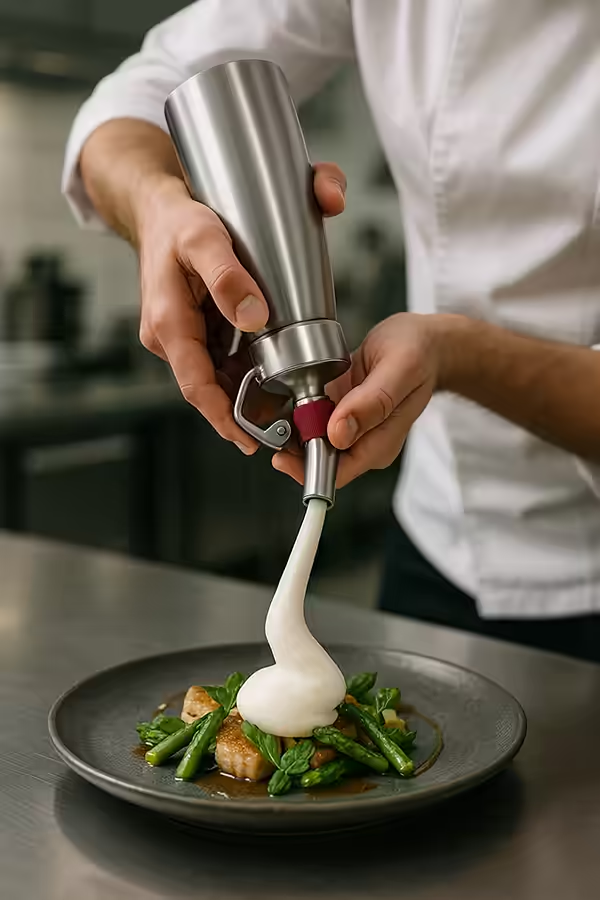
A culinary siphon consists of a body (a bottle containing the mixture) and a head (a part with a cartridge and a lever). The process works as follows:
- Filling: The liquid mixture is poured into the siphon body.
- Sealing: The head is tightly screwed onto the body.
- Gas charging: A nitrous oxide (N2O) cartridge is inserted into a special holder and punctured.
- Gas dissolution: Under high pressure, gas dissolves in liquid.
- Shaking: Shake the siphon to distribute the gas evenly.
- Extrusion: When the lever is pressed, the pressure drops sharply, the gas escapes from the solution in the form of small bubbles, forming foam.
The role of nitrous oxide (N2O)
The nitrogen oxide used in siphon cartridges is the same gas found in cans of whipped cream. When the cartridge is pierced, the gas, which is under pressure many times greater than atmospheric pressure, enters the siphon body. There it dissolves in the liquid. When the mixture is squeezed out, the pressure drops sharply and the gas escapes from the solution, forming thousands of tiny bubbles that turn the liquid into airy foam.
Factors affecting consistency
The density and stability of foam depend on several factors:
- Amount of stabilizer: the more binding agent, the denser the foam
- Temperature: some stabilizers only work at certain temperatures
- Cooling time: prolonged cooling usually results in denser foam.
- Composition of the base mixture: presence of fats, proteins, and other components
- pH of the environment: acidity can affect foam stability
Equipment needed to make espuma
Culinary siphon (creamer)
This is the main tool for making espuma. The most popular siphons are from the iSi brand, in particular the iSi Gourmet Whip model, which is suitable for both cold and hot applications. Siphons are available in volumes from 250 ml to 1 liter. For home use, 500 ml is the optimal volume.
Gas cartridges
Nitrous oxide (N2O) cartridges are used for espuma. Usually, one cartridge is enough for whipped cream and two for espuma for a 500 ml siphon. It is important not to confuse N2O cartridges with CO2 cartridges, which are only intended for carbonating beverages.
Additional equipment
- Blender or immersion blender: for making smooth purées
- Fine sieve: for straining the mixture before pouring it into the siphon
- Kitchen scales: for accurate dosing of stabilizers
- Thermometer: for controlling the temperature when working with gelatin and agar
- Water bath: for heating the siphon with cold espuma
Stabilizers for espuma: a comprehensive overview
A stabilizer is an ingredient that helps maintain the structure of the foam and prevents it from collapsing quickly. The choice of stabilizer depends on the base product, the desired consistency, and the serving temperature.
Fat-based stabilizers
Cream and dairy products
The fat in cream allows you to create a thick, silky foam that everyone knows as whipped cream. Cream works best when cold. Other fatty dairy products that can be used:
- Mascarpone (thinned with liquid)
- Cream fresh
- Cream cheese
- Yogurt
- Clarified butter
Egg yolks also act as a fat stabilizer due to their lecithin content.
Protein-based stabilizers
Egg whites
Egg whites form foam due to their ability to form stable molecular bonds when in contact with air. They work best at room temperature and are not suitable for hot foams. Important: egg whites do not mix with fats, so only use them for water-based solutions.
Milk
Milk proteins form relatively stable bubbles when heated, making milk an excellent choice for hot foams.
Gelatin
Gelatin is one of the most popular stabilizers for espuma due to its availability and ease of use. It is only suitable for cold and cool applications.
How to use:
- Soak the gelatin sheets in cold water for 5-10 minutes.
- Squeeze out excess water
- Add gelatin to warm (not hot!) liquid.
- Stir until completely dissolved.
- Strain, pour into a siphon, charge, and chill for 4-24 hours.
Proportions: from 0.2% to 2.5% of the liquid mass
Lecithin
Soy lecithin is a modern stabilizer that works in both cold and hot mixtures. Its main advantage is that the foam is ready immediately after charging the siphon, without the need for prolonged cooling.
Proportions: from 0.5% to 2% of the liquid mass (2.5-10 g per 500 ml)
If only
Agar is the ideal choice for warm foams. Its special feature is that after solidifying (at 32-40°C), it remains in gel form when heated to 85°C.
How to use:
- Mix the agar with the liquid.
- Bring to a boil and boil for 5 minutes.
- Chill in the refrigerator until set.
- Blend until smooth.
- Pour into the siphon, charge
- Heat in a water bath to 32-85°C before serving.
Proportions: from 0.25% to 3% of the liquid mass
Starch
Potato, corn, or rice starch is a versatile stabilizer that works in both hot and cold applications.
How to use:
- Dissolve the starch in a small amount of cold liquid (make a suspension).
- Add to the main liquid
- Heat until thickened
- Strain into a siphon, charge
- Serve hot or chill
Xanthan gum
Xanthan gum is a stabilizer, not a foaming agent, so it is used in combination with other ingredients or for liquids that are already capable of forming foam. Its main advantage is that it works at any temperature.
Proportions: from 0.1% to 0.7% of the liquid mass
Basic technique for preparing espuma
Step-by-step instructions
- Prepare the base: Prepare the base mixture (puree, sauce, broth, etc.). It should be smooth and thin enough to pass through the siphon valve.
- Adding stabilizer: Measure out the required amount of stabilizer and add it to the mixture according to the instructions for the selected type.
- Straining: Be sure to strain the mixture through a fine sieve before pouring it into the siphon. Any pieces can clog the valve.
- Filling: Pour the mixture into the siphon, filling it no more than 2/3 full.
- Closing: Tightly screw the siphon head onto the body.
- Gas charging: Insert the N2O cartridge into the holder and screw it in until you hear a characteristic hissing sound.
- Shaking: Shake the siphon well 4-5 times in an inverted position.
- Cooling or heating: Depending on the recipe, cool the siphon in the refrigerator or heat it in a water bath.
- Serving: Holding the siphon vertically with the head facing down, press the lever and squeeze the espuma onto the dish.
Important tips
- Always store the siphon with the head facing upwards (except when in use).
- Shake the siphon gently before each squeeze.
- Do not refill the siphon more than recommended (usually 1-2 cartridges per 500 ml).
- Espuma is best in the first few hours after preparation.
Espuma recipes: from classics to original variations
Potato espuma (classic)
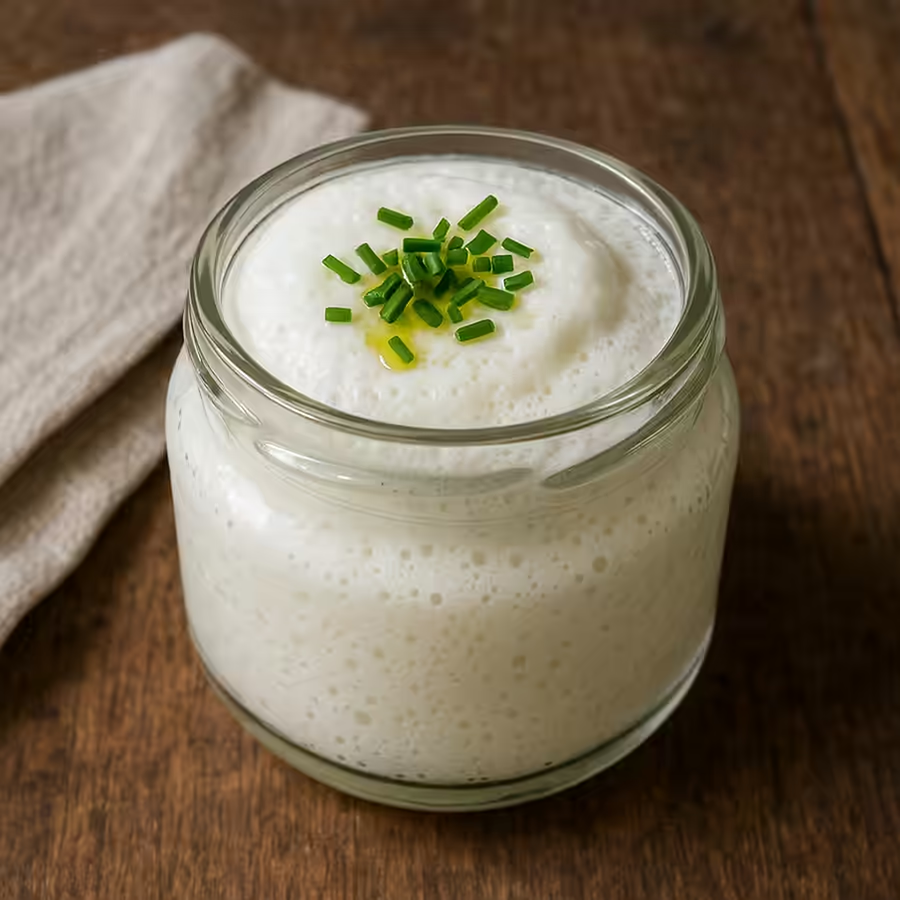
Potato espuma is one of the most popular savory variations, which goes well with meat dishes, steaks, and stewed vegetables.
Ingredients:
- 400 g floury potatoes
- 200 g onions
- 700 ml vegetable broth
- 500 ml cream 33%
- 2 bay leaves
- 3 g salt
- Pepper to taste
Preparation:
- Cut the onion into thin slices and fry in oil until soft (without color).
- Add the diced potatoes, broth, cream, and bay leaf.
- Cook until the potatoes are tender and the total weight has reduced to 1100 g.
- Remove the bay leaf and blend until smooth.
- Strain, pour into the siphon, load with one cartridge
- Heat in a water bath before serving.
Parmesan espuma
An elegant espuma with a rich cheese flavor, perfect for pasta, risotto, and vegetable dishes.
Ingredients:
- 300 ml whipping cream
- 100 g grated Parmesan cheese
- Salt to taste
- A pinch of nutmeg
Preparation:
- Bring the cream to a boil.
- Remove from heat and stir in grated Parmesan cheese until completely dissolved.
- Add salt and nutmeg.
- Strain, pour into a siphon, charge
- Serve warm
Hrinova espuma
A savory espuma that perfectly complements meat dishes, especially beef and pork.
Ingredients:
- 150 ml meat broth
- 150 ml cooking cream
- 1 small potato
- 1 small onion
- 50 g fresh horseradish
- 30 g butter
- Salt and pepper to taste
Preparation:
- Fry the chopped onion in oil.
- Add the chopped potatoes, pour in the broth and cream
- Season with salt and pepper and cook until the potatoes are tender.
- Add grated horseradish
- Blend with a blender until smooth and liquid.
- Cool, strain into a siphon, charge
- Chill in the refrigerator for at least 4 hours.
Chocolate espuma
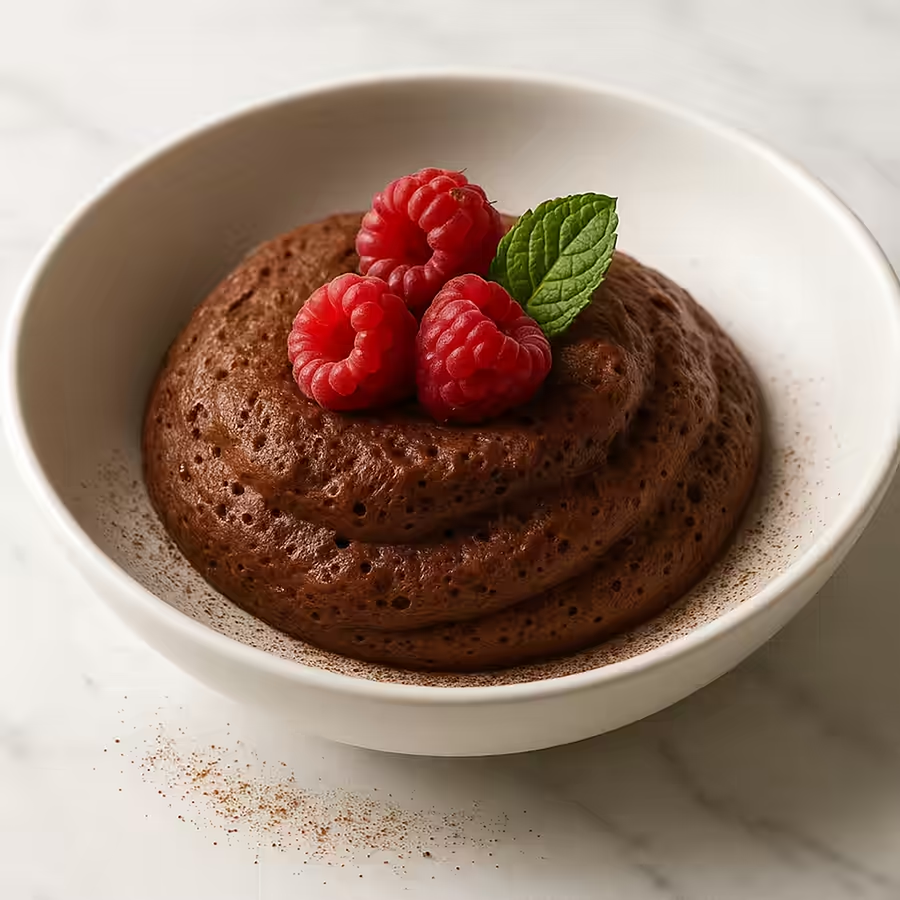
A luxurious dessert option with a deep chocolate flavor.
Ingredients:
- 100 ml of milk
- 100 ml cream 33%
- 50 g dark chocolate (70% cocoa)
- 50 g avocado (for creaminess)
- 10 g sugar
Preparation:
- Heat the milk and cream
- Add the chopped chocolate and sugar, stir until completely dissolved.
- Add the avocado flesh and blend with a blender.
- Strain, pour into a siphon, charge
- Chill for at least 2 hours.
- Serve with fruit or desserts.
Blueberry espuma
Fresh fruit espuma, perfect for desserts and breakfasts.
Ingredients:
- 120 g blueberries
- 30 g sugar
- 10 ml lemon juice
- 70 g mascarpone
- 70 ml of milk
- 70 ml cream
- 1 sheet of gelatin
Preparation:
- Soak the gelatin in cold water.
- Boil blueberries with sugar and lemon juice.
- Blend and strain
- Add the squeezed gelatin to the warm puree and stir.
- Add the mascarpone, milk, and cream, and whisk until smooth.
- Strain into a siphon, charge
- Chill for 4-6 hours
Almond espuma
Delicate espuma with nutty aroma for desserts.
Ingredients:
- 200 ml milk
- 100 g almonds
- 40 ml milk (additional)
- 100 ml cream
- 25 g sugar
Preparation:
- Pour milk (200 ml) over the almonds and leave overnight.
- Blend with a blender and strain through cheesecloth to obtain almond milk.
- Mix 60 ml of almond milk with extra milk, cream, and sugar.
- Heat until the sugar dissolves.
- Strain into a siphon, charge
- Chill before serving.
Red cabbage espuma
Original brightly colored espuma for festive dishes.
Ingredients:
- 300 g red cabbage
- 400 ml vegetable broth
- 2 tablespoons apple cider vinegar
- 2 sheets of gelatin
- Salt and pepper to taste
Preparation:
- Soak the gelatin in cold water.
- Finely chop the cabbage, pour in the broth
- Add salt, pepper, vinegar, and cook until tender.
- Blend until smooth.
- Cool slightly, add the squeezed gelatin, stir
- Strain into a siphon, charge
- Chill for 4-6 hours
Espuma crema catalana
An exquisite dessert inspired by classic Spanish cream.
Ingredients:
- 80 g sugar
- 30 ml of water
- 200 ml cream 33%
- 200 ml milk
- 1 cinnamon stick
- 80 g egg yolks
- 160 g mascarpone
- Zest of half an orange
- Zest of half a lemon
- 60 ml orange juice
Preparation:
- Caramelize sugar with water until golden brown.
- Carefully pour in the cream (the mixture will bubble up!)
- Add milk and a cinnamon stick, heat
- Separately, lightly beat the egg yolks and gradually pour in the hot mixture, stirring constantly.
- Add the mascarpone, zest, and orange juice.
- Strain into a siphon, charge
- Chill for at least 4 hours
Variations and creative ideas
Salty variations
Celery espuma is a wonderful accompaniment to fish and seafood. It is made from boiled celery root with the addition of cream.
Beetroot espuma — its bright color and sweet taste will complement meat dishes and salads.
Pea espuma — spring freshness for lamb and poultry dishes.
Mushroom espuma — a rich umami flavor for steaks and pasta.
Tomato espuma is a light alternative to tomato sauce.
Sour cream espuma is a versatile base that goes well with both savory and sweet dishes.
Sweet variations
Passion fruit espuma — tropical tartness for chocolate desserts.
Coconut milk espuma — an exotic accent for Asian desserts.
Coffee espuma — an intense aroma for tiramisu and chocolate dishes.
Lavender espuma — a delicate floral aroma for light desserts.
Semolina espuma — a classic flavor with a new texture.
Cocktail applications
Espuma is actively used in bartending to create aromatic foams on cocktails. Popular options:
- Foam made from lemon juice and egg white
- Passion fruit foam for tropical cocktails
- Coffee foam for espresso martinis
Where is espuma used?
In restaurant kitchens
Espuma has become an integral part of the menus of gourmet restaurants around the world. It is used:
- As a standalone element: light foam can replace traditional sauce or side dish
- As a component of appetizers: espuma in glass jars creates a spectacular presentation
- In soups: foam soup with crunchy elements (croutons, bacon) — a popular modern interpretation
- In desserts: light fruit and chocolate mousses round off the meal
In molecular cuisine
Espuma is one of the basic techniques of molecular gastronomy, which allows you to:
- Create unexpected flavor combinations
- Experiment with textures
- Impress guests with visual effects
- Control portions and calorie intake
In home cooking
Thanks to the availability of siphons, espuma is gradually finding its way into home kitchens. It allows you to:
- Add a professional touch to your home cooking
- Surprise your guests at a festive dinner
- Experiment with new flavors
- Create diet versions of sauces (less fat for the same volume)
Making espuma without a siphon
Although classic espuma is prepared in a siphon, culinary foam can also be created in other ways:
Immersion blender
The easiest way to make light, airy mousses:
- Add lecithin (0.5-1%) to the liquid.
- Tilt the blender slightly so that the blades catch air.
- Beat until foamy.
- Scoop the foam off the surface with a spoon.
Milk frother
Suitable for milk and cream foams:
- Heat milk or cream with flavorings
- Spin using a cappuccino maker
- Scoop up the foam and serve immediately.
Mixer or whisk
For protein and cream foams:
- Chill the cream or prepare the egg whites.
- Beat until the desired consistency is achieved.
- Carefully stir in the flavorings.
Important: Foams without a siphon are less stable and settle faster, so serve them immediately after preparation.
Expert tips for perfect espuma
General recommendations
- Base consistency: The mixture should be thin enough to pass freely through the siphon valve. If it is too thick, add liquid.
- Mandatory straining: Even the smallest pieces can clog the valve. Always strain the mixture through a fine sieve.
- Do not overfill the siphon: Fill the body to a maximum of 2/3 — the gas needs space to distribute.
- Proper shaking: After charging, shake the siphon 4-5 times in an inverted position.
- Enhancing flavor: Since the foam is saturated with air, the flavor of the base product becomes less intense. Make the mixture a little more intense than you would like in the final dish.
Working with temperature
- For cold foams: chill the siphon in the refrigerator for 4 to 24 hours, depending on the recipe.
- For hot foams: heat the siphon in a water bath to the desired temperature.
- Never place the siphon on an open flame or in the oven.
Combination of textures
Espuma is best perceived in combination with contrasting textures:
- Crunchy elements (croutons, nuts, chips)
- Dense components (meat, fish, vegetables)
- Gel-like textures
- Sauces of varying thickness
Storage
- The finished espuma in the siphon can be stored in the refrigerator for up to 3 days.
- Shake the siphon well before each use.
- Hot espuma is prepared immediately before serving.
Safety precautions when working with a siphon
Improper use of a culinary siphon can lead to accidents. Follow these safety rules:
- Only use certified siphons from reliable manufacturers.
- Check the rubber gasket before each use — it should be intact and fit snugly.
- Do not exceed the recommended number of cartridges
- Never try to open the siphon under pressure — release all the gas first.
- Do not point the nozzle at people when dispensing foam.
- Keep the siphon away from heat sources when working with N2O.
- Clean all parts of the siphon regularly in accordance with the manufacturer’s instructions.
Common mistakes and how to fix them
| The problem | Reason | Decision |
|---|---|---|
| No foam is formed | Not enough stabilizer | Increase the amount of stabilizer |
| The foam immediately subsides | Incorrect stabilizer or temperature | Select the appropriate stabilizer |
| Liquid instead of foam | Insufficient cooling | Cool longer (for gelatin) |
| Foam that is too dense | Too much stabilizer | Reduce the amount or add liquid |
| The valve is clogged. | Heterogeneous mixture | Strain thoroughly through a fine sieve. |
| The bubbles are too large | Insufficient shaking | Shake more vigorously |
FAQ: Frequently asked questions about espuma
How does espuma differ from mousse?
Espuma and mousse are similar but not identical textures. Mousse is usually prepared by mechanical whipping and has a denser structure. Espuma is created using pressurized gas, which gives it a lighter, airier consistency. Espuma also allows you to work with a wider range of ingredients, including salty components.
Is it possible to prepare espuma without special equipment?
Yes, you can make culinary foam using an immersion blender with lecithin, a milk frother, or a regular mixer. However, such foams are less stable and do not have the same characteristic texture as classic espuma from a siphon.
How long does the finished espuma keep?
Espuma in a charged siphon can be stored in the refrigerator for up to 3 days. However, the best results are achieved within the first few hours. Shake the siphon well before each use.
Which foods are not suitable for espuma?
Difficult to turn into espuma:
- Very thick puree without thinning
- Products with large particles
- Mixtures with a high alcohol content (it interferes with stabilization)
- Some acidic foods (may destroy gelatin)
Is espuma safe for your health?
Yes, Espuma is completely safe for consumption. Nitrous oxide (N2O) is the same gas used in store-bought whipped cream cans. All stabilizers—gelatin, agar, lecithin, starch—are food additives.
How many cartridges are needed for a siphon?
For a 500 ml siphon, 1 cartridge is usually sufficient for simple cream foams and 2 cartridges for espumas. Do not exceed the recommended amount.
Why is my espuma runny?
Possible causes:
- Not enough stabilizer
- Insufficient cooling time (for gelatin)
- The base mixture is too thin.
- Wrong type of stabilizer for your mixture
Can I use a regular whipped cream canister?
No, regular whipping cream dispensers are not suitable for making espuma. They are designed exclusively for whipping cream and do not allow you to control the composition and consistency of the mixture.
Where to buy a siphon and cartridges?
Culinary siphons and N2O cartridges are sold:
- In specialized kitchen equipment stores
- In online stores (Amazon, specialized culinary websites)
- In stores for bars and cafes
What is the difference between N2O and CO2 cartridges?
N2O (nitrous oxide) cartridges are used to create foams and espumas. CO2 (carbon dioxide) cartridges are designed exclusively for carbonating beverages and are not suitable for espumas.
Conclusion
Espuma is an exciting culinary technique that opens up endless possibilities for creativity in the kitchen. From simple potato foam to exquisite crema catalana espuma, this technique allows you to transform everyday ingredients into something incredible.
Start with simple recipes based on gelatin or cream, gradually moving on to more complex combinations. Don’t be afraid to experiment — that’s how the best culinary discoveries are made. After all, as Ferran Adrià himself said, creativity begins where copying ends.
Get yourself a high-quality siphon, stock up on cartridges and stabilizers, and your kitchen will turn into a real laboratory of flavors, where every dish will become a small masterpiece of molecular gastronomy.