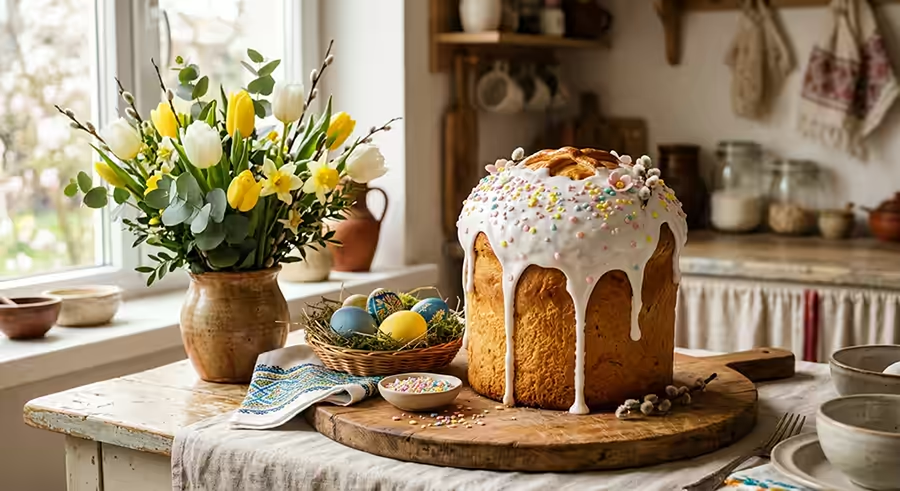
Easter — the brightest and most joyful holiday in Ukrainian tradition. The center of the Easter table has always been and will continue to be easter bread — fluffy, aromatic, sweet bread that symbolizes resurrection and renewal. In 2026, traditional recipes will not disappear, but a new trend will emerge: classic recipes will see trendy variants — easter bread with glaze, chocolate, with matcha, with spicy nuts. In this article, you will find 6 detailed recipes, secrets of the dough, tips for those baking for the first time, and answers to the most popular questions.
Content
When to Bake Easter in 2026
The Orthodox and Greek-Catholic Easter in 2026 falls on April. Traditionally, Easter is baked on Clean Thursday or Good Friday — 2–3 days before the holiday. This gives time to rise, stabilize the texture and glaze.
Easter is stored at room temperature in a covered dish for 5–7 days, or in the refrigerator — up to two weeks.
What You Need to Know Before You Start Baking
First, before attempting any recipe, remember the number of golden rules: without any advice, the best recipe can fall flat:
- All ingredients should be at room temperature — cold butter or eggs “deflate” the dough.
- Always sift the flour — this aerates it and makes the dough fluffier.
- Check the yeast for freshness — dissolve in warm milk (35–38°C) with a bit of sugar: if after 10–15 minutes bubbles appear — the yeast is alive.
- Do not rush — decorating the dough should be light, it doesn’t matter whether you put it in a warm place.
- Do not forget about the dough for the first 20 minutes of baking, so that the cake does not «fall»
- Temperature of the dough during the mixing should not exceed 25°C — if the dough overheats, gluten tears apart
Recipe №1 — Classic Ukrainian Easter Cake (Traditional Recipe)
This fermented dough recipe is for 4 large cakes. The dough will yield soft, moist, aromatic, with a yellow tint from the yolks and yellows.
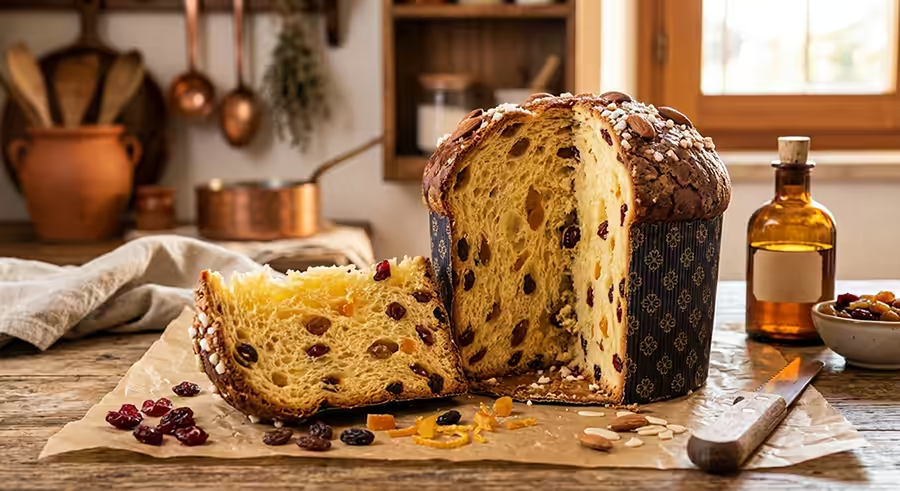
Ingredients (for 4 cakes ~800 g each)
Yeast mixture:
- Warm milk — 500 ml
- Dried yeast — 100 g (or fresh — 30 g)
- Sugar — 3 tbsp. (from total amount)
- Butter — 8 tbsp. (from total amount)
Dough:
- Egg yolks — 10 pcs.
- Homemade cottage cheese — 100 g
- Lard (pork fat) — 50 g
- Butter 82% — 150 g
- Vegetable oil — 50 ml
- Salt — 0.5 tsp.
- Sugar — 300 g
- Vanilla sugar — 1 sachet (16 g)
- Baking powder (in total for the dough) — 1450 g ± 50 g
- Turmeric — 0.5 tsp. (for yellowness)
- Lemon zest — from 1 lemon
- Ginger — 1 tbsp. (for piquancy)
- Dried fruits (raisins, candied fruits) — 400 g
Preparation Process
Step 1 — Yeast mixture. In warm milk (35–38°C) dissolve the dried yeast, add 3 tbsp. sugar and 8 tbsp. butter. Stir, cover with a cloth and leave it warm for 20–30 minutes until the active foam appears.
Step 2 — Egg yolks. Mix yolks with the leftover sugar until a light mass forms. Add vanilla sugar, turmeric, lemon zest, ginger, and cottage cheese. Blend well.
Step 3 — Mixing the dough. To the mixture add the yolk mixture, in portions — the softened butter. Mix the dough by hand or with a mixer for 10–15 minutes.
Step 4 — Fats. Introduce softened butter, lard, and oil, adding alternately in 3–4 batches, mixing each time until well incorporated. The dough should remain smooth, elastic and slightly detaches from the hands.
Step 5 — Doughnut. Mix the ingredients until combined, let it rest and roll it out. Work the dough at a slow speed.
Step 6 — Rising. Cover the dough and place it in a warm place for 1.5–2 hours. After the first rise, punch down and let it sit for another 40–60 minutes.
Step 7 — Shaping. Cut the dough into pieces, filling it to 1/3. Leave to rise for another 40–50 minutes until the dough reaches the edge of the cutter.
Step 8 — Frying. Heat the oil. Fry at 180°C for the first 10 minutes, then reduce to 160°C and fry for another 25–35 minutes depending on size. Check with a wooden skewer.
Recipe №2 — Quick Pastry for Beginners (Without Yeast)
This recipe — is an ideal start for those who have never made pastry. Without yeast, without complicated techniques. It comes together faster, and the taste — is no worse than the traditional one.
Ingredients (for 2–3 medium pastries)
- All-purpose flour — 270 g
- Milk 2.5% — 120 ml (cold!)
- Sugar — 90 g
- Baking powder — 15 g
- Eggs — 2 pcs. (~70 g)
- Butter 82% — 100 g (cold, diced into cubes)
- Salt — 5 g
- Raisins or currants — 100 g (to taste)
- Almond flakes for sprinkling
Preparing the Dough
Step 1. In a bowl, mix flour, cold milk, sugar, baking powder, and beaten eggs. Mix for 6–8 minutes until the dough starts to pull away from the bowl.
Step 2. Add the remaining egg and salt. Mix for another 5 minutes until the gluten develops.
Step 3. Add cold butter in 3 portions, mixing well each time. The dough should become smooth and shiny, it will stretch well. Important: the dough temperature should not exceed 25°C.
Step 4. Add the dough to the form or mold, and place it at a low speed. Leave the dough to ferment for 1.5–2 hours in the refrigerator (the cold fermentation method – the dough should rise more slowly and fluffy).
Step 5. Roll out the dough into shapes (up to 1/3 of height), let it rise at room temperature for 1 hour. Before baking – grease it with egg and sprinkle with almond flakes.
Step 6. Bake at 170°C (top/bottom heating + convection). A medium-sized mold (500 g) will take approximately 25 minutes to bake.
🔋 Tip for Beginners: If you do not have a thermometer for the dough – just touch it lightly. The dough should be slightly cold to the touch.
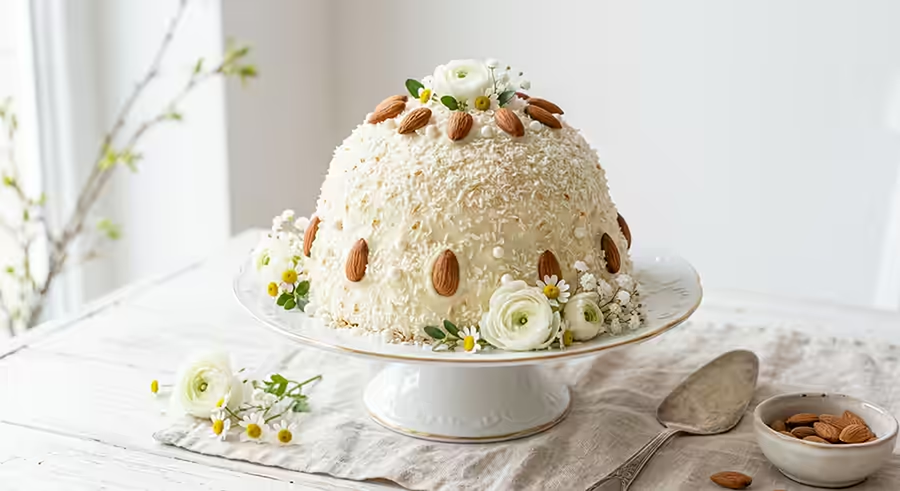
Recipe №3 – Dough with Almonds and White Flour (Sviatkovaya)
This dough is for those who want to impress guests with an original taste and a delightful appearance.
Ingredients
- Powdered sugar – 60 g
- Butter – 1 kg
- Sugar – 350 g
- Eggs – 5 pcs.
- Warm milk – 300 ml
- Butter (melted) – 150 g
- Cream 20% – 100 g
- White flour – 250 g
- Salt – a pinch
- Vanilla sugar – 1 packet
Almond Paste (for decoration):
- Almond flour – 100 g
- Sugar powder – 80 g
- Egg white – 1 pc.
- Decoration: whole almonds or almond flakes
Preparation
Mix dry ingredients in warm milk with a spoon of sugar. Combine all dry ingredients (flour, sugar, vanilla sugar, salt) separately. Combine with soft butter, egg whites, and almond paste. Mix for 10–12 minutes. Let it rise twice: for 1 hour each time.
Roll out into shapes, filling them to 1/3. Let it rise to the edges. Before baking cover with almond paste from the conditional mixture on the surface. Bake at 200°C for 20 minutes. Decorate with whole almonds or flakes, sprinkle with powdered sugar.
Recipe №4 — Cheese Pastry Without Baking (Cold)
This is the fastest pastry, which generally does not require baking. Classic cheese pastry in the form of pyramids — traditional for some regions of Ukraine and very popular in 2026 as a lighter alternative.
Ingredients
- Cream cheese (soft, fatty) — 500 g
- Butter room temperature — 150 g (at room temperature)
- Sugar or powdered sugar — 150 g
- Egg yolks — 3 pcs.
- Sour cream — 2 tbsp.
- Vanilla sugar — 1 tsp.
- Lemon zest — 1 tsp.
- Walnuts — 100 g
- Dried fruits — 50 g
- Salt pinch
Preparation
Step 1. Grate the cheese through a sieve twice — this will ensure a creamy texture without lumps.
Step 2. Combine soft butter with the powdered sugar until a white fluffy mass. Add yolks one at a time, sour cream, vanilla, lemon zest, and salt.
Step 3. Combine the cheese mixture with the oily mixture, thoroughly mix. Add walnuts and dried fruits.
Step 4. Shape the pastry into pyramids or sheets and transfer to a mold. Cover with weight and place in the refrigerator for 12–24 hours for setting.
Step 5. Before serving, carefully turn out onto a plate and remove the mold. Garnish with dried fruits, nuts, and flowers.
💡 Ideal for those who do not have time to bake or want to put something light and fresh on the table.
Recipe №5 — Pastry on Zakvas (Trend 2026)
In 2026, sourdough pastry became a real hit among home bakers and confectioners. Long fermentation on the sourdough provides the bread with the unmatched touch of a creamy, deeply flavorful texture.
Ingredients
- Active wheat sourdough (100% hydration) — 150 g
- High-quality flour — 400 g
- Warm milk — 100 ml
- Eggs — 3 pcs.
- Sugar — 150 g
- Butter room temperature — 130 g (softened)
- Yolks — 2 pcs. (for a richer decoration)
- Salt — 6 g
- Vanilla extract — 1 tsp.
- Apple cider vinegar — from 1 apple
- Walnuts, dried fruits — 200 g
- Tops 33% — 50 ml
Preparation of the Dough
Step 1 — Prepare the dough. For 8–12 hours before replacement, prepare the dough in a proportion of 1:5:5 (dough: flour: water). It should be at peak activity — it should expand in volume and make a bubbly top.
Step 2 — Autolyse. Mix flour with milk, eggs, and yolks. Let it rest for 30 minutes for the gluten to develop — this simplifies the subsequent kneading.
Step 3 — Mixing. Add the dough to the mix and sugar. Mix for 8–10 minutes. Then, in small portions, add soft butter, salt, vanilla extract, apple cider, and zest. Mix until smooth, shiny dough is formed.
Step 4 — Fermentation. Leave the dough at room temperature for 3–4 hours (with 2–3 folds every 45 minutes), then refrigerate for 12–16 hours. This is where the full flavor of the dough develops.
Step 5. Shape the dough, let rise for 1 hour. Incorporate raisins. Divide into molds in a 1/3 ratio. Leave to rise at room temperature for 4–6 hours.
Step 6 — Baking. Preheat the oven. Bake at 160°C for approximately 30–35 minutes, covering with foil for the first 15 minutes to prevent the top from burning.
🔥 Why a sourdough for Easter — trend 2026: the dough is allowed to remain fresh (up to 7 days), not ferment too quickly, and should have a deep flavor and be more balanced due to the natural fermentation.
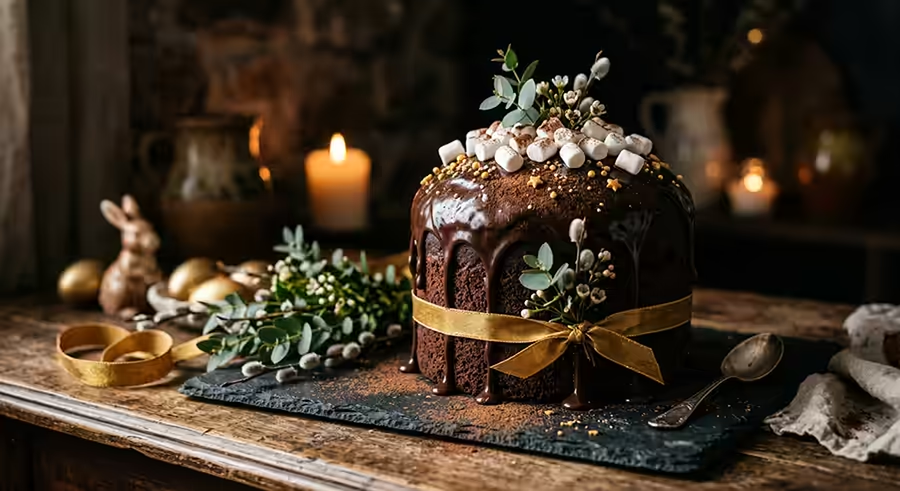
Recipe №6 — Chocolate Easter with Nuts (New)
For those who want to step outside of tradition and create something unique. The chocolate Easter is a wonderful way to engage children and amaze adults.
Ingredients
- Flour — 800 g
- Dried fruit — 50 g
- Milk — 250 ml
- Eggs — 4 pcs.
- Yolks — 2 pcs.
- Sugar — 200 g
- Butter (softened) — 150 g
- Cocoa powder (quality) — 50 g
- Dark chocolate 70% — 100 g (melted)
- Salt — 1 tsp.
- Vanilla extract — 1 tsp.
- Walnuts or almonds — 150 g (shelled)
- Chocolate chips — 80 g
For chocolate glaze:
- Dark chocolate — 100 g
- Cream 33% — 60 ml
- Butter — 20 g
Preparation
Chop the nuts in warm milk. Simply grind together with cocoa. Combine all ingredients (except butter, nuts and chocolate chips), mix for 8 minutes. Gradually add butter and melted chocolate. Mix for another 5–7 minutes.
Add the nuts and chocolate chips. Leave the dough to rise twice (for 1 hour each). Spread into forms, let rise. Bake at 175°C for 25–30 minutes.
For the glaze: combine the cream until it reaches a boil, add grated chocolate, stir until smooth, add butter. Leave to cool (but do not harden) and set aside.
Secrets of the Ideal Glaze for Easter
Glaze is the “face” of Easter bread, and it must be white, smooth, and glossy. These are the main variations:
Classic White Glaze
- Whites — 3 pcs.
- Sugar — 180 g
- Vanilla sugar — 1 tbsp.
- Powdered sugar — 50 g
- Fine salt
Mix cold whites with sugar in a bowl. Gradually add sugar, continuously mixing. Beat to the desired stiff peaks. Cover with cooled glaze.
Glaze on Icing Sugar (Swedish Variant)
Mix 200 g of powdered sugar with 2–3 tbsp. of lemon juice and 1 tbsp. of corn syrup. This glaze does not absorb and looks very accurate.
Colored Glaze (Trend 2026)
Add to the basic glaze a number of colored food paint pastel shades — lavender, pink, or black. This specifically effective looks good in Instagram and Pinterest.
How to Decorate Easter: Ideas 2026
- Fresh or preserved flowers — edelweiss, phlox, peonies trojan
- Almond flakes and whole almonds
- Colored sprinkle — shaped as little balls, star shapes, flowers
- Chocolate dragees — melted chocolate through a cornet
- Figures with yeast — traditional pies, pastries, cakes, specifically made and applied in yeast
- Without rustic — planted on a non-traditional yeast dough
Large Style: What to Prepare
Pastry — colorful, but this style requires and brightens. Here is what traditionally and modernly in 2026:
| Dish | Description | Preparation time |
|---|---|---|
| Cravings and desires | Eggs, colored with natural dyes: beetroot, turmeric, spinach | 30 min |
| Cold dish (cold meat) | Traditional meat cold dish with horseradish | 4–5 hours |
| Homemade sausage | Baked or boiled | 2 hours |
| pâté | With a crispy crust and rich butter | 40 min |
| Babka with potatoes | Lower crust with potatoes, cheese, and greens | 1 year |
| Salad “Large” | With eggs, green onion, cucumbers, radishes, and peppers | 15 min |
| Baked ham | With honey-mustard glaze | 2–3 years |
10 Tips For Those Who Bake Easter Cake First Time
- Follow the simple recipe — Recipe №2 (Quick Easter Cake) ideal for the first time
- Do not rush — all the dough with a dry yeast take time and quiet
- Weigh the ingredients — not by eye, but in kitchen scales; this significantly impacts the result
- Use paper forms — they hold the shape and are convenient for gifting
- Check the yeast before starting — no manipulation will ruin the dough with dead yeast
- Cover the dough while rising — with a napkin or food film, so it doesn’t dry out
- Do not forget the bake first 15–20 minutes — the cake “falls” from a sudden temperature change
- Let them breathe on the side — usually the warm cake may deform under its own weight
- Prepare the glaze for the cooled cake — on the heated water it dissolves and does not hold.
- Getting ready for glazing — pour the icing mixture after spreading the glaze.
Common details and how to include them
The cake did not rise:
- Dead yeast — always check for activity.
- Too hot milk (over 45°C) kills the yeast.
- Mix in the kitchen — cover and place in a warm place without wind.
The cake came out too heavy:
- Excess flour — the dough must be soft, slightly sticky.
- Insufficient rising time — do not rush, let the dough rise well.
The cake is browned on top, but the inside is raw:
- Too high temperature — reduce the temperature first for the initial 15 minutes and lower the temperature.
The glaze may harden and crack:
- Applied to hot cake — wait until it reaches room temperature.
- Insufficient egg whites — whip until stiff peaks.
FAQ: The most common questions about the Cake
What is the difference between ‘paska’ and ‘pascha’?
In Ukraine, ‘paska’ is the traditional name for the large loaf, while ‘pascha’ is the name for the holiday (Easter). Although in the folk language these words are often used interchangeably, it is correct to say ‘paska’ for the loaf and ‘pascha’ or ‘Velykden’ for the holiday.
Can you bake a cake in a regular shape for cakes?
Yes, you can! Forms for cakes, banks with conserved (previously compressed and filled) paper, silicone forms — all will be fine. The main thing is to fill not more than 1/3 of the volume.
How long does the cake keep?
The cake at room temperature, cooled in the fridge or a bowl, keeps 5–7 days. In the refrigerator — up to 2 weeks. The cake on a shelf keeps longer due to natural acidity.
Can the cake be frozen?
Yes! After reaching room temperature and before glazing — submerge the cake in liquid and freeze for up to 3 months. Before serving — thaw at room temperature, then glaze.
Is it possible to replace the yeast with a starter?
Yes, but you may need to adjust for 20–30 minutes of intensive kneading. Good dough requires a well-developed gluten. The method of “stretching and folding” compensates for the lack of yeast.
Is it necessary to proof the dough?
Essential! Proofing enriches the dough with lactic acid, breaks up the gluten strands and significantly improves the structure of the dough – the crust comes out lighter and fluffier.
Why does the crust harden after baking?
The most common reasons: premature opening of the oven, insufficient baking time, or the dough not reaching the desired rise before baking. The crust will always become harder – when you place it in the oven, it “stiffens.”
How long does the whole fermentation process take?
For classic bread – from 5 to 8 hours (including the proofing of the dough). For fast bread – 3–4 hours. For sourdough bread – 24–36 hours (more time – passive fermentation in the refrigerator).
Which kind of crumbs are better – dry or preserved?
Save on working variants. Preserved provide more active acidity and traditional taste. Dry are more convenient to use and store. Note: 10 g of preserved = approximately 3–3.5 g of dry (active).
What to do if the dough didn’t rise?
Check the temperature in the room – ideally 24–26°C. If it is too cold – place the dough in the oven with the light on or in a slightly heated (up to 30°C) and turned-off oven. If the dough hasn’t risen within 2 hours – it is probably dead.
Traditional Easter Cake: What To Put In The Dough
Traditional Easter cake in 2026 looks like this:
- 🧁 Eggs – at least 3
- 🍰 Cake – the main element
- 🧀 Cheese and butter – in the form of curds or small pieces
- 🧆 Sausage or ham – a small piece
- 🧂 Salt – in small quantity
- 🐆 Flavoring – a symbol of strength
- 🔖 Label – for identification
A spoon is adorned with embroidered fabric and is not served to the church for the consecration on Saturday evening or on Sunday morning.
Announcement
Easter 2026 — this is a combination of ancient tradition and modern trends. Regardless of your experience in the kitchen — whether you are an experienced baker or if you are taking the ingredients in your hands for the first time — among the six recipes of this article, you will find your ideal variant. Easter in a baking pan will moisten the cake, the speed at which the cake is baked will make it fluffy, and the classic one will firmly anchor the family at the table just like it did generations ago. May your cake always come out moist, fragrant, and delicious — for that is the very magic of the Great Easter. Christ is Risen! 🌸