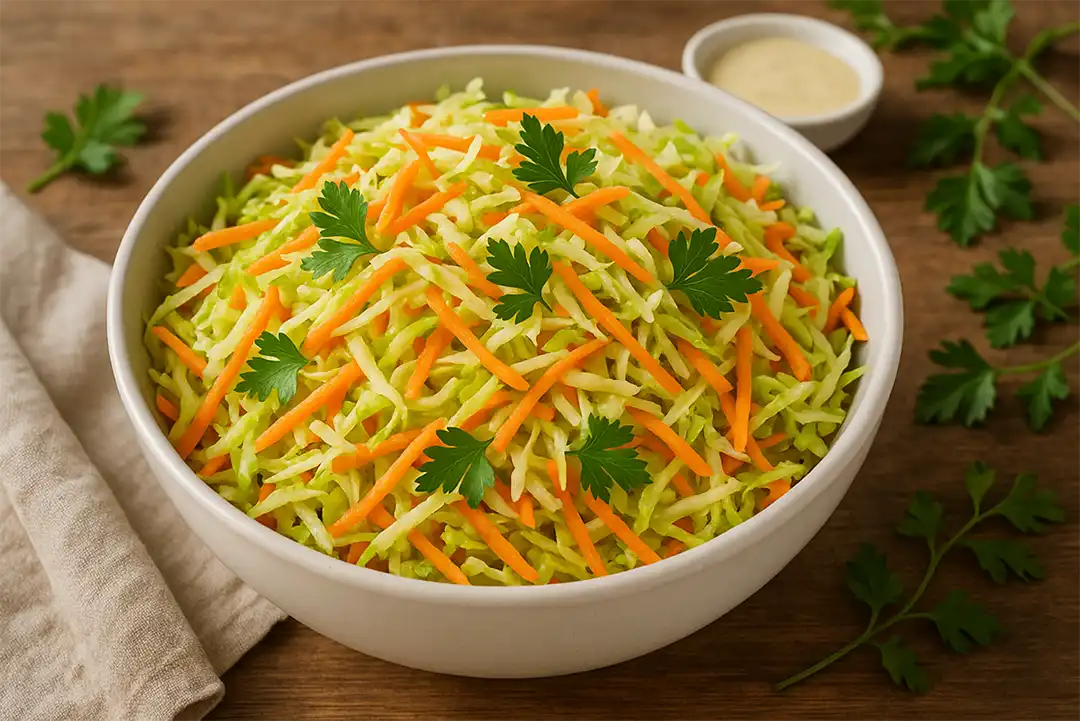
Coleslaw is a true American culinary wonder that has gained popularity around the world thanks to its simplicity, crunchy texture, and unbeatable taste. This vitamin-rich salad is ideal for both everyday meals and festive occasions, as it goes well with meat, fish, and vegetable dishes.
Content
History and origin of Cole Slaw
The name “coleslaw” comes from the Dutch word “koolsla,” which literally means “cabbage salad.” The term originated in the 18th century when Dutch settlers brought the recipe to America. The part of the word “cole” comes from the Latin “caulis,” which means cabbage.
According to historical records, a Dutch cookbook from 1770 contained a recipe in which thin strips of cabbage were mixed with melted butter, vinegar, and oil. Over time, this simple recipe evolved into the many variations we know today.
The health benefits of cabbage
White cabbage, the basis of this salad, is a real treasure trove of nutrients. 100 g of fresh cabbage contains:
- Vitamin C: 36.6 mg (61% of the daily value)
- Vitamin K: 76 mcg (95% of the daily value)
- Folate: 43 mcg (11% of the daily value)
- Potassium: 170 mg (5% of daily value)
- Calcium: 40 mg (4% of the daily value)
- Magnesium: 12 mg (3% of the daily value)
Red cabbage contains 30% more vitamin C – a full 95% of the daily requirement per 100 g. Cabbage is also rich in antioxidants, including polyphenols and sulfur compounds, which protect the body from free radicals.
The main benefits of cabbage for the body
Immune support: High vitamin C content helps strengthen the body’s defenses and acts as an anti-inflammatory agent.
Improved digestion: Cabbage is rich in soluble and insoluble fiber, which supports healthy bowel function and nourishes beneficial bacteria.
Anti-aging properties: Vitamins E and K slow down the aging process of skin and hair, while the antioxidant kaempferol protects against sunlight.
Cholesterol reduction: Unique vitamin U prevents the formation of cholesterol plaques and blood clots.
Classic coleslaw recipe
Ingredients:
For the salad:
- White cabbage – 500 g
- Carrots – 150-200 g
- Onion (optional) – ½ piece
- Fresh herbs (dill, parsley) – 1 bunch
For dressing:
- Mayonnaise – 70 g
- Sour cream – 70 g
- Apple cider vinegar – 1-2 tablespoons
- Dijon mustard – 1-2 tsp.
- Sugar – 1 teaspoon
- Honey – 1 tsp.
- Salt and pepper to taste
- Lemon juice – 1 tablespoon
Step-by-step recipe:

- Preparing the cabbage: Shred the cabbage as thinly as possible—this is key to achieving the right texture for the salad. Salt lightly and knead well with your hands to soften.
- Preparing the carrots: Grate the carrots using a coarse grater or cut them into thin strips for a better appearance.
- Additional ingredients: Cut the onion into thin half-rings and finely chop the herbs.
- Prepare the dressing: In a separate bowl, mix the mayonnaise, sour cream, mustard, vinegar, honey, sugar, lemon juice, salt, and pepper until smooth.
- Assembling the salad: Combine all the vegetables in a large bowl, add the dressing, and toss thoroughly.
- Infusion: Be sure to leave the salad in the refrigerator for 2-4 hours – this will allow the flavors to blend and the vegetables to release their juices.
Secrets to making the perfect coleslaw
Proper cutting
Thickness matters: Cabbage should be shredded as thinly as possible – this ensures better texture and taste. You can use a special shredder, mandolin, or sharp knife.
Homogeneity: All ingredients should be approximately the same thickness for even dressing penetration.
Cabbage processing
Salt rubbing: After cutting the cabbage, be sure to salt it and knead it well with your hands—this makes it softer and juicier.
Heat treatment: Some chefs recommend pouring boiling water over shredded cabbage and cooling it immediately—this makes it softer.
Refueling balance
Sweet and sour taste: The right salad should have a balanced sweet and sour taste thanks to the combination of vinegar, sugar, and honey.
Consistency: The dressing should not be too runny or too thick—it should coat each cabbage leaf.
Infusion time
Minimum 2 hours: The salad must be left to stand in the refrigerator so that the vegetables release their juices and the flavors blend together.
The next day: The salad tastes even better after being stored for 24 hours.
Popular variations
Cole slaw with red cabbage
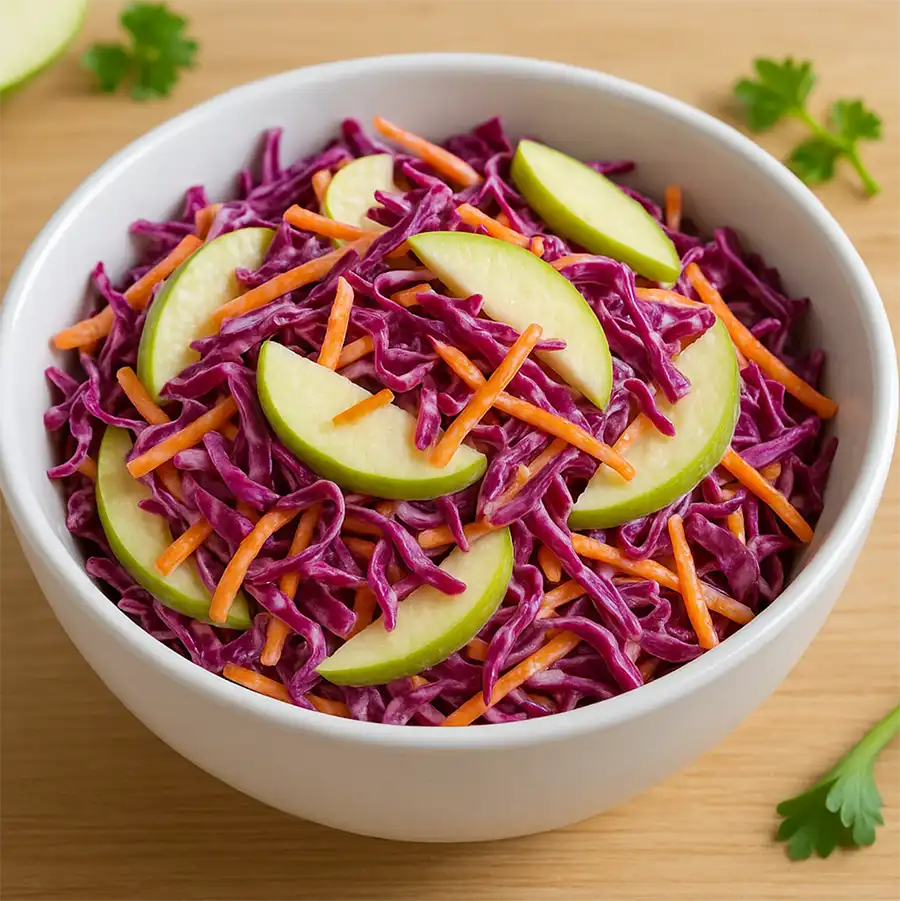
The combination of white and red cabbage creates a bright color and adds vitamins:
Ingredients:
- White cabbage – 300 g
- Red cabbage – 300 g
- Carrots – 200 g
- Canned corn – 1 can
- Parsley greens
Red cabbage makes the salad more visually appealing and adds anthocyanins, which are powerful antioxidants.
(see the generated image above)
Cole slaw with apples
Adding apples makes the salad more refreshing and crunchy:
Additional ingredients:
- Green apples – 1-2 pieces.
- Lemon juice (to prevent apples from turning brown)
Grate the apples or cut them into strips and be sure to sprinkle them with lemon juice.
Cole slough with nuts and raisins
Ingredients:
- Walnuts – 50 g
- Raisins – 50 g
- Sunflower seeds (roasted)
This option adds nutrition and an interesting texture to the salad.
Cole slaw with celery
Additional ingredients:
- Celery stalks – 2-3 pieces
- Celery root – 100 g
Celery adds a special freshness and crunch to the salad.
Asian Cole Slaw
Special dressing:
- Soy sauce – 2 tablespoons
- Rice vinegar – 2 tablespoons
- Sesame oil – 1 tbsp.
- Honey – 1 tsp.
- Grated ginger – 1 teaspoon
Add roasted peanuts or sesame seeds.
Options for coleslaw dressings
Classic mayonnaise dressing
Ingredients:
- Mayonnaise – 3 tablespoons
- Apple cider vinegar – 1 tablespoon
- Sugar – 1 teaspoon
- Mustard – 1 tsp.
- Salt, pepper
Light yogurt dressing
Ingredients:
- Greek yogurt – 100 g
- Sour cream – 50 g
- Honey – 1 tablespoon
- Apple cider vinegar – 1 teaspoon
- Dijon mustard – 1 tbsp.
This is a more diet-friendly option with fewer calories.
Dressing like at KFC
Ingredients:
- Mayonnaise – 120 ml
- Kefir – 60 ml
- Milk – 60 ml
- Sugar – 2 tablespoons
- Vinegar – 1.5 tablespoons
- Lemon juice – 2.5 tablespoons
- Grated onion – 1 tbsp.
This dressing creates a particularly delicate and sweet taste.
Olive dressing
Ingredients:
- Olive oil – 4 tablespoons
- Apple cider vinegar – 2 tablespoons
- Honey – 1 tablespoon
- Dijon mustard – 1 tsp.
- Garlic – 1 clove
This option is suitable for those who avoid mayonnaise.
Tips for serving and storage
Submission
With meat: Cole slaw is perfect with barbecue, steaks, fried chicken, and burgers.
As a standalone dish: Can be served with bread as a light salad.
Side dish: Perfect with potatoes and other vegetable dishes.
Storage
In the refrigerator: The prepared salad can be stored for 2-3 days in an airtight container.
Separate dressing: For long-term storage, it is better to keep vegetables and dressing separate.
Do not freeze: Cole slaw should not be frozen due to the high water content in cabbage.
Common mistakes when cooking
Too coarse cutting
Cutting the cabbage into large pieces makes the salad less tasty and difficult to eat. The cabbage should be chopped as finely as possible.
Insufficient preparation of cabbage
If you don’t knead the cabbage with salt, the salad will be too tough.
Sorting with dressing
Too much dressing makes the salad “floaty” and ruins the texture.
Absence of insistence
Salad without marinating does not reveal its full flavor.
Frequently asked questions (FAQ)
Can coleslaw be prepared in advance?
Yes, coleslaw can be prepared a day before serving. On the contrary, it becomes even tastier after marinating. However, it is better to keep the dressing separate until serving if you plan to store it for more than 2 days.
Which cabbage is best to use?
Regular white cabbage is suitable for coleslaw. It is better to use autumn cabbage, which is denser, rather than young spring cabbage. You can also use red cabbage or combine both types.
Can mayonnaise be replaced?
Yes, mayonnaise can be replaced with Greek yogurt, sour cream, or a combination of both. There are also options with olive oil instead of mayonnaise.
How can you make a salad less caloric?
Use Greek yogurt or low-fat sour cream instead of mayonnaise. Reduce the amount of sugar and add more lemon juice for tartness.
What to do if the salad is too salty?
Add a little more cabbage and carrots, or a small amount of sugar or honey to balance the flavors.
Can other vegetables be added?
Yes, apples, celery, cucumbers, radishes, and corn are often added to coleslaw. The main thing is to stick to the principle of crunchy texture.
How long should you keep the salad before serving?
At least 2 hours, but preferably 4-6 hours or even overnight. This allows the flavors to blend and the vegetables to release their juices.
Why doesn’t my cole slaw crunch?
Perhaps you didn’t chop the cabbage finely enough or used too much dressing. It’s also important not to use too much salt when mixing the cabbage.
Can coleslaw be served warm?
Cole slaw is traditionally served cold as a refreshing salad. Serving it warm is not typical for this dish.
How to make the dressing less sour?
Add more honey or sugar, reduce the amount of vinegar. You can also add a little sour cream for a milder taste.
Cole slaw in world cuisine
Although coleslaw is of American origin, different countries have adapted this salad to their culinary traditions. In Germany, the Bavarian version with oil and vinegar without mayonnaise is popular. In Israel, they prepare a version with red cabbage, mayonnaise, salt, pepper, and lemon juice.
In Ukraine, cole slaw has become popular relatively recently, but it quickly found its way onto the menus of many restaurants and home kitchens thanks to its simplicity and taste.
Cole slaw is not just a salad, but a true culinary classic that combines ease of preparation, health benefits, and unmatched taste. Properly prepared, cole slaw will be a wonderful addition to any table and a source of vitamins for the whole family.